Key takeaways
- Treat any AI visibility score as a claim to verify, not a fact. Brandlight's own page says it makes no accuracy claim and tells buyers to "check the sources, not the score." Take that advice literally for every vendor.
- Run a 30 to 60 day paid pilot with your own prompts, your own markets and a set of control checks before signing an annual enterprise contract.
- Compare the vendor's collected answers against what you see by hand in the real ChatGPT, Gemini, Perplexity and AI Overviews interfaces. Differences between API output and user-facing answers are the most common source of bad data.
- AI answers shift on their own. ChatGPT cut average citations per search response by roughly 27% around March 4, 2026, so a good vendor must separate platform changes from brand changes.
- Score vendors on a written rubric: source traceability, repeatability, market separation, error handling and export access.
Why accuracy is the buying question that matters
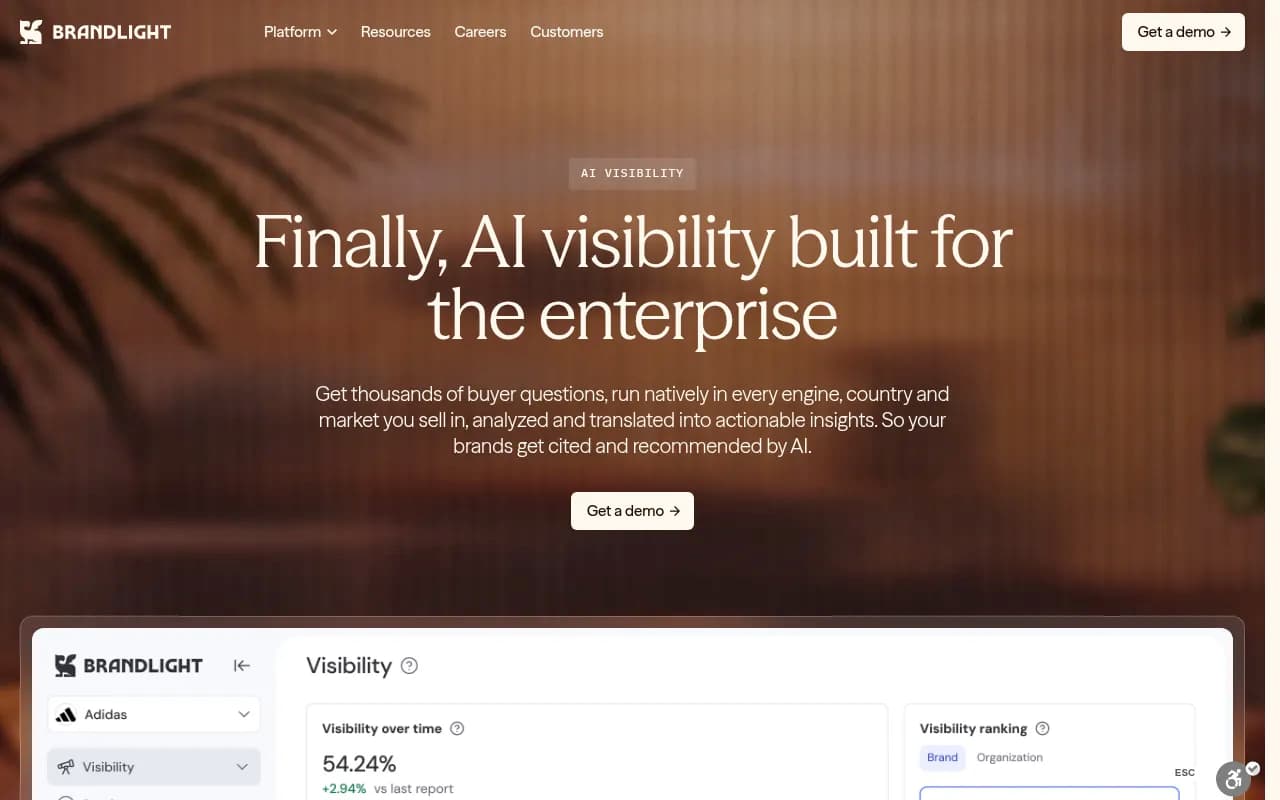
Most enterprise AI visibility demos look the same. A dashboard shows a percentage, a ranking against three or four competitors, a chart by engine. Brandlight's hero view, for instance, shows a brand at 54.24% visibility, ranked ahead of rivals, split by engine and category. It looks authoritative. It also tells you nothing about whether the number is right.
That is not a criticism of Brandlight specifically. Every vendor in this category reports a derived score from a sample of prompts, and the score is only as good as the prompt set, the collection method and the scoring logic. Brandlight deserves credit for being upfront here. Its FAQ says it makes no accuracy claim and points you to the sources behind each answer. Few vendors say that out loud.
So the job falls to you. Before a six-figure commitment, you need a test plan.
What "accurate" actually means here
Accuracy in AI visibility data is not one thing. It breaks into at least five separate questions, and a vendor can pass some while failing others.
- Collection accuracy. Did the vendor really capture what a user in your market would see?
- Scoring accuracy. Does a mention, a recommendation and a citation get classified correctly?
- Stability. Does the same prompt set produce a similar score tomorrow, absent real change?
- Factual accuracy of what AI says about you. Does the tool correctly flag wrong prices, wrong parent companies or claims you never made?
- Attribution accuracy. Can each score be traced back to the actual answer and the sources cited in it?
A useful framing from the Savage Global Marketing guide on measuring AI visibility: a mention is not a citation, and neither automatically means the brand influenced a buying decision. A recommendation without a citation, or a citation without a recommendation, are different outcomes. If a vendor collapses them into one number without showing you the split, you cannot audit it.
Step 1: Build your own ground-truth set before the demo
Do this before you talk to any sales team, so the vendor cannot shape the test.
Pick 40 to 60 prompts that reflect how buyers actually ask. Include:
- Category prompts where you hope to be recommended
- Competitor comparison prompts
- Brand-specific prompts, including ones about pricing, policy and ownership
- A handful of prompts in each non-English market you sell in
- Five to ten prompts where you already know the right answer, so you can spot hallucinations
Then run them by hand in the real interfaces: ChatGPT with search on, Gemini, Perplexity, and Google AI Overviews and AI Mode in the right country. Save the full answers and the cited URLs. This is your ground truth. It is tedious, and it is the only way to know whether a vendor's data matches reality.
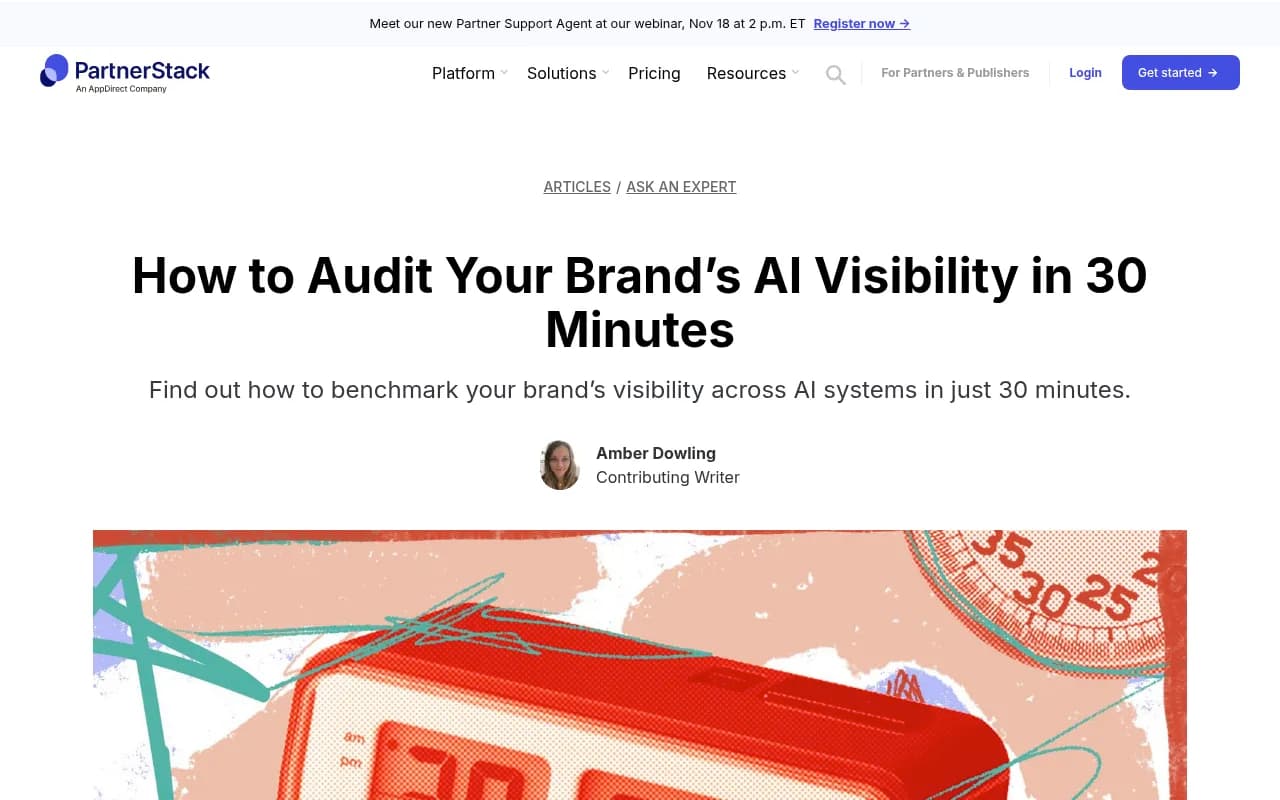
The PartnerStack write-up on 30-minute AI visibility audits makes a similar point: an audit should produce a repeatable benchmark, not a vague overview, and it should look at answer integrity, meaning whether the brand is described correctly, not only whether it appears.
Step 2: Ask how the data was collected
This is where vendors differ most, and where many accuracy problems start.
Ask these questions in writing:
- Is the data collected from the real user interface of each AI engine, or from an API? User-facing answers, citations and shopping results can differ from API output.
- Is each monitor fixed to one country and language, or do markets mix?
- Can you see the raw response for every data point?
- How often do prompts run, and can you change the frequency?
- What happens when a platform changes its model or behavior mid-contract?
Brandlight describes questions run natively in every engine, country and market. That is the right claim to make. Your job in the pilot is to confirm it. Pick ten prompts from your ground-truth set, ask the vendor to show the raw captured responses for the same date, and compare them to yours. You will not get a character-for-character match, since AI answers vary between runs, but brand order, cited domains and the gist of the answer should be close.
Step 3: Test repeatability with a control
AI answers are noisy. Before judging a vendor's score, you need to know how much noise is normal.
Promptwatch Data gives useful context. In its average sources per response report, ChatGPT cited about 5 sources per web-search answer, Google AI Overviews about 10 and steady, and Perplexity almost exactly 10 every day. Copilot, by contrast, swung from under 2 to nearly 17 sources within weeks before settling low. The practical takeaway: Perplexity can act as a relatively stable control, while Copilot numbers should be read with more caution.
Run this repeatability test:
- Have the vendor run the same 20 prompts three times across a week with no changes on your side.
- Compare visibility score, position and cited domains across runs.
- Ask the vendor how they report variance. A single point estimate with no range should make you wary.
If the score swings by 10 points on identical prompts with no real-world change, you have learned something about the signal-to-noise ratio. That is useful to know before you build a quarterly board report on it.
Step 4: Separate platform shifts from brand shifts
This is the test most buyers skip, and it matters most for reporting to executives.
Promptwatch's ChatGPT citation drop report found that around the GPT-5.3 rollout on March 4, 2026, average citations per search-enabled ChatGPT response fell from about 6.4 to roughly 4.7 to 4.9. That is around 27% fewer citation slots. The drop hit GPT-5.3, GPT-5.4 and GPT-5-Mini at once, and there was no recovery a month later. Any brand tracked during that window would have seen citation numbers fall regardless of what it did.
The query fanout data tells a similar story. According to Promptwatch's ChatGPT query fanouts report, average fanouts per response were 2.15 in early December, about 1.84 by early March and exactly 1.0 when data resumed in April. Average query length dropped from about 117 characters to the high 80s, then about 53 in April. A single prompt can trigger 3 to 8 or more searches. And in August 2026, ChatGPT started using the site: operator at scale, jumping from about 0.4% to about 17% of fanout queries overnight.
What this means for your pilot:
- Ask whether the vendor annotates model releases and platform behavior changes on trend charts.
- Ask whether they can show a competitor set moving together, which suggests a platform change, versus your brand moving alone, which suggests something you did or something about your content.
- Single-snapshot audits are unreliable. Continuous monitoring with annotations is the minimum.
Step 5: Verify source traceability
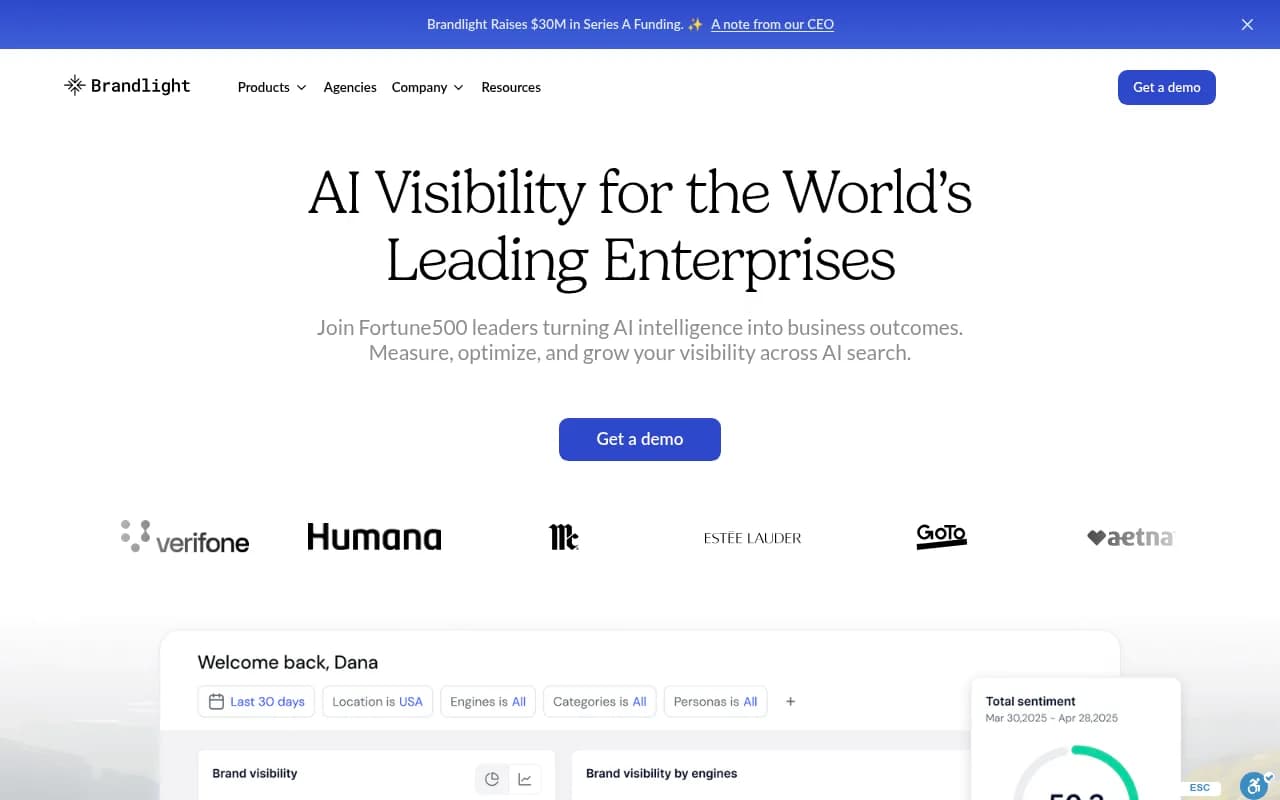
Brandlight's marketing says it finds factual errors, assesses severity and traces each one to the answer it came from. That is exactly the capability that makes a score auditable. Test it hard.
For five to ten flagged items, check:
- Can you open the exact AI response that produced the flag?
- Is the cited source URL shown, and does it really say what the AI claims?
- Is the severity rating explainable, or is it a black box?
- Does the tool tell you which page on your own site is feeding the wrong claim?
This is also where you test the factual-accuracy claims. Plant a few known errors in your ground truth, such as an outdated price or a wrong parent company, and see whether the tool finds them without being told. A vendor that catches your planted errors earns trust. One that misses them has just told you something important.
For your own side of this check, tools in the category approach it differently. Promptwatch separates the individual claims AI makes about your brand (Brand Narrative) from a Fact Check step that scans your crawled pages to find which one states the wrong version, and its IP-verified crawler logs help tell an access problem from a content problem.

Step 6: Test market and language separation
Enterprise brands rarely operate in one market. A common failure is blended data, where a German monitor quietly includes English-language answers or a US location bleeds into a UK report.
In the pilot:
- Pick two or three markets and run your ground-truth prompts in each by hand, from a local IP.
- Check that the vendor's per-market view matches your hand results on cited domains and brand order.
- Confirm whether location settings are fixed per monitor, and whether city or coordinate-level targeting exists if you run local or franchise queries.
The LinkedIn piece on enterprise AI visibility software lists the same areas a global brand should probe: how the platform structures data, manages prompts, separates markets, identifies sources and handles competitors. Use that as a checklist.
Step 7: Check how the score is built
A visibility score is a composite. Ask to see the formula, or at least its inputs.
- What weights apply to position, prominence and depth of mention?
- Do responses that never mention the brand count as zero, or are they excluded? Excluding them inflates the score.
- Is the prompt set weighted by real buyer volume or treated equally? Brandlight says its score is built and weighted on thousands of real questions. Ask for the evidence.
- Can you edit the prompt set, or is it fixed by the vendor? If it is fixed, you cannot test the score against your own priorities.
- How are brand names that are also common words handled?
If you can reproduce a score by hand from the exported raw data, the score is trustworthy. If you cannot, treat it as directional only.
A scorecard you can reuse
The table below turns the steps into a pass or fail rubric. Score each vendor 0 to 2 on every row during the pilot.
| Test | What you check | Pass looks like |
|---|---|---|
| Real-interface collection | Raw responses match your manual runs | Same cited domains and brand order on at least 8 of 10 prompts |
| Repeatability | Same prompts run 3 times in a week | Score range is small and reported |
| Platform-shift annotation | Model release dates on trend charts | Competitor set movement is distinguishable from brand movement |
| Source traceability | Each flag links to the answer and source | One click from score to raw response |
| Planted-error detection | Known wrong facts are found | At least 4 of 5 planted errors flagged |
| Market separation | Per-market results match local manual checks | No cross-market contamination |
| Score transparency | Inputs and weights are explained | You can approximate the score from exports |
| Data access | CSV, API or MCP export of raw data | Full export without extra fees |
How the main rivals compare for a pilot
The category is crowded, so build a shortlist of three. These are the tools most often compared with Brandlight in enterprise evaluations, based on the positioning in our catalog. Verify every claim yourself in your pilot.
| Tool | Positioning | Worth testing for |
|---|---|---|
| Brandlight | Enterprise visibility, accuracy flagging, source tracing | Factual-error detection across many markets |
| Promptwatch | End-to-end visibility plus content and crawler data | Whether fixes get crawled, cited and clicked |
| Profound | Enterprise tracking across many engines | Breadth of engine coverage |
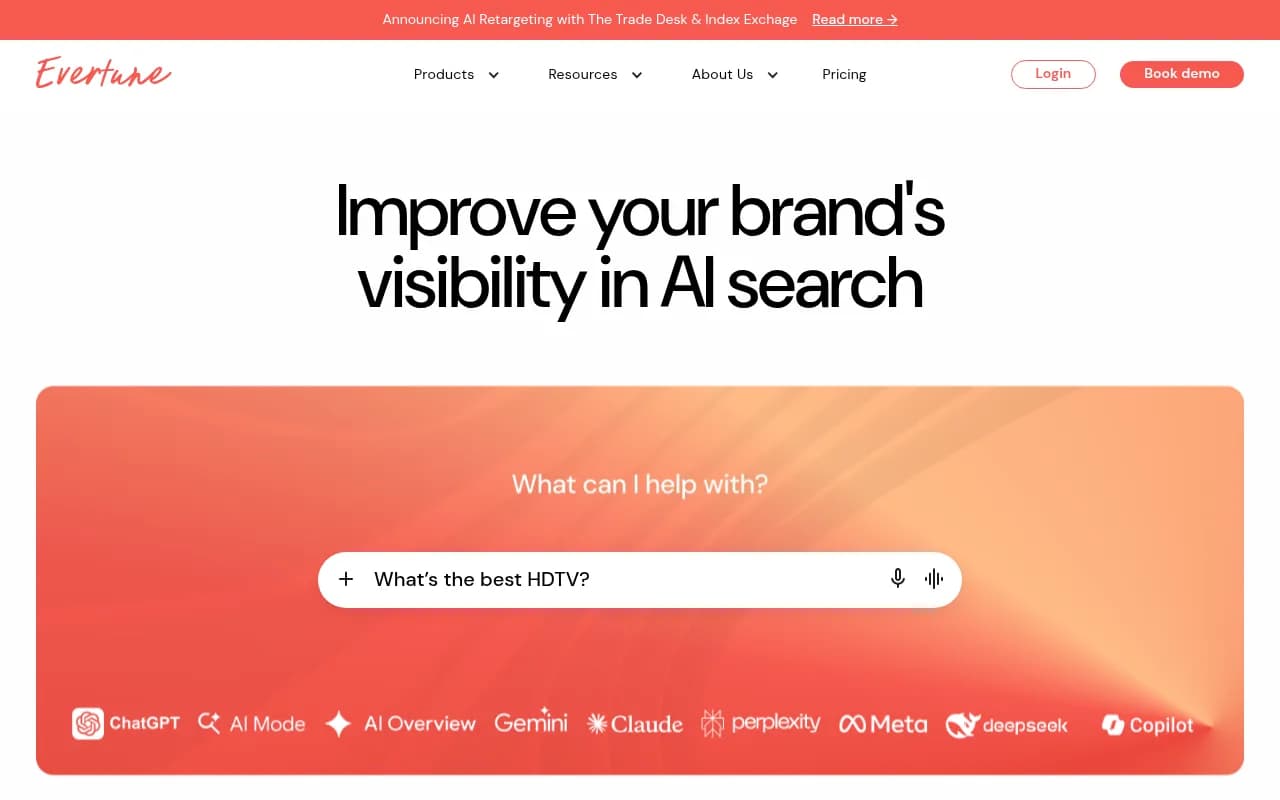
| Evertune | Enterprise GEO for large brands | Fortune 500 style reporting |
| Bluefish AI | Enterprise AI marketing platform | Large brand rollouts |
| Scrunch AI | Visibility and tracking | Monitoring depth |
Profound

If you want to widen the shortlist, the GEO software directory lists more options by capability.
For a direct feature comparison, the Promptwatch comparison of GEO platforms in 2026 and the head-to-head page Promptwatch vs Profound are useful references. Treat them as one vendor's view and cross-check against your own pilot.
Questions to put in the contract
Testing is wasted if the contract does not protect what you learned.
- A pilot or opt-out window long enough to run the full test plan, with the right to export all raw data.
- Written notice when the vendor changes collection methods, models tracked or scoring logic, with historical scores restated or clearly marked.
- Access to raw responses and citations through export or API, not only through the dashboard.
- Clear rules on what happens when a tracked AI model is deprecated or a new one is added.
- Security basics such as certifications and audit logs, since enterprise procurement will ask.
- No lock-in on prompt sets. Your prompts and tagging should be portable.
Be cautious about social proof during selection. Brandlight shows a 4.9/5 rating from 240 reviews on its own site, and that figure is self-reported. Check the review platform directly and read the critical reviews, for any vendor, not only this one.
A realistic 30 day pilot plan
| Week | What you do |
|---|---|
| 1 | Build the ground-truth prompt set. Run it by hand and save answers and citations. Send vendors the data-collection questions in writing. |
| 2 | Load the same prompts into each vendor. Compare raw responses to your manual runs. Plant known errors. |
| 3 | Run the repeatability test. Check market separation. Review how each tool annotates platform changes. |
| 4 | Score the rubric. Review contract terms. Ask each vendor to explain the biggest discrepancy you found. |
How a vendor reacts to a discrepancy is itself data. A team that investigates and explains is a better long-term partner than one that insists the dashboard is right.
What I would watch for
A few red flags worth stating plainly:
- A single score with no way to drill into raw responses.
- Reluctance to run your prompts instead of theirs.
- No mention of model changes or platform shifts when trend lines move.
- Citation counts presented as comparable across engines, when they plainly are not. ChatGPT, AI Overviews and Perplexity cite different numbers of sources per answer.
- Accuracy claims without a method.
The flip side matters too. Brandlight telling you to check sources rather than trust the score is a sound instinct. Take them up on it, and apply the same standard to every rival on your list.
If you want outside help running a pilot like this, 1001 SEO Media works with brands on AI search and GEO measurement, and uses Promptwatch as its visibility platform, so factor that in when you weigh its recommendations. For free starting points, the free AI visibility report gives you a quick outside-in check to compare against any vendor's numbers.
Bottom line
An AI visibility score is only worth buying if you can trace it to a real answer, reproduce it, and explain its movement. Run your own prompts, check raw responses against manual runs, separate platform changes from brand changes, plant known errors, and put data-export rights in the contract. Do that and the decision between Brandlight, Promptwatch, Profound or anyone else gets much easier, because you will be comparing evidence instead of dashboards.