Key takeaways
- Traditional rank tracking is no longer enough — AI Overviews appear in nearly 19% of search results, and a #1 organic ranking can sit 1,200+ pixels below the fold.
- AccuRanker leads on speed and SERP diagnostics, including its "Pixel Tracking" metric that measures actual on-screen position rather than just rank number.
- Advanced Web Ranking is the strongest choice for agencies that need flexible, white-label reporting at scale with no per-keyword pricing ceiling.
- SE Ranking offers the most complete all-in-one package for budget-conscious teams who still want AI Overview tracking alongside content tools.
- None of the three fully covers LLM visibility (ChatGPT, Perplexity, Claude) — that requires a separate tool built for AI search monitoring.
Why rank tracking changed in 2026
Not long ago, rank tracking was simple: you entered keywords, the tool returned position numbers, and you reported on movement. That model started breaking down when Google began pushing organic results further down the page with ads, local packs, People Also Ask boxes, and featured snippets. But the real disruption came with AI Overviews.
SE Ranking's own research found that AI Overviews now appear in 18.76% of search results. That number is higher in certain verticals — health, finance, and how-to queries — and it keeps climbing. When an AI Overview occupies the top of the page, a brand ranking #1 organically can effectively be invisible to most users who never scroll past the AI-generated answer.
This created two separate problems for rank trackers:
- Position numbers stopped reflecting actual visibility. Ranking #3 with an AI Overview above you is very different from ranking #3 without one.
- The question of "where do I appear in AI search?" became just as important as "where do I rank in Google?" — and most rank trackers weren't built to answer it.
The tools that survived and grew in 2026 are the ones that adapted to both problems. Let's look at how AccuRanker, Advanced Web Ranking, and SE Ranking each responded.
AccuRanker: built for speed and SERP precision
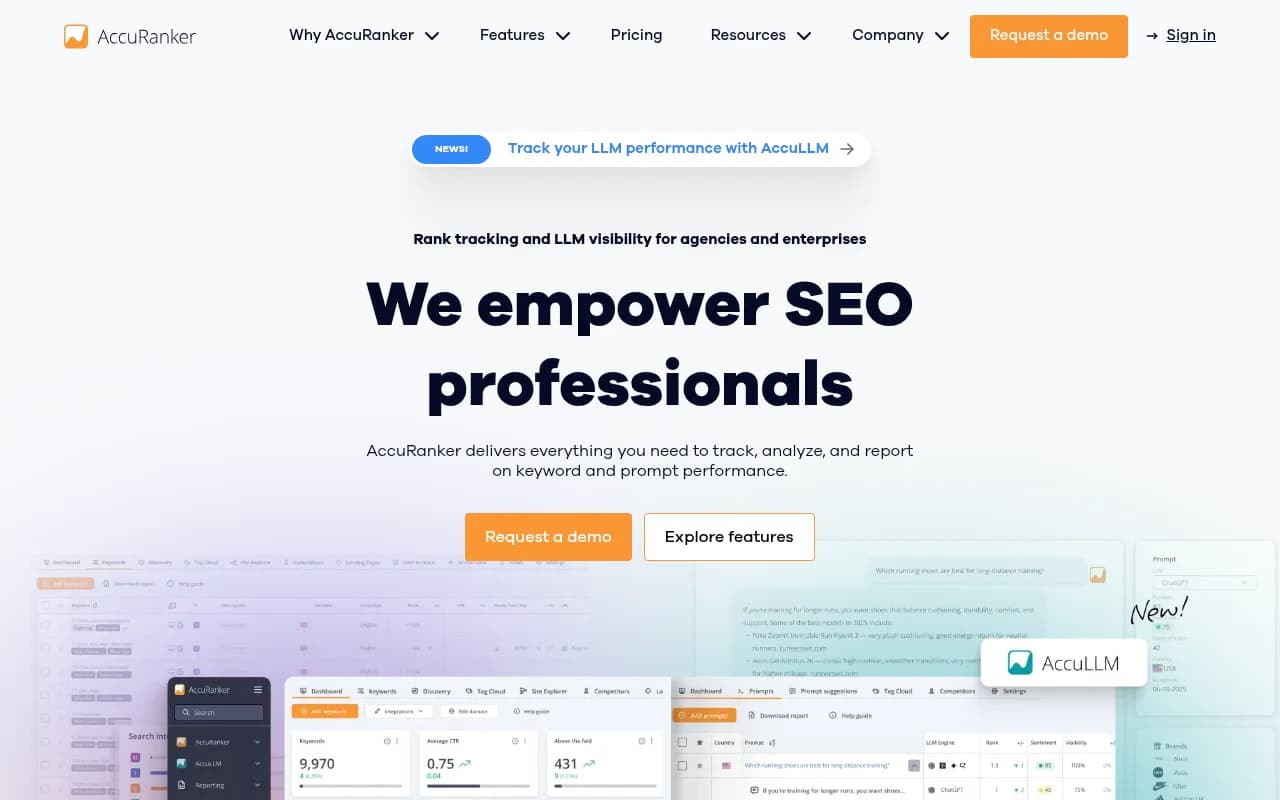
AccuRanker has always competed on two things: update frequency and data accuracy. In 2026, those strengths matter more than ever because SERP volatility has increased. When Google rolls out an algorithm change or an AI Overview starts appearing for a keyword cluster, you want to know within hours, not days.
Pixel Tracking: the metric that actually reflects visibility
The most significant thing AccuRanker did was introduce "Pixel Tracking" — a metric that measures how far down the page your result actually appears, in pixels, rather than just reporting a rank number. This directly addresses the AI Overview problem. If your result sits at position 2 but 1,400 pixels below the fold because an AI Overview, a featured snippet, and a local pack all appear above it, Pixel Tracking shows you that. A raw rank number wouldn't.
This is genuinely useful diagnostic data, not a marketing gimmick. For e-commerce teams and agencies managing high-competition keywords, knowing the pixel depth of your result changes how you prioritize optimization work.
On-demand refreshes
AccuRanker lets you trigger manual rank checks at any time rather than waiting for the next scheduled update. For agencies managing clients who notice ranking changes before the tool does, this eliminates an awkward conversation. It's a small feature that saves real time.
Where AccuRanker falls short
AccuRanker is primarily a rank tracker. It doesn't have a built-in content editor, keyword research suite, or site audit tool. You're paying for precision tracking, not an all-in-one SEO platform. Its AI Overviews tracking exists but is less comprehensive than SE Ranking's dedicated AI visibility reporting. And for LLM monitoring — tracking how your brand appears in ChatGPT, Perplexity, or Claude responses — you'll need a separate tool entirely.
Pricing is keyword-based, which can get expensive as you scale. Teams tracking thousands of keywords across multiple clients should model the cost carefully before committing.
Advanced Web Ranking: the reporting workhorse
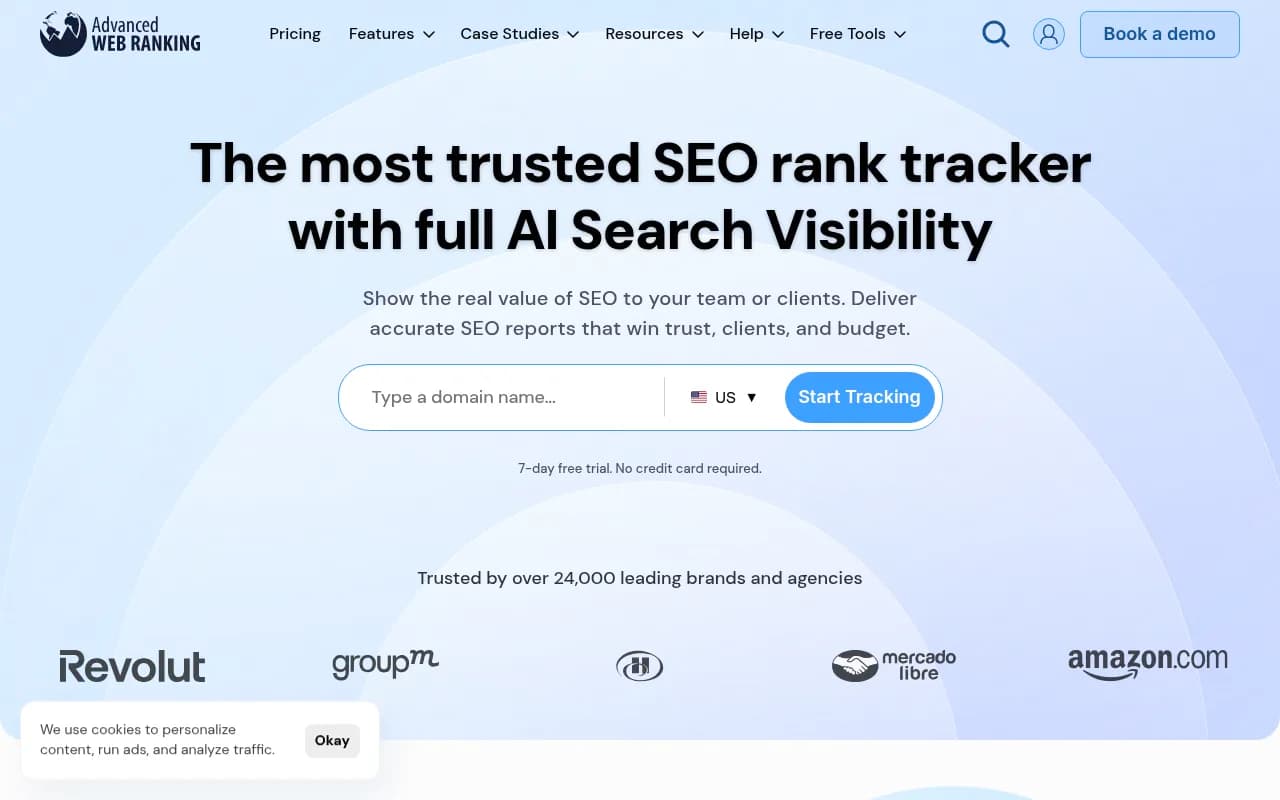
Advanced Web Ranking has been around for over 20 years. That's not a trivial fact — it means the platform has survived multiple major search paradigm shifts and has a data infrastructure that newer tools simply don't have yet. In 2026, its main competitive advantage is reporting flexibility combined with a pricing model that doesn't punish you for tracking more keywords.
Reporting that agencies actually want
AWR's white-label reporting is genuinely good. You can build custom dashboards, schedule automated reports, and deliver them directly to clients under your own branding. The level of customization is higher than what most competitors offer — you can mix and match data sources, set custom date ranges, and build views that match how each client thinks about their business.
For agencies managing 20+ clients with different reporting requirements, this matters a lot. AWR handles it better than SE Ranking, which has solid reporting but less flexibility in how you structure and present data.
Scalability without keyword caps
AWR's pricing model is based on update frequency and the number of websites, not strictly on keyword count. This makes it more predictable for large-scale tracking operations. An agency tracking 500 keywords per client across 30 clients won't hit a pricing wall the same way they might with AccuRanker's keyword-based tiers.
AI Brand Visibility feature
AWR added an AI Brand Visibility module that tracks how your brand appears in AI-generated answers. It's a newer addition and not as deep as dedicated AI visibility platforms, but it's a meaningful step. For agencies that want a single tool for both traditional rank tracking and basic AI monitoring, AWR's inclusion of this feature reduces the need to add another subscription.
Where AWR falls short
AWR's interface feels more complex than AccuRanker's. There's a learning curve, and onboarding new team members takes longer. The content creation and optimization tools are minimal — AWR is a tracking and reporting platform, not a content platform. If your workflow involves briefing and writing content based on rank data, you'll need additional tools.
SE Ranking: the all-in-one option for growing teams
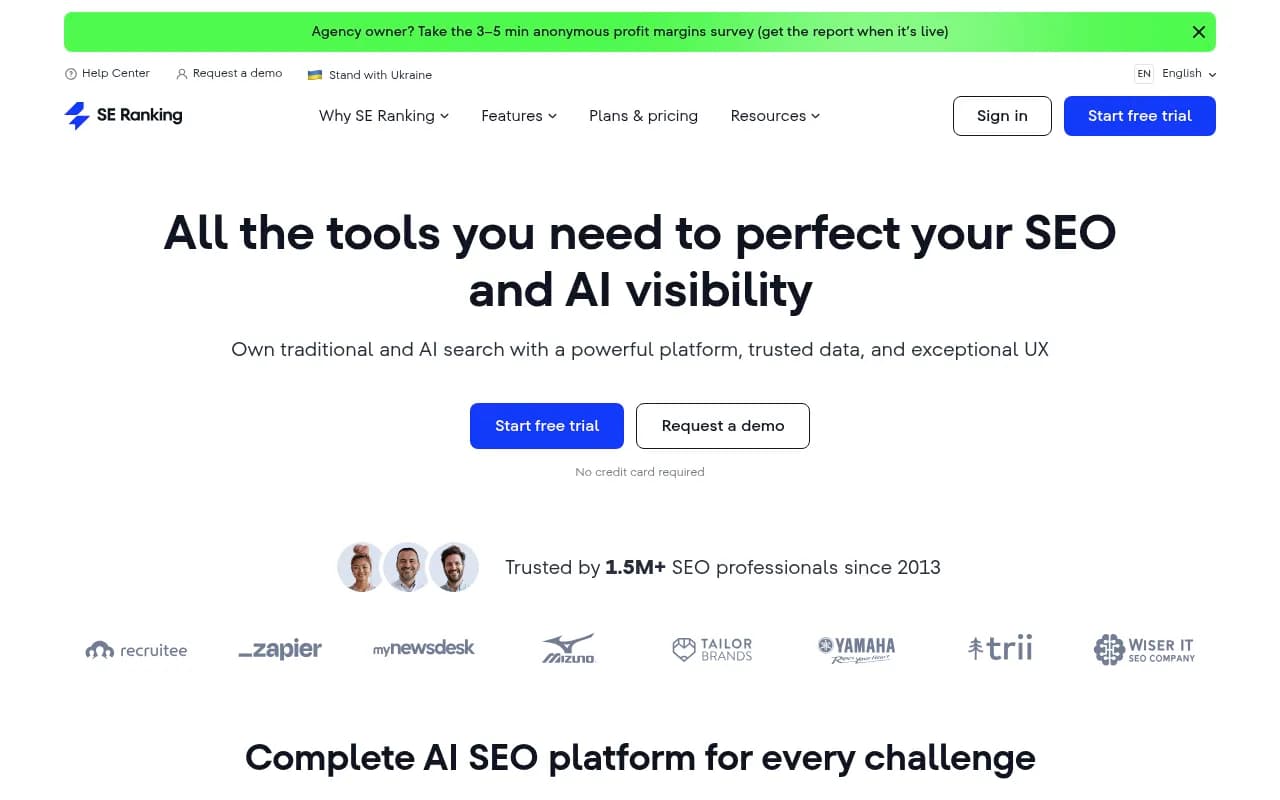
SE Ranking has positioned itself as the most complete platform for teams that want rank tracking, content tools, site auditing, and AI visibility in a single subscription. In 2026, that positioning is more compelling than it was two years ago, because the number of separate tools you need to manage has grown.
AI Overviews tracking built in
SE Ranking's research team actively tracks AI Overview prevalence, and that data feeds into the platform. You can see which of your tracked keywords trigger AI Overviews, whether your content appears within those overviews, and how that changes over time. This is more developed than what AccuRanker offers and comparable to AWR's newer AI Brand Visibility module.
For teams that need to report on AI visibility alongside traditional rankings, SE Ranking makes that easier without requiring a separate tool.
Content tools that connect to rank data
SE Ranking includes a content editor and content marketing module that lets you optimize pages based on your rank data. If a keyword is dropping, you can jump directly into the content workflow without switching platforms. This integration isn't perfect — dedicated content optimization tools like Surfer SEO or Clearscope go deeper — but for teams that want "good enough" content tools without another subscription, it works.
Pricing structure
SE Ranking uses defined plan tiers rather than AWR's more open-ended model. This makes it easier to predict costs but can create friction when you need to scale beyond a tier. The entry-level plans are genuinely affordable, which is why SE Ranking consistently appears as the recommendation for budget-conscious agencies and in-house teams.
Where SE Ranking falls short
SE Ranking's depth on any individual feature is generally less than a specialist tool. AccuRanker tracks faster and more accurately. AWR reports more flexibly. Dedicated content tools optimize more thoroughly. SE Ranking is the right choice when you want 80% of the capability across all areas without managing five different subscriptions — but if you need the best-in-class version of any single capability, you'll likely outgrow it.
Head-to-head comparison
| Feature | AccuRanker | Advanced Web Ranking | SE Ranking |
|---|---|---|---|
| Update frequency | On-demand + daily | Daily (frequency varies by plan) | Daily |
| Pixel Tracking | Yes | No | No |
| AI Overviews tracking | Basic | Yes (AI Brand Visibility module) | Yes (dedicated reporting) |
| LLM visibility (ChatGPT, Perplexity) | No | Limited | Limited |
| White-label reporting | Yes | Yes (most flexible) | Yes |
| Built-in content tools | No | No | Yes |
| Site audit | No | No | Yes |
| Pricing model | Per keyword | Per website/frequency | Tiered plans |
| Best for | Agencies needing speed + SERP diagnostics | Agencies needing flexible reporting at scale | Teams wanting all-in-one at lower cost |
The gap none of them fully close: LLM visibility
Here's the honest problem with all three tools: they track Google (and sometimes Bing), and they're adding AI Overviews monitoring. But tracking how your brand appears in actual LLM responses — when someone asks ChatGPT "what's the best CRM for small businesses?" or asks Perplexity "which accounting software should I use?" — is a fundamentally different problem.
AI Overviews are still Google's product. Tracking them is an extension of traditional SERP tracking. But ChatGPT, Claude, Perplexity, Gemini, and Grok generate answers from their own training data and retrieval systems. Whether your brand gets cited in those answers depends on factors that traditional rank tracking tools weren't built to measure.
For brands that care about LLM visibility — and in 2026, most marketing teams should — you need a platform built specifically for that problem. Promptwatch tracks brand mentions and citations across 10 AI models, shows you which prompts your competitors are visible for that you're not, and helps you create content to close those gaps.

The distinction matters: AccuRanker, AWR, and SE Ranking tell you where you rank in Google. A dedicated AI visibility platform tells you whether AI models recommend you when someone asks a question in your category.
Which tool should you use?
The right answer depends on your primary workflow:
Choose AccuRanker if you're an agency or in-house team where rank data accuracy and update speed are the priority. You need to know about ranking changes fast, you want pixel-depth data to understand real on-page visibility, and you're comfortable using separate tools for content and auditing.
Choose Advanced Web Ranking if you run an agency with complex, multi-client reporting requirements. You need white-label reports that look professional, you're tracking a large number of keywords across many sites, and you want a pricing model that scales without keyword-count anxiety.
Choose SE Ranking if you're a growing team or agency that wants rank tracking, AI Overview monitoring, content tools, and site auditing under one subscription. You're not looking for the deepest implementation of any single feature — you want a capable, integrated platform that doesn't require managing five different tools.
Add a dedicated AI visibility tool regardless of which rank tracker you choose. The three platforms above cover Google and its AI Overviews. They don't tell you how ChatGPT, Perplexity, or Claude respond when users ask questions in your category. That's a separate visibility problem that requires a separate solution.
What to watch in the second half of 2026
A few things are worth keeping an eye on as the year continues:
Google's AI Mode (the more conversational, AI-first search experience) is expanding. As it does, the line between "Google SERP tracking" and "AI search tracking" will blur further. Expect all three platforms to add more AI Mode coverage.
The num=100 parameter that many rank trackers used to pull bulk SERP data was disabled by Google in late 2025. Tools that relied on it had to rebuild their data infrastructure. This is worth asking about when evaluating any rank tracker — how they collect data now matters for accuracy.
Zero-click search continues to grow. With over 60% of searches ending without a click, visibility metrics (impressions, AI citations, Share of Voice) are becoming more important than traffic-based metrics. The tools that help you measure and improve visibility — not just rank position — will be the ones that matter most going into 2027.
Traditional rank tracking isn't dead. It's just no longer sufficient on its own. The teams that combine solid SERP tracking with dedicated AI visibility monitoring will have a clearer picture of where they actually stand than those relying on either approach alone.