Key takeaways
- Semrush has the most AI-adjacent features of the five platforms, but most are content writing aids, not true AI search visibility tools
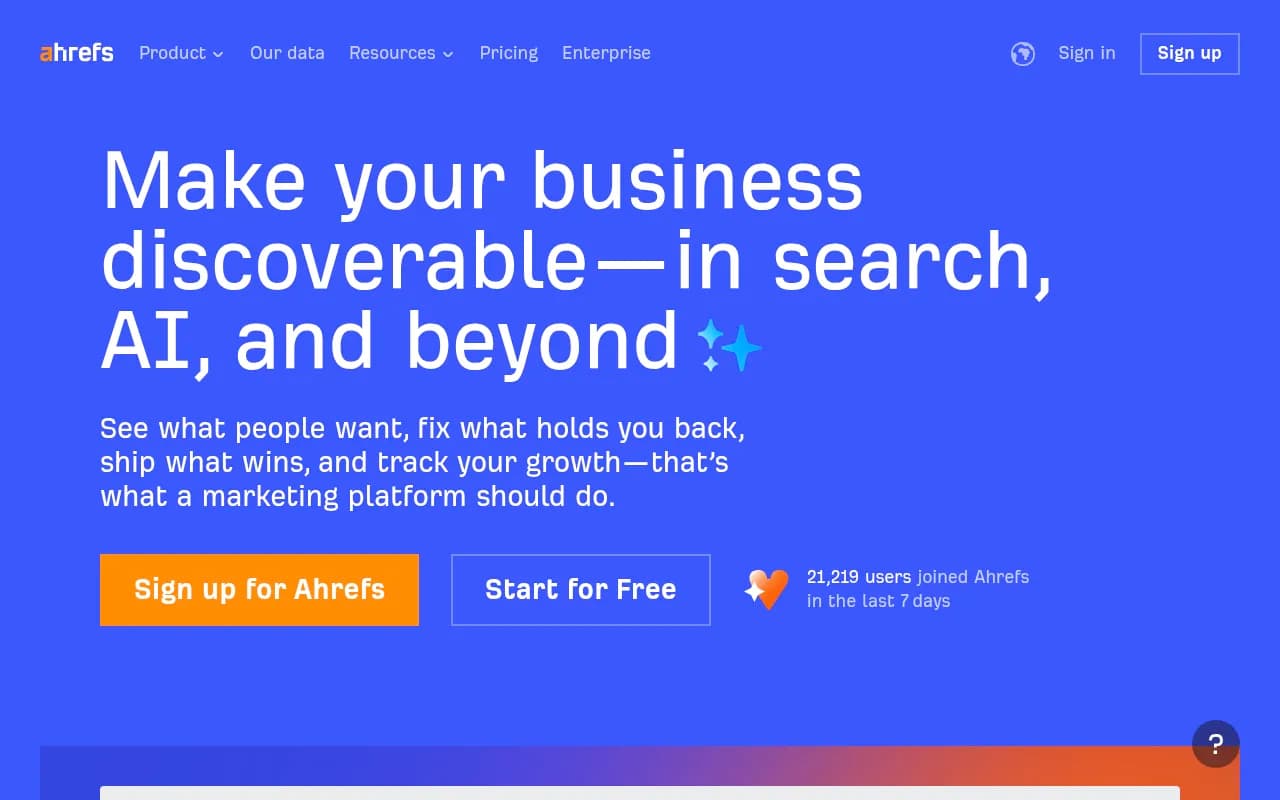
- Ahrefs added an AI Overviews tracking layer in 2025 and has the strongest backlink and keyword data, making it the best all-rounder for traditional SEO with some AI search awareness
- Moz, SE Ranking, and Mangools lag significantly on AI search features -- they're solid for traditional SEO but won't tell you much about how you appear in ChatGPT or Perplexity
- None of these five platforms were built for Generative Engine Optimization (GEO); if AI search visibility is your priority, you'll need a dedicated tool alongside whichever platform you choose
- Price-to-feature ratio varies enormously: Mangools is the budget pick, SE Ranking is the mid-market value play, and Semrush/Ahrefs are the enterprise-grade options
The SEO tool market in 2026 looks a lot like it did in 2022 on the surface -- Semrush, Ahrefs, and Moz still dominate the conversation, SE Ranking has carved out a strong mid-market position, and Mangools remains the go-to for budget-conscious users. But underneath that familiar landscape, something has shifted.
AI search engines -- ChatGPT, Perplexity, Google AI Overviews, Gemini -- now handle a meaningful share of informational queries. Brands that rank well in Google don't automatically appear in AI-generated answers. And the five platforms in this comparison were all built before that reality existed.
So the real question isn't just "which has the best keyword database?" It's: which of these platforms has actually adapted to AI search, and how far does that adaptation go?
Let's find out.
The five platforms at a glance
Before getting into AI features specifically, here's where each platform stands in 2026.
| Platform | Starting price | Best known for | AI search features | Free trial |
|---|---|---|---|---|
| Semrush | ~$139/mo | All-in-one breadth, PPC + SEO | AI writing tools, limited AI Overviews data | 7 days |
| Ahrefs | ~$129/mo | Backlink index, content research | AI Overviews tracking (basic), AI content tools | Webmaster Tools (free) |
| Moz Pro | ~$99/mo | DA metric, local SEO, beginner UX | Minimal -- no dedicated AI search features | 30 days |
| SE Ranking | ~$65/mo | Value for money, rank tracking | Basic AI Overviews monitoring | 14 days |
| Mangools | ~$29/mo | Simplicity, affordability | Essentially none | 10 days |
Semrush: the feature-rich option that's still catching up on AI search
Semrush has the widest feature set of any platform in this comparison. Its keyword database (25.5 billion keywords) is larger than Ahrefs'. Its backlink database (36 billion) is the biggest in the industry. And it has invested heavily in AI-powered content tools over the past two years.
But "AI features" in Semrush mostly means AI-assisted writing, not AI search visibility tracking. The ContentShake AI tool generates SEO-optimized drafts. The Writing Assistant scores your content against competitors. These are useful -- but they're about creating content for Google, not understanding how AI engines like ChatGPT or Perplexity cite and recommend content.
Where Semrush does touch AI search: it added some Google AI Overviews tracking to its Position Tracking module. You can see whether a keyword triggers an AI Overview and whether your site appears in it. That's genuinely useful. The limitation is that it uses a fixed set of prompts rather than letting you define custom queries, which means you're seeing AI search behavior through Semrush's lens, not your customers' actual questions.
For agencies and larger teams, Semrush's API and integrations are the best in this group -- it connects to more third-party tools than any competitor here.
Where Semrush wins: Feature breadth, PPC + SEO in one place, largest databases, API flexibility.
Where it falls short on AI search: No visibility into ChatGPT, Perplexity, Gemini, or Claude. AI Overviews tracking exists but uses fixed prompts. No content gap analysis tied to AI responses.
Ahrefs: the most credible all-rounder, with growing AI awareness
Ahrefs has earned its reputation for having the most accurate and comprehensive backlink data in the industry. If link building is central to your SEO strategy, Ahrefs is non-negotiable -- the data is more frequently updated and more reliable than what you get from Semrush or Moz.
In 2025, Ahrefs added AI Overviews tracking to its rank tracking module. Like Semrush, you can see which keywords trigger AI Overviews and whether your pages appear in them. Ahrefs also launched an AI content helper that suggests improvements based on competitor content analysis.
The honest assessment: Ahrefs' AI search features are slightly more integrated than Semrush's in terms of the rank tracking workflow, but they're similarly limited in scope. You're not getting visibility into non-Google AI engines. You can't track how ChatGPT or Perplexity cite your brand. And the AI content tools, while competent, are table stakes at this point.
What Ahrefs does better than anyone else here is the core data quality. Keywords Explorer is excellent. Site Explorer gives you a complete picture of any domain's organic performance. Content Explorer surfaces link-worthy content opportunities that other tools miss.
Where Ahrefs wins: Backlink data quality, keyword research depth, Content Explorer, overall data accuracy.
Where it falls short on AI search: Same limitations as Semrush -- Google AI Overviews only, no multi-LLM tracking, no AI response analysis.
Moz Pro: solid fundamentals, minimal AI search investment
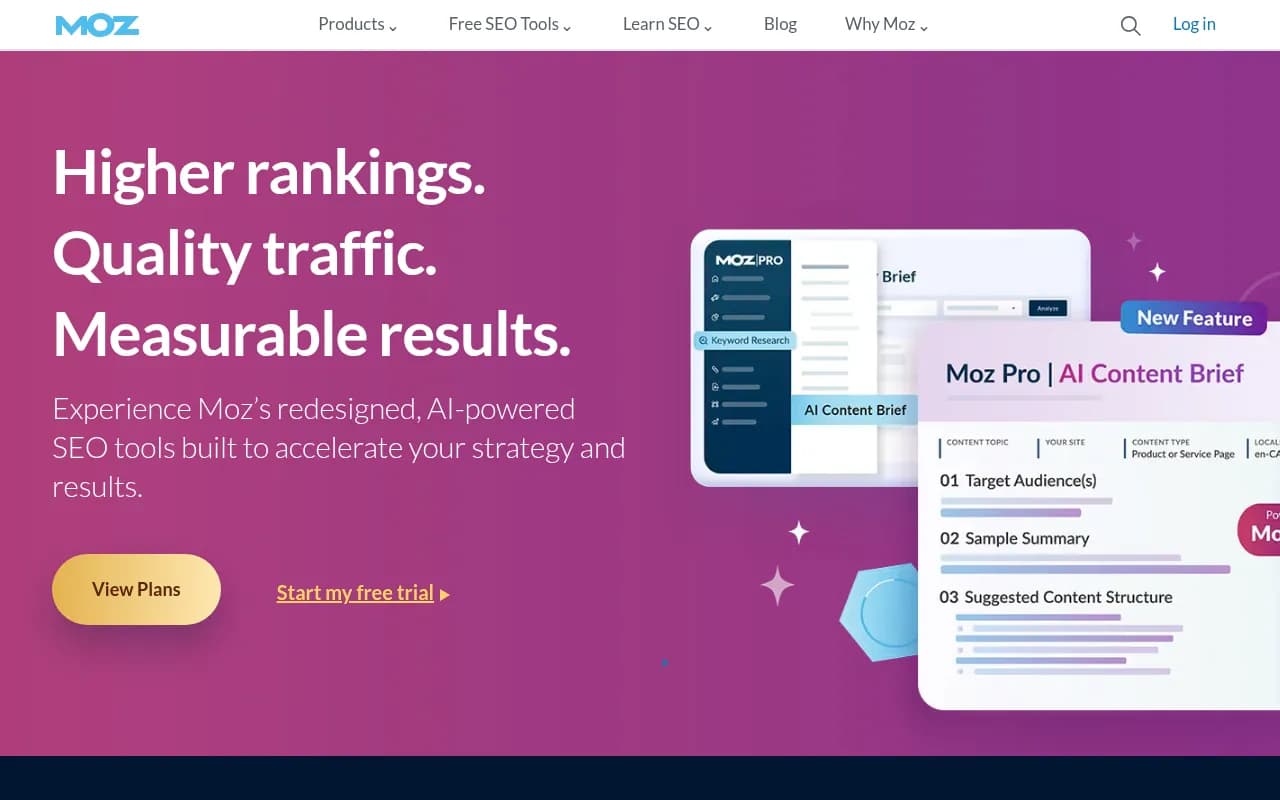
Moz invented Domain Authority, and that metric still carries weight in the industry even if its methodology has been questioned. Moz Pro is the most beginner-friendly platform in this comparison -- the interface is clean, the onboarding is good, and the 30-day free trial is the most generous of the five.
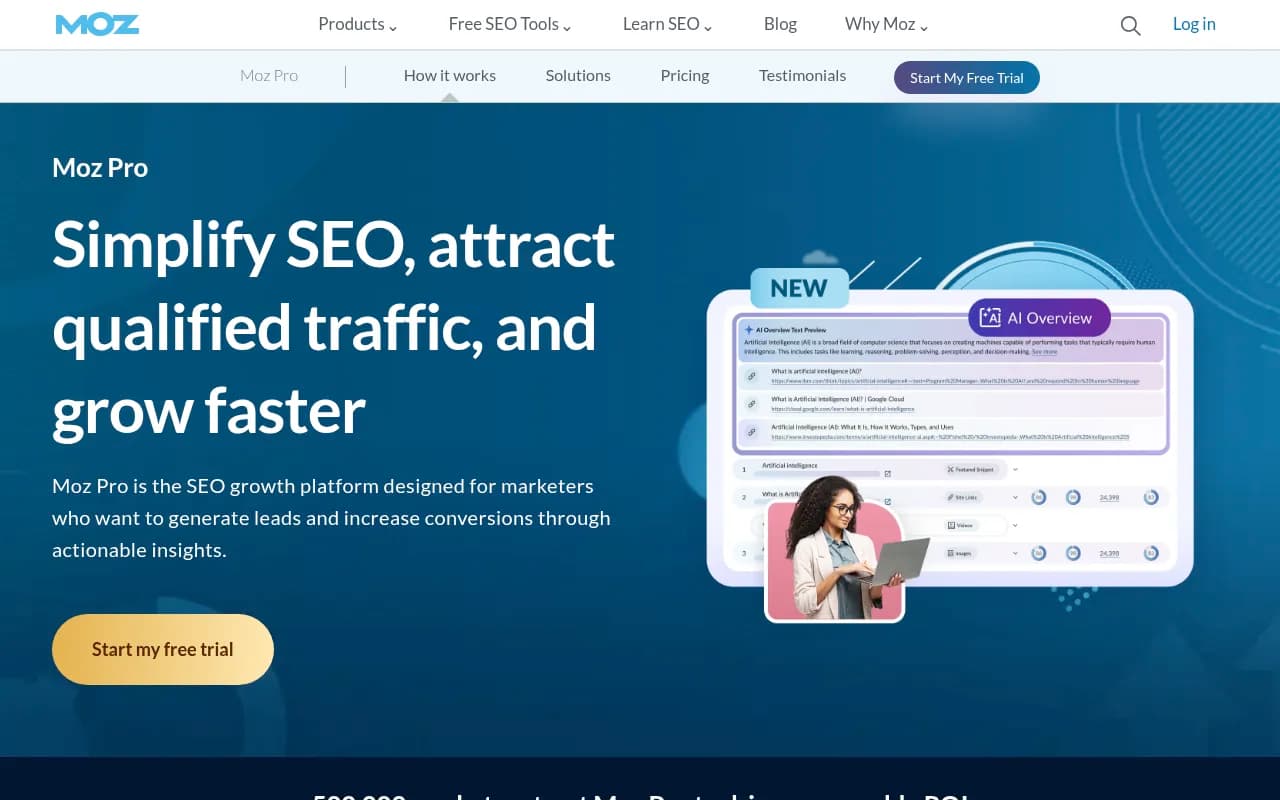
For local SEO specifically, Moz has historically been strong. Moz Local handles listing management well, and the rank tracking includes local pack results.
But on AI search features, Moz is the weakest of the five. There's no AI Overviews tracking in the rank tracker. No AI content generation tools beyond basic writing suggestions. No visibility into how AI engines treat your brand. Moz has been slower to adapt to the AI search shift than its competitors, and that gap is noticeable in 2026.
If you're running a local business or just starting with SEO, Moz Pro is a fine choice. If AI search visibility matters to your strategy, it's not the right primary tool.
Where Moz wins: Beginner UX, 30-day trial, local SEO, DA metric for link prospecting.
Where it falls short on AI search: No meaningful AI search features. The most behind of the five platforms on this dimension.
SE Ranking: the value play with better-than-expected AI Overviews coverage
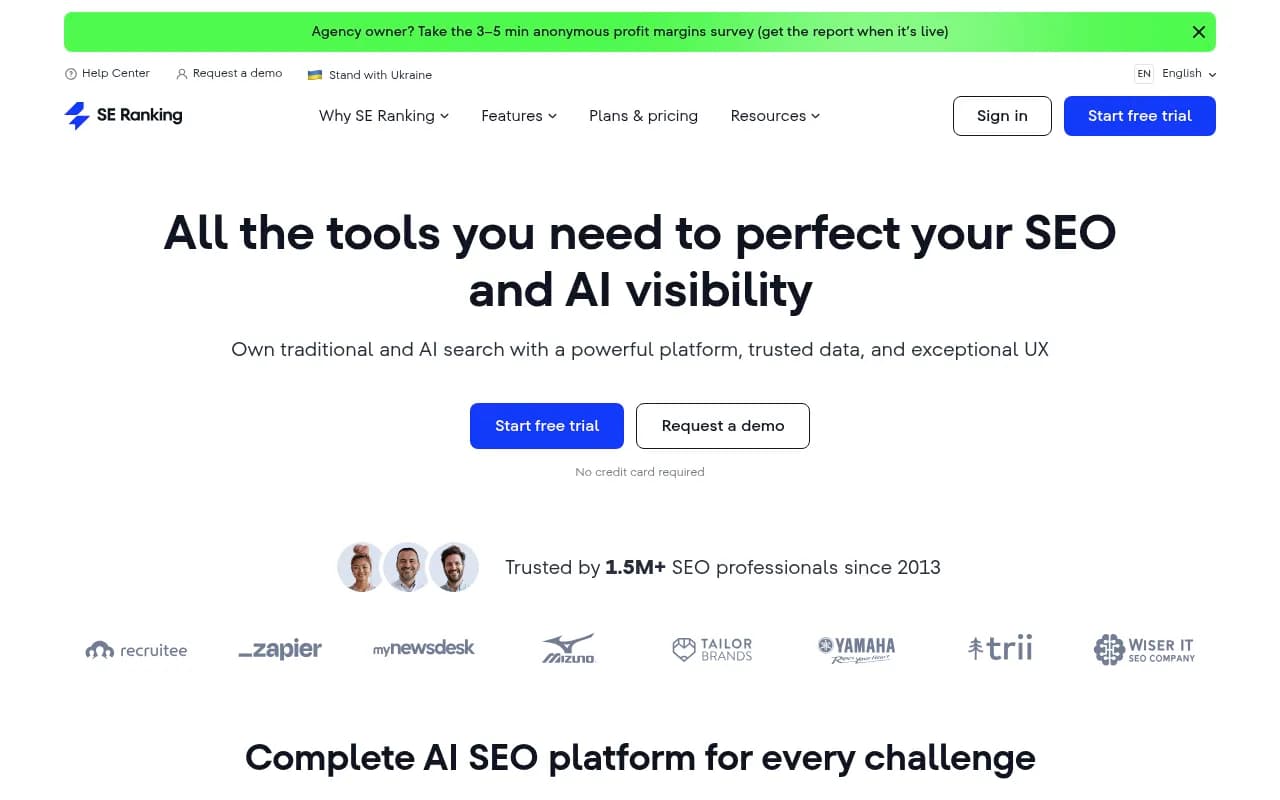
SE Ranking has quietly become one of the more interesting platforms in this space. At roughly half the price of Semrush or Ahrefs, it covers the core SEO workflow competently -- rank tracking, site audits, keyword research, backlink analysis, and competitor research.
On AI search, SE Ranking has done more than Moz and Mangools. It added AI Overviews tracking to its rank tracker, and it has a content editor with AI writing assistance. The data quality isn't quite at Ahrefs or Semrush levels, but for most small-to-mid-sized teams, it's close enough.
SE Ranking also launched SE Visible, a separate product specifically for AI search visibility monitoring. That's worth noting -- it signals that SE Ranking sees AI search as a distinct problem worth solving, not just a feature to bolt onto the existing platform.
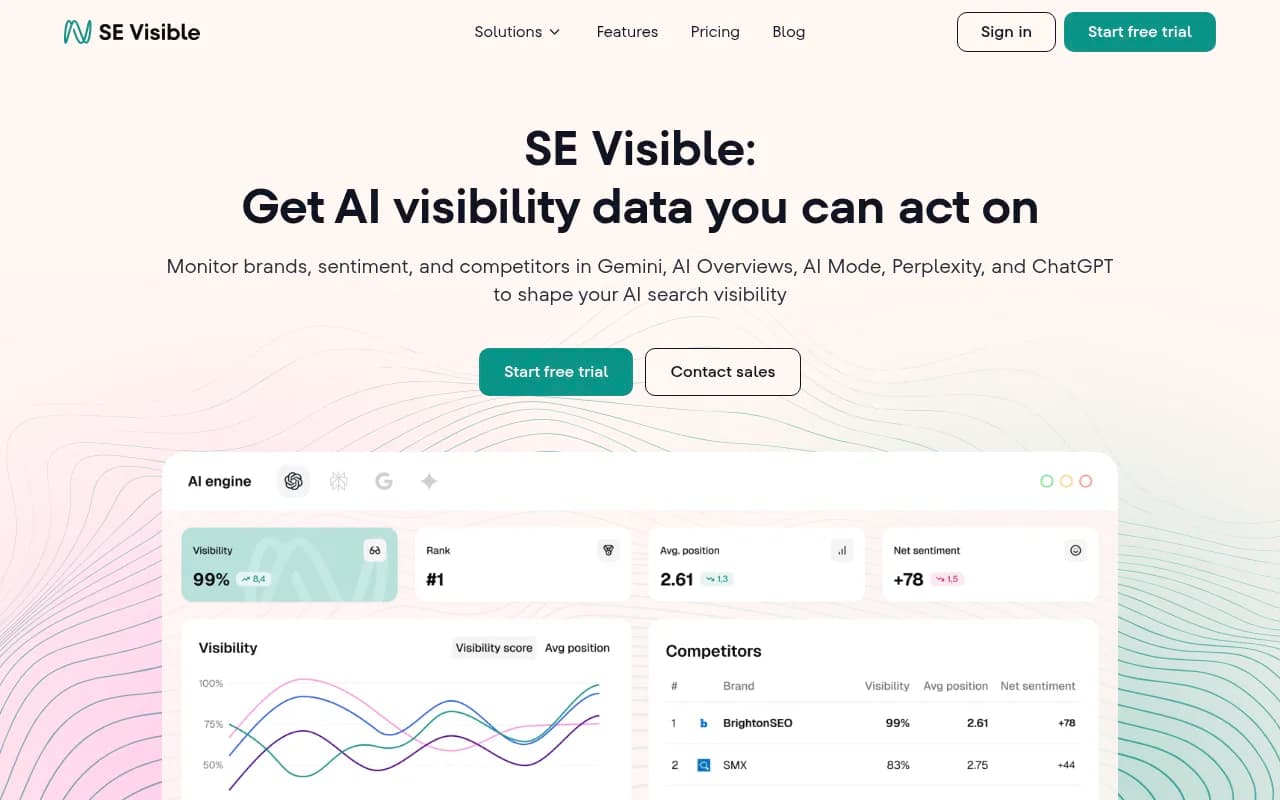
The limitation is the same as the others: SE Ranking's AI search coverage is primarily Google AI Overviews. Multi-LLM tracking (ChatGPT, Perplexity, Gemini, Claude) isn't part of the core platform.
Where SE Ranking wins: Price-to-feature ratio, rank tracking accuracy, decent AI Overviews monitoring, 14-day trial.
Where it falls short on AI search: Limited to Google AI Overviews, no multi-LLM visibility, SE Visible is a separate product rather than integrated.
Mangools: great for traditional SEO, not built for AI search
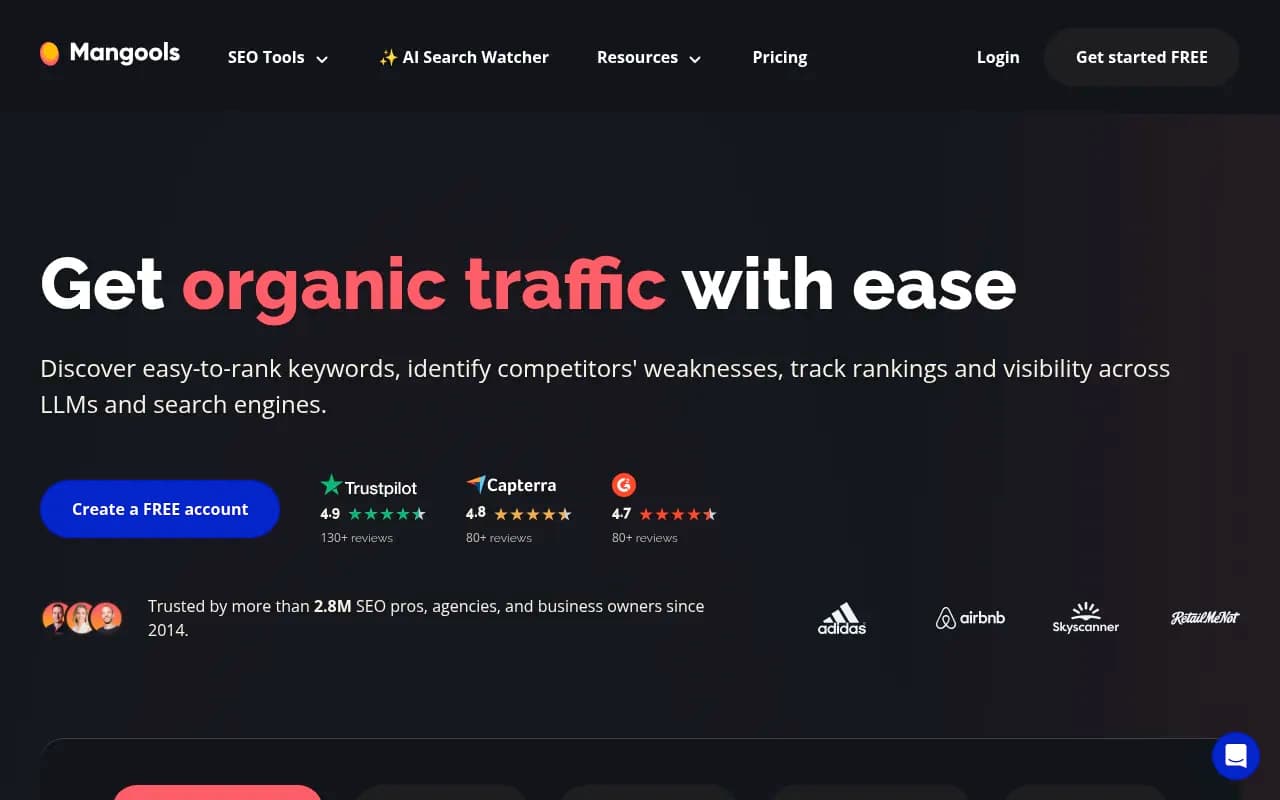
Mangools is the most affordable option here, and it's genuinely good at what it does. KWFinder is one of the cleanest keyword research tools available -- the interface is intuitive, the difficulty scores are reliable, and the low-competition keyword discovery is excellent for bloggers and small businesses.
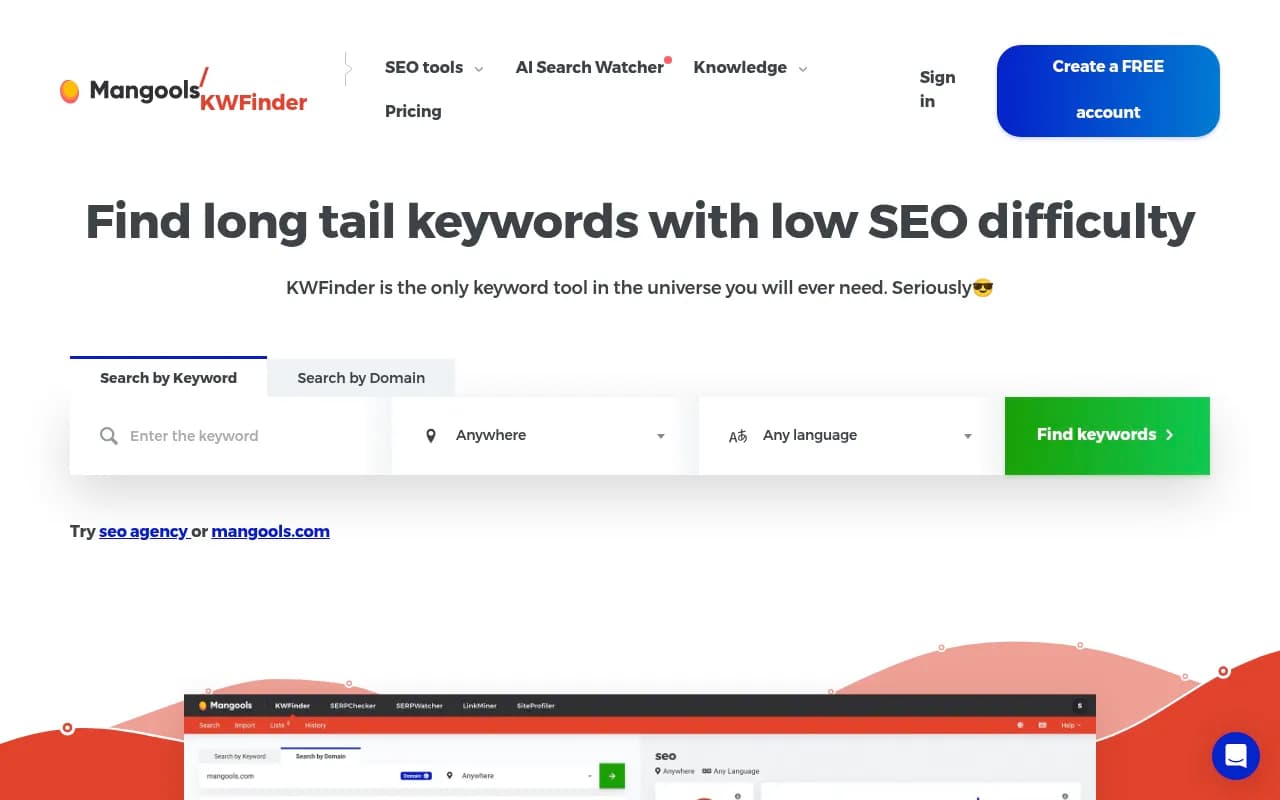
But Mangools wasn't built for AI search, and it hasn't meaningfully invested in that direction. There's no AI Overviews tracking, no AI content generation, no LLM visibility monitoring. If you're a blogger or small business owner focused on traditional Google rankings, Mangools is a solid, affordable choice. If AI search is part of your strategy, you'll need to look elsewhere.
Where Mangools wins: Price ($29/mo), simplicity, KWFinder's keyword research UX, SERP analysis.
Where it falls short on AI search: Essentially no AI search features at all.
Head-to-head: AI search features compared
This is the dimension most comparison articles gloss over, so let's be specific.
| Feature | Semrush | Ahrefs | Moz | SE Ranking | Mangools |
|---|---|---|---|---|---|
| Google AI Overviews tracking | Yes (fixed prompts) | Yes | No | Yes | No |
| Custom prompt tracking | No | No | No | No | No |
| ChatGPT visibility | No | No | No | No | No |
| Perplexity visibility | No | No | No | No | No |
| Gemini/Claude/Grok tracking | No | No | No | No | No |
| AI content writing tools | Yes (ContentShake, SWA) | Basic | Basic | Basic | No |
| Content gap vs AI responses | No | No | No | No | No |
| AI crawler log analysis | No | No | No | No | No |
| Citation analysis (LLMs) | No | No | No | No | No |
The pattern is clear: all five platforms have invested in Google AI Overviews to varying degrees, but none of them track how AI engines like ChatGPT, Perplexity, or Gemini actually respond to user queries about your brand or category. That's a significant gap given that these engines now handle hundreds of millions of queries daily.
The gap these platforms don't fill
Here's the honest reality: if your goal is to understand and improve how your brand appears in AI search engines -- not just Google AI Overviews, but ChatGPT, Perplexity, Gemini, Claude, Grok, and others -- none of these five platforms will get you there.
They're traditional SEO tools with AI features bolted on. That's not a criticism; it's just what they are. They were built to help you rank in Google's blue links, and they're still excellent at that.
For teams that need to go further -- tracking AI citations, identifying content gaps against AI responses, understanding which prompts competitors appear for but you don't -- a dedicated GEO platform is the logical complement. Promptwatch is built specifically for this: it tracks brand visibility across 10 AI models, identifies answer gaps, and generates content designed to fill them.

The distinction matters because the action loop is different. Traditional SEO tools show you keyword rankings and suggest content improvements. A GEO platform shows you which AI-generated answers mention competitors but not you, then helps you create content that closes that gap. Those are fundamentally different workflows.
Which platform should you choose?
The right answer depends on what you actually need.
Choose Semrush if you need the broadest feature set, run PPC alongside SEO, or need robust API integrations for custom reporting. It's the most complete all-in-one platform, even if its AI search features are limited.
Choose Ahrefs if backlink analysis and content research are central to your strategy. The data quality is the best in the group, and the AI Overviews tracking is well-integrated into the rank tracking workflow.
Choose Moz Pro if you're newer to SEO, focused on local search, or want the longest free trial to evaluate the platform properly. Don't choose it primarily for AI search features.
Choose SE Ranking if you want solid core SEO coverage at a significantly lower price point. It's the best value in this comparison, and its AI Overviews tracking is better than Moz's.
Choose Mangools if you're a blogger, freelancer, or small business owner who needs clean, affordable keyword research and rank tracking without the complexity of a full SEO suite.
Add a dedicated GEO tool if AI search visibility is a real priority for your business. None of these five platforms track multi-LLM visibility, analyze AI-generated answers, or help you create content specifically engineered to appear in AI responses.
A note on pricing and trials
| Platform | Entry price | Free option | Best trial |
|---|---|---|---|
| Semrush | ~$139/mo | Limited free tier | 7-day Pro trial |
| Ahrefs | ~$129/mo | Ahrefs Webmaster Tools (free, limited) | No full trial |
| Moz Pro | ~$99/mo | None | 30-day free trial |
| SE Ranking | ~$65/mo | None | 14-day free trial |
| Mangools | ~$29/mo | None | 10-day free trial |
Moz's 30-day trial is the most generous for evaluation purposes. Ahrefs Webmaster Tools gives you free access to site audit and some backlink data for your own domain, which is useful for smaller sites that don't need the full platform.
Bottom line
In 2026, all five of these platforms are competent SEO tools. Semrush and Ahrefs are the clear leaders on features and data quality. SE Ranking is the best value. Moz is the most approachable for beginners. Mangools is the budget pick.
On AI search features specifically, the honest verdict is that none of them are purpose-built for it. They've added Google AI Overviews monitoring because they had to, but tracking how your brand appears in ChatGPT, Perplexity, or Gemini isn't something any of these platforms does well. That's not a knock on them -- it's just a different problem that requires different tooling.
If you're serious about AI search visibility, the practical approach in 2026 is to use one of these platforms for traditional SEO (Ahrefs or Semrush for most teams, SE Ranking if budget matters) and pair it with a dedicated GEO platform for the AI search layer. The two workflows complement each other rather than compete.