Key takeaways
- Klaviyo is the strongest pick for e-commerce brands that want deep Shopify/WooCommerce integration and revenue-tied automation -- but you'll pay for it as your list grows.
- Brevo is the best value option for smaller stores and multi-channel senders, especially if you want SMS and WhatsApp alongside email without a steep price jump.
- ActiveCampaign has the most powerful automation builder of the six, making it ideal for complex customer journeys -- though it's overkill if you just need basic flows.
- Mailchimp remains the easiest entry point, but its pricing has crept up and its e-commerce features lag behind Klaviyo and Omnisend.
- Omnisend is purpose-built for e-commerce and punches above its weight on automation pre-sets, SMS, and push notifications at a mid-range price.
- MailerLite is the best choice if you're budget-conscious and want a clean, modern interface without sacrificing core automation.
Picking an email marketing platform for an e-commerce brand in 2026 is genuinely harder than it was three years ago. Every tool has gotten better. Most now offer automation, segmentation, SMS, and some form of AI-assisted content. The differences that actually matter -- how well a platform connects to your store data, how granular the segmentation gets, and what you're paying per contact -- are buried under nearly identical feature lists.
This comparison cuts through that. Six platforms, honest assessments, and a clear recommendation for each type of brand.
The six platforms at a glance
Before going deep, here's a side-by-side view of the basics:
| Platform | Best for | Free plan | Paid starts at | SMS included | Native e-commerce focus |
|---|---|---|---|---|---|
| Mailchimp | Beginners, simple newsletters | Yes (500 contacts) | ~$13/mo | Add-on | Moderate |
| Brevo | Budget multi-channel senders | Yes (300 emails/day) | ~$9/mo | Yes | Moderate |
| ActiveCampaign | Complex automation, B2B/B2C hybrid | No | ~$15/mo | Add-on | Moderate |
| Klaviyo | E-commerce brands, Shopify stores | Yes (250 contacts) | ~$20/mo | Yes (separate) | Strong |
| Omnisend | E-commerce, omnichannel | Yes (500 emails/mo) | ~$16/mo | Yes | Strong |
| MailerLite | Budget-conscious, clean UX | Yes (1,000 contacts) | ~$9/mo | No | Basic |
Mailchimp
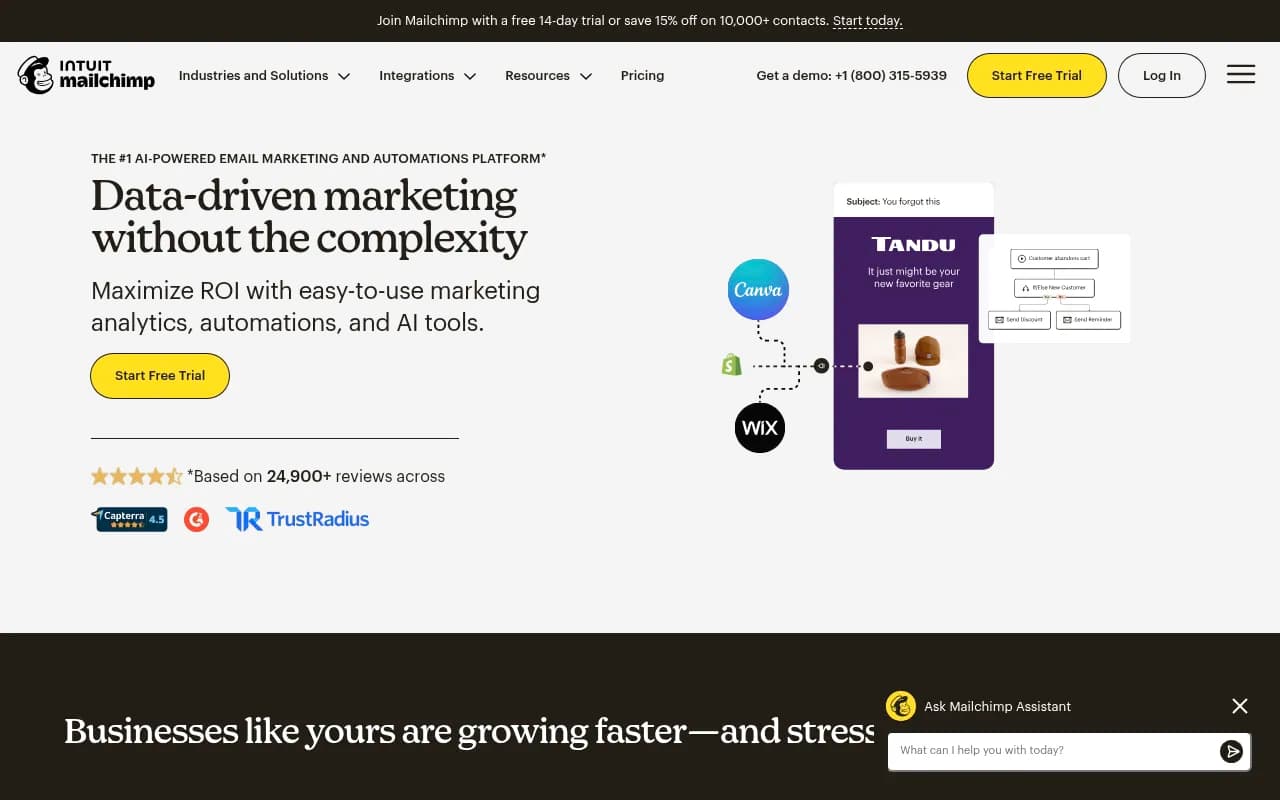
Mailchimp has 11 million users in 2026 -- more than any other email marketing platform by a wide margin. That scale tells you something: it's genuinely easy to use, the brand recognition is enormous, and the free plan is a reasonable starting point for new stores.
The problem is that Mailchimp's pricing has become harder to justify as your list grows. The jump from free to paid is fine, but once you're past 5,000 or 10,000 contacts, you're paying rates that start to look expensive compared to Klaviyo or Omnisend -- platforms that give you meaningfully better e-commerce data in return.
Mailchimp's automation has improved, but it still feels like it was built for newsletters first and e-commerce second. Abandoned cart flows, product recommendation emails, and post-purchase sequences all exist, but the logic isn't as tightly tied to real-time store behavior as Klaviyo's. Segmentation works, but it's not as granular on purchase history and predictive behavior.
Where Mailchimp genuinely shines: the drag-and-drop editor is excellent, the template library is large, and if you're running a content-heavy brand that happens to sell products (rather than a pure e-commerce operation), it handles that use case well.
Good fit for: New stores, content creators selling products, brands that want a simple tool and don't need deep automation.
Brevo
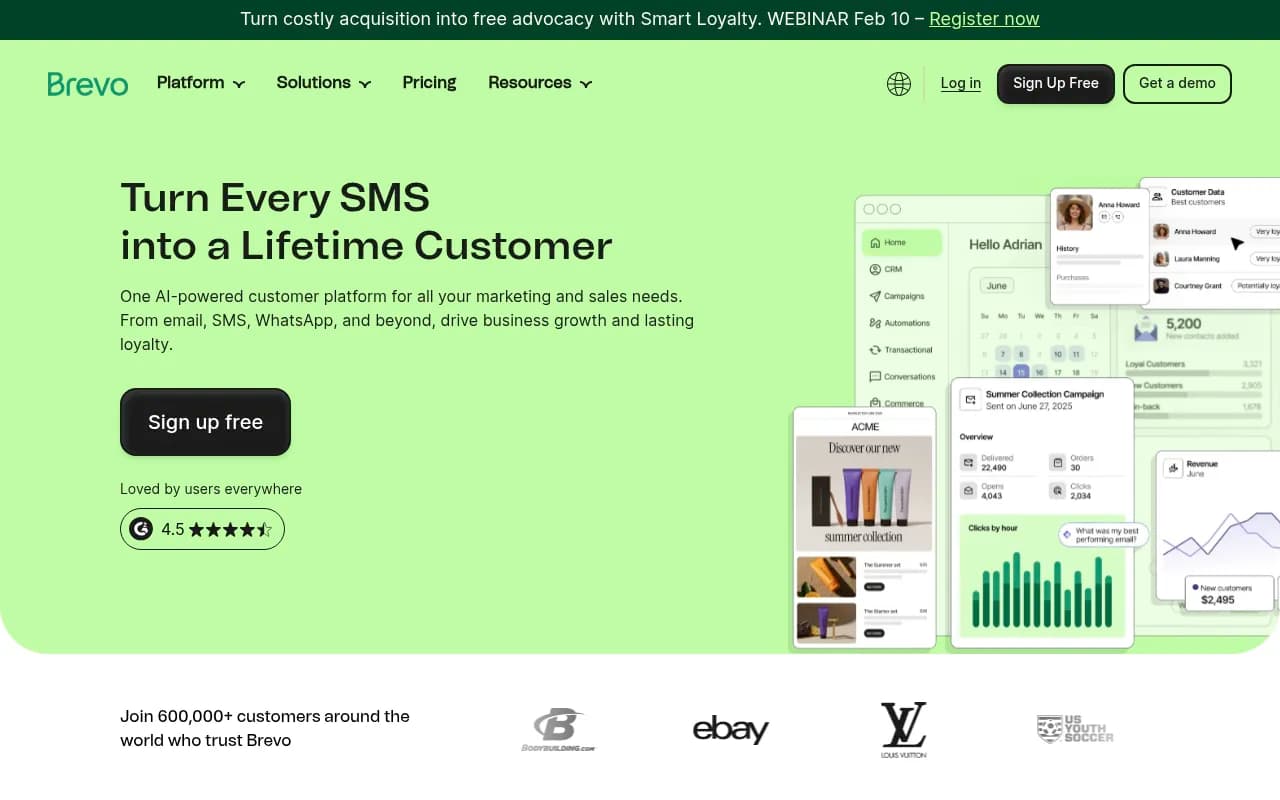
Brevo (formerly Sendinblue) made a smart pivot: instead of competing on contact list size, it charges by email sends. That model is genuinely better for brands with large lists that don't email everyone every day.
The free plan allows 300 emails per day with unlimited contacts -- which is more useful than Mailchimp's 500-contact cap for brands that are building a list but sending infrequently. Paid plans start around $9/month and scale based on send volume rather than list size.
For e-commerce, Brevo's strength is breadth. It handles email, SMS, WhatsApp, live chat, and push notifications from one platform. The automation builder covers the standard e-commerce flows (abandoned cart, welcome series, post-purchase), and the transactional email capability is genuinely strong -- useful if you're sending order confirmations and shipping updates from the same tool.
Where it falls short: the e-commerce data integration isn't as deep as Klaviyo's. You get the flows, but the predictive analytics and revenue attribution aren't as sophisticated. The interface has improved a lot since the Sendinblue days, but it still occasionally feels less polished than Mailchimp or MailerLite.
Good fit for: Budget-conscious brands, multi-channel senders, stores with large lists that send selectively, European brands (Brevo is GDPR-native and has strong EU infrastructure).
ActiveCampaign
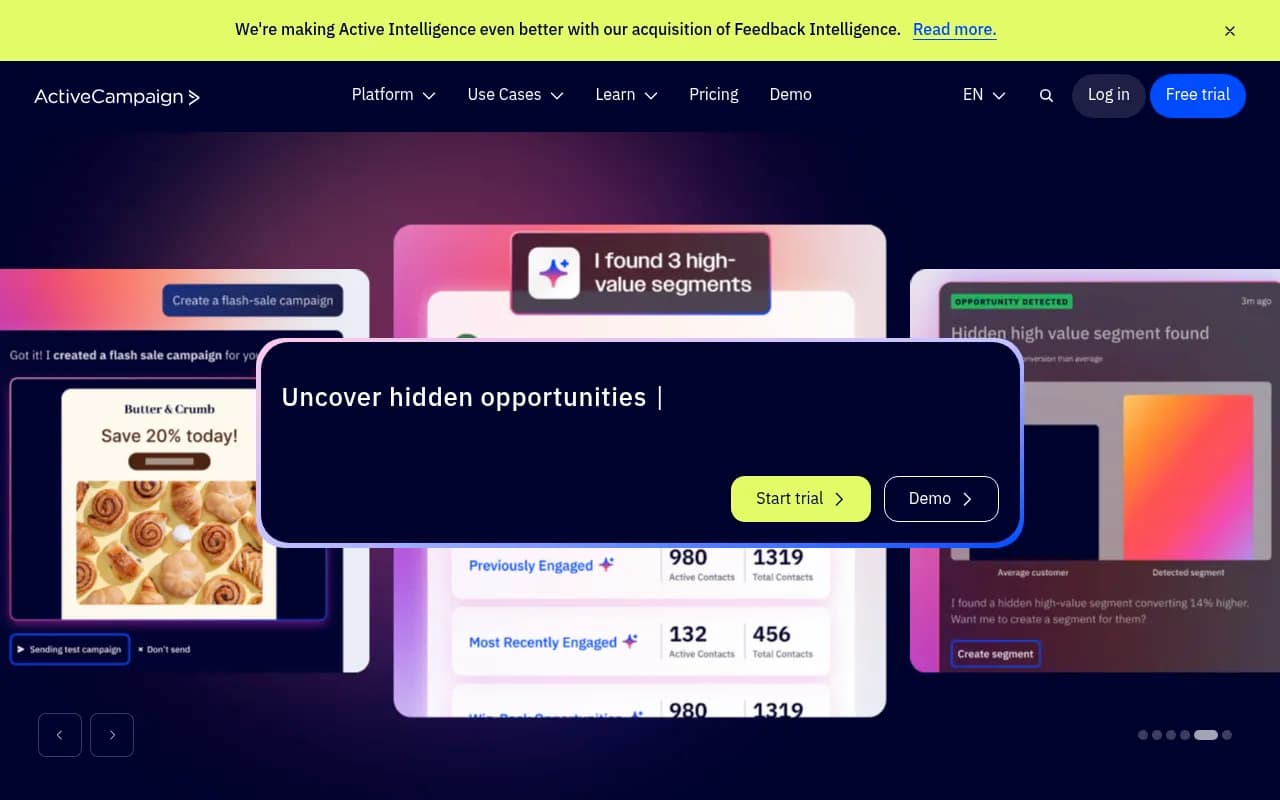
ActiveCampaign has the deepest automation builder of any platform in this comparison. The visual workflow editor lets you build genuinely complex conditional logic -- if/else branches, goal-based triggers, lead scoring, CRM actions, and site tracking all in one flow. For brands running sophisticated lifecycle marketing, nothing else here comes close.
The trade-off is complexity. ActiveCampaign takes longer to learn than any other platform on this list. If you're a small team that wants to set up a welcome series and an abandoned cart flow and move on, you'll probably find it overwhelming. But if you have a marketing ops person or a dedicated email specialist, the ceiling is very high.
E-commerce integrations are solid -- Shopify, WooCommerce, BigCommerce, and WooCommerce all connect cleanly -- but the platform wasn't built specifically for e-commerce the way Klaviyo was. Revenue attribution and product-level segmentation exist but require more setup.
There's no free plan. Paid starts around $15/month for very small lists, but the features that make ActiveCampaign worth it (advanced automation, CRM, site tracking) are on higher tiers.
Good fit for: Brands with complex customer journeys, B2C brands with a B2B component, teams with dedicated email marketers who want maximum automation control.
Klaviyo
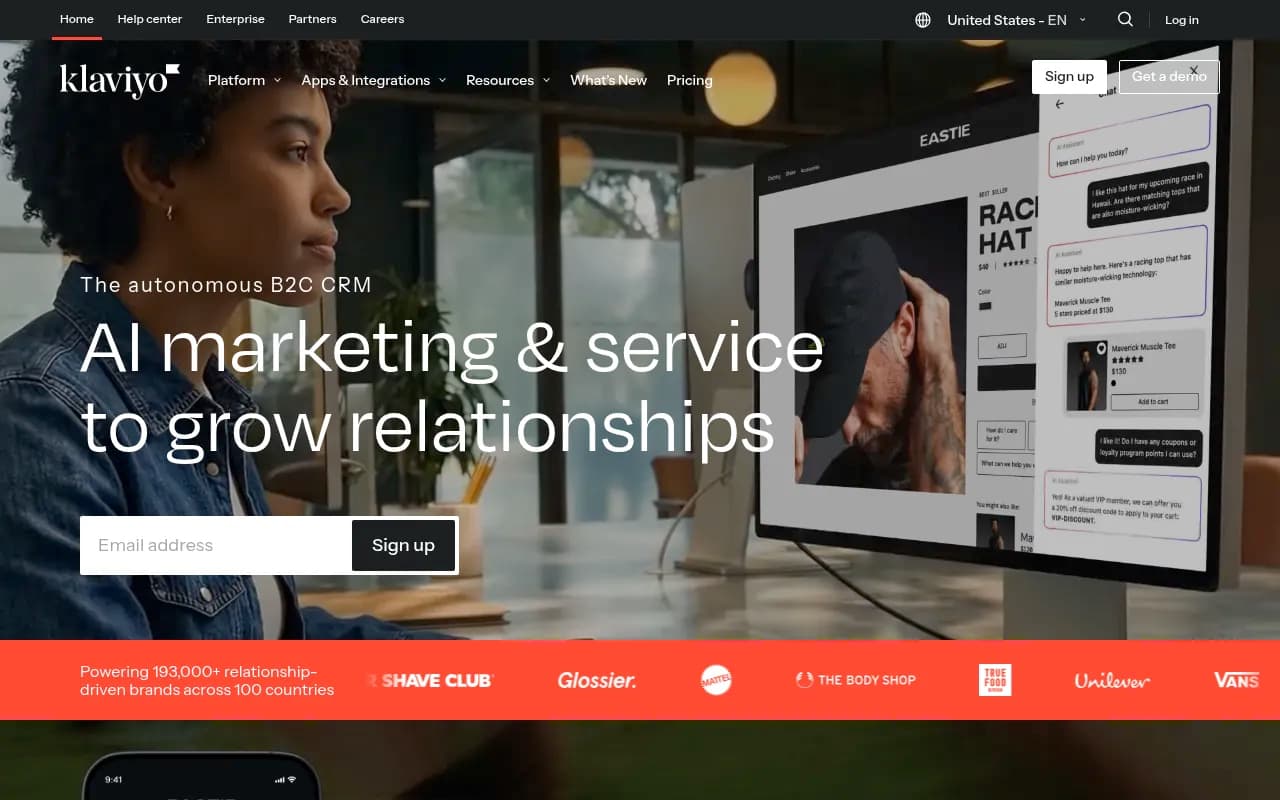
Klaviyo is the closest thing to a default choice for serious e-commerce brands in 2026. The Shopify integration is the tightest of any platform here -- it pulls in real-time purchase data, browsing behavior, product catalog information, and customer lifetime value, then lets you use all of it in segmentation and automation triggers.
The pre-built flows are genuinely good: abandoned cart, browse abandonment, post-purchase, win-back, VIP, and more. But what separates Klaviyo is how it handles data. Predictive analytics estimates when a customer is likely to buy again, what they're likely to spend, and whether they're at risk of churning. You can build segments around those predictions, not just past behavior.
SMS is a separate add-on with its own pricing, but the integration between email and SMS flows is seamless -- you can build a single automation that sends an email first, then follows up with SMS if the email goes unopened.
The pricing model is the main friction point. Klaviyo charges per contact, and the rates climb quickly as your list grows. A 10,000-contact list runs around $150/month for email only. Add SMS and it goes higher. For brands doing meaningful e-commerce revenue, that's usually easy to justify. For stores just getting started, it can feel steep.
Good fit for: Shopify and WooCommerce stores, brands with 1,000+ contacts who want revenue-tied automation, e-commerce teams that want the best data integration available.
Omnisend
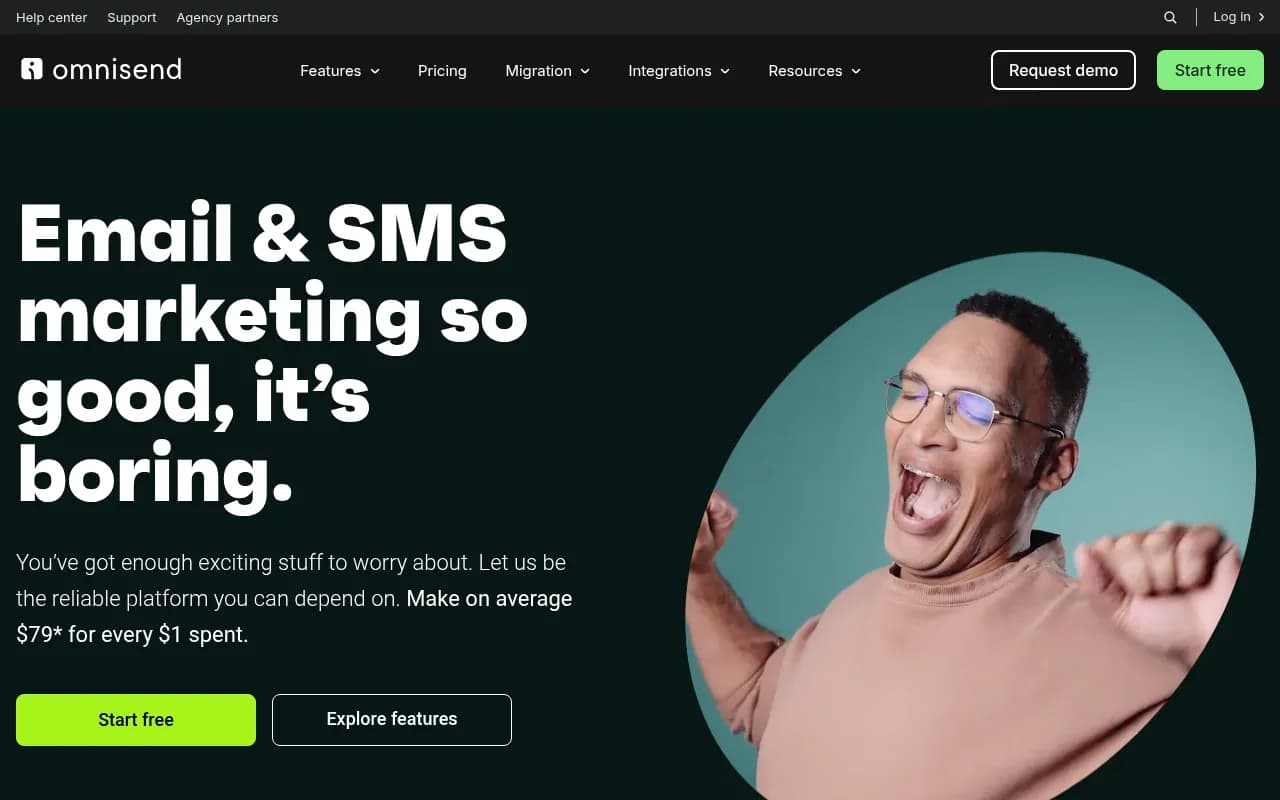
Omnisend sits in an interesting position: it's purpose-built for e-commerce like Klaviyo, but it's meaningfully cheaper and easier to use. The free plan allows 500 emails per month with unlimited contacts, and paid plans start around $16/month.
The automation library is strong. Omnisend ships with pre-built workflows for abandoned cart, product abandonment, welcome series, order confirmation, shipping confirmation, and customer reactivation -- all with e-commerce logic baked in. The multi-channel angle is real too: email, SMS, push notifications, and even Google and Facebook retargeting audiences can be managed from one place.
Where Omnisend falls short of Klaviyo: the predictive analytics aren't as sophisticated, the segmentation is less granular on behavioral data, and the reporting is simpler. For most growing stores, that's a fine trade-off. For brands doing serious revenue optimization, Klaviyo's data depth starts to matter.
One underrated strength: Omnisend's customer support is consistently rated highly, and the onboarding experience is smoother than Klaviyo's for teams without a dedicated email specialist.
Good fit for: Growing e-commerce brands that want Klaviyo-style features at a lower price, stores on Shopify or BigCommerce that want omnichannel automation without the complexity of ActiveCampaign.
MailerLite
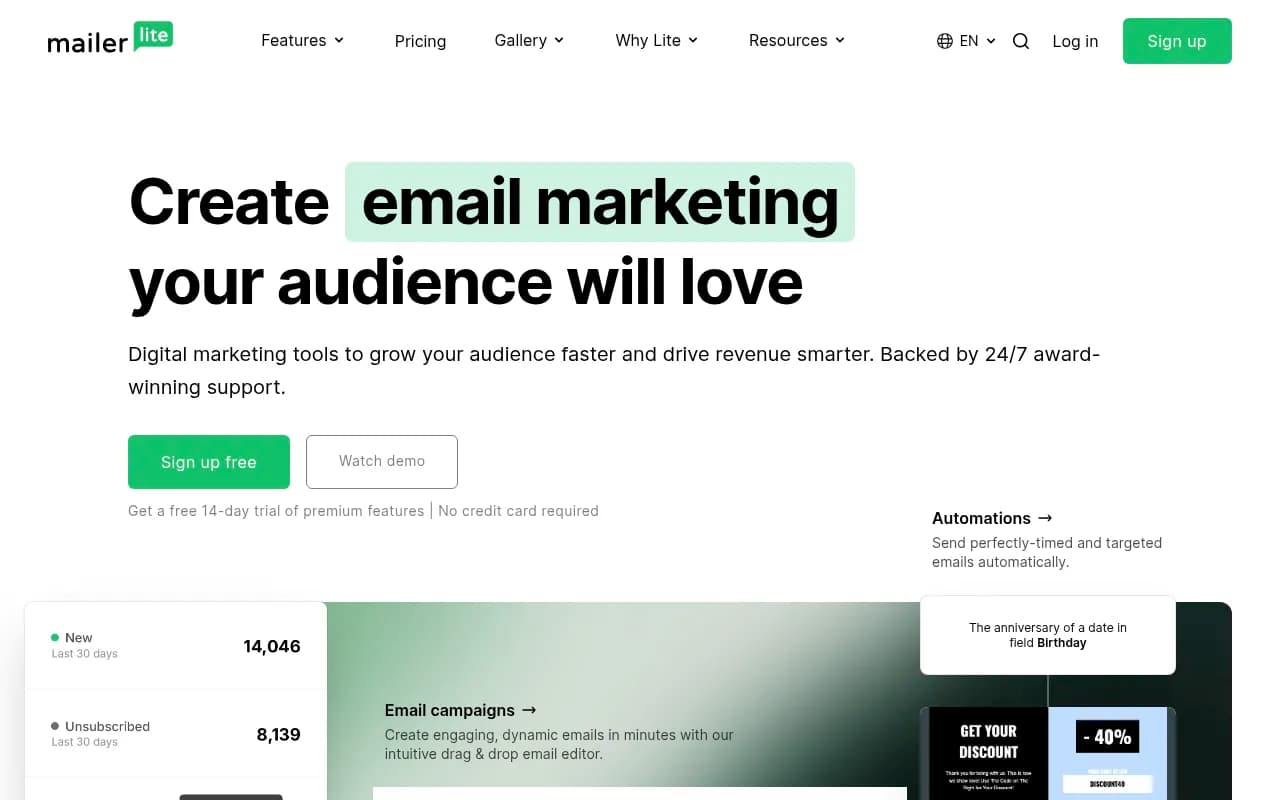
MailerLite grew its user base by 52% between mid-2024 and 2026 -- the fastest growth rate of any platform in this comparison. That's not an accident. The platform has gotten genuinely good at being simple without being limited.
The free plan covers 1,000 contacts and 12,000 emails per month, which is the most generous free tier here. The interface is clean and modern, the drag-and-drop editor is fast, and the automation builder covers the basics well: welcome series, abandoned cart (via Shopify integration), post-purchase, and re-engagement flows.
What MailerLite doesn't do: deep e-commerce data integration, predictive analytics, or advanced behavioral segmentation. The Shopify connection works, but it's not as tight as Klaviyo's. There's no SMS. The reporting is functional but not detailed.
For a brand that's just starting out, or one that's been overpaying for Mailchimp and wants a cleaner, cheaper alternative, MailerLite is an excellent move. For a brand doing $500K+ in annual revenue that wants to optimize every customer touchpoint, it'll feel limiting within a year.
Good fit for: New e-commerce stores, brands migrating from Mailchimp who want lower costs, teams that prioritize ease of use over advanced features.
Feature comparison: what actually matters for e-commerce
| Feature | Mailchimp | Brevo | ActiveCampaign | Klaviyo | Omnisend | MailerLite |
|---|---|---|---|---|---|---|
| Shopify integration depth | Moderate | Moderate | Good | Excellent | Good | Basic |
| Abandoned cart automation | Yes | Yes | Yes | Yes | Yes | Yes |
| Browse abandonment | Limited | No | Yes | Yes | Yes | No |
| Predictive analytics | Basic | No | Basic | Yes | Limited | No |
| SMS (native) | Add-on | Yes | Add-on | Separate | Yes | No |
| Push notifications | No | No | No | No | Yes | No |
| Free plan | Yes | Yes | No | Yes | Yes | Yes |
| Pricing model | Per contact | Per send | Per contact | Per contact | Per contact | Per contact |
| Automation complexity | Low-Medium | Medium | High | High | Medium | Low-Medium |
| Reporting depth | Medium | Medium | High | High | Medium | Basic |
How to choose
The honest answer is that your store's revenue stage and technical setup matter more than any individual feature.
If you're on Shopify and doing more than $200K/year in revenue, Klaviyo is worth the price. The data integration alone -- real-time purchase behavior, predictive LTV, product-level segmentation -- will generate more revenue than it costs, assuming you actually build the flows.
If you're earlier stage or more budget-sensitive, Omnisend gives you 80% of Klaviyo's e-commerce functionality at roughly half the price. The gap in predictive analytics and data depth is real, but it won't matter until you're optimizing at a more sophisticated level.
If you need complex automation logic that goes beyond standard e-commerce flows -- think multi-step conditional journeys, lead scoring, CRM integration -- ActiveCampaign is the right call. It's the most powerful automation builder here, and it handles hybrid B2B/B2C use cases better than any of the others.
Brevo makes the most sense if you're sending to a large list infrequently, want SMS and WhatsApp in the same platform, or are operating primarily in Europe where its infrastructure and GDPR compliance are a genuine advantage.
Mailchimp is fine for simple use cases, but if you're specifically building an e-commerce email program, you'll likely outgrow it faster than you expect.
MailerLite is the pick if cost is the primary constraint and you want a clean, modern tool that handles the basics without friction.
A note on pricing as your list grows
One thing that catches brands off guard: most of these platforms charge per contact, and the costs scale faster than expected. Here's a rough comparison at 10,000 contacts:
| Platform | ~10K contacts/month cost |
|---|---|
| Mailchimp | ~$100/mo (Essentials) |
| Brevo | ~$25/mo (based on sends, not contacts) |
| ActiveCampaign | ~$99/mo (Plus) |
| Klaviyo | ~$150/mo (email only) |
| Omnisend | ~$80/mo |
| MailerLite | ~$54/mo |
Brevo's send-based model looks dramatically cheaper at this scale, which is why it's worth considering seriously if you have a large list but don't email everyone constantly.
Bottom line
There's no universally "best" platform here -- but there are clear winners for specific situations. Klaviyo leads for serious e-commerce brands that want the deepest store data integration. Omnisend is the smart value pick for growing stores. ActiveCampaign wins on automation power. Brevo wins on price-to-feature ratio for multi-channel senders. MailerLite wins on simplicity and free-tier generosity. Mailchimp is the easiest starting point but the hardest to justify as you scale.
The worst outcome is picking a platform based on name recognition alone and then rebuilding your entire email program 18 months later because the tool doesn't fit how your store actually operates. Match the platform to your current stage and your next 12 months of growth -- not to where you hope to be in five years.