Key takeaways
- Buffer is the best pick for small teams and solo creators who want simple, affordable scheduling without a steep learning curve.
- Hootsuite covers the most ground for enterprise teams: publishing, analytics, social listening, and AI content generation in one place.
- Sprout Social leads on customer service features and sentiment analysis, but the price tag is hard to justify for most teams.
- Later is purpose-built for visual-first brands and Instagram-heavy workflows, with a link-in-bio tool that actually converts.
- Planable is the collaboration-first option — ideal for agencies managing client approvals across multiple accounts.
- None of these tools track how your brand appears in AI search engines like ChatGPT or Perplexity. That's a separate problem requiring a separate tool.
Social media management tools have been around long enough that most people have a strong opinion about them. You've probably used at least two of these five. Maybe you switched from Hootsuite to Buffer because the pricing felt more honest, or you moved to Sprout Social because a client demanded better reporting. These are all reasonable decisions.
But in 2026, there's a new question sitting alongside the usual ones: what happens to your brand visibility when someone asks ChatGPT or Perplexity about your industry instead of searching Google? Your social media scheduler has nothing to say about that. This guide covers both problems — which tool to use for social, and what to do about the AI search gap.
Let's start with the tools themselves.
The five tools at a glance
| Tool | Best for | Starting price | AI features | Approval workflows | Analytics depth |
|---|---|---|---|---|---|
| Hootsuite | Enterprise, multi-platform | ~$99/mo | Strong (OwlyWriter AI) | Yes | Deep |
| Sprout Social | Customer service teams | ~$249/mo | Strong (AI Assist) | Yes | Very deep |
| Buffer | Small teams, creators | Free / $6/channel | Basic | Limited | Basic-moderate |
| Later | Visual brands, Instagram | $25/mo | Moderate | Limited | Moderate |
| Planable | Agencies, client approvals | $39/mo | Moderate | Excellent | Basic |
Hootsuite
Hootsuite is the oldest name on this list and, depending on who you ask, either the gold standard or the bloated incumbent. Both things are sort of true.
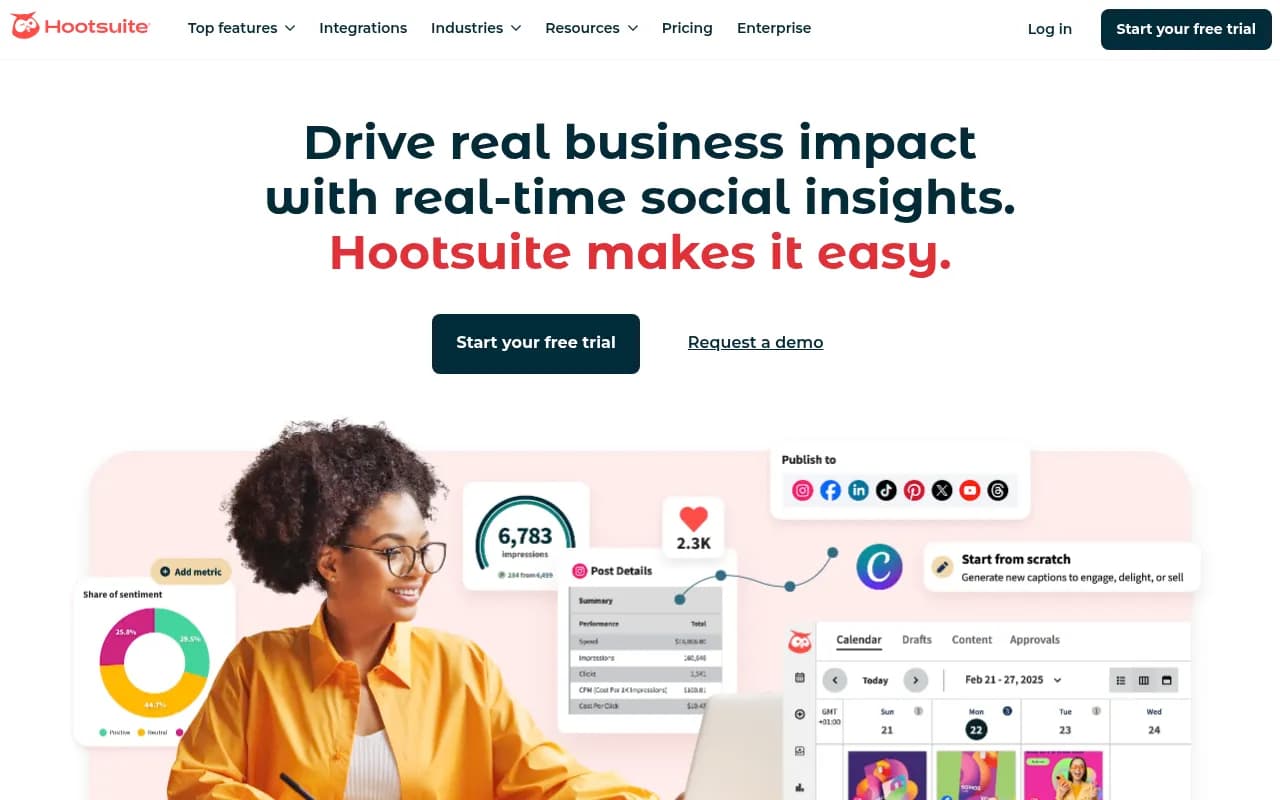
The platform covers everything: scheduling across every major network, a unified inbox for social messages, social listening, team permissions, and a reasonably deep analytics suite. For enterprise teams managing dozens of accounts across multiple regions, that breadth is genuinely useful. You don't need to stitch together five different tools.
The AI story here is OwlyWriter, which has been iterating since 2023. In 2026 it handles caption generation, repurposing top-performing posts, and suggesting posting schedules based on historical engagement data. It's not magic, but it's legitimately useful for teams that need to produce a lot of content without a lot of creative overhead.
The honest downside: Hootsuite's pricing has crept up steadily, and the interface carries years of accumulated complexity. New users often find it overwhelming. If your team is small or your workflow is simple, you're paying for features you'll never touch.
Best for: Enterprise teams, agencies managing many clients, brands that need social listening baked in.
Sprout Social
Sprout Social is where you go when social media is genuinely a customer service channel, not just a broadcast medium. The platform's inbox management, tagging, and routing features are the best in this group. If your team is fielding hundreds of DMs and comments every day, Sprout's workflow tools make a real difference.
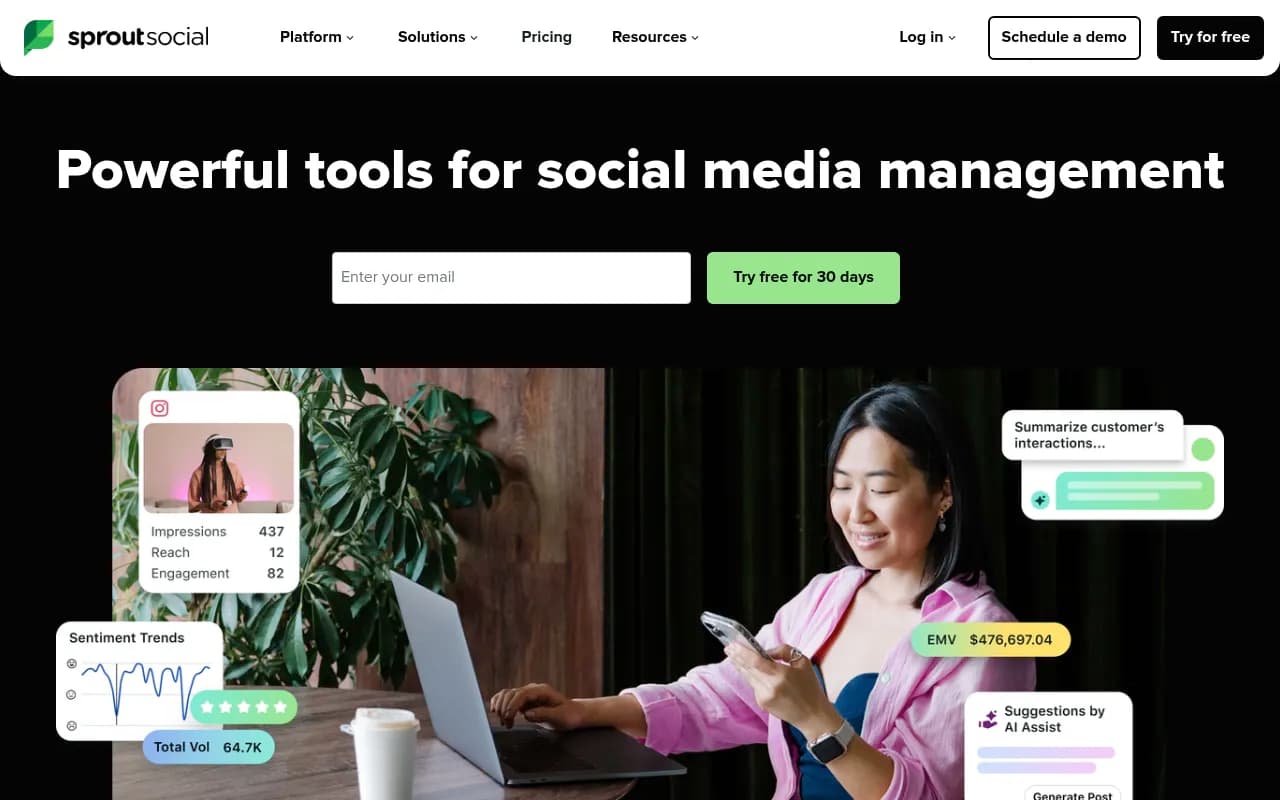
The AI Assist feature handles sentiment analysis across mentions and messages, suggests responses for customer service scenarios, and automates parts of the reporting process. The reporting itself is excellent — Sprout generates the kind of executive-ready dashboards that make quarterly reviews easier.
The problem is the price. Sprout Social's entry point sits around $249/month, and meaningful features like competitive reports and listening tools push you into higher tiers quickly. For a small marketing team, that's hard to justify. For a mid-size brand with an active social presence and a real customer service function, it might be exactly right.
Best for: Brands where social is a customer service channel, teams that need detailed reporting, mid-to-large marketing departments.
Buffer
Buffer is the tool that does what it says on the tin. You connect your accounts, schedule your posts, look at some basic analytics, and get on with your day. That's not a criticism — for a lot of teams, that's exactly what they need.
The pricing model is genuinely different from the others. Buffer charges per channel rather than per seat or per tier, which means a small business managing three social accounts pays very little. The free plan is functional enough to be useful, not just a teaser.
AI features exist but are modest compared to Hootsuite or Sprout. Buffer's AI assistant can help draft captions and suggest hashtags, but it's not doing sentiment analysis or content calendar optimization. The analytics are solid for tracking post performance but won't satisfy anyone who needs competitive benchmarking or audience demographic breakdowns.
Where Buffer shines is simplicity and honesty. The interface is clean, the learning curve is minimal, and the pricing doesn't require a spreadsheet to understand.
Best for: Solo creators, small businesses, teams that want scheduling without complexity.
Later
Later started as an Instagram scheduler and still carries that DNA. The visual content calendar is genuinely good — you can drag and drop posts, preview your grid before publishing, and plan Stories alongside feed posts. For brands where Instagram is the primary channel, this visual-first approach makes real sense.
The link-in-bio tool (Linkin.bio) is one of Later's strongest features. It creates a shoppable landing page from your Instagram posts, which is more useful than it sounds for e-commerce brands and creators who drive sales through social.
Later has expanded to cover TikTok, Pinterest, Facebook, Twitter/X, and LinkedIn, but the experience is noticeably better on Instagram. If you're running a multi-platform strategy with equal weight across channels, you'll feel the platform's roots.
AI scheduling optimization is present — Later analyzes your historical data to suggest optimal posting times — and the analytics are decent for tracking engagement and follower growth. But it's not a deep analytics platform, and the approval workflow tools are limited compared to Planable or Hootsuite.
Best for: Visual brands, Instagram-first strategies, e-commerce teams, creators who sell through social.
Planable
Planable is the collaboration tool that social media teams actually want to use. The core product is built around one problem: getting content approved without losing your mind in email threads and Slack messages.
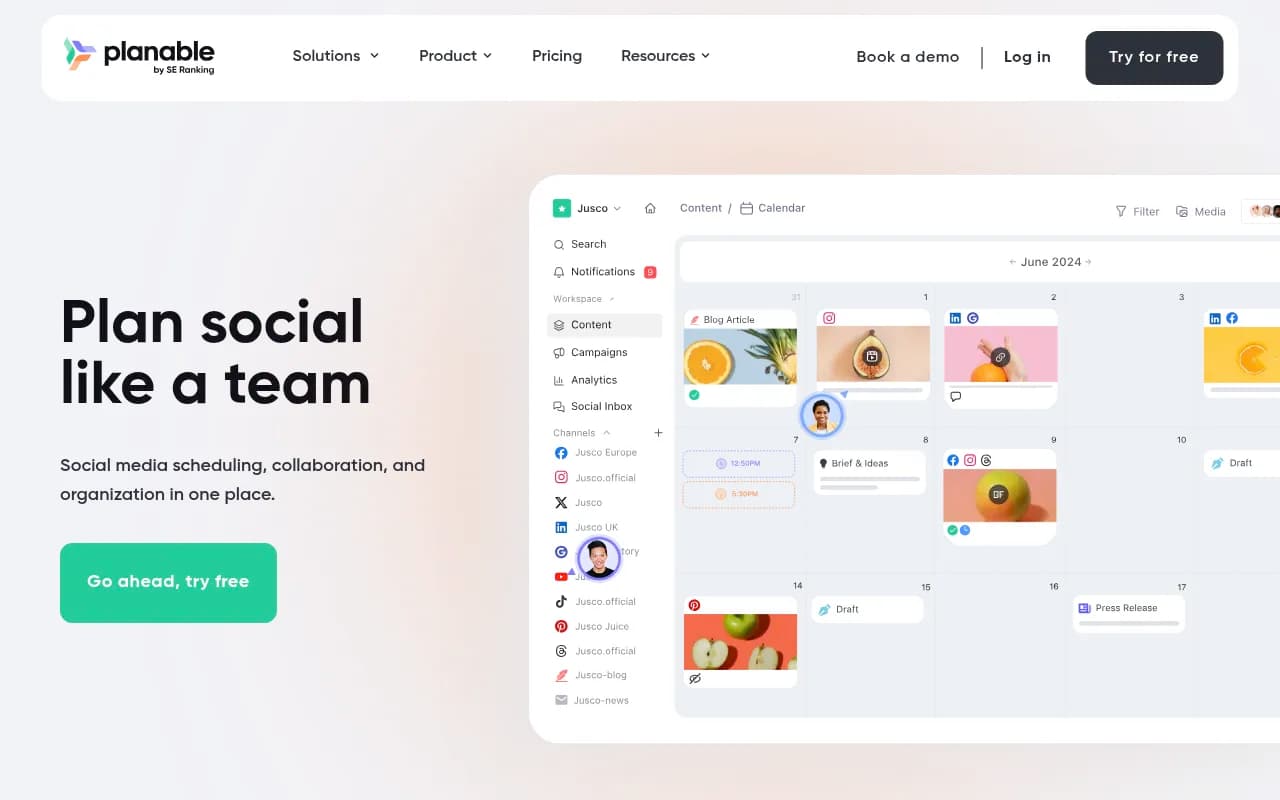
The approval workflow is the best in this comparison. You can set up multi-level approval chains, leave comments directly on posts, and give clients a clean preview interface that doesn't require them to log into anything complicated. For agencies managing multiple client accounts, this alone is worth the subscription.
The scheduling and publishing features are competent but not exceptional. Planable isn't trying to compete with Hootsuite on analytics depth or Sprout on inbox management. It's focused on the content creation and approval phase of the workflow.
AI features have improved in recent releases — Planable can generate caption variations and suggest content ideas — but the platform's real value is still in the collaboration layer, not the AI layer.
Best for: Agencies, in-house teams with complex approval processes, brands that work with external stakeholders on content sign-off.
Feature comparison: what actually matters
| Feature | Hootsuite | Sprout Social | Buffer | Later | Planable |
|---|---|---|---|---|---|
| Scheduling | Excellent | Excellent | Good | Good (visual) | Good |
| Analytics | Deep | Very deep | Basic | Moderate | Basic |
| Social listening | Yes | Yes | No | No | No |
| Team approval workflows | Yes | Yes | Limited | Limited | Excellent |
| AI content generation | OwlyWriter | AI Assist | Basic | Basic | Moderate |
| Inbox/DM management | Yes | Excellent | Limited | Limited | No |
| Link-in-bio | No | No | Yes (basic) | Yes (strong) | No |
| Free plan | No | No | Yes | Yes (limited) | Yes (limited) |
| Pricing transparency | Moderate | Low | High | High | High |
Pricing reality check
Pricing in this category is messier than the marketing pages suggest. Here's a rough honest picture for 2026:
Buffer is the cheapest by a significant margin if you're managing a small number of channels. The free plan covers three channels, and paid plans start at $6 per channel per month. A team managing five channels pays $30/month. That's it.
Later starts at $25/month for one user and one set of social profiles. It scales up to $80/month for teams, which is still reasonable.
Planable starts at $39/month for the Starter plan, with agency plans scaling based on workspaces.
Hootsuite's pricing has become less transparent over time. The Professional plan starts around $99/month, but meaningful enterprise features push costs significantly higher. Teams often find the actual bill is larger than expected once add-ons are factored in.
Sprout Social is the most expensive by a wide margin. The Standard plan starts around $249/month per seat. For a team of three, that's $750/month before you've added any premium features. The product is good enough to justify this for the right use case, but it's a real commitment.
How to choose
The honest answer is that the "best" tool depends almost entirely on what you actually need.
If you're a solo creator or small business: Buffer. The pricing is fair, the tool does what you need, and you won't spend three hours learning the interface.
If social is a customer service channel with real volume: Sprout Social. The inbox management and sentiment analysis are genuinely better than the alternatives, and the reporting will make your life easier when someone asks for numbers.
If Instagram is your primary channel and visual planning matters: Later. The grid preview and Linkin.bio tool are worth it.
If you're an agency managing client approvals: Planable. The approval workflow will save you more time than any other feature on this list.
If you need everything in one place at enterprise scale: Hootsuite. It's not the prettiest tool, but the breadth is real.
The gap none of these tools address: AI search visibility
Here's the thing that's worth saying plainly: none of these five tools will tell you what ChatGPT says about your brand when someone asks "what's the best [your category] tool?" They won't tell you whether Perplexity is citing your competitors instead of you, or whether Google's AI Overviews are pulling from a three-year-old blog post that no longer reflects your product.
This matters because AI search is now a real traffic and discovery channel. According to data from Promptwatch, brands that don't actively track their AI search visibility are often invisible in AI-generated answers, even when they rank well in traditional search. Social media scheduling tools have no visibility into this.

If your team is already thinking about AI search visibility alongside social media management, those are two separate workflows requiring two separate tools. Promptwatch tracks how your brand appears across ChatGPT, Perplexity, Google AI Overviews, Claude, Gemini, and seven other AI engines, and shows you specifically which content gaps are causing you to lose visibility to competitors. That's a different problem from scheduling your Instagram posts, but it's increasingly an important one.
Other tools worth knowing about
The five tools above aren't the only options. A few others are worth a mention depending on your situation:
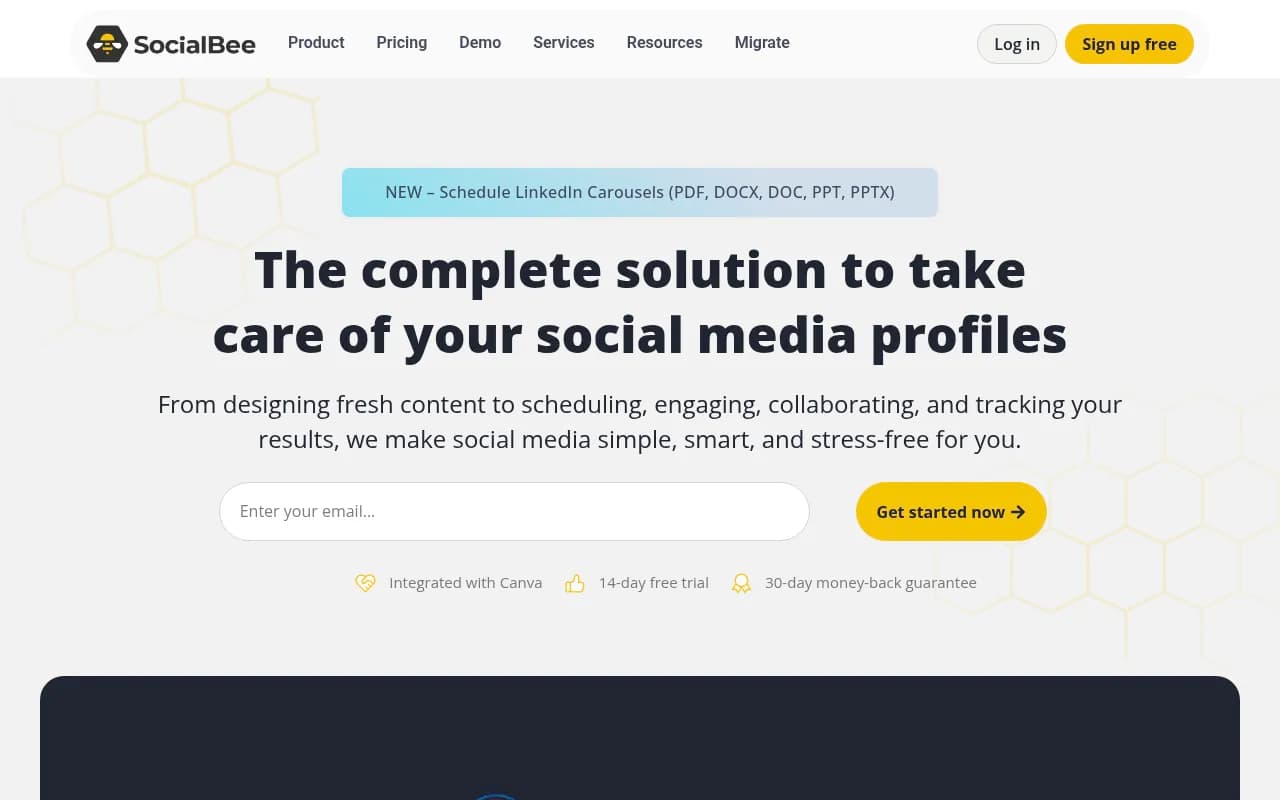
SocialBee sits between Buffer and Hootsuite in terms of complexity and price. It has a content category system that works well for teams managing evergreen content alongside time-sensitive posts.
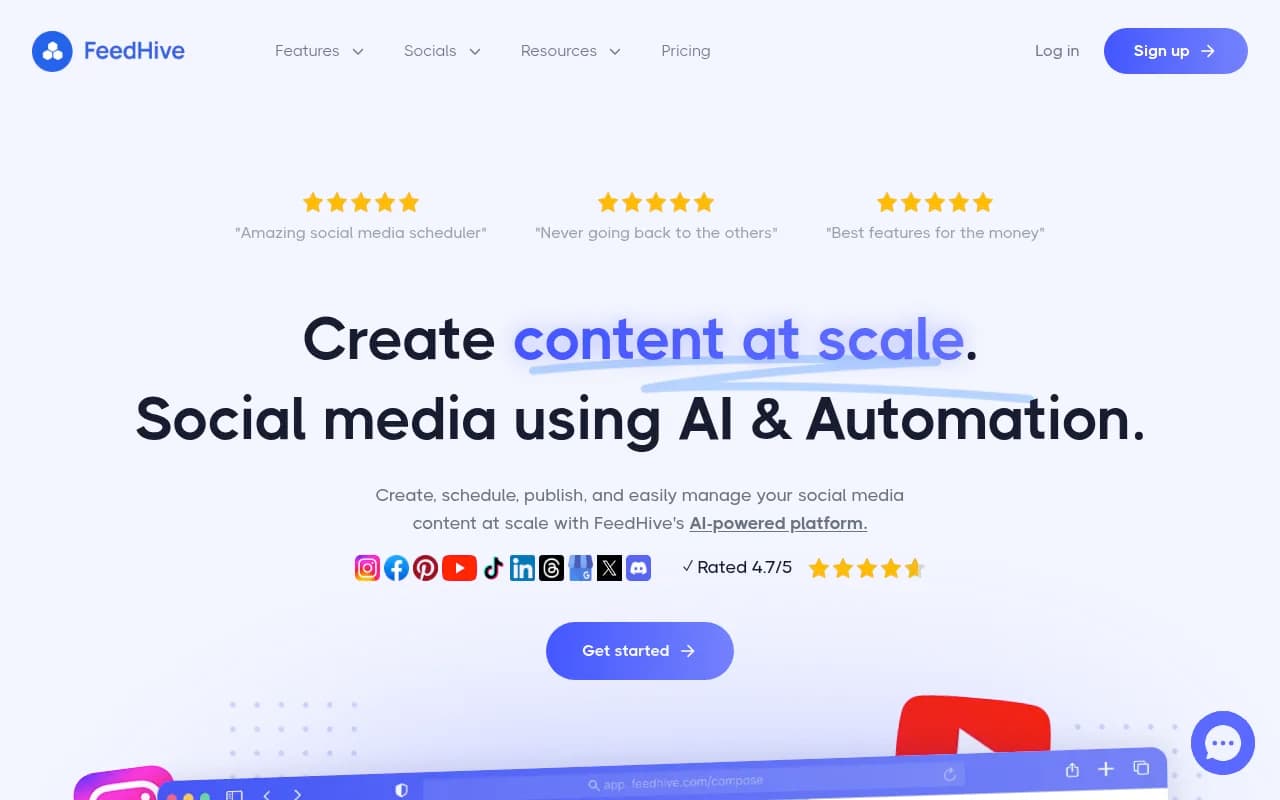
FeedHive is worth a look if content recycling is important to your workflow. It automatically resurfaces older posts that performed well, which is useful for teams with large content libraries.
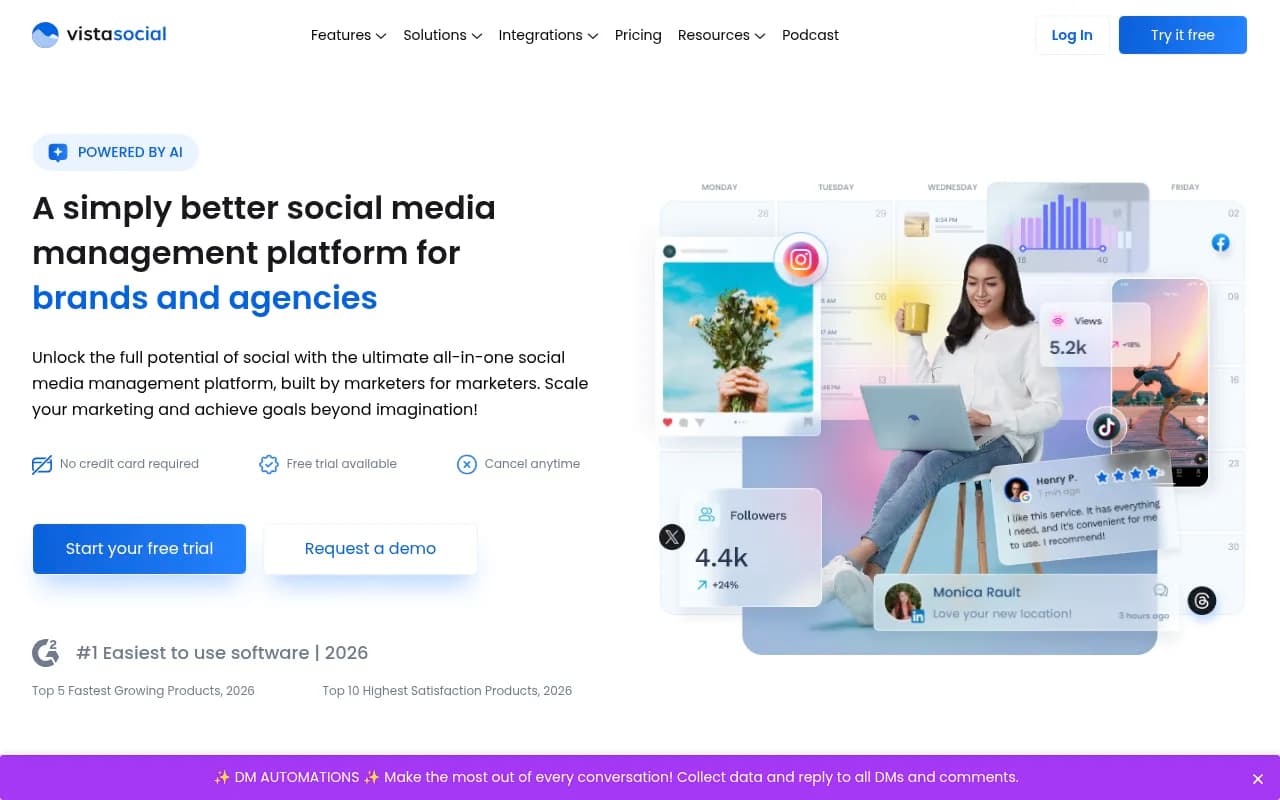
Vista Social is a budget-friendly option that covers more channels than Buffer at a similar price point, with better analytics than you'd expect at that tier.
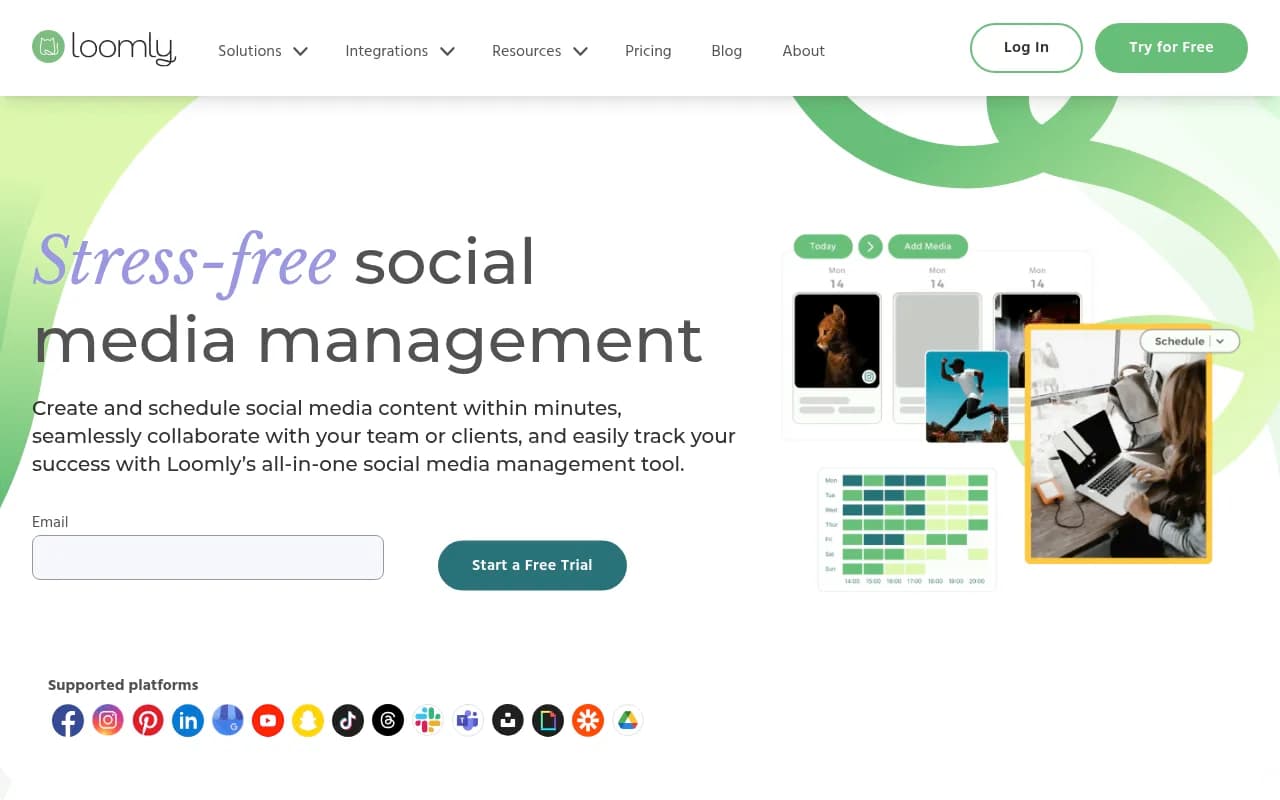
Loomly is a solid mid-market option with good content inspiration features and a cleaner interface than Hootsuite. It's worth considering if you find Hootsuite overwhelming but need more than Buffer offers.
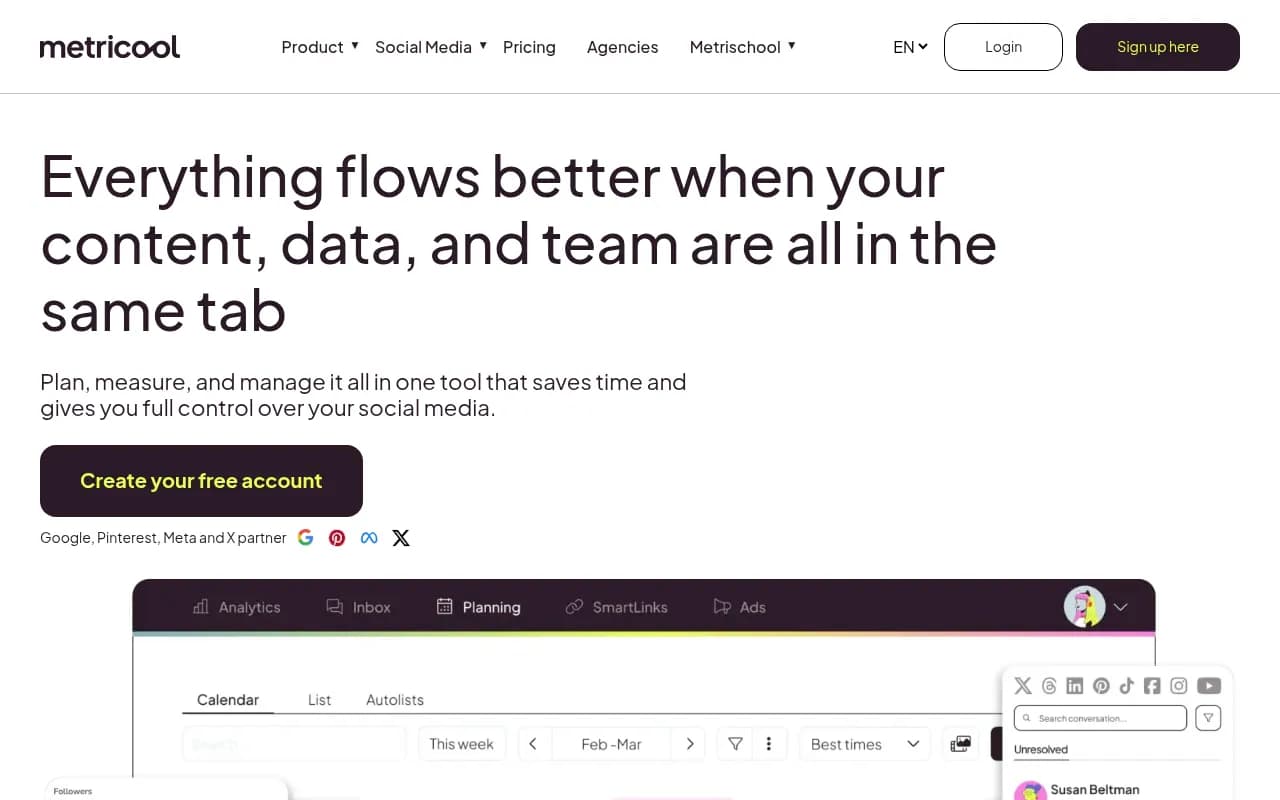
Metricool deserves a mention for teams that care about analytics. The reporting features are more detailed than Buffer or Later, and the pricing is competitive.
Final thoughts
The social media management tool market is mature. The five tools in this comparison are all genuinely good at what they do, and the differences between them are mostly about fit rather than quality. Buffer isn't worse than Sprout Social — it's just for a different use case.
What's changed in 2026 is the context around these tools. Social media is still important, but it's no longer the only channel where brand discovery happens. AI search engines are now part of how people find products, services, and recommendations. Your social media scheduler won't help you there.
Pick the right social tool for your team's actual workflow. Then separately figure out your AI search visibility strategy — because that's a gap that's only getting bigger.