Key takeaways
- Dreamdata and HockeyStack are the strongest purpose-built B2B attribution tools, but they serve different buyers: Dreamdata suits data-heavy RevOps teams, HockeyStack has expanded into a broader GTM platform.
- Adobe Marketo Measure (formerly Bizible) is deeply Salesforce-native but struggles with cookie deprecation and manual data entry -- a real problem in 2026.
- Ruler Analytics is the best option for teams that need to close the loop between marketing spend and CRM revenue without a large technical lift.
- Improvado is not an attribution platform -- it's a marketing data infrastructure layer. It belongs in a different conversation unless your problem is data unification at scale.
- No single platform solves attribution perfectly for long B2B sales cycles. The right choice depends on your CRM, team size, technical resources, and how you define "revenue."
B2B attribution is one of those problems that sounds solvable until you're actually in it. You've got a deal that took 14 months, touched 23 people across six accounts, ran through LinkedIn ads, two webinars, a cold email sequence, three sales calls, and a referral from a customer who saw a blog post. Which channel gets credit?
Every platform in this guide claims to answer that question. Most of them answer a version of it. The differences -- and they matter -- come down to what data they can actually access, how they model credit, and whether the output is something your CFO will believe.
This guide compares five platforms that come up most often in 2026 B2B attribution conversations: Dreamdata, HockeyStack, Ruler Analytics, Improvado, and Adobe Marketo Measure. I've tried to be direct about what each one actually does well and where the cracks show.
What B2B attribution actually requires in 2026
Before comparing platforms, it's worth being clear about what makes B2B attribution hard -- because the platforms handle these challenges very differently.
Long sales cycles mean touchpoints happen months or years before revenue closes. Multi-stakeholder buying means you're tracking buying committees, not individual leads. Offline touchpoints (sales calls, events, referrals) don't show up in your ad platform. And CRM data is often messy, inconsistently entered, and missing key fields.
A good attribution platform needs to handle all of this. It needs to connect anonymous web sessions to known contacts, stitch those contacts to accounts, map touchpoints across the full journey, and then tie everything to closed revenue in your CRM. That's a lot of plumbing.
The five platforms at a glance
| Platform | Best for | CRM depth | Attribution models | Technical lift | Pricing tier |
|---|---|---|---|---|---|
| Dreamdata | RevOps teams, data warehouse users | Salesforce, HubSpot | Multi-touch, custom, data-driven | Medium-high | Mid-market to enterprise |
| HockeyStack | GTM teams wanting one platform | Salesforce, HubSpot | Rules-based, AI-assisted | Low-medium | Mid-market to enterprise |
| Ruler Analytics | SMB/mid-market, HubSpot/Salesforce users | Salesforce, HubSpot, Pipedrive | Multi-touch, first/last touch | Low | SMB to mid-market |
| Improvado | Data teams needing pipeline infrastructure | Any (via connectors) | Depends on BI layer | High | Mid-market to enterprise |
| Adobe Marketo Measure | Salesforce-native enterprise teams | Salesforce (deep), Marketo | Multi-touch, custom | Medium | Enterprise |
Dreamdata
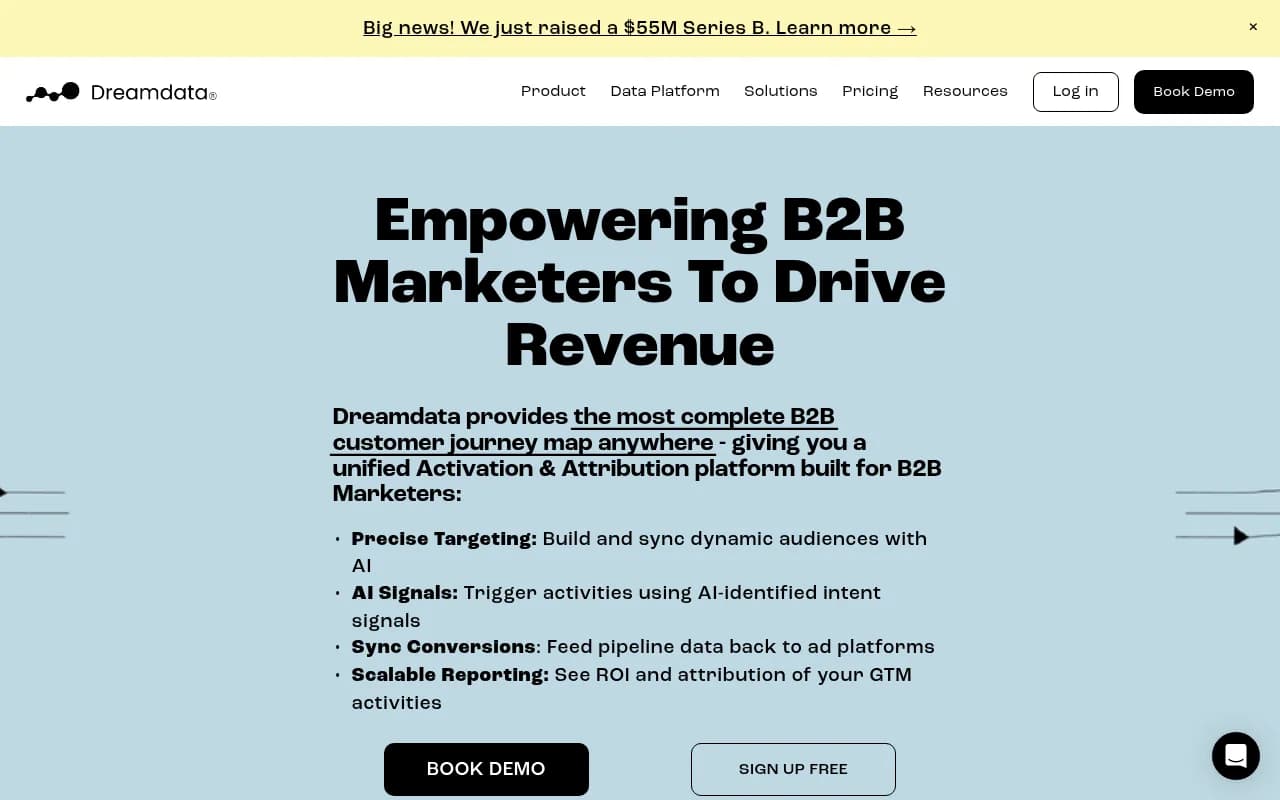
Dreamdata is built specifically for B2B revenue attribution. Its core idea is that you should be able to see every touchpoint -- from first anonymous visit to closed-won -- mapped to a single account timeline, and then model how different channels contributed to revenue.
What it does well: the account journey view is genuinely useful. You can see the full sequence of interactions for a given account, filter by channel, and apply different attribution models to see how credit shifts. It connects to your CRM (Salesforce and HubSpot primarily), pulls in ad platform data, and can push attribution data back into your CRM for reporting.
The data warehouse integration is a real differentiator for technical teams. If you're running BigQuery or Snowflake, Dreamdata can sync data there, which means you're not locked into their BI layer for analysis.
Where it gets complicated: pricing scales with contact volume, which can get expensive fast for larger databases. The initial setup requires mapping your data model carefully -- if your CRM is messy, Dreamdata will surface that messiness rather than hide it. Some teams find the interface requires RevOps or data analyst involvement to get full value.
From Reddit's r/b2bmarketing: "Dreamdata and HockeyStack tend to work best for B2B" -- but the thread also notes that no tool fully solves attribution for long, complex journeys. That's honest.
Best for: RevOps and data teams at B2B SaaS companies who want warehouse-level control and are willing to invest in setup.
HockeyStack
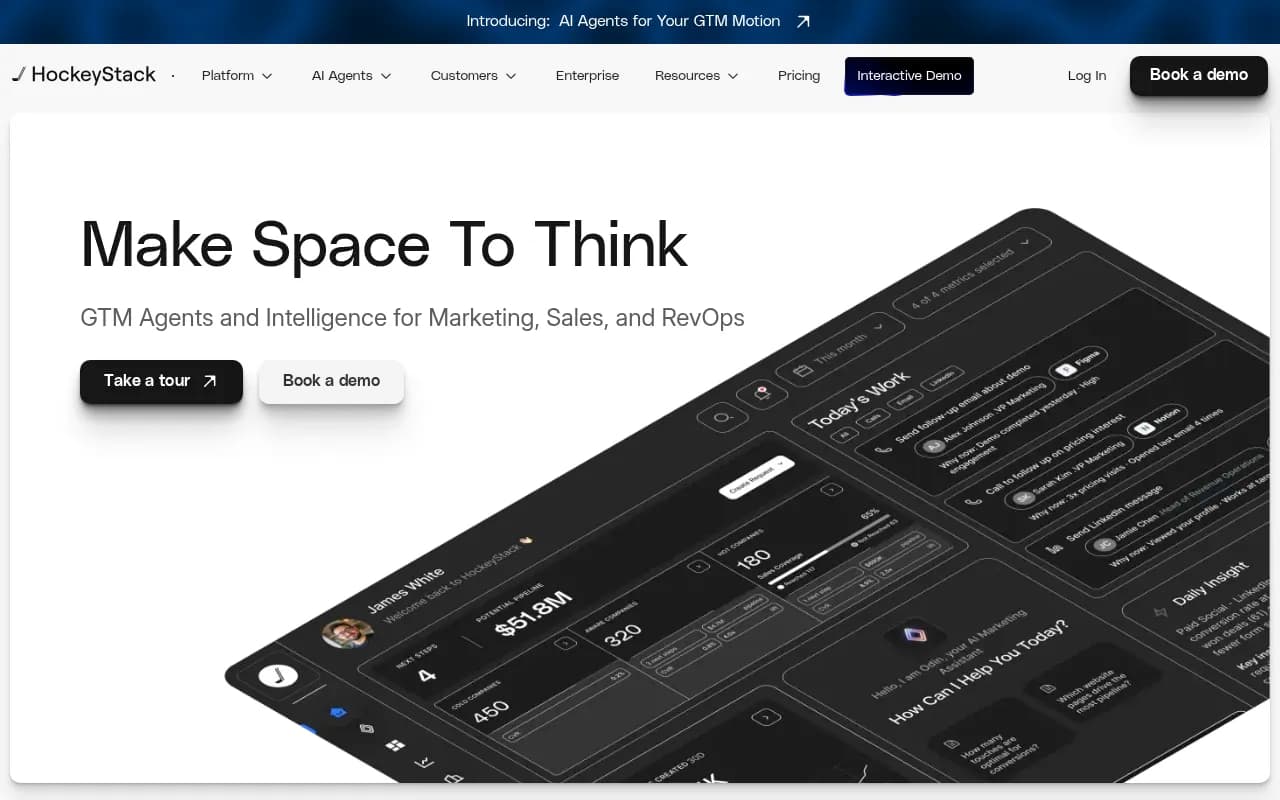
HockeyStack started as a B2B analytics and attribution tool. In 2025-2026 it expanded significantly into a full GTM intelligence platform -- adding AI sales agents (Nova), an AI analyst (Odin), account intelligence, intent data, and sales engagement features.
That expansion is both its strength and its complication. If you want one platform that handles attribution, account scoring, sales intelligence, and AI-assisted analysis, HockeyStack has built toward that. The interface is cleaner than most attribution tools, and marketing teams (not just RevOps) can navigate it without a data analyst in the room.
The attribution methodology, though, has drawn criticism. Rules-based models with fixed positional weights can produce numbers that don't hold up when you dig into them. When attribution is one feature inside a larger GTM platform, it tends to get less methodological investment than when it's the whole product. Teams that need to defend their attribution numbers to a CFO or board may find HockeyStack's outputs harder to validate.
The other thing to know: HockeyStack's pricing is on the higher end, and the platform's value proposition has shifted. If you bought it for attribution and attribution alone, you're paying for a lot of features you may not use.
Best for: GTM teams that want a unified platform covering attribution, account intelligence, and sales insights -- and are comfortable with rules-based attribution models.
Ruler Analytics
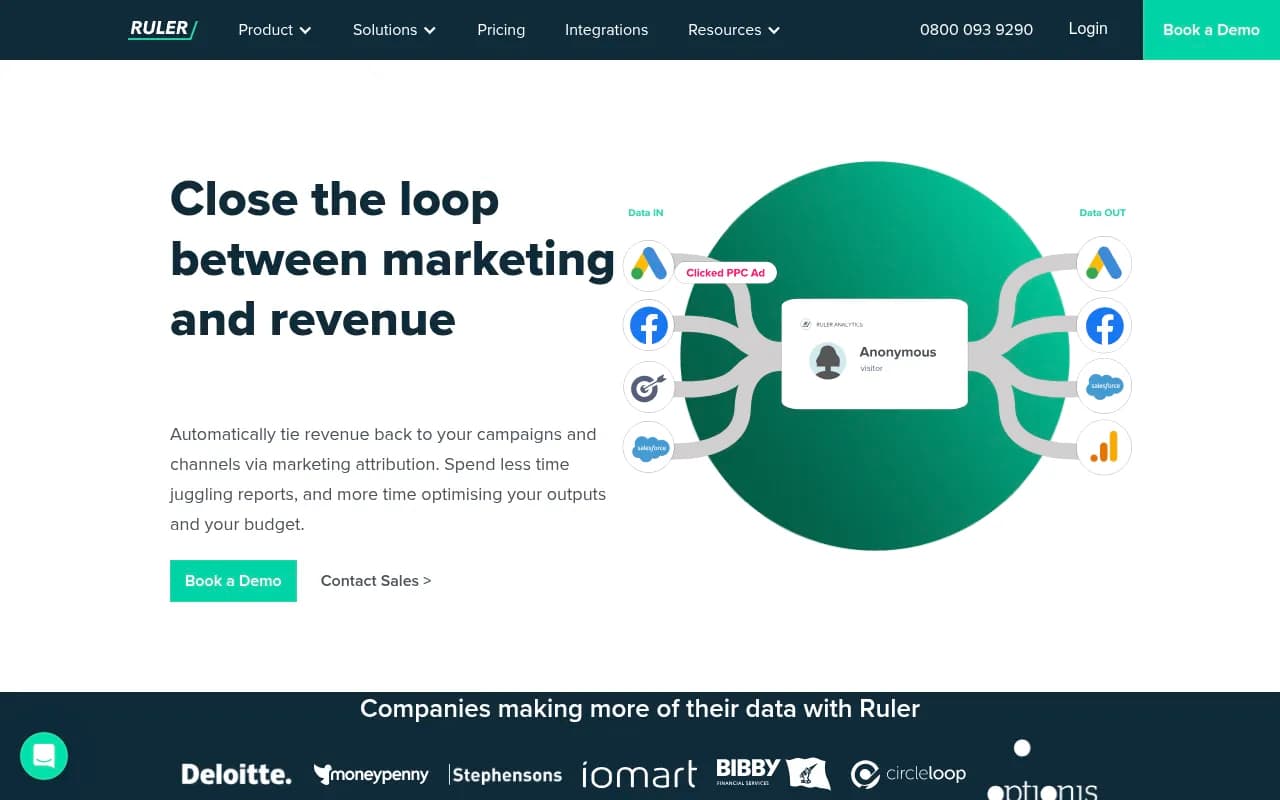
Ruler Analytics takes a different approach. Rather than building a complex data pipeline, it focuses on one specific problem: connecting marketing touchpoints to revenue in your CRM.
It works by tracking visitors across sessions (using first-party cookies), capturing form fills, calls, and live chat, and then matching those conversions to marketing touchpoints. When a deal closes in Salesforce, HubSpot, or Pipedrive, Ruler pushes the revenue value back to the original touchpoints. That closed-loop reporting is genuinely useful for teams that want to see which campaigns actually drove revenue, not just leads.
The trade-offs are real. Ruler is less sophisticated than Dreamdata or HockeyStack for complex multi-stakeholder journeys. It's better at tracking individual lead journeys than account-level buying committees. If your average deal involves 10+ stakeholders and an 18-month cycle, Ruler will miss a lot of the picture.
But for mid-market B2B teams -- say, ACV of $10k-$50k, sales cycles of 1-6 months, HubSpot or Salesforce as CRM -- Ruler is often the most practical choice. Setup is relatively quick, the interface is accessible to marketing managers without RevOps support, and the price point is reasonable.
Best for: SMB and mid-market B2B teams that want closed-loop attribution without a heavy technical investment.
Improvado
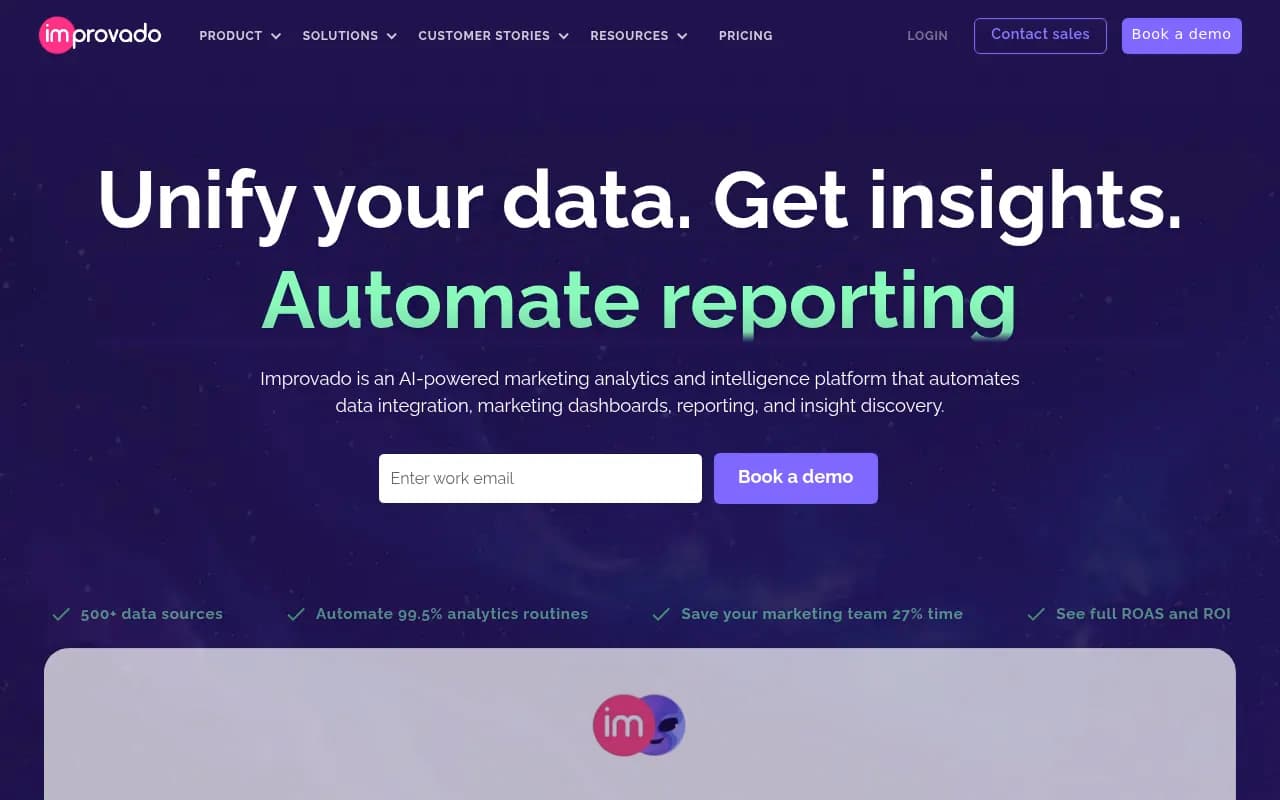
Improvado is not really an attribution platform. It's a marketing data infrastructure tool -- it aggregates data from 500+ sources (ad platforms, CRMs, analytics tools, data warehouses) and normalizes it into a unified data model.
That's genuinely valuable, but it's a different problem. Improvado helps you get all your marketing data into one place with consistent schema. What you do with that data -- including attribution modeling -- depends on your BI layer (Looker, Tableau, Power BI) and your own data team's work.
Teams evaluating Dreamdata alternatives sometimes land on Improvado because they're frustrated with Dreamdata's integration limitations. That's a reasonable path if your core problem is data unification at scale. But if your core problem is "I don't know which channels are driving revenue," Improvado won't give you that answer out of the box -- you'll need to build the attribution logic yourself.
The pricing reflects this: Improvado is enterprise-oriented and not cheap. It makes sense for large marketing ops teams that need a data pipeline, not for teams that want a pre-built attribution dashboard.
Best for: Enterprise marketing ops teams that need to centralize data from dozens of sources and have the data team resources to build attribution logic on top.
Adobe Marketo Measure (formerly Bizible)
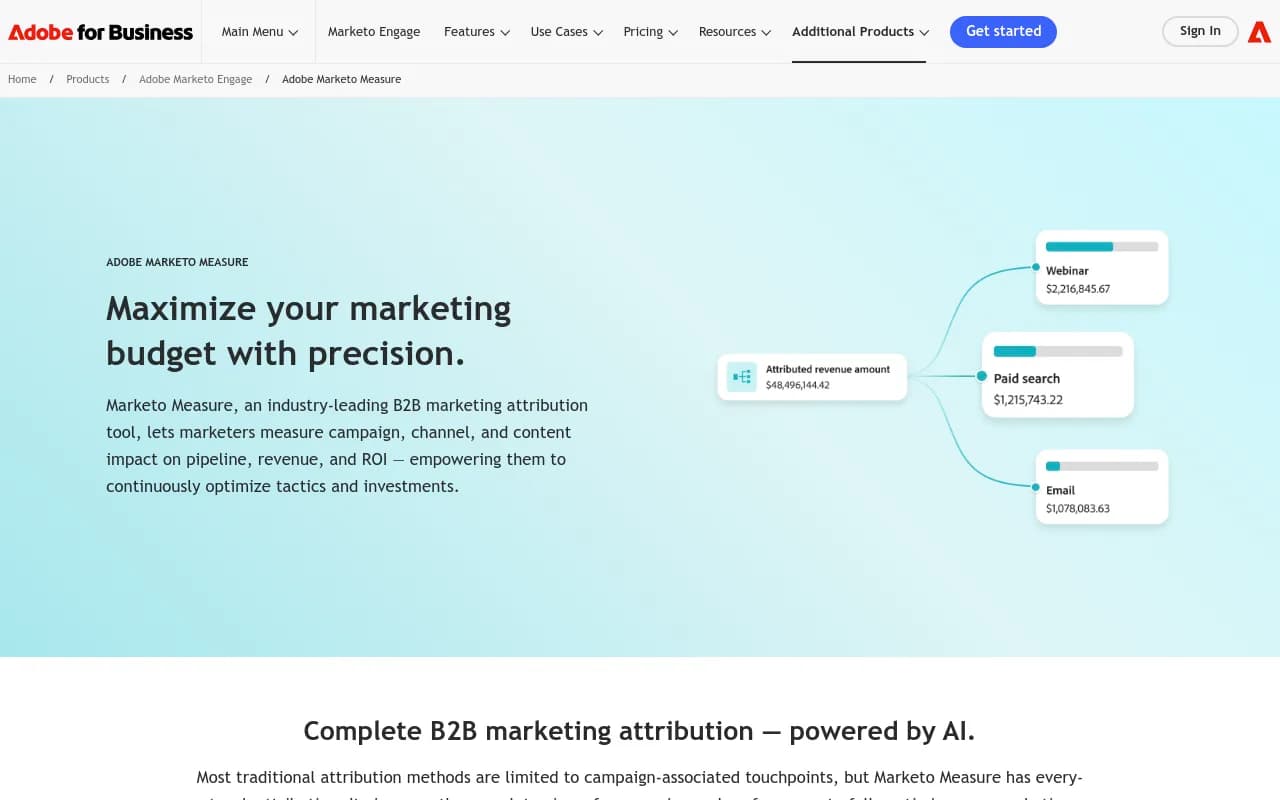
Adobe Marketo Measure has a long history as the go-to B2B attribution tool for Salesforce-heavy enterprises. It's deeply integrated with Salesforce and Marketo, supports custom attribution models, and has the brand trust that comes with being part of the Adobe Experience Cloud.
The problems in 2026 are real, though. The platform's tracking relies heavily on third-party cookies and CNAME-based approaches that are increasingly blocked by browsers. As cookie deprecation has progressed, teams have reported growing blind spots in their attribution data. Manual workarounds -- like importing contacts directly into Salesforce to preserve UTM tracking -- create data quality issues that compound over time.
G2 reviews note specific frustrations: cost integration requires manual input for ad platforms without direct integrations, and the ROI reporting limitations mean teams often end up building supplementary reports in Salesforce or Tableau anyway.
The other issue is organizational. Adobe's acquisition of Marketo and Bizible created a large, complex product suite. Teams report that support and product velocity have slowed compared to the pre-acquisition era. If you're already deep in the Adobe/Salesforce ecosystem, Marketo Measure can still work. But for teams evaluating fresh, it's hard to recommend over purpose-built alternatives.
Best for: Large enterprises already running Salesforce + Marketo who need deep native integration and have the technical resources to manage the platform's limitations.
Head-to-head: key decision factors
CRM integration depth
Adobe Marketo Measure wins on raw Salesforce integration depth -- it's been built around Salesforce for years. Dreamdata and HockeyStack both support Salesforce and HubSpot well. Ruler Analytics supports Salesforce, HubSpot, and Pipedrive. Improvado connects to any CRM but doesn't do attribution natively.
Attribution model flexibility
Dreamdata offers the most flexibility, including custom and data-driven models. Adobe Marketo Measure supports custom models but the implementation is complex. HockeyStack uses rules-based models that are easier to set up but harder to defend. Ruler Analytics covers standard multi-touch models (first touch, last touch, linear, time decay). Improvado has no built-in attribution models.
Ease of setup and use
Ruler Analytics is the easiest to get running. HockeyStack has invested in UX and is accessible to non-technical marketers. Dreamdata requires more setup but gives you more control. Adobe Marketo Measure has a steep learning curve, especially for custom configurations. Improvado requires significant data engineering work.
Account-level attribution
This is where B2B gets specific. Dreamdata is strongest here -- account-level journey mapping is a core feature. HockeyStack also handles account-level data. Ruler Analytics is primarily lead-level, with some account grouping. Adobe Marketo Measure supports account-level attribution in Salesforce. Improvado depends on your data model.
Pricing transparency
Ruler Analytics is the most transparent on pricing. Dreamdata and HockeyStack both require custom quotes for most plans. Adobe Marketo Measure is enterprise-priced and bundled with Adobe/Marketo contracts. Improvado is enterprise-only.
Which platform should you choose?
There's no universal answer, but here's a practical framework:
If you're on Salesforce, have a RevOps team, and want warehouse-level control: Dreamdata is the strongest choice. The setup investment pays off if you have the technical resources.
If you want one platform for attribution plus account intelligence and sales insights, and you're okay with rules-based attribution: HockeyStack makes sense, especially if you're already evaluating it as a GTM platform.
If you're a mid-market team on HubSpot or Salesforce and want closed-loop attribution without a big technical project: Ruler Analytics is the most practical option.
If you're a large enterprise deep in the Adobe/Salesforce ecosystem and need native integration: Adobe Marketo Measure still works, but go in with eyes open about its tracking limitations.
If your core problem is data unification across dozens of marketing sources, not attribution modeling: Improvado is worth evaluating -- but pair it with a BI tool and data team resources.
A note on what none of these platforms solve
Every platform in this comparison has the same fundamental limitation: they can only attribute what they can track. Dark social (Slack communities, private referrals, word of mouth), offline events, and multi-device journeys across long sales cycles will always have gaps.
The honest answer from practitioners in 2026 is that attribution is a model, not a measurement. The goal isn't perfect accuracy -- it's directional confidence that helps you make better budget decisions. The best platform is the one your team will actually use and trust, not the one with the most impressive feature list.
One more thing worth knowing: as AI search engines like ChatGPT, Perplexity, and Google AI Overviews become a meaningful traffic source for B2B brands, traditional attribution models miss that channel entirely. If your buyers are researching solutions through AI search, none of these platforms will tell you whether your brand is showing up in those answers. That's a separate problem -- one that platforms like Promptwatch are built to address.

The attribution platforms in this guide are built for the funnel you can see. Making sure your brand is visible in the channels your buyers are increasingly using -- including AI search -- is a different layer of the problem, and worth thinking about alongside your attribution stack.