Key takeaways
- SpyFu excels at PPC competitor intelligence and is the more affordable option, but materially under-reports long-tail traffic (up to 55% in independent testing).
- Semrush has broader feature coverage and cleaner keyword intent data, but its AI search capabilities use fixed prompt sets that don't reflect how real users query AI engines.
- Neither tool was built for AI search visibility. They track what happens in Google's index, not what ChatGPT, Perplexity, or Gemini say about your brand.
- Winning in AI search in 2026 requires a separate layer of tooling on top of traditional SEO platforms.
- The most effective teams use SpyFu or Semrush for traditional competitive research, then pair that with a dedicated GEO platform to close the AI visibility gap.
The competitive analysis landscape has split in two
For most of the past decade, competitive analysis meant one thing: figure out what keywords your competitors rank for, estimate their traffic, and build a content strategy to take some of it. SpyFu and Semrush both do this well, in different ways, for different budgets.
But 2026 is different. A growing share of search behavior now happens inside AI engines. When someone asks ChatGPT "what's the best project management tool for remote teams?" or queries Perplexity for "top CRMs for small businesses," the answer they get has nothing to do with Google rankings. It's based on what AI models have learned from training data, citations, and real-time web access.
Your competitors are already thinking about this. The question is whether your competitive analysis tools can help you understand it.
The honest answer: SpyFu and Semrush are genuinely useful for traditional competitive research. But for AI search visibility, both have significant gaps. This guide covers what each tool does well, where they fall short, and how to build a complete competitive intelligence stack for 2026.
SpyFu: what it's actually good at
SpyFu has been around since 2005 and built its reputation on one thing: making competitor PPC data accessible and affordable. If you want to know what keywords a competitor is bidding on, what ad copy they've tested, and roughly how much they're spending, SpyFu gets you there faster and cheaper than most alternatives.
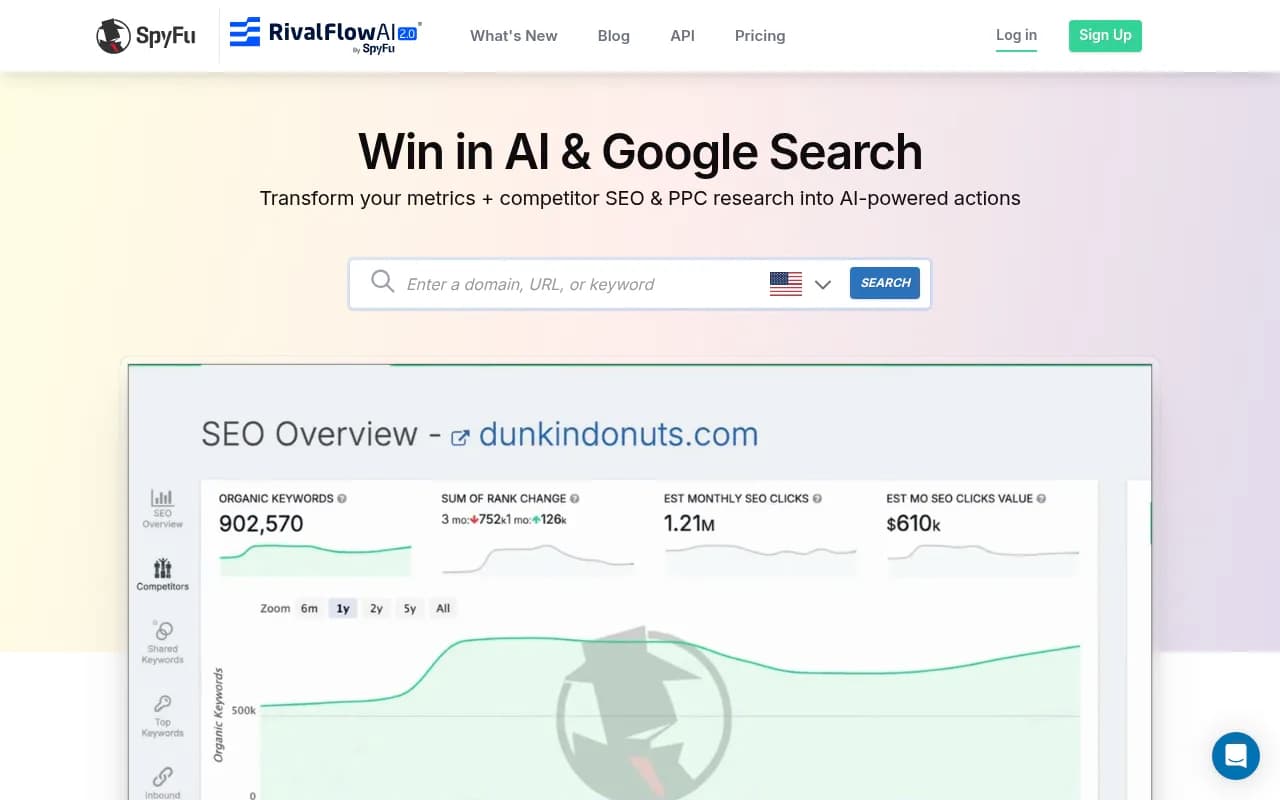
The core workflow is simple. You enter a competitor's domain, and SpyFu surfaces their top organic keywords, estimated monthly clicks, PPC keywords, ad history, and ranking history. The ad history feature is particularly useful -- you can see every variation of an ad a competitor has run, which gives you a window into what messaging has worked for them over time.
SpyFu also has a "kombat" feature that shows keyword overlap between you and multiple competitors simultaneously. It's a quick way to spot gaps: keywords your competitors rank for that you don't.
Where SpyFu struggles
Traffic estimation accuracy is a real problem. In a head-to-head test conducted across 40+ domains by 1ClickReport in early 2026, SpyFu under-reported organic traffic by 55% compared to actual Google Search Console data. For a SaaS site doing 12,000 monthly clicks, SpyFu estimated 5,400.
That gap matters most for long-tail-heavy sites. If your competitors grow through hundreds of low-volume informational queries (common in SaaS and B2B), SpyFu will systematically undercount their traffic and make them look weaker than they are. You might deprioritize a competitor who's actually eating your lunch.
On the PPC side, Reddit's r/PPC community has noted that SpyFu's spend estimates can be "misleading at best and wildly inaccurate at worst" when compared against actual account data. Use them for directional signals, not budget planning.
And for AI search? SpyFu has no native capability to track how competitors appear in ChatGPT, Perplexity, or Google AI Overviews. The platform is built entirely around Google's traditional index.
Semrush: broader coverage, better intent data
Semrush is the heavier tool. It covers keyword research, rank tracking, backlink analysis, technical SEO auditing, content optimization, and competitive analysis -- all in one platform. For teams that want a single subscription to cover most of their SEO needs, it makes sense.
On competitive analysis specifically, Semrush's Traffic Analytics and Keyword Gap tools are genuinely strong. The keyword intent classification is cleaner than SpyFu's -- Semrush breaks keywords into informational, navigational, commercial, and transactional buckets, which helps you understand not just what competitors rank for but why those rankings matter.
The Competitive Positioning Map gives you a visual overview of where competitors sit relative to each other on traffic vs. keyword count axes. It's a useful starting point for understanding the competitive landscape before you dig into specifics.
Semrush also has the Domain Overview feature, which aggregates a competitor's estimated traffic, top keywords, backlink profile, and paid search activity in one view. For a first pass on a new competitor, it's hard to beat.
Where Semrush struggles
Traffic estimates are more accurate than SpyFu (the same 1ClickReport test showed Semrush at -32% vs. actual GSC data, compared to SpyFu's -55%), but still meaningfully off. No third-party tool matches Google Search Console for your own domain, and for competitor domains, you're always working with estimates.
The bigger issue for 2026 is AI search. Semrush has added some AI search features -- it tracks brand mentions in AI Overviews and has a Brand Monitoring tool -- but these use fixed prompt sets. That means Semrush queries a predetermined list of prompts and checks whether your brand appears. It doesn't reflect the actual diversity of how real users prompt AI engines, and it doesn't show you the specific content gaps that are causing competitors to outrank you in AI responses.
Semrush also has no crawler log analysis for AI bots (GPTBot, ClaudeBot, PerplexityBot), no query fan-out analysis, and no content generation tied to AI prompt data. It can tell you that a competitor appears in AI Overviews for some queries. It can't tell you why, or what to do about it.
Head-to-head: SpyFu vs Semrush for competitive analysis
| Feature | SpyFu | Semrush |
|---|---|---|
| PPC competitor intelligence | Excellent | Good |
| Organic keyword gap analysis | Good | Excellent |
| Traffic estimation accuracy | -55% vs. GSC | -32% vs. GSC |
| Ad copy history | Yes | Limited |
| Backlink analysis | Basic | Comprehensive |
| Technical SEO auditing | No | Yes |
| Keyword intent classification | Basic | Strong |
| AI search brand monitoring | No | Basic (fixed prompts) |
| AI crawler log analysis | No | No |
| Content gap for AI prompts | No | No |
| AI content generation | No | No |
| Price (entry level) | ~$39/mo | ~$139/mo |
The short version: SpyFu wins on price and PPC depth. Semrush wins on breadth and accuracy. Neither wins on AI search.
The AI search gap neither tool fills
Here's the problem neither SpyFu nor Semrush solves: when a potential customer asks an AI engine a question relevant to your business, you have no idea whether your brand appears, what your competitors say, or what content gaps are causing you to be invisible.
This isn't a small edge case anymore. ChatGPT crossed 800 million weekly active users in early 2026. Perplexity is growing fast. Google AI Mode is now the default experience for many queries. If you're only tracking Google's traditional blue links, you're missing a significant and growing portion of how people discover products and services.
The mechanics of AI search visibility are also different from traditional SEO. AI models don't rank pages -- they synthesize answers from sources they've learned to trust. Getting cited in an AI response depends on things like:
- Whether your content directly answers the specific question being asked
- Whether your domain has been crawled recently by AI bots (GPTBot, ClaudeBot, PerplexityBot)
- Whether your brand appears in third-party sources that AI models treat as authoritative (Reddit threads, review sites, industry publications)
- Whether your content structure makes it easy for AI models to extract a clear, citable answer
SpyFu and Semrush don't track any of this. They were built for a world where Google's crawler is the only crawler that matters.
Building a complete competitive intelligence stack
The practical answer for most marketing teams in 2026 is to use SpyFu or Semrush for what they're good at -- traditional keyword and competitor research -- and add a dedicated AI search visibility platform on top.
For AI search specifically, Promptwatch is worth looking at. It tracks how your brand and competitors appear across 10 AI engines (ChatGPT, Perplexity, Google AI Overviews, Claude, Gemini, Grok, DeepSeek, Copilot, Meta AI, and Mistral), shows you exactly which prompts competitors are visible for that you're not, and generates content designed to close those gaps. The crawler log analysis is particularly useful -- you can see when GPTBot or ClaudeBot last crawled your pages, which pages they're reading, and whether those pages are actually getting cited.

That's a fundamentally different capability from what SpyFu or Semrush offer. It's not just monitoring -- it's a feedback loop from gap identification to content creation to citation tracking.
For teams that want to explore the AI visibility space more broadly, there are other options at different price points:
Otterly.AI

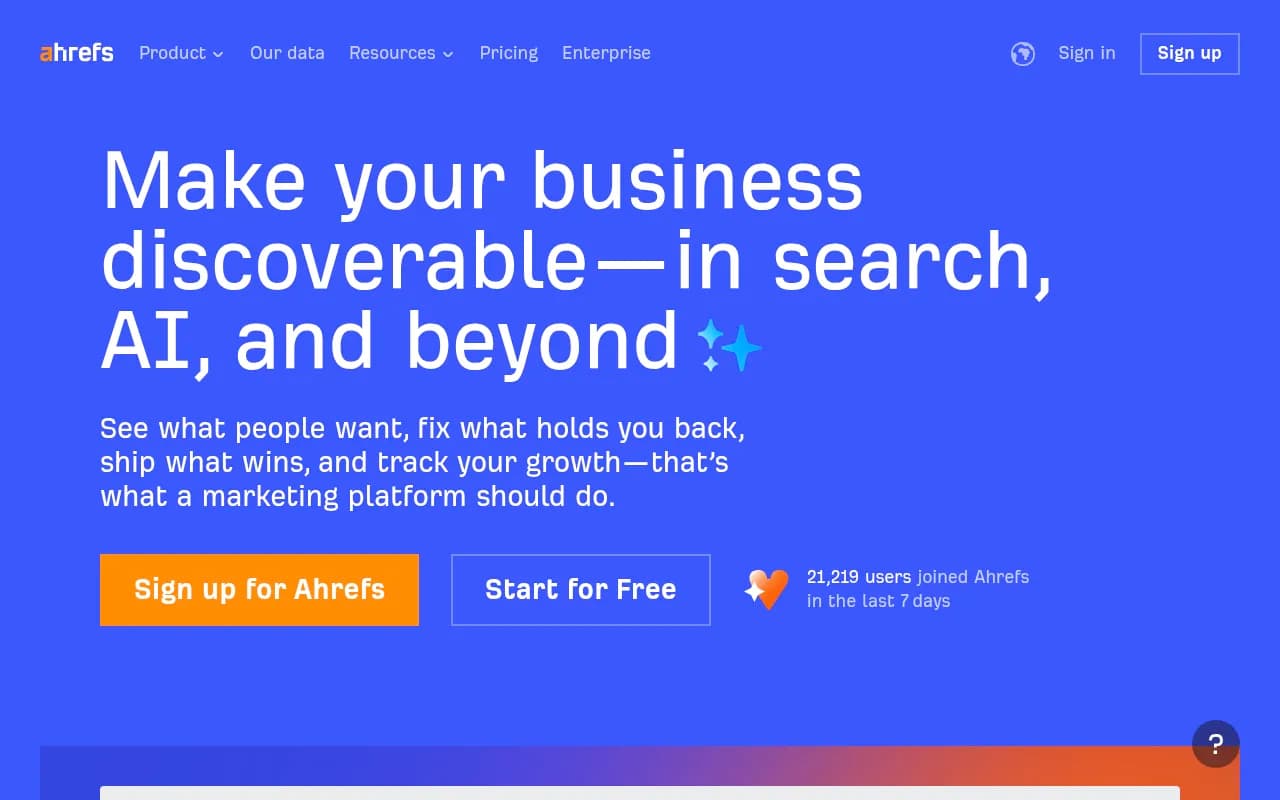
Ahrefs sits closer to Semrush in terms of traditional SEO coverage, and its Brand Radar feature tracks some AI search mentions, though it uses fixed prompts and lacks traffic attribution. Otterly.AI is a lighter monitoring tool that tracks brand mentions across ChatGPT, Perplexity, and AI Overviews -- useful for basic awareness but without the content generation or crawler analysis that more complete platforms offer.
How to use SpyFu and Semrush strategically for AI search prep
Even though neither tool directly tracks AI search, you can use them to inform your AI visibility strategy.
Use Semrush's keyword intent data to find AI-relevant queries
Informational queries are the ones most likely to trigger AI-generated answers rather than traditional blue links. In Semrush's Keyword Gap tool, filter for informational intent keywords that competitors rank for but you don't. These are strong candidates for content that could get cited in AI responses -- because AI engines are most active on exactly these "how," "what," and "why" questions.
Use SpyFu's competitor keyword history to spot content patterns
SpyFu's historical data shows when competitors started ranking for specific keywords. If a competitor suddenly gained traction on a cluster of informational queries 6-12 months ago, that often correlates with a content push that's now getting AI citations. Use this as a signal to investigate what content they published and whether it's appearing in AI responses.
Cross-reference with Google Search Console
Both SpyFu and Semrush estimate traffic; neither is accurate enough to trust for precise decisions. For your own domain, always use Google Search Console as ground truth.
GSC also shows you which queries are driving impressions but low clicks -- a pattern that often indicates Google is showing an AI Overview for that query instead of sending traffic to your page. Those queries are worth prioritizing for AI search optimization.
Map your content against competitor AI citations
Once you've identified the informational keyword clusters where competitors outrank you in traditional search, check whether those same competitors are being cited in AI responses for related prompts. The overlap is usually high. Traditional search authority and AI citation authority tend to correlate -- but not perfectly, which is where the opportunity lies.
Practical recommendations by team type
Different teams will weight these tools differently:
Small teams and solo marketers: SpyFu's lower price point makes it the practical choice for PPC research and basic competitive keyword analysis. Pair it with a free or entry-level AI visibility tracker to cover the AI search gap.
In-house SEO teams at mid-size companies: Semrush's broader feature set justifies the higher price if you're using it across keyword research, technical auditing, and content optimization. Add a dedicated AI visibility platform for the AI search layer -- Semrush's native AI features aren't comprehensive enough to rely on alone.
Agencies managing multiple clients: Semrush's agency features (white-label reporting, multi-client management) are genuinely useful. For AI search, look at platforms with multi-site support and agency pricing.
Enterprise brands: Neither SpyFu nor Semrush is built for the scale of enterprise AI visibility monitoring. Enterprise-focused platforms with crawler log analysis, multi-region support, and API access are worth evaluating separately.
The bottom line
SpyFu and Semrush are solid tools for what they were built to do. SpyFu is the better choice if PPC competitive intelligence is your primary need and budget is a constraint. Semrush is the better choice if you need a comprehensive traditional SEO platform with reasonable competitive analysis built in.
But neither tool gives you a complete picture of the competitive landscape in 2026. AI search is a real and growing channel, and the competitive dynamics there are different from Google's traditional index. Brands that treat AI visibility as an afterthought -- or assume their Semrush subscription covers it -- are going to find themselves invisible in an increasingly important channel.
The teams winning in AI search right now are the ones who treat it as a distinct discipline: tracking which prompts matter, understanding why competitors get cited, and systematically creating content that fills the gaps. That requires tooling beyond what SpyFu and Semrush currently offer.