Key takeaways
- Most AI search visibility platforms are monitoring-only dashboards -- they show you where you're invisible but give you no tools to fix it.
- The defining question to ask any vendor is: "After I see the data, what can I actually do inside your platform?"
- Action-oriented platforms close the loop between gap discovery, content creation, and results tracking.
- Crawler logs, content gap analysis, and AI-native content generation are the clearest signals that a platform is built for optimization, not just reporting.
- Pricing and feature depth vary widely -- knowing what to look for prevents you from paying for a dashboard you'll outgrow in 90 days.
The AI search visibility market has exploded. There are now dozens of platforms claiming to help you "rank in ChatGPT" or "optimize for Perplexity." Most of them show you a score, a chart, and a list of prompts where your brand didn't appear. Then they stop.
That's not optimization. That's a status report.
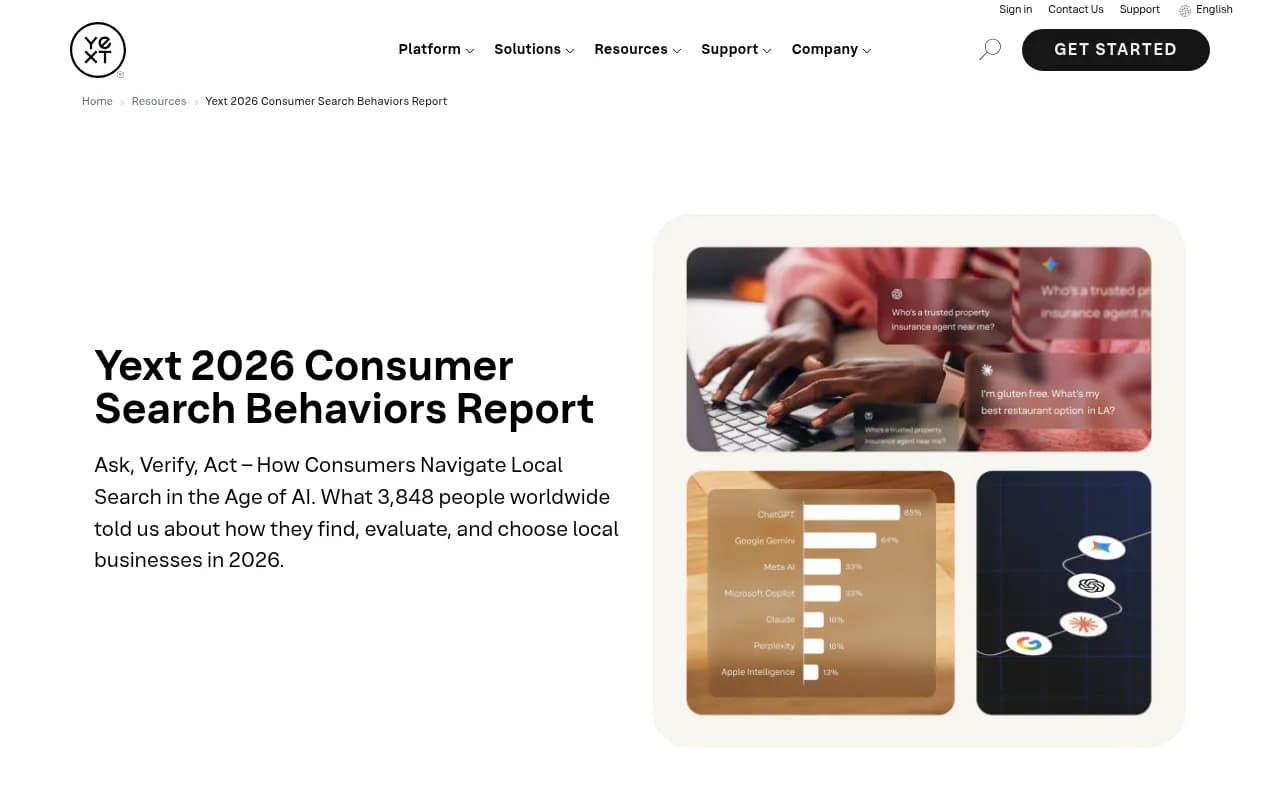
The distinction matters more than ever in 2026. According to the Stanford HAI 2026 AI Index Report, generative AI has reached 53% consumer adoption -- and Yext's 2026 Consumer Search Behaviors survey found that 28% of respondents tried a new local business specifically because of an AI recommendation. The buyer journey is genuinely shifting through AI channels. Brands that only monitor that shift, without acting on it, are watching competitors pull ahead in real time.
This guide gives you a practical framework for evaluating any AI search platform -- whether you're buying for the first time or reconsidering a tool you already pay for.
The core question every evaluation should start with
Before you look at pricing pages or feature lists, ask one question: "After I see the data, what can I do inside this platform?"
If the answer is "export a CSV" or "share a report with your team," you're looking at a reporting tool. If the answer involves generating content briefs, identifying specific gaps in your site's coverage, or tracking which pages AI crawlers are actually reading -- you're looking at something closer to an optimization platform.
This distinction cuts through most vendor positioning. Everyone claims to help you "improve AI visibility." The question is whether the platform does anything to make that improvement happen, or whether it just measures it.
Seven things to check when evaluating an AI search platform
1. Does it show you what's missing, not just what's there?
The most basic feature any platform offers is mention tracking -- how often your brand appears in AI responses to a set of prompts. That's useful as a baseline, but it's table stakes.
What separates action-oriented platforms is answer gap analysis: the ability to show you which prompts your competitors appear for that you don't. This is the difference between knowing your score and knowing what to do about it.
Ask vendors specifically: "Can I see the exact prompts where a competitor is cited and I'm not?" If they can't answer that clearly, you're looking at a monitoring dashboard.
2. Does it track real user-facing AI behavior, not just API outputs?
This one is subtle but important. Several platforms query AI models through their APIs and report back what the API returns. The problem is that what ChatGPT or Perplexity shows in their actual user interfaces -- with citations, shopping recommendations, and follow-up suggestions -- can differ meaningfully from raw API responses.
Platforms that monitor real user-facing behavior give you a more accurate picture of what your actual customers are seeing. Ask vendors how they collect data: API calls, or actual UI simulation?
3. Can it generate content, or just report on content gaps?
This is the biggest dividing line in the market right now. A handful of platforms have built content generation directly into the workflow -- so when you find a gap, you can immediately create an article, listicle, or comparison page designed to fill it.
The better implementations don't just generate generic SEO filler. They pull in real prompt data, citation patterns, competitor analysis, and brand guidelines to produce content that's actually engineered to answer what AI models are looking for.
If a platform identifies 40 prompt gaps but has no way to help you address them, you're left doing the hard work yourself -- or paying for a separate content tool on top.
4. Does it have AI crawler logs?
This feature is rare, and it's one of the clearest signals that a platform is serious about optimization rather than reporting.
AI crawler logs show you which pages on your site ChatGPT, Perplexity, Claude, and other AI engines are actually reading -- how often, which errors they encounter, and how long it takes for a crawled page to start generating citations. This is the technical layer that explains why some of your content gets cited and some doesn't.
Without crawler logs, you're guessing at the technical side of AI visibility. With them, you can diagnose indexing problems, prioritize pages for optimization, and track the timeline from publish to citation.
Ask vendors directly: "Do you have AI crawler monitoring?" Most will say no.
5. Does it cover the AI models your customers actually use?
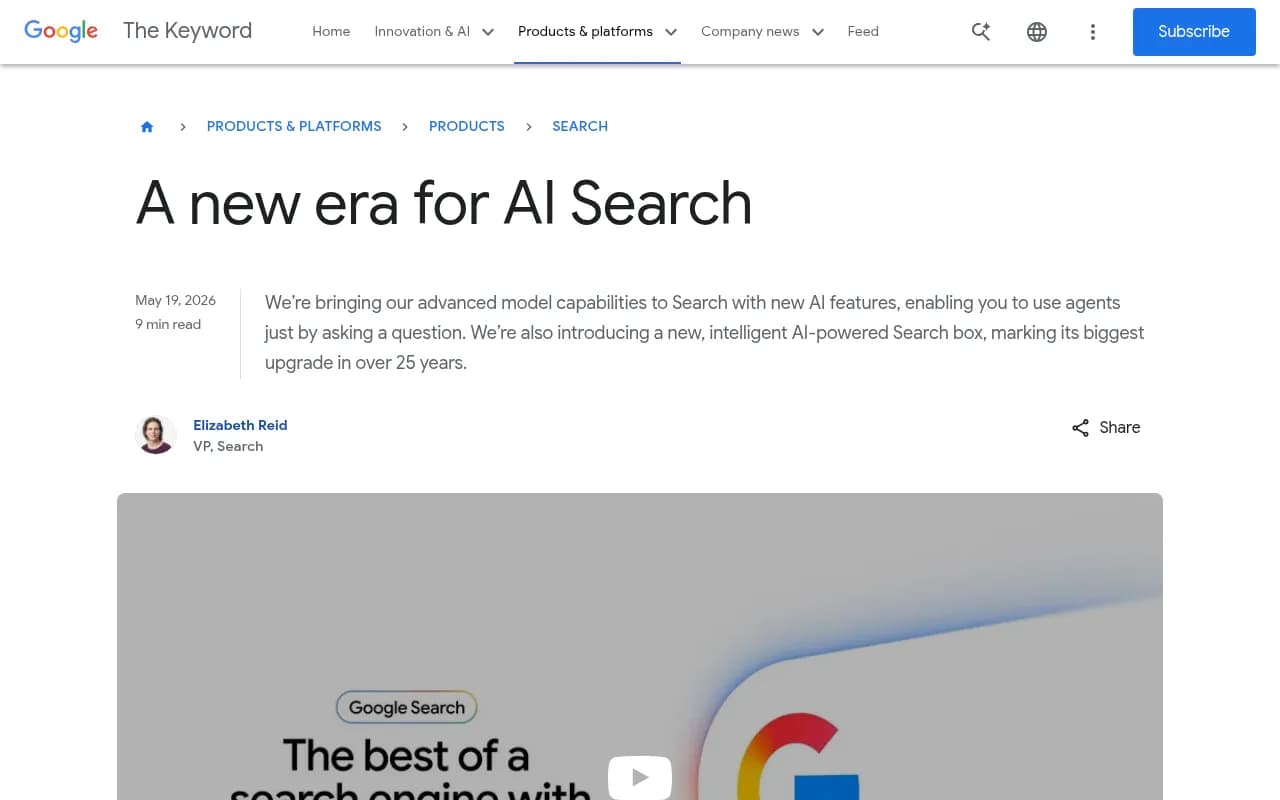
The AI search landscape in 2026 is fragmented. Google's I/O 2026 announcements confirmed that AI Mode and AI Overviews are now central to how Google surfaces information -- not a side feature.
Meanwhile, ChatGPT, Perplexity, Claude, Gemini, Grok, DeepSeek, Copilot, Meta AI, and Mistral all have meaningfully different citation behaviors. A platform that only tracks two or three of these is giving you a partial picture.
Check the model list carefully. Also check whether the platform supports multi-language and multi-region monitoring -- if your customers are in Germany, France, or Japan, you need to know what AI models say about you in those markets.
6. Can it connect AI visibility to revenue?
Most platforms stop at citation counts. That's fine for awareness, but marketing teams eventually need to justify spend -- and "we appeared in more AI responses" is a hard number to bring to a CFO.
Look for platforms that offer traffic attribution: the ability to connect AI referral traffic to actual conversions or revenue. This typically requires a website integration (Cloudflare, Vercel, server logs, or a tracking snippet), but it's what transforms AI visibility from a vanity metric into a business metric.
7. Does it track offsite citations, not just your own pages?
AI models don't only cite your website. They cite Reddit threads, YouTube videos, third-party review sites, industry publications, and listicles. If a competitor is getting cited because they're mentioned in a popular Reddit thread and you're not, you won't know that from a platform that only monitors your own domain.
Offsite citation analysis tells you where the influence is actually coming from -- which external sources are driving AI recommendations in your category. That's actionable in a way that on-site metrics alone aren't.
How the market breaks down
Here's a practical comparison of the main platform types you'll encounter:
| Platform type | Gap analysis | Content generation | Crawler logs | Offsite citations | Traffic attribution |
|---|---|---|---|---|---|
| Full optimization platform | Yes | Yes | Yes | Yes | Yes |
| Mid-tier monitoring | Yes | No | Sometimes | No | No |
| Basic monitoring | No | No | No | No | No |
| Traditional SEO (Semrush, Ahrefs) | Limited | Limited | No | No | No |
Most platforms on the market today fall into the "basic monitoring" or "mid-tier monitoring" buckets. They're useful for awareness but not for optimization.
Promptwatch is the platform that currently covers all five columns -- gap analysis, content generation via Content Agents, AI crawler logs, offsite citation tracking, and traffic attribution through website integrations. It's worth understanding as a benchmark for what a full-stack platform looks like, even if you're evaluating alternatives.

Tools like Otterly.AI and Peec AI are solid for basic monitoring -- they track brand mentions across ChatGPT, Perplexity, and Google AI Overviews -- but they stop at reporting. You see the data; you're on your own for what to do with it.
Otterly.AI


Profound and AthenaHQ sit in the mid-tier: stronger feature sets, better prompt intelligence, but still primarily monitoring-focused with limited content optimization capabilities.
Profound


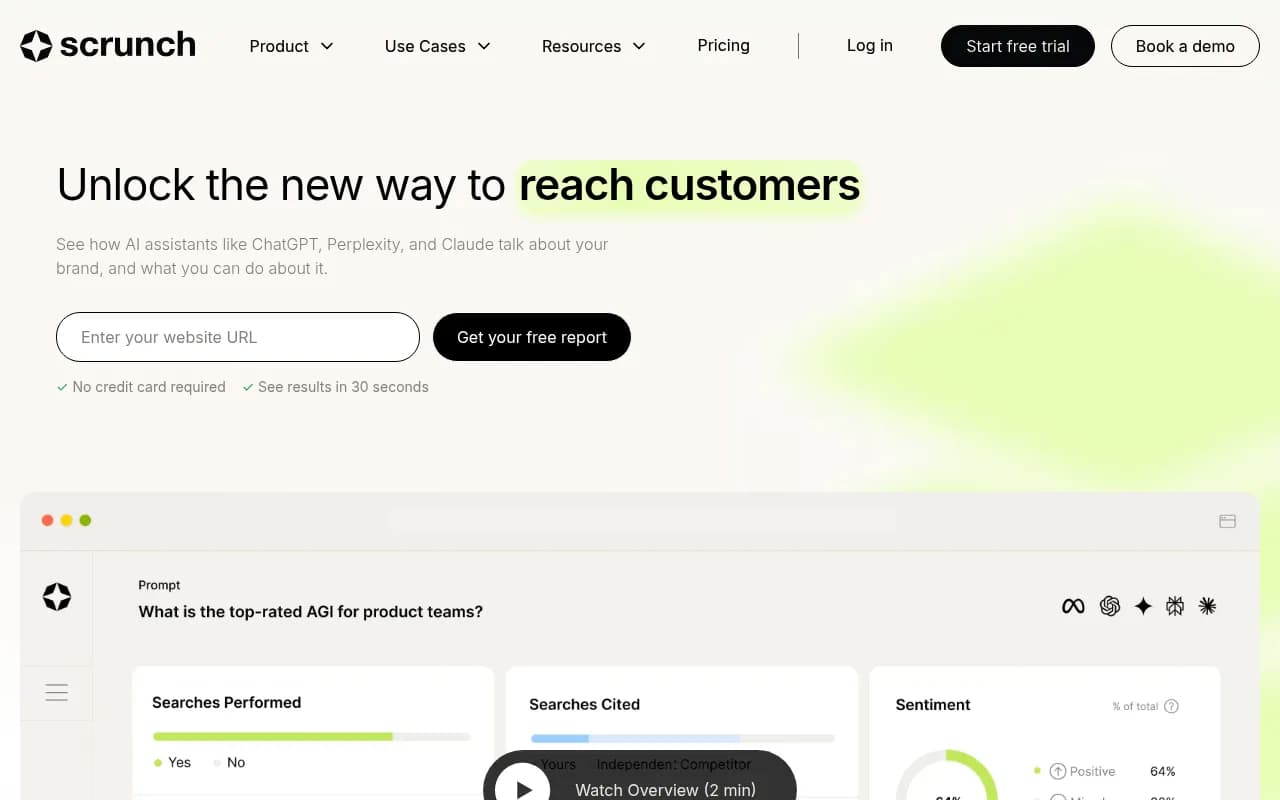
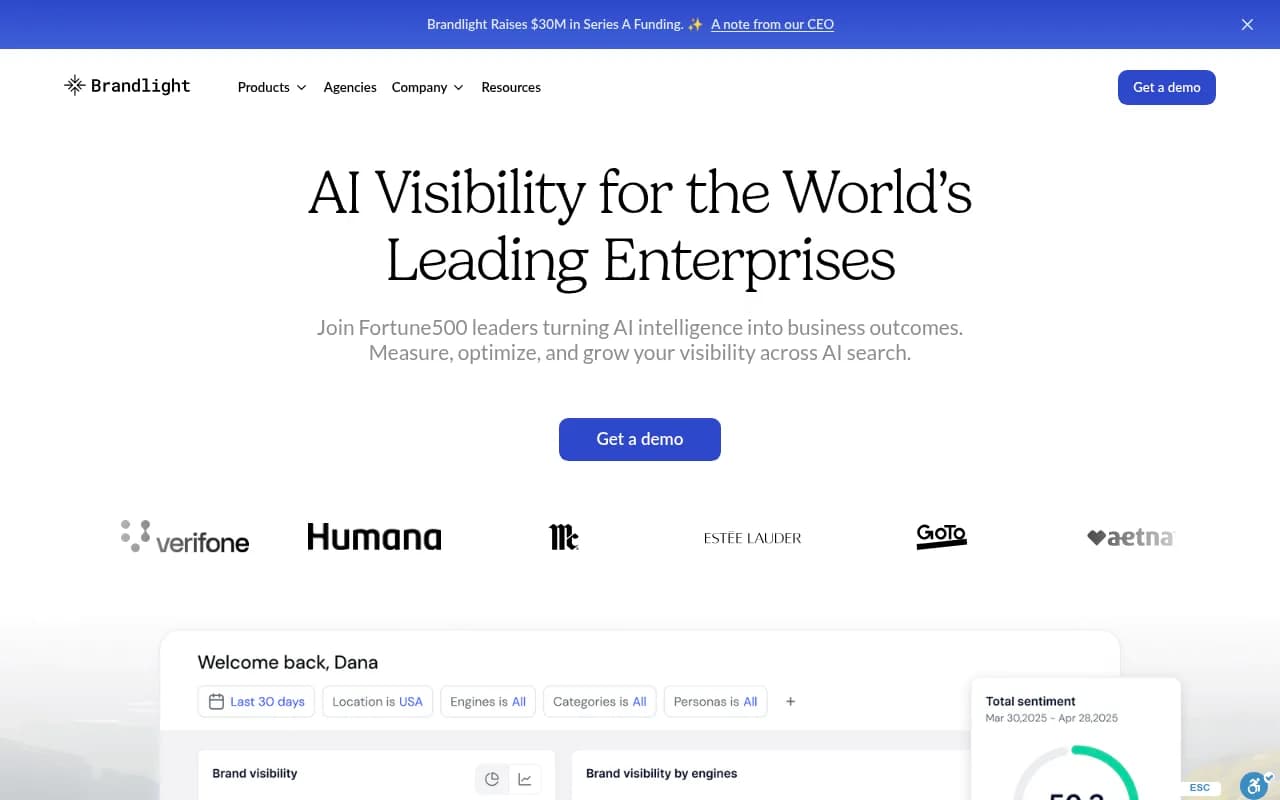
Scrunch AI and Brandlight.ai are worth considering for specific use cases (Scrunch has decent tracking depth; Brandlight focuses on brand sentiment in AI responses), but neither closes the loop to content creation.
For traditional SEO teams looking to add AI search monitoring to an existing workflow, Semrush has added AI search features, and Ahrefs has its Brand Radar. Both are limited compared to dedicated platforms -- Semrush uses fixed prompts, Ahrefs Brand Radar has no AI traffic attribution -- but they're reasonable starting points if you're already paying for those suites.
Red flags to watch for in vendor demos
When you're sitting through a demo, these are the things that should make you pause:
The demo is all dashboards, no workflows. If the entire demo is "here's your visibility score, here's a chart, here's a list of prompts" -- and there's no walkthrough of what you do next -- that's a reporting tool.
They can't explain how their data is collected. "We use AI to analyze AI" is not an answer. You want to know: do they query APIs or simulate real user interfaces? How often do they refresh data? How do they handle prompt variations?
Prompt coverage is fixed. Some platforms give you a set list of prompts you can monitor. That's fine for getting started, but you should be able to add custom prompts that reflect how your actual customers search. If you can't, you're tracking their assumptions about your market, not yours.
No mention of crawling or technical visibility. If a vendor never mentions how AI crawlers discover your content, they're not thinking about the technical side of AI search. That's a gap that will matter as you try to move from monitoring to optimization.
The pricing scales on "prompts" but not on outcomes. Prompt-based pricing is standard and reasonable. But if there's no tier that includes content generation or crawler logs, the platform is structurally designed to stay in the reporting lane.
Questions to ask in every vendor evaluation
Here's a short list you can use in any sales conversation:
- How do you collect data -- API calls or real UI simulation?
- Can I see which prompts competitors rank for that I don't?
- Does your platform help me create content to fill those gaps, or just identify them?
- Do you have AI crawler logs? Which crawlers do you track?
- Can I track offsite citations -- Reddit, YouTube, third-party sites?
- How do I connect AI visibility to actual traffic or revenue?
- Which AI models do you cover, and how often is data refreshed?
- Can I add custom prompts, or am I limited to a preset list?
- Do you support multi-language and multi-region monitoring?
- What does the workflow look like from "I found a gap" to "I published content to fix it"?
The answers to questions 2, 3, and 4 will tell you most of what you need to know about whether a platform is built for action or just for reporting.
A note on pricing and what it signals
Pricing in this market ranges from free tiers with very limited prompt counts to enterprise contracts in the tens of thousands per year. A few things to watch:
Free and very cheap tiers ($0-$50/month) are almost always monitoring-only. They're useful for getting a feel for the category but won't support serious optimization work.
Mid-range platforms ($99-$300/month) vary enormously. Some include content generation and crawler logs at this tier; most don't. Read the feature comparison carefully rather than assuming similar prices mean similar capabilities.
Enterprise pricing ($500+/month or custom) should include the full stack: gap analysis, content generation, crawler logs, offsite citations, traffic attribution, multi-region support, and API access. If an enterprise-priced platform is missing crawler logs or content generation, that's worth pushing back on.
The bottom line
The AI search visibility market is maturing fast, and the gap between monitoring tools and optimization platforms is widening. Monitoring tells you where you stand. Optimization changes where you stand.
When you evaluate any platform in 2026, the question isn't "does it track AI mentions?" -- almost all of them do. The question is what happens after you see the data. If the answer is "you get a report," you're paying for awareness. If the answer is "you get a workflow that takes you from gap to content to citation," you're paying for results.
That's the distinction worth building your evaluation around.