Key takeaways
- Google Business Profile data now feeds AI-generated answers in ChatGPT, Gemini, Perplexity, and Google AI Overviews -- an incomplete profile means you're invisible in those results
- NAP consistency, category accuracy, and review velocity are the three signals that matter most for both local pack rankings and AI citations
- Structured, specific content (services, descriptions, Q&A) gives AI models the context they need to recommend your business confidently
- User engagement signals -- photo clicks, direction requests, message responses -- have become a direct ranking factor in 2026
- Tracking your GBP performance alongside AI visibility gives you a complete picture of where customers actually find you
Why your GBP matters more in 2026 than it ever did
Something changed in how people search for local businesses. They used to type a query into Google, scan a list of links, and click through to a few websites. Now a growing number of people just ask ChatGPT or Gemini: "What's the best plumber in Philadelphia with good reviews?" They want two or three names, a quick reason to trust each one, and a phone number. That's it.
The data AI models use to answer those questions comes largely from your Google Business Profile. If your profile is sparse, outdated, or inconsistent, the AI either skips you entirely or -- worse -- gets your details wrong. For local and service-based businesses, this is the most consequential shift in search behavior in years.
Your GBP was already your digital storefront on Google Search and Maps. In 2026, it's also a structured data feed that powers AI recommendations across multiple platforms. That changes how you should think about maintaining it.
Step 1: Get the fundamentals right (NAP consistency)
Before anything else, your Name, Address, and Phone number need to be exactly consistent everywhere online. Not approximately consistent -- exactly. If your GBP says "Suite 200" but your website says "Ste. 200" and Yelp says nothing, that's a problem. AI models cross-reference multiple sources to verify business information, and discrepancies create doubt.
Check your NAP across:
- Your GBP listing
- Your website's contact page and footer
- Major directories (Yelp, Bing Places, Apple Maps, Facebook)
- Industry-specific directories relevant to your niche
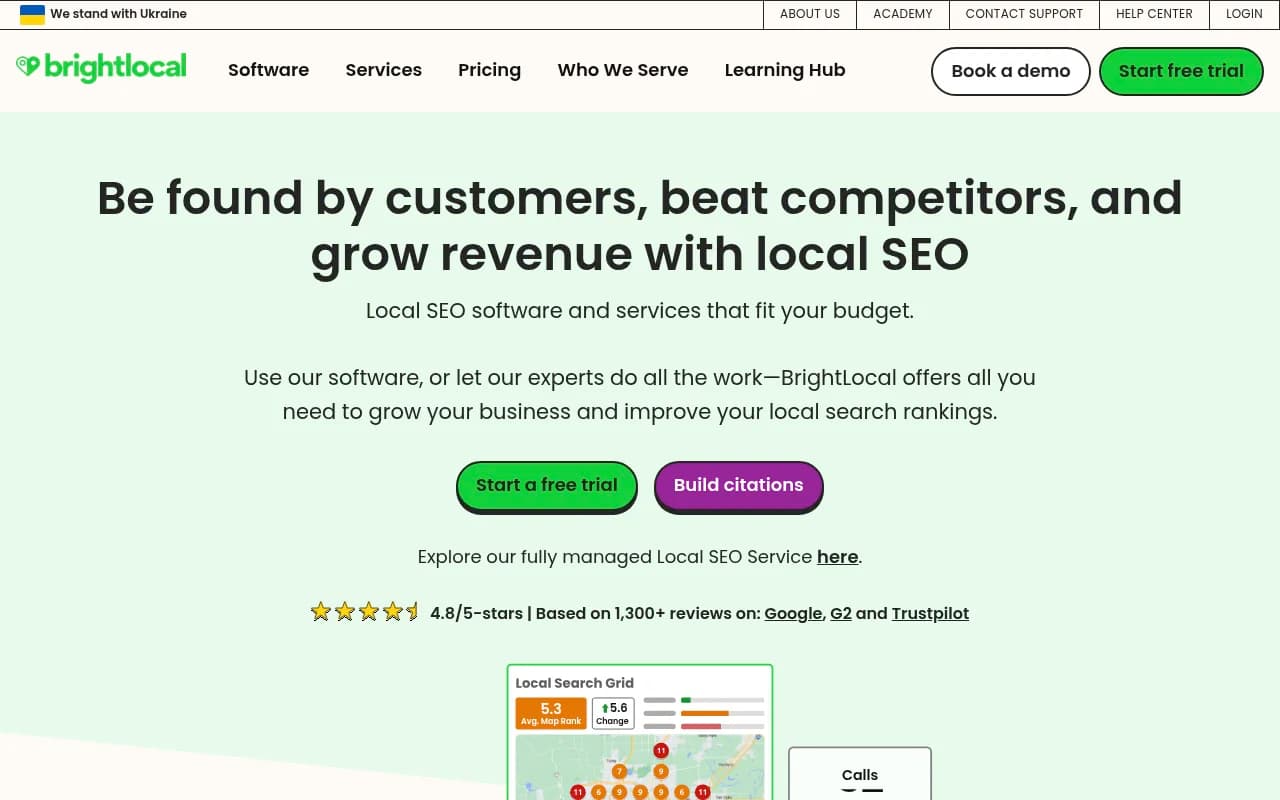
Tools like BrightLocal make it straightforward to audit citation consistency across dozens of directories at once.
While you're at it, make sure your business hours are accurate and include special hours for holidays. An AI that tells someone you're open when you're closed destroys trust fast.
Step 2: Choose categories with precision
Categories are how Google (and by extension, AI models) understand what your business does. Most businesses either pick too broad a primary category or stuff in too many secondary categories hoping to cast a wide net. Neither works well.
Your primary category should describe your core service as specifically as possible. "Plumber" is better than "Home Services Company." "Italian Restaurant" beats "Restaurant." The more specific the category, the more precisely Google can match you to relevant queries.
Secondary categories should cover genuine services you offer, not aspirational ones. If you run a dental practice that does general dentistry, cosmetic dentistry, and orthodontics, those are legitimate secondary categories. Adding "Oral Surgeon" when you don't have one on staff is the kind of inaccuracy that erodes trust signals.
One practical check: look at the categories your top local competitors use. If they're ranking in the local pack for queries you want, their category choices are worth studying.
Step 3: Write a business description that works for AI
The business description field (750 characters) is one of the most underused parts of a GBP. Most businesses write something vague like "We provide quality services to our customers." That tells an AI model almost nothing.
Write your description as if you're answering the question: "What does this business do, who does it serve, and why should someone choose it?" Be specific about:
- The services or products you offer
- The geographic area you serve
- Any genuine differentiators (years in business, certifications, specializations)
- The type of customer you work with
Avoid keyword stuffing. AI models are good at detecting it, and it reads poorly to humans too. Write for a person first; the AI will extract the relevant signals naturally.
Here's a rough contrast:
Weak: "ABC Plumbing offers plumbing services in the area. We are committed to quality and customer satisfaction."
Stronger: "ABC Plumbing has served residential and commercial customers in the Philadelphia metro area since 2008. We specialize in emergency repairs, water heater installation, and drain cleaning, with licensed plumbers available same-day for most calls."
The second version gives an AI model something concrete to work with when someone asks for a reliable plumber in Philadelphia.
Step 4: Build out your services and products
The Services section of GBP is where you can go deep. Each service entry has its own name, description, and price field. Fill these out completely.
This matters for AI search because it gives models a structured list of what you actually offer. When someone asks "does [business name] do X?" or "who offers X near me?", a well-populated services section is direct evidence.
For each service:
- Use the name customers would actually search for
- Write a 2-3 sentence description explaining what's included
- Add pricing where possible, even if it's a range
If you run a restaurant, the Products section serves a similar purpose. A menu with descriptions helps AI models answer "does [restaurant] have vegetarian options?" or "what's good at [restaurant]?"
Step 5: Photos and visual content
User engagement with your photos is now a ranking signal. That's not speculation -- it's confirmed by how Google's local ranking algorithm has evolved. Profiles with recent, high-quality photos get more clicks, and more clicks signal relevance.
What to upload:
- Exterior shots (helps people recognize your location)
- Interior shots (sets expectations, builds trust)
- Team photos (humanizes the business)
- Work-in-progress or finished project photos (for service businesses)
- Product photos (for retail or restaurants)
Upload new photos regularly -- monthly at minimum. A profile where the most recent photo is from 2022 signals a business that isn't paying attention.
Video works too. Short clips of your space, team, or work process perform well and are still underused by most local businesses.
Step 6: Reviews -- volume, recency, and responses
Reviews are probably the single most important factor in whether AI models recommend your business. When ChatGPT or Gemini answers "best [service] in [city]," they're pulling from review data to assess quality and trustworthiness.
Three things matter:
Volume. More reviews generally mean more trust signals. A business with 12 reviews is harder for an AI to confidently recommend than one with 200.
Recency. A stream of recent reviews tells AI models (and humans) that your business is active and consistently performing. A burst of reviews from three years ago followed by silence is a yellow flag.
Your responses. Responding to reviews -- especially negative ones -- signals that you're engaged. It also gives you a chance to naturally include relevant keywords and service mentions in your responses, which AI models can read.
Build a simple system for asking satisfied customers to leave reviews. A follow-up text or email with a direct link to your review page removes friction and meaningfully increases conversion.
Step 7: Use Google Posts consistently
Google Posts appear directly on your profile and are one of the few places you can publish fresh, structured content without needing a website update. AI models can read these posts, and they signal an active, current business.
Post about:
- New services or seasonal offerings
- Special promotions or events
- Recent work or case studies (for service businesses)
- Answers to common customer questions
Keep posts under 300 words and include a clear call to action. Posts expire after 7 days (for most types), so weekly publishing is the right cadence if you want consistent coverage.
Step 8: Q&A section -- don't leave it to strangers
The Q&A section of your GBP is publicly editable. Anyone can ask a question, and anyone can answer it. If you're not actively managing this section, you might have incorrect or unhelpful answers sitting there right now.
Go through your Q&A and:
- Answer any unanswered questions
- Correct any inaccurate answers
- Seed the section with questions you commonly hear from customers, then answer them yourself
This last point is particularly valuable for AI search. When someone asks an AI "does [business] offer X?", a well-answered Q&A entry is a direct source the model can cite. Think of it as a structured FAQ that lives on your profile.
Step 9: Attributes and accessibility features
GBP attributes let you flag specific features of your business: wheelchair accessible, outdoor seating, LGBTQ+ friendly, free Wi-Fi, accepts credit cards, and dozens more depending on your category.
These attributes feed directly into filtered searches and AI responses. When someone asks "coffee shops near me with outdoor seating," businesses with that attribute checked are far more likely to appear. Fill out every relevant attribute honestly.
Step 10: Track performance and close the loop
Optimizing your GBP without tracking results is guessing. Google's built-in Insights panel shows you search queries, profile views, direction requests, calls, and website clicks. Check these monthly and look for trends.
But GBP Insights only tells part of the story. It doesn't tell you whether your business is appearing in ChatGPT responses, Perplexity answers, or Google AI Overviews. For that, you need a separate layer of tracking.
Promptwatch is built for exactly this -- tracking how your brand appears across AI search engines like ChatGPT, Gemini, Perplexity, and Google AI Overviews, and identifying the specific gaps where competitors are getting cited but you're not.

The combination of GBP Insights (for traditional local search) and an AI visibility platform (for LLM-driven discovery) gives you a complete picture of where customers are finding you and where you're missing out.
How GBP signals feed into different AI search engines
It's worth understanding which AI platforms actually use GBP data and how.
| AI platform | Uses GBP data | How it appears |
|---|---|---|
| Google AI Overviews | Yes, directly | Local pack results, business summaries |
| Google AI Mode | Yes, directly | Conversational local recommendations |
| Gemini | Yes, via Google index | Business recommendations in chat |
| ChatGPT | Indirectly (via web browsing) | Cited in local recommendations |
| Perplexity | Indirectly (via web crawling) | Business mentions in answers |
| Grok | Indirectly | Occasional business references |
Google's own AI products have the most direct access to GBP data, which is why optimizing your profile is the highest-leverage action for local AI visibility. But the indirect pathways matter too -- ChatGPT and Perplexity crawl the web, and your GBP data surfaces on Google Maps pages, your website, and directory listings that these models index.

Common mistakes that hurt AI visibility
A few patterns consistently hold businesses back:
Inconsistent business names. Using "ABC Plumbing Co." in one place and "ABC Plumbing Company" in another creates ambiguity. Pick one and use it everywhere.
Ignoring the description and services sections. These are free structured content fields that AI models read. Leaving them blank or generic is a missed opportunity.
Not responding to negative reviews. AI models can read review sentiment and your responses. A business that ignores complaints looks less trustworthy than one that engages professionally.
Letting the profile go stale. No new photos, no posts, no recent reviews. Stale profiles rank lower and get cited less.
Wrong primary category. This is the most common technical mistake. If your primary category doesn't match your core service, you'll struggle to rank for the queries that matter most.
A practical monthly GBP maintenance routine
You don't need to spend hours on this every week. A consistent monthly routine covers most of it:
- Check and update business hours (especially around holidays)
- Upload 3-5 new photos
- Publish 2-4 Google Posts
- Respond to all new reviews
- Review and answer any new Q&A questions
- Check GBP Insights for any unusual drops in views or actions
- Verify NAP consistency if you've made any changes to contact info
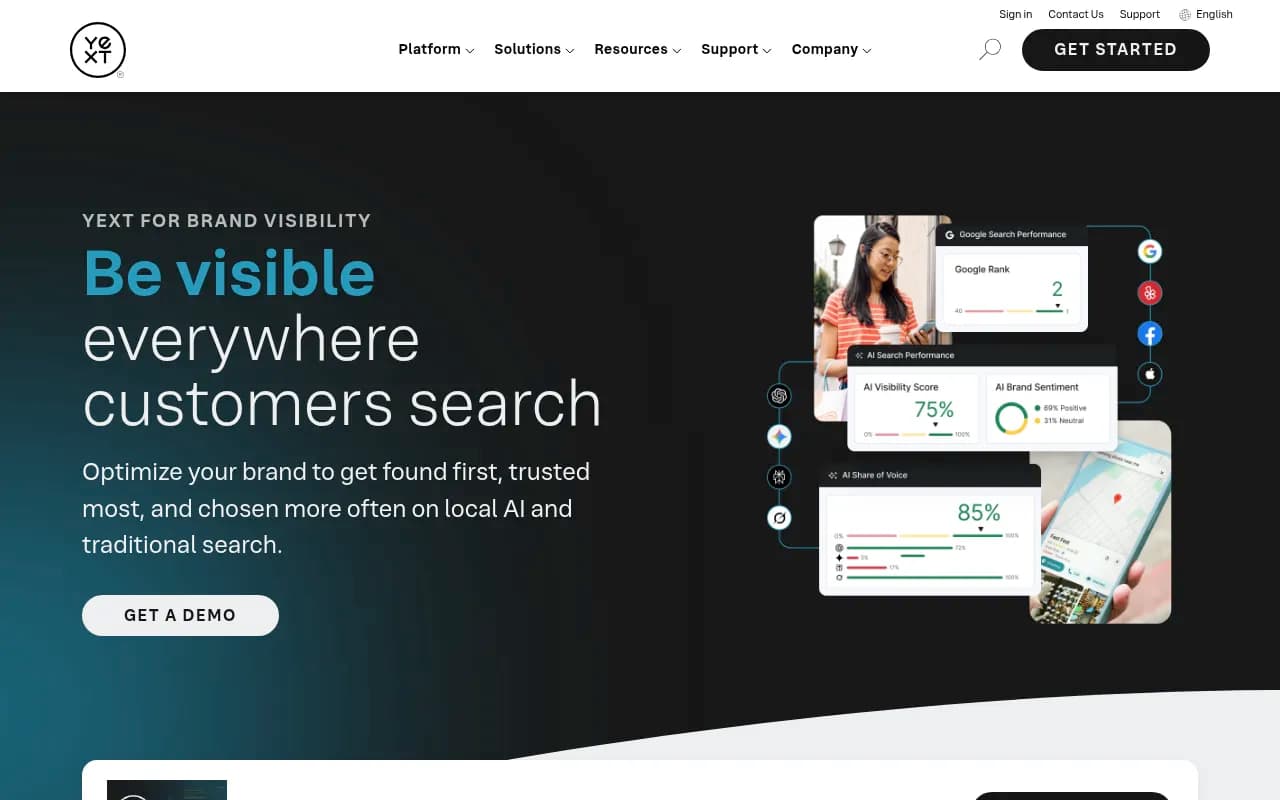
For multi-location businesses, tools like BrightLocal or Yext can help manage this at scale.
Connecting GBP optimization to broader AI search strategy
Your GBP is one piece of a larger AI visibility puzzle. AI models don't just read your profile -- they read your website, your reviews across multiple platforms, mentions of your business on Reddit and other forums, and the content you publish.
A business that has a well-optimized GBP but a thin website will still lose out to a competitor whose website clearly explains their services, expertise, and location. The two need to work together.
If you want to go deeper on how AI models discover and cite businesses, tracking tools like Promptwatch show you exactly which prompts are driving citations in your category, which competitors are winning those prompts, and what content gaps you need to fill to compete.
The core insight is this: AI search rewards clarity and completeness. The more clearly and consistently you describe what your business does, where it operates, and why customers trust it -- across your GBP, your website, and the broader web -- the more confidently AI models will recommend you.
That's not a new principle. It's just more consequential now than it used to be.