Key takeaways
- Most AI visibility platforms show you where you're invisible but don't help you fix it. Only a few have genuine content generation built in.
- Promptwatch is the most complete end-to-end platform: gap analysis, AI writing grounded in citation data, crawler logs, and traffic attribution in one place.
- AirOps is a strong choice for enterprise content teams that want governed, scalable content production -- but it requires more setup.
- Atomic AGI combines tracking with workflow automation and is worth a look for teams that want flexibility without enterprise pricing.
- Searchable has the right idea (visibility + content in one tool) but is the newest and least proven of the four.
The pitch sounds the same across all four platforms: track your AI visibility, find the gaps, create content that gets cited. But when you actually dig in, the differences are significant -- in what data they use, how the content generation works, and whether the whole thing actually connects to results.
This guide breaks down each platform honestly. No feature-list padding. Just what they do, what they're missing, and who should actually use them.
Why "monitoring + content generation" is the right idea (but hard to execute)
AI search has created a new problem for marketing teams. You can rank well in Google and still be invisible in ChatGPT, Perplexity, or Google AI Mode. The fix isn't just "publish more content" -- it's publishing the right content, the kind that AI models actually want to cite.
That requires two things working together: knowing which prompts and topics you're missing (monitoring), and being able to create content that addresses those gaps in a way AI models will pick up (generation). Most tools do one or the other. The four platforms in this comparison all claim to do both.
Here's how they actually stack up.
Promptwatch
Promptwatch is the most complete platform in this comparison for teams that want to go from "we don't know where we're invisible" to "we published content and our visibility improved."

The monitoring side covers 10 AI models -- ChatGPT, Perplexity, Claude, Gemini, Google AI Overviews, Google AI Mode, DeepSeek, Grok, Copilot, and Mistral. That's broader than most competitors. But what sets it apart is what happens after you see the data.
The Answer Gap Analysis shows you exactly which prompts competitors are appearing for that you're not. Not vague topic areas -- specific prompts, with volume estimates and difficulty scores. You can see which gaps are worth chasing and which aren't.
From there, the built-in AI writing agent generates articles, listicles, and comparisons grounded in real citation data. Promptwatch has analyzed 880M+ citations, so the content suggestions aren't generic -- they're shaped by what AI models actually cite in practice. The agent factors in prompt volumes, persona targeting, and competitor analysis before writing anything.
The third piece is tracking. Page-level visibility scores show which of your pages are being cited, by which models, and how often. Traffic attribution closes the loop: you can connect AI visibility to actual sessions and revenue via a code snippet, Google Search Console integration, or server log analysis.
A few features that competitors mostly lack: AI Crawler Logs (real-time logs of ChatGPT, Claude, and Perplexity crawlers hitting your site), Reddit and YouTube tracking (which discussions influence AI recommendations), and ChatGPT Shopping tracking for product brands.
Pricing starts at $99/month for the Essential plan (1 site, 50 prompts, 5 articles). Professional is $249/month and adds crawler logs, city/state tracking, and 15 articles. Business is $579/month for 5 sites and 30 articles. A free trial is available.
The one honest limitation: the article output is strong but not magic. You still need a human to review and refine before publishing. That's true of every AI writing tool, but worth saying.
Best for: Marketing and SEO teams that want a single platform covering the full cycle -- find gaps, create content, track results -- without stitching together multiple tools.
AirOps
AirOps comes at this from a different angle. It's less of a monitoring-first platform and more of a content engineering system that happens to include AI visibility tracking.
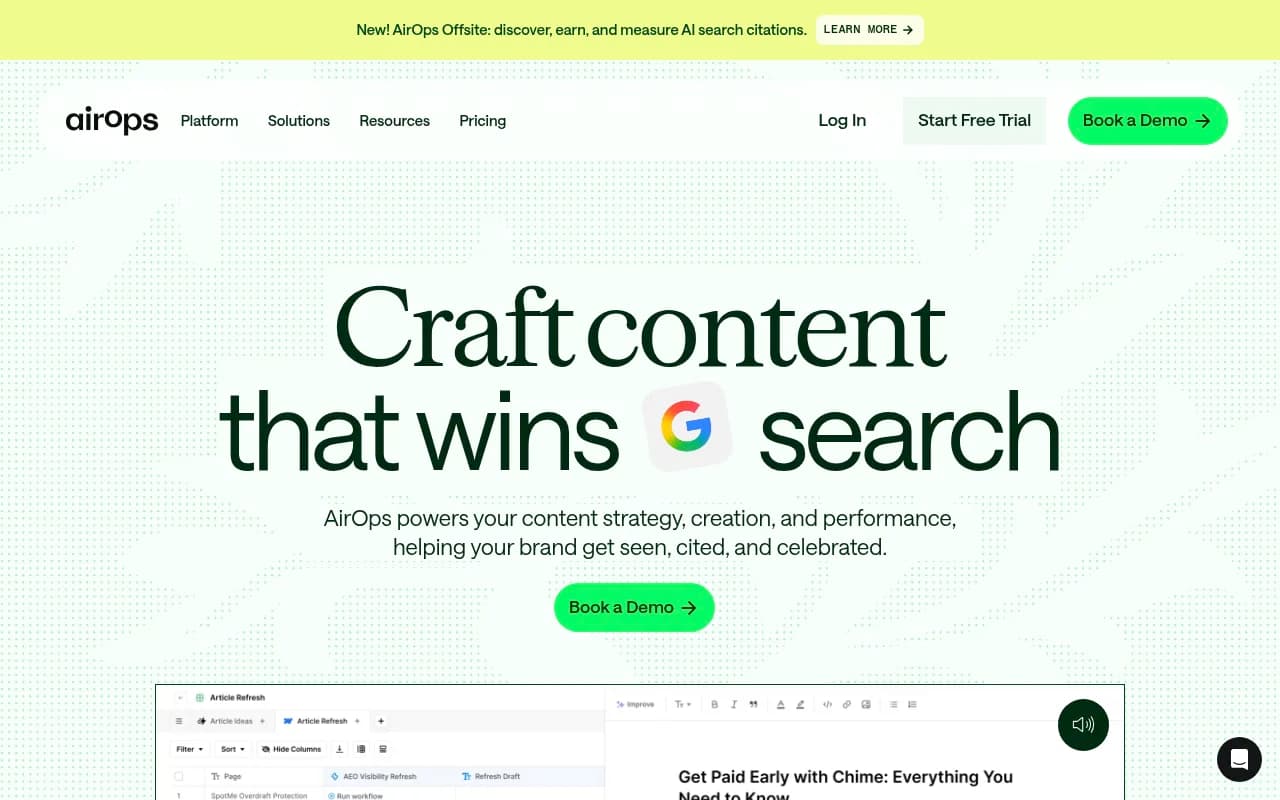
The core use case is enterprise content production at scale. AirOps lets teams build governed workflows for AI content -- with approval steps, brand voice controls, and integrations into existing CMS and publishing systems. If you have a large content team managing hundreds of pages, that governance layer matters.
On the visibility side, AirOps tracks share of voice, citations, and mentions across major AI engines. The gap analysis functionality exists, but it's more focused on feeding the content production pipeline than on deep prompt-level intelligence. You won't get the same granularity on prompt volume estimates or query fan-outs that Promptwatch provides.
Where AirOps genuinely shines is the content execution side. The platform is built around the idea that insight without execution is useless -- and it's designed to remove the bottleneck between "we know what content we need" and "that content is published." For enterprise teams with complex approval processes, that's a real problem worth solving.
The tradeoff is setup time. AirOps requires more configuration upfront than the other tools in this comparison. It's not a "sign up and start tracking" experience -- it's closer to implementing a content operations system. That's fine if you have the resources, but it's not the right fit for a lean team.
Pricing isn't publicly listed in detail; you'll need to book a demo for enterprise pricing. There is a free trial.
Best for: Enterprise content teams that need governed, scalable AI content production and have the resources to configure a more complex system.
Atomic AGI
Atomic AGI positions itself as an AI-native SEO platform that combines multi-engine tracking with workflow automation. It's the most flexible of the four in terms of how you can set up your monitoring and content workflows.
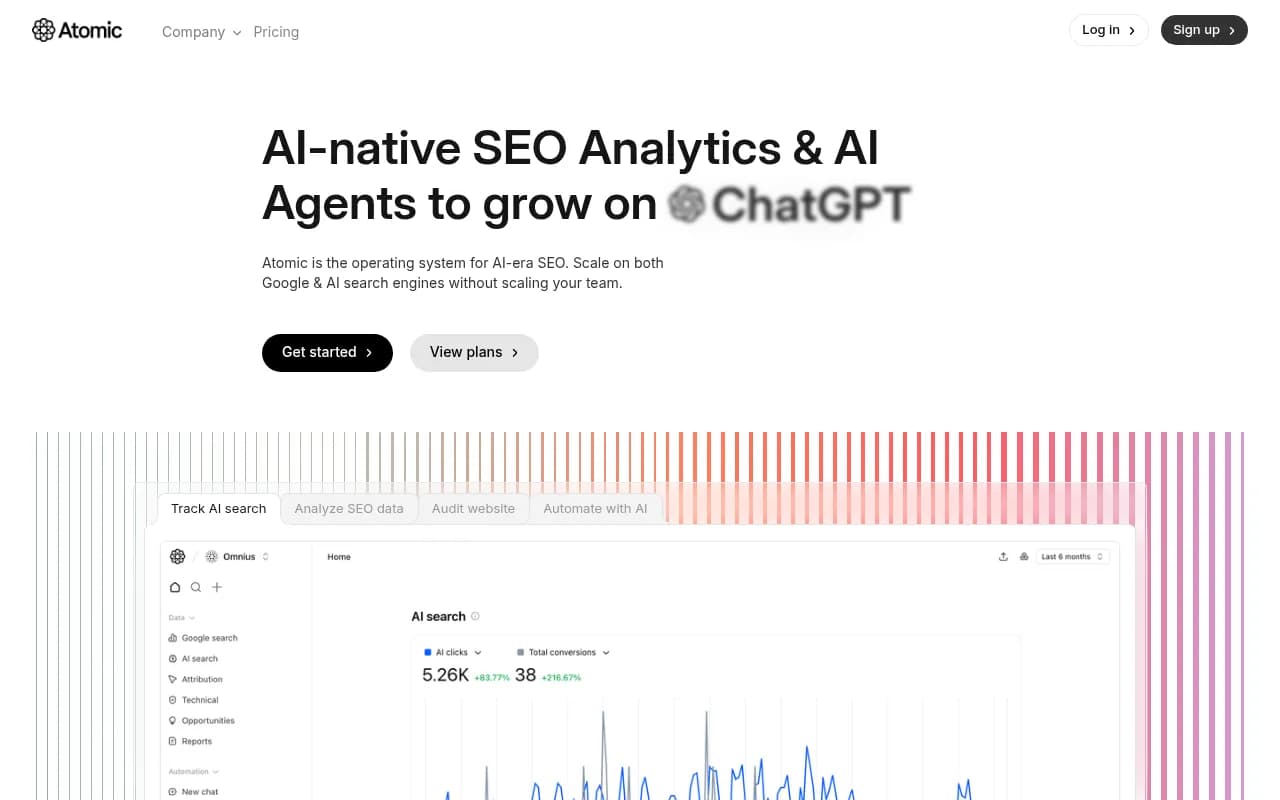
The tracking side covers the major AI engines and includes competitive benchmarking. The workflow automation angle is interesting -- Atomic AGI lets you build custom sequences that connect visibility data to content tasks, which is useful if you want to automate parts of your GEO process without being locked into a single tool's opinionated workflow.
Content generation is present but not as deeply integrated with citation data as Promptwatch's approach. The writing features are more general-purpose AI writing than citation-grounded content engineering. That's a meaningful difference: content that's written based on what AI models actually cite is more likely to get cited than content that's just topically relevant.
Atomic AGI is worth considering if you want flexibility and don't need the full depth of Promptwatch's citation database or AirOps's enterprise governance. It sits in a middle ground -- more capable than basic monitoring tools, less opinionated than AirOps.
Pricing is more accessible than AirOps and competitive with Promptwatch's mid-tier plans.
Best for: Teams that want AI visibility tracking plus content workflow automation and prefer a flexible, less prescriptive setup.
Searchable
Searchable is the newest entrant in this comparison and has the clearest positioning: AI search visibility with built-in content generation, aimed at teams that want both in one place.
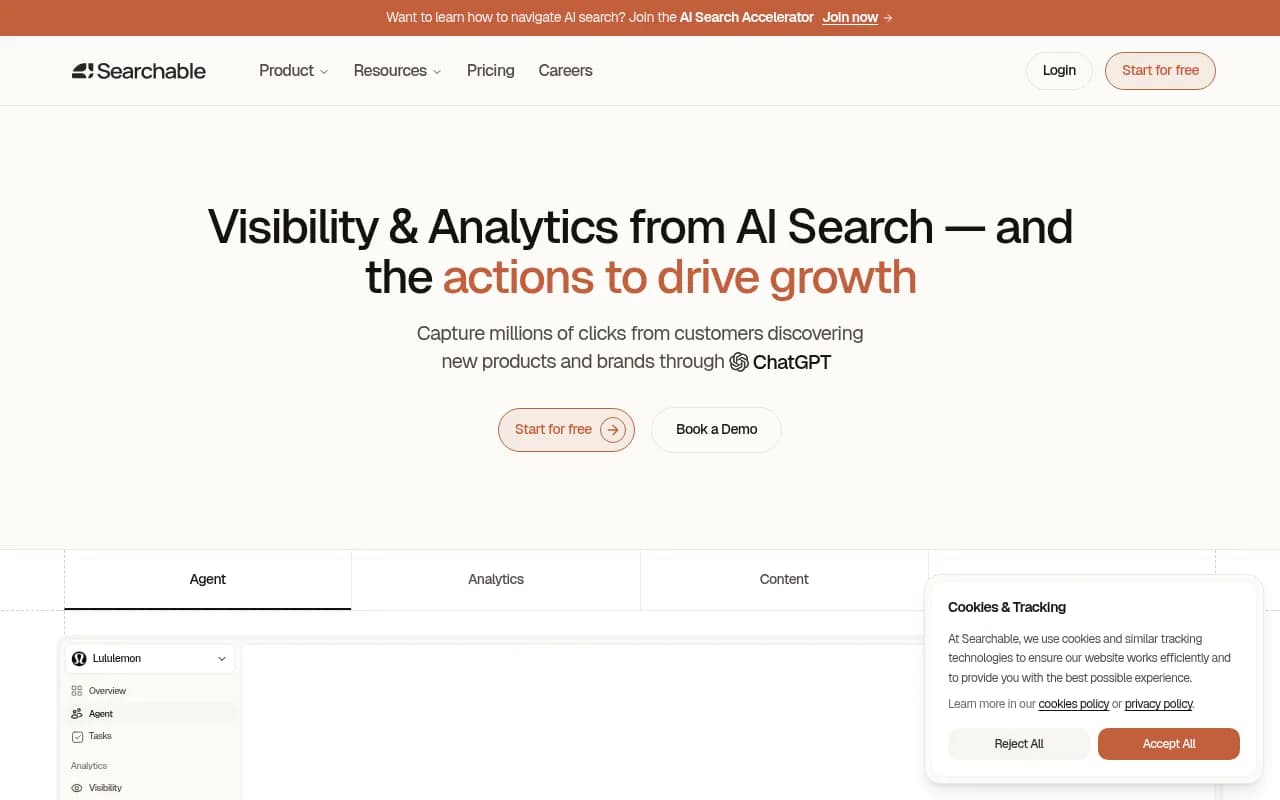
The honest assessment: the concept is right, but the platform is still maturing. Monitoring coverage is solid for the major AI engines. The content generation features exist and are functional. But the depth of citation data, the prompt intelligence layer, and the traffic attribution capabilities are not yet at the level of Promptwatch or AirOps.
That's not a permanent knock -- newer platforms catch up. And Searchable's pricing is competitive, which makes it worth watching. But if you're making a decision today for a team that needs reliable data and proven results, it's the highest-risk choice of the four.
Best for: Teams with smaller budgets who want to experiment with the monitoring + content generation combination and don't need enterprise-grade depth yet.
Side-by-side comparison
| Feature | Promptwatch | AirOps | Atomic AGI | Searchable |
|---|---|---|---|---|
| AI engines monitored | 10 (ChatGPT, Perplexity, Claude, Gemini, Google AIO, AI Mode, DeepSeek, Grok, Copilot, Mistral) | Major engines (ChatGPT, Perplexity, Gemini, Google AI) | Major engines | Major engines |
| Prompt-level gap analysis | Yes, with volume + difficulty scores | Yes, focused on content pipeline | Yes | Basic |
| Content generation | Yes, grounded in 880M+ citations | Yes, with governance workflows | Yes, general-purpose | Yes |
| AI crawler logs | Yes | No | No | No |
| Traffic attribution | Yes (snippet, GSC, server logs) | Limited | Limited | No |
| Reddit + YouTube tracking | Yes | No | No | No |
| ChatGPT Shopping tracking | Yes | No | No | No |
| Query fan-outs | Yes | No | No | No |
| Setup complexity | Low-medium | High | Medium | Low |
| Starting price | $99/month | Custom (demo required) | Competitive | Competitive |
| Free trial | Yes | Yes | Yes | Yes |
| Best for | Full-cycle GEO teams | Enterprise content operations | Flexible workflow automation | Budget-conscious teams |
How to choose
The right choice depends on where your team's bottleneck actually is.
If you're starting from zero and need to understand your AI visibility, find gaps, create content, and track whether it's working -- all in one place -- Promptwatch is the most complete option. The citation-grounded content generation and the traffic attribution are genuinely differentiated. Most competitors stop at the monitoring dashboard; Promptwatch is built around the full loop.
If you're at an enterprise with a large content team, complex approval processes, and a need for governed AI content production at scale, AirOps is worth the setup investment. It's less of a visibility tool and more of a content operations system, but for the right team it solves a real problem.
If you want flexibility and workflow automation without committing to an enterprise system, Atomic AGI is a reasonable middle ground. The content generation isn't as citation-grounded as Promptwatch's, but the workflow flexibility is useful.
If budget is the primary constraint and you're willing to accept a less mature platform, Searchable is worth a trial. Just go in with realistic expectations about depth.
The question most teams don't ask
Most teams evaluating these tools focus on the monitoring features -- how many AI engines, how often prompts run, how the dashboard looks. That's the wrong starting point.
The better question is: what happens after I see the data? Can I turn a visibility gap into published content without switching tools? Can I see whether that content actually improved my citations? Can I connect citations to traffic and revenue?
That's where the real differences show up. Monitoring is table stakes in 2026. The platforms that matter are the ones that help you do something about what you find.