Key takeaways
- Traditional rank tracking measures position 1-10 in blue-link results. AI Overview tracking measures citation inclusion -- a binary yes/no that position numbers can't capture.
- Gartner predicted a 25% drop in traditional search volume by 2026 as AI answers satisfy queries directly on the SERP. That shift is now playing out.
- Click-through rate data from a 2026 Seer Interactive study (53 brands, 5.47 million tracked queries) confirms that AI Overviews reduce organic CTR for informational queries -- but brands cited inside the overview often see higher-quality traffic.
- The two tracking approaches aren't mutually exclusive. In 2026, you need both -- but they measure fundamentally different things.
- Tools like Promptwatch are built specifically for AI visibility tracking, while traditional tools like AccuRanker and Semrush remain strong for blue-link rank monitoring.
If you've been doing SEO for more than a few years, rank tracking feels familiar. You pick keywords, connect a tool, and watch positions move up or down. Position 1 is good. Position 11 is not. The logic is simple.
Google AI Overviews broke that logic.
When Google generates a synthesized answer at the top of the results page, the question isn't "what position did I rank?" -- it's "did I get cited at all, and what did Google say about me?" Those are genuinely different questions. And answering them requires genuinely different tools and metrics.
Here are the eight key differences between AI Overview rank tracking and traditional SEO rank tracking in 2026.
1. Position vs citation: what you're actually measuring
Traditional rank tracking gives you a number. You're in position 3 for "best project management software." That number is meaningful because it correlates with click probability -- position 1 gets roughly 10x the clicks of position 10.
AI Overview tracking doesn't give you a position. It gives you a citation status. Either your page was pulled into the AI-generated summary or it wasn't. There's no position 2 inside an AI Overview -- there's "cited" and "not cited."
This is the most fundamental difference. A page that ranks position 5 organically but gets cited in the AI Overview may generate more visibility than the page sitting at position 1 below the fold. Conversely, a page at position 1 that gets displaced by an AI Overview that doesn't cite it can see CTR drop significantly.
The metric you optimize for changes completely. Traditional SEO optimizes for position. AI Overview optimization targets citation inclusion.
2. Keyword ranking vs prompt matching
Traditional rank tracking is built around keywords. You define a list -- "best CRM for small business," "project management software pricing" -- and track where you rank for each one.
AI Overviews are triggered by prompts, not keywords. When someone types a conversational question into Google, the system generates sub-queries internally, pulls relevant passages from multiple sources, and synthesizes an answer. The query "what's the best CRM for a 10-person sales team with a tight budget" might fan out into five different sub-queries behind the scenes.
This means traditional keyword lists miss a huge portion of the AI Overview landscape. You can rank well for your tracked keywords and still be invisible in AI Overviews for the conversational prompts your actual customers are typing.
Effective AI Overview tracking requires prompt-based monitoring -- tracking how AI responds to full questions and scenarios, not just keyword fragments. Tools built for this purpose track prompt variations, query fan-outs, and the specific passages Google pulls when it generates an overview.

3. Single-engine tracking vs multi-surface tracking
Traditional rank tracking has one job: monitor Google (and maybe Bing) organic results. The SERP is predictable. Ten blue links, some ads, maybe a featured snippet.
AI Overview tracking has to account for a much messier surface. Google AI Overviews appear inconsistently -- they show up for some queries and not others, they vary by device, location, and user history, and they change more frequently than organic rankings do. A page cited in an AI Overview on Monday may not be cited on Friday.
Beyond Google, the AI search landscape in 2026 includes ChatGPT, Perplexity, Claude, Gemini, Grok, DeepSeek, Copilot, and Meta AI. Each has its own citation logic. A brand that's well-cited in Perplexity may be invisible in ChatGPT. Traditional rank trackers don't touch any of these surfaces.
If you're only tracking Google organic positions, you have a partial picture of your search visibility -- and that partial picture is shrinking as a share of total search behavior.
| Tracking dimension | Traditional SEO tools | AI Overview / GEO tools |
|---|---|---|
| Google organic positions | Yes | Partial |
| Google AI Overviews | No | Yes |
| ChatGPT citations | No | Yes |
| Perplexity citations | No | Yes |
| Claude, Gemini, Grok | No | Yes |
| Featured snippets | Yes | Partial |
| Local pack | Yes | Partial |
| Reddit/YouTube influence | No | Yes (advanced tools) |
4. CTR as a success metric vs citation quality
In traditional SEO, click-through rate is the bridge between ranking and traffic. You track impressions, clicks, and CTR in Google Search Console. A position 1 result with a 30% CTR is performing well. A position 1 result with a 5% CTR has a title/meta problem.
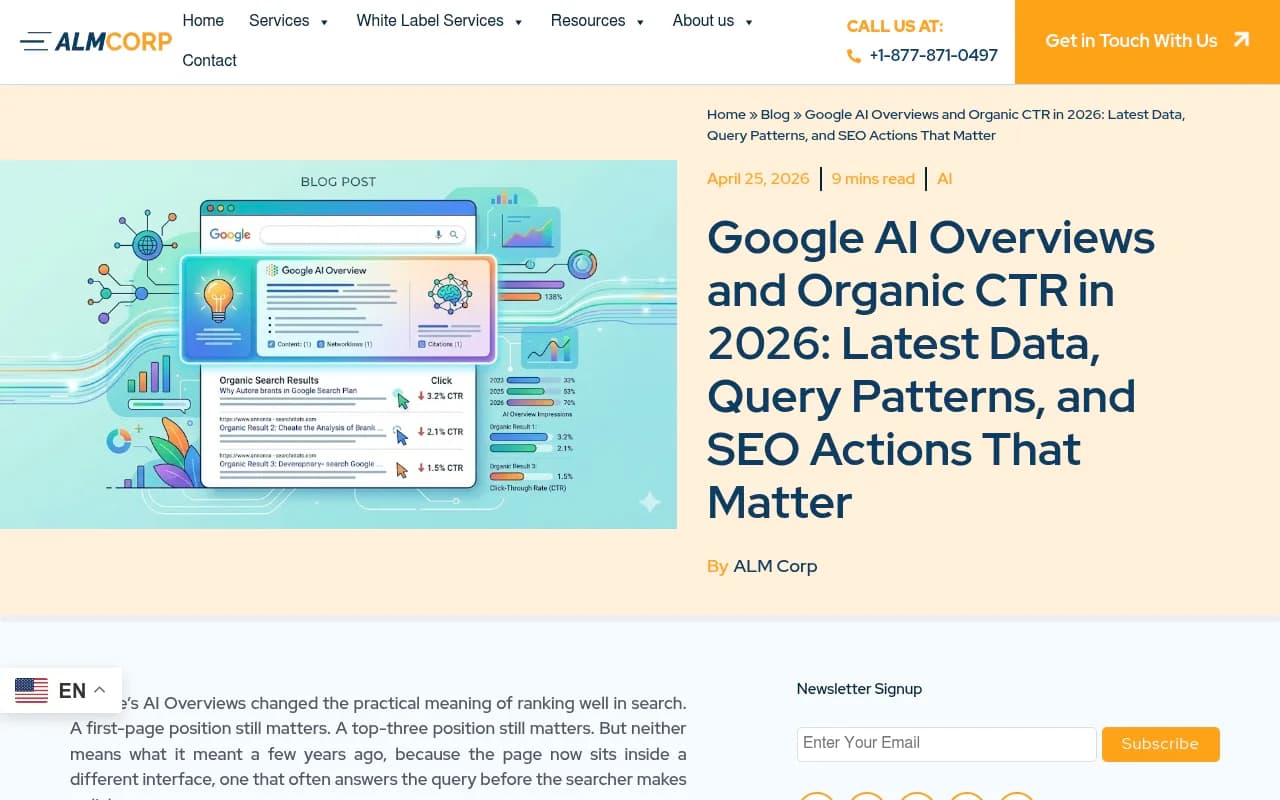
AI Overviews complicate this. The Seer Interactive 2026 study found that when AI Overviews appear, CTR for the organic results below them drops -- sometimes sharply for informational queries. But here's the nuance: pages that are actually cited inside the AI Overview often see different behavior. The traffic that does click tends to be higher-intent, because the user has already read a synthesized answer and wants to go deeper.
This means "CTR" as a standalone metric becomes less useful. You need to track:
- Whether you're cited in the AI Overview at all
- What the AI says about you when it cites you (sentiment, accuracy, context)
- Whether cited traffic converts differently than non-cited organic traffic
Traditional rank trackers don't capture any of this. They see a drop in organic CTR and report it as a loss, without context about whether you're gaining AI Overview visibility that offsets it.
5. Stable rankings vs volatile citations
One thing traditional rank tracking has going for it: rankings are relatively stable. A page that ranks position 2 today is likely to rank position 2 next week, barring a major algorithm update. This stability makes weekly or daily rank checks meaningful.
AI Overview citations are far more volatile. Google's AI Overviews update frequently, pull from different sources depending on query phrasing, and can change based on factors that have nothing to do with your page's authority or content quality. A page cited today might not be cited tomorrow for the same query -- and a page that was never cited might suddenly appear after a content update.
This volatility has two implications. First, you need higher-frequency monitoring for AI Overview tracking than traditional rank tracking. Second, you need to track citation patterns over time, not just point-in-time snapshots. A page that gets cited 70% of the time for a given prompt is more valuable than one cited 20% of the time, even if both show up in a single snapshot.
6. Backlink authority vs entity clarity and structured data
Traditional SEO rank tracking is downstream of a well-understood ranking model: content relevance + backlink authority + technical health = rankings. The tools built around this model (Ahrefs, Semrush, Moz) are excellent at measuring these inputs.
AI Overview inclusion works differently. Google's AI system cares about entity clarity -- does it understand unambiguously who you are, what you do, and what your expertise covers? It cares about structured data -- can it parse your content into discrete facts and claims? And it cares about third-party validation -- are you mentioned in authoritative sources, forums, and publications that the AI model trusts?
Backlinks still matter, but they're not the primary lever. A page with modest backlinks but excellent structured markup, clear entity signals, and citations from trusted sources can outperform a high-DA page with thin, unstructured content in AI Overviews.
This means the diagnostic questions change. Traditional tracking asks "why did my ranking drop?" and points you toward lost backlinks or technical errors. AI Overview tracking asks "why am I not being cited?" and points you toward entity gaps, missing structured data, or content that doesn't directly answer the prompts Google is processing.
7. Traffic attribution: GSC vs AI-specific analytics
Traditional rank tracking integrates cleanly with Google Search Console. You can see exactly which queries drove impressions and clicks, match them to your tracked keywords, and attribute traffic to specific pages with reasonable confidence.
AI Overview traffic attribution is a mess by comparison. Google Search Console doesn't currently distinguish between clicks that came from AI Overview citations and clicks that came from organic blue links. Traffic from ChatGPT, Perplexity, and other AI engines shows up in analytics as direct traffic or gets misattributed entirely.
This creates a real measurement gap. Brands that are getting meaningful AI-referred traffic often can't see it clearly in their standard analytics setup. Some platforms have started addressing this with server log analysis, UTM tracking for AI referrers, and direct integrations with AI search APIs -- but it requires deliberate setup.
The practical implication: if you're only looking at GSC data to evaluate your search visibility, you're missing a growing share of the picture. AI-referred traffic from sources like Perplexity does show up with referral attribution when users click through, but the volume of zero-click AI interactions (where the user gets their answer without clicking) is invisible to standard analytics entirely.
8. Competitive benchmarking: SERP positions vs share of voice in AI
Traditional competitive rank tracking is straightforward: you and your competitors track the same keywords, and you compare positions. If you're at position 3 and a competitor is at position 1, the gap is clear and actionable.
AI Overview competitive analysis is more complex. The question isn't "who ranks higher" -- it's "who gets cited more often, for which prompts, and what does the AI say about each brand?" A competitor might be cited in 80% of AI Overviews for your core category while you appear in 20%. That gap is harder to see and harder to close than a position difference.
Share of voice in AI search -- the percentage of relevant prompts where your brand appears in AI-generated answers -- is becoming the competitive metric that matters. It's harder to measure than position tracking, but it's a more accurate reflection of actual visibility in how people are searching in 2026.
What this means for your tracking setup in 2026
You don't have to choose between traditional rank tracking and AI Overview tracking. Most serious SEO teams need both -- they're measuring different things.
Traditional rank tracking still matters for:
- Monitoring blue-link positions for transactional and commercial queries
- Tracking technical SEO health and recovery after site changes
- Competitive benchmarking on keyword-level performance
- Feeding data into forecasting models built on historical position/CTR curves
AI Overview tracking matters for:
- Understanding whether you're visible in the answers Google generates for informational and research queries
- Monitoring what AI models say about your brand across ChatGPT, Perplexity, Claude, and others
- Identifying content gaps -- the prompts where competitors are cited and you're not
- Measuring citation quality and sentiment, not just citation presence
The tools that handle traditional tracking well (AccuRanker, SE Ranking, Ahrefs, Semrush) aren't built for the AI side. And most AI monitoring tools don't have the depth for traditional rank tracking. A few platforms are starting to bridge both, but the honest answer in 2026 is that most teams are running parallel setups.
For the AI visibility side specifically, platforms like Promptwatch go beyond just showing you citation data -- they help you identify which prompts you're missing, generate content designed to earn citations, and track whether that content actually improves your visibility over time. That action loop (find gaps, create content, track results) is what separates optimization platforms from monitoring dashboards.
For teams that want to explore other AI visibility options, there are several monitoring-focused tools worth knowing:
Otterly.AI

Profound


The core takeaway: in 2026, a position-1 ranking and a citation in Google's AI Overview are not the same thing, don't require the same strategy to achieve, and can't be measured with the same tools. Treating them as equivalent is how brands end up with strong traditional rankings and declining visibility where it increasingly counts.