Key takeaways
- Some sites have lost 20-60% of organic traffic to AI Overviews, but top-ranked pages still capture a disproportionate share of remaining clicks
- Ranking #1 on Google directly influences which sources AI models cite — your search visibility and AI visibility are now linked
- Zero-click searches hurt informational queries far more than commercial and transactional ones
- The winning strategy in 2026 isn't to abandon Google SEO — it's to optimize for both traditional rankings and AI citation simultaneously
- Tools that track only one of these dimensions are leaving you with an incomplete picture
There's a version of this conversation that's been happening in every marketing Slack channel for the past year: "Is SEO dead? Should we just focus on AI?" And honestly, it's a fair question. Google now answers questions before users even click on your site. AI summaries sit at the very top of the results page. Some websites have genuinely lost 20 to 60 percent of their organic traffic since AI Overviews rolled out at scale.
But here's the thing: the death of Google rankings is being significantly overstated. And if you abandon traditional SEO in favor of chasing AI visibility alone, you're likely making a mistake that will take 12-18 months to fully feel.
Let me explain why.
What's actually changed with AI Overviews
Google's AI Overviews (previously called SGE) now appear for a wide range of queries — especially informational ones. When someone asks "what's the best way to treat a sunburn" or "how does compound interest work," they often get a synthesized answer at the top of the page without needing to click anything.
This is real, and the traffic impact is real. Zero-click searches have been climbing for years, but AI Overviews accelerated the trend significantly. If your content strategy was built around capturing high-volume informational queries, you've probably already felt the squeeze.
But there are two important nuances that often get lost in the panic:
First, AI Overviews don't appear for every query. Commercial queries ("best project management software for remote teams"), transactional queries ("buy running shoes size 10"), and navigational queries ("HubSpot login") are far less likely to trigger an AI Overview. These are also the queries that drive actual revenue. The clicks that matter most to your business are largely still there.
Second, ranking in the top 10 doesn't guarantee you'll be cited inside an AI Overview — but being outside the top 10 makes it much less likely. Google's AI Overviews heavily favor pages that already rank well. So if you've been treating traditional SEO and AI visibility as separate problems, you're creating a false dichotomy.
The AI citation loop: why your Google rank still feeds everything
Here's something that doesn't get discussed enough: your position in traditional search results directly influences whether AI models — not just Google's, but ChatGPT, Perplexity, Claude, and others — cite your content.
AI models are trained on web data. They learn which sources are authoritative partly by looking at signals that overlap heavily with SEO: backlinks, domain authority, content quality, structured data, how often a page is referenced by other credible sources. A page that ranks #1 on Google for a competitive query is, almost by definition, a page that AI models are more likely to have encountered, indexed, and treated as credible.
One Reddit commenter in r/MarketingMentor put it well: "Rankings matter because they feed AI training data too, so being visible in search helps you show up in AI answers down the line."
This isn't a guarantee — AI citation is more complex than that — but the correlation is strong enough that abandoning your Google rankings to focus exclusively on "AI SEO" is a bit like pulling up your roots to plant new seeds. You need both.
Where #1 still dominates: the click-through reality
Even with AI Overviews present, the #1 organic result still captures a significant share of clicks — particularly when:
- The query is commercial or transactional
- The user wants to compare options rather than get a single answer
- The AI Overview doesn't fully satisfy the intent (which happens more than you'd think)
- The user is skeptical of AI-generated summaries and wants to verify
There's also a brand trust dimension. Appearing at the top of Google results for your category's core keywords signals authority to potential customers, even if they don't click immediately. That visibility compounds over time in ways that are hard to measure but very real.
The queries where AI Overviews actually hurt you
To be fair, there are specific types of content where AI Overviews have genuinely changed the math:
- "How to" guides for simple tasks
- Definition-style content ("what is X")
- Basic comparison queries where the answer can be summarized in a paragraph
- FAQ-style content that answers a single, closed question
If your content strategy relied heavily on these query types for traffic, you need to adapt. But the adaptation isn't "stop ranking on Google" — it's "create content that can't be fully summarized in an AI Overview."
That means:
- Original research and data that AI can't synthesize from elsewhere
- First-person experience and perspective (AI models can't replicate genuine expertise)
- Detailed, nuanced comparisons that require reading the full piece
- Content targeting commercial intent where users want to make a decision, not just get an answer
The dual-track strategy: Google + AI visibility
The marketers who are winning in 2026 aren't choosing between Google SEO and AI visibility. They're running both tracks simultaneously, because the two reinforce each other.
Here's what that looks like in practice:
Track 1: Traditional SEO fundamentals (still essential)
- Technical SEO: fast load times, clean crawlability, proper structured data. AI crawlers care about this just as much as Googlebot.
- Backlink authority: still one of the strongest signals for both Google rankings and AI model trust.
- Content depth: comprehensive, well-structured content that covers a topic better than competitors.
- E-E-A-T signals: Experience, Expertise, Authoritativeness, Trustworthiness. Google has been doubling down on these, and they map directly onto what AI models look for in a credible source.
Track 2: AI visibility optimization
- Understand which prompts your target customers are asking AI models, and whether you appear in the responses.
- Identify content gaps where competitors are getting cited but you're not.
- Create content specifically structured to be cited by AI: clear, factual, well-attributed, with explicit answers to common questions.
- Monitor your brand mentions across ChatGPT, Perplexity, Claude, Gemini, and others — not just Google.
For the second track, tools like Promptwatch can help you see exactly where you're visible (and invisible) across AI search engines, and what content you'd need to create to close those gaps.

How to tell if you're over-indexed on one track
A quick self-audit: if you're only tracking Google rankings and organic traffic, you have no idea how you're performing in AI search. Conversely, if you've pivoted entirely to AI visibility monitoring and stopped caring about your Google positions, you're likely watching your AI citation rates slowly decline as your domain authority erodes.
The right balance depends on your business:
| Business type | Google ranking priority | AI visibility priority |
|---|---|---|
| E-commerce / transactional | Very high (AI Overviews rare) | Medium (product recommendations) |
| B2B SaaS | High (commercial queries) | High (category comparisons) |
| Content / media | Medium (AI Overviews hurt) | High (brand mentions in answers) |
| Local business | High (local pack still dominant) | Medium (growing fast) |
| Healthcare / finance | High (YMYL queries, AI cautious) | Medium |
Tools worth knowing about
If you're trying to track traditional rankings alongside AI visibility, a few tools are worth having in your stack:
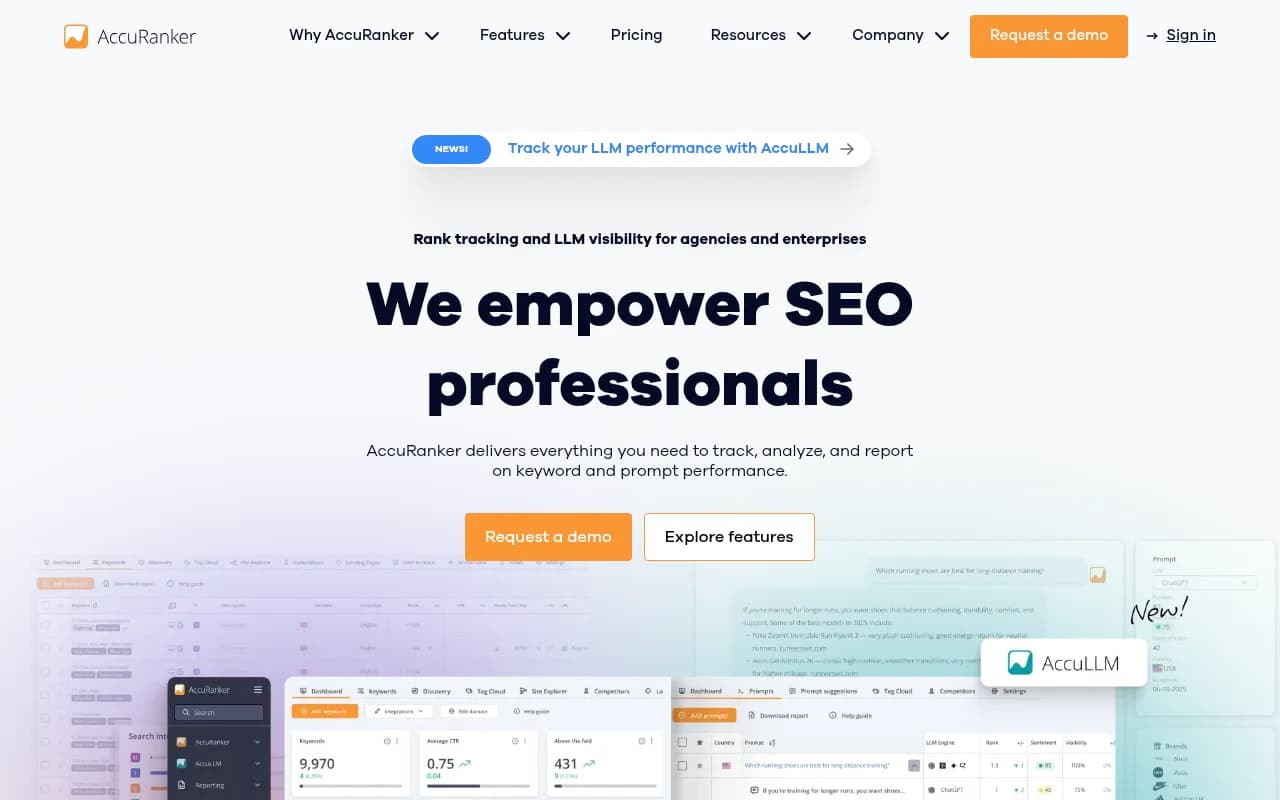
For traditional rank tracking, AccuRanker gives you real-time, on-demand rank updates — useful when you're actively testing content changes and need fresh data quickly.
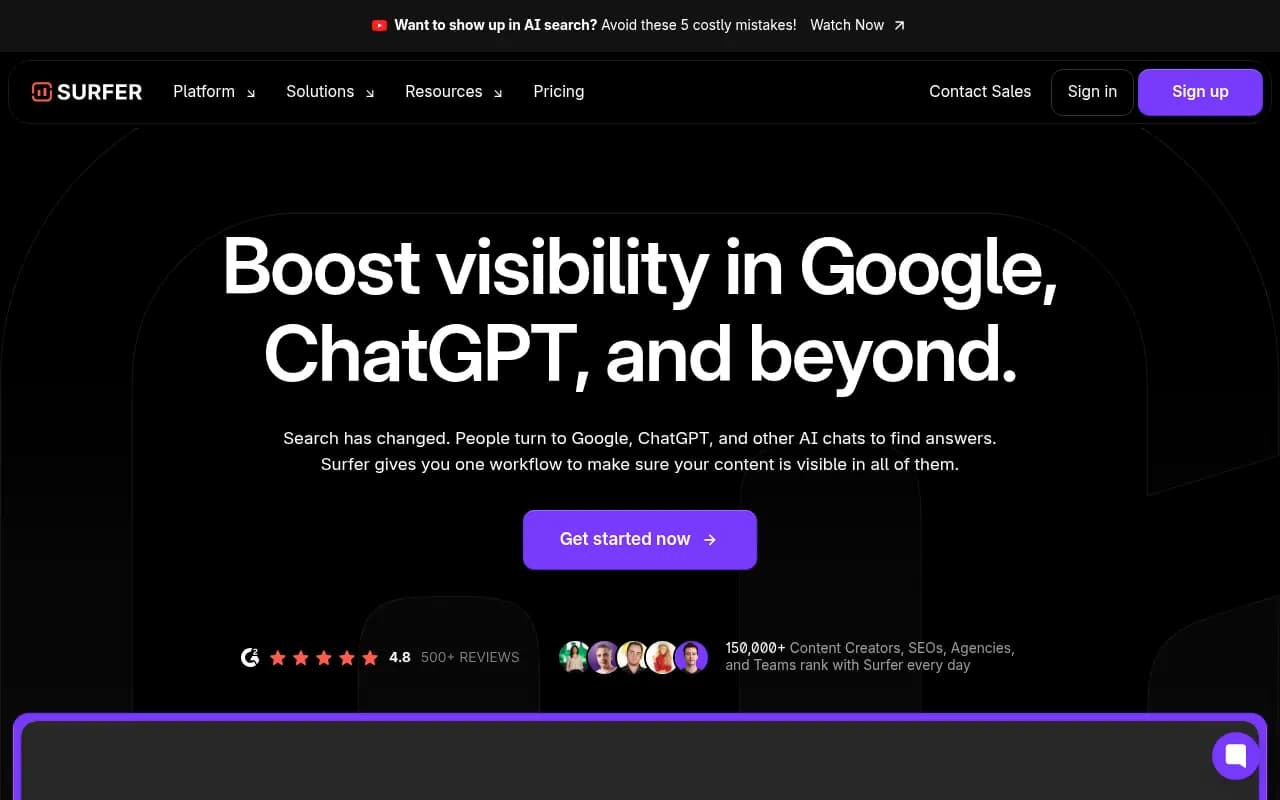
For SEO content optimization, Surfer SEO remains one of the more reliable tools for making sure your content is competitive on the signals Google actually measures.
For AI search visibility specifically, Promptwatch goes beyond just monitoring — it shows you which prompts competitors are winning, helps you generate content engineered to get cited, and tracks whether that content actually moves your visibility scores. Most AI visibility tools stop at showing you the data. Promptwatch is built around helping you act on it.
For monitoring your brand mentions across AI engines without the full optimization suite, Otterly.AI is a lighter-weight option worth considering.
Otterly.AI

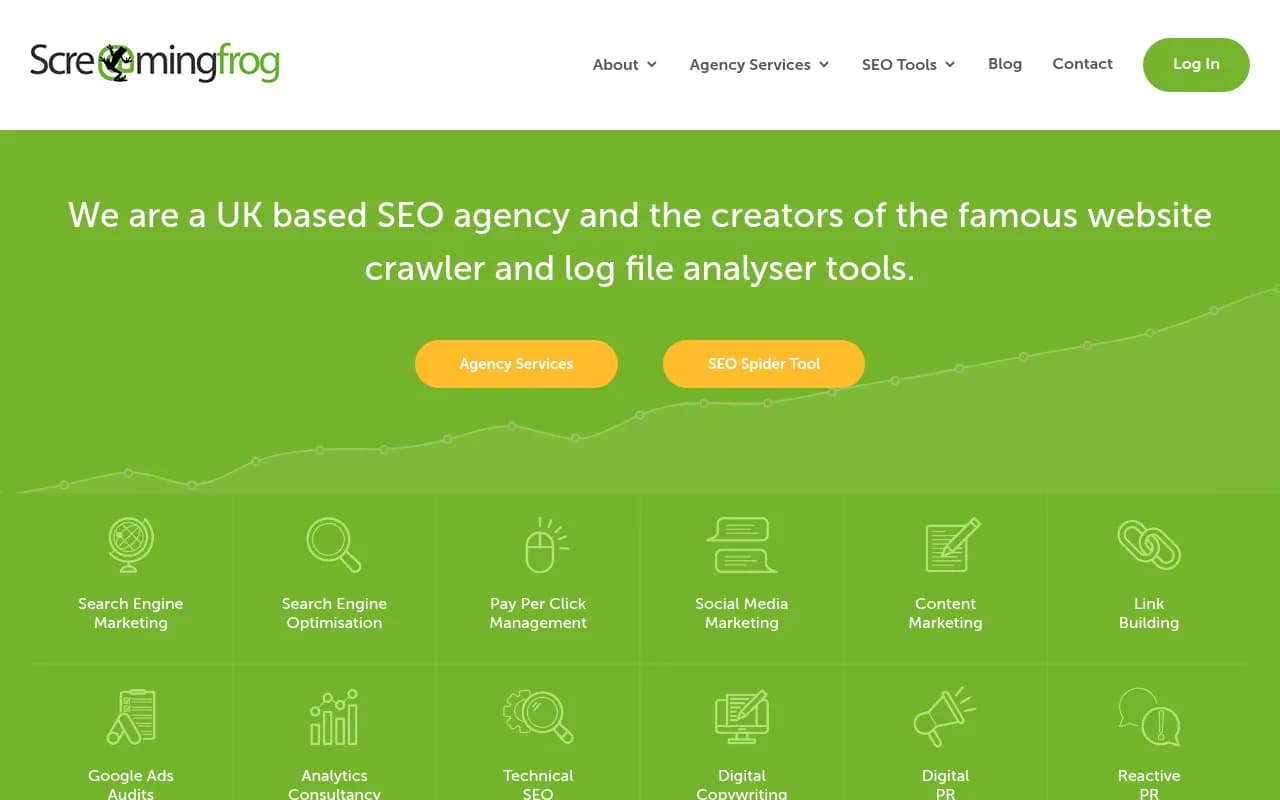
And for technical SEO audits — which matter more than ever given that AI crawlers have their own crawlability requirements — Screaming Frog SEO Spider is still the most thorough desktop crawler available.
The PR angle that most SEOs are missing
One thing that's genuinely new in 2026: PR and earned media now have a more direct impact on AI visibility than they ever had on traditional SEO. When your brand gets mentioned in credible publications, those mentions become part of the training data and retrieval context that AI models use when deciding whether to recommend you.
This means your SEO strategy and your PR strategy need to be more coordinated than they've historically been. A mention in a well-read industry publication isn't just good for brand awareness — it's a signal that AI models pick up on when deciding whether you're a credible source worth citing.
What this means for your 2026 strategy
The practical takeaway is simpler than all the noise suggests:
Google rankings still matter. They drive direct traffic for commercial queries, they build domain authority that feeds AI citation, and they signal credibility to both human users and AI models. Don't abandon them.
But Google rankings alone are no longer sufficient. If you're not also tracking and optimizing your AI search visibility, you're flying blind on a channel that's growing fast and will only become more important.
The sites that will struggle are the ones that either (a) kept doing exactly what they were doing in 2022 and ignored AI entirely, or (b) panicked, pivoted away from SEO, and are now watching both their Google traffic and their AI citations decline in parallel.
The sites that will win are the ones treating this as an expansion of the visibility problem, not a replacement of it. More channels to be visible in, more types of content to create, more signals to track — but the same underlying goal: be the most credible, most useful source in your category, wherever your customers are looking.
That's always been the job. The channels just got more complicated.