Key takeaways
- When a Google AI Overview appears, the top organic result now loses around 58% of its clicks -- so ranking #1 is no longer the whole game
- Modern search requires a dual strategy: traditional SEO for action-driven queries, plus GEO/AEO optimization for informational and conversational ones
- AI models use "query fan-out" to pull answers from dozens of sub-queries -- branded mentions across those pages matter more than backlinks
- Content structure (answer blocks, headers, schema, FAQs) directly affects whether AI engines extract and cite your pages
- Tracking your AI visibility separately from traditional rankings is now a core part of any SEO workflow
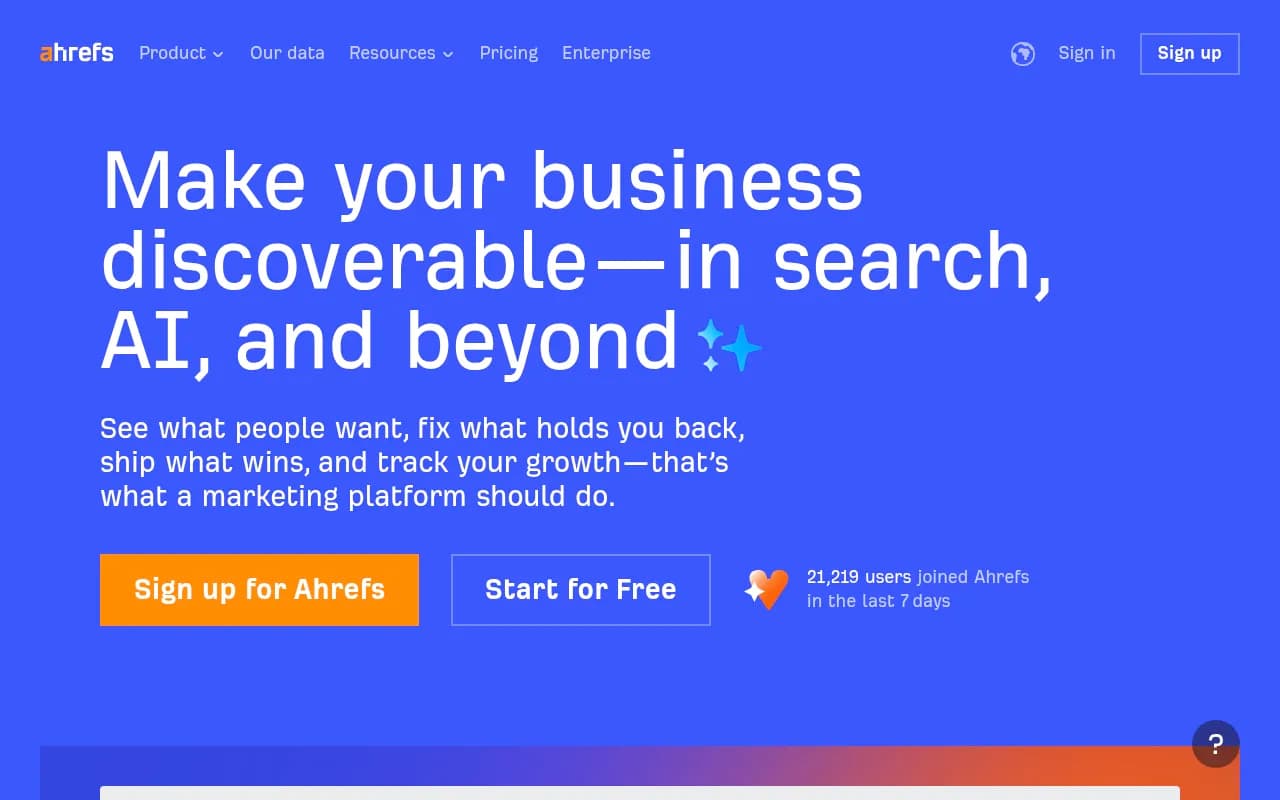
Something shifted in 2025 that a lot of SEOs are still catching up to. Traffic dropped, panic spread, and AI Overviews started appearing on more and more queries. According to Ahrefs' data, when an AI Overview shows up in Google results, the top-ranked page loses roughly 58% of its clicks. That's not a rounding error -- that's a fundamental change to how search works.
The good news: traditional SEO isn't dead. It's just incomplete. The playbook has expanded, and the teams winning right now are the ones who understand both sides of it.
Here's what actually works in 2026.
Understanding what changed (and what didn't)
Before getting tactical, it helps to understand the split that now defines search.
Google still runs traditional blue-link results. Those still get clicks -- especially for transactional, action-oriented queries. Someone searching for "backlink checker," "mortgage calculator," or "snow removal service near me" needs to click somewhere. AI can explain concepts, but it can't complete tasks for users. That's where traditional SEO still wins cleanly.
But for informational and research queries -- "best CRM for small business," "how does compound interest work," "what's the difference between GEO and AEO" -- AI Overviews and generative answers are increasingly eating the clicks. Users get a synthesized answer at the top of the page and never scroll down.
So the question isn't "SEO or AI optimization?" It's "which queries need which approach, and how do I win at both?"
Part 1: Traditional SEO -- where it still dominates
Focus on action-driven keywords
The clearest win in 2026 is targeting keywords where users need to do something, not just learn something. Think:
- Tool-based queries: "keyword checker," "image compressor," "invoice generator"
- Service queries: "plumber in Austin," "web design agency for startups"
- Transactional queries: "buy noise-canceling headphones," "best price on X"
- Comparison queries with clear purchase intent: "HubSpot vs Salesforce pricing"
A practical workflow: use a keyword research tool's matching terms report, filter by terms like "calculator," "checker," "generator," "near me," and layer on a transactional intent filter. You'll surface a list of queries where clicks are still flowing and traditional ranking factors still decide who wins.
On-page optimization still matters
The fundamentals haven't changed. Matching searcher intent, writing clear title tags, using proper heading structure, and building internal links -- these still move the needle. Where a lot of sites are falling down in 2026 is neglecting the basics while chasing AI optimization trends.
A few things worth auditing:
- Title tags: Are they specific, intent-matched, and under 60 characters?
- Meta descriptions: Do they give a reason to click, not just describe the page?
- Heading structure: Does the page answer the query clearly in the first 100 words?
- Internal linking: Are you connecting related pages so both users and crawlers can navigate your site?

Technical SEO: the unglamorous stuff that still matters
Core Web Vitals, crawlability, and site speed remain ranking factors. But in 2026, there's an added dimension: AI crawlers (GPTBot, ClaudeBot, PerplexityBot) also need to access and parse your content. If your site blocks these bots or renders content in JavaScript that they can't read, you're invisible to AI engines regardless of how well-optimized your content is.
Check your robots.txt to make sure you're not accidentally blocking AI crawlers. If your site is heavily JavaScript-rendered, consider a prerendering solution.

Part 2: AI search optimization (GEO and AEO)
This is the newer half of the playbook, and it's where most sites are leaving visibility on the table.
What GEO and AEO actually mean
Generative Engine Optimization (GEO) is about getting your content cited in AI-generated responses from ChatGPT, Perplexity, Claude, Gemini, and similar tools. Answer Engine Optimization (AEO) is about winning featured snippets, People Also Ask boxes, and Google AI Overviews specifically.
They overlap significantly. The underlying principle is the same: structure your content so AI engines can easily extract, trust, and cite it.
Structure content for extraction
AI engines don't read pages the way humans do. They're looking for clear, extractable answers. A few structural changes that make a real difference:
Answer blocks: Lead with a direct 40-80 word answer to the main question before expanding. If someone asks "what is anchor text," your page should answer that in two sentences before going into detail. This is the format AI engines pull from.
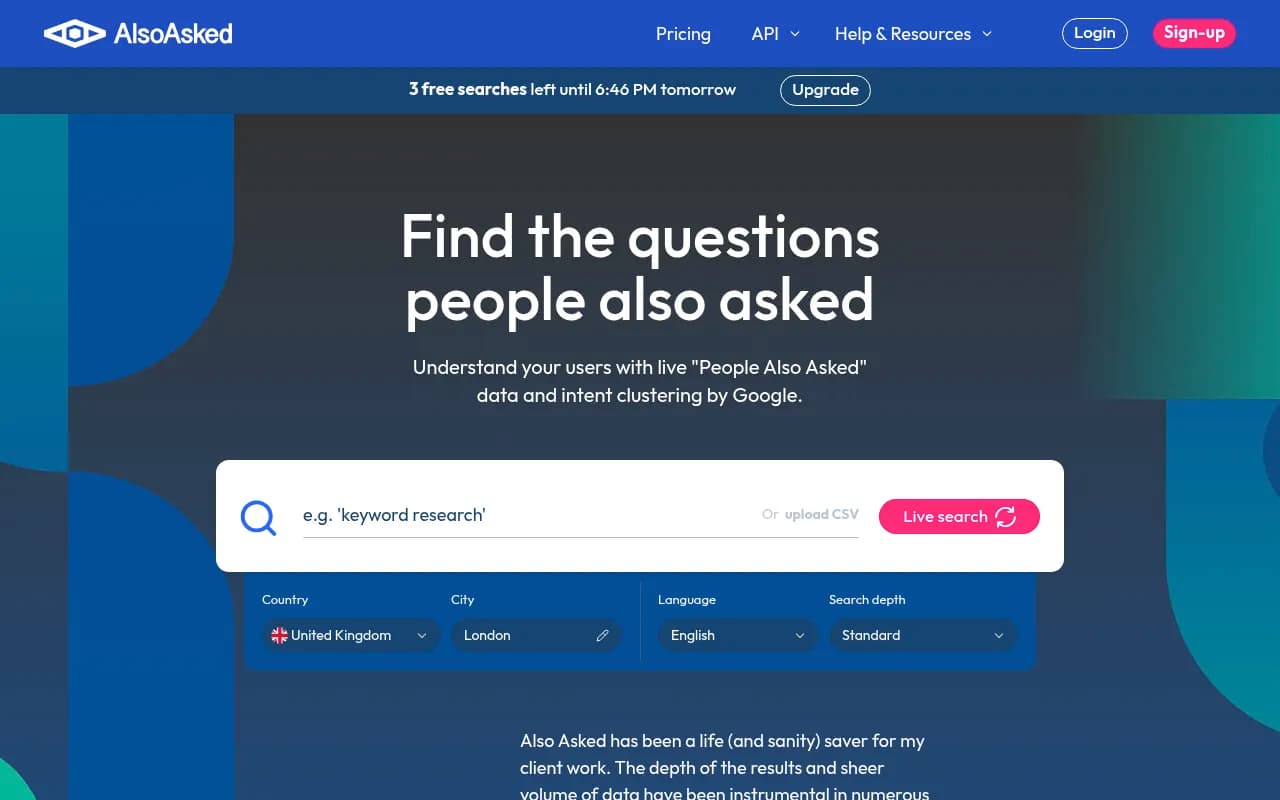
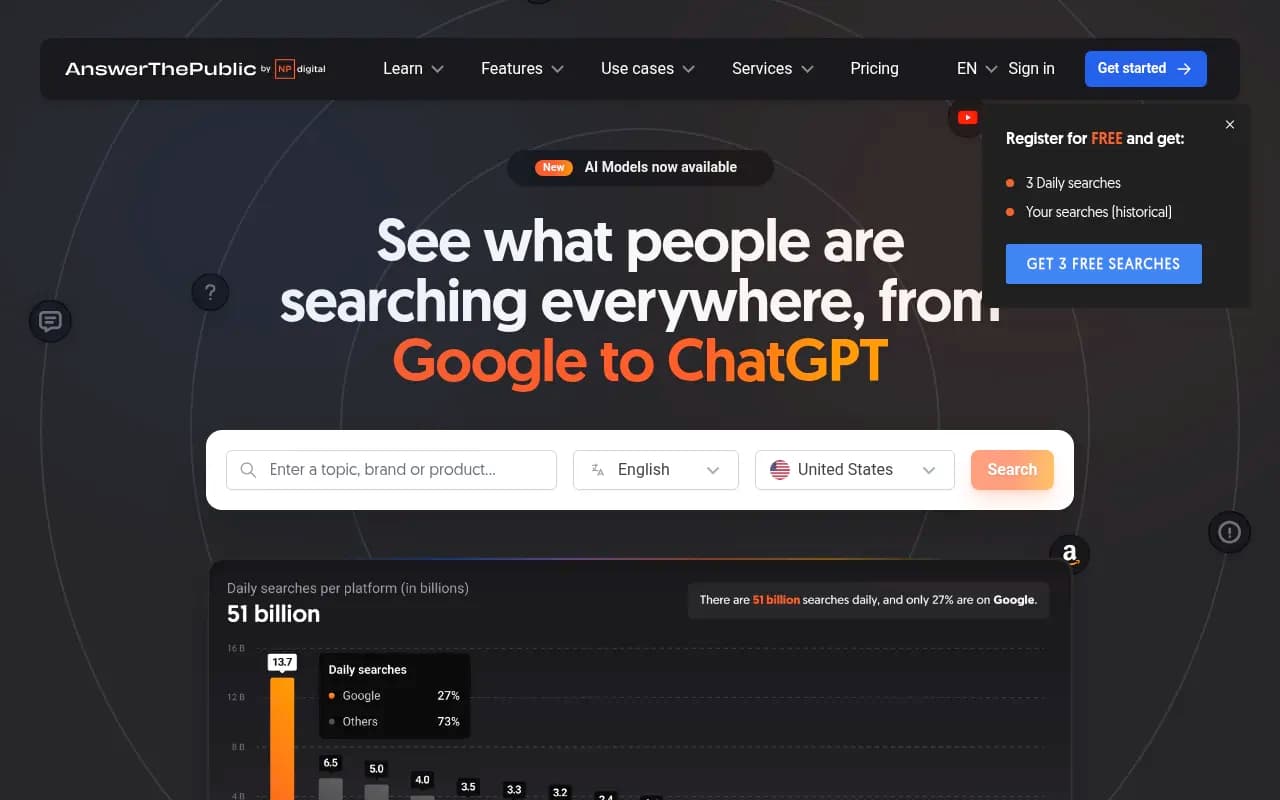
Logical heading hierarchy: Use H2s and H3s that mirror the questions users actually ask. Tools like AlsoAsked or AnswerThePublic show you the exact phrasing people use.
Lists and tables: AI engines love structured data. If you're comparing options, use a table. If you're explaining a process, use a numbered list.
FAQ sections: Add a FAQ at the bottom of key pages targeting related questions. These get pulled into People Also Ask boxes and AI summaries regularly.
Schema markup: FAQ schema, HowTo schema, and Article schema help AI engines understand what type of content they're reading. Not a magic bullet, but worth implementing.
Build entity consistency and trust signals
One thing that's become clearer in 2026: AI engines care about whether they can trust your brand as a source. That means:
- Author bios with real credentials, linked to social profiles
- Consistent brand name, address, and contact information across the web
- Citations from other credible sources (not just backlinks -- actual mentions in editorial content)
- Up-to-date content with visible publish/update dates
Entity consistency matters too. If your brand name appears differently across your website, Google Business Profile, LinkedIn, and third-party directories, AI engines have a harder time associating all that content with a single authoritative source.
Understand query fan-out
This is one of the more important concepts to grasp for AI visibility. When a user types "best project management software" into ChatGPT or Perplexity, the AI doesn't just look for pages that rank for that exact phrase. It fans out into dozens of sub-queries: "best project management software for remote teams," "Asana vs Monday.com," "top-rated project management tools 2026," "project management software reviews," and so on.
It then stitches an answer from the pages ranking across all those sub-queries. Ahrefs' research found that branded mentions correlate with AI Overview visibility more strongly than backlinks or domain rating. If your brand appears across the pages that rank for those fan-out queries -- comparison articles, review roundups, Reddit threads, YouTube videos -- your odds of being cited go up significantly.
The practical implication: don't just optimize your own site. Think about where else your brand should appear. Getting reviewed on high-authority comparison pages, being mentioned in relevant Reddit discussions, and appearing in YouTube reviews all feed into AI visibility.
Part 3: The multi-platform discovery reality
Here's something that's easy to miss: your buyers don't start and end their research on Google anymore. They bounce from Google to Reddit to YouTube to review sites, then validate on Amazon or G2 or Trustpilot. AI assistants are doing the exact same thing -- pulling from all those sources to build their answers.
Ahrefs' data shows that 86% of top-cited sources are unique to each AI assistant. ChatGPT cites different pages than Perplexity, which cites different pages than Claude. That means you can't just optimize for one platform.
Where to focus your off-site presence
- Reddit: AI engines cite Reddit heavily for product recommendations and comparisons. Genuine participation in relevant subreddits (not spam) builds the kind of mentions that feed into AI responses.
- YouTube: Video content gets cited by AI assistants. A well-optimized YouTube video with a clear transcript can appear in AI-generated answers.
- Review platforms: G2, Capterra, Trustpilot, and similar sites are frequently cited sources. Make sure your profiles are complete and actively maintained.
- Industry publications: Getting mentioned in niche publications and blogs in your space builds the citation footprint AI engines look for.
Part 4: Tracking what's actually working
You can't manage what you don't measure, and in 2026 that means tracking two separate things: traditional search rankings and AI visibility.
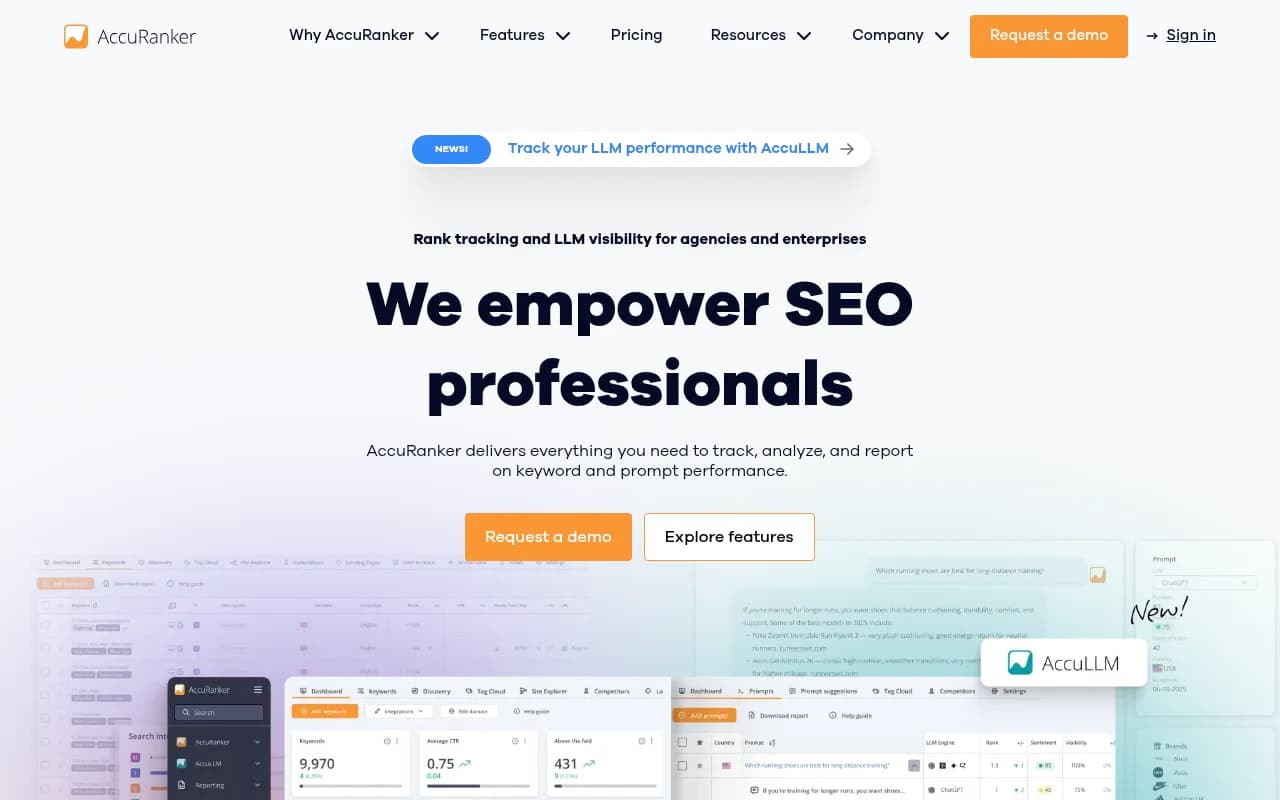
Traditional rank tracking tools (AccuRanker, SE Ranking, Ahrefs) handle the first part. For AI visibility -- whether your brand is being cited in ChatGPT, Perplexity, Claude, and Google AI Overviews -- you need a different set of tools.
For AI visibility specifically, Promptwatch tracks your brand's presence across 10 AI models including ChatGPT, Perplexity, Claude, Gemini, and Google AI Overviews. It also shows you which prompts competitors are visible for but you're not -- which is where the content gap analysis becomes useful for figuring out what to write next.

Other tools worth knowing about:
Otterly.AI

Profound

The content strategy that works in 2026
Pulling this together into a content approach:
Cover topics deeply, not broadly
Thin content is getting crushed. AI engines prefer sources that cover a topic comprehensively -- not just the surface-level answer, but the follow-up questions, the edge cases, the comparisons. A single 3,000-word piece that genuinely answers a topic beats five 600-word posts that each skim the surface.
Build content clusters
Group your content around core topics. A central "pillar" page covers the broad topic; supporting pages go deep on subtopics. Internal links connect them. This signals topical authority to both Google and AI engines.
Publish consistently and update old content
Freshness signals matter. AI engines favor content that's been recently updated. A practical habit: set a quarterly review of your top-performing pages to refresh statistics, add new examples, and update any outdated information.
Don't ignore local SEO if it applies
For businesses with physical locations or service areas, local SEO is still one of the highest-ROI activities. Google Business Profile optimization, local citations, and location-specific content all feed into both traditional local results and AI-generated local recommendations.
A comparison of what works where
| Query type | Best approach | Key tactics |
|---|---|---|
| Transactional ("buy X," "X near me") | Traditional SEO | Title tags, local SEO, product schema |
| Tool/action queries ("X calculator," "X checker") | Traditional SEO | Functional content, fast load times |
| Informational ("how does X work") | AEO/GEO | Answer blocks, FAQ schema, structured headings |
| Comparison ("X vs Y," "best X for Y") | Both | Comparison tables, entity mentions, review presence |
| Conversational/research queries | GEO | Multi-platform presence, entity consistency, citations |
Where most sites are getting it wrong
The most common mistake right now is treating AI optimization as a separate project from SEO. It's not. The same content quality principles apply -- clear writing, genuine expertise, well-structured pages. The difference is adding the structural elements (answer blocks, schema, FAQ sections) and the off-site presence (Reddit, YouTube, review platforms) that AI engines use to build their responses.
The second most common mistake is ignoring measurement. If you're not tracking your AI visibility separately from traditional rankings, you have no idea whether your content is being cited by ChatGPT or Perplexity, and you can't tell which changes are actually working.
The teams winning in 2026 are running both tracks in parallel: maintaining solid traditional SEO for action-driven queries while systematically building AI visibility for informational and research queries. Neither track is optional anymore.