Key takeaways
- Searchable covers basic AI visibility monitoring but lacks the features teams need to act on what they find.
- Six specific gaps stand out: no content gap analysis, no AI crawler logs, no built-in content generation, limited prompt intelligence, no Reddit/YouTube tracking, and no traffic attribution.
- Each gap has a real cost in 2026, when ranking #1 no longer guarantees traffic and AI citations are becoming the primary visibility surface.
- Several tools fill these gaps individually, but Promptwatch is the only platform that covers all six in one place.
The AI visibility category has exploded in the last 18 months. Dozens of tools now claim to track your brand across ChatGPT, Perplexity, Claude, and Google AI Overviews. Searchable is one of them. It has a clean interface, covers the major AI models, and does a reasonable job of showing you where your brand appears.
But here's the problem: knowing where you appear is only the first question. The harder questions are why you're not appearing for certain prompts, what content you'd need to create to change that, and whether any of this is actually driving traffic. Searchable doesn't answer those questions. It shows you the data and leaves you to figure out the rest.
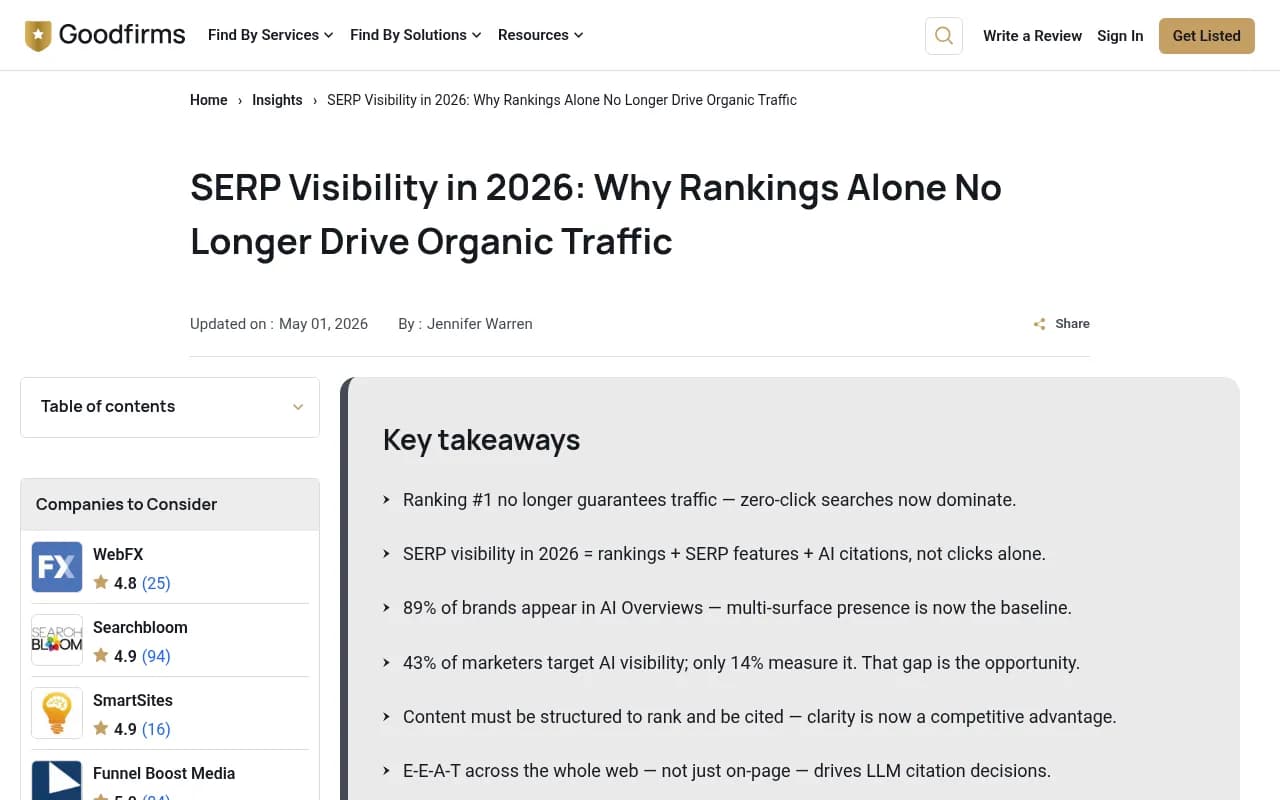
In 2026, that's a real limitation. According to Goodfirms' SERP Visibility research, AI Overviews have cut organic CTR by 61% on affected queries, and getting cited inside an AI Overview now earns 35% more clicks than holding a traditional ranking alone. The visibility-to-citation pipeline is where growth happens now. A monitoring-only tool gets you partway there.
Here are the six features Searchable is missing, and the tools that actually fill those gaps.
1. Content gap analysis
Searchable will tell you that a competitor appears in responses to a prompt you're missing. What it won't tell you is why you're missing, or what specific content you'd need to publish to change that.
Content gap analysis -- specifically the kind that maps competitor visibility to your own content inventory -- is the bridge between "we're invisible here" and "here's what to do about it." Without it, you're left doing manual research: pulling competitor responses, guessing at the topics they're covering, and hoping your next article lands.
This is one of the most practically useful features in the AI visibility space, and Searchable skips it entirely.
What fills the gap:
Promptwatch has an Answer Gap Analysis feature that shows you the exact prompts competitors rank for that you don't. You see the specific topics, angles, and questions AI models want answers to but can't find on your site. It's not a vague "content opportunity" flag -- it's a prioritized list of gaps tied to actual prompt data.

AthenaHQ also surfaces some competitive visibility data, though it's more focused on monitoring than actionable gap identification.

2. AI crawler logs
This one surprises people. Most AI visibility tools track what AI models say about you. Almost none of them track how AI crawlers interact with your website.
There's a meaningful difference. ChatGPT's crawler (GPTBot), Claude's crawler, and Perplexity's crawler all visit websites to gather information. If they're hitting error pages, getting blocked by your robots.txt, or simply not visiting key pages, your visibility suffers -- and you'd have no idea why.
Searchable has no crawler log functionality. You can't see which pages AI crawlers are reading, how often they return, or what errors they encounter. That's a blind spot that gets more expensive as AI search traffic grows.
What fills the gap:
Promptwatch's AI Crawler Logs feature gives you real-time visibility into which AI crawlers are hitting your site, which pages they're reading, and what errors they encounter. It's one of the few platforms that connects the "what do AI models say about me" question to the "are AI models even able to read my content" question.
xSeek specifically focuses on GPTBot crawler monitoring and ChatGPT rank tracking, which is useful if ChatGPT is your primary concern.
Scriptbee also offers crawler monitoring across unlimited domains, which makes it worth looking at for agencies managing multiple client sites.
3. Built-in content generation
Finding a gap is only useful if you can close it. Searchable shows you visibility data but has no tools for actually creating content based on what it finds. You're expected to take the insights somewhere else -- to a separate writing tool, a content team, or a freelancer -- and hope the output is structured in a way that AI models will actually cite.
That handoff is where most teams lose momentum. The insight gets noted, a ticket gets created, and three weeks later someone writes an article that has nothing to do with the specific prompt gap that was identified.
What fills the gap:
Promptwatch has a built-in AI writing agent that generates articles, listicles, and comparisons grounded in real citation data. It's not generic content -- it's built around the specific prompts and gaps identified in the platform, using 880M+ citations to inform what structure and angle is most likely to get cited by AI models.
AirOps is worth mentioning here too. It's an end-to-end content engineering platform that's specifically designed to produce content for AI search visibility, with strong workflow tooling for teams that want more control over the production process.
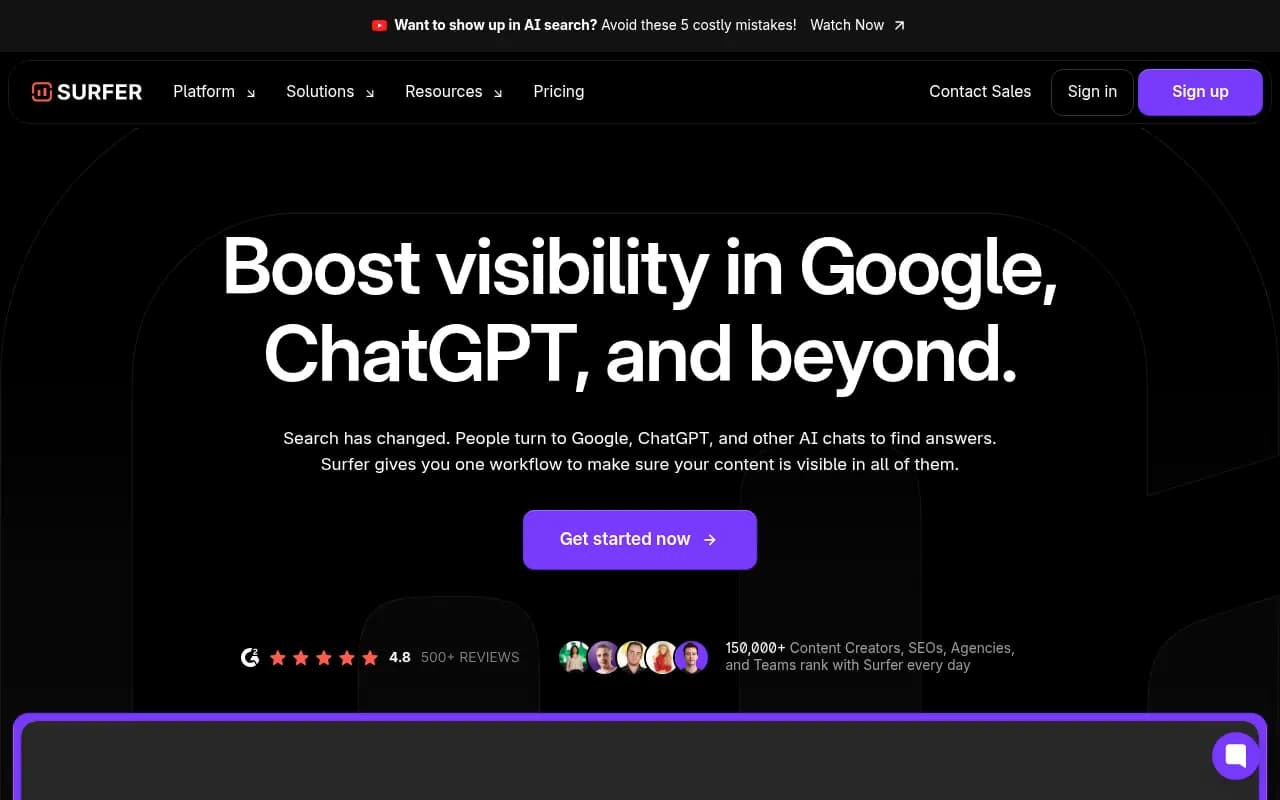
Surfer SEO handles content optimization well for traditional search, and has been adding AI visibility features, though its content generation is more SEO-focused than GEO-focused.
4. Prompt intelligence (volume, difficulty, and query fan-outs)
Not all prompts are equal. Some are asked by millions of people every month; others are niche queries with minimal volume. Some prompts are dominated by a handful of authoritative sources that are nearly impossible to displace; others are wide open.
Searchable doesn't give you this data. There's no prompt volume estimate, no difficulty scoring, and no concept of query fan-outs -- the way a single prompt branches into related sub-queries that AI models explore when generating a response.
Without this, you're flying blind on prioritization. You might spend three months optimizing for a prompt that gets asked 50 times a month when there's a high-volume, low-competition prompt right next to it.
What fills the gap:
Promptwatch includes volume estimates and difficulty scores for each prompt, plus query fan-out mapping. This is what separates a strategic AI visibility program from random content creation.
Profound has solid prompt intelligence features at the enterprise level, though it comes at a higher price point and lacks some of Promptwatch's content generation capabilities.
Profound

Peec AI covers prompt tracking across the major AI models but doesn't go deep on volume or difficulty scoring.

5. Reddit and YouTube tracking
This one is easy to overlook, but it matters a lot in practice. When AI models generate responses, they don't only cite brand websites and news articles. They cite Reddit threads, YouTube videos, forum discussions, and community content -- heavily. If you want to understand why a competitor is being recommended over you, the answer is often in a Reddit thread you didn't know existed.
Searchable doesn't track Reddit or YouTube as citation sources. You get the AI response data, but you don't see the underlying sources that are shaping those responses.
What fills the gap:
Promptwatch surfaces Reddit discussions and YouTube content that directly influence AI recommendations. This is a channel most competitors ignore entirely, and it opens up a whole category of influence strategy -- participating in the right discussions, creating the right video content, and understanding the full ecosystem that shapes what AI models say about your brand.
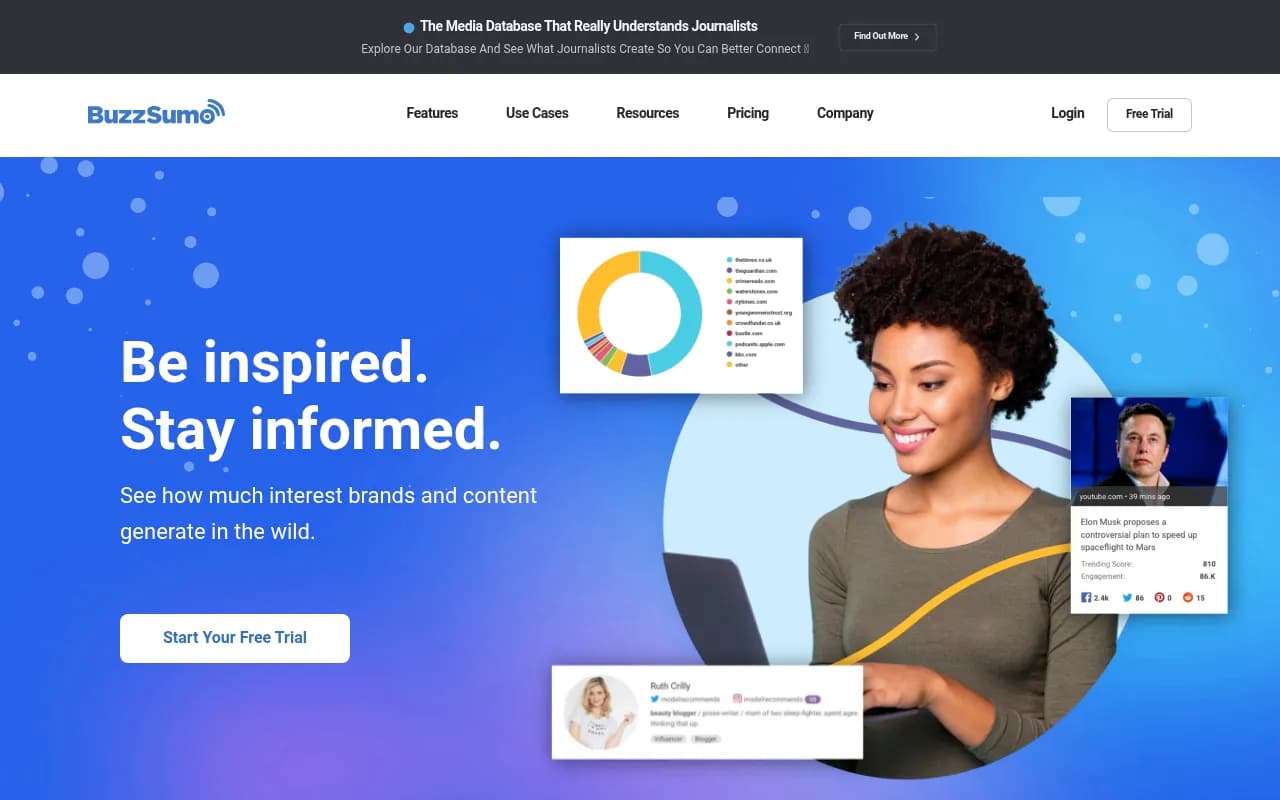
BuzzSumo is useful for Reddit content research more broadly, even if it's not purpose-built for AI visibility.
For YouTube specifically, tracking which videos get cited in AI responses is something very few tools do. Promptwatch is one of the few that surfaces this data in the context of AI visibility rather than as a standalone social listening feature.
6. Traffic attribution
This is the gap that costs teams the most credibility internally. You can show a chart of improving AI visibility scores, but if you can't connect that to actual website traffic and revenue, the program is hard to defend in budget conversations.
Searchable has no traffic attribution. There's no way to connect your AI visibility improvements to the traffic that results from them. You're left with correlation at best -- "our visibility went up and our traffic went up, so maybe..."
What fills the gap:
Promptwatch offers three attribution methods: a code snippet for direct measurement, Google Search Console integration, and server log analysis. Page-level tracking shows exactly which pages are being cited, how often, and by which models. The traffic attribution layer closes the loop between visibility and revenue -- which is what makes AI visibility a business metric rather than a vanity metric.
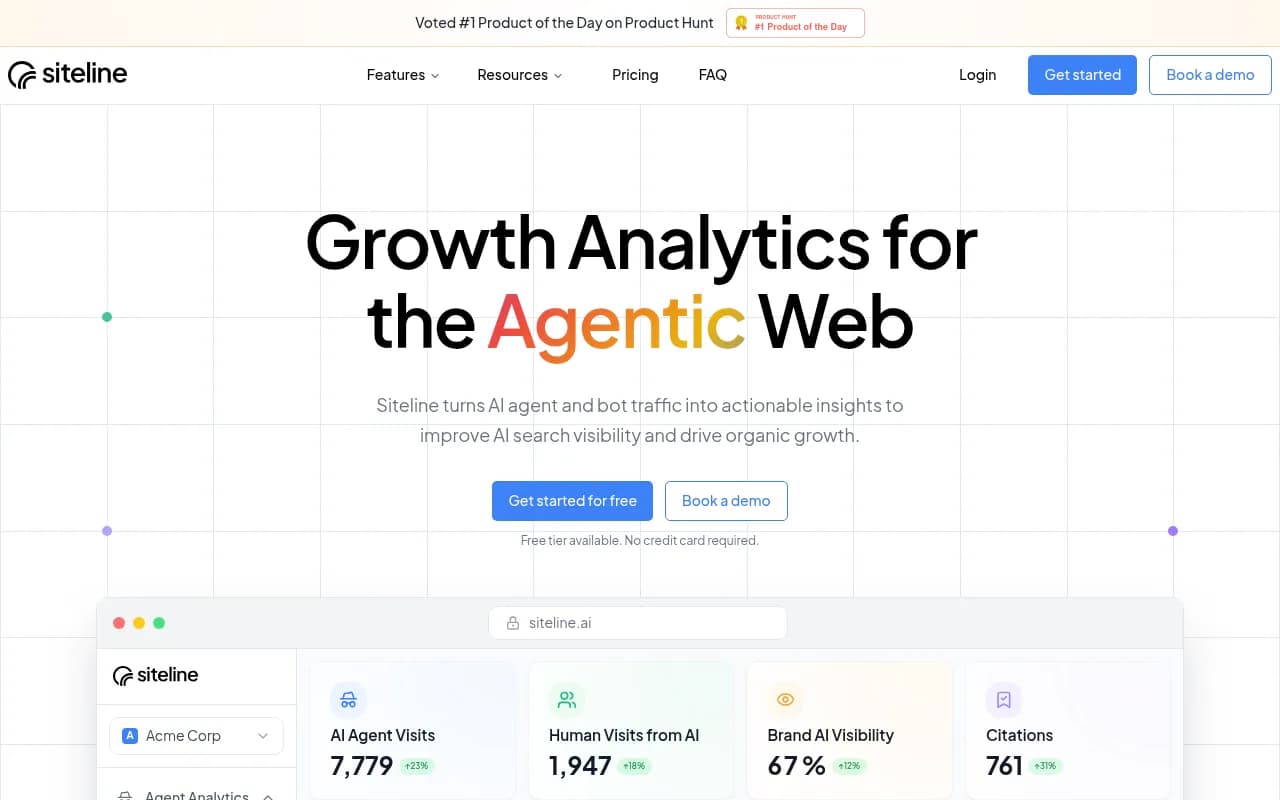
Analyze AI is specifically built around connecting AI visibility to real traffic, which makes it a useful complement if you're using another tool for monitoring.
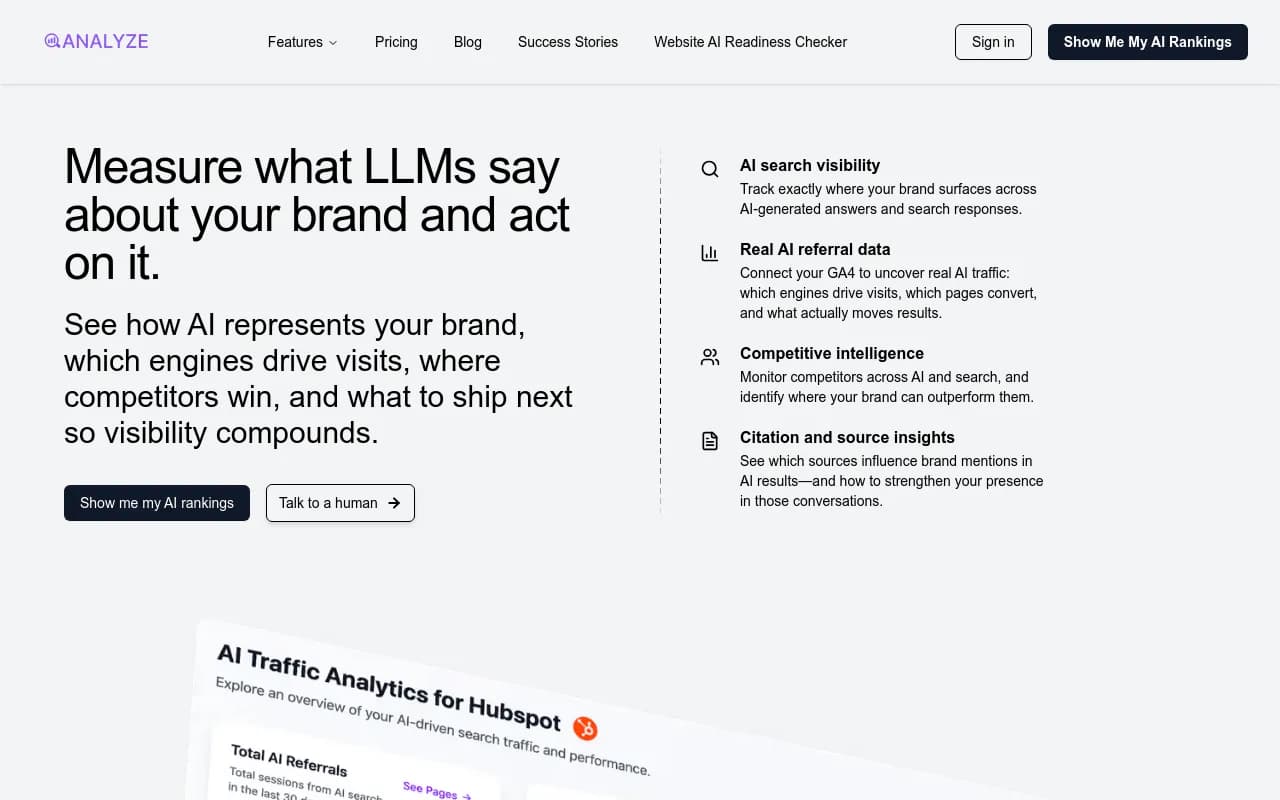
Siteline AI also focuses on AI agent traffic analytics with a revenue lens, worth evaluating if attribution is your primary concern.
How the tools compare
| Feature | Searchable | Promptwatch | AthenaHQ | Profound | AirOps | Peec AI |
|---|---|---|---|---|---|---|
| AI visibility monitoring | Yes | Yes | Yes | Yes | Partial | Yes |
| Content gap analysis | No | Yes | Partial | Partial | No | No |
| AI crawler logs | No | Yes | No | No | No | No |
| Built-in content generation | No | Yes | No | No | Yes | No |
| Prompt volume & difficulty | No | Yes | No | Partial | No | No |
| Reddit/YouTube tracking | No | Yes | No | No | No | No |
| Traffic attribution | No | Yes | No | No | No | No |
| Covers 10+ AI models | Partial | Yes | Yes | Yes | N/A | Yes |
The pattern is clear. Searchable is a monitoring tool. It shows you data. Most of the alternatives in this table are also primarily monitoring tools. Promptwatch is the outlier -- it's built around the full cycle of finding gaps, creating content, and tracking results.
Who Searchable is actually fine for
To be fair: if you genuinely only need to monitor AI visibility and have a separate, well-resourced content team that can act on the data, Searchable might be sufficient. It's a reasonable starting point for teams that are new to AI visibility and want to understand the landscape before committing to a more comprehensive platform.
But most teams don't have that separation. The people tracking AI visibility are usually the same people responsible for improving it. For them, a monitoring-only tool creates a workflow gap that slows everything down.
The bottom line
The AI search landscape in 2026 is moving fast. Google's March 2026 core update intensified zero-click patterns. AI Overviews are reshaping CTR across entire query categories. The teams winning in this environment aren't just tracking their visibility -- they're systematically identifying gaps, creating content engineered to get cited, and measuring the results.
Searchable helps with the first part. For everything else, you need tools that go further.
If you want to explore the full range of options, the comparison table above is a good starting point. The key question to ask of any platform is not "does it show me where I appear?" but "does it help me appear in more places, and can it prove that it worked?"