Key takeaways
- AI brand perception is what AI engines say about you (presence, prominence, portrayal) and whether that drives action (persuasion). Track all four, in that order.
- IAB's August 2026 framework splits data into directional and decision-grade. Only decision-grade data should move budget.
- Each AI engine cites different sources, so measure each engine separately. A blended score hides the real problem.
- Perception tracking has three layers: AI answer tracking, social listening, and customer research. Most teams only run the first two.
- A sensible first month: build a prompt set, baseline every engine, fact-check the claims AI makes about you, then set a weekly and monthly review rhythm.
What AI brand perception actually means
Brand perception used to mean surveys, social mentions and review scores. Those still matter. But a growing share of buyers now ask ChatGPT, Gemini, Perplexity or Google's AI Overviews "what's the best X for Y" and get a short list with opinions attached. If your brand is missing from that list, or described wrongly, you lose before anyone visits your site.
So AI brand perception is a specific thing: how AI engines represent your brand, how they rank it against competitors, and what claims they attach to it. It is different from sentiment analysis, which scores individual mentions, and from classic brand monitoring, which counts mentions and flags spikes.
The problem is that measuring it is messy. IAB reports that more than 20 companies now sell AI visibility measurement tools, each with its own methodology, and they can return different answers for the same brand. That is why a framework matters more than a tool choice. Pick the wrong metrics and the best dashboard in the world will mislead you.
The framework: IAB's 4 P's as your measurement spine
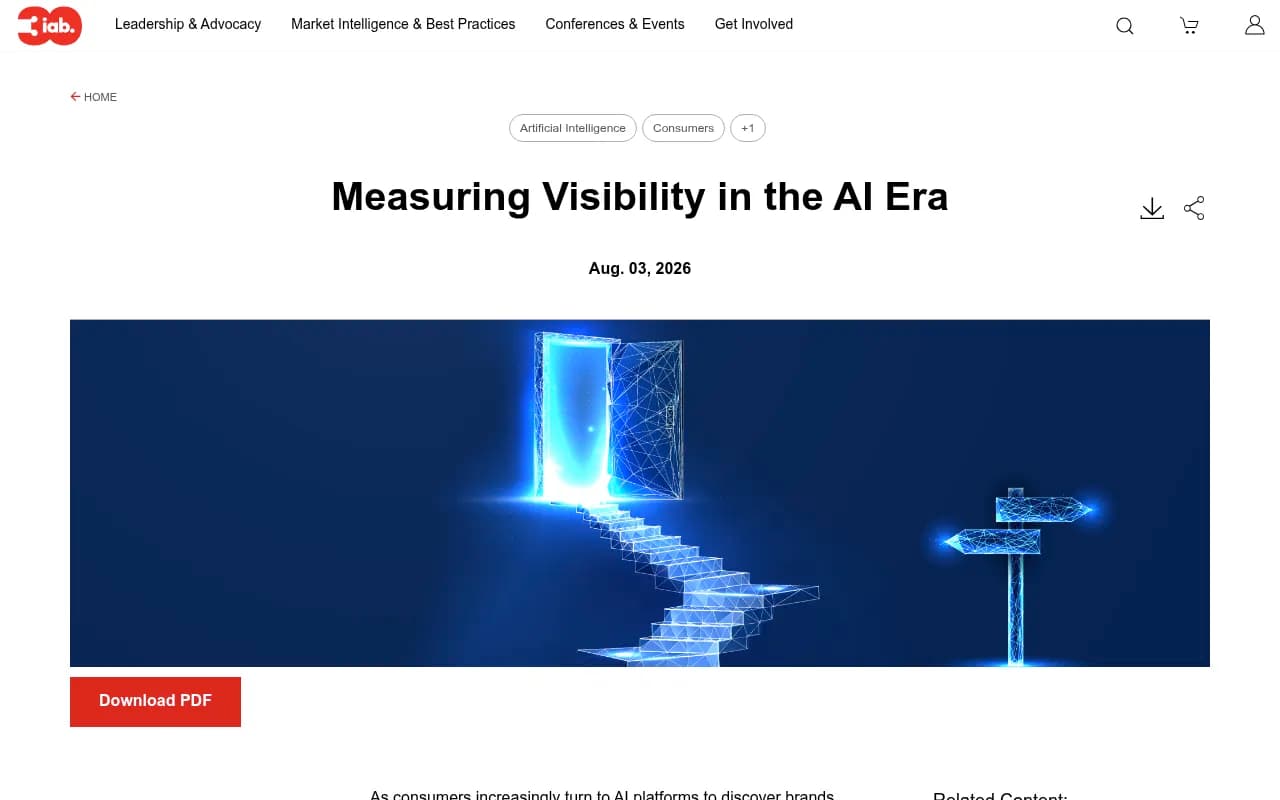
IAB released Measuring Visibility in the AI Era on August 3, 2026. It does not rank tools or tell you what to buy. It gives a shared vocabulary and a causal hierarchy, which is exactly what a measurement plan needs. I find it more useful as a checklist than as a standard to certify against.
| P | Question it answers | Metrics to track |
|---|---|---|
| Presence | Does the brand appear at all? | Mention rate, citation rate, share of voice, visibility momentum |
| Prominence | How prominently, and is content used substantively? | Position in the answer, ranking order, depth of use versus a passing cite |
| Portrayal | Is what AI says accurate and favorable? | Sentiment, framing, hallucination rate, factual inaccuracy rate |
| Persuasion | Does visibility drive action? | Recommendation strength, post-citation click-through rate |
The order matters. Prominence is pointless if you have no presence. Persuasion is pointless if the portrayal is wrong. When a number drops, work down the list: did presence fall, or did you still show up but get pushed to the bottom of the answer, or did the framing change?
Why portrayal deserves extra attention
IAB calls portrayal a brand safety dimension unique to AI measurement, and I agree. With search rankings, a bad result just sits lower on the page. With AI answers, a wrong claim ("no free plan", "doesn't integrate with Salesforce", "acquired in 2023") gets delivered as a flat statement to a buyer who never sees your side. Track factual inaccuracy as its own metric, not as a footnote to sentiment.
Directional versus decision-grade data
The second useful idea in the IAB framework is a two-tier quality standard.
Directional data shows patterns and early signals. It is fine for competitive awareness and for spotting something worth investigating. It is not enough to justify a budget shift or an executive strategy change.
Decision-grade data has to clear a higher bar on query volume, sample size, prompt-type coverage, testing cadence, reproducibility and platform coverage. IAB calls this the required standard before budget or strategy decisions.
In practice that means asking some blunt questions before you trust a number:
- How many prompts sit behind this score, and are they a fair sample of how buyers really ask?
- Is each prompt run repeatedly, or once? AI answers vary run to run.
- Are the answers collected from the real user interfaces, or only from APIs? What people see in the product can differ from what an API returns.
- Can I reproduce the number next week with the same setup?
- Is each engine reported separately?
A screenshot of ChatGPT recommending a competitor is directional. A trend across a few hundred prompts, run daily across engines for a quarter, is closer to decision-grade.
Step 1: Build a prompt set that looks like your buyers
Everything downstream depends on this step, and it is where most people cut corners. Group prompts by intent:
- Discovery: "best project management tools for agencies"
- Evaluation and comparison: "Tool A vs Tool B for a 20-person team"
- Brand-specific: "is [your brand] worth it", "[your brand] pricing", "[your brand] alternatives"
- Sentiment probes: "what are the downsides of [your brand]"
Add personas if your buyers differ. A CFO and a developer will phrase the same need differently and may get different answers. Track by country and language too, since AI answers shift by market.
Keep branded and non-branded prompts in separate buckets. Branded prompts tell you about portrayal. Non-branded discovery prompts tell you about presence, which is where growth comes from.
Step 2: Track each engine separately
Do not average ChatGPT, Gemini, Perplexity and AI Overviews into one score. They behave differently, and Promptwatch Data shows how differently.
In Promptwatch's social media citations report for Oct 11 to Nov 9, 2026, social platforms made up 13.16% of Google AI Overviews citations, 1.94% of Perplexity citations, and 0.64% of ChatGPT citations. AI Overviews cited social platforms about 20 times as often as ChatGPT did. YouTube alone was 6.71% of AI Overviews citations, more than the other six platforms combined.
The practical consequence: a YouTube push may move your AI Overviews numbers and do nothing in ChatGPT, where your own site and the listicles, guides and comparisons it cites matter more. If you blend engines, you will never see that.
Citation volume per answer varies too. According to Promptwatch's average sources per response data, ChatGPT cites roughly 5 sources per response when web search triggers, while AI Overviews and Perplexity sit around 10. Perplexity's count is almost perfectly steady, which makes it a decent test bench: if your citations there change, it is probably your content and not engine noise. Copilot swung from under 2 to nearly 17 within a few weeks, so judge it on monthly trends, not weekly snapshots.
Step 3: Pick metrics that locate the problem
A single "visibility score" is a nice headline and a poor diagnostic. Read a few metrics together and each one points at a different kind of problem.
| Symptom | Likely problem | Where to look |
|---|---|---|
| Low share of voice | Coverage: you are not in enough answers | Content gaps, topics you do not cover |
| Late position in answers | Prominence: you appear but not first | Comparison and listicle content, third-party mentions |
| Mentioned but never cited | Content or crawlability | Whether AI crawlers can read your pages |
| Weak or wrong claims | Reputation or factual errors | Pages that state the wrong thing, review sites |
| Cited but no clicks | Persuasion | Page copy, offer clarity, landing experience |
For background on how these are calculated, the Promptwatch Academy metrics overview and its citations versus mentions guide are worth a read. The distinction matters: a mention means the model named you, a citation means it pointed at your source.
Step 4: Audit what AI claims about you
This is the portrayal layer in practice. Pull the individual claims AI makes across your tracked responses and group them: pricing, features, support, reputation. Then mark each as accurate or inaccurate.
For every inaccurate claim, find the source. It is usually one of three things: an outdated page on your own site, a third-party review or comparison with old data, or a forum thread. Fixing the claim means fixing the source, then waiting for the next crawl and re-measuring. You cannot edit the model.
Tools differ a lot here. Some only report a sentiment number. Promptwatch has a Brand Narrative view that extracts the specific claims AI makes about you and competitors and scores them by theme, and a Fact Check feature (Business plan and up) that finds which of your crawled pages state the wrong thing. Whatever tool you use, insist on claim-level detail, not just a green or red sentiment arrow.
Step 5: Add the two layers AI trackers do not cover
An AI answer tracker tells you that something changed. It rarely tells you why, and it says nothing about how real people feel. A complete perception program has three layers:
- AI answer tracking: what the engines say, collected from real interfaces.
- Social and web listening: what people say publicly, via tools like Brand24, Brandwatch or Talkwalker.
- Customer research: why perception is moving, from interviews and surveys.
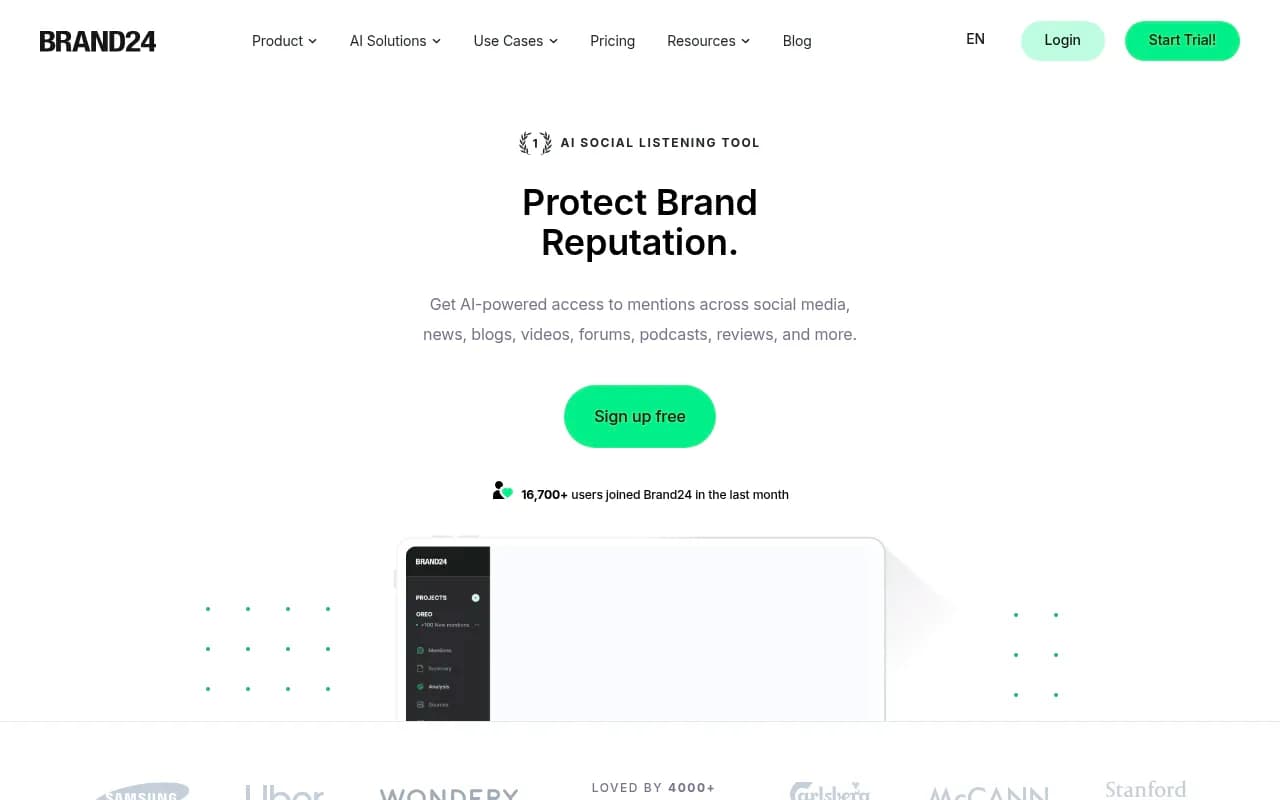
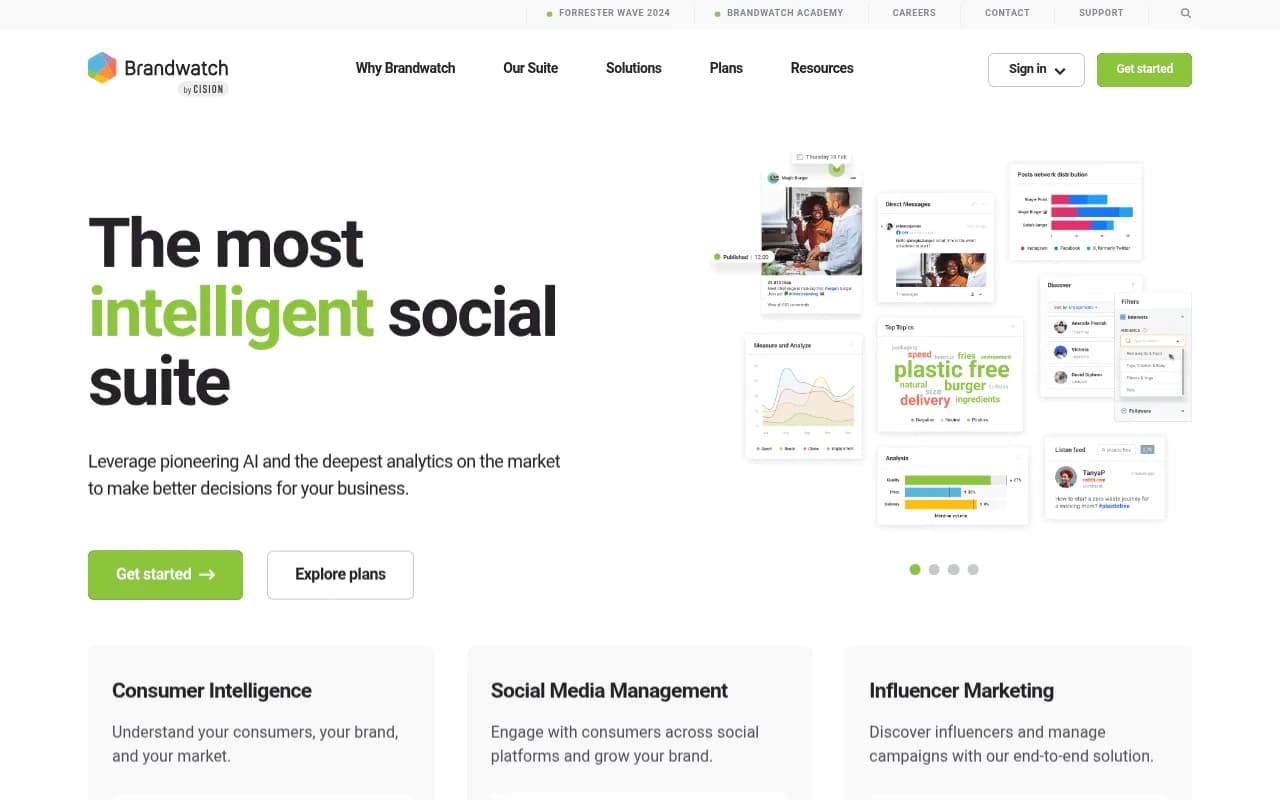
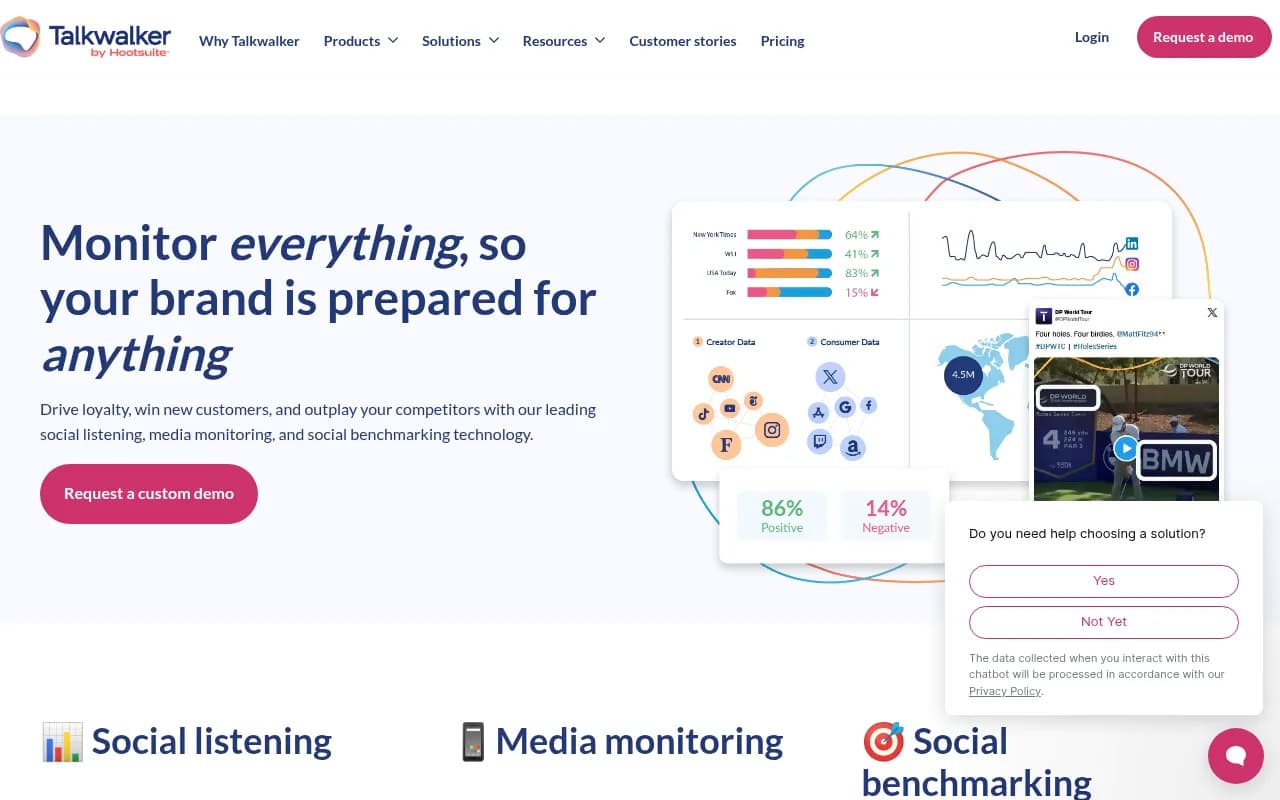
Vendors such as Listen Labs argue that the third layer is the least common one in brand stacks, and I think that is fair. If your AI visibility drops from 31% to 22% while social sentiment holds flat, the dashboard cannot tell you whether buyers changed their minds or the models changed their sources. A handful of customer interviews or a short survey (SurveyMonkey, Qualtrics, Wynter for B2B panels) often can.
Treat the vendor-published market sizing and category claims in these guides with some caution. They are marketing, and I have not verified them. The three-layer split itself is a sound way to organize a stack.
Step 6: Tie perception to traffic and revenue
Persuasion is the P that executives care about, and the hardest to measure. Two practical pieces:
- AI crawler logs show whether bots actually read the pages you want cited. A page AI cannot fetch cannot be cited, whatever your content quality.
- Visitor analytics segmented by AI referrer show whether visibility turns into sessions and conversions. Note that ChatGPT stopped sending a referrer on October 8, 2026, so you may need UTM tagging (utm_source=chatgpt.com) to keep attribution intact.
IAB has also released an AI-era attribution blueprint, and the Persuasion metrics in its framework link to it. If you only do one thing here, compare conversion rate from AI-referred visitors against your other channels. A small, high-converting channel deserves investment even before it is big.
Choosing tools for the job
The tool market is crowded. Here is how I would split it by what you need rather than by brand loyalty.
| Need | Examples | Notes |
|---|---|---|
| End-to-end AI visibility, crawler logs, content and measurement | Promptwatch | Tracks, explains, acts and measures in one loop |
| Lightweight AI answer monitoring | Otterly.AI, Peec AI, Rankshift | Mostly dashboards; check for crawler and traffic data |
| Enterprise AI visibility | Profound, Scrunch | Strong monitoring, higher price points |
| Existing SEO suite add-ons | Semrush, Ahrefs Brand Radar | Convenient, usually fixed prompt sets |
| Social listening | Brand24, Brandwatch, Talkwalker | Public conversation, not AI answers |
| Survey and research | Qualtrics, SurveyMonkey, Wynter | Explains why perception moves |
Promptwatch is the one we use and recommend for the AI answer layer. It collects responses from the real interfaces of ChatGPT, Google AI Overviews, AI Mode, Gemini, Perplexity, Copilot and others, tracks Visibility Score, Share of Voice, position and sentiment, and goes past monitoring with IP-verified crawler logs, visitor analytics and a Content Agent that writes the pages AI cites. That matters for this framework because it covers presence through persuasion in one place instead of four.

If you want to compare more options, the GEO software directory lists the field, and Promptwatch publishes a side-by-side comparison of GEO platforms. A few catalog alternatives worth a look for lighter needs:
Otterly.AI



Profound

Whatever you choose, apply the IAB test: does the vendor disclose prompt counts, run cadence, platform coverage and how responses are collected? If not, treat the output as directional.
Step 7: Set a cadence and thresholds
Measurement without a rhythm becomes a quarterly panic. A workable schedule:
- Daily: automated prompt runs. Nobody should read these.
- Weekly: a short review of share of voice, position and any new inaccurate claims. Flag movement of several points, not noise.
- Monthly: per-engine trends, competitor comparison, top cited sources, AI-referred traffic and conversions. This is where decision-grade conclusions come from.
- Quarterly: refresh the prompt set, revisit personas, run customer research on whatever shifted.
Set thresholds in advance. For example: a factual error found on any engine goes on the fix list within a week; a sustained drop in presence on a priority topic for three weeks triggers a content gap review; a competitor passing you in position on commercial prompts triggers a comparison-content project. Deciding this before the data arrives keeps you from rationalizing afterwards.
A 30-day starting plan
Week 1. Write 50 to 150 prompts across discovery, comparison, brand-specific and sentiment probes. Pick your engines and markets. List five to ten competitors.
Week 2. Baseline every engine separately. Record presence, position and sentiment, plus the claims AI makes about you. Do not react yet.
Week 3. Fact-check the claims. Fix the three worst sources. Check AI crawler access to your key pages, for instance with the free Agentic Readiness Check.
Week 4. Install visitor analytics with AI referrer segmentation, set up the weekly and monthly reports, and write down your thresholds. Run a short customer survey or a few interviews to compare buyer language with what AI says.
After that the job is repeating the loop: measure, find the cause, fix the source, measure again.
Common mistakes
- Reporting one blended score across engines.
- Treating a single screenshot as evidence.
- Tracking only branded prompts, which flatters you.
- Reading sentiment without reading the actual claims.
- Using API outputs alone when buyers use the web interfaces.
- Skipping the customer research layer, then guessing at causes.
Bottom line
AI brand perception is measurable, but only if you are strict about it. Use IAB's 4 P's to decide what to track, hold your data to the directional versus decision-grade standard, split every metric by engine, audit the claims AI makes, and connect it all to traffic. Whether the specifics come from one platform or a mix, the structure above is what turns a pile of dashboards into a decision you can defend. If you are weighing outside help to build and run the program, 1001 SEO Media handles AI search measurement and GEO for brands, and the free Promptwatch AI visibility report is a quick way to get a first baseline today.