Key takeaways
- Google AI Mode now reaches 75 million daily users, and brands appear in roughly 90% of its responses — making it the highest-leverage AI search surface in the Google ecosystem.
- Tracking AI Mode positions is fundamentally different from traditional rank tracking: responses are generative, vary by persona and region, and don't have fixed "positions" in the classic sense.
- Competitive tracking requires monitoring the same prompts across your brand and multiple competitors simultaneously, then comparing visibility scores and citation rates.
- The most useful platforms go beyond monitoring — they help you identify which content gaps are causing you to lose ground and generate content to close them.
- Tools range from $29/month for basic monitoring to $2,500+/month for enterprise platforms, so matching the tool to your actual needs matters.
Why AI Mode tracking is different from everything you've done before
If you've been tracking Google rankings for years, your instinct is probably to look for a "position 1" equivalent in AI Mode. That instinct is wrong, and it'll lead you to misread your data.
Traditional rank tracking is deterministic. You query Google for "best project management software," and position 3 is position 3 for everyone in that geography. AI Mode doesn't work that way. The responses are generated fresh each time, synthesized from multiple sources, and shaped by the user's conversation history, their persona, and the specific phrasing of the question. Two people asking nearly identical questions can get meaningfully different answers.
This matters for competitive tracking because you're not looking for a fixed position — you're looking for presence. Is your brand mentioned? Is it cited as a source? Is it recommended over a competitor? And critically: which prompts trigger your competitor's brand but not yours?
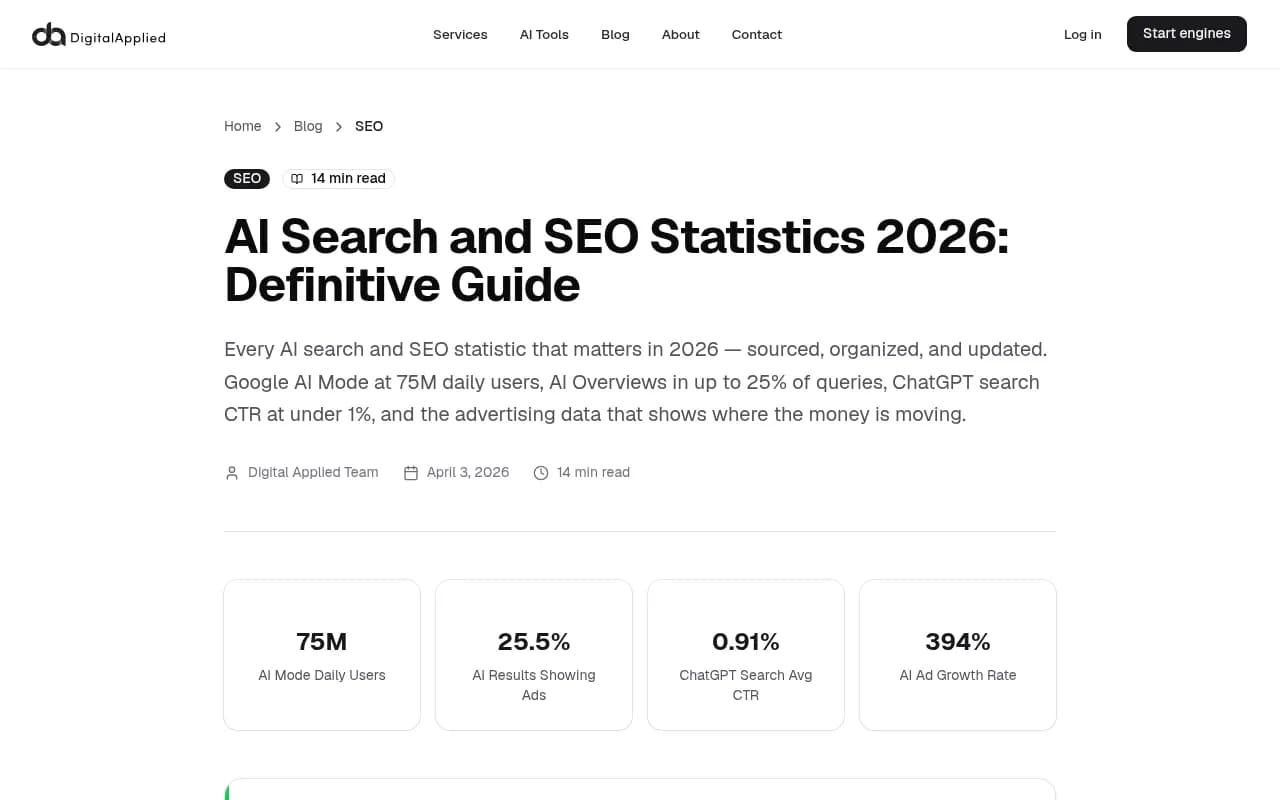
According to data from Digital Applied's 2026 AI Search Statistics report, AI Mode queries show a 93% zero-click rate. Users are getting their answers directly from the AI response. If you're not in that response, you effectively don't exist for that query.
What "position" actually means in AI Mode
Before setting up any tracking, you need to agree on what you're measuring. The field has converged on a few standard metrics:
Mention rate: The percentage of relevant prompts where your brand appears in the AI response. If you track 100 prompts and your brand shows up in 60 of them, your mention rate is 60%.
Citation rate: How often your website is cited as a source in the response. This is distinct from a brand mention — the AI might mention your brand by name without linking to your site.
Sentiment: When your brand is mentioned, is the framing positive, neutral, or negative? This matters more than people expect. An AI that says "Brand X is known for frequent outages" is technically mentioning you.
Competitive share of voice: Across a shared set of prompts, what percentage of mentions go to you vs. each competitor? If you and three competitors are all tracked on the same 100 prompts, and you appear in 40, Competitor A in 55, and Competitor B in 30, you have a clear competitive picture.
Prompt-level gaps: Which specific prompts is Competitor A winning that you're losing? This is where the real optimization work begins.
Setting up a competitive tracking framework
Step 1: Define your prompt universe
The quality of your competitive tracking depends entirely on the quality of your prompt list. Generic prompts give you generic data.
Start by mapping the questions your actual customers ask when evaluating solutions like yours. Think in terms of:
- Category-level prompts ("best CRM for small businesses")
- Problem-aware prompts ("how do I reduce customer churn")
- Comparison prompts ("X vs Y")
- Feature-specific prompts ("which CRM has the best email automation")
- Brand-direct prompts ("is [Competitor] good for enterprise")
For competitive tracking specifically, you want prompts where multiple brands could plausibly appear. Pure brand-name queries ("what is Salesforce") will only ever surface one brand. Category and comparison prompts are where competitive dynamics play out.
Aim for 50-150 prompts to start. More isn't always better — a focused set of high-intent prompts gives you cleaner signal than 500 vague ones.
Step 2: Identify your competitor set
Be deliberate here. Most teams track too many competitors and end up with a dashboard that's too noisy to act on. Pick 3-5 direct competitors that your customers actually compare you against. You can always expand later.
For each competitor, you want to track:
- Their mention rate across your shared prompt set
- Which specific prompts they appear in that you don't
- Whether they're being cited as a source or just mentioned
- How their visibility changes over time (especially after they publish new content)
Step 3: Choose your tracking tool
This is where most teams get stuck. The options range from lightweight monitors to full enterprise platforms, and the right choice depends on how many competitors you're tracking, how many prompts, and whether you need optimization features or just data.
Here's a practical comparison of the main options:
| Tool | AI Mode coverage | Competitor tracking | Content optimization | Starting price |
|---|---|---|---|---|
| Promptwatch | Yes (10 models) | Yes, with gap analysis | Yes (Content Agents) | $99/mo |
| Profound | Yes (Enterprise) | Yes | Limited | $99/mo |
| Nightwatch | Yes (add-on) | Basic | No | $39/mo + add-on |
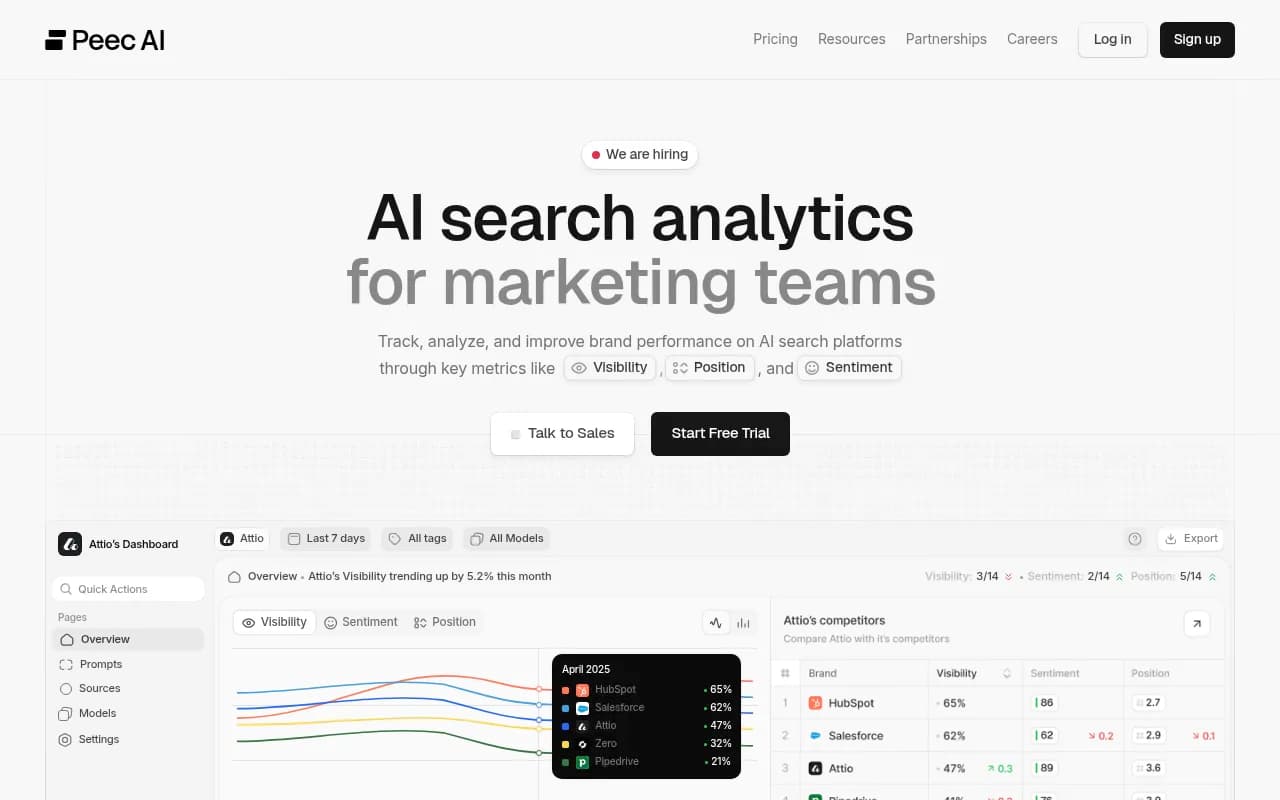
| Peec AI | Yes | Yes | No | €85/mo |
| Otterly.AI | Add-on | Basic | No | $29/mo |
| SE Visible | Yes | Yes | No | Varies |
| seoClarity | Yes | Yes | Yes | $2,500+/mo |
| LLM Pulse | Limited | Basic | No | €49/mo |
For teams that need to track multiple competitors simultaneously and actually do something with the data, Promptwatch is worth looking at closely. It tracks across 10 AI models including Google AI Mode, shows you exactly which prompts competitors are winning that you're not, and has Content Agents that generate articles specifically designed to close those gaps. Most of the cheaper tools stop at showing you the data.

For pure monitoring on a tight budget, Otterly.AI and Peec AI are reasonable starting points, though you'll hit their limits quickly once you want to understand why you're losing ground.
Otterly.AI

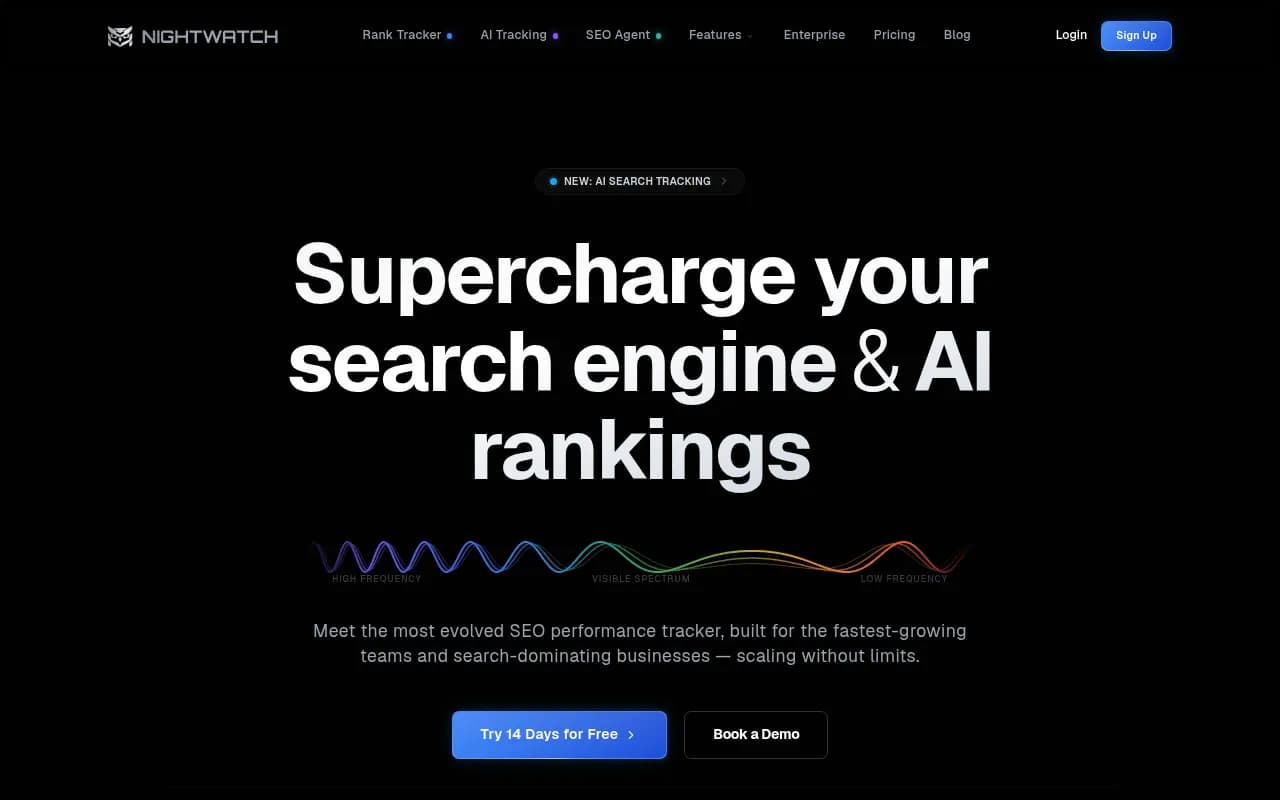
Nightwatch is worth considering if you're already using it for traditional rank tracking and want to add AI Mode as an incremental layer.
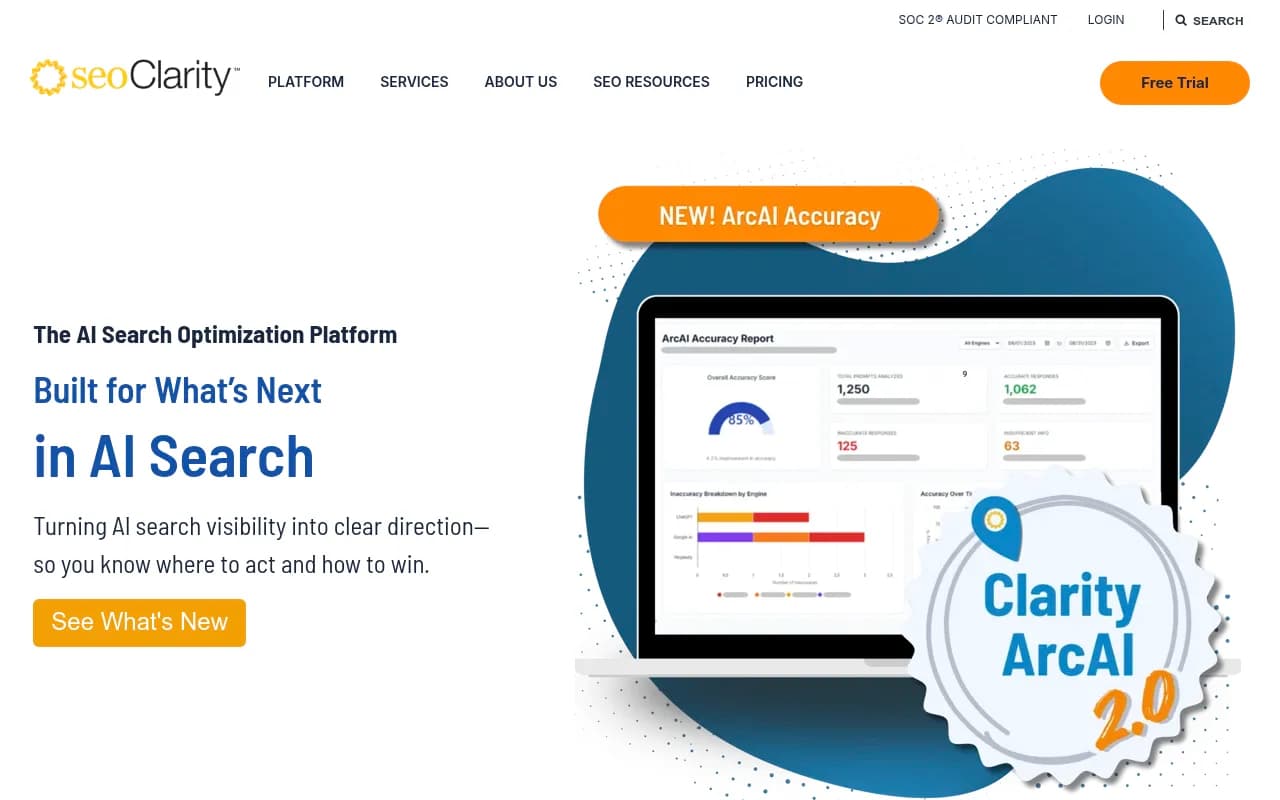
For enterprise teams with complex multi-brand or multi-region needs, seoClarity has the depth, but the price reflects that.
Running the actual competitive analysis
Prompt-level comparison
Once your tracking is running, the first report to pull is a prompt-level competitive breakdown. For each prompt in your set, you want to see:
- Which brands appear in the response
- Whether your brand appears
- The sentiment of each mention
- Whether a source citation is included
This gives you a matrix. Rows are prompts, columns are brands. Fill in each cell with mention (yes/no), and you immediately see the competitive landscape.
The prompts where Competitor A appears but you don't are your priority gaps. These are prompts where AI models have found Competitor A's content more relevant, more authoritative, or more directly answering the question than anything on your site.
Trend tracking over time
A single snapshot is useful. A time series is where competitive tracking gets genuinely powerful.
Track your mention rate and your competitors' mention rates weekly. When a competitor's visibility jumps on a specific set of prompts, it usually means they published new content. When yours drops, something changed — either they improved, or your content became less relevant relative to what the AI is now seeing.
Most platforms let you set up automated reports for this. You want to be notified when there's a significant shift, not just reviewing static dashboards once a month.
Analyzing competitor citation sources
This is a step most teams skip, and it's a mistake. When a competitor is cited in an AI Mode response, the AI is pulling from somewhere — their website, a Reddit thread, a YouTube video, a third-party review site. Understanding where the citation comes from tells you what kind of content you need to create.
If Competitor A is being cited from a detailed comparison article on their blog, you need a better comparison article. If they're being cited from a Trustpilot review summary, you need more reviews. If they're being cited from a Reddit thread where their users are vocal advocates, that's a different problem entirely.
Some platforms surface this citation source data automatically. Others require you to manually inspect the AI responses. Either way, it's worth doing for your highest-priority prompt gaps.
Common mistakes in competitive AI Mode tracking
Tracking too many prompts too early. It's tempting to dump your entire keyword list into a tracking tool. Resist this. Start with 50-75 high-intent prompts, get comfortable with the data, then expand. A focused set you actually act on beats a massive set you ignore.
Ignoring persona variation. AI Mode responses can vary based on the implied user persona. A prompt from a "small business owner" context might surface different brands than the same prompt from an "enterprise IT manager" context. If your product serves multiple segments, you need to track with multiple personas.
Treating a mention as a win. Appearing in an AI response is good. Being cited as the recommended solution is better. Being cited with a link to your site is best. Don't conflate these — a competitor who appears in 80% of responses as "a popular option" but is rarely the top recommendation may actually be losing the battle that matters.
Not connecting tracking to content action. The most common failure mode is building a beautiful dashboard that nobody acts on. Competitive tracking is only valuable if it drives content decisions. When you identify a prompt gap, someone needs to own creating content that addresses it.
Checking results too infrequently. AI models update their training data and citation behavior regularly. A monthly review cycle is too slow. Weekly is better. Some teams run daily checks on their highest-priority prompts.
Turning competitive gaps into content
Here's where most monitoring-only tools leave you stranded. You have a list of prompts where Competitor A is winning. Now what?
The answer is content — but not generic SEO content. AI models cite content that directly and comprehensively answers the question being asked. If the prompt is "what's the best way to reduce SaaS churn in the first 30 days," the AI is looking for content that specifically addresses that question, with concrete advice, ideally from a credible source.
For each priority gap prompt, you need to:
- Look at what the AI is currently citing for that prompt (competitor content, third-party sources, etc.)
- Identify what your site is missing — is there no content on this topic? Is your content too shallow? Is it framed wrong?
- Create or update content that directly addresses the prompt with more depth and specificity than what's currently being cited
This is the cycle that actually moves your visibility numbers. Track the gap, create the content, watch whether the AI starts citing you, repeat.
Promptwatch has a feature called Answer Gap Analysis that automates step 1 and 2 — it shows you exactly which prompts competitors are winning and what content your site is missing. The Content Agents then generate briefs and articles grounded in that gap data. It's the closest thing to a closed-loop system in the market right now.
For teams that want to handle content creation separately, tools like AirOps and Search Atlas can help with the content generation side once you've identified the gaps.

Multi-region and multi-language considerations
If your business operates across multiple markets, competitive tracking gets more complex. AI Mode responses vary by country and language — a brand that dominates AI Mode in the US might be invisible in Germany or Japan.
For multi-region tracking, you need a tool that can simulate queries from specific geographies and in specific languages. Not all platforms support this. Promptwatch supports multi-language and multi-region monitoring with customizable personas. Profound also handles this at the enterprise tier.
The practical implication: if you're tracking a competitor who is strong in your home market but weak in a market you're trying to enter (or vice versa), that's a strategic opportunity. Their content gaps in that market are your opening.
Building a reporting cadence
Competitive AI Mode tracking only creates value if it's connected to decisions. Here's a reporting structure that works for most teams:
Weekly: Automated alert if any competitor's mention rate shifts more than 10 points on your tracked prompt set. Review the specific prompts that changed.
Monthly: Full competitive share-of-voice report. Which prompts did you gain? Which did you lose? What content did competitors publish that correlated with their gains?
Quarterly: Strategic review. Are the right prompts in your tracking set? Have new competitors emerged? Should you expand to new prompt categories or regions?
The weekly alerts keep you reactive to fast-moving changes. The monthly and quarterly reviews keep your strategy calibrated.
What to expect in terms of results
Improving AI Mode visibility is not instant. AI models crawl and re-evaluate content on their own schedules. Publishing a new article today doesn't mean you'll appear in AI Mode responses tomorrow.
Realistically, expect 4-8 weeks between publishing optimized content and seeing it reflected in your AI Mode visibility scores. Some platforms (including Promptwatch) have crawler log features that show you when AI crawlers actually visit your new pages, which helps you understand the lag and troubleshoot if pages aren't being picked up.
The competitive dynamic is similar. If a competitor publishes strong content today, you might not see their visibility scores jump for several weeks. This means your tracking data is always slightly lagged — which is fine as long as you account for it in your interpretation.
The brands winning in AI Mode right now are the ones who started tracking and creating content 6-12 months ago. The brands who start today will be ahead of the ones who start next year. That's the only timeline that matters.