Key takeaways
- Jasper AI is a content creation platform with SEO-awareness, but it wasn't built for LLM citation optimization -- it doesn't track AI visibility or tell you why you're being cited (or not).
- Atomic AGI focuses on digital PR and content strategy for AI search, with a strong emphasis on off-site authority signals that influence LLM citations.
- Promptwatch is the only platform of the three that closes the full loop: it finds citation gaps, generates content engineered to fill them, and tracks whether that content actually gets cited by AI models.
- If your goal is specifically to appear in ChatGPT, Perplexity, Gemini, and similar AI search engines, the tools serve very different purposes -- and picking the wrong one wastes time and budget.
These three tools keep appearing in the same conversations about AI search visibility, but they're solving different problems. Jasper is a content platform. Atomic AGI is a strategy and PR tool. Promptwatch is a GEO (Generative Engine Optimization) platform. Lumping them together makes about as much sense as comparing a word processor to an analytics suite.
That said, the question of which one to use for LLM citation growth is legitimate -- and the answer depends entirely on where you are in the process. This guide breaks down what each tool actually does, where it falls short, and which scenarios call for which approach.
What "getting cited by LLMs" actually requires
Before comparing tools, it helps to understand what drives LLM citations in the first place.
When ChatGPT, Perplexity, or Gemini answer a question, they pull from content they've indexed or retrieved. Getting cited means your content needs to:
- Exist and be crawlable by AI agents
- Answer the specific questions users are prompting AI models with
- Be seen as authoritative -- either through direct indexing or through third-party mentions (Reddit, review sites, news coverage, etc.)
Most teams fail at step one or two. They publish content without knowing what prompts are driving AI responses in their category. Or they publish content that's too generic to match the specific phrasing AI models are responding to.
A good tool for LLM citation growth needs to address at least one of these layers. The best tools address all three.
Jasper AI: content creation with SEO awareness
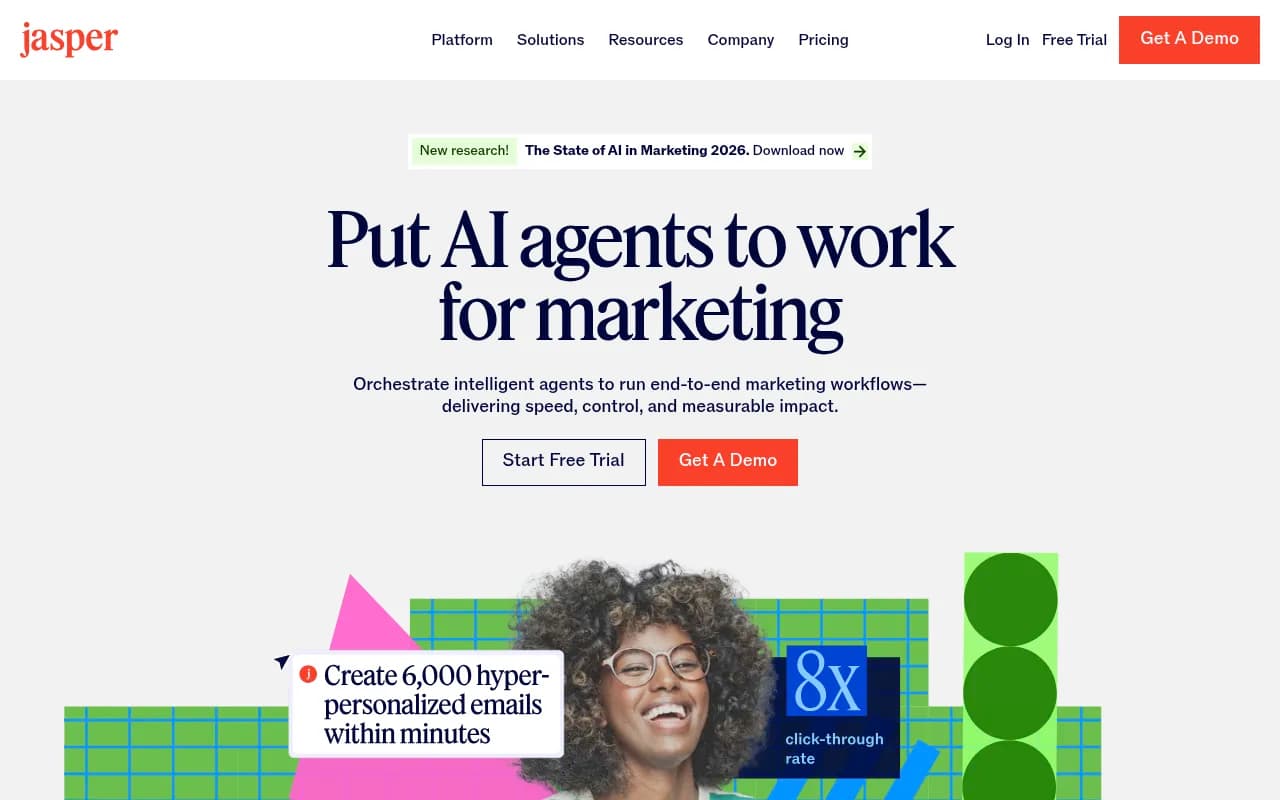
Jasper is primarily a content generation platform for marketing teams. It's been around long enough to build a serious enterprise customer base, and its 2025-2026 product evolution has pushed it toward marketing workflow automation -- brand voice consistency, campaign pipelines, multi-channel content at scale.
What Jasper does well
Jasper's SEO mode helps writers produce content that's structured for search. It integrates with tools like Surfer SEO to pull in keyword data and optimize content as you write. For teams that need to produce a lot of content quickly while maintaining brand consistency, it's genuinely useful.
The platform has also added AI agents that can handle content workflows -- briefing, drafting, reviewing -- without constant human input. For enterprise teams managing dozens of campaigns, this reduces the bottleneck.
Where Jasper falls short for LLM citations
Here's the honest problem: Jasper doesn't know what AI models are citing. It doesn't track which prompts are driving AI responses in your category. It doesn't show you whether your published content is being picked up by ChatGPT or Perplexity. And it doesn't analyze citation gaps -- the specific questions your competitors are getting cited for that you're not.
Jasper can help you write content. It can't tell you what content to write to get cited by AI models, and it can't confirm whether that content is working.
That's not a knock on Jasper -- it's just not what the tool was built for. If you're using Jasper to create content and hoping it gets picked up by LLMs, you're flying blind.
Who Jasper is right for
Teams that already have a clear content strategy and need production capacity. If you know what you want to write and need to write a lot of it, Jasper is a reasonable choice. It's less useful if your problem is figuring out what to write to improve AI visibility.
Atomic AGI: digital PR and strategy for AI search
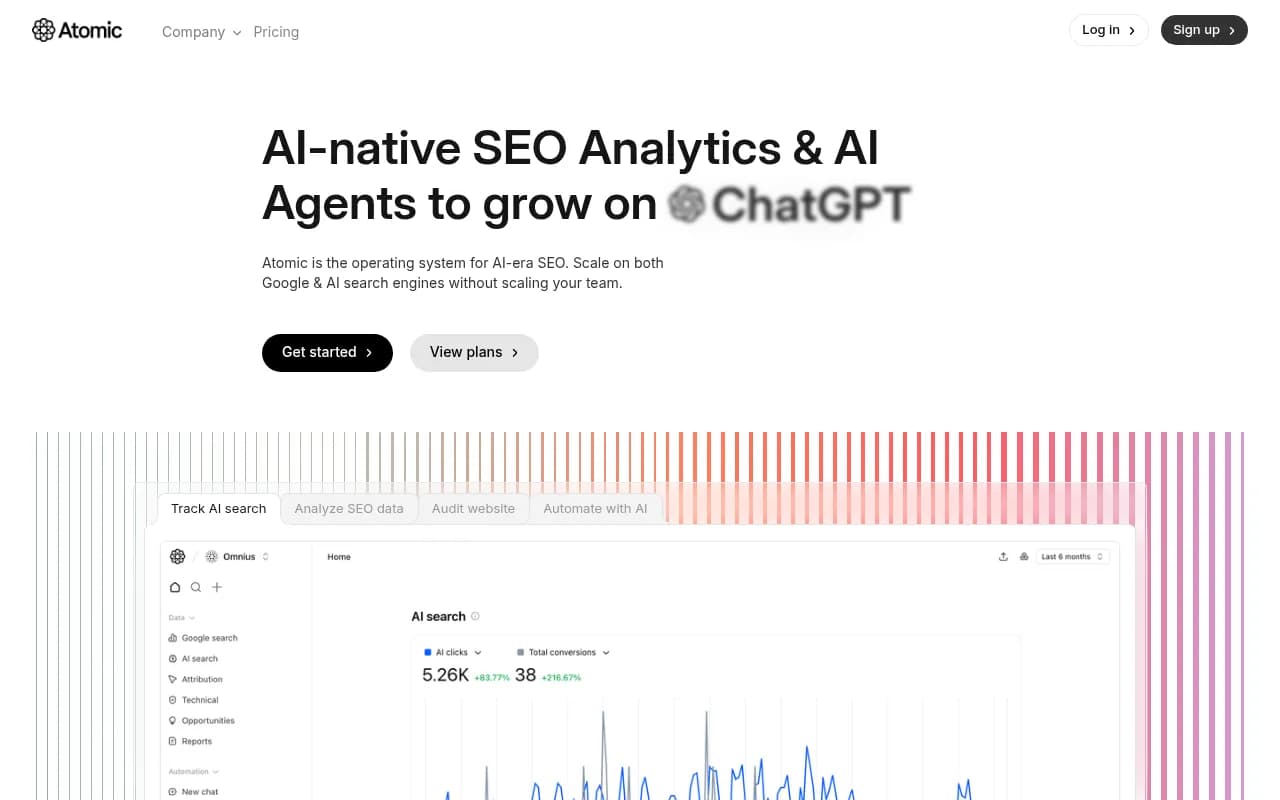
Atomic AGI takes a different angle. Rather than content production, it focuses on the strategic and off-site factors that influence LLM citations -- digital PR, authority signals, and the kind of third-party coverage that AI models treat as credible sources.
What Atomic AGI does well
Atomic AGI's core thesis is that LLM citations are heavily influenced by what's being said about you outside your own website. Reddit threads, news articles, industry listicles, YouTube mentions -- these are the signals AI models use to determine whether a brand is worth citing.
Their digital PR approach for AI search is genuinely well-reasoned. They've published detailed research on which off-site signals correlate with LLM citation rates, and their strategy guides are among the more rigorous pieces of content in this space. If you're trying to understand why certain brands get cited and others don't, Atomic AGI's thinking is worth engaging with.
The platform also combines multi-engine tracking with workflow automation, which means you can monitor visibility across AI models while managing the campaigns designed to improve it.
Where Atomic AGI falls short
The off-site PR approach is real and important, but it's slow. Building the kind of third-party authority that influences LLM citations takes months of consistent effort. And without deep prompt-level tracking -- knowing exactly which questions AI models are answering in your category -- it's hard to prioritize where to focus that effort.
Atomic AGI's tracking capabilities are solid but not as granular as dedicated GEO platforms. You get visibility data, but the gap analysis and content optimization layer is thinner than what you'd get from a platform built specifically around the full optimization loop.
Who Atomic AGI is right for
Brands that already have decent on-site content but aren't getting cited because they lack off-site authority. If your content is good but AI models don't seem to know you exist, a digital PR-focused approach makes sense. It's also a reasonable fit for teams that think in terms of PR campaigns rather than content operations.
Promptwatch: the full GEO loop
Promptwatch is built around a specific problem: most brands don't know which prompts are driving AI responses in their category, which means they can't create content to win those prompts, and they can't measure whether their efforts are working.

The platform addresses this with what it calls the action loop: find gaps, create content, track results.
Finding gaps
Promptwatch's Answer Gap Analysis shows you exactly which prompts your competitors are being cited for that you're not. You see the specific questions AI models are answering in your category, who's getting cited, and what content is driving those citations.
This is the piece most content tools skip entirely. Jasper can help you write content, but it can't tell you which prompts to target. Atomic AGI can help you build authority, but without prompt-level data, you're guessing at which topics matter most.
Promptwatch also tracks prompt volumes and difficulty scores, so you can prioritize the gaps that are both high-value and winnable -- rather than chasing prompts where established players have an insurmountable head start.
Creating content that gets cited
Once you know the gaps, Promptwatch's Content Agents generate articles, listicles, comparisons, and briefs grounded in real prompt data. The output is designed to answer the specific questions AI models are already being asked -- not generic SEO content, but content engineered around actual citation patterns.
This is meaningfully different from Jasper's approach. Jasper generates content based on what you tell it to write. Promptwatch generates content based on what AI models are actually looking for.
Tracking results
This is where Promptwatch separates itself most clearly from both Jasper and Atomic AGI. The platform tracks:
- Which of your pages are being cited, by which AI models, and how often
- AI crawler logs showing when ChatGPT, Perplexity, Claude, and others crawl your site, which pages they read, and what errors they encounter
- The timeline from publish to crawl to citation -- so you can see whether new content is actually being picked up
- Traffic attribution connecting AI citations to actual revenue
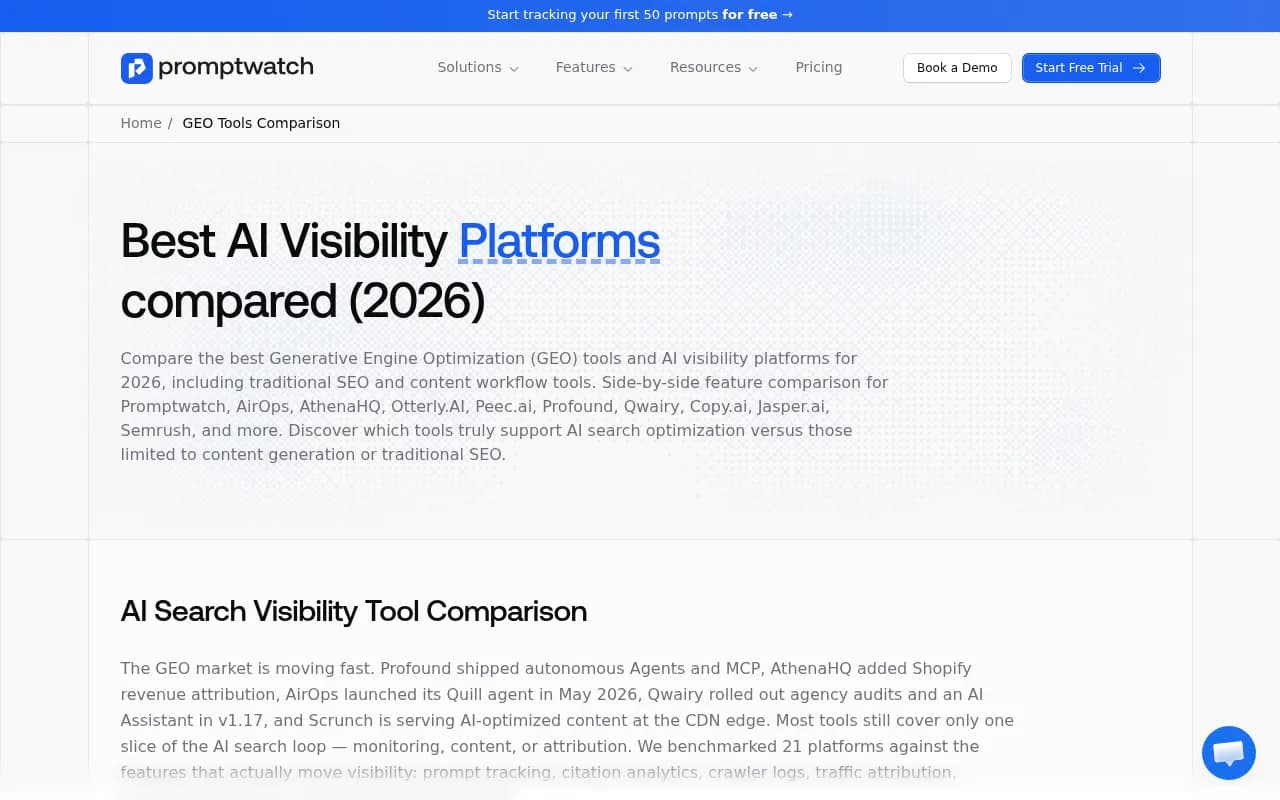
Promptwatch monitors 10 AI models: ChatGPT, Perplexity, Google AI Overviews, Google AI Mode, Claude, Gemini, Meta/Llama, DeepSeek, Grok, and Mistral. It also tracks Reddit discussions and YouTube mentions that influence AI recommendations -- a channel most platforms ignore.
Pricing
Promptwatch's Essential plan starts at $99/month (1 site, 50 prompts, 5 articles). Professional is $249/month (2 sites, 150 prompts, 15 articles, crawler logs, state/city tracking). Business is $579/month (5 sites, 350 prompts, 30 articles). A free trial is available.
Who Promptwatch is right for
Marketing teams, SEO teams, and agencies that want to systematically improve AI search visibility -- not just monitor it. If you need to know which prompts to target, create content that actually gets cited, and prove that your work is moving the needle, Promptwatch is the most complete option of the three.
Head-to-head comparison
| Capability | Jasper AI | Atomic AGI | Promptwatch |
|---|---|---|---|
| Content generation | Yes (brand-consistent, at scale) | Limited | Yes (prompt-grounded, citation-engineered) |
| Prompt tracking | No | Partial | Yes (10 AI models) |
| Citation monitoring | No | Yes (basic) | Yes (page-level, per-model) |
| Answer gap analysis | No | No | Yes |
| AI crawler logs | No | No | Yes |
| Off-site / digital PR focus | No | Yes (core feature) | Partial (Reddit/YouTube insights) |
| Traffic attribution | No | No | Yes |
| ChatGPT Shopping tracking | No | No | Yes |
| Prompt volume & difficulty | No | No | Yes |
| Content briefs from real data | No | No | Yes |
| Free trial | Yes | Yes | Yes |
| Starting price | ~$49/mo | Custom | $99/mo |
| Best for | Content production teams | PR-led authority building | Full GEO optimization loop |
Which tool fits which situation
The honest answer is that these tools aren't really competing for the same use case.
Use Jasper if you have a clear content strategy and need to produce a high volume of on-brand content efficiently. It's a production tool, not a visibility tool.
Use Atomic AGI if your on-site content is solid but you're not getting cited because you lack off-site authority. Digital PR for AI search is a real strategy, and Atomic AGI has thought about it more carefully than most.
Use Promptwatch if you want to actually optimize for LLM citations -- find the specific prompts driving AI responses in your category, create content engineered to win those prompts, and track whether it's working. It's the only platform of the three that closes the full loop from gap identification to content creation to citation tracking.
For teams that are serious about AI search visibility, the combination that makes most sense is Promptwatch for strategy and tracking, with Jasper potentially handling content production volume once Promptwatch has identified what to write. Atomic AGI's digital PR approach can complement Promptwatch's on-site work -- off-site authority and on-site content optimization aren't mutually exclusive.
Other tools worth knowing about
If you're evaluating this space more broadly, a few other platforms are worth a look depending on your needs.
For monitoring-focused teams that want simpler tracking without the full optimization stack:
Otterly.AI

For teams that want traditional SEO capabilities alongside AI visibility tracking:
For agencies managing multiple clients across AI search:
Profound

The bottom line
The AI citation space is still early enough that most brands are leaving visibility on the table. The question isn't really "which tool is best" in the abstract -- it's which tool matches where you are and what you're trying to accomplish.
If you're starting from scratch on AI visibility, Promptwatch gives you the clearest path: find the gaps, fill them with the right content, and measure what's working. That's a more direct route to LLM citations than either content production at scale or digital PR alone.
The brands getting cited consistently in 2026 aren't the ones with the most content or the most press coverage -- they're the ones who understand exactly which prompts matter in their category and have content that answers those prompts better than anyone else.