Key takeaways
- Reddit, YouTube, and LinkedIn are the three most-cited social platforms across ChatGPT, Perplexity, Google AI Mode, Gemini, and AI Overviews -- but their rankings shift dramatically by platform.
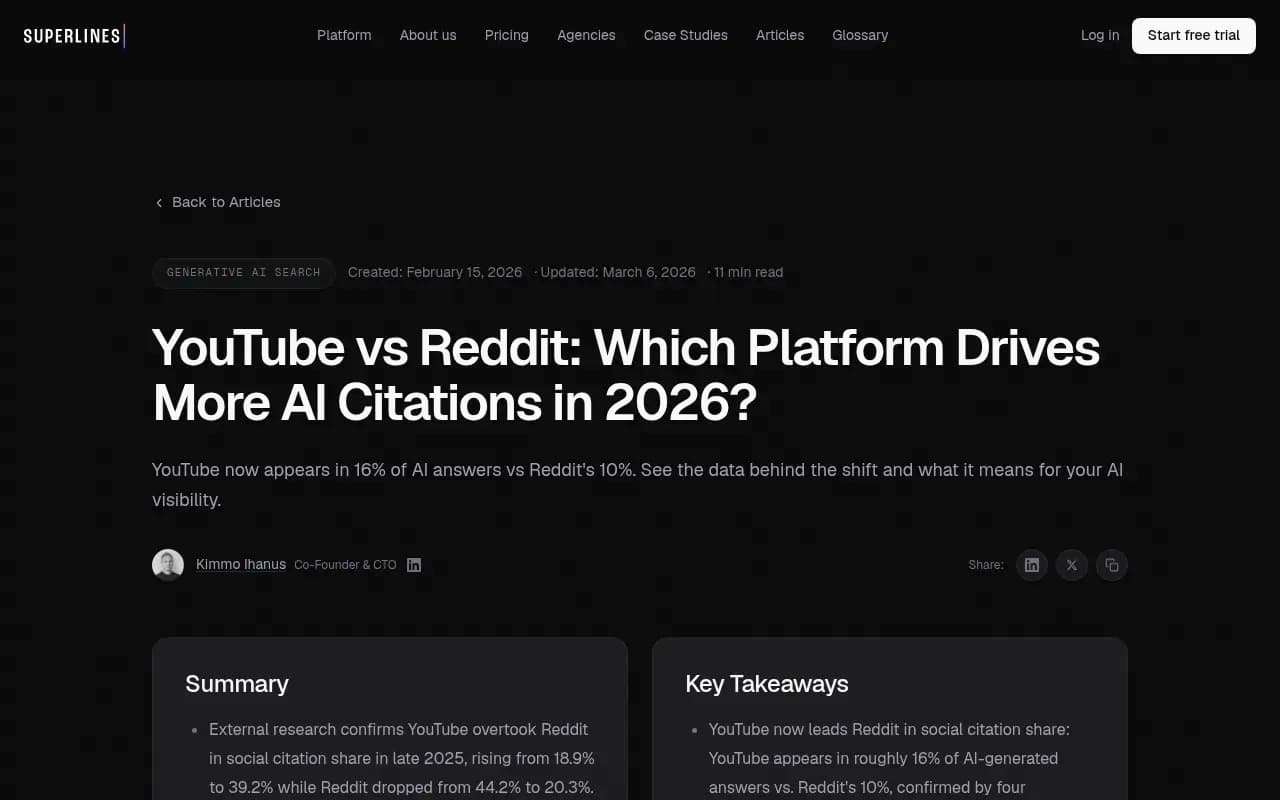
- YouTube overtook Reddit in citation share in late 2025 (39.2% vs 20.3%), but Reddit still leads in absolute citation volume across tracked brands.
- LinkedIn is the surprise performer: with 15,835 citations in one 30-day period across 62 brands, it nearly matches YouTube and dominates B2B AI queries.
- No single platform wins across all LLMs -- Perplexity cites Reddit 6.1x more than YouTube, while Google AI Overview shows near parity between the two.
- A multi-platform strategy beats betting on one channel. Tools like Promptwatch can show you exactly which platforms are driving citations for your specific prompts.
The debate used to be simple: Reddit was where AI models went for real human opinions, YouTube was for video, and LinkedIn was something you checked when you got a recruiter message. That framing is now completely outdated.
In 2026, these three platforms are locked in a genuine three-way competition for LLM citation share -- and the data is messier, more interesting, and more actionable than most marketers realize.
Let's get into what the numbers actually say.
The headline numbers (and why they contradict each other)
Here's where it gets confusing: depending on which study you read, a different platform is "winning."
A Peec AI analysis of 30 million sources across ChatGPT, Google AI Mode, Gemini, Perplexity, and AI Overviews found Reddit ranked as the most-cited domain overall, with YouTube and LinkedIn following. That study was published in March 2026 and covered the broadest dataset.
Meanwhile, Superlines tracked 62 brands over a 30-day period ending February 2026 and found Reddit still led in raw citation volume: 39,551 citations vs. YouTube's 15,735. LinkedIn came in at approximately 15,835 -- essentially tied with YouTube.
But a separate analysis tracking citation share (what percentage of social citations go to each platform) found YouTube had overtaken Reddit in late 2025, rising from 18.9% to 39.2% while Reddit dropped from 44.2% to 20.3%.
So which is it? The honest answer: both are true, and they're measuring different things. Citation share tells you about the direction of travel -- YouTube is gaining ground fast. Absolute volume tells you where citations are actually happening right now for most brands -- Reddit still dominates there. LinkedIn is quietly competitive in both metrics and gets far less attention than it deserves.
Platform-by-platform breakdown
Reddit: still the volume leader, but losing share
Reddit's dominance in AI citations comes down to one thing: AI models trust it for authentic human opinion. When someone asks ChatGPT "what's the best project management tool for a 10-person startup," the model wants to cite a real discussion where real people argued about it -- not a brand's landing page.
Reddit delivers that at scale. The platform has millions of threads covering almost every product category, use case, and opinion imaginable. That breadth is why it still generates more raw citations than YouTube or LinkedIn for most brands.
The catch: Reddit's citation share is falling. The drop from 44.2% to 20.3% in social citation share is significant. Part of this is YouTube catching up, but part of it is also Reddit's own content moderation becoming more aggressive, which may be reducing the volume of indexable content AI models can access.
For marketers, Reddit still matters enormously -- especially for Perplexity, which cites Reddit 6.1x more than YouTube. If your audience uses Perplexity (common in tech and research-heavy industries), Reddit is non-negotiable.
YouTube: the fastest-growing citation source
YouTube's rise makes sense once you understand how AI models use it. They're not watching videos -- they're reading transcripts and descriptions. A well-structured YouTube video with a detailed transcript, chapter markers, and a keyword-rich description is essentially a long-form article in the eyes of an LLM.
The jump from 18.9% to 39.2% citation share happened quickly, and the trajectory suggests YouTube will continue gaining ground. Google AI Overview in particular shows near parity between YouTube and Reddit (1,569 vs 1,478 citations in the Superlines data), which makes sense given Google's ownership of YouTube and its incentive to surface its own properties.
What makes YouTube citations different from Reddit citations: they tend to be more structured and authoritative. A Reddit thread is a discussion; a YouTube video is typically a more deliberate piece of content with a clear point of view. AI models seem to be increasingly treating well-produced YouTube content as a credible source, not just a social platform.
The practical implication: if you're creating video content and not adding detailed transcripts and chapter descriptions, you're leaving AI citations on the table.
LinkedIn: the B2B dark horse
LinkedIn is the platform most marketers underestimate for AI visibility. The data from Superlines shows 15,835 citations in a single month across 62 tracked brands -- nearly matching YouTube's 15,735. And a separate analysis found LinkedIn appearing in 11% of AI responses on ChatGPT search, specifically 14.3% -- ahead of Wikipedia and YouTube for that platform.
Why does LinkedIn punch above its weight? A few reasons:
- LinkedIn content tends to be professional, opinionated, and specific. Posts from practitioners explaining how they solved a problem are exactly the kind of content AI models want to cite.
- LinkedIn articles and newsletters are indexed and treated as editorial content, not just social posts.
- For B2B queries, LinkedIn is often the most relevant source. When someone asks an AI about enterprise software, SaaS pricing, or B2B marketing strategy, LinkedIn posts and articles from practitioners frequently surface.
Perplexity in particular favors LinkedIn for B2B queries -- the Peec AI study specifically called this out. If you're a B2B brand and you're not treating LinkedIn as an AI visibility channel, you're missing citations your competitors may already be getting.
How different AI engines treat each platform
This is where strategy gets interesting. The "right" platform depends entirely on which AI engines your audience uses.
| AI engine | Reddit preference | YouTube preference | LinkedIn preference |
|---|---|---|---|
| Perplexity | Very high (6.1x vs YouTube) | Moderate | High (especially B2B) |
| Google AI Overview | Near parity with YouTube | Near parity with Reddit | Moderate |
| ChatGPT | High | Moderate | High (14.3% citation rate) |
| Grok | High (2.3x vs YouTube) | Moderate | Lower |
| Gemini | Moderate | High (Google properties) | Moderate |
The takeaway: there's no single platform that dominates across all LLMs. Perplexity and Grok lean heavily toward Reddit. Google's products increasingly favor YouTube. ChatGPT shows a surprisingly strong preference for LinkedIn.
This means your platform strategy should be informed by where your audience actually searches. A developer audience using Perplexity needs Reddit coverage. A B2B buyer using ChatGPT needs LinkedIn presence. A consumer audience using Google AI Mode needs YouTube.
What actually gets cited on each platform
Understanding citation preferences is one thing. Understanding what type of content gets cited is more useful.
On Reddit, AI models favor threads where multiple people weigh in with specific, experience-based opinions. A thread titled "Has anyone actually used [product] for enterprise deployments?" with 40 substantive replies is more likely to be cited than a thread with two comments. Upvotes matter too -- they function as a rough quality signal.
On YouTube, transcripts are the primary citation surface. Videos with auto-generated transcripts are better than nothing, but manually edited transcripts with clear structure get cited more reliably. Chapter markers help AI models identify which section of a video answers a specific question. Video descriptions that summarize key points also contribute.
On LinkedIn, the content that gets cited tends to be specific and practitioner-led. A post from a CMO explaining their attribution methodology is more citable than a generic "5 tips for marketing" post. LinkedIn articles (the long-form format) get more citations than standard posts, and newsletters appear to be gaining traction as a citation source.
The 62% problem
One data point from the Superlines research deserves its own mention: 62% of brands are completely absent from AI-generated answers. Not underperforming -- absent entirely.
This means the majority of brands haven't established enough presence on any of these platforms to show up when AI models answer questions in their category. The brands that are winning AI citations tend to have consistent presence across all three platforms, not just one.
This is the core argument for a multi-platform approach. If you're only on Reddit, you're invisible to ChatGPT users searching for B2B information. If you're only on LinkedIn, you're missing Perplexity's Reddit-heavy citation patterns. If you're only on YouTube, you're missing the conversational query types where Reddit dominates.
How to build an AI citation strategy across all three platforms
For Reddit
- Participate in relevant subreddits authentically. AI models cite threads, not brand accounts -- but your brand's perspective can appear in threads if you're a genuine participant.
- Create content that answers specific questions your customers ask. Reddit threads that match common AI prompts get cited repeatedly.
- Monitor which subreddits AI models are already citing in your category. This tells you where to focus.
For YouTube
- Add detailed, manually edited transcripts to every video. This is the single highest-leverage action for YouTube AI citations.
- Use chapter markers with descriptive titles that match how people phrase questions to AI models.
- Write video descriptions that summarize key points in plain language -- treat them like a short article, not a marketing blurb.
- Include specific, citable claims. "We reduced churn by 23% using this approach" is more citable than "this approach really works."
For LinkedIn
- Post specific, experience-based content rather than generic advice. AI models cite practitioners, not content marketers.
- Write LinkedIn articles on topics your customers ask AI models about. These get indexed and cited more reliably than standard posts.
- Use clear, direct language. LinkedIn posts that answer a specific question in the first two lines perform better as citation sources.
- For B2B brands: make sure your executives and subject matter experts are posting, not just your brand page. Personal accounts with demonstrated expertise get cited.
Tracking what's actually working
The challenge with all of this is attribution. You can publish content across all three platforms and have no idea which pieces are actually driving AI citations, which AI engines are picking them up, or whether your visibility is improving over time.
This is where dedicated AI visibility tracking becomes genuinely useful. Promptwatch tracks citations across 10 AI models and includes specific Reddit and YouTube insights -- surfacing which discussions and videos are influencing AI recommendations in your category. That kind of offsite citation data is hard to get any other way.

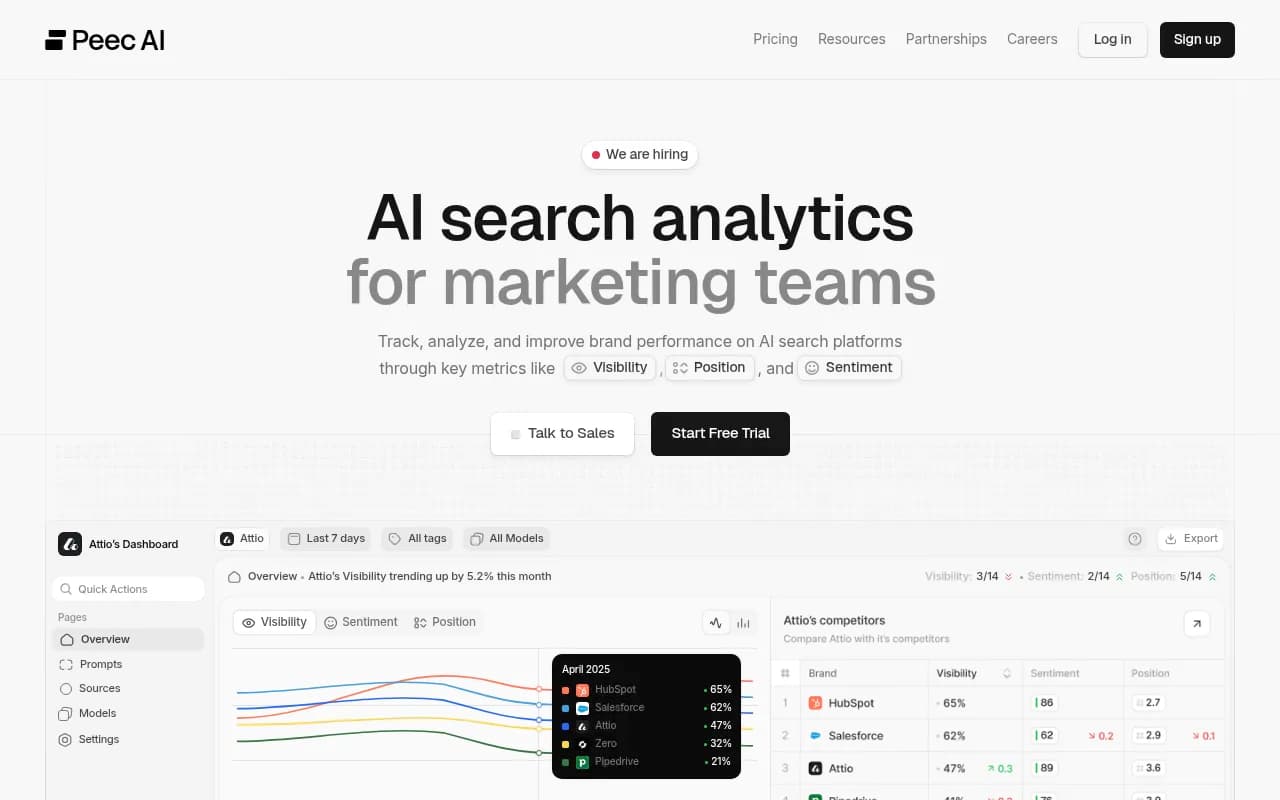
For brands that want to understand their current citation baseline before building a platform strategy, tools like Peec AI and Superlines also offer citation analysis.
The bottom line
Reddit, YouTube, and LinkedIn each drive meaningful AI citations in 2026, and none of them is clearly dominant across all LLMs and use cases. Reddit leads in raw volume and Perplexity citations. YouTube is growing fastest and dominates Google's AI products. LinkedIn is the most underrated channel for B2B brands and ChatGPT visibility.
The brands getting cited most consistently aren't betting on one platform. They're treating all three as distinct content surfaces with different optimization requirements -- and they're tracking results at the citation level, not just at the traffic level.
If you're currently absent from AI-generated answers in your category (and statistically, there's a 62% chance you are), the question isn't which platform to pick. It's how quickly you can establish credible presence across all three.