Key takeaways
- In January 2025, only 6% of consumers used ChatGPT to find local businesses. By January 2026, that number jumped to 45%, making it the third most-used local search channel.
- Local SEO now spans four distinct channels: Google Maps, Google AI Overviews, Google's new Ask Maps feature, and AI chatbots like ChatGPT and Perplexity — each with different ranking logic.
- ChatGPT's local recommendations are largely powered by the Bing index, not Google. If you've ignored Bing, you may be invisible in ChatGPT searches even if you rank well on Google.
- City-level and neighborhood-level tracking in AI search is now a real capability — and a real competitive advantage for businesses that use it.
- Tracking AI visibility requires different tools than traditional rank trackers. Platforms like Promptwatch can monitor how AI models cite your business across cities and prompts.
The number that should change your strategy
In January 2025, 6% of consumers used ChatGPT to find a local business. Twelve months later, that number was 45%.
That's not a gradual shift. That's a channel materializing almost overnight. And most local SEO strategies haven't caught up.
For years, local search meant one thing: Google Maps. You optimized your Google Business Profile, built citations, collected reviews, and watched your 3-pack ranking. That still matters. But it's no longer the whole game.
When someone in Chicago asks ChatGPT "what's the best Italian restaurant near Wicker Park," they're not seeing a map. They're getting a conversational recommendation, often with a specific business name, a reason to trust it, and sometimes a link. If your business isn't in that answer, you don't exist for that query — regardless of how well you rank on Google.
This guide breaks down how local search actually works in 2026, what's different about AI-powered local discovery, and what you need to do to show up in both.
How local search works in 2026: four channels, four ranking systems
The biggest mistake local businesses make right now is treating local SEO as a single channel. It's four, and they work differently.
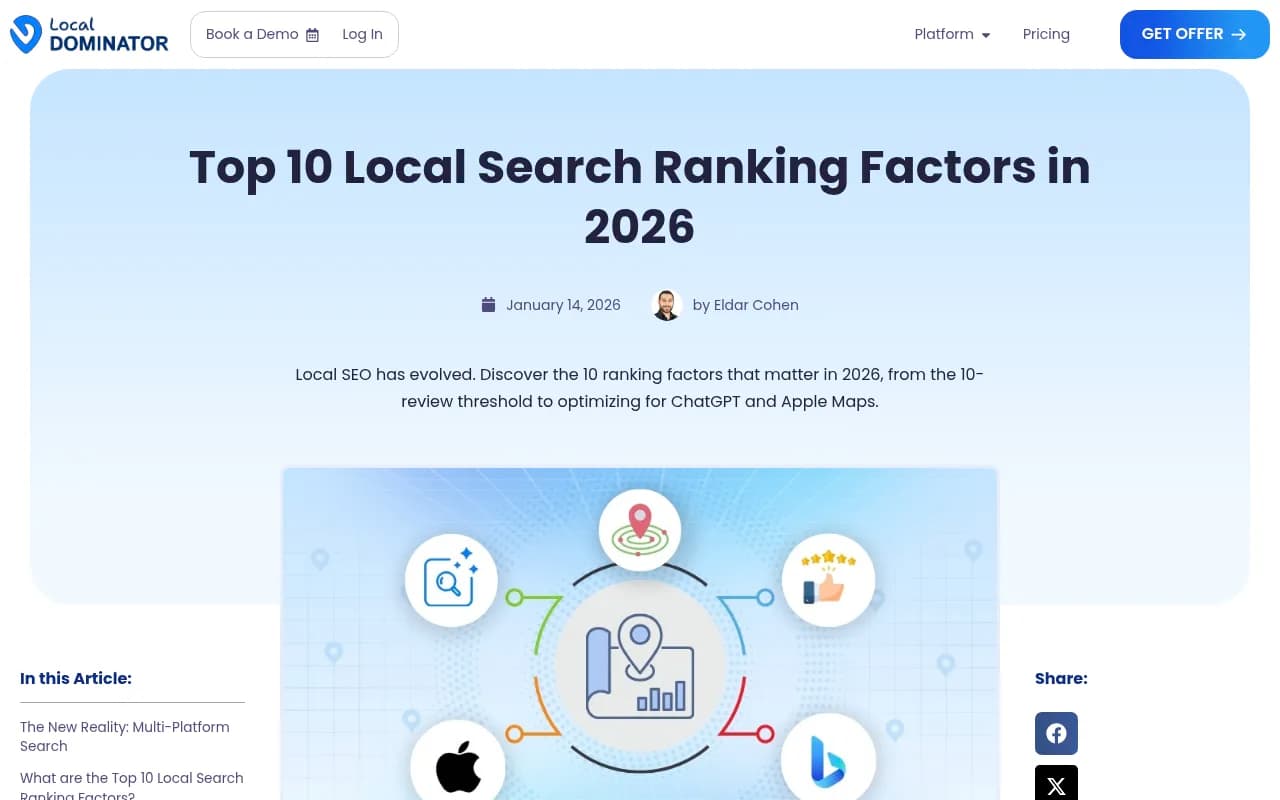
Google Maps (the traditional 3-pack)
Still the highest-volume local search channel for most businesses. The ranking logic here is well-understood: Google Business Profile completeness, proximity to the searcher, review quantity and quality, citation consistency, and on-page signals from your website.
The 10-review threshold matters more than it used to. Businesses with fewer than 10 reviews are increasingly pushed out of competitive 3-packs, even with strong proximity signals.
Google AI Overviews
These appear above organic results for many local queries. They pull from web content, not directly from your GBP. Structured data (schema markup), E-E-A-T signals, and clear topical authority on your website drive inclusion here. A well-optimized GBP alone won't get you into AI Overviews.
Ask Maps (Google's new feature)
Ask Maps is Gemini-powered conversational search built directly into Google Maps. A user can type "coffee shop with good wifi for remote work" and get a curated, AI-generated list. It draws from the Places database, your GBP, and review content. The more complete and specific your GBP attributes are — parking, wifi, seating, ambiance — the better your chances here.
ChatGPT, Perplexity, and other AI chatbots
This is the new frontier. These tools don't use Google's index. ChatGPT's local recommendations are largely powered by Bing. Perplexity does its own web crawling. Claude draws from its training data plus real-time search when enabled.
The implication: your Google rankings don't automatically translate here. A business that dominates Google Maps but has weak Bing presence, thin web content, and few third-party citations may be completely absent from ChatGPT recommendations.
| Channel | Primary data source | Key ranking signals | Optimization focus |
|---|---|---|---|
| Google Maps | Google Business Profile | Proximity, reviews, GBP completeness | GBP, citations, reviews |
| Google AI Overviews | Google web index | E-E-A-T, schema, content quality | Website content, structured data |
| Ask Maps | Google Places + GBP | GBP attributes, review detail | GBP attributes, review keywords |
| ChatGPT | Bing index + training data | Bing presence, third-party citations, web content | Bing Webmaster Tools, content depth |
| Perplexity | Live web crawl | Crawlability, content authority, citations | Technical SEO, content authority |
Why ChatGPT city tracking is now a real discipline
Traditional local rank tracking was simple: pick a keyword, pick a location, check your position. Tools like BrightLocal or Local Falcon would show you a geo-grid of rankings across a city.
AI search doesn't work that way. There's no "position 1" in ChatGPT. Instead, there's citation or no citation. Mention or no mention. And the answer can vary based on how the prompt is phrased, what persona is asking, and even what time of day the query runs.
This is why "ChatGPT city tracking" has become its own discipline. You're not tracking a rank — you're tracking whether your business appears in AI-generated answers for location-specific prompts across different neighborhoods, use cases, and query phrasings.
For example, a plumber in Seattle might want to track:
- "Best plumber in Capitol Hill Seattle"
- "Emergency plumber Seattle Eastside"
- "Who do people recommend for pipe repair in Bellevue"
- "Plumber near me with good reviews" (run from a Seattle IP)
Each of these can return different results. A business might appear in three of them and be absent from the fourth — and that fourth prompt might represent 40% of the search volume.
Promptwatch handles this kind of tracking with city and neighborhood-level granularity, running prompts across ChatGPT, Perplexity, Google AI Overviews, and other models simultaneously. It's one of the few platforms built to handle the multi-prompt, multi-model nature of AI local search.

The Bing problem most local businesses don't know they have
Here's something that surprises a lot of people: ChatGPT's local search results are largely powered by Bing's index, not Google's.
Microsoft's Bing powers the web search capability in ChatGPT. When someone asks ChatGPT for a local recommendation, it often queries Bing to find relevant businesses and content. If your business has a weak Bing presence — no Bing Places listing, low Bing organic rankings, few Bing-indexed pages — you may be invisible in ChatGPT even if you're ranking #1 on Google Maps.
The fix isn't complicated, but it's often overlooked:
- Claim and fully optimize your Bing Places for Business listing
- Submit your sitemap to Bing Webmaster Tools
- Check that your key pages are indexed in Bing (not just Google)
- Build citations on sites that Bing crawls and trusts
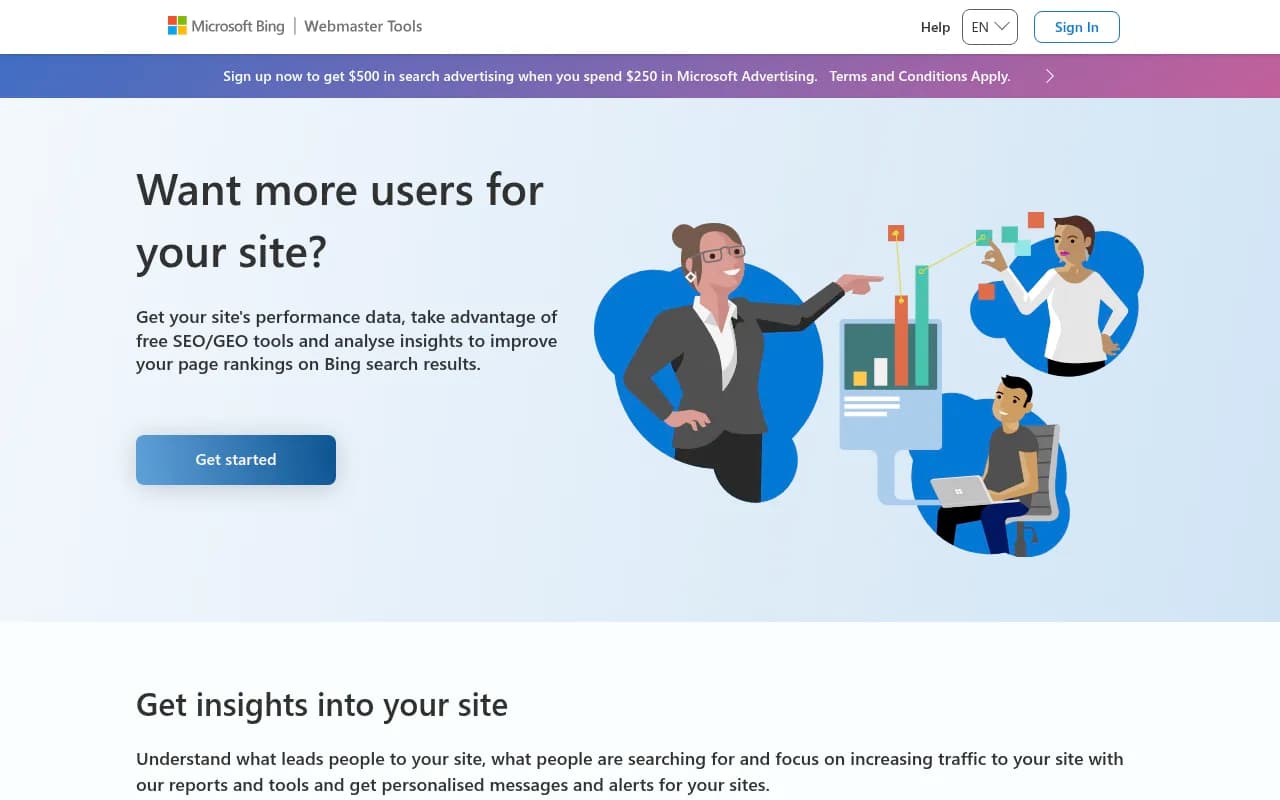
This is a quick win for most local businesses. The Bing optimization gap is real, and closing it can meaningfully improve ChatGPT visibility within weeks.
What actually drives AI recommendations for local businesses
AI models don't have a simple ranking algorithm you can reverse-engineer the way Google's local pack does. But there are patterns in what gets cited.
Third-party validation matters more than self-promotion
AI models are trained on the web. They're more likely to cite a business that appears in "best of" lists, local news articles, review aggregators, and community discussions than one that only has a well-optimized website. A mention in a local blog post or a Reddit thread about "best mechanics in Austin" can carry more weight in an AI recommendation than a perfectly structured GBP.
This is a meaningful shift from traditional local SEO, where your own website and GBP were the primary levers. In AI search, earned mentions across the web matter a lot.
Review content is read, not just counted
AI models can read review text. A business with 200 reviews that all say "great service, highly recommend" gives an AI model less to work with than a business with 80 reviews that specifically mention "fast response time," "fair pricing," "great with older homes," and "explained everything clearly."
Keyword-rich review content — the kind that comes from customers describing their actual experience in detail — gives AI models the specificity they need to recommend you for particular types of queries.
Consistency across platforms builds entity authority
When ChatGPT, Perplexity, or Gemini encounters your business name across multiple sources — your website, Yelp, TripAdvisor, local directories, news mentions, Reddit — it builds confidence that you're a real, established business. Inconsistent NAP (name, address, phone) data across these sources creates ambiguity that AI models resolve by... not recommending you.
Content depth on your website
AI models crawl and read your website. A plumber with a single homepage has less to offer than one with pages covering specific services, neighborhoods served, common problems, and FAQs. The more specific and useful your content, the more likely an AI model is to surface it in response to a specific local query.
Tools for tracking and improving local AI visibility
The tooling landscape for local AI search is still maturing, but there are solid options depending on what you need.
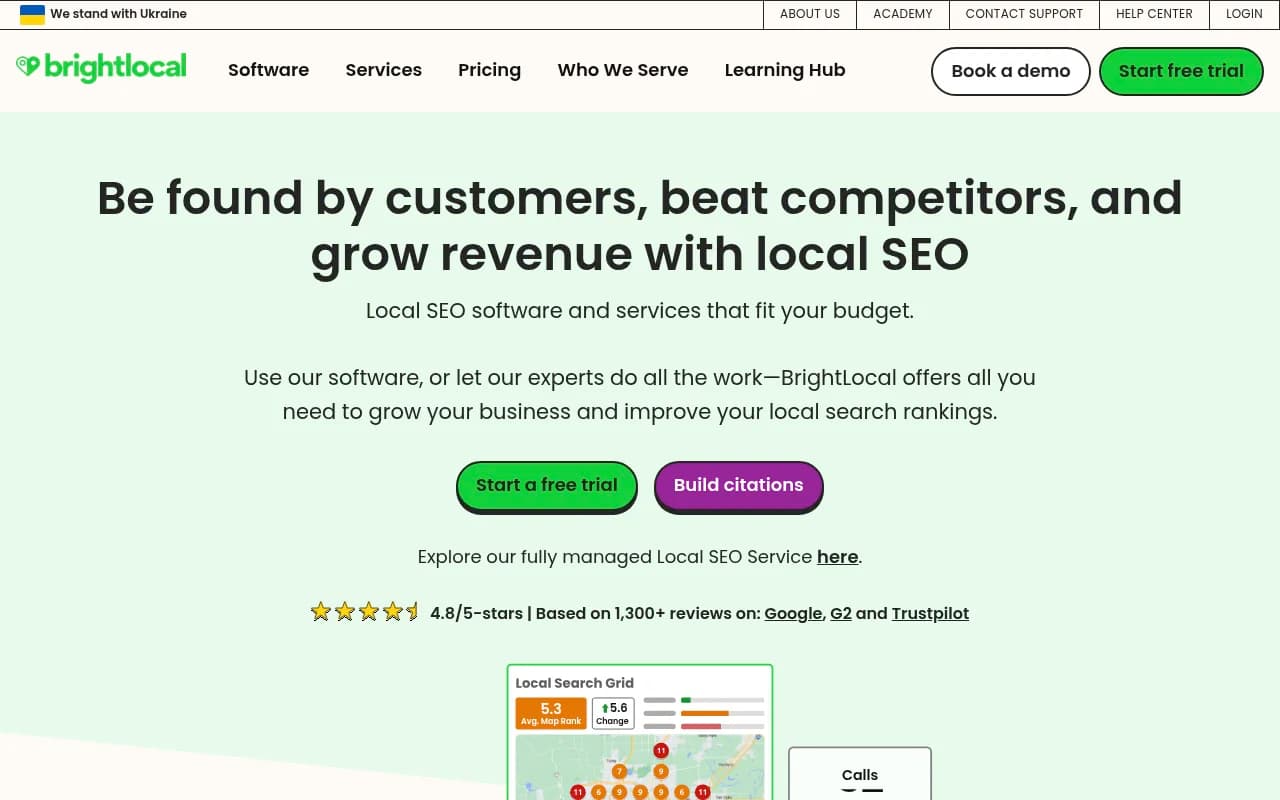
For traditional local SEO tracking (Google Maps, local pack rankings), BrightLocal remains a strong choice for agencies managing multiple locations.
For AI visibility tracking specifically — monitoring how your business appears in ChatGPT, Perplexity, and other models for local prompts — you need something built for that purpose. Promptwatch covers 10 AI models with city-level tracking, prompt volume data, and content gap analysis that shows you which prompts competitors are winning that you're not.
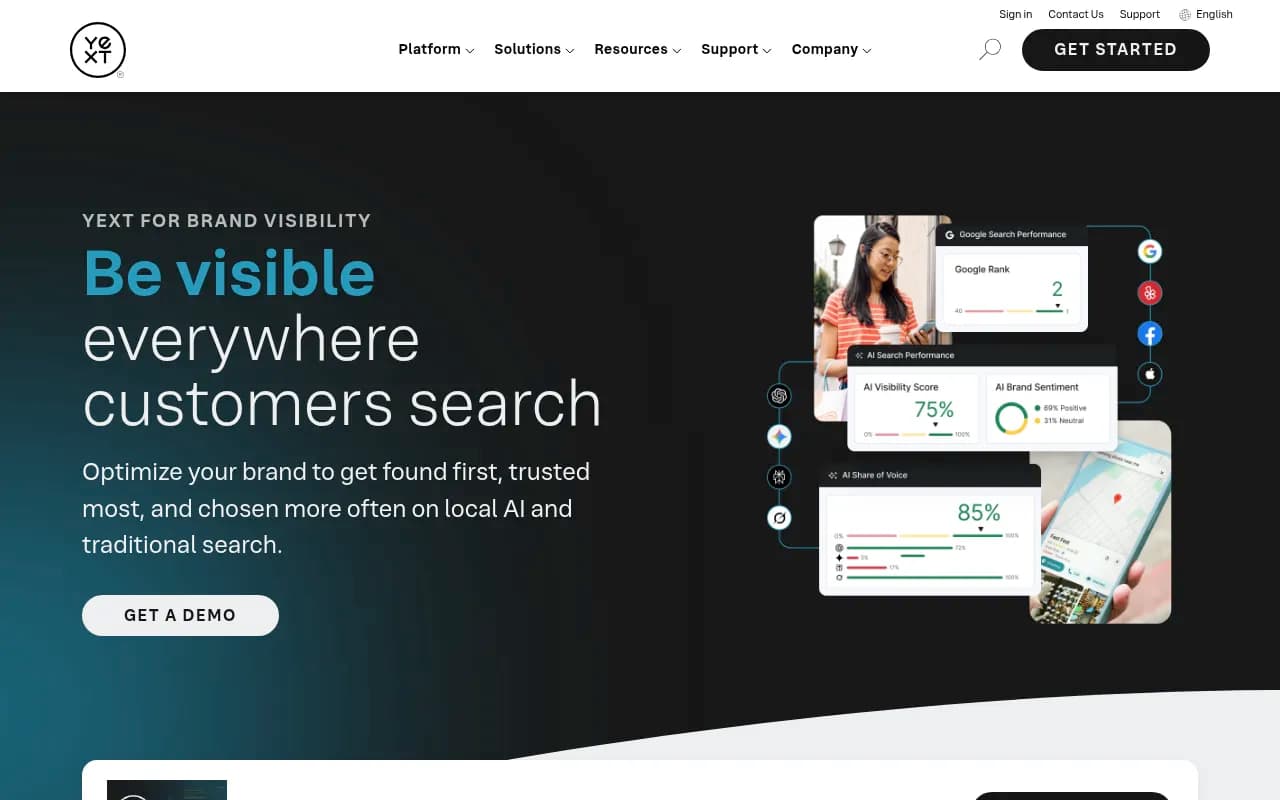
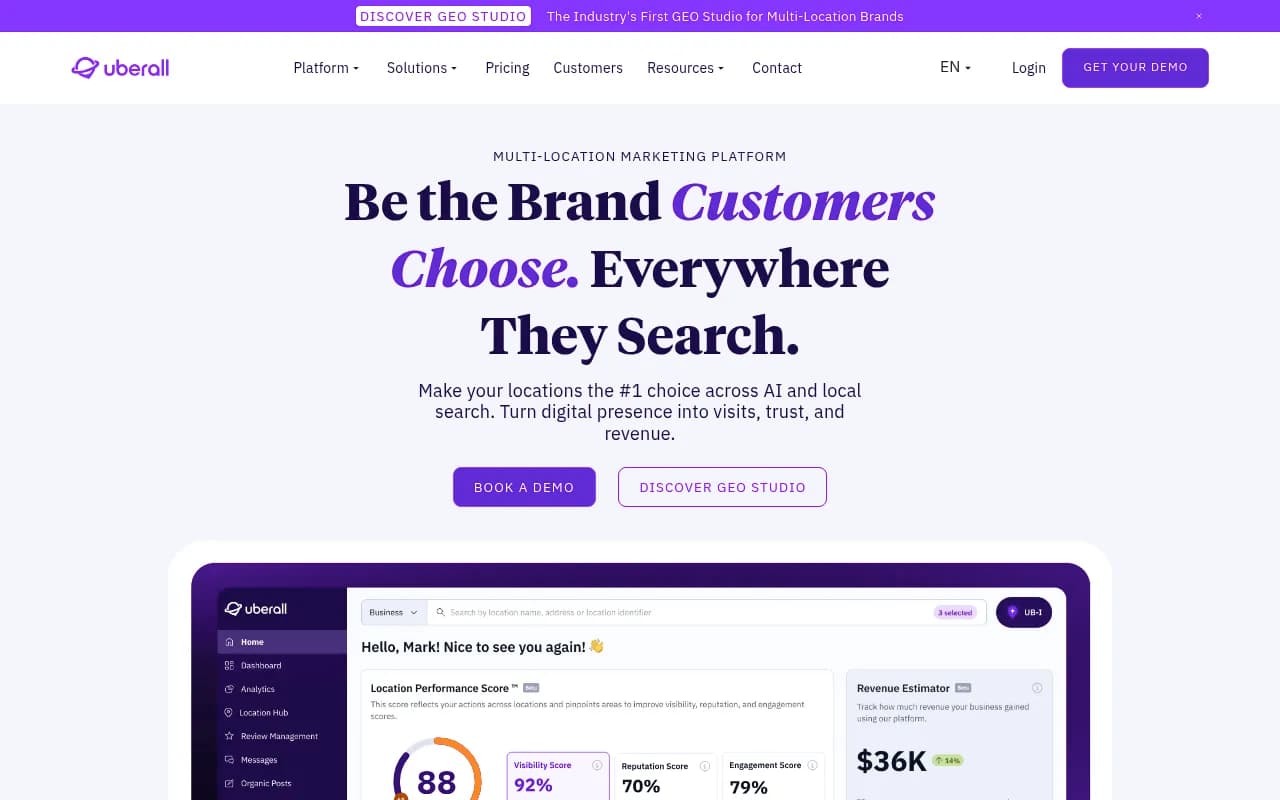
For businesses focused on multi-location AI and local search visibility, Yext and Uberall both have emerging AI search features alongside their traditional listing management.
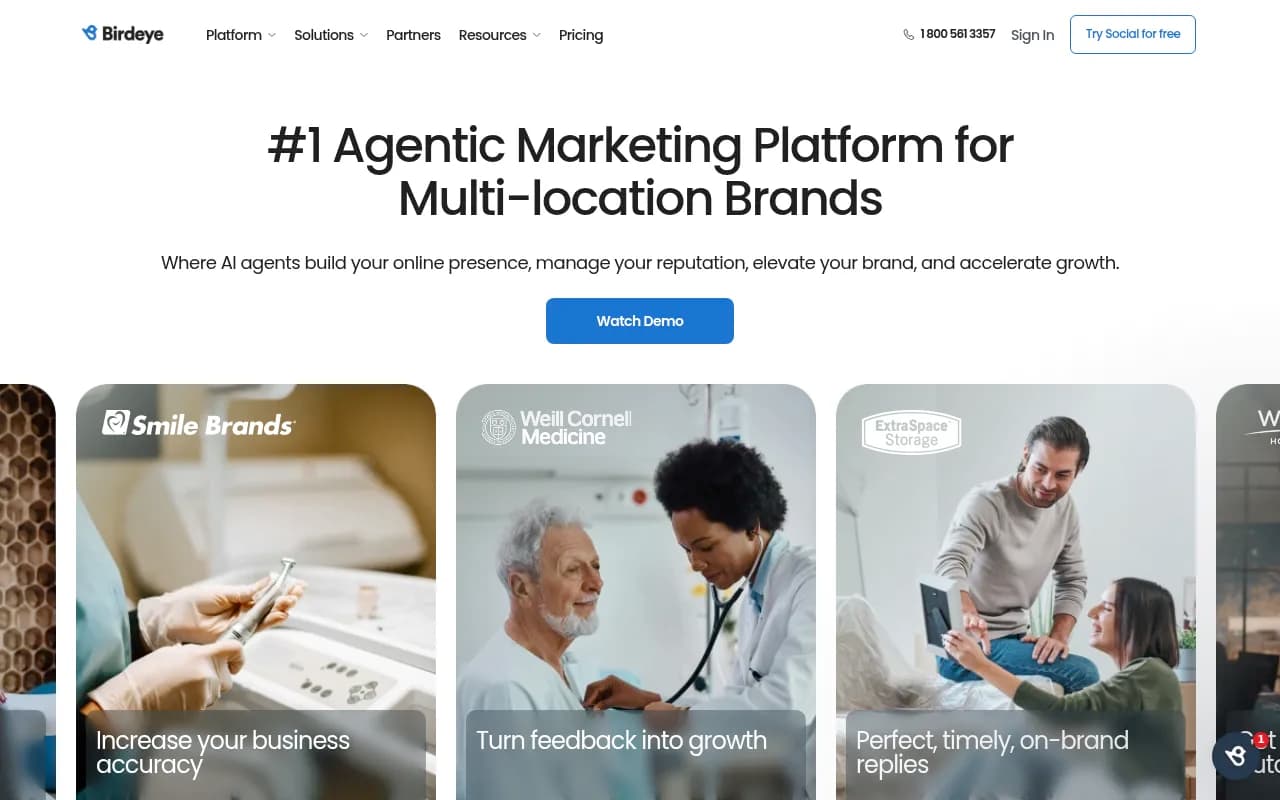
For reputation management that feeds both traditional local SEO and AI visibility, Birdeye tracks brand appearances in AI-generated answers alongside review management.
The practical checklist: showing up in both Google Maps and AI search
You don't need two separate strategies. Most of the work overlaps. Here's what to prioritize:
Foundation (affects all channels)
- Complete your Google Business Profile with every attribute filled in, including hours, services, photos, and Q&A
- Claim and optimize your Bing Places listing (critical for ChatGPT)
- Ensure NAP consistency across all directories and citation sources
- Fix any crawl errors or indexing issues that prevent AI bots from reading your site
Content (primarily affects AI chatbots and AI Overviews)
- Create service pages that are specific to neighborhoods or cities you serve, not just generic "we serve the greater metro area" copy
- Write FAQ content that mirrors how people actually ask questions in conversation
- Publish content that earns third-party citations: guides, local resources, data, opinions worth linking to
- Use LocalBusiness schema markup on your website
Reviews (affects all channels)
- Actively ask customers for reviews and coach them to be specific about what they experienced
- Respond to reviews — AI models read your responses too
- Aim for consistent review velocity rather than bursts
Off-site presence (primarily affects AI chatbots)
- Get listed in local directories that Bing indexes
- Earn mentions in local news, blogs, and community sites
- Monitor Reddit and local forums for discussions where your business could be mentioned
- Build relationships with local content creators who write "best of" lists
The consistency trap: why good Google rankings don't guarantee AI visibility
One of the more frustrating discoveries for local businesses in 2026 is that Google Maps success doesn't transfer automatically to AI search. A business can be in the top 3 on Google Maps for its primary keywords and still be absent from ChatGPT recommendations.
The reasons vary:
- Weak Bing presence (as covered above)
- Thin website content that AI models can't draw useful information from
- No third-party editorial mentions — just directory listings
- Review content that's too generic for AI models to use in specific recommendations
- Poor crawlability for AI bots (JavaScript-heavy sites, blocked crawlers)
The reverse is also true. Some businesses with mediocre Google Maps rankings show up consistently in ChatGPT because they've been mentioned in local news, have detailed review content, and have a content-rich website that AI models find useful.
This is why tracking both channels separately matters. You need to know where you stand in each, because the gaps are often in different places.
What's coming next in local AI search
A few trends worth watching:
Voice-based AI search is accelerating. As more people use AI assistants on phones and smart speakers for local queries, the conversational phrasing of prompts will shift further from keyword-style searches toward natural questions. Businesses optimized for conversational content will have an advantage.
Personalization in AI recommendations is increasing. AI models are getting better at factoring in a user's stated preferences, past behavior, and location context. This makes it harder to predict exactly which businesses will be recommended — but it also means that businesses with rich, specific content are better positioned to match varied user contexts.
Google's Ask Maps feature is still new and will evolve quickly. Early evidence suggests it heavily weights GBP completeness and review specificity. Businesses that treat their GBP as a living document — updating it regularly, adding photos, responding to questions — will likely see the most benefit as Ask Maps matures.
The bottom line: local search in 2026 is genuinely multi-channel in a way it wasn't two years ago. The businesses that treat Google Maps as their only local visibility channel are already behind. The gap will widen.