Key takeaways
- Peec AI's AI Shopping feature works at the SKU level, but its own docs say it is based on ChatGPT today. That is the main reason ecommerce teams look elsewhere.
- Peec is still the cheapest self-serve way to get product-level tracking. Rework lists Starter at $95/mo with the full AI Shopping feature set.
- Rankscale and LLM Pulse are the closest self-serve alternatives. Profound, Scrunch and Semrush gate shopping features behind Enterprise plans or sales calls.
- Tracking alone does not fix anything. Promptwatch pairs shopping carousel tracking with crawler logs, AI traffic attribution and a Content Agent that does the fixing.
- ChatGPT only attaches shopping features to a low single-digit percentage of web-search responses, so you need to track commercial prompts specifically, not everything.
What Peec AI does for ecommerce, and where it stops
Peec launched AI Shopping Analytics on 17 June 2026. You upload a catalog (Shopify, CSV or Merchant Center), and it reports visibility, position, win rate and share of voice for individual products, plus which competitors appear next to them. The data refreshes daily.
It is a clean tool and I understand why people like it. But the limits are written right into the docs:
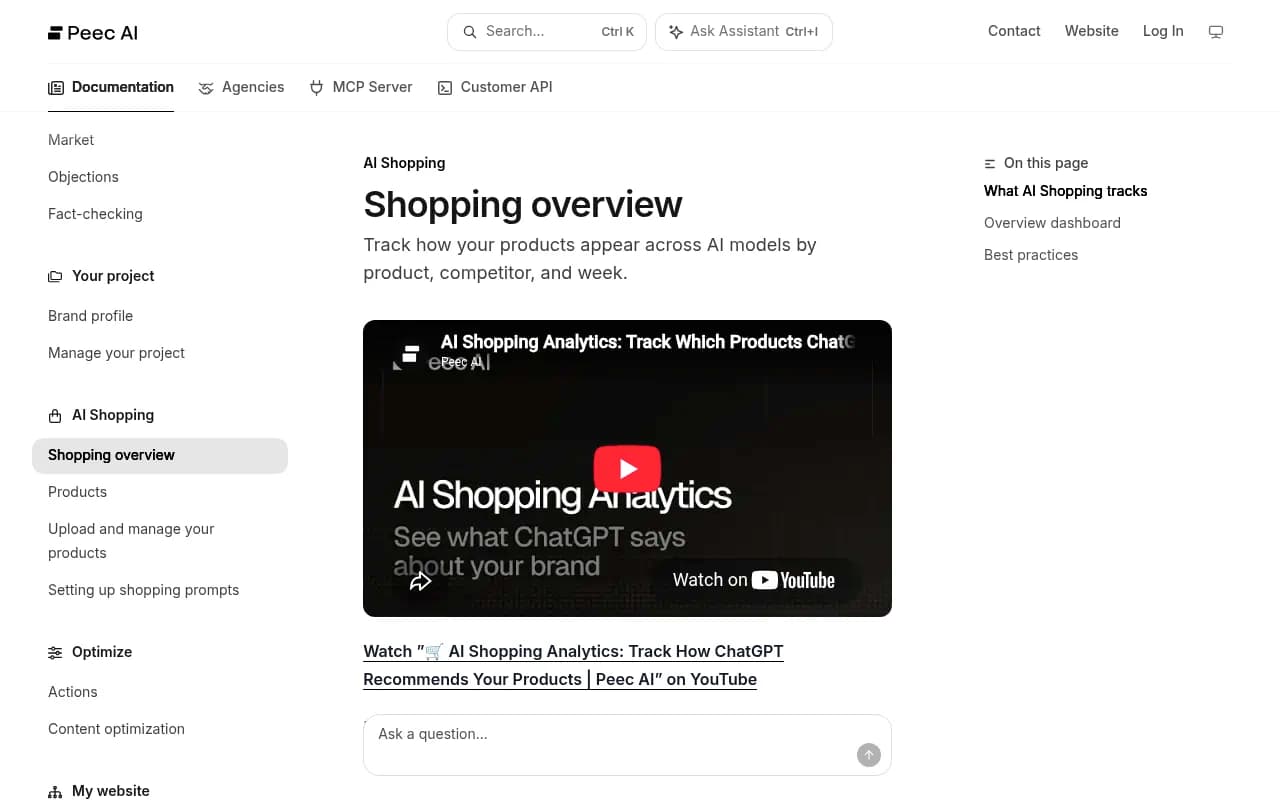
"Today, this is based on ChatGPT, where the product carousel and shopping experience are most advanced. Other AI models may follow."
That leaves four gaps worth knowing about before you commit:
- No Google AI Mode shopping results or Amazon Alexa product answers.
- No write-back. Peec reads your catalog and gives recommendations, but it does not rewrite titles or attributes.
- Base plans cover a limited set of engines. One comparison notes the Pro plan at EUR 199/mo includes three engines of your choice and 150 prompts.
- No crawler logs, so you cannot see whether AI bots are even reading your product pages.
None of these are dealbreakers for a small store that lives in ChatGPT. They matter a lot if you sell across engines or run a large catalog.
Why shopping carousels deserve their own tracking
Brand-level visibility metrics hide what happens at product level. ChatGPT's shopping cards are a different surface from its normal answers, and they behave differently.
Promptwatch's ChatGPT shopping usage data shows shopping features (product cards, recommendations, price comparisons) appear on only a low single-digit percentage of web-search responses overall. The rate moves in steps, not smoothly. It roughly doubled overnight in late May and fell back weeks later, which looks like OpenAI actively tuning when carousels fire. The trigger rate is far higher on commercial and transactional prompts.
Two practical consequences. First, a tracker pointed at generic prompts will mostly show you nothing. Run the buying-intent prompts your customers actually use. Second, check results over several days, since one run can land on an outlier.
The citation side matters too. In Promptwatch's content type data for Sep 28 to Oct 4, 2026, product pages were the most cited type in ChatGPT at 22.4%, and 26.0% for commercial prompts. Product pages, landing pages, listicles and comparisons together made up almost 70% of commercial citations. Your product pages are the asset. Whether they are readable and complete is the lever.
And ads are now in the mix. Promptwatch's ChatGPT ads data shows ads in an average of 20.1% of web-search responses between May 20 and August 17, 2026, with the past-30-day average near 29.6%. If you compete on product prompts, you are competing with paid placements as well.
Peec AI alternatives compared
Pricing and coverage below come from vendor and third-party comparisons (Rework, Ranketta, MentionBird). Ranketta is a vendor promoting its own tool, so treat its claims on competitors cautiously. Confirm everything on the vendors' pricing pages.
| Tool | Product-level tracking | Shopping engines | Lowest plan with it | What it does with a finding |
|---|---|---|---|---|
| Peec AI | Yes, SKU level | ChatGPT only | Starter, about $95/mo | Scored recommendations |
| Promptwatch | Yes, plus catalog upload | ChatGPT shopping carousels, Amazon Alexa products | Business, $579/mo (Shopping Insights) | Action Board, Content Agent, CMS publishing |
| Rankscale | Yes, Merchant and Product Cockpits | ChatGPT, Google AI Mode, Bing Copilot | Pro, about $99/mo | Tracking and sponsored placement monitoring |
| LLM Pulse | Yes | ChatGPT, Alexa as add-on | Scale, EUR 299/mo weekly | Free ChatGPT feed checker |
| Profound | Shopping Analysis with SKU analysis | ChatGPT; others "evolving" | Enterprise, sales call | Monitoring and analysis |
| Scrunch | Product observability | ChatGPT, Copilot | Enterprise | Monitoring |
| Semrush | AI Shopping report | ChatGPT Shopping, AI Mode shopping | Enterprise AIO | Part of the SEO suite |
| Ranketta | Yes | Browser sessions across several engines | Not verified | Rewrites product data, exports feeds |
The tools, one by one
Promptwatch: tracking plus the fix
Promptwatch tracks product visibility in ChatGPT shopping carousels and Amazon Alexa product results, and you can upload your own catalog to follow your actual products. It also tracks sponsored placements in AI search (Ads Radar), showing which advertisers bid on your prompts, with their ad copy and landing pages. That covers the two things Peec leaves out: the Alexa surface and the ads.
What separates it from pure trackers is what happens next. IP-verified AI crawler logs show whether GPTBot, OAI-SearchBot and ChatGPT-User are reading your product pages and what errors they hit. Visitor analytics tie AI referrals to conversions. The Action Board turns gaps into a prioritized to-do list, and the Content Agent can plan, write and publish content to Webflow, Framer or WordPress. Published pages then get tracked through crawls, citations and clicks.
Trade-offs: Shopping Insights and Ads Radar sit on Business ($579/mo) and above, so it is not the cheap entry point. Agency plans include Ads Radar but not Shopping Insights. It also tracks real user interfaces, not just APIs, which matters because shopping answers differ between the two.

Rankscale: the closest self-serve rival
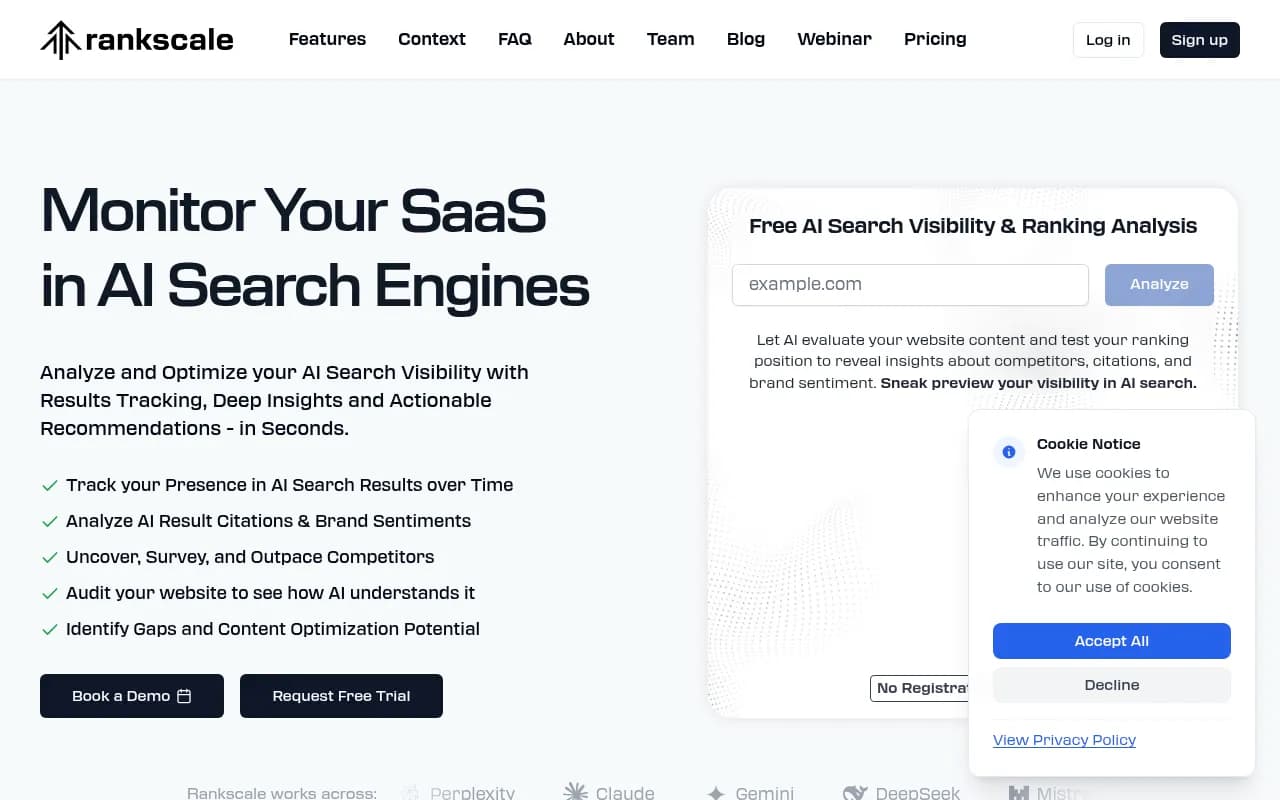
Rankscale is the main answer if your frustration is ChatGPT-only coverage. Per Rework's comparison, its shopping analysis covers ChatGPT, Google AI Mode and Bing Copilot, with Merchant and Product Cockpits, from the Pro plan at about $99/mo (not on Essentials). It also tracks sponsored placements in AI shopping answers. You can buy it without a sales call.
LLM Pulse: cheap-ish with a useful feed checker
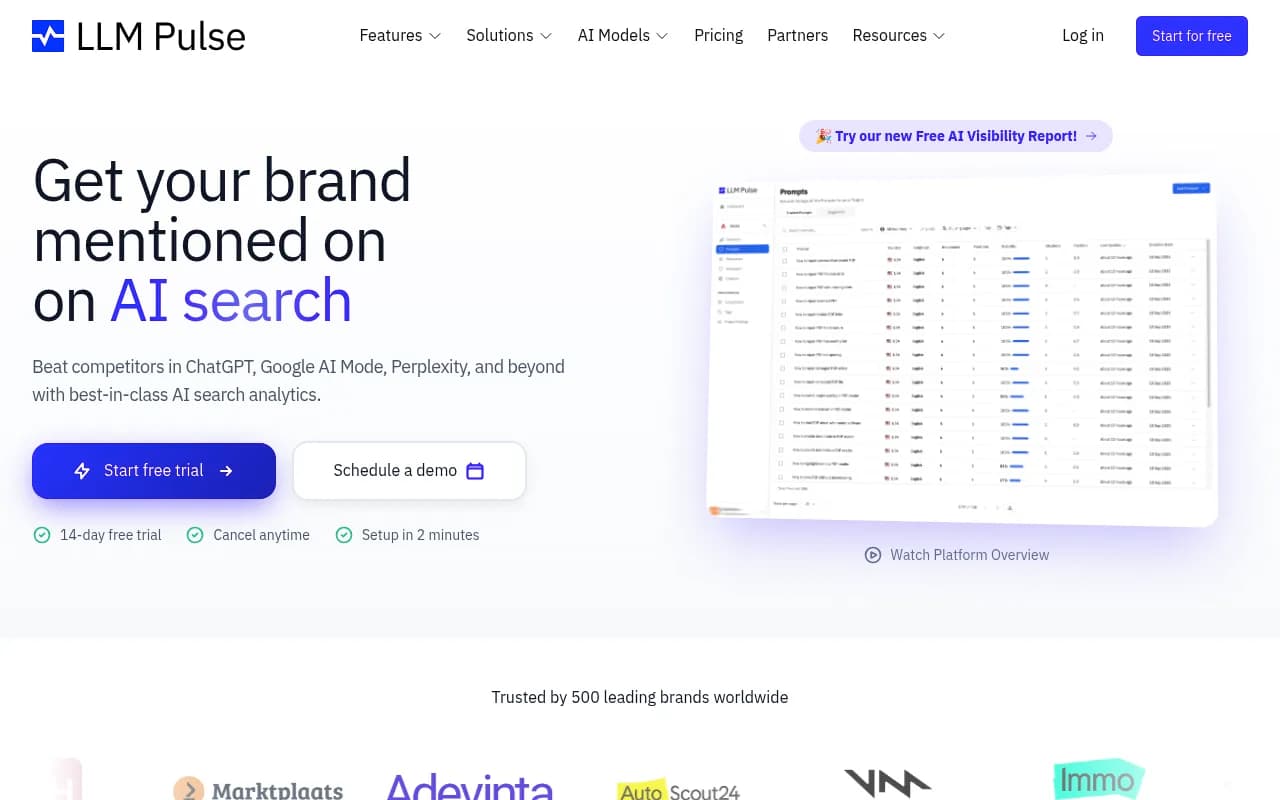
LLM Pulse includes ChatGPT Shopping tracking on its Scale plan (EUR 299/mo weekly, EUR 449 daily) and sells Alexa for Shopping as an add-on. The free ChatGPT shopping feed checker, which it says validates a feed against OpenAI's specification, is worth using even if you buy nothing. Downsides: mostly ChatGPT-centric and a smaller vendor.
Profound: deep but gated
Profound's Shopping Analysis includes SKU analysis and focuses on ChatGPT, with Perplexity and Gemini described as evolving. Rework lists it as Enterprise only, with no access during the trial and no self-serve purchase. Another comparison notes Profound's Starter tracks ChatGPT alone, so broader multi-engine coverage starts around $399. If you want a demo-led enterprise relationship, fine. If you want to test quickly, look elsewhere.
Profound

Scrunch and Semrush
Scrunch offers product observability covering ChatGPT and Copilot (Perplexity listed as coming soon), but Rework saw it only on an Enterprise layout. Semrush has an AI Shopping report inside its Enterprise AIO tier covering ChatGPT Shopping and AI Mode shopping. Both make sense if you already pay for the suite or the platform. Neither is an easy standalone purchase.
AthenaHQ and Otterly
AthenaHQ's ecommerce page mentions product-level tracking, but Rework could not confirm which plan includes it, so ask before buying. Otterly is a lighter brand-level monitor (ChatGPT, AI Overviews, Perplexity and Copilot), and I would not pick it for SKU work.

Otterly.AI

Ranketta
Ranketta positions itself on fixing the data: it rewrites product titles, attributes and descriptions with a confidence score and exports corrected feeds to Google Merchant Center, Amazon and Heureka. That is a different angle from most tools here and attractive for feed-heavy retailers. It is also the source of the comparison article that ranks it first, so weigh that accordingly.
How to choose
| Your situation | Likely pick |
|---|---|
| Small catalog, ChatGPT is your channel, budget is tight | Peec AI Starter |
| Need AI Mode and Copilot shopping, self-serve | Rankscale Pro |
| Want to validate a feed against OpenAI's spec first | LLM Pulse feed checker, then decide |
| Need tracking, crawler diagnostics, AI traffic revenue and content execution | Promptwatch Business |
| Fortune 500 style procurement, demo-led | Profound or Scrunch |
| Already deep in an SEO suite | Semrush Enterprise AIO |
Questions to ask any vendor before paying:
- Which engines does the shopping data cover on my plan, not on the top plan?
- Does it read the real chat interface, or an API?
- Can I upload my catalog, and how many SKUs are included?
- Will it show me whether AI crawlers can actually access my product pages?
- Does it tell me what changed because of my fix?
A practical ecommerce workflow
Tools matter less than the loop you run with them.
- Prep product data. Complete Product schema, accurate prices and availability, and a clean merchant feed. This is the same advice Promptwatch's shopping data report gives, and it is unglamorous but works.
- Pick buying-intent prompts. Commercial and transactional ones such as "best running shoes for flat feet under $150." Skip generic informational prompts for shopping tracking.
- Record carousel appearances over several days. Note which brands fill the cards and whether ads appear.
- Check crawlability. If AI bots are hitting errors on product pages, nothing else will help. Crawler logs are the fastest way to find this.
- Fix pages, then re-measure. Update product pages, comparison pages and listicles, since those are the cited formats, and track whether they start getting cited.
- Watch the half-life. Promptwatch's content half-life data shows landing pages and docs stay cited longest while news loses half its pages within 36 days, so evergreen product and category pages are worth the investment.
Is switching worth it?
Honestly, if you only sell in ChatGPT's world and your catalog is modest, Peec's price is hard to beat and staying put is reasonable. Switch when coverage or action is the bottleneck. That means shoppers on Google AI Mode or Alexa, a need to see crawler behavior, or a team that is tired of exporting recommendations into spreadsheets.
For wider comparisons beyond shopping, the GEO software directory at bestgeosoftware.com lists more platforms, and the pricing pages of every vendor above are the final word on what each plan includes. Run a trial on your own top 20 products before you commit to an annual plan.