Key takeaways
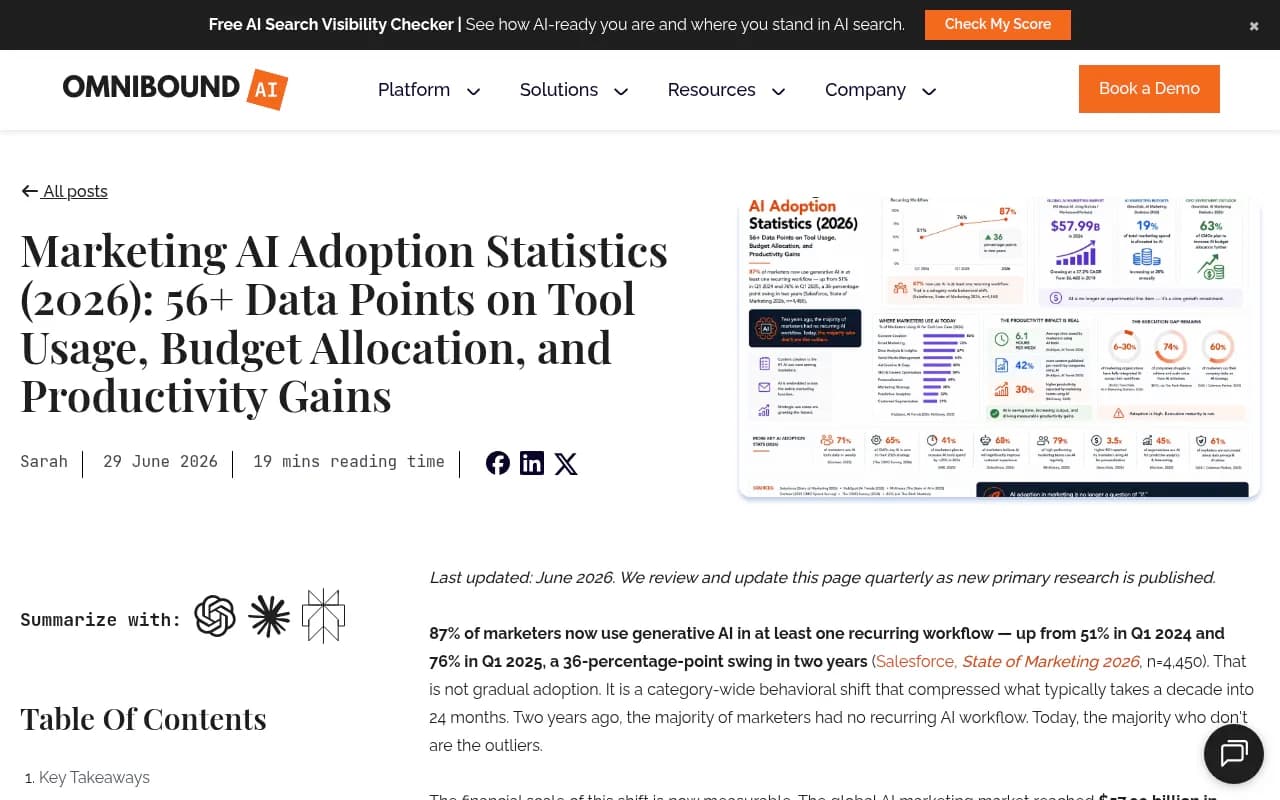
- Adoption is no longer the question. Salesforce's State of Marketing 2026 puts recurring GenAI workflow use at 87% in Q1 2026, up from 51% in Q1 2024 (via the Omnibound roundup of marketing AI statistics).
- The tool market tripled in two years, from roughly 1,200 AI marketing tools in 2024 to 3,800+ in 2026 (Chiefmartec, via Searchlab), so most teams are choosing from a crowded field and dropping a lot.
- Trust is what kills tools. Only 13% of marketers fully trust AI insights without human review, and Hex's survey of data teams found trust and accuracy was the number one AI concern, cited nearly twice as often as any other.
- The pattern in data teams, drifting from generic chatbots toward specialized tools, is a reasonable guide to where marketing is heading. It is not marketing data, so treat it as a signal.
- There is no solid public dataset on churn for AI visibility tools specifically. This guide says where the evidence stops.
What we actually know, and what we don't
Let me be upfront about the limits here. Plenty of articles on this topic invent a neat chart of "top tools adopted" and "top tools dropped." I couldn't find a credible public source for that, especially for AI search visibility tools. What exists is adoption data for AI in marketing broadly, some adjacent data from data teams and consumers, and first-party data about how AI engines behave.
The stats below also come largely through aggregators (Searchlab, Digital Applied, Averi, Omnibound). They cite Salesforce, HubSpot, McKinsey, Gartner and Chiefmartec, but I haven't checked them against the originals, so check the primary reports before putting any of these numbers in a board deck.
What follows is the evidence we have, the reasoning that connects it, and a practical way to decide what stays in your stack.
Where adoption stands in 2026
The headline numbers are large.
| Metric | Value | Source (via aggregator) |
|---|---|---|
| Marketers using AI tools daily | 78 to 88% | HubSpot State of Marketing 2026 |
| GenAI in recurring workflows | 51% (Q1 2024), 76% (Q1 2025), 87% (Q1 2026) | Salesforce State of Marketing 2026 |
| Plan to expand AI use in 2027 | 73% | Salesforce |
| Marketing leaders piloting AI agents | 81% | Gartner CMO Survey 2025 |
| CMOs planning to increase AI spend | 63% | Searchlab 2026 |
| Marketers not using AI for blog creation | 65% (2024), 5% (2026) | Averi |
| Fully integrated AI across workflows | 6 to 30% | BizIQ / Digital Applied |
| GenAI causing confusion in teams | 45% | Gartner CMO Survey 2025 |
Read the last three rows against the first few. Almost everyone uses AI. Very few have it properly wired into how work gets done. The Duke Fuqua CMO Survey from spring 2025 found that GenAI touched about 15% of marketing activities on average, and 91% of respondents said implementation takes too long. That gap between "we use it" and "it runs our workflows" is where tools get dropped.
Money is following usage
The median mid-market marketing team's AI tool spend reportedly tripled from $1,200 a month in Q1 2025 to $3,400 a month in Q1 2026. Tripling spend while only 13% fully trust the output is a setup for consolidation. Finance teams notice when a line item grows that fast, and they ask which tools earn their keep.
What teams keep
The tools that survive tend to share a few traits. None of this is from a churn study. It's inference from the adoption data and how teams describe their priorities.
Tools tied to a task people do every week
HubSpot's task-level data shows brainstorming at 62%, summarizing at 53% and drafting at 44%. These are repeated, low-risk tasks where a human reviews the output anyway. General assistants like ChatGPT and Claude cover these well, which is why they're so hard to dislodge.
McKinsey's application-level ROI figures, as quoted in the Omnibound roundup, point the same way: content drafting at 3.2x, personalization at 2.7x, audience research at 2.4x and ad copy at 2.3x. Drafting wins on ROI and on frequency, so drafting tools stick.
Tools that connect to real outcomes
This is where AI search tools either earn a seat or lose it. A dashboard that says "you were mentioned in 14% of answers" is interesting once. By the third monthly review, someone asks what changed in revenue. Tools that tie visibility to traffic, crawls and conversions have an answer. Tools that stop at mentions don't.
That's the practical difference between a prompt tracker and a platform that helps you act. Promptwatch is built around the second model: it adds IP-verified AI crawler logs, AI-referred visitor analytics and a Content Agent on top of tracking, so the question "did the fix work" has an answer in the same product.

Tools that match how AI engines actually behave
AI search isn't one channel. Promptwatch Data's average sources per response report shows ChatGPT averaging about 5 citations per web-search answer, while Google AI Overviews and Perplexity sit around 10. Copilot swung from under 2 to nearly 17 within weeks before settling at the low end. A tool that reports one blended "AI visibility" number hides differences that change what you should do. Teams keep tools that split results by engine.
What teams drop
Again, this is reasoned from the evidence, not a measured churn rate. These are the patterns that make a tool easy to cancel.
Monitoring-only dashboards
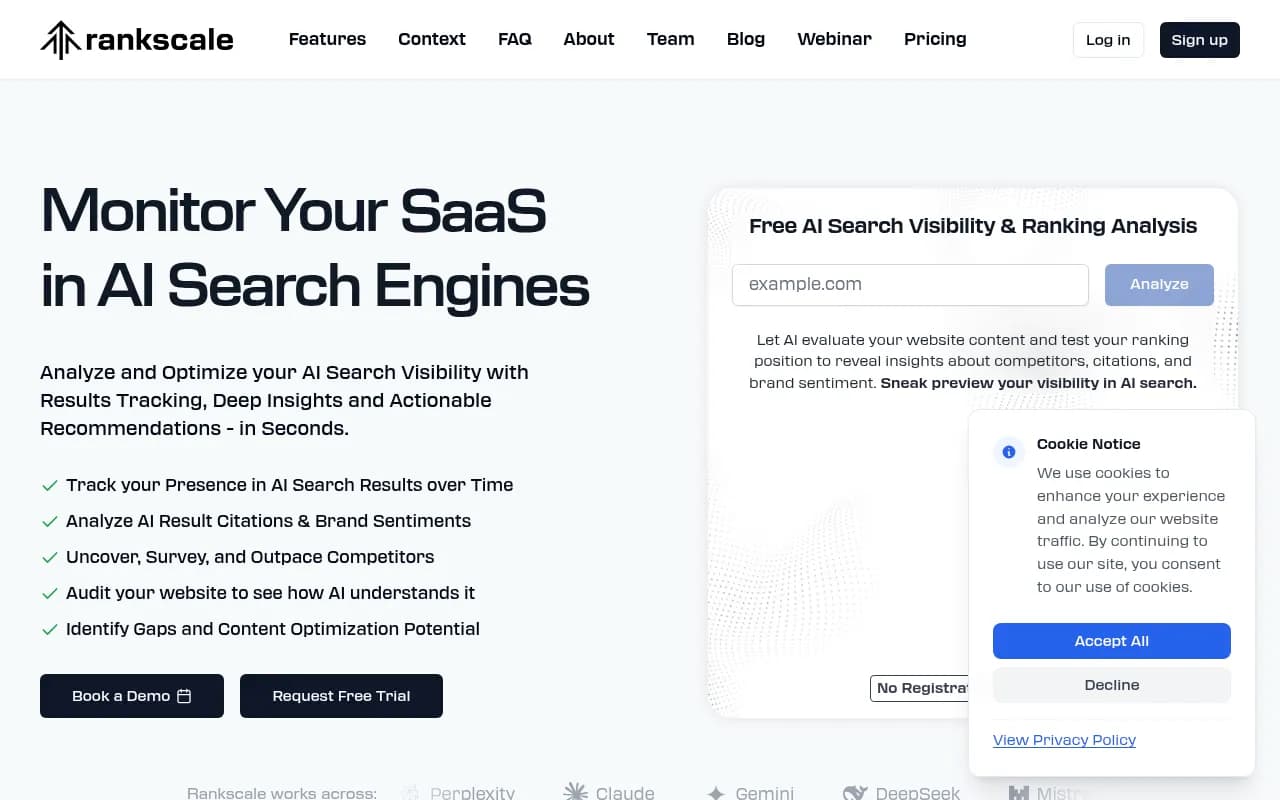
Plenty of tools in the AI visibility space track brand mentions across ChatGPT, Perplexity and Gemini and do little else. Lower-priced trackers such as Otterly.AI, Peec AI and Rankscale are reasonable for a first look. The risk is that once you know you're invisible, the tool has nothing more to say.
Otterly.AI


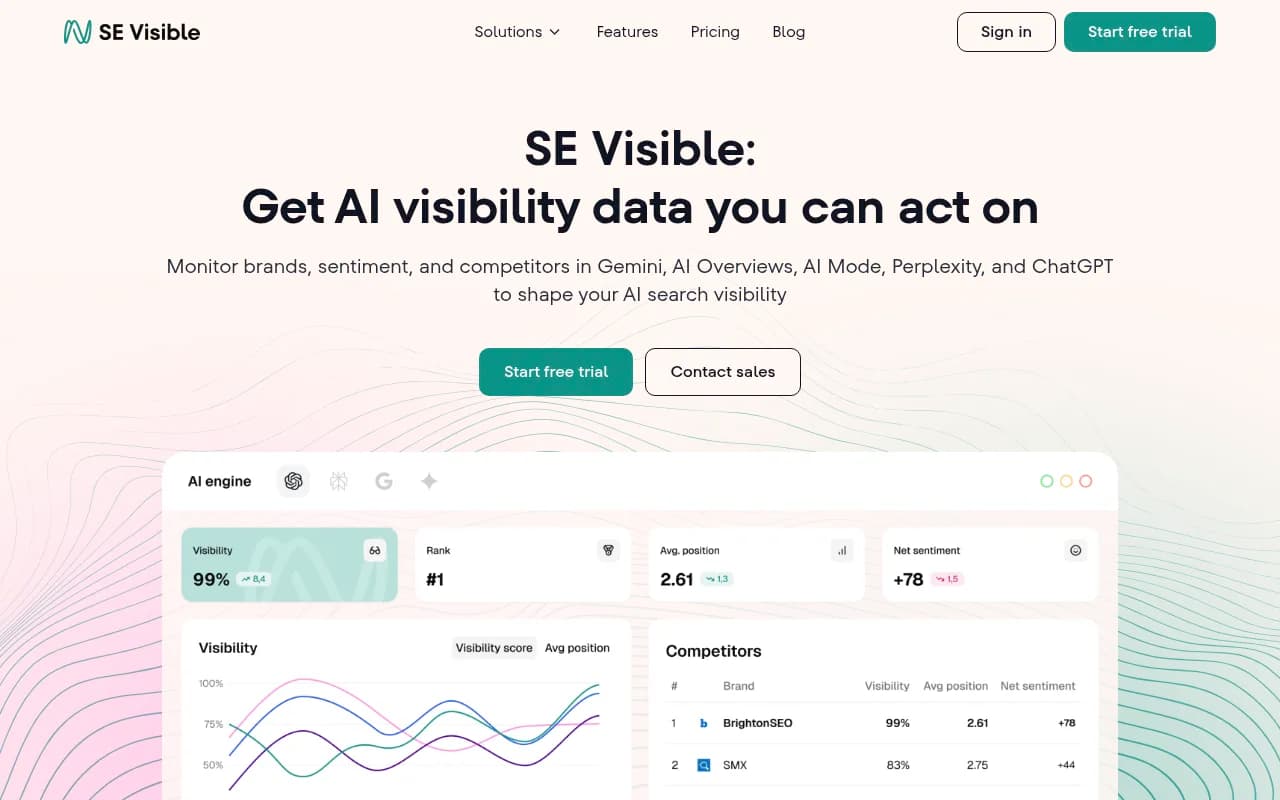
SE Ranking's SE Visible is candid about this in its own positioning: track mentions without the tools to fix them. That's a fine product for a team that already has a content process and wants a scoreboard. It's a weak fit for a team hoping the tool will tell it what to do next.
Tools built on metrics that move around
Some of the numbers AI trackers report are volatile because the engines are. Promptwatch Data's Reddit citations report shows reddit.com falling from about 4% to 0.5% of ChatGPT citations on August 14, 2026. The October 2026 social media citations report (Sep 28 to Oct 4) then found social platforms together make up just 0.46% of ChatGPT citations, against 12.2% for Google AI Overviews. If your tool's playbook said "win on Reddit for ChatGPT," it went stale overnight. Teams drop tools whose advice stops working without explanation.
Generic content generators with no grounding
As the share of marketers not using AI for blog creation fell from 65% to 5%, producing a draft stopped being a differentiator. Content generators with no visibility data, citation data or crawler data behind them produce text, not results. Tools like Jasper, Copy.ai and Writesonic are still widely used for copy, but teams that care about AI search increasingly want the writing step connected to what AI engines actually cite.


Overlapping seats
With 3,800+ tools available, many teams end up paying for three things that do the same job. The cheapest cut is the overlap. If your SEO suite already includes AI tracking, a standalone tracker has to justify itself. Semrush and Ahrefs both bolt AI visibility onto the suites teams already pay for, which is convenient but, in my view, shallower than dedicated tools on things like crawler logs and traffic attribution.
The trust problem is the real churn driver
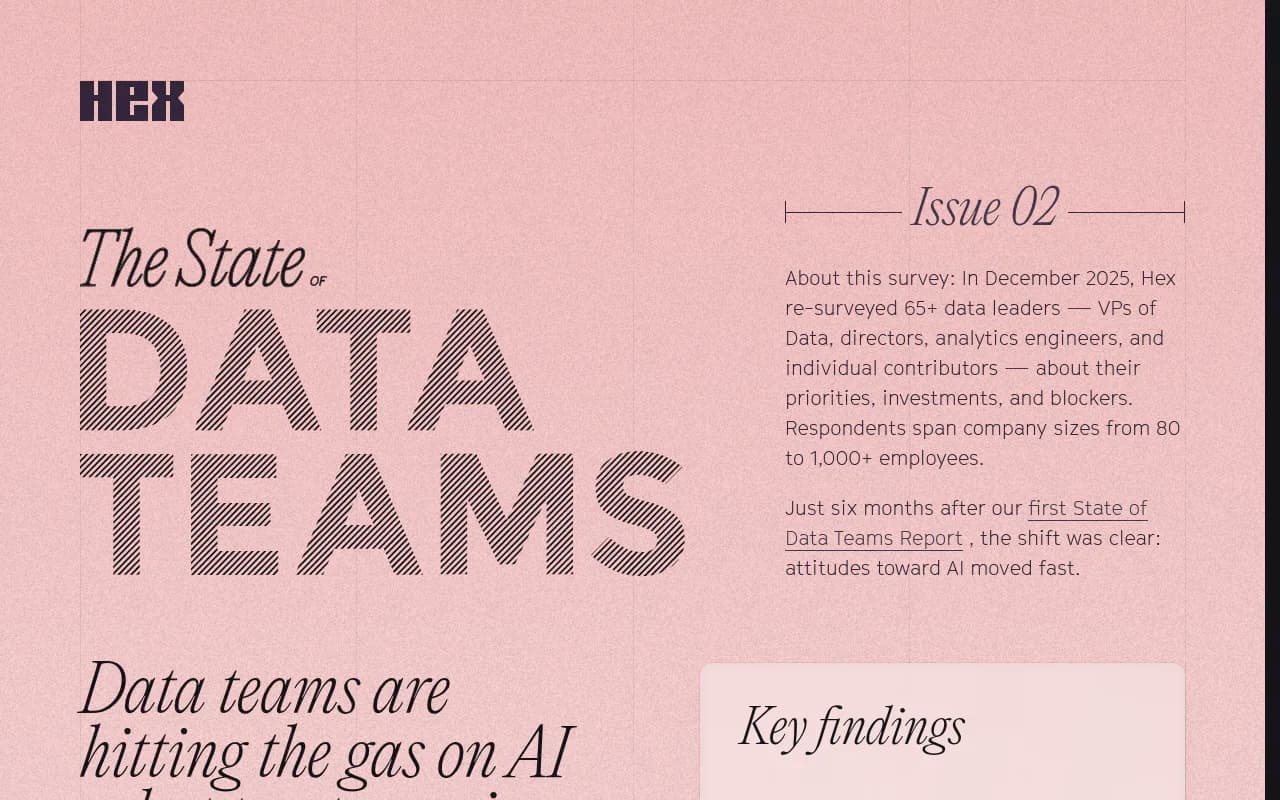
Hex surveyed 65+ data leaders in December 2025. It's data-team research, not marketing research, but the dynamics carry over. AI as a stated top goal jumped from 4% to 27% in six months. Trust and accuracy was the number one AI concern at 31%, nearly double the next barrier. And leaders expect generic LLMs to be used less over time while specialized, domain-aware tools grow.
I'd be careful about stretching that too far. Data teams ask questions of structured data, where wrong answers are measurable. Marketing outputs are fuzzier. But the instinct is the same: people adopt fast, then pull back to tools they can verify. For AI search tools, verifiable means you can check the tracker against what a real user sees. That's why real-interface monitoring (rather than API calls alone) matters, because user-facing answers and citations can differ from API outputs.
Menlo Ventures' 2026 consumer report adds a useful note from the other side of the market. Consumer AI adoption hardly grew in 2026, but spending tripled, and more than half of users now pay. The people your brand wants to reach are using AI more heavily and paying for it, which is why AI search stays on the roadmap even when individual tools get cut.
A simple audit for your own stack
Since there's no reliable public ranking of what gets dropped, run your own. It takes an hour.
- List every AI tool with a paid seat, including the ones one person bought on a card.
- For each, write the single decision it informed last month. If you can't name one, mark it.
- Mark overlaps. Two trackers, or a tracker plus a suite feature, means one goes.
- Check whether the tool shows a path from insight to action to result. Mentions alone don't count.
- Check which engines it covers and whether it separates them. Blended scores hide the differences described above.
- Check whether it can connect to traffic. Visitor analytics, crawler logs, or at least Search Console and Bing data.
How the main categories compare
| Category | Example tools | Typically kept when | Typically dropped when |
|---|---|---|---|
| General AI assistants | ChatGPT, Claude | Used weekly for drafting and research | Replaced by a built-in feature |
| Prompt trackers | Otterly.AI, Peec AI, Rankscale | You need a cheap scoreboard | You need to know what to fix |
| SEO suites with AI add-ons | Semrush, Ahrefs | You already pay for the suite | Data feels shallow next to dedicated tools |
| Content generators | Jasper, Copy.ai, Writesonic | Output is edited and measured | Output isn't tied to visibility data |
| Optimization platforms | Promptwatch | Visibility, crawler and traffic data drive the content plan | Nobody acts on the recommendations |
The last row has the same caveat as every other: a platform only helps if someone uses what it surfaces. Promptwatch's Action Board and Content Agent are meant to reduce that effort, and customers like Crisp reported 2x higher conversion from AI traffic compared to traditional channels, but you should judge it against your own numbers using the free trial on the paid plans. Confirm current pricing at promptwatch.com/pricing.
What this means for engines you should plan around
Tool choice depends on where your audience gets answers.
- ChatGPT: Promptwatch Data found product pages were the most cited content type at 22.4% of citations (Sep 28 to Oct 4, 2026), followed by landing pages and listicles. If your tool only tells you to write blog posts, it's missing this.
- Google AI Overviews: social content matters here far more than in ChatGPT, with YouTube leading at 4.28% of citations in the same week.
- Perplexity: stable at about 10 citations per answer, which makes it a good test bench for content changes.
- Copilot: judge it on monthly trends, and check that Bing indexes your key pages.
A stack that can't tell these apart will keep producing reports nobody trusts, and that's the one that gets cancelled.
If you want to browse the wider field before deciding, the GEO software directory at bestgeosoftware.com lists most of the platforms mentioned above.
Questions worth asking before you renew anything
- Does it use real interface data or only API calls?
- Can it show which pages AI crawlers actually read, and where they hit errors?
- Can it connect visibility to visits and conversions?
- Does it help produce and publish content, or only report?
- Does it still make sense if your SEO suite adds the same feature next quarter?
Bottom line
Adoption of AI in marketing is close to saturated. What's left is a sorting process. Teams keep general assistants for repeat tasks and keep AI search tools that connect visibility to traffic and to a next step. They drop monitoring-only dashboards, overlapping seats and generators with no grounding. The one thing I'd do this week is the audit above, because nobody has published the churn data that would do it for you.