Key takeaways
- Botify and seoClarity are built for technical SEO at enterprise scale -- they're not AI visibility platforms in any meaningful sense yet
- Peec AI is a clean, user-friendly AI visibility tracker but stops at monitoring; it won't help you fix what it finds
- Promptwatch is the only platform in this comparison that closes the full loop: find visibility gaps, generate content to fill them, and track the results
- If you need both technical SEO depth and AI search optimization in one place, you'll likely need two tools -- or a platform like Promptwatch paired with a dedicated crawler
The question "which platform combines technical SEO with AI visibility best?" is a reasonable one to ask in 2026. AI search is eating into traditional organic traffic fast. But most teams still have technical SEO obligations -- crawl budgets, Core Web Vitals, structured data, log file analysis. The dream is one platform that handles both.
The reality is messier. Let's look at what Peec AI, Promptwatch, Botify, and seoClarity actually do, where they overlap (or don't), and which one makes sense for your situation.
What each platform is actually built for
Before comparing features, it's worth being honest about what category each tool belongs to. Lumping them together as "SEO platforms" obscures some real differences.
Botify is a technical SEO platform for large websites. Its core strength is crawl analysis, log file processing, and helping enterprise teams understand how search engines (including AI crawlers) interact with their site. It has started adding AI visibility features, but that's not where it was built.
seoClarity is an enterprise SEO platform with a broad feature set -- rank tracking, content optimization, site audits, competitive intelligence. It added AI visibility tracking as the market demanded it, but it's an add-on to an existing SEO stack, not a ground-up AI search tool.
Peec AI is a purpose-built AI visibility tracker. It monitors how your brand appears across ChatGPT, Perplexity, Claude, and other LLMs. It's clean, easy to use, and well-regarded for prioritizing opportunities. But it's a monitoring tool -- it shows you the problem, not the solution.

Promptwatch started as an AI visibility platform and has grown into what it calls an "optimization platform" -- the distinction being that it doesn't just track your visibility, it helps you improve it. That means content gap analysis, an AI writing agent that generates articles grounded in citation data, crawler log monitoring, and traffic attribution.
Promptwatch is used by 6,700+ brands and agencies, including Booking.com and Center Parcs, and has processed over 1.1 billion citations, clicks, and prompts.

Feature comparison
Here's how the four platforms stack up across the dimensions that matter most for teams trying to bridge technical SEO and AI visibility:
| Feature | Peec AI | Promptwatch | Botify | seoClarity |
|---|---|---|---|---|
| AI brand visibility tracking | Yes | Yes | Limited | Yes |
| Models monitored | ChatGPT, Perplexity, Claude, Gemini | 10+ (ChatGPT, Claude, Perplexity, Gemini, Grok, DeepSeek, Copilot, Meta AI, Mistral, Google AI Overviews) | Partial | ChatGPT, Perplexity, Google AI Overviews |
| Answer gap / content gap analysis | No | Yes | No | Limited |
| AI content generation | No | Yes (built-in writing agent) | No | No |
| Technical SEO crawling | No | No | Yes (enterprise-grade) | Yes |
| AI crawler log analysis | No | Yes | Yes | No |
| Traffic attribution from AI | No | Yes (GSC, code snippet, server logs) | No | Limited |
| Prompt volume / difficulty scoring | No | Yes | No | No |
| Reddit & YouTube citation tracking | No | Yes | No | No |
| ChatGPT Shopping tracking | No | Yes | No | No |
| Competitor heatmaps | Basic | Yes | No | Yes |
| Looker Studio / API | Yes | Yes | Yes | Yes |
| Pricing (entry) | ~$49/mo | $99/mo | Custom (enterprise) | Custom (enterprise) |
| Free trial | Yes | Yes | No | No |
A few things stand out from this table. Botify and seoClarity are enterprise tools with custom pricing -- they're not designed for marketing teams at growth-stage companies. Peec AI is accessible and well-designed but the feature set is genuinely limited once you move past monitoring. Promptwatch has the broadest AI-specific feature set and is the only platform here with built-in content generation tied to real citation data.
Botify: excellent crawler, early-stage AI visibility
Botify's strength is undeniable if you're managing a site with millions of pages. Its log file analysis is among the best in the industry -- you can see exactly which pages Googlebot crawls, how often, and where it's wasting budget. The company has started surfacing AI crawler data (GPTBot, ClaudeBot, PerplexityBot) in those same logs, which is genuinely useful.
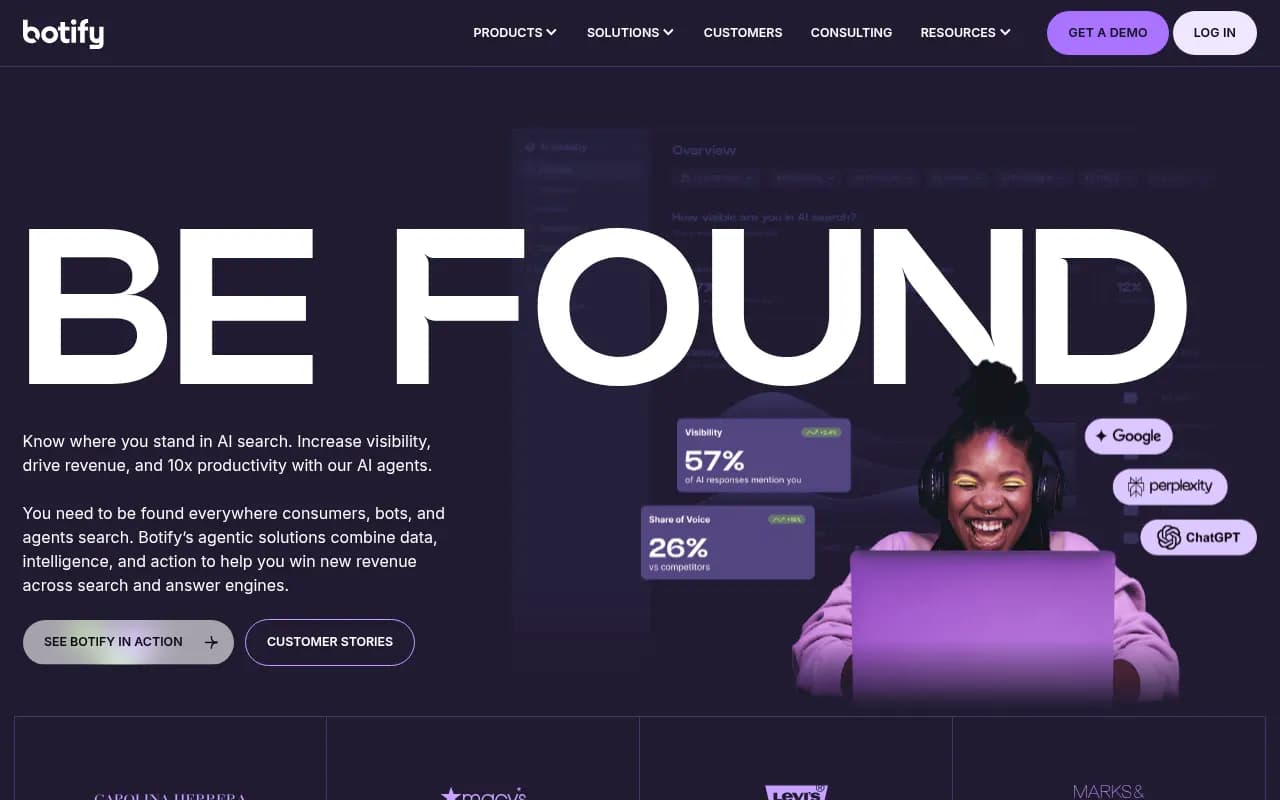
But Botify doesn't tell you what AI models are saying about your brand. It doesn't track citations, measure share of voice across LLMs, or help you understand why a competitor is getting cited and you're not. It's a crawl intelligence tool that's starting to acknowledge AI crawlers exist -- not an AI visibility platform.
If you're an enterprise with a large, complex site and technical SEO is your primary concern, Botify is hard to beat. If AI visibility is your goal, you'll need something else alongside it.
seoClarity: broad enterprise SEO with AI visibility bolted on
seoClarity has been around long enough to have built a genuinely comprehensive enterprise SEO platform. Rank tracking, content optimization, site audits, competitive analysis -- it's all there. The AI visibility features added in 2024-2025 let you track brand mentions across a handful of AI engines.
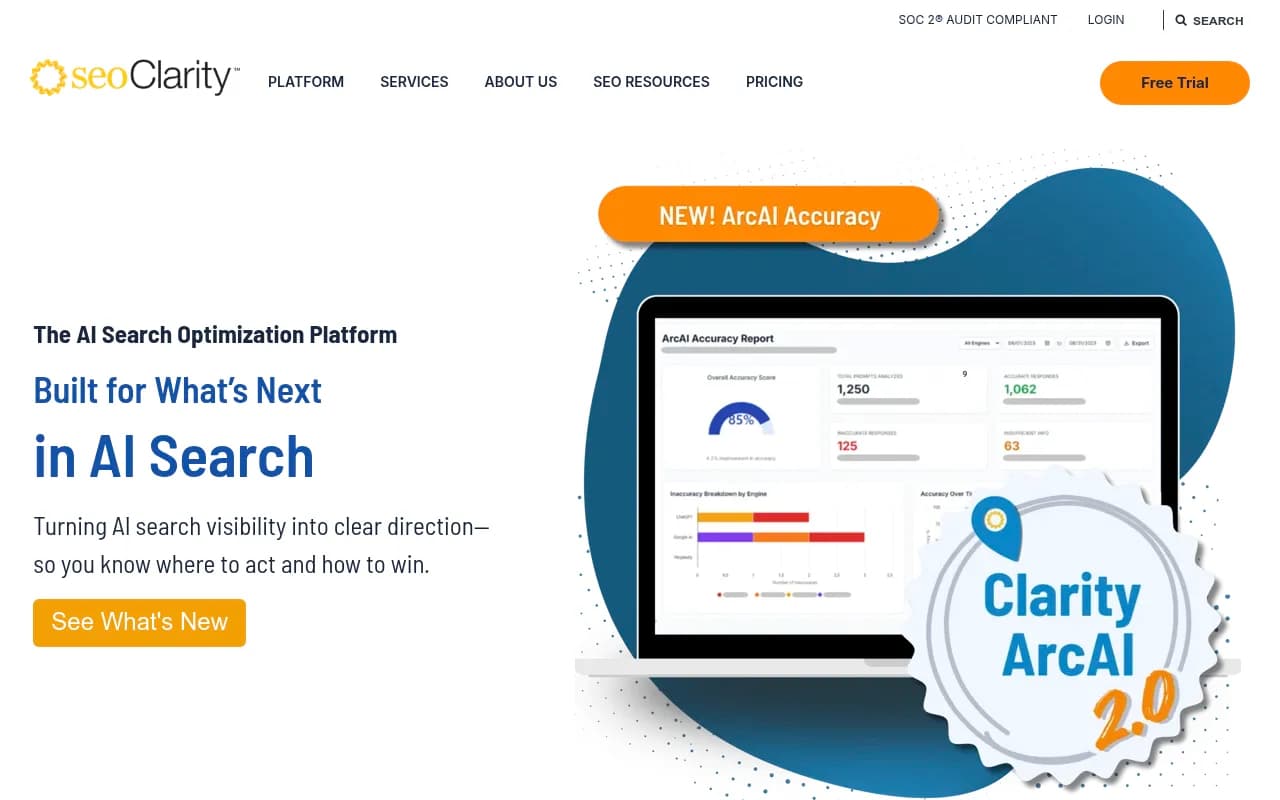
The honest assessment: the AI visibility features feel like a response to market demand rather than a core product investment. Coverage is narrower than dedicated platforms (ChatGPT, Perplexity, and Google AI Overviews, versus Promptwatch's 10+ models). There's no content gap analysis, no built-in content generation, and no Reddit or YouTube citation tracking.
For teams that are already deep in the seoClarity ecosystem and want to add basic AI visibility monitoring without switching tools, it's a reasonable option. For teams where AI visibility is a strategic priority, it's probably not enough.
Peec AI: clean monitoring, but it stops there
Peec AI has earned genuine praise for being easy to use. The interface is clean, setup is fast, and the opportunity prioritization -- surfacing which prompts you're close to winning -- is genuinely helpful for teams that don't have time to wade through raw data.
The Looker Studio integration is a nice touch, and it's one of the more accessible tools in this space for smaller teams.
But Peec AI is a monitoring tool. It shows you where you're invisible. It doesn't show you what content to create, doesn't generate that content, doesn't track AI crawler behavior on your site, and doesn't connect visibility to actual traffic or revenue. A Reddit thread from the r/SEO community put it plainly: "Peec is easier to use and already has Looker integration. Promptwatch is more advanced."
That's a fair summary. If you want to understand your AI visibility quickly and cheaply, Peec AI is a solid starting point. If you want to actually improve it, you'll outgrow it fast.
Promptwatch: the optimization loop, not just the dashboard
The core argument for Promptwatch is that monitoring without action is just anxiety. Most AI visibility tools show you a score, maybe a list of prompts where competitors appear and you don't, and then leave you to figure out what to do about it.
Promptwatch is built around a three-step loop:
-
Find the gaps. Answer Gap Analysis shows exactly which prompts competitors are visible for that you're not. You see the specific topics and questions AI models want answers to but can't find on your site.
-
Create content that ranks in AI. The built-in writing agent generates articles, listicles, and comparisons grounded in real citation data (880M+ citations analyzed). This isn't generic content -- it's engineered to get cited by ChatGPT, Claude, Perplexity, and others.
-
Track the results. Page-level tracking shows which pages are being cited, how often, and by which models. Traffic attribution (via code snippet, GSC integration, or server log analysis) connects visibility to actual revenue.
On top of that loop, Promptwatch has features that none of the other three platforms in this comparison offer: AI crawler logs showing which pages ChatGPT and Perplexity are actually reading on your site, Reddit and YouTube citation tracking (which surfaces the discussions that influence AI recommendations), ChatGPT Shopping tracking, and prompt volume and difficulty scoring so you can prioritize high-value, winnable prompts.
Pricing starts at $99/month for the Essential tier (1 site, 50 prompts, 5 articles), with Professional at $249/month and Business at $579/month. There's a free trial.
Which platform should you actually use?
The honest answer depends on your situation:
You're an enterprise with a large, complex site and technical SEO is your primary concern. Botify is the right call for crawl intelligence and log analysis. Add Promptwatch alongside it if AI visibility is also a priority -- they don't overlap much, and together they cover both bases.
You're already in the seoClarity ecosystem and want basic AI visibility without switching tools. The built-in AI visibility features are fine for a first look. But if AI search becomes a serious channel for you, you'll want a dedicated platform.
You want to start tracking AI visibility quickly without a lot of setup. Peec AI is a good entry point. It's affordable, clean, and easy to explain to stakeholders. Just know you'll hit its ceiling once you want to act on what you're seeing.
You want to actually improve your AI visibility, not just measure it. Promptwatch is the right tool. The content gap analysis, built-in writing agent, crawler logs, and traffic attribution make it the only platform here that treats AI visibility as something to be optimized rather than just observed.
The "combined technical SEO + AI visibility" question
To answer the original question directly: no single platform in this comparison fully combines deep technical SEO with deep AI visibility. Botify is the best technical SEO tool here but a weak AI visibility tool. Promptwatch is the best AI visibility tool here but doesn't do technical crawling.
The closest thing to a combined solution is probably Promptwatch's AI crawler logs feature -- which shows you how ChatGPT, Claude, and Perplexity are actually crawling your site, which pages they're reading, and where they're hitting errors. That's a meaningful bridge between technical SEO and AI visibility. But it's not a replacement for a full technical SEO crawler.
For most marketing and SEO teams in 2026, the practical answer is: use Promptwatch as your AI visibility and optimization platform, and use a dedicated technical SEO tool (Botify, Screaming Frog, Lumar, or similar) for crawl analysis. The two categories are converging, but they're not there yet.
What's clear is that monitoring alone -- which is where Peec AI, early-stage seoClarity AI features, and most of the market still sits -- isn't enough. The teams winning in AI search right now are the ones who've moved from "we know we're invisible" to "we know exactly what to publish to fix it."