Key takeaways
- Scrunch AI tracks brand mentions across LLMs but stops there -- it doesn't help you fix visibility gaps or create content that gets cited
- No AI crawler logs, no Reddit/YouTube tracking, no ChatGPT Shopping monitoring, and limited prompt intelligence
- The platform works fine as a monitoring dashboard but struggles to justify its price once you need to take action
- Several alternatives offer more complete workflows, especially if you need content generation alongside tracking
- For teams that need to move from "we see the problem" to "we fixed it," Scrunch AI's monitoring-only model is a real constraint
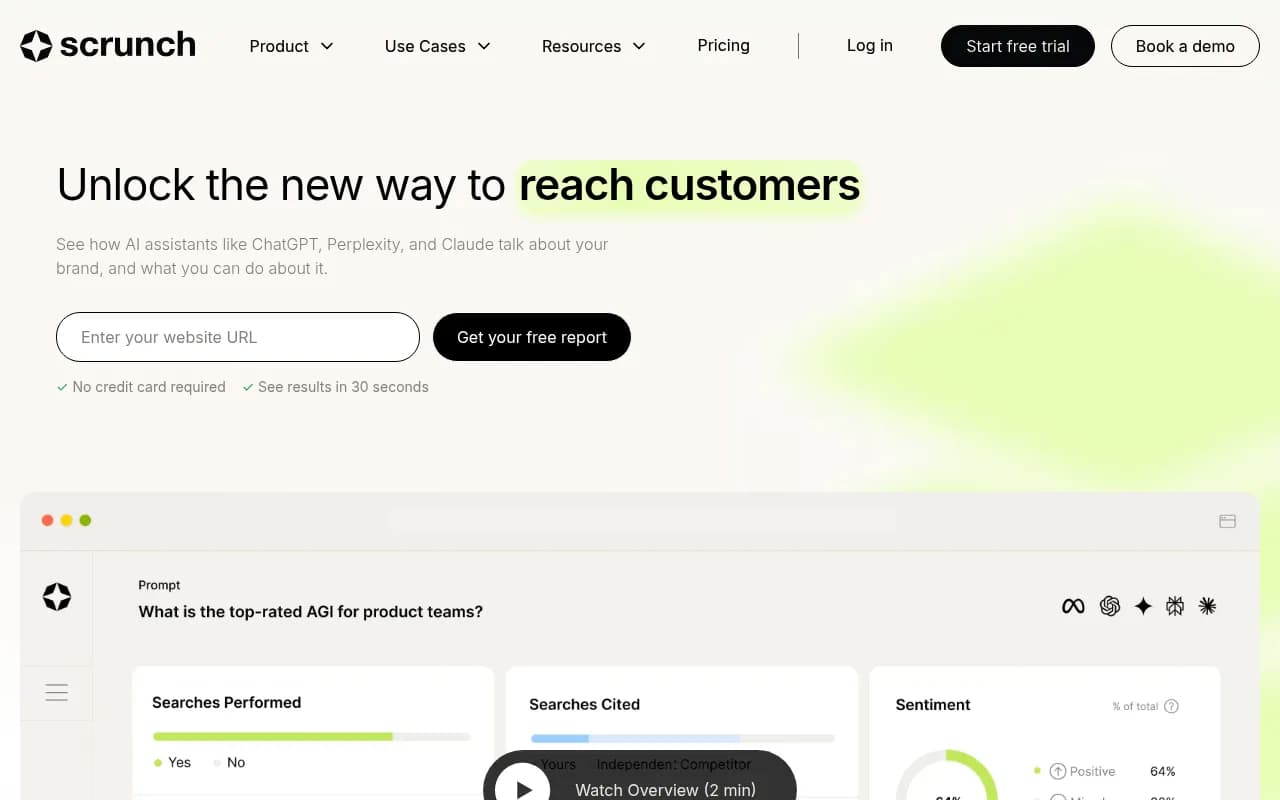
Scrunch AI has been around long enough to build a decent reputation in the AI visibility space. It tracks brand mentions across ChatGPT, Perplexity, and a handful of other LLMs. The interface is clean. The onboarding is smooth. And if you've just started thinking about AI search visibility, it'll feel like exactly what you need.
But spend a few months actually trying to improve your visibility -- not just watch it -- and the cracks start to show.
This isn't a hit piece. Scrunch does some things well. But there are genuine limitations that rarely come up in reviews, and if you're evaluating it for serious use, you deserve the full picture.
What Scrunch AI actually does well
Before getting into the problems, it's worth being fair. Scrunch AI does give you a real-time view of where your brand appears in AI-generated responses. You can set up prompts, see whether your brand gets mentioned, and track changes over time. The dashboard is reasonably intuitive, and the setup process is faster than most competitors.
For a brand that's just waking up to the fact that AI search exists and wants a quick read on where they stand, Scrunch gets you there without much friction. That's genuinely useful.
The core problem: monitoring without action
Here's the thing that doesn't get said enough about Scrunch AI: it tells you what's happening, but it doesn't help you change it.
You can see that a competitor is getting cited for a prompt you're not. You can see that your brand appears in 12% of responses for a given query. But then what? Scrunch doesn't tell you why you're missing, what content you'd need to create to fix it, or which specific pages AI models are actually reading on your site.
That gap -- between knowing you're invisible and knowing how to become visible -- is where most marketing teams get stuck. And Scrunch AI doesn't bridge it.
This is the fundamental difference between a monitoring tool and an optimization platform. Scrunch is firmly in the first category.
Specific limitations worth knowing about
No AI crawler logs
When ChatGPT or Perplexity crawls your website, what pages do they visit? How often? Are they hitting errors? Do they even crawl your most important content?
Scrunch AI has no answer to any of these questions. There's no crawler log visibility, which means you're flying blind on one of the most important technical factors in AI visibility. If an AI model can't read your pages properly, it won't cite them -- and you'd have no idea that's the problem.
This is a significant gap. Knowing your brand isn't getting cited is one thing. Knowing it's because GPTBot keeps hitting a 404 on your best content is actionable.
Prompt intelligence is shallow
Scrunch lets you set up prompts to monitor, but the depth of insight around those prompts is limited. There's no volume data -- you can't tell whether a prompt is asked by thousands of people daily or almost nobody. There's no difficulty scoring to help you prioritize which gaps are actually winnable. And there's no query fan-out analysis showing how one prompt branches into related sub-queries.
This matters because not all visibility gaps are equal. A team with limited resources needs to know which prompts to go after first. Without that data, you're guessing.
No content gap analysis
This is probably the biggest missing piece. Scrunch doesn't show you which specific prompts your competitors rank for that you don't. You can see your own visibility, but you can't systematically identify the content opportunities that would move the needle.
Answer gap analysis -- the ability to see "here are 47 prompts where your competitors get cited and you don't" -- is what turns AI visibility data into a content strategy. Without it, you're left manually comparing responses and trying to reverse-engineer what's working.
No Reddit or YouTube tracking
A lot of what AI models cite comes from Reddit threads, YouTube videos, and forum discussions -- not just brand websites. Scrunch AI doesn't track any of this. You can't see which Reddit discussions are influencing AI recommendations in your category, or which YouTube content is getting pulled into responses.
This is a channel most platforms ignore, but it's increasingly important. If a Reddit thread from two years ago is shaping what ChatGPT says about your product category, you probably want to know about it.
No ChatGPT Shopping tracking
ChatGPT's shopping and product recommendation features are becoming a real commercial channel. Scrunch AI doesn't monitor when your brand appears (or doesn't appear) in these product carousels. For e-commerce brands or anyone selling physical products, this is a notable blind spot.
Limited traffic attribution
Scrunch AI can show you your AI visibility score, but connecting that to actual website traffic and revenue is difficult. There's no native integration with Google Search Console, no code snippet for AI traffic attribution, and no server log analysis. So you can't close the loop between "our visibility improved" and "here's what that meant for business results."
That makes it hard to justify the investment internally, especially when you're trying to convince a CMO that AI search visibility matters.
How it compares to the broader market
The AI visibility space has matured quickly in 2026. The gap between monitoring-only tools and full optimization platforms has become much more obvious.
| Feature | Scrunch AI | Otterly.AI | Profound | Promptwatch |
|---|---|---|---|---|
| Brand mention tracking | Yes | Yes | Yes | Yes |
| Multi-LLM coverage | Yes | Partial | Yes | Yes (10 models) |
| AI crawler logs | No | No | No | Yes |
| Answer gap analysis | No | No | Limited | Yes |
| Built-in content generation | No | No | No | Yes |
| Reddit/YouTube tracking | No | No | No | Yes |
| ChatGPT Shopping tracking | No | No | No | Yes |
| Prompt volume/difficulty | No | No | Limited | Yes |
| Traffic attribution | No | No | Limited | Yes (GSC, snippet, logs) |
| Page-level citation tracking | Limited | No | Yes | Yes |
The pattern is pretty clear. Scrunch sits in the same monitoring-only bucket as Otterly.AI and Peec.AI -- tools that give you data but leave you to figure out what to do with it.
Otterly.AI

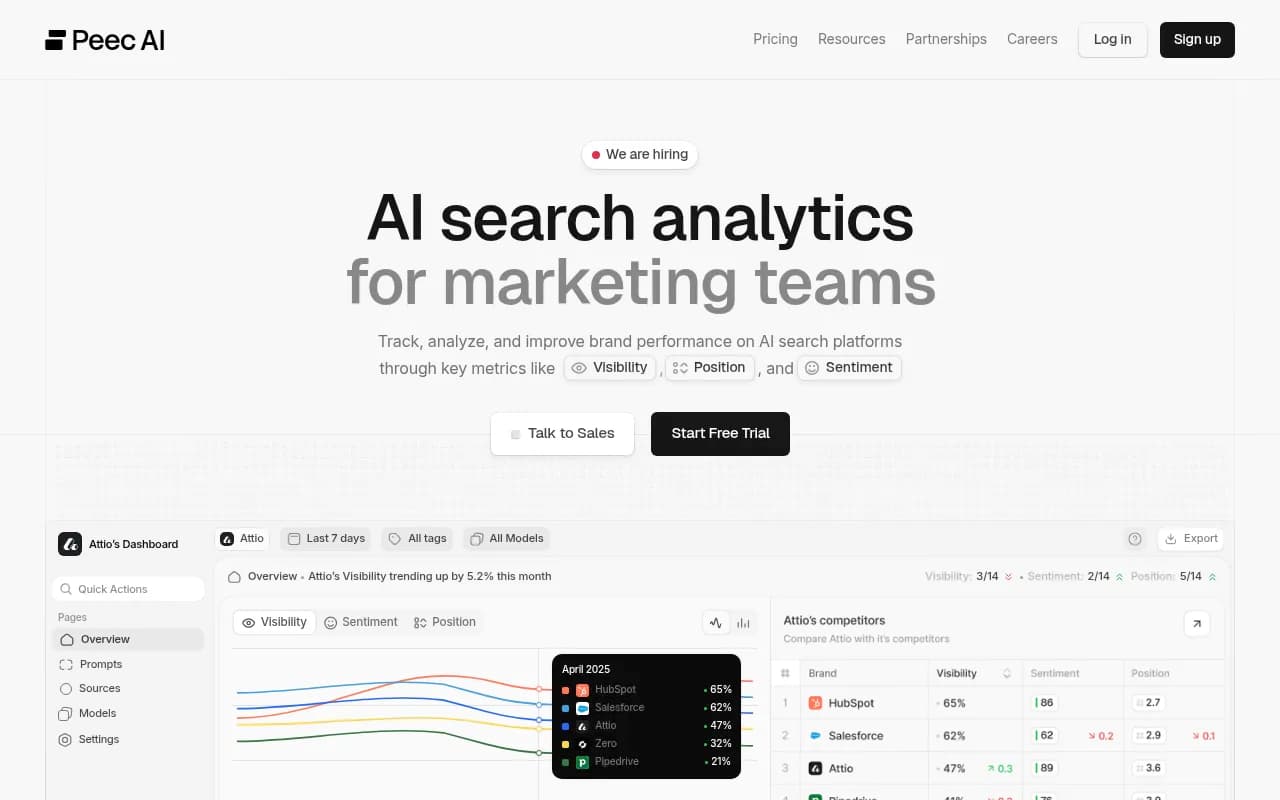
Profound has more depth on the enterprise side, but it's priced accordingly and still doesn't offer content generation or Reddit tracking.
Profound

The platform that most directly addresses Scrunch's limitations is Promptwatch, which is built around a full action loop: find the gaps, generate content that gets cited, then track whether it worked. It's the only tool in this comparison that covers all the bases -- crawler logs, answer gap analysis, built-in AI writing, Reddit/YouTube insights, ChatGPT Shopping, and traffic attribution in one place.

Who Scrunch AI is actually right for
To be fair, there are use cases where Scrunch makes sense.
If you're a small brand just starting to understand your AI visibility, and you mainly want a simple dashboard to check in on occasionally, Scrunch is fine. The learning curve is low, the interface is clean, and you'll get a reasonable overview without much setup.
It also works if you already have a strong content operation and just need monitoring data to feed into your existing workflow. If your team is already producing content based on competitive research and you just want to verify that it's getting cited, Scrunch can handle that.
Where it falls short is when you need to actually move the needle. If your brief is "improve our AI search visibility by Q3," Scrunch will show you whether you succeeded or failed -- but it won't help you get there.
What to look for instead
If you're evaluating alternatives, here are the questions worth asking any platform:
- Can it show me which prompts my competitors rank for that I don't?
- Does it have AI crawler logs so I can see technical issues?
- Can I generate content directly from the gap analysis?
- Does it track Reddit and YouTube as citation sources?
- Can I connect visibility data to actual traffic and revenue?
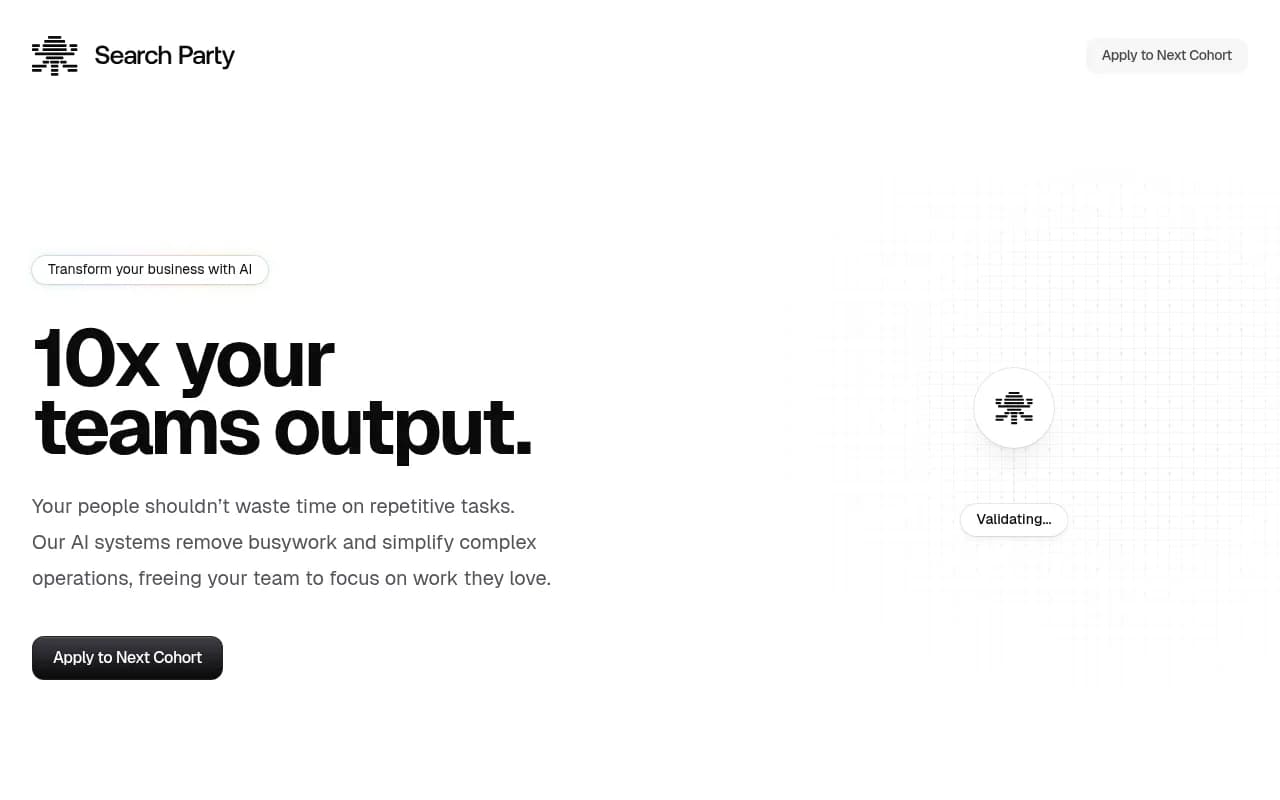
Tools like AthenaHQ and Search Party have their own strengths, but they're also primarily monitoring-focused.

Search Party
If you want a tool that actually helps you take action on what you find, the options narrow quickly. Promptwatch is the most complete platform in this space right now -- it's the only one that covers the full cycle from gap identification to content creation to traffic attribution, with crawler logs and Reddit tracking on top.
The bottom line
Scrunch AI is a decent monitoring tool. It's not a bad product. But in 2026, "decent monitoring" isn't enough if you're serious about AI search visibility as a growth channel.
The platforms that matter now are the ones that help you do something with the data -- find the content gaps, create content that AI models actually want to cite, and prove that it's driving traffic. Scrunch doesn't do that. If that's what you need, you'll outgrow it quickly.