Key takeaways
- All four platforms track AI visibility, but they differ dramatically in what they do after showing you the data
- Promptwatch is the only platform of the four that closes the full loop: find gaps, generate content, track results
- Peec AI has the fastest refresh rate (every 4 hours) and solid multi-LLM coverage, but stops at monitoring
- Relixir is built for enterprise teams that want an end-to-end GEO engine with content workflows baked in
- Evertune targets Fortune 500 brands with deep analytics, but pricing and accessibility reflect that positioning
- If you're a mid-market brand or agency wanting to act on your data, not just stare at it, Promptwatch is the clearest choice
Running the same 50 prompts through four different GEO platforms is a humbling exercise. You quickly realize how much variance exists between tools that, on paper, all claim to do the same thing: tell you how visible your brand is in AI search.
Some of that variance is technical. Different platforms query different AI models, at different times, with different prompt structures. Some of it is philosophical. A few of these tools are genuinely trying to help you improve your visibility. Others are dashboards dressed up as strategy tools.
We tested Peec AI, Promptwatch, Relixir, and Evertune using the same set of 50 prompts across a mix of branded, category, and comparison queries. Here's what we found.
How we ran the test
The 50 prompts covered three types of queries:
- Branded (e.g., "What is [brand]?" or "Is [brand] good for X?")
- Category (e.g., "Best tools for AI search visibility")
- Comparison (e.g., "[Brand] vs [Competitor] — which is better?")
We tracked results across ChatGPT, Perplexity, Claude, and Google AI Overviews where each platform supported them. We looked at four things: which AI models each platform covers, how it presents the data, whether it explains why you're visible or not, and what it tells you to do next.
That last point is where the platforms diverge most sharply.
Peec AI

Peec AI is a European GEO platform with a genuinely useful differentiator: it refreshes every 4 hours. Most tools in this category update daily or weekly, so if you're running a campaign or responding to a PR moment, that refresh cadence matters.
The platform tracks ChatGPT, Perplexity, and Claude natively, with other models available as add-ons depending on your tier. The lowest plan starts at €85/month for 50 prompts and unlimited countries, which is reasonable for the feature set.
In our test, Peec AI returned clean, readable results. The prompt-level tracking is solid — you can see which AI engines mentioned your brand for each query, and the sentiment scoring gives you a rough sense of how you're being described, not just whether you appear.
Where it falls short is the "so what." Peec shows you the gap. It doesn't help you close it. There's no content generation, no answer gap analysis that maps missing topics to specific pages, and no crawler log data to understand how AI engines are actually reading your site. For a team that already has content resources and just needs monitoring data, that's fine. For a team that wants to move from visibility to optimization, it's a ceiling.
One genuinely useful feature: Peec's multi-country tracking is clean and doesn't require separate configurations per region. If you're a European brand tracking visibility across multiple markets, that's worth noting.
Promptwatch

Promptwatch is the platform we'd recommend to most marketing teams reading this, and the reason is simple: it's the only one of the four that treats monitoring as a starting point rather than a destination.
The core workflow is what makes it different. You identify which prompts competitors are visible for but you're not (Answer Gap Analysis). You use the built-in AI writing agent to create content specifically engineered to get cited by ChatGPT, Claude, Perplexity, and others. Then you track whether that content actually improves your visibility scores over time. That loop — find gaps, create content, track results — is what separates an optimization platform from a monitoring dashboard.
In our 50-prompt test, Promptwatch surfaced the most actionable data. The prompt intelligence layer shows volume estimates and difficulty scores for each query, so you can prioritize which gaps to close first rather than treating all 50 prompts as equally important. The query fan-out feature is particularly useful: it shows how one prompt branches into sub-queries, which helps you understand the full surface area of a topic before you start writing.
The AI crawler logs were something none of the other three platforms offered at all. Seeing exactly which pages ChatGPT or Perplexity's crawlers visited, which errors they hit, and how frequently they returned gave us a completely different layer of insight into why certain pages were getting cited and others weren't.
Coverage spans 10 AI models: ChatGPT, Perplexity, Google AI Overviews, Google AI Mode, Claude, Gemini, Meta/Llama, DeepSeek, Grok, Mistral, and Copilot. The Reddit and YouTube tracking — showing which discussions and videos AI models are citing in their responses — is a channel most competitors ignore entirely.
Pricing starts at $99/month for the Essential plan (1 site, 50 prompts, 5 articles). The Professional plan at $249/month adds crawler logs, state/city tracking, and 15 articles per month. A free trial is available.
The one honest limitation: the content generation workflow requires you to actually use it. Teams that want a fully managed service rather than a self-serve platform may find the learning curve steeper than expected.
Relixir
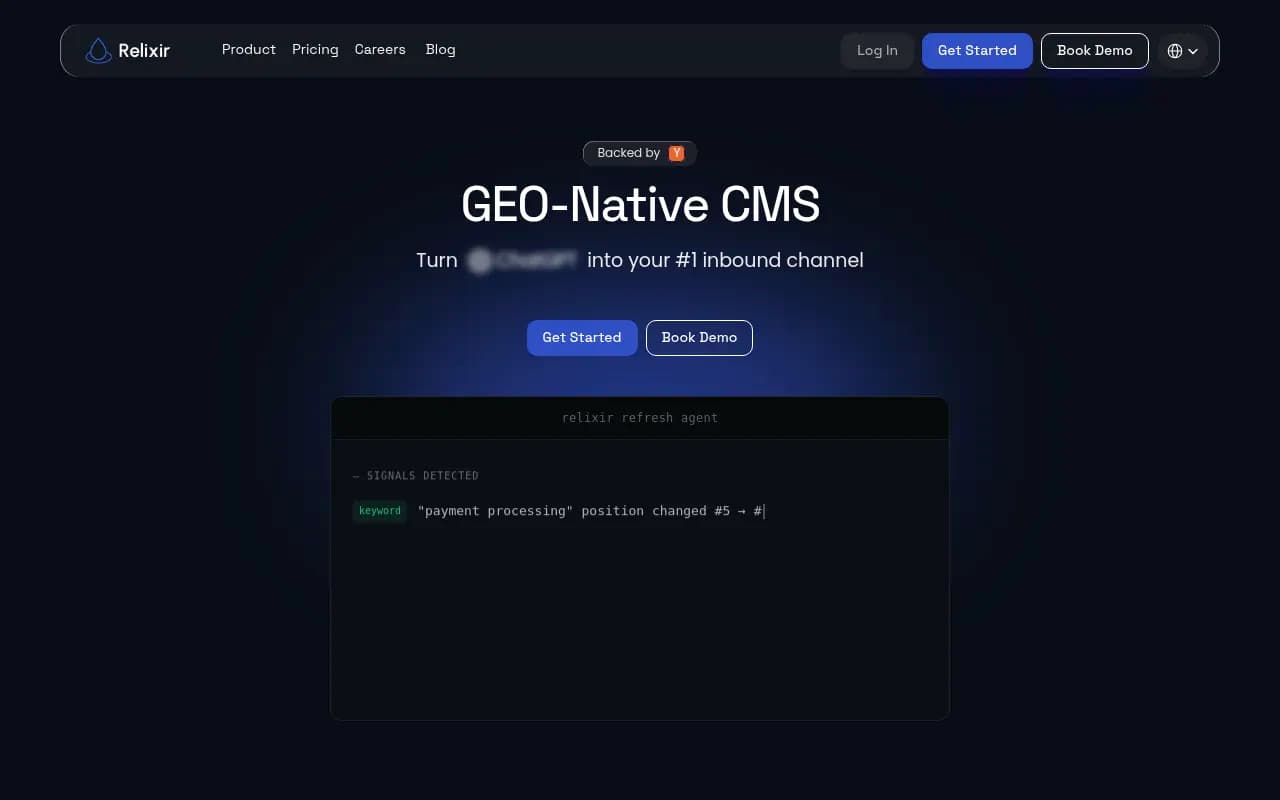
Relixir positions itself as an end-to-end GEO engine built for enterprise brands. In practice, that means it combines visibility tracking with content workflows, but the emphasis is on the workflow side more than the analytics side.
In our test, Relixir's interface felt more like a content operations platform that happens to include AI visibility data, rather than a visibility platform that happens to include content tools. That's not a criticism — it's a different philosophy, and for enterprise teams with dedicated content teams who need structured workflows, it may be exactly right.
The platform's strength is in how it handles content production at scale. If you're managing visibility for a large brand with dozens of product lines or markets, Relixir's workflow tooling is more mature than what you'd find in Promptwatch's Essential or Professional tiers.
What we found less compelling: the monitoring layer felt thinner than Peec or Promptwatch in terms of raw data granularity. Prompt-level visibility scores were present, but the kind of detailed citation analysis — which specific pages are being cited, by which models, how often — was less transparent.
Relixir doesn't publish pricing publicly, which is a signal about who it's built for. If you need to ask, you're probably in the right tier. For mid-market teams, the pricing conversation alone may push you toward Promptwatch.
Evertune
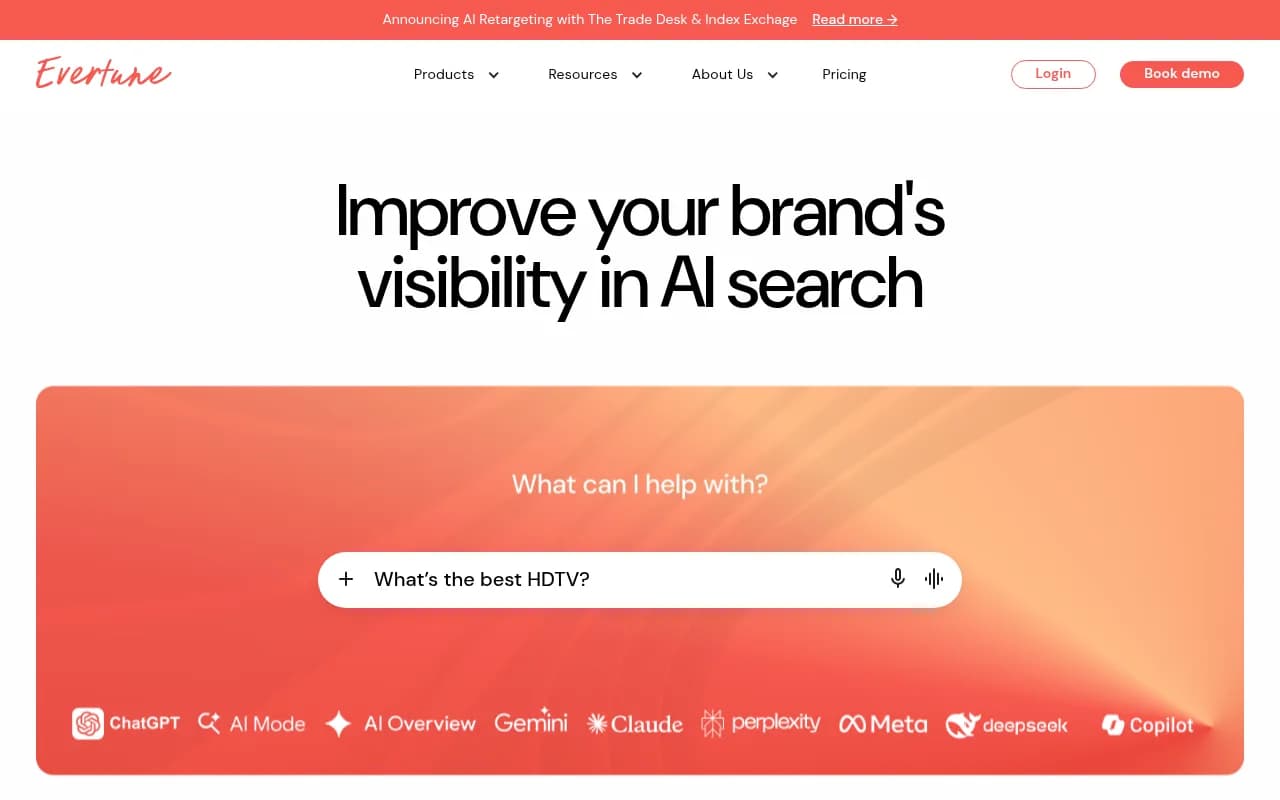
Evertune is the most enterprise-oriented platform of the four. It's built for Fortune 500 brands, and the product reflects that: deep analytics, sophisticated reporting, and a focus on brand perception across AI engines rather than just citation tracking.
In our test, Evertune's sentiment analysis was the most nuanced of the four. It doesn't just tell you whether your brand appeared in a response — it analyzes how you were described, whether the framing was positive or negative, and how that compares to competitors. For brand teams managing reputation at scale, that depth is genuinely valuable.
The gap is on the action side. Like Peec, Evertune is primarily a monitoring and analytics platform. There's no built-in content generation, no answer gap analysis that produces a content brief, and no crawler log data. The assumption seems to be that enterprise brands have separate teams for content production and don't need those capabilities bundled in.
That assumption may be correct for a Fortune 500 marketing org with dedicated GEO specialists. For everyone else, it means paying for insights you then have to act on elsewhere.
Pricing is enterprise-only and requires a demo. Expect it to be significantly higher than the other three platforms.
Head-to-head comparison
| Feature | Peec AI | Promptwatch | Relixir | Evertune |
|---|---|---|---|---|
| AI models covered | ChatGPT, Perplexity, Claude + add-ons | 10 models (ChatGPT, Claude, Gemini, Perplexity, Grok, DeepSeek, Copilot, Mistral, Meta AI, Google AI Mode) | Select models | Multiple (enterprise) |
| Refresh rate | Every 4 hours | Daily | Daily | Daily |
| Prompt-level tracking | Yes | Yes | Yes | Yes |
| Answer gap analysis | No | Yes | Partial | No |
| Built-in content generation | No | Yes | Yes | No |
| AI crawler logs | No | Yes (Professional+) | No | No |
| Reddit/YouTube tracking | No | Yes | No | No |
| Sentiment analysis | Basic | Yes | Yes | Advanced |
| ChatGPT Shopping tracking | No | Yes | No | No |
| Traffic attribution | No | Yes | No | No |
| Pricing (entry) | €85/month | $99/month | Custom | Custom (enterprise) |
| Free trial | Yes | Yes | Demo required | Demo required |
| Best for | Monitoring-focused teams, European brands | Mid-market teams wanting to act on data | Enterprise content teams | Fortune 500 brand teams |
What the 50-prompt test actually revealed
A few things stood out across all four platforms that are worth naming directly.
First, AI model variance is real and large. The same prompt run through ChatGPT and Perplexity on the same day can produce completely different citation patterns. Any platform that only monitors one or two models is giving you a partial picture. Promptwatch's 10-model coverage matters more than it sounds.
Second, refresh rate matters less than you'd think for most use cases. Peec's 4-hour refresh is genuinely useful for time-sensitive monitoring, but for the majority of GEO use cases — understanding structural visibility gaps and fixing them — daily data is sufficient. The more important question is what the platform does with the data between refreshes.
Third, the content generation quality gap is significant. Relixir and Promptwatch both offer content generation, but Promptwatch's approach is grounded in 880M+ citations analyzed, which means the content recommendations are based on what AI models have actually cited, not just SEO best practices. That's a meaningful difference when you're trying to engineer content to get cited by Claude or Perplexity specifically.
Fourth, attribution is the missing piece for most teams. All four platforms show you visibility data. Only Promptwatch connects that visibility to actual traffic and revenue through GSC integration, a code snippet, or server log analysis. Without that connection, you're optimizing for a metric that may or may not translate to business outcomes.
Which platform should you use?
The honest answer depends on what you're trying to do.
If you need fast, clean monitoring data with strong multi-country support and don't need content generation, Peec AI is a solid choice at a reasonable price point.
If you want to actually improve your AI visibility — not just measure it — Promptwatch is the clearest recommendation. The action loop (find gaps, generate content, track results) is the most complete of the four, and the $99/month entry point makes it accessible to teams that aren't running Fortune 500 budgets.
If you're an enterprise brand with a dedicated content team and need workflow tooling at scale, Relixir is worth evaluating. Just go in knowing the monitoring layer is thinner than Promptwatch's.
If you're a large brand where brand perception and sentiment analysis are as important as citation tracking, Evertune's depth in that area is hard to match. But be prepared for enterprise pricing and a monitoring-only posture.
For most marketing teams and agencies reading this, the answer is Promptwatch. It's the only platform of the four that treats "you're not visible for this prompt" as a problem to solve, not just a data point to report.

The GEO platform market has matured quickly. A year ago, most tools were basic monitoring dashboards. Now the differentiation is clear: some platforms show you where you stand, and some help you change it. That distinction is worth paying attention to when you're choosing where to spend your budget.