Key takeaways
- Profound is a strong analytics platform for teams that love dashboards, but it stops at monitoring -- there's no built-in content generation or optimization workflow.
- Promptwatch is the only platform in this comparison rated as a "Leader" across all GEO categories, combining monitoring, content gap analysis, AI writing, and traffic attribution in one loop.
- Relixir is built specifically for enterprise brands that want an end-to-end GEO engine, with a focus on automated content publishing and competitive gap analysis.
- Bluefish positions itself around brand protection and crisis monitoring rather than optimization -- useful for risk-sensitive teams, less useful for growth-focused ones.
- Price alone doesn't determine value: the question is whether the platform helps you fix visibility gaps or just shows you they exist.
Enterprise GEO platforms are not cheap. Profound, Promptwatch, Relixir, and Bluefish all sit in a price bracket where you're committing real budget -- and real expectations. So before you sign anything, it's worth asking a harder question than "which one has the most features?"
The real question is: which one actually moves the needle?
Monitoring your AI visibility is table stakes in 2026. ChatGPT, Perplexity, Claude, Gemini, and Google AI Overviews are now a meaningful source of brand discovery, and if you're not showing up in those answers, you're losing ground to competitors who are. But knowing you're invisible doesn't make you visible. That's where these platforms diverge sharply.
Let's get into it.
What each platform is actually trying to do
Before comparing features, it helps to understand the core philosophy behind each tool. They're not solving the same problem.
Profound is built around analytics depth. It tracks your brand across 10+ AI engines, gives you sentiment analysis, share-of-voice metrics, and SOC 2-certified data infrastructure. It's the platform for teams that want to understand their AI visibility in granular detail. The dashboards are genuinely impressive.
Promptwatch is built around the full optimization loop: find gaps, create content, track results. It's not just a tracker -- it's a platform that shows you which prompts your competitors are winning and you're not, generates content engineered to get cited by AI models, and then closes the loop with traffic attribution. Used by 6,700+ brands including Booking.com and Center Parcs.

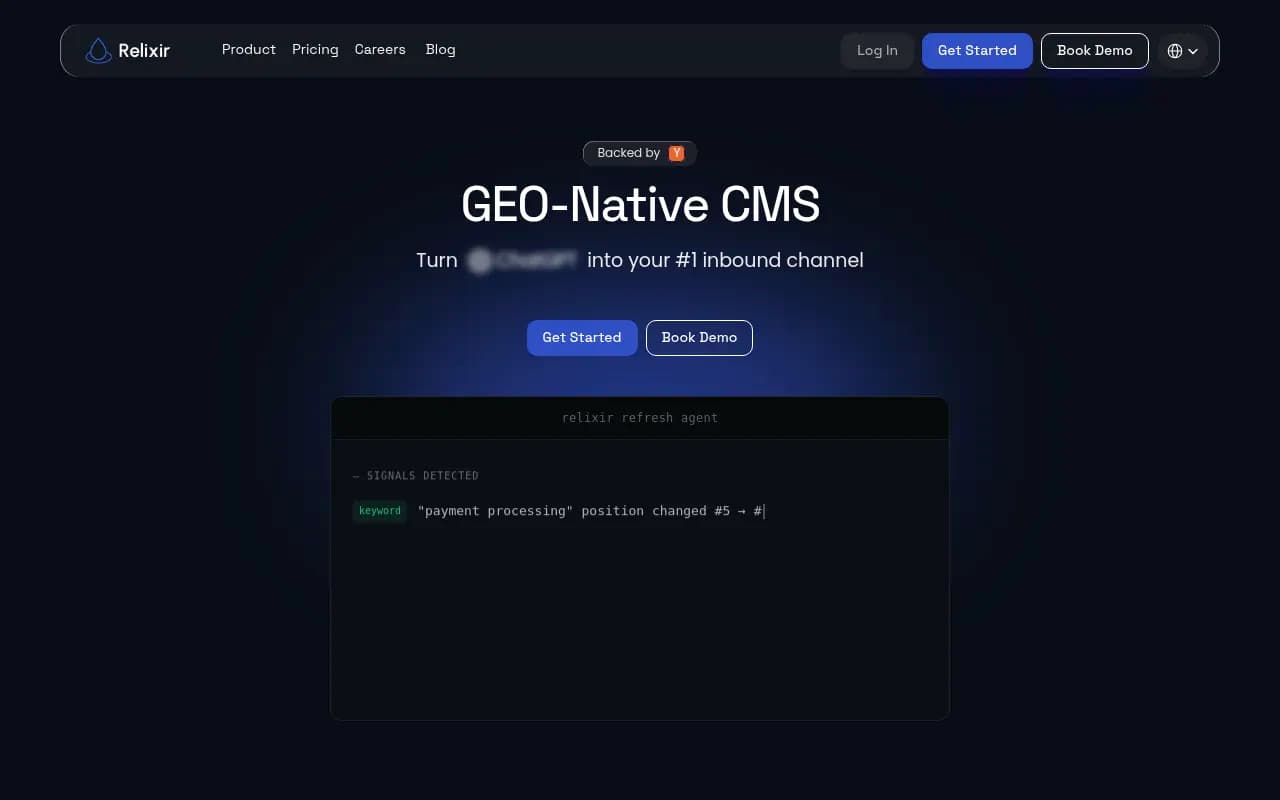
Relixir describes itself as an end-to-end GEO engine for enterprise brands. Its focus is on automating the content publishing side of GEO -- identifying gaps and pushing content to close them at scale. It's newer than Profound but has been gaining traction with larger teams that want less manual work.
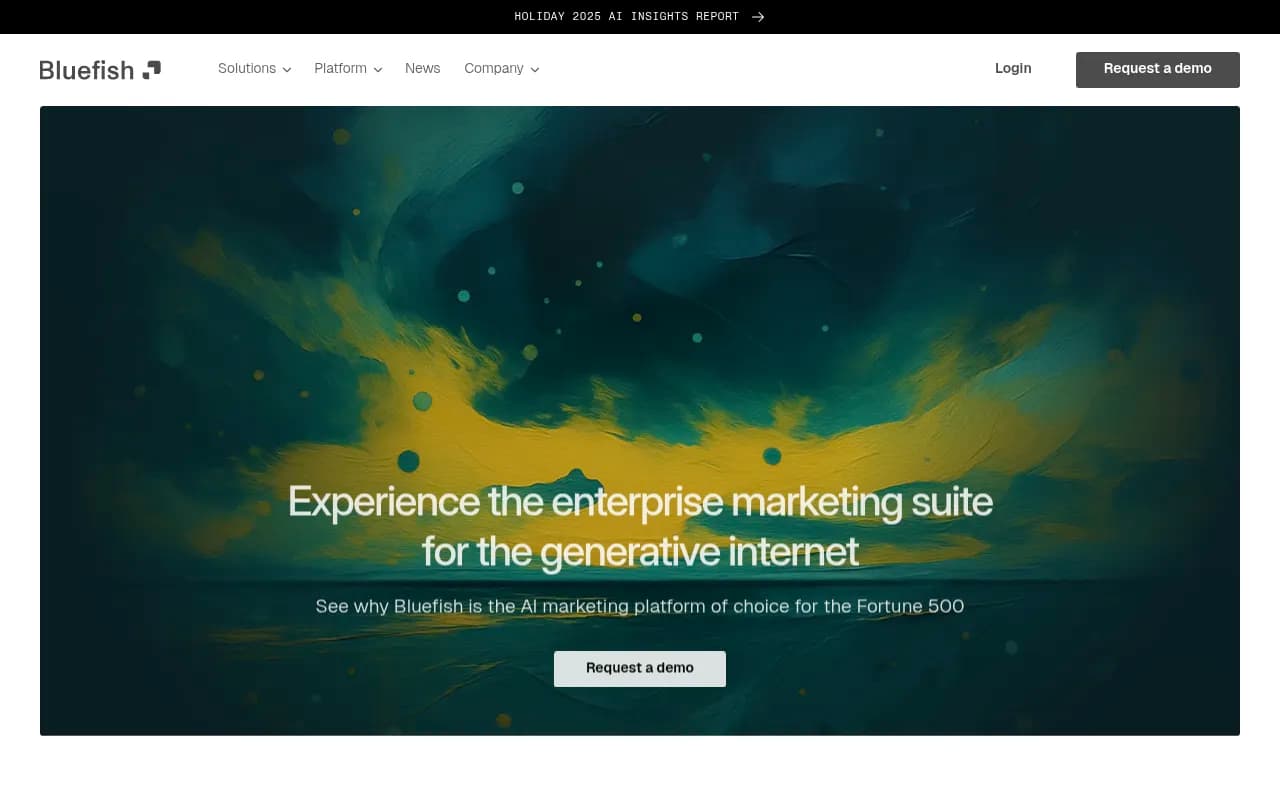
Bluefish leans into brand protection and crisis monitoring. It's strong at detecting when AI models are saying something wrong or damaging about your brand, and it's built for teams where legal and comms have a seat at the table alongside marketing.
Feature-by-feature comparison
Here's how the four platforms stack up across the dimensions that matter most for enterprise teams.
| Feature | Profound | Promptwatch | Relixir | Bluefish |
|---|---|---|---|---|
| AI engines tracked | 10+ | 10 | 8+ | 8+ |
| Monitoring & brand tracking | Yes | Yes | Yes | Yes (strong) |
| Answer gap / competitor analysis | Limited | Yes (Answer Gap Analysis) | Yes | Limited |
| Built-in content generation | No | Yes (AI writing agent) | Yes (automated) | No |
| Traffic attribution | No | Yes (GSC, snippet, logs) | Partial | No |
| AI crawler logs | No | Yes | No | No |
| Reddit & YouTube tracking | No | Yes | No | No |
| ChatGPT Shopping tracking | No | Yes | No | No |
| Prompt volume & difficulty scores | No | Yes | No | No |
| SOC 2 certified | Yes | No | No | No |
| Crisis / brand protection focus | No | No | No | Yes |
| Page-level citation tracking | Limited | Yes | Partial | No |
| Multi-language / multi-region | Yes | Yes | Partial | Partial |
| Looker Studio / API | API only | UI + API | API | Limited |
| Free trial | Yes | Yes | Yes | Yes |
The table tells a clear story. Profound and Bluefish are strong at specific things -- analytics depth and brand protection, respectively -- but neither helps you actually fix the problem. Relixir and Promptwatch both attempt the full loop, but Promptwatch has more supporting infrastructure around it: crawler logs, Reddit/YouTube signal tracking, prompt intelligence, and traffic attribution that connects visibility to revenue.
Pricing reality check
None of these platforms are cheap, and pricing transparency varies.
Profound doesn't publish pricing publicly. Based on community reports and third-party comparisons, enterprise plans typically start in the $500-$1,000+/month range. It's built for larger teams with dedicated analytics resources.
Promptwatch publishes its pricing openly:
- Essential: $99/month (1 site, 50 prompts, 5 articles)
- Professional: $249/month (2 sites, 150 prompts, 15 articles, crawler logs, city/state tracking)
- Business: $579/month (5 sites, 350 prompts, 30 articles)
- Agency/Enterprise: custom pricing
That's a meaningful difference. Promptwatch's Business plan at $579/month covers what most mid-market teams actually need, and the Professional plan at $249/month is genuinely usable for a single brand.
Relixir also doesn't publish pricing openly. Enterprise-focused, custom quotes. Expect it to be in a similar bracket to Profound.
Bluefish is enterprise-only with custom pricing. Given its focus on Fortune 500 brand protection use cases, expect it to be at the higher end.
The pricing gap between Promptwatch and the others is real. If you're a marketing team that needs to justify ROI, Promptwatch's transparent pricing and traffic attribution features make that conversation easier.
Where Profound actually wins
Profound is genuinely good at what it does. If your team's primary need is analytics -- understanding share of voice, tracking sentiment shifts, comparing how different AI models describe your brand -- Profound's data depth is hard to beat. The SOC 2 certification matters for enterprise procurement teams and regulated industries. The dashboards are clean and the data is reliable.
Where it falls short: Profound shows you the problem but doesn't help you solve it. There's no content generation, no gap analysis that tells you what to write, no traffic attribution to close the loop. You get excellent data and then you're on your own.
Profound

For teams with a dedicated SEO or content team that can take Profound's insights and act on them independently, that's fine. For teams that want the platform to do more of the heavy lifting, it's a limitation.
Where Promptwatch actually wins
Promptwatch's core advantage is that it's built around action, not just observation. The Answer Gap Analysis shows you exactly which prompts competitors are appearing in that you're not -- specific topics, specific questions, specific angles that AI models want to answer but can't find on your site.
From there, the built-in AI writing agent generates content grounded in 880M+ citations analyzed, prompt volume data, and competitor analysis. This isn't generic content -- it's engineered to get cited by ChatGPT, Claude, Perplexity, and others.
Then you track the results. Page-level tracking shows which pages are being cited, how often, and by which models. Traffic attribution connects that visibility to actual website visits and revenue.
A few features that stand out as genuinely unusual in the market:
- AI crawler logs that show you which pages ChatGPT, Claude, and Perplexity are actually reading on your site -- and which ones they're ignoring or hitting errors on
- Reddit and YouTube tracking, surfacing discussions that directly influence AI recommendations
- ChatGPT Shopping tracking for brands that appear in product carousels
- Query fan-outs that show how one prompt branches into sub-queries, helping you prioritize
The 2026 comparison of 12 GEO platforms rated Promptwatch as the only "Leader" across all categories. That's a strong signal, though worth noting that Promptwatch itself operates this review site -- so read the broader market with that context in mind.
Where Relixir actually wins
Relixir is worth taking seriously, especially for enterprise teams that want automation over manual workflows. Its strength is in the content publishing pipeline -- it's designed to identify GEO gaps and push content to close them with less human intervention than most platforms require.
For large brands managing multiple product lines or regions, that automation angle is genuinely valuable. You don't want to manually brief a content team on 50 gap topics every month.
The platform is newer, which means the data infrastructure isn't as deep as Profound's and the feature set isn't as broad as Promptwatch's. But it's moving fast and the enterprise focus is real.
Where Bluefish actually wins
Bluefish is the right choice if your primary concern is brand protection rather than growth. If your legal team is worried about AI models misrepresenting your products, if you're in a regulated industry where AI-generated misinformation is a real risk, or if you've had a brand crisis and want early warning systems -- Bluefish is built for that.
It's not built for the marketing team trying to increase AI citation share. The feature set reflects that. Strong on monitoring and alerting, weak on optimization and content.
The honest verdict
Here's how I'd think about the decision:
Choose Profound if you have a large analytics team, need SOC 2 compliance, and your primary goal is understanding your AI visibility landscape in depth. You'll need to pair it with separate content tools.
Choose Promptwatch if you want to actually improve your AI visibility, not just measure it. The combination of gap analysis, AI content generation, crawler logs, and traffic attribution is the most complete optimization loop available at a price point that doesn't require enterprise procurement sign-off.
Choose Relixir if you're a large enterprise that wants automated content publishing at scale and has the budget for a custom enterprise contract. Good for teams that want less manual work in the GEO workflow.
Choose Bluefish if brand protection and crisis monitoring are your primary use case, and you're less focused on growing your AI citation share.
For most marketing teams reading this -- especially those who need to show ROI on their GEO investment -- Promptwatch is the most practical choice. The transparent pricing, the action-oriented workflow, and the traffic attribution features make it easier to justify and easier to act on.
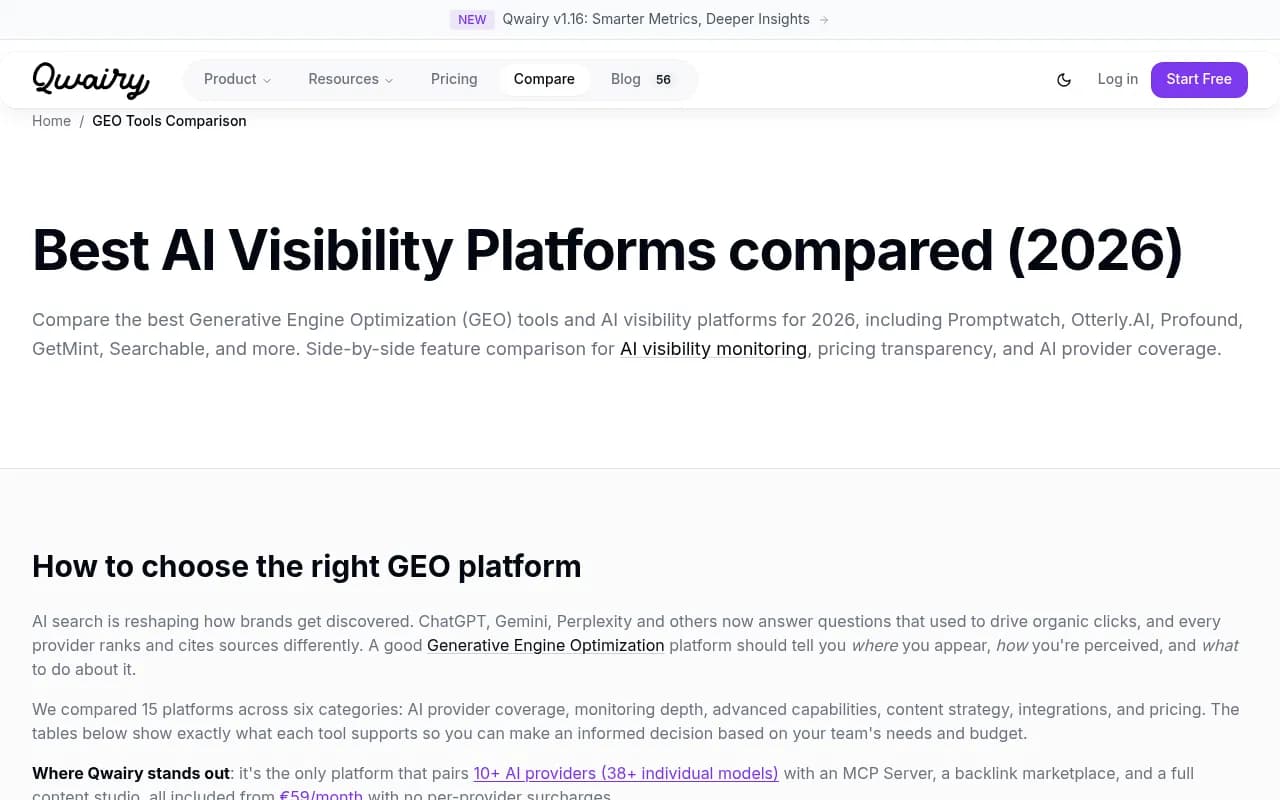
A 2026 feature comparison across major GEO platforms, showing how coverage and capabilities vary significantly between tools.
A few tools worth knowing about
If none of the four above feel like the right fit, there are other options in the market worth a look.
For teams that want lighter-weight monitoring without enterprise pricing:
Otterly.AI


For teams that want traditional SEO plus emerging AI search tracking in one platform:

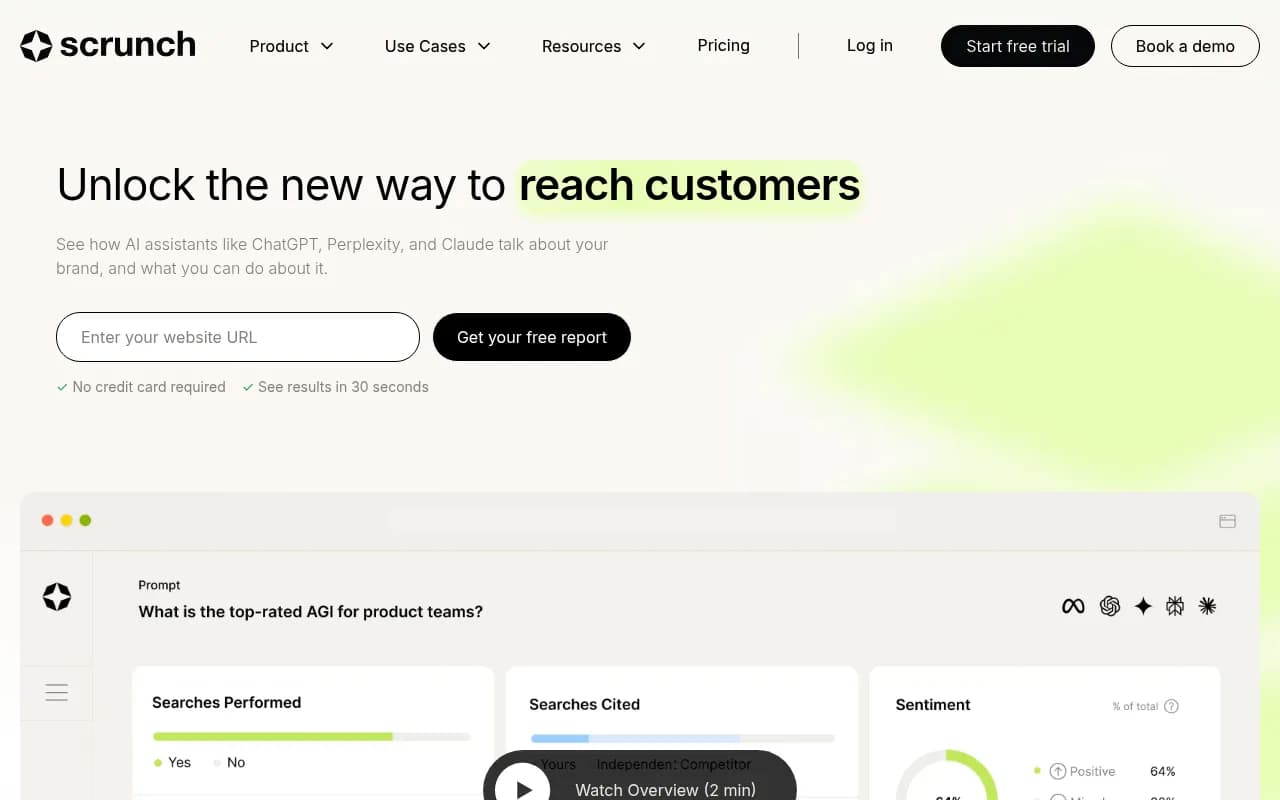
For teams focused specifically on tracking AI citations and brand mentions at a lower price point:

Bottom line
The GEO platform market in 2026 has a real split: tools that monitor and tools that optimize. Profound and Bluefish are monitoring tools with enterprise polish. Relixir and Promptwatch are trying to be optimization platforms.
If you're spending enterprise money on GEO, the question to ask every vendor is simple: "After I see the data, what does your platform help me do about it?" The answer tells you everything.