Key takeaways
- Searchable offered a clean entry point into AI search visibility monitoring, but its feature set stayed shallow compared to what the market needed
- The platform tracked brand mentions across AI engines but lacked crawler logs, content generation, and traffic attribution -- the tools needed to actually act on data
- Most teams that switched were looking for the same thing: a way to close the loop between "we're invisible" and "here's how to fix it"
- The AI search landscape shifted dramatically in 2025, with Google's AI Overviews, ChatGPT, and Perplexity eating into organic traffic in ways that basic monitoring couldn't address
- Platforms that combine tracking with content optimization and gap analysis have pulled ahead as the default choice for serious marketing teams
What was happening in AI search during 2025
To understand why Searchable mattered -- and where it fell short -- you need to understand the year it was operating in.
2025 was the year AI search stopped being a curiosity and became a real traffic problem. Google's AI Overviews expanded aggressively. ChatGPT's web-browsing mode matured. Perplexity grew its user base fast enough that brands started noticing referral traffic from it in their analytics. And the broader pattern, documented by Digital SEO Land's 2025 recap, was stark: answers appeared without clicks, AI systems chose which brands to quote, and forums outranked polished blog posts.
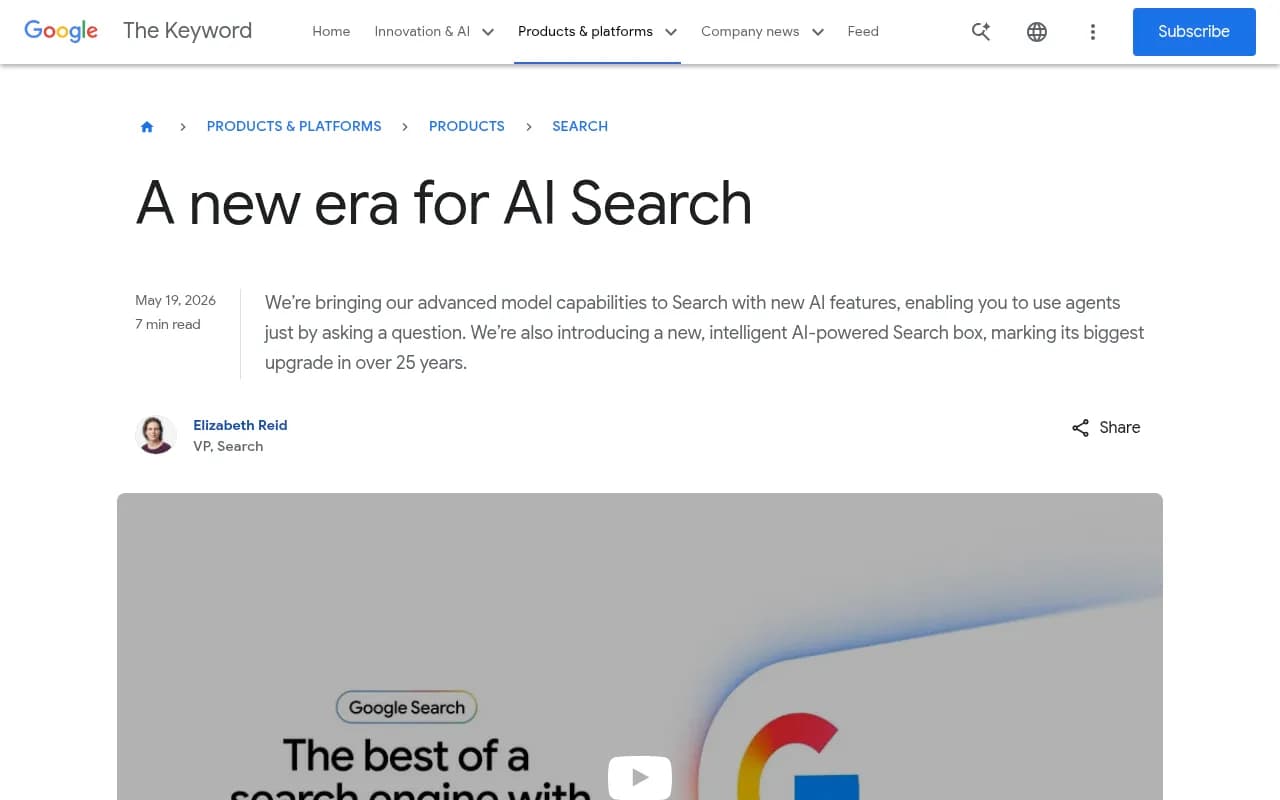
The shift wasn't gradual. Teams that had been optimizing for traditional Google rankings found that their content was being summarized, paraphrased, or ignored entirely by AI engines that had their own opinions about which sources to trust. A brand that ranked #2 on Google for a competitive keyword might not appear at all in ChatGPT's answer to the same question.
That created a new category of tool: AI search visibility platforms. Searchable was one of the early entrants.
What Searchable got right
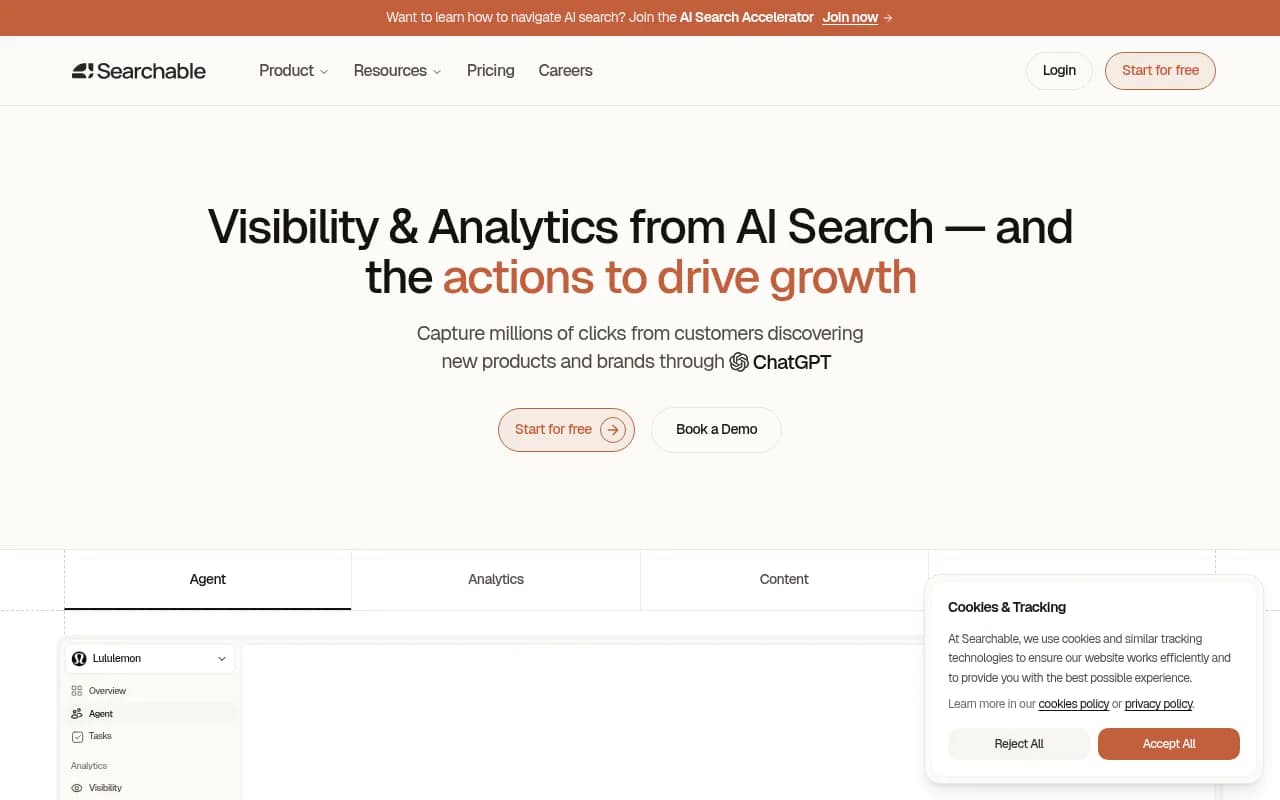
To be fair to the platform, Searchable identified a real problem early. When most SEO tools were still treating AI search as a footnote, Searchable was building dashboards that showed where your brand appeared (or didn't) in AI-generated answers.
A few things it genuinely did well:
The interface was clean. Teams that were new to AI visibility monitoring could get up and running without a steep learning curve. The concept of tracking brand mentions across ChatGPT, Perplexity, and Google AI Overviews was presented in a way that made sense to marketers who weren't deeply technical.
It made the problem visible. For many teams, just seeing the data -- "we appear in 12% of relevant AI responses, our competitor appears in 47%" -- was enough to get internal buy-in for investing more seriously in AI search optimization. Searchable deserves credit for making that conversation easier.
The prompt-based monitoring approach was directionally correct. You define the prompts relevant to your business, the platform checks how AI engines respond to those prompts, and you see where your brand lands. That's the right model.
Where it fell short
Here's where things get honest.
Monitoring is only useful if it tells you what to do next. And Searchable, through most of 2025, stopped at the data layer. You could see that you were invisible. You couldn't easily figure out why, and the platform didn't help you fix it.
No content gap analysis
The most common question teams had after seeing their visibility scores was: "What content do we need to create to show up in these answers?" Searchable didn't answer that. There was no mechanism to map your existing content against what AI engines were citing, no way to see which topics your competitors were being cited for that you weren't, and no brief generation to help your writers act on the data.
This left teams exporting data to spreadsheets and doing the analysis manually -- which mostly didn't happen, because it's tedious and time-consuming.
No crawler log visibility
When AI engines like GPTBot or ClaudeBot crawl your site, they leave traces. Understanding which pages they're reading, how often they return, and whether they're hitting errors is genuinely useful for diagnosing why your content isn't being cited. Searchable had no visibility into this layer.
No content generation
Some platforms in this space started building content agents that could take gap analysis data and generate articles, listicles, or comparison pages designed to fill those gaps. Searchable didn't go there. It remained a reporting tool.
Limited prompt intelligence
Knowing that you're invisible for a prompt is useful. Knowing that the prompt gets asked by hundreds of thousands of users per month, and that it branches into eight sub-queries, is much more useful. Searchable's prompt data was thin on this kind of context, which made it hard to prioritize where to focus.
No traffic attribution
The ultimate question for any marketing team is: is this AI visibility actually driving traffic and revenue? Searchable couldn't connect the dots between a citation in a ChatGPT response and a visit to your website. That made it hard to justify the investment internally.
The broader market context
Searchable wasn't alone in these limitations. The first generation of AI visibility tools -- including Otterly.AI, Peec AI, and several others -- were largely monitoring dashboards. They showed you the problem. They didn't help you solve it.
Otterly.AI


The teams that switched away from Searchable weren't necessarily unhappy with the data quality. They were frustrated by the gap between insight and action. Seeing that you're invisible is demoralizing if the tool doesn't give you a clear path forward.
Here's how the main players in this space compared by the end of 2025:
| Platform | Brand monitoring | Content gap analysis | Content generation | Crawler logs | Traffic attribution | Prompt volume data |
|---|---|---|---|---|---|---|
| Searchable | Yes | Limited | No | No | No | Basic |
| Otterly.AI | Yes | No | No | No | No | No |
| Peec AI | Yes | No | No | No | No | No |
| Profound | Yes | Partial | No | No | No | Partial |
| AthenaHQ | Yes | Partial | No | No | No | Partial |
| Promptwatch | Yes | Yes | Yes | Yes | Yes | Yes |
Profound


The pattern is pretty clear. Most platforms stopped at column one or two. The teams that switched were looking for something further right in that table.
What teams actually needed
When you talk to marketing managers and SEO leads who moved away from Searchable in 2025, a few themes come up consistently.
"We knew we had a problem. We didn't know what to do about it." This was the most common complaint. Visibility data without actionable next steps is just anxiety-inducing. Teams wanted to know which specific content to create, not just that their visibility score was low.
"We couldn't connect it to revenue." Finance teams and CMOs want to know if AI search investment is paying off. Without traffic attribution -- some way to see that an AI citation led to a website visit that led to a conversion -- the ROI case was hard to make.
"Our competitors were moving faster." Several teams noticed that competitors who had adopted more comprehensive platforms were appearing in AI answers more frequently over the course of the year. The monitoring-only approach felt like watching a race from the sidelines.
What the switch looked like in practice
Teams that moved to more comprehensive platforms generally went through a similar process.
First, they ran an answer gap analysis to see which prompts their competitors were being cited for that they weren't. This usually produced a list of 20-50 content opportunities that were specific and actionable -- not "write more content about X" but "write a comparison of A vs B that addresses the specific angle AI engines are looking for."
Second, they used content generation tools to produce articles and pages targeting those gaps. The key difference from generic AI writing was that the content was grounded in real prompt data, citation analysis, and competitor research -- not just keyword stuffing.
Third, they tracked results over time. As new content got crawled and cited, visibility scores improved. Crawler logs showed when AI bots were reading the new pages. Traffic attribution connected citations to actual visits.
That cycle -- find gaps, create content, track results -- is what most teams were looking for and couldn't get from Searchable alone.
Promptwatch is the platform that most closely matches this description, combining gap analysis, content agents, crawler logs, and traffic attribution in one place.

Other tools worth knowing about
Depending on what you need, a few other platforms are worth considering alongside or instead of Searchable.
For teams that want enterprise-grade monitoring with strong data depth, Profound has built a solid reputation, though it sits at a higher price point and doesn't include content generation.
Profound
For agencies managing multiple clients, Search Party takes a workflow-automation angle that some teams find useful, though its prompt intelligence is limited.
Search Party
For teams that want to track AI visibility alongside traditional SEO metrics in one place, Semrush has added AI search features, though they use fixed prompts rather than custom prompt tracking, which limits flexibility.
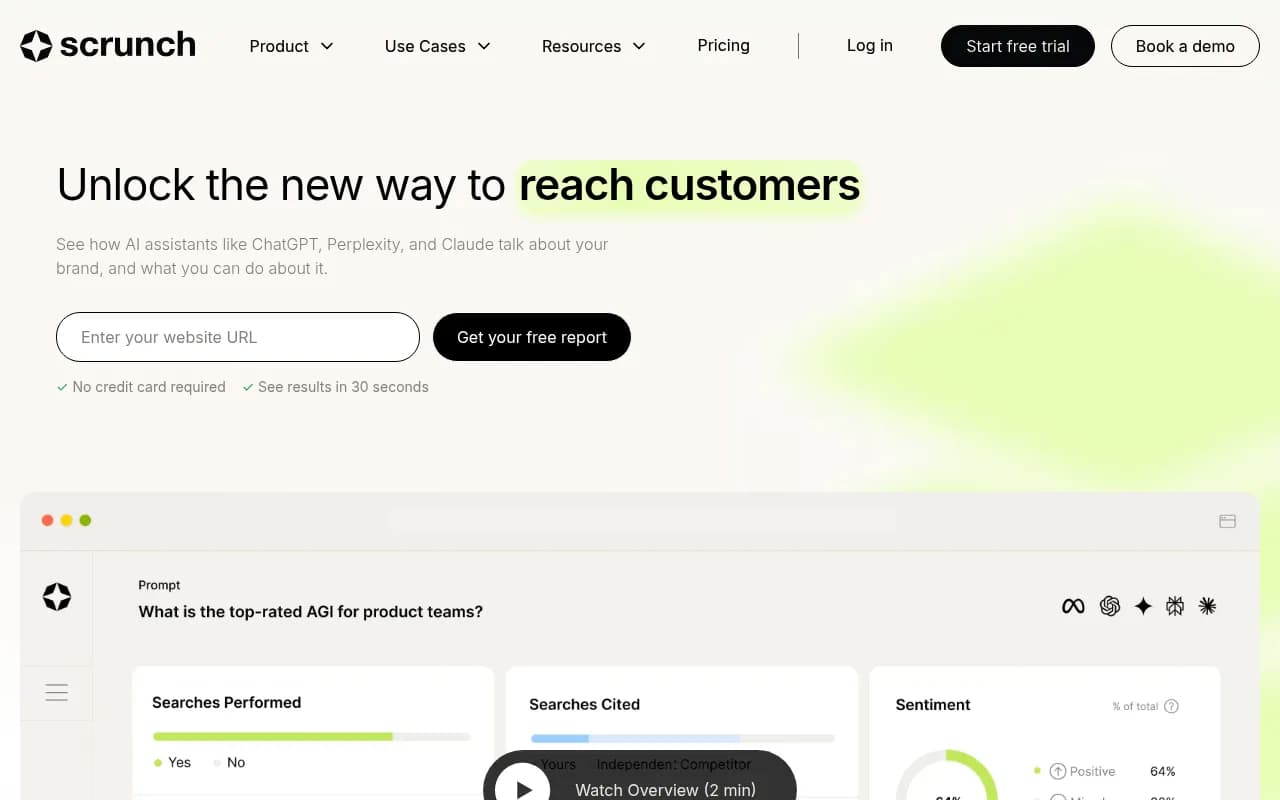
ScrunchAI is another option worth a look for teams focused primarily on brand mention tracking across LLMs.
The honest verdict on Searchable
Searchable wasn't a bad product. It was an early product in a fast-moving category. It identified the right problem, built a reasonable first solution, and helped a lot of teams understand that AI search visibility was something they needed to pay attention to.
The problem is that the category moved quickly. By mid-2025, the bar for what a useful AI visibility platform needed to do had risen significantly. Monitoring alone wasn't enough. Teams needed gap analysis, content tools, crawler visibility, and attribution. Searchable didn't keep pace with those expectations.
If you're evaluating AI search visibility tools now, the question to ask any platform is simple: "After you show me where I'm invisible, what do you help me do about it?" The answer to that question will tell you more than any feature comparison.
The platforms that can answer it clearly -- with specific tools for content gap analysis, content creation, and result tracking -- are the ones worth investing in. The ones that stop at "here's your visibility score" are useful for awareness but not for growth.
What to look for in a replacement
If you're moving on from Searchable or evaluating alternatives for the first time, here's a practical checklist:
- Does it track the AI engines your customers actually use (ChatGPT, Perplexity, Google AI Overviews, Gemini)?
- Can you define custom prompts that match how your customers actually search, rather than being limited to fixed prompt sets?
- Does it show you what content your competitors are being cited for that you're not?
- Does it help you create content to fill those gaps, or just show you the gap exists?
- Can you see when AI crawlers are visiting your site and which pages they're reading?
- Does it connect AI citations to actual website traffic and conversions?
- Does it track prompt volume so you can prioritize high-value opportunities?
The more of those boxes a platform checks, the more likely it is to actually move your AI search visibility in a meaningful direction -- rather than just giving you a dashboard to watch while your competitors get cited instead of you.