Key takeaways
- Internal approvals, not content creation, are the biggest bottleneck for marketing teams. Contentoo's 2026 survey of 203 B2B content leaders found 45% name approvals as their top workflow problem, ahead of unclear briefs (41%) or writing the first draft (40%).
- A documented process alone doesn't fix anything. 65% of teams already have one written down, yet 76% of those same teams still publish content they know isn't good enough.
- There are four real workflow structures worth knowing: optional, required, multi-level (sequential), and conditional. Most teams over-engineer this and bolt on approval stages they don't actually need.
- If you work in financial services, pay attention: FINRA's Regulatory Notice 26-14 (July 2026) proposes replacing blanket principal pre-approval with risk-based written procedures, a meaningful shift for how regulated brands structure social approvals.
- Tooling matters less than people assume. Planable, Loomly, and Hootsuite all offer workable approval systems at wildly different price points, from $39/workspace to $249/seat per month.
Why approval processes break in the first place
Here's the scenario every social media manager has lived through. A post is drafted, the design is locked, and then it just sits there. The reviewer is in meetings. Feedback shows up in a Slack thread, an email reply, and a comment on a PDF nobody can find. By the time someone actually says "approved," the moment it was built for has passed.
This isn't a one-off annoyance. Contentoo's State of Content Teams 2026 report, based on a survey of 203 B2B marketing leaders plus 12 follow-up interviews, found that 45% of teams rank approvals as their single biggest bottleneck, ahead of unclear briefs and even ahead of the difficulty of writing the first draft. Nearly half of content leaders spend at least 40% of their week coordinating work instead of making it.
And writing down a process doesn't automatically solve it. The same report found 65% of teams already have a documented workflow, but 76% of those teams still ship content they privately know isn't good enough. The paperwork exists. The discipline to follow it doesn't.
The cost of this isn't abstract either. Adobe's 2026 State of Marketing in an AI-Driven World survey of 150 marketing leaders across five countries found 84% of organizations missed at least one marketing opportunity in the previous quarter because their workflow couldn't move fast enough. West Monroe research cited by HeyOrca puts a number on it: slow internal approvals can cost companies up to 5% of annual revenue in lost opportunities.
So the goal here isn't "add more process." It's building the smallest workflow that actually catches mistakes without adding friction nobody needed.
What a social media approval workflow actually needs
Hootsuite frames the core cycle as six stages: ideate, draft, review, revise, approve, publish. Strip out the ideation step if your team doesn't formally track it, but the rest holds up across almost every team I've looked at.
| Role | Responsibility | When they step in |
|---|---|---|
| Content creator | Drafts copy, picks visuals, adds hashtags and links | Creation |
| Editor or peer reviewer | Checks grammar, tone, brand voice | Internal review |
| Designer | Builds or signs off on visual assets | Internal review |
| Marketing or brand lead | Confirms alignment with campaign goals | Strategic review |
| Legal or compliance reviewer | Flags regulatory issues, disclaimers, privacy concerns | Strategic review |
| Final approver | Gives the actual go-ahead to schedule or publish | Sign-off |
Not every post needs every row. A routine Tuesday tip post probably just needs a creator and one reviewer. A post mentioning pricing, a health claim, or a regulated product should automatically route through legal. That's the difference between a flat workflow and a conditional one, and it's the single biggest lever for keeping your process fast without getting reckless.
Choosing your approval structure
There are really four patterns in use, and picking the wrong one is the most common mistake I see teams make.
| Structure | How it works | Best for |
|---|---|---|
| Optional | Approvers are notified but a post can go live even without their response | Fast-moving, low-risk brands |
| Required | Nothing publishes until someone explicitly signs off | Brands with reputational risk, agencies managing client accounts |
| Multi-level (sequential) | Post moves through tiers: creator, editor, manager, legal, each clearing before the next starts | Regulated industries, enterprise teams |
| Conditional | Routing changes automatically based on content type, risk level, or department | Large orgs with varied content types |
A word of caution on multi-level approval: it only works if every person in the chain is actually responsive. One slow approver stalls the entire queue behind them. Most reviewers of tools like Planable recommend starting with a single required reviewer and only adding stages once you've proven you genuinely need them. Resist the urge to build a five-stage chain for a three-person team just because a bigger company's playbook looks impressive.
Building the workflow: seven steps
Step 1: Audit what's actually happening today
Before changing anything, trace a handful of recent posts through their real path. Who drafted them, who gave feedback, where did that feedback live, who actually hit publish. You'll usually find the documented process and the real process have drifted apart.
Step 2: Define roles explicitly
Use the roles table above as a starting point, but name actual people. "The marketing lead reviews" is vague. "Priya reviews strategic alignment within 24 hours of submission" is a workflow.
Step 3: Write content and brand guidelines down
Reviewers need something to check against. Document your brand voice, approved hashtags, visual standards, and any disclaimer language required for your industry. Without this, every reviewer applies their own subjective standard, and feedback contradicts itself from one person to the next.
Step 4: Pick your structure
Use the table above. If you're not sure, start with required single-reviewer approval and graduate to multi-level only when volume or risk genuinely demands it.
Step 5: Map the full path, stage by stage
Write out every step from draft to publish and share it with the whole team. A typical path looks like: draft created, internal review for tone and grammar, strategic or compliance review if the content needs it, final approval, then scheduling. Teams that skip writing this down often discover, mid-crisis, that everyone had a different mental model of who was supposed to catch what.
Step 6: Set deadlines and escalation rules
Vague timelines get ignored. Give each stage a real number: 24 hours for internal review, 48 hours for strategic sign-off. Then decide what happens when someone misses it. Does it auto-escalate to a backup approver? Does the creator get pinged? Without an answer to that question, your queue grows quietly until content misses its window entirely.
Step 7: Run it for a month, then fix it
No workflow survives contact with reality unchanged. Run it for two to four weeks and watch for the real friction points: a single reviewer drowning in volume, feedback loops that add rounds nobody needed, or a conditional rule routing too much content through your longest chain. Revisit the workflow quarterly. Shorten SLAs where reviews are dragging, cut stages that stopped adding value, and add an audit trail for anything regulated.
A quick note on compliance in 2026
If your team touches financial services content, there's a real change worth tracking. FINRA Regulatory Notice 26-14, published July 9, 2026, proposes modernizing Rule 2210 by replacing the current requirement that a registered principal pre-approve every retail communication with risk-based written procedures tailored to a firm's size and business. The comment period closed September 11, 2026, and no final rule has been confirmed yet, so treat this as a proposal in motion rather than settled law. FINRA's own notice explicitly cites the rise of social media and generative AI content as the reason blanket pre-approval has become impractical. Firms outside finance don't need to worry about this, but if you're a broker-dealer or financial advisor running social accounts, it's worth reading the notice directly before you redesign your approval chain around the old rule.
Separately, regardless of what Rule 2210 ends up looking like, FINRA still requires firms to archive social and business-related communications for at least three years, with the most recent two years kept in an easily accessible format.
Best practices that actually hold up
- Lock content after approval. If someone edits copy after sign-off, the version that goes live isn't the version that was reviewed. That's an accountability gap, and in regulated industries it's a potential violation.
- Build pre-approved templates for repeatable content. Weekly tips, event announcements, job postings. Reviewers only need to check what actually changed, not re-approve the whole thing from scratch.
- Set a recurring review cadence instead of one-off requests. Content submitted by the 20th, feedback due by the 25th, scheduled by month's end. Predictability kills the back-and-forth that usually causes delays.
- Keep internal discussion separate from client-facing approval threads so messy internal debate never leaks into a client view.
- Assign a named backup approver for every stage. People go on leave, miss notifications, get pulled into other fires. One absent approver shouldn't be able to stall a launch.
Comparing the tools that run these workflows
Once the process is on paper, the tool is just the thing that enforces it. Here's how the main players stack up on approval depth and price, based on current 2026 pricing (worth double-checking on vendor sites, since these pages update often).
| Tool | Approval depth | Starting price | Best for |
|---|---|---|---|
| Planable | Four modes: none, optional, required, multi-level | $39/workspace/month, unlimited users | Agencies and teams needing real sequential chains |
| Loomly | Approval workflows and roles included from the entry tier | $49-65/month | Teams that want approvals without upgrading tiers |
| Hootsuite | Multi-level approval gated behind the Enterprise "Vigil" module | $99/user/month (Standard), custom for Vigil | Larger teams already in the Hootsuite ecosystem |
| Sprout Social | Approval workflows only unlock at the Professional tier and above | $299/seat/month for workflows | Teams that need deep analytics alongside approvals |
| HeyOrca | Calendar built around agency-client approval from the ground up | Custom pricing | Agencies managing multiple client sign-offs |
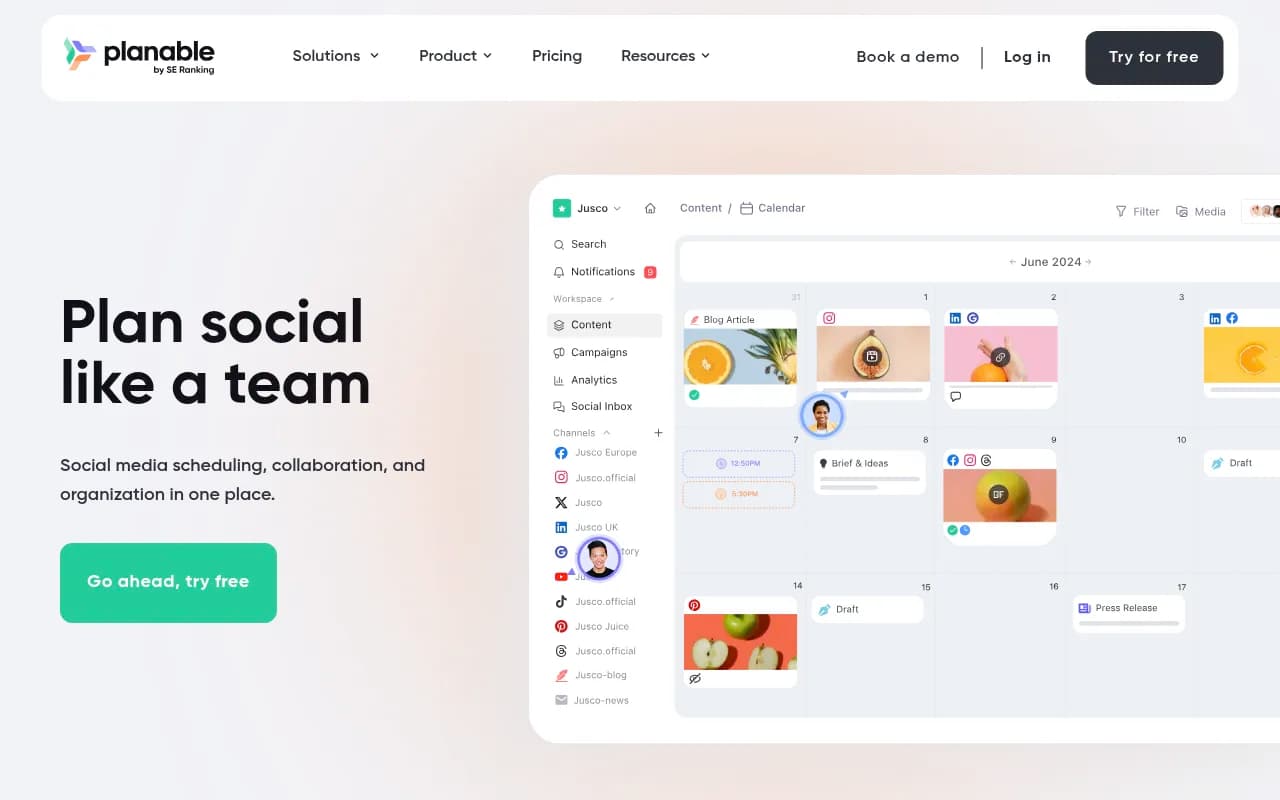
Planable's multi-level system is the deepest I've seen in this category, letting you build a real sequential chain, copywriter to brand manager to client, where each level needs its own sign-off before the post advances. It also charges per workspace rather than per seat, which matters if you have more reviewers than budget.
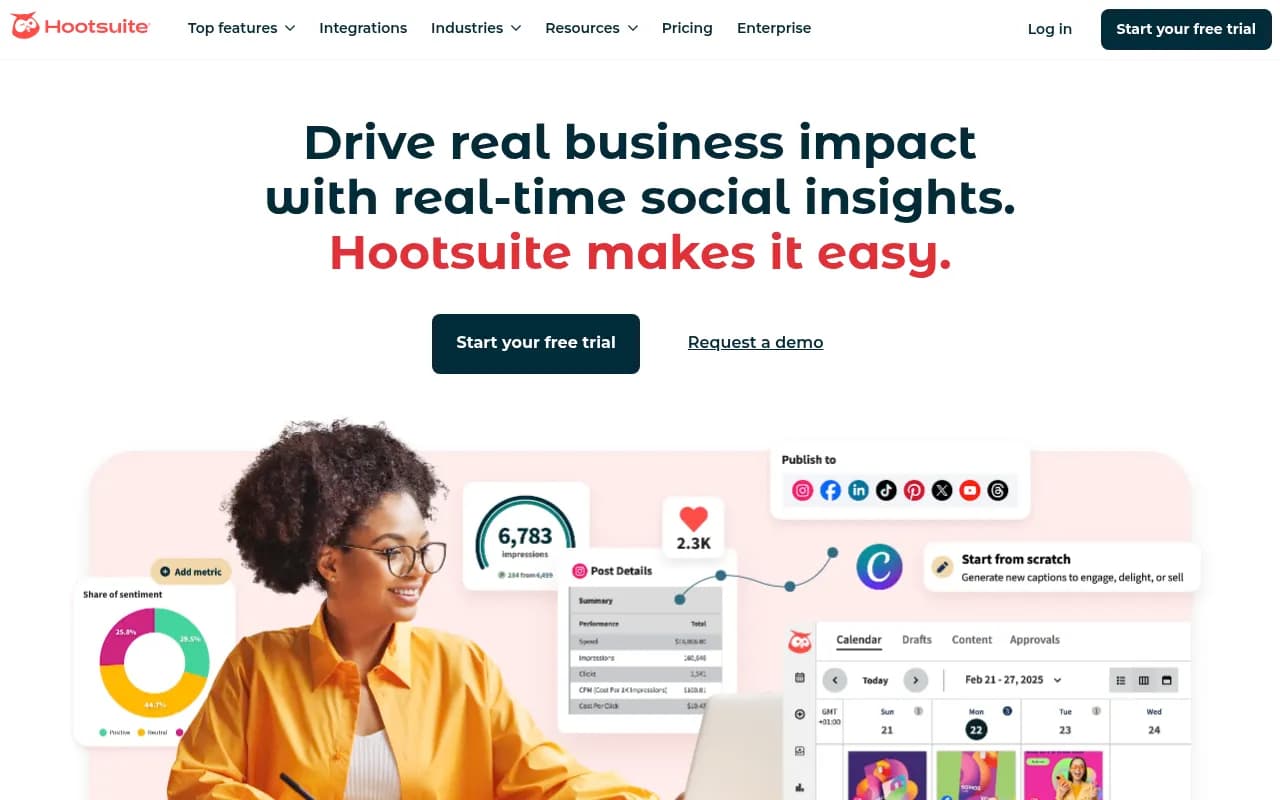
Hootsuite's approval tooling is solid for teams that already live inside its scheduling and analytics suite, but the real governance features, audit trails and role-based permissions tied to the Vigil module, live behind the Enterprise tier, which is a meaningful jump for smaller teams.
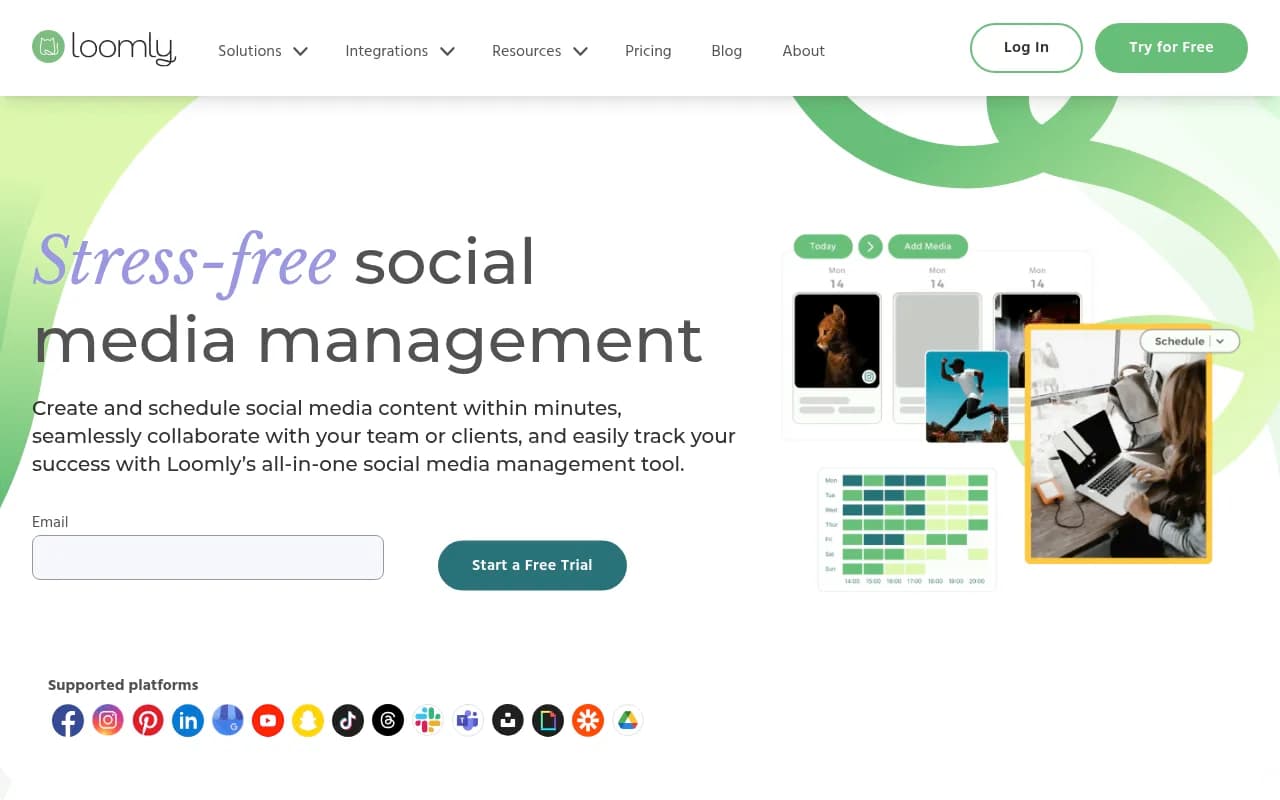
Loomly builds approval workflows and defined roles into its entry-level Starter plan, which makes it a reasonable starting point if you don't want to pay enterprise prices just to get basic sign-off routing.
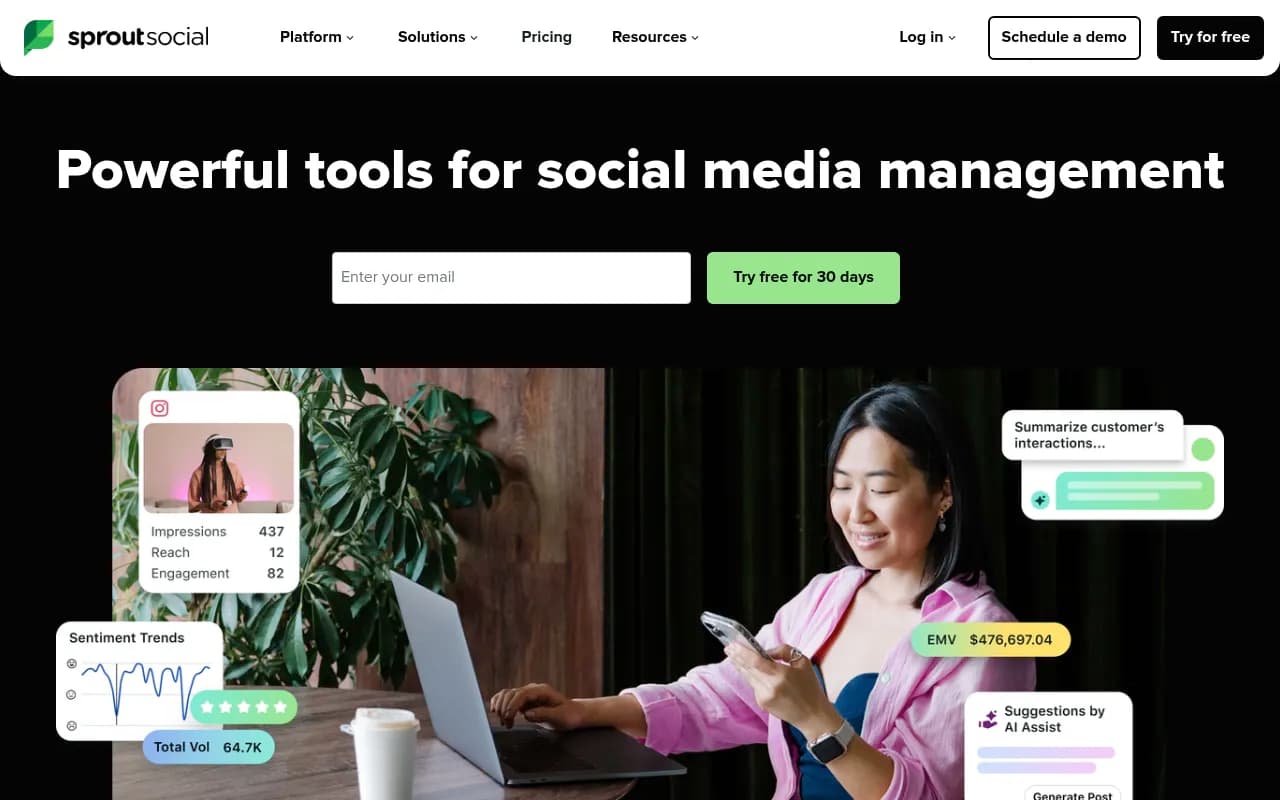
Sprout Social is worth considering if your team already wants its broader social analytics, but know that its cheapest Standard plan doesn't include approval workflows at all. You need the Professional tier to unlock that, and the Advanced tier if you want clients to approve without needing a login.
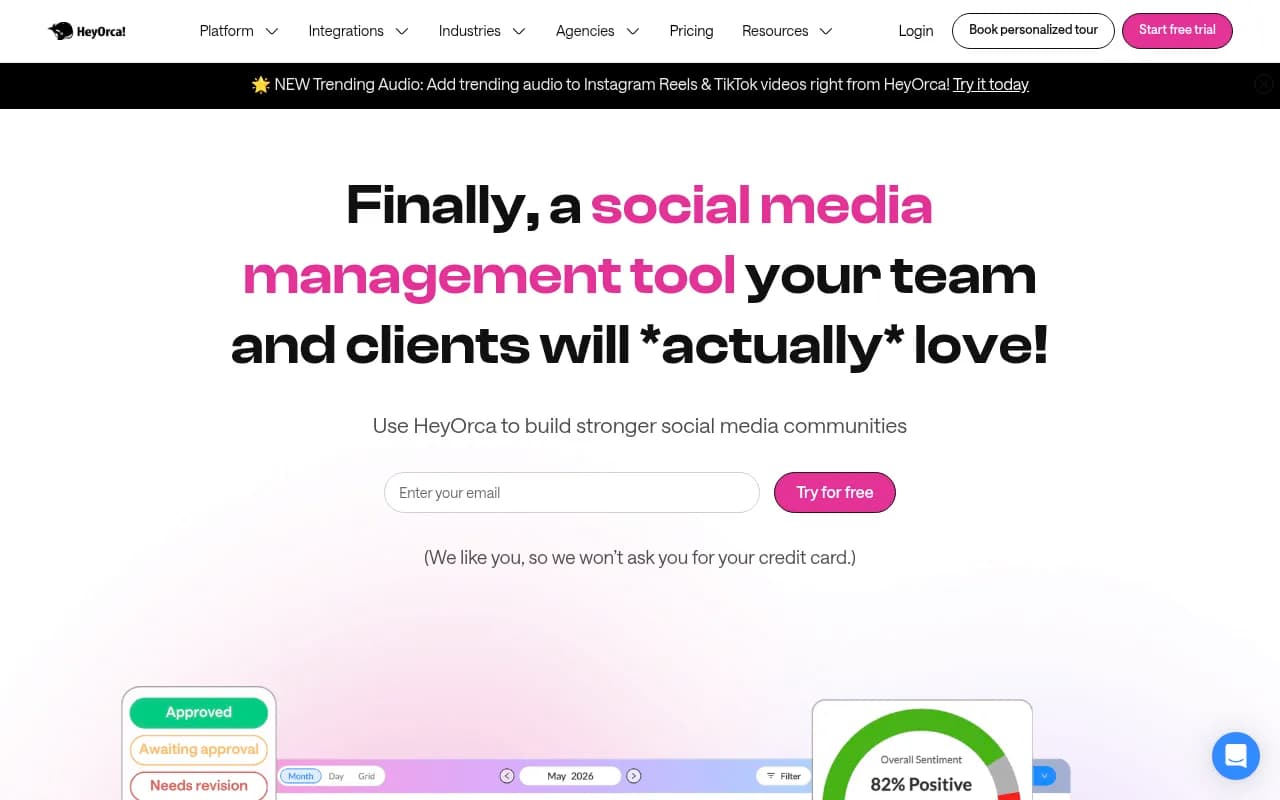
HeyOrca is built specifically around the agency-client approval relationship, which makes it worth a look if most of your approval friction comes from external stakeholders rather than internal reviewers.
If your team is small and your approval needs are genuinely light, Buffer's simplicity and low per-channel pricing can be enough, though you'll outgrow it the moment you need multi-level sign-off.
Where AI visibility fits into the picture, briefly
One thing worth knowing as you tighten your social process: AI search engines don't weight social platforms evenly when deciding what to cite. Promptwatch's data on social media citations by AI model, drawn from more than 26 billion analyzed citations, shows Reddit accounts for roughly 5.19% of ChatGPT's citations while LinkedIn sits at just 0.23%. X barely registers anywhere, never exceeding a 0.25% share on any model. If your governance process includes thinking about where social content ends up getting cited or repurposed by AI answers, Promptwatch tracks that kind of cross-platform visibility alongside standard brand monitoring.

For most teams, though, this is a side note, not the main event. The core fix for social approval chaos is still the boring stuff: named roles, written deadlines, a structure that matches your actual risk level, and a tool that locks content once it's signed off. Get those four things right and the rest tends to sort itself out. If you want to browse other social scheduling and governance platforms beyond the ones covered here, the directory at surferstack.com has a broader comparison worth checking before you commit to a vendor.