Key takeaways
- Finseo's own published pricing (Starter at €84/mo, Business at €210/mo) exists, but plenty of buyers still report a demo-gated sales process and an entry tier capped at 100 prompts on one project
- The biggest reasons teams switch: opaque or inconsistent pricing, an AI feature set that feels secondary to Finseo's SEO heritage, and gaps in locale coverage
- Promptwatch stands out from the pack because it pairs tracking with Content Agents that actually write and publish GEO content, not just dashboards
- Profound, Peec AI, and Scrunch AI lead the monitoring-only category, while Semrush and Ahrefs bolt AI tracking onto existing SEO suites
- Average pricing across 30+ tools in this category sits around $337/month, but solid options exist from $29/mo (Otterly Lite) up to custom enterprise deals
Why people go looking for a Finseo alternative
Finseo built a real AI visibility tracker on top of an SEO product, and it has the customer logos to prove it works for some teams, Kellogg's, Panasonic, Lidl, Würth. That's not nothing. But I've read through a stack of comparison posts and vendor pages while researching this, and the complaints cluster around the same three things every time.
First, pricing confusion. Finseo does publish tiers on its own site (Starter at roughly €84/mo, Business at €210/mo, Growth at €479/mo), yet a good chunk of the review ecosystem still describes it as demo-gated. That inconsistency alone is a red flag for a buyer trying to budget in five minutes, which is usually all the time anyone gives a SaaS pricing page.
Second, the entry plan is thin. 50 prompts and one project on Starter doesn't go far if you're tracking a brand plus two or three competitors across five AI engines.
Third, and this is the subtler one: Finseo grew out of an SEO tool, and its AI module can feel like a feature bolted onto that, rather than the product's whole reason for existing. If AI visibility is now half your job, you probably want a platform built around it from day one.
What actually matters when picking a replacement
Before the list, a quick note on what separates a tool that's worth your money from one that just looks good in a sales deck.
AI engines don't all behave the same way, and that changes how much a tracker's coverage actually matters. Promptwatch's own data on citation volume shows ChatGPT typically cites around 5 sources per search-triggered answer, while Google AI Overviews cites close to double that, and Perplexity sits at a remarkably steady 10 sources per answer almost every day (Promptwatch's average sources per response data). Microsoft Copilot, by contrast, is wildly inconsistent, swinging from under 2 to nearly 17 citations per response within weeks. A tool that only tracks ChatGPT is missing where a lot of the real citation inventory lives.
It's also worth knowing that citations aren't dominated by the giant domains you'd assume. Promptwatch's August 2026 domain-rank breakdown found that DR 46-75 sites captured nearly half of all ChatGPT citations, while the very top authority tier (DR 91-100) fell from around 7% to roughly 3% mid-month (ChatGPT citation share by domain rank, August 2026). That means the value of a visibility tool has less to do with the size of its citation database and more to do with whether it can actually flag mid-authority wins, which is where most of the real opportunity sits.
With that framing, here's what I'd check on any Finseo alternative:
- Self-serve pricing you can see before talking to a salesperson
- How many AI engines are tracked on the entry tier, not just "available"
- Whether Gemini, Claude, or Google AI Mode are bundled or billed as pricey add-ons (this can roughly double your real cost, as it does with Otterly)
- Whether the tool only measures, or also helps you act: content briefs, automated publishing, crawler logs
- API/MCP access if you want the data flowing into your own workflows
The 10 alternatives
1. Promptwatch
Promptwatch is the one I'd point most teams toward first, not because it's the cheapest, but because it's the only platform in this list that closes the loop from "here's where you're invisible" to "here's the published page that fixes it." It tracks ChatGPT, Gemini, Claude, Perplexity, Grok, DeepSeek, Mistral, Copilot, Meta Llama, Google AI Overviews, Google AI Mode, and AI coding assistants like Claude Code, and it's used by 1,840+ brands including Duolingo, Yelp, Typeform, and Shutterstock, rated 4.7/5 on G2.

What separates it from pure trackers like Otterly or Peec is the action layer. Agent Analytics shows exactly when AI crawlers hit your pages and whether they hit errors. Content Agents plan, write, and publish GEO-optimized articles directly to Webflow, Framer, or WordPress on a schedule you set. Unified Actions turns all that data into a prioritized to-do list instead of a wall of charts. It also tracks Reddit and YouTube citations, ChatGPT Shopping results, and sponsored placements in AI search, areas most competitors skip entirely.
Pricing runs from a free Explore tier (10 prompts, ChatGPT only) up to Essential at $95/mo, Professional at $245/mo (the most popular tier, with automated content generation and shopping insights), and Business at $579/mo. Agency plans start at $199/mo. If you want a tool that does the analysis and the fixing, this is the one to trial first.
2. Profound
Profound is probably the closest thing to Finseo's direct competitor in terms of market position, enterprise customers, and a sales-led upper tier. Starter runs $99/month (ChatGPT only, 50 prompts, 1 user), Growth is $399/month for 3 engines and 100 prompts on a single brand, and Enterprise is custom. It scores 4.5/5 on G2.
Profound

The trade-off is scope for price. Rankability's own comparison points out that its $199/mo Core plan covers all 9 platforms with no client cap, versus Profound's $399/mo buying three engines for one brand. Take vendor-vs-vendor claims with a grain of salt, but it's a fair question to ask on a demo call.
3. Peec AI
Peec is the one reviewers consistently praise for a clean UI and transparent pricing. Starter is $95/month for 50 prompts across up to 3 models and 1 project; Pro is $245/month for 150 prompts and 2 projects; Advanced hits $495/month with multi-country tracking and GSC/GA integrations.

It plugs into Looker Studio, has a REST API, and an MCP connector so you can feed visibility data straight into Claude or another agent. The catch: base plans cap which models you track without paying for add-ons, so check the fine print before committing to an annual plan.
4. Otterly.AI
Otterly is the budget entry point, with a Lite plan at $29/mo covering 15 prompts across ChatGPT, Google AI Overviews, Perplexity, and Copilot. Standard jumps to $189/mo with 100 prompts and GEO URL audits.
Otterly.AI

The thing to watch here: Gemini, Claude, and Google AI Mode are all paid add-ons, not included. Add all three to Standard and you're at $416/mo, not $189. It's a reasonable starting point if you genuinely only need the four core engines, less so if you want full coverage without surprise line items.
5. Scrunch AI
Scrunch takes a different approach entirely. Instead of just tracking what AI says about you, it serves AI-optimized versions of your pages to crawlers in real time through what it calls an Agent Experience Platform. It's also one of the few tools in the category with a hallucination-alert feature.
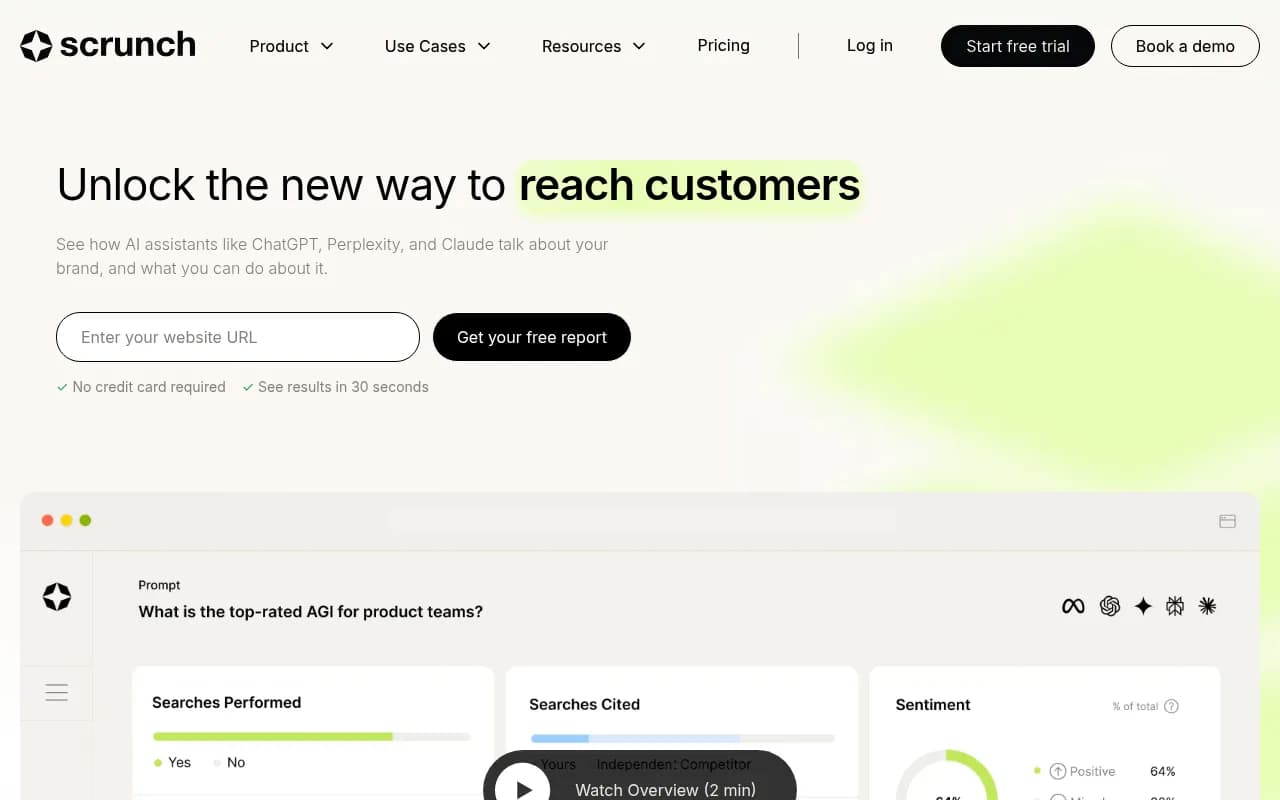
Brand Core starts at $250/mo for 125 prompts and 4 platforms; Enterprise adds up to 9 platforms and AXP access. It's priced like an enterprise tool, and several reviewers note it's hard to justify for freelancers or early-stage teams, but if you want a platform actively shaping what AI agents see, not just measuring it, this is worth a look.
6. Semrush AI Visibility Toolkit
If you already live inside Semrush, the AI add-on starts at $99/month per domain for 25 tracked prompts and 300-1,000 daily queries depending on the report type. The bundled "Semrush One" plans fold AI visibility into the broader SEO suite starting around $165/mo annual.
The honest criticism here, quoted from one agency CMO reviewing the toolkit: "I can't say this tool is worth $99/month... not for a startup and not for a big brand either." Costs escalate fast once you add domains, users, or extra prompts. Good if you want AI tracking bundled with keyword research you're already paying for; not a great standalone buy.
7. Ahrefs Brand Radar
Ahrefs took a database-first approach: its AI Visibility Index at $699/mo for all platforms taps into 405-448 million pre-collected search-backed prompts, no setup required. A cheaper custom-prompt path starts at $50/mo for 2,500 checks.
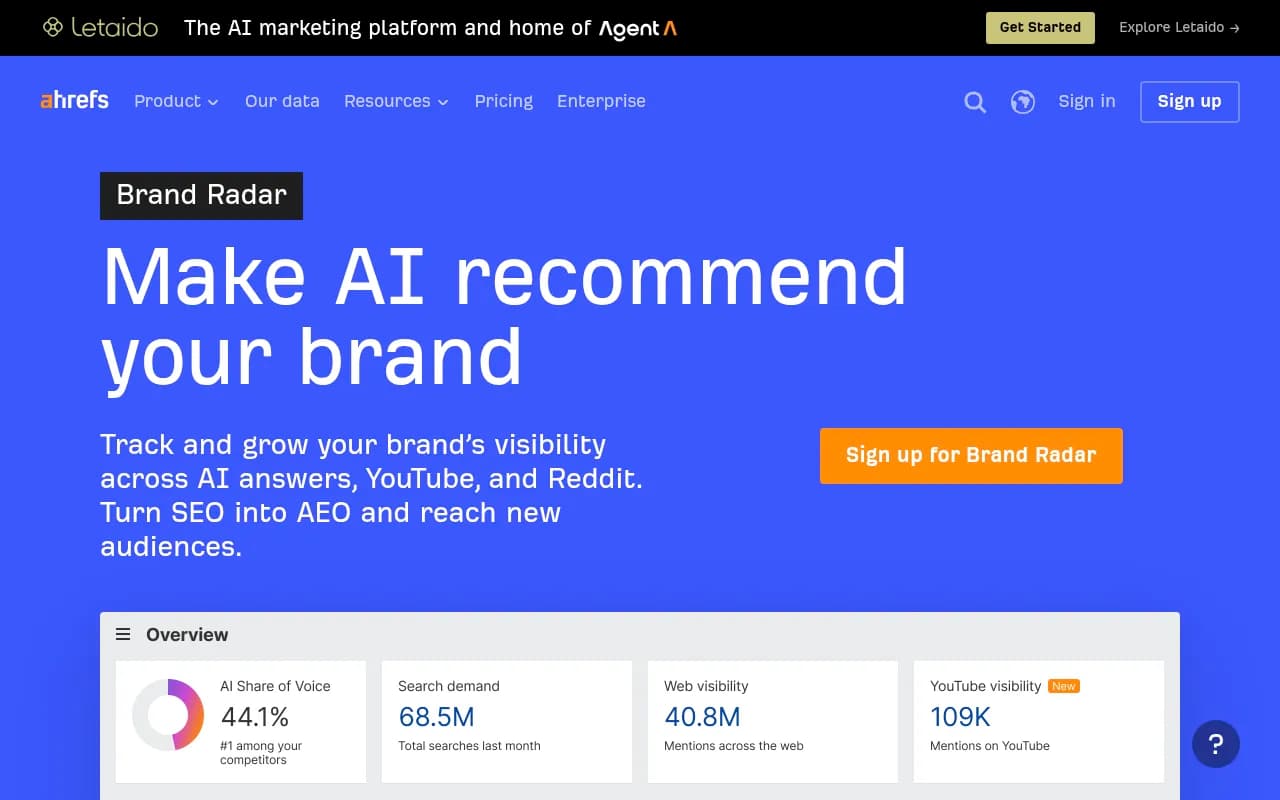
It also tracks YouTube, TikTok, and Reddit visibility alongside AI citations, which is broader than most competitors offer. The downside, flagged even by rival Profound's own review, is that coverage skews toward Google AI Overviews since many prompts originate in Google's ecosystem, and sentiment analysis isn't available.
8. SE Ranking (SE Visible)
SE Ranking folds AI visibility into its existing SEO platform rather than selling it standalone. The AI Search add-on starts at $89/mo (annual) for 200 checks on top of a core plan, or you can buy the standalone SE Visible product from $99/mo for 200 prompts.
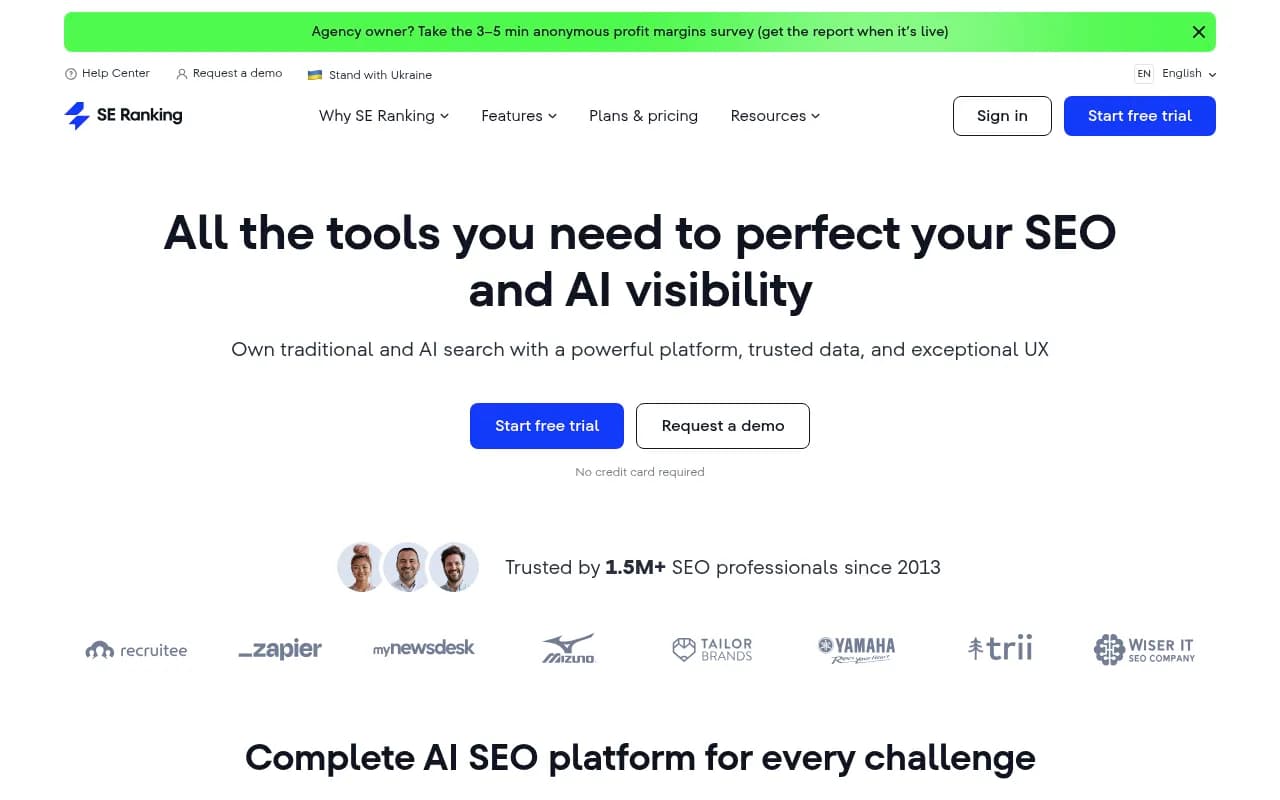
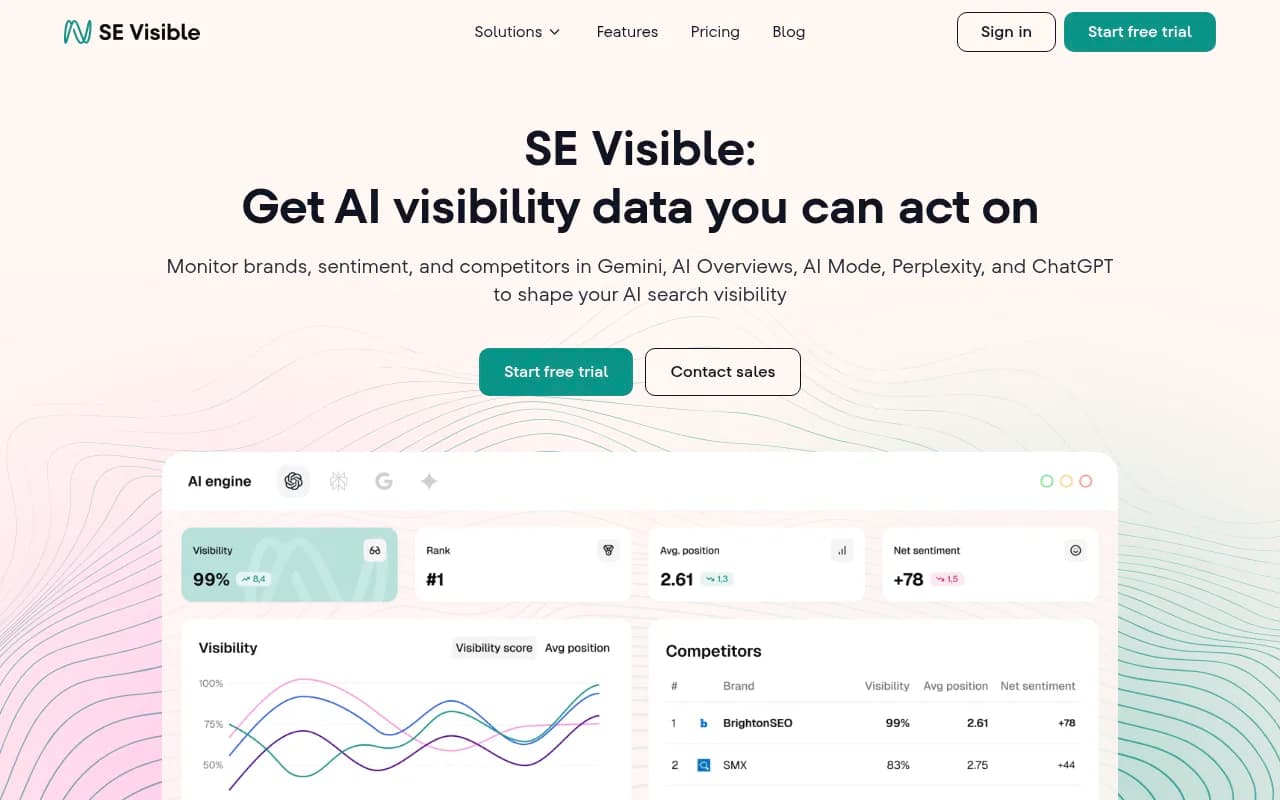
Its real edge is seat pricing: additional users cost just $16/mo, which is dramatically cheaper than most competitors on this list. Best fit for teams that already run keyword tracking and site audits in SE Ranking and want AI visibility bundled in rather than bought as a separate subscription.
9. AirOps
AirOps leans hardest into content production. Its free Insights tier covers 1,000-10,000 tasks with 30+ AI models and 10+ CMS integrations. Paid tiers (Solo, Pro) aren't published outright, but third-party estimates put Solo around $200/mo and Pro near $2,000/mo.
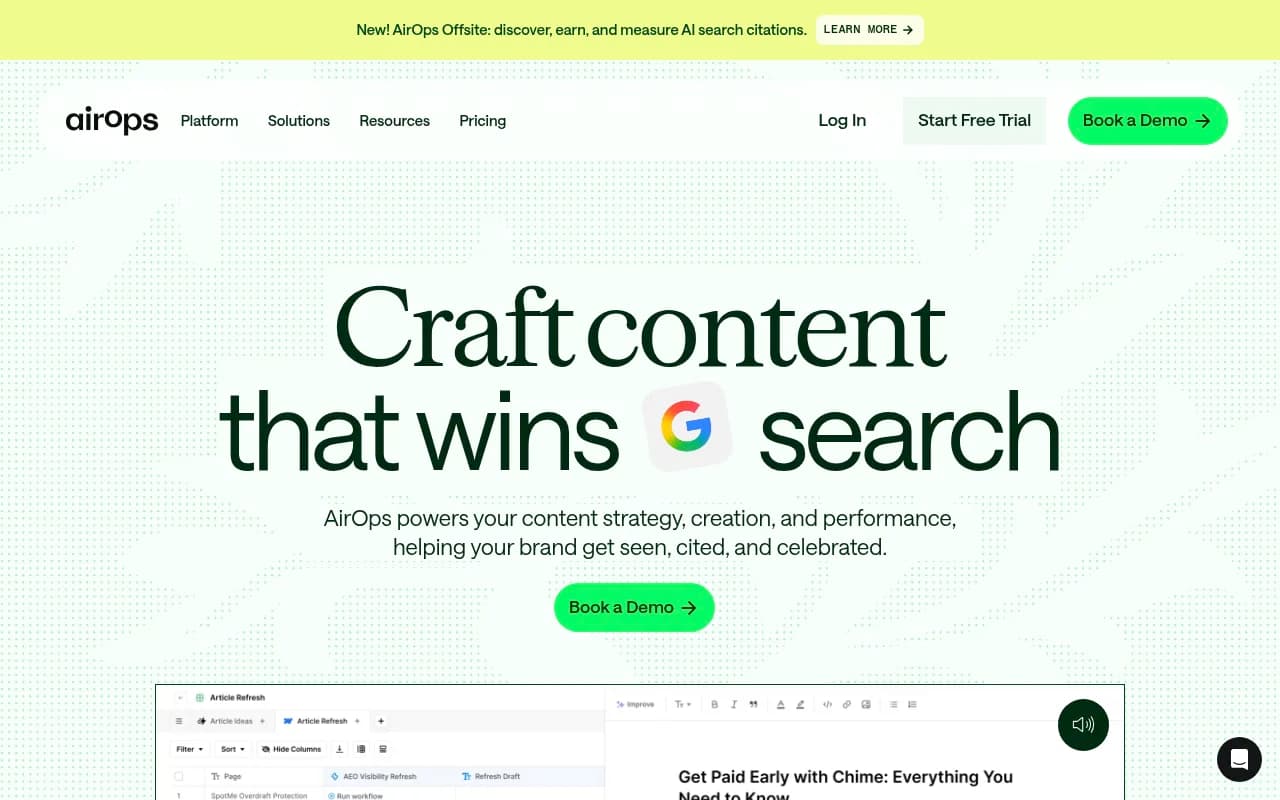
It's rated 4.7/5 on G2 across 134 reviews, and one case study has Brainlabs growing its mention rate 42% in three months. The differentiator is "Workflows" and "Grids," spreadsheet-style bulk content operations that connect visibility data directly to scaled content production. Good fit if your team wants to act on findings at volume, not just watch a dashboard.
10. Rankability
Rankability positions itself as an SEO-plus-AI hybrid built for agencies. Starter is $99/mo for 60 daily prompts; Core is $199/mo for 125 daily prompts across ChatGPT, Google AI Mode, Claude, AI Overviews, and Perplexity; Team is $399/mo adding Gemini, Grok, and Copilot.
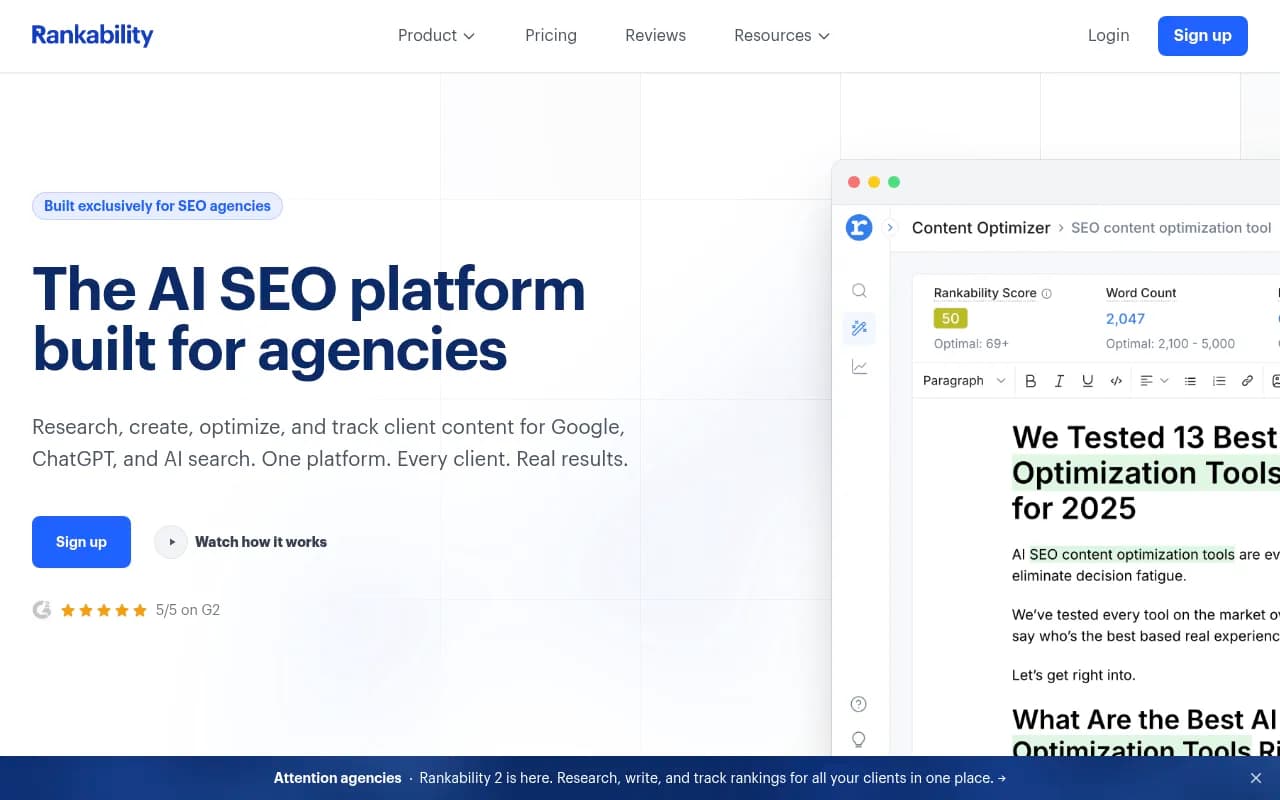
All plans include unlimited seats, API access, and hosted MCP, which is generous compared to competitors that charge per seat. If you're an agency juggling multiple client brands and want content workflows bundled with visibility tracking at a lower price point than Profound or Scrunch, it's a reasonable fit.
Comparison table
| Tool | Entry price | Entry tier limits | Standout feature | Weak spot |
|---|---|---|---|---|
| Promptwatch | Free / $95/mo | 10-50 prompts | Content Agents publish directly to your CMS | Higher tiers needed for full engine coverage |
| Profound | $99/mo | 50 prompts, ChatGPT only | Strong enterprise reputation | Growth tier limited to 3 engines for $399 |
| Peec AI | $95/mo | 50 prompts, 3 models | Clean UI, Looker/MCP integration | Model add-ons needed for full coverage |
| Otterly.AI | $29/mo | 15 prompts, 4 engines | Lowest entry price | Gemini/Claude/AI Mode are costly add-ons |
| Scrunch AI | $250/mo | 125 prompts, 4 platforms | Hallucination alerts, AXP delivery layer | Enterprise pricing, hard for small teams |
| Semrush AI Toolkit | $99/mo | 25 prompts, 1 domain | Bundled with existing SEO suite | Add-on costs escalate fast |
| Ahrefs Brand Radar | $50-699/mo | Varies by plan | 448M+ prompt database, YouTube/Reddit tracking | Skews toward AI Overviews, no sentiment |
| SE Ranking / SE Visible | $89-99/mo | 200 checks | Cheapest additional seats ($16/mo) | AI module feels secondary to core SEO tool |
| AirOps | Free / ~$200/mo | 1,000+ tasks | Bulk content ops tied to visibility data | Paid pricing largely unpublished |
| Rankability | $99/mo | 60 daily prompts | Unlimited seats on every plan | Fewer engines at entry tier |
How to actually switch
If you're moving off Finseo, don't just sign up for a new tool and start fresh. Export whatever prompt history and citation data you can from Finseo first, since most of these platforms let you re-import a prompt list rather than rebuilding it from scratch. Run a 2-4 week overlap period where both tools track the same prompts, so you can sanity-check the new platform's citation detection against what you already know to be true about your brand's visibility.
Then decide what you're actually optimizing for. If the goal is simply knowing where you stand, a tracker like Peec AI or Otterly gets you there cheaply. If the goal is fixing the gaps the data reveals, without hiring a content team to do it manually, that's where a platform with content generation built in, Promptwatch or AirOps, earns its higher price tag.
For teams that want a broader view of what's out there before committing, the GEO software directory at bestgeosoftware.com is worth a browse, and surferstack.com covers the wider marketing and SEO tool stack if AI visibility is just one piece of what you're evaluating.
One more thing worth knowing before you switch anything: if your content strategy itself needs rebuilding, not just the tracking layer underneath it, that's a different conversation. Agencies like 1001 SEO Media work specifically on AI search and GEO strategy alongside the technical SEO work, which is a different problem than picking the right dashboard.