Key Takeaways
- Five distinct categories have emerged in the AI visibility space: monitoring-only platforms that track brand mentions, optimization platforms that help you fix visibility gaps, content generation tools that create AI-optimized content, enterprise solutions for large organizations, and hybrid platforms that combine multiple capabilities
- Monitoring alone isn't enough — 68% of brands using monitoring-only tools report frustration with "seeing the problem but not being able to fix it," according to 2026 industry research
- Optimization platforms deliver 3-5x faster results by closing the loop between visibility tracking and content creation, with platforms like Promptwatch leading this category
- Enterprise needs differ fundamentally from SMB requirements — Fortune 500 brands need multi-region tracking, compliance controls, and API access that basic monitoring tools can't provide
- Hybrid platforms are the future — the market is consolidating toward platforms that combine tracking, optimization, and content generation in a single workflow

What Is AI Visibility and Why Platform Categories Matter
AI visibility refers to how brands, products, and organizations appear in answers generated by large language models like ChatGPT, Claude, Gemini, Perplexity, and Google AI Overviews. Unlike traditional SEO where you optimize for search rankings, AI visibility focuses on whether AI models cite your brand, how they describe you, and how you compare to competitors in generated responses.
The AI visibility platform market has matured rapidly. In 2024, most tools were basic monitoring dashboards. By 2026, the landscape has fragmented into five distinct categories, each serving different use cases and organizational needs. Understanding these categories is critical because choosing the wrong type of platform can waste months of effort and budget.
Category 1: Monitoring-Only Platforms
What They Do
Monitoring-only platforms track where and how often your brand appears in AI-generated responses. They run prompts across multiple AI models (typically ChatGPT, Perplexity, Claude, Gemini, and Google AI Overviews), capture the responses, and show you visibility scores, citation counts, and competitor comparisons.
Core capabilities:
- Daily or weekly prompt runs across 5-10 AI models
- Brand mention tracking and visibility scoring
- Competitor comparison dashboards
- Historical trend charts
- Basic citation analysis (which sources AI models reference)
Representative Tools
Otterly.AI is the most established monitoring-only platform, tracking brand mentions across ChatGPT, Perplexity, and Google AI Overviews. It provides clean dashboards and reliable tracking but offers no content optimization or generation features.
Otterly.AI

Peec.ai takes a similar approach with slightly more AI models covered but the same fundamental limitation: you see the data, but you're on your own to fix visibility gaps.

AthenaHQ focuses on narrative tone monitoring—tracking not just whether you're mentioned but how you're described. This adds qualitative analysis but still leaves content creation to the user.

When Monitoring-Only Makes Sense
Monitoring-only platforms work for:
- Established brands with strong existing visibility who need to track changes over time
- PR and communications teams monitoring brand reputation in AI responses
- Agencies running reports for clients who handle content internally
- Research and benchmarking projects where you need data but not optimization
The Critical Limitation
The fundamental problem with monitoring-only platforms is the action gap. You see that competitors are visible for 47 prompts where you're not mentioned, but the platform doesn't tell you what content you're missing or help you create it. According to 2026 research from LogicMonitor, 68% of IT and marketing leaders report frustration with observability tools that "show problems without solutions."
Category 2: Optimization Platforms
What They Do
Optimization platforms go beyond tracking to help you actually improve AI visibility. They identify content gaps, analyze what's missing from your website, and provide actionable recommendations for closing visibility gaps.
Core capabilities:
- Everything monitoring-only platforms do, plus:
- Answer Gap Analysis: Shows which prompts competitors rank for but you don't, with specific content recommendations
- Page-level tracking: Identifies which pages on your site are being cited (or should be)
- AI crawler logs: Real-time visibility into which AI models are crawling your site and what they're reading
- Prompt intelligence: Volume estimates and difficulty scores for prioritizing which prompts to target
- Citation and source analysis: Deep dive into which domains and pages AI models cite most frequently
The Leader: Promptwatch
Promptwatch is the market-leading optimization platform, used by 6,700+ brands including Booking.com, Center Parcs, and Wortell. What sets it apart is the action loop: find gaps, generate content, track results.
The Promptwatch difference:
-
Find the gaps: Answer Gap Analysis shows exactly which prompts competitors are visible for but you're not. You see the specific content your website is missing—the topics, angles, and questions AI models want answers to but can't find on your site.
-
Create content that ranks in AI: The built-in AI writing agent generates articles, listicles, and comparisons grounded in real citation data (880M+ citations analyzed), prompt volumes, persona targeting, and competitor analysis. This isn't generic SEO filler—it's content engineered to get cited by ChatGPT, Claude, and Perplexity.
-
Track the results: See your visibility scores improve as AI models start citing your new content. Page-level tracking shows exactly which pages are being cited, how often, and by which models. Close the loop with traffic attribution to connect visibility to actual revenue.
Additional capabilities that support the action loop:
- AI Crawler Logs: Real-time logs of AI crawlers (ChatGPT, Claude, Perplexity) hitting your website—which pages they read, errors they encounter, how often they return
- Reddit & YouTube Insights: Surface discussions that directly influence AI recommendations
- ChatGPT Shopping Tracking: Monitor when your brand appears in ChatGPT's product recommendations
- Multi-language & Multi-region: Monitor AI responses in any language, from any country
Other Optimization Platforms
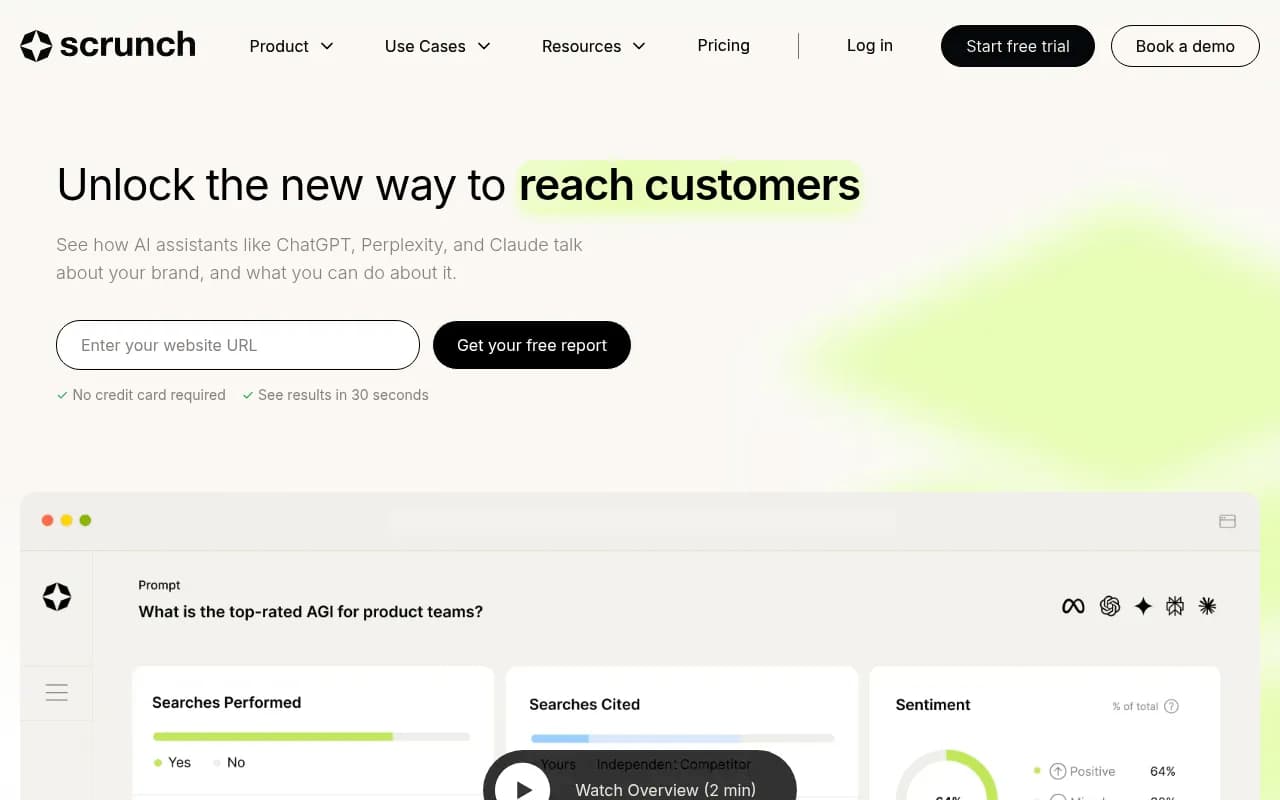
Scrunch AI offers influencer signal analysis and basic content gap identification but lacks the content generation capabilities that make Promptwatch a complete solution.
Profound provides enterprise-level tracking across 9+ AI search engines with some optimization features, but at a significantly higher price point and without the integrated content workflow.
Profound

When Optimization Platforms Make Sense
Optimization platforms are ideal for:
- Marketing teams responsible for improving AI visibility with limited resources
- SEO teams expanding into AI search optimization
- Digital agencies managing AI visibility for multiple clients
- Brands that need to move fast and see measurable results in 30-60 days
Category 3: Content Generation Platforms
What They Do
Content generation platforms focus on creating AI-optimized content at scale. They may include basic visibility tracking, but their primary value is producing articles, comparisons, and listicles designed to rank in AI search results.
Core capabilities:
- AI-powered content writing with SEO and AI search optimization
- Competitor content analysis
- Keyword and topic research
- Content briefs and outlines
- Publishing and distribution workflows
Representative Tools
Writesonic is a content generator with AI search optimization features. It can produce blog posts and articles optimized for AI visibility, but it lacks the tracking infrastructure to measure whether the content actually improves your visibility.

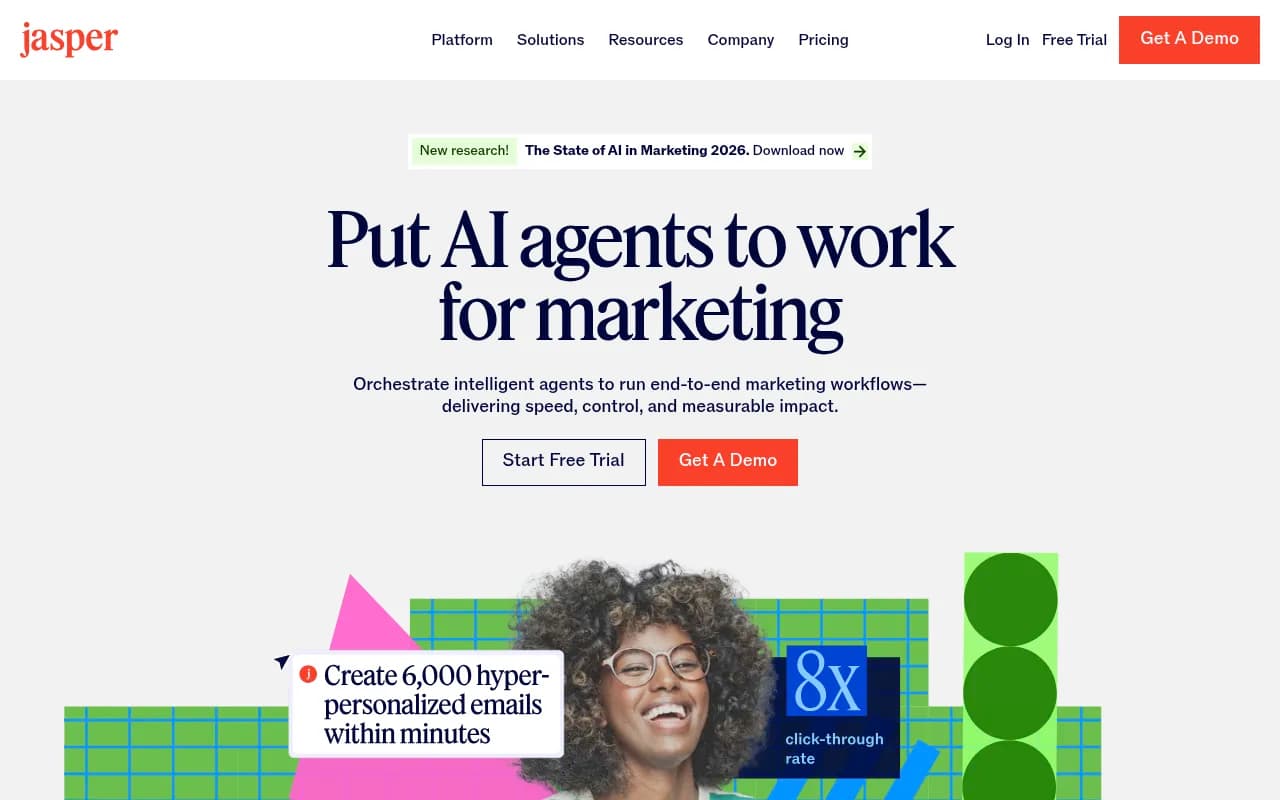
Jasper is an AI-powered marketing platform with content generation agents and pipelines. It's strong on content creation but doesn't track AI visibility or provide gap analysis.
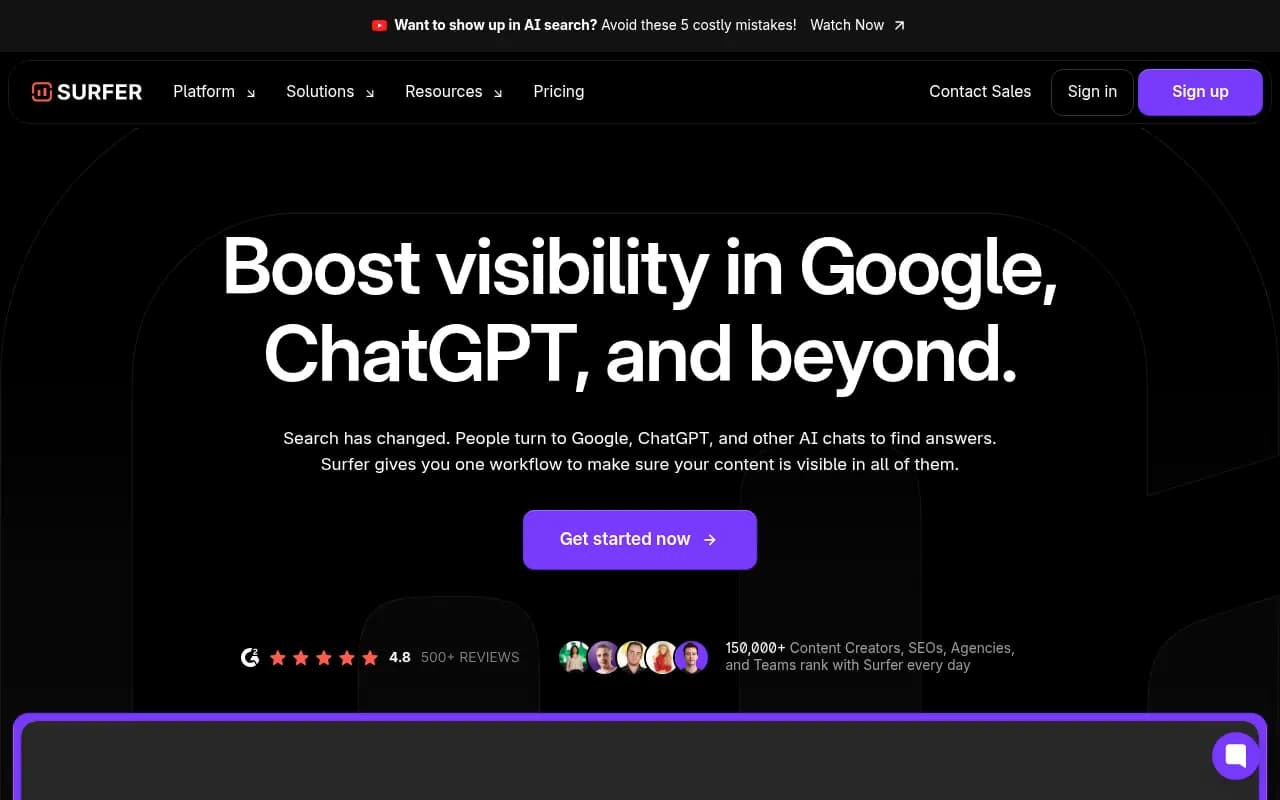
Surfer SEO optimizes content for traditional search and has added AI visibility features, but it's primarily a content optimization tool rather than a visibility tracking platform.
The Critical Gap
Content generation platforms face the opposite problem of monitoring-only tools: they help you create content but don't tell you if it's working. You can generate 50 articles, but without visibility tracking and citation analysis, you're guessing whether AI models are actually citing your new content.
When Content Generation Platforms Make Sense
Content generation platforms work for:
- Content teams with existing visibility tracking who need to scale production
- Bloggers and publishers focused on volume over precision targeting
- Brands with strong domain authority who just need more content
Category 4: Enterprise Platforms
What They Do
Enterprise platforms are built for Fortune 500 brands and large organizations with complex requirements: multi-region tracking, compliance controls, API access, custom integrations, and dedicated support.
Core capabilities:
- Everything optimization platforms do, plus:
- Multi-region and multi-language tracking at scale (50+ countries, 30+ languages)
- Role-based access controls and compliance features
- API access for custom integrations
- Dedicated account management and onboarding
- Custom reporting and Looker Studio integration
- White-label options for agencies
Representative Tools
Bluefish AI positions itself as an enterprise GEO powerhouse with advanced features for large organizations. It offers comprehensive tracking and optimization but at enterprise pricing.
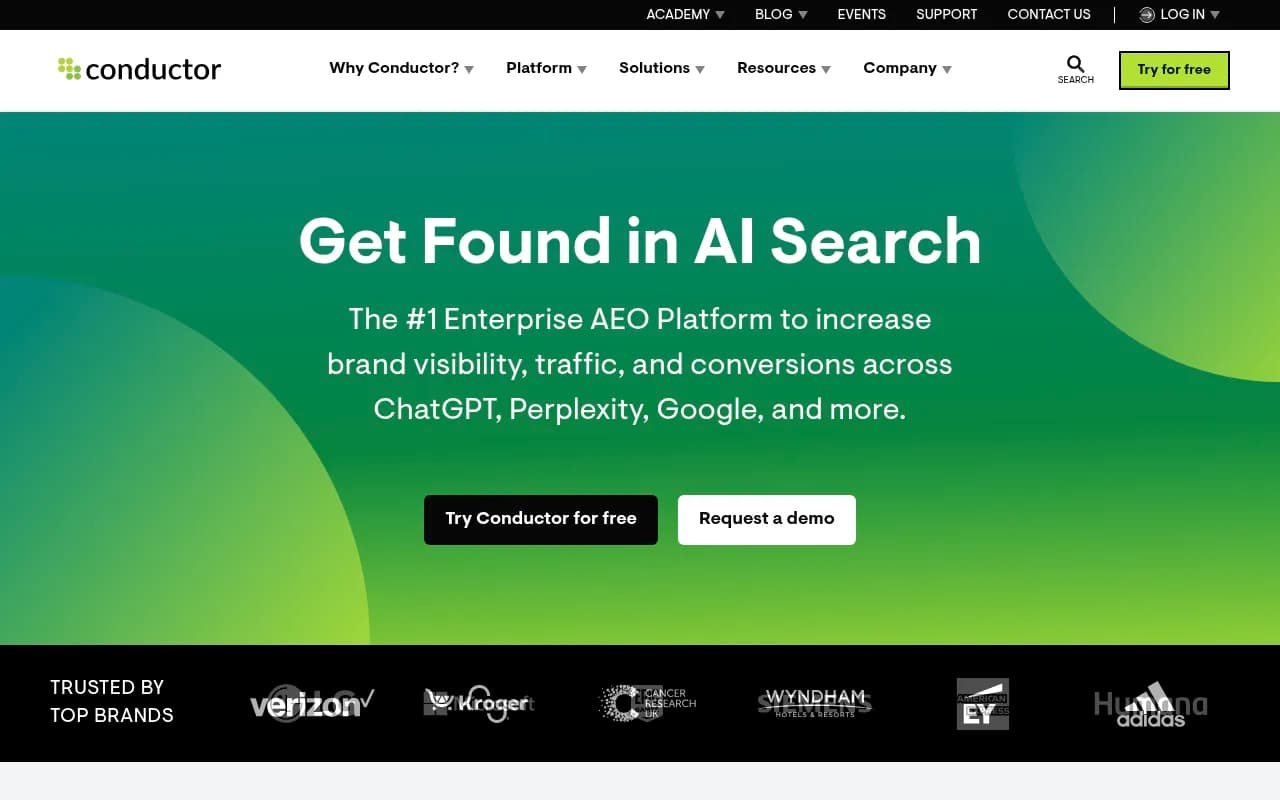
Conductor bridges traditional SEO and AI search with enterprise-grade tracking and content optimization. It's designed for brands with existing SEO infrastructure who want to expand into AI visibility.
Semrush has added AI visibility tracking to its traditional SEO platform, offering a familiar interface for enterprise teams already using Semrush for SEO. However, it uses fixed prompts and lacks the depth of AI-native platforms.
When Enterprise Platforms Make Sense
Enterprise platforms are necessary for:
- Fortune 500 brands with global operations
- Multi-location businesses tracking visibility across regions
- Agencies managing 50+ client accounts
- Organizations with strict compliance and security requirements
The Cost-Value Equation
Enterprise platforms typically start at $2,000-5,000/month. For large organizations, this is justified by the scale, compliance features, and dedicated support. For smaller brands, platforms like Promptwatch offer 80% of the functionality at $99-579/month.
Category 5: Hybrid Platforms (The Future)
What They Do
Hybrid platforms combine monitoring, optimization, and content generation in a single integrated workflow. They represent the evolution of the AI visibility market—recognizing that brands need end-to-end solutions, not point tools.
Core capabilities:
- Comprehensive tracking across 10+ AI models
- Answer Gap Analysis and content recommendations
- Built-in AI content generation grounded in citation data
- Page-level tracking and attribution
- AI crawler logs and technical optimization
- Workflow automation from gap identification to content publishing
The Hybrid Leader: Promptwatch
Promptwatch is the most complete hybrid platform in 2026. It's the only platform rated as a "Leader" across all categories in a 2026 comparison of 12 GEO platforms (Search Party, Otterly.AI, Peec.ai, Profound, AthenaHQ, Scrunch, Brandlight.ai, Bluefish, Searchable, Semrush, Ahrefs Brand Radar).
The core difference: most competitors are monitoring-only dashboards that show you data but leave you stuck. Promptwatch is built around taking action—it shows you what's missing, then helps you fix it.
Why hybrid platforms are winning:
- Faster results: Brands using hybrid platforms see visibility improvements in 30-45 days vs. 90-120 days with separate monitoring and content tools
- Lower total cost: One platform at $249-579/month vs. $500-1,500/month for separate monitoring, optimization, and content tools
- Better data: Content generation informed by real citation data and prompt intelligence produces higher-quality, more targeted content
- Closed-loop optimization: Track what works, create more of it, measure the impact—all in one platform
Other Hybrid Platforms
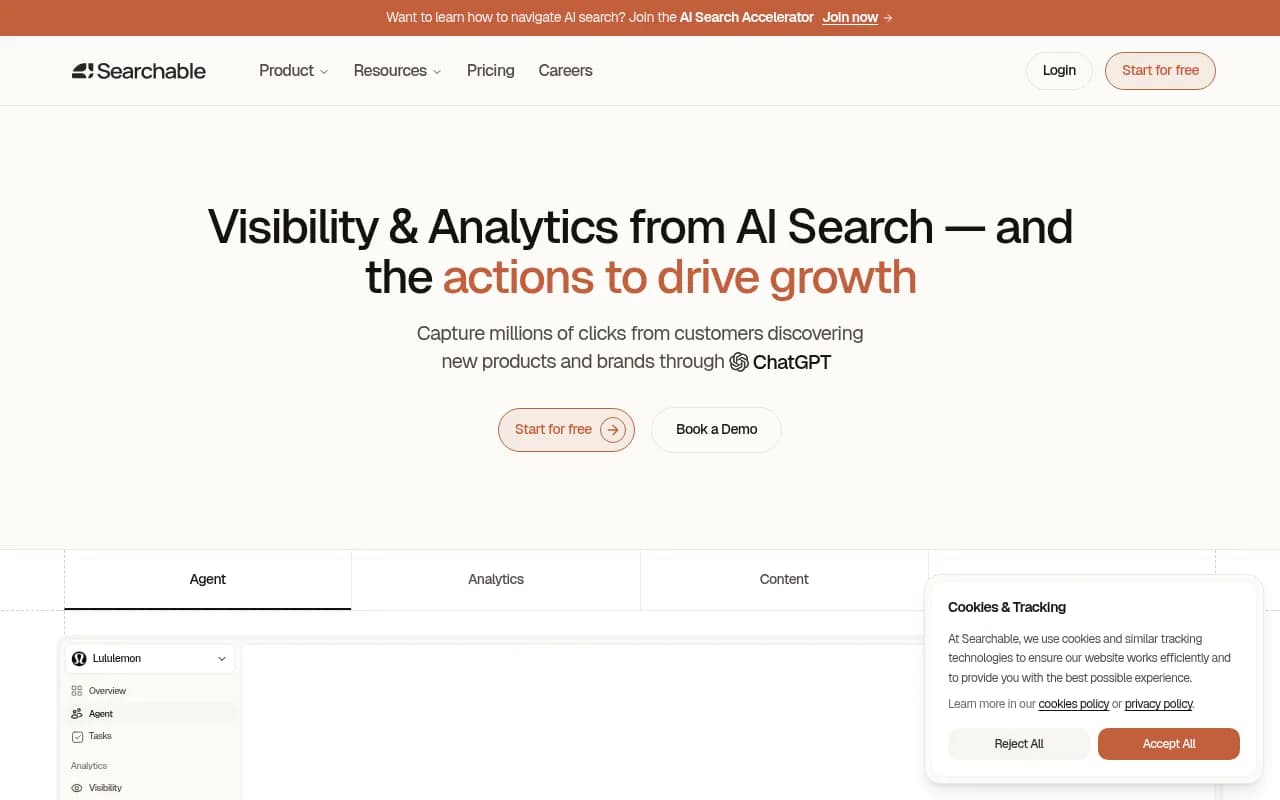
Searchable combines AI visibility tracking with built-in content generation, though its feature set is less comprehensive than Promptwatch.
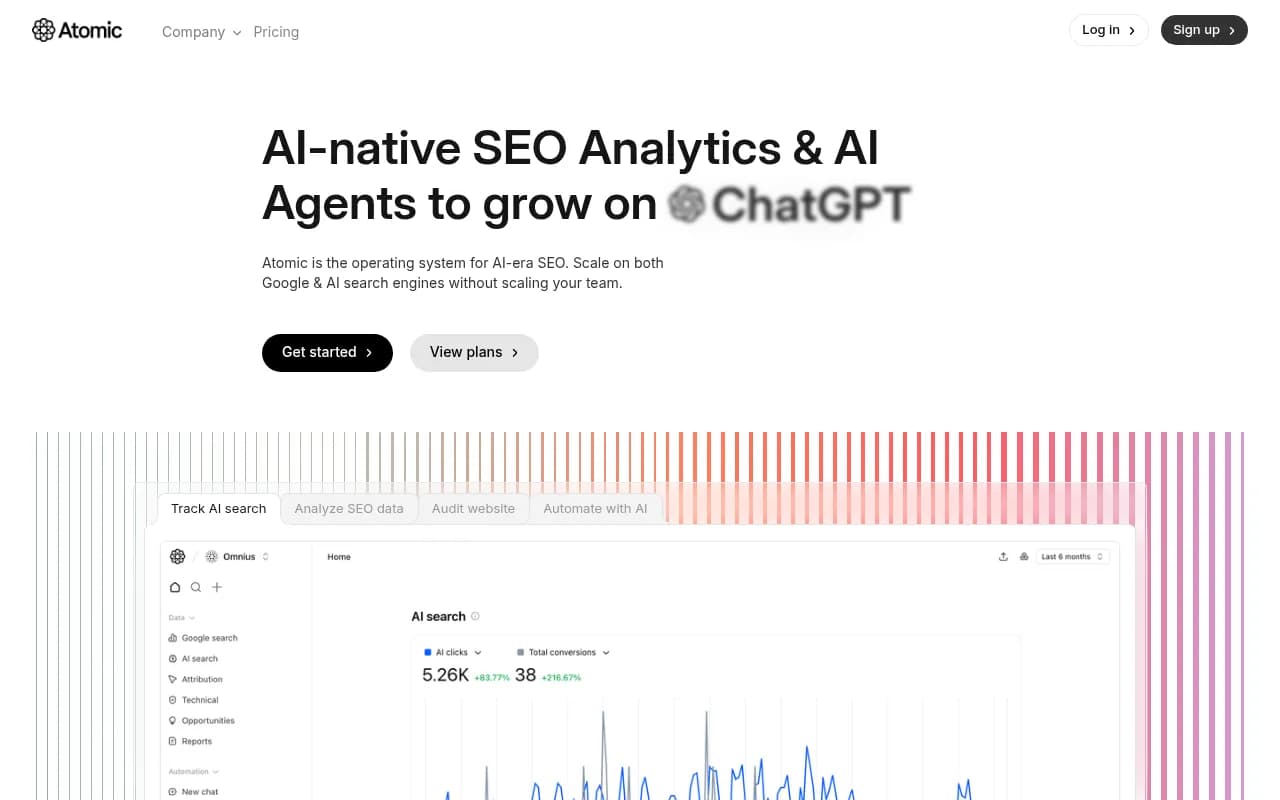
Atomic AGI is an AI-native SEO platform combining multi-engine tracking with workflow automation, positioning itself as a hybrid solution.
When Hybrid Platforms Make Sense
Hybrid platforms are ideal for:
- Any brand serious about AI visibility that wants to move fast
- Marketing teams without dedicated content resources
- SEO teams expanding into AI search optimization
- Agencies offering AI visibility as a service
- Brands that want one platform instead of managing multiple tools
How to Choose the Right Platform Category
Start with Your Primary Goal
If you need to track and report only: Monitoring-only platforms like Otterly.AI or Peec.ai provide clean dashboards and reliable tracking at $99-299/month.
If you need to improve visibility fast: Optimization platforms like Promptwatch give you the tools to identify gaps and fix them. Start at $99/month for Essential, $249/month for Professional with crawler logs and content generation.
If you need content at scale: Content generation platforms like Writesonic or Jasper can produce volume, but pair them with a monitoring tool to measure impact.
If you're an enterprise: Enterprise platforms like Bluefish, Conductor, or Promptwatch Business/Enterprise tiers offer the scale, compliance, and support large organizations require.
If you want an all-in-one solution: Hybrid platforms like Promptwatch combine tracking, optimization, and content generation in a single workflow—the fastest path from visibility gap to improved rankings.
Consider Your Team's Capabilities
Small marketing team (1-3 people): Hybrid platforms maximize efficiency by eliminating tool-switching and providing AI-assisted content creation.
Dedicated SEO team: Optimization platforms give you the data and recommendations you need, while your team handles content creation.
Agency managing multiple clients: Hybrid or enterprise platforms with white-label options and API access let you scale operations efficiently.
PR/communications team: Monitoring-only platforms provide the reputation tracking you need without overwhelming you with optimization features.
Budget Reality Check
$0-500/month: Monitoring-only platforms or entry-level hybrid platforms like Promptwatch Essential ($99/mo) or Professional ($249/mo).
$500-2,000/month: Full-featured hybrid platforms like Promptwatch Business ($579/mo) or mid-tier enterprise platforms.
$2,000+/month: Enterprise platforms with dedicated support, custom integrations, and unlimited scale.
The Market Is Consolidating Toward Hybrid
The AI visibility platform market is following the same consolidation pattern we saw in traditional SEO tools. In 2010, you needed separate tools for rank tracking, keyword research, backlink analysis, and site audits. By 2020, platforms like Ahrefs and Semrush had consolidated these into all-in-one solutions.
The same is happening in AI visibility. Monitoring-only platforms are adding optimization features. Content generation tools are adding tracking. The market is moving toward hybrid platforms that do it all.
Key trends for 2026-2027:
- Monitoring-only platforms will struggle as buyers demand actionable insights, not just data
- Content generation without tracking will lose relevance as brands realize they need to measure impact
- Hybrid platforms will dominate by offering the fastest path from problem to solution
- Enterprise platforms will consolidate as smaller players get acquired or shut down
- AI-native platforms will win over traditional SEO tools adding AI features as an afterthought
Real-World Use Cases by Category
Monitoring-Only: Brand Reputation Tracking
A Fortune 500 pharmaceutical company uses Otterly.AI to monitor how AI models describe their drugs and compare them to competitors. They have a dedicated content team handling optimization, so they only need visibility tracking and reporting.
Optimization: Fast Visibility Improvement
A SaaS company with 15 employees uses Promptwatch to identify 73 prompts where competitors are visible but they're not. The Answer Gap Analysis shows exactly what content is missing. They use the built-in AI writer to create 12 targeted articles in two weeks. Within 45 days, their visibility score increases 34% and they start seeing AI-referred traffic in Google Analytics.
Content Generation: Scaling Production
A digital marketing agency uses Writesonic to produce 200+ blog posts per month for clients, optimized for both traditional SEO and AI visibility. They pair it with Promptwatch for tracking to measure which content actually improves AI rankings.
Enterprise: Multi-Region Tracking
A global hotel chain uses Conductor to track AI visibility across 30 countries and 12 languages. They need role-based access for regional marketing teams, API integration with their CMS, and compliance controls for brand guidelines. Enterprise pricing is justified by the scale and complexity.
Hybrid: End-to-End Workflow
A B2B software company with a 5-person marketing team uses Promptwatch for everything: tracking visibility across ChatGPT, Claude, Perplexity, and Google AI Overviews; identifying content gaps; generating optimized articles; and measuring impact. One platform, one workflow, measurable results in 30-60 days.
The Bottom Line: Choose Based on Your Workflow
The right AI visibility platform category depends on your workflow, not just your budget:
- If you only need to see the data, monitoring-only platforms are sufficient
- If you need to act on the data, optimization platforms give you the tools to fix visibility gaps
- If you need content at scale, generation platforms can produce volume (but pair them with tracking)
- If you're an enterprise, you need the scale, compliance, and support that enterprise platforms provide
- If you want to move fast with limited resources, hybrid platforms like Promptwatch offer the complete solution
The AI visibility market has matured from "track your mentions" to "improve your visibility." Platforms that help you take action—not just observe—are winning in 2026. Choose accordingly.