Key Takeaways
- AI search is now mainstream: 88% of marketers use AI daily, and LLM traffic is projected to overtake traditional search by end of 2026 — agencies that can't sell AI visibility services will lose clients to those who can
- Positioning beats features: Successful agencies frame AI search optimization as revenue protection ("don't lose customers to competitors in ChatGPT") rather than technical SEO upgrades
- Pricing models that work: Hybrid retainer + performance pricing (base fee + bonuses for visibility gains) consistently outperforms flat-fee or pure outcome-based models for AI search services
- Proof closes deals: Agencies winning AI search contracts lead with competitor visibility audits showing exactly where clients are invisible in ChatGPT, Perplexity, and Claude — then demonstrate quick wins within 30 days
- The action loop is your differentiator: Tools like Promptwatch separate monitoring-only dashboards from optimization platforms that actually help you fix visibility gaps and generate AI-optimized content

Why AI Search Services Are the Biggest Agency Opportunity Since Mobile
Let's start with the uncomfortable truth: your clients are already losing customers to AI search, and most of them don't even know it.
When someone asks ChatGPT "best project management software for remote teams" or Perplexity "top accounting firms in Austin," your client either appears in that answer or they don't. There's no page two. No "scroll down for more results." Just a single AI-generated response that either includes your client's brand or hands the customer directly to a competitor.
The numbers tell the story:
- 60%+ of Google searches now trigger AI Overviews
- ChatGPT processes 3+ billion queries per month
- Perplexity handles 600+ million searches monthly
- 88% of marketers use AI tools daily for research and recommendations
- LLM traffic is projected to overtake traditional search by the end of 2026
This isn't a future trend. This is happening right now. And the agencies that figure out how to sell AI search optimization services in 2026 will own the next decade of digital marketing.
The Problem: Why Most Agencies Struggle to Sell AI Search Services
Here's what we're hearing from agencies trying to add AI search optimization to their service lineup:
"Clients don't understand what GEO/AEO is" — They've spent years learning SEO, now you're asking them to invest in something that sounds like alphabet soup.
"We can't prove ROI yet" — Traditional SEO has rankings, traffic, conversions. AI search visibility feels abstract and hard to tie to revenue.
"Pricing is all over the place" — Some agencies charge $500/month for basic monitoring, others charge $5,000+ for optimization. Nobody knows what's fair.
"We don't have case studies" — It's a new service category. How do you sell something you haven't successfully delivered before?
"Tools are expensive and confusing" — There are 40+ AI visibility tracking platforms now, most with overlapping features and wildly different price points.
Sound familiar? You're not alone. According to recent research, 95% of generative AI pilots are failing to deliver measurable business value. The gap between AI adoption and AI effectiveness has never been wider.
But here's the opportunity: that gap is exactly where exceptional agencies will build their competitive advantage.
The Solution: A Three-Part Framework for Selling AI Search Services
After analyzing dozens of agencies successfully selling AI search optimization in 2026, we've identified a repeatable framework that works across verticals, client sizes, and service models.
The framework has three components:
- Positioning — How you frame the problem and solution
- Pricing — How you structure packages and charge for value
- Proof — How you demonstrate results and close deals
Let's break down each component with specific tactics you can implement immediately.
Part 1: Positioning — Frame AI Search as Revenue Protection, Not Technical Upgrade
The Wrong Way to Pitch AI Search Services
"We'll optimize your website for ChatGPT and Perplexity using advanced GEO techniques including entity optimization, schema markup, and citation building."
This pitch fails because:
- It's feature-focused, not outcome-focused
- It uses jargon the client doesn't understand
- It positions AI search as an add-on, not a must-have
- It doesn't create urgency
The Right Way to Pitch AI Search Services
"Right now, when your ideal customers ask ChatGPT or Perplexity for recommendations in your category, your competitors are getting cited and you're not. That means you're losing qualified buyers before they even reach your website. We'll audit exactly where you're invisible, show you the revenue at risk, and fix it within 30 days."
This pitch works because:
- It starts with the client's pain (losing customers)
- It creates urgency (competitors are winning right now)
- It promises a specific outcome (visibility in 30 days)
- It offers proof upfront (the audit)
Three Positioning Frameworks That Close Deals
Framework 1: The Competitor Visibility Audit
Lead with a free or low-cost audit that shows:
- 10-20 high-value prompts relevant to the client's business
- Which competitors appear in AI responses for those prompts
- Estimated monthly search volume for each prompt
- The specific content gaps preventing the client from being cited
This works because it makes the problem concrete and visual. Instead of abstract concepts like "AI search optimization," you're showing the client exactly where they're losing and to whom.
Tools like Promptwatch excel at this because they don't just show you where you're invisible — they show you exactly what content you're missing and help you create it.
Framework 2: The Revenue Protection Story
Position AI search optimization as insurance, not innovation:
"You've spent years building SEO authority and brand recognition. But if your ideal customers are now asking AI engines for recommendations instead of Googling, all that investment is at risk. AI search optimization protects your existing marketing investment by ensuring you're visible wherever customers are searching."
This reframes the conversation from "new shiny thing" to "protect what you've already built." It's especially effective with established brands that have strong traditional SEO but zero AI visibility.
Framework 3: The Zero-Click Future
Educate clients about the fundamental shift happening in search behavior:
"Traditional search sends users to websites. AI search answers questions directly. That means the battle for customers now happens inside the AI response, not on page one of Google. If you're not cited by ChatGPT, Claude, or Perplexity, you don't exist to that customer."
This positions AI search optimization as inevitable, not optional. It's the mobile-first argument of 2026.
Part 2: Pricing — Hybrid Models Win in AI Search Services
Why Traditional Pricing Models Fail for AI Search
AI search optimization breaks conventional agency pricing because:
- Per-seat pricing doesn't work — AI agents are designed to replace seats, not add them
- Flat-fee unlimited access is risky — Heavy usage from a single client can destroy your margins
- Pure performance pricing is hard to sell — Clients want predictable costs, and AI visibility metrics are still new
- Hourly billing undervalues results — You're selling outcomes (visibility, citations, traffic), not time
The Pricing Model That's Working: Hybrid Retainer + Performance
The most successful agencies in 2026 are using a hybrid model:
Base Retainer — Covers core services:
- Monthly visibility tracking across 5-10 AI engines
- Competitor monitoring and benchmarking
- Content gap analysis and recommendations
- Technical optimization (schema, entity markup, crawler access)
- Monthly reporting and strategy calls
Performance Bonuses — Tied to measurable outcomes:
- Visibility score improvements (e.g., +10% = $500 bonus)
- New prompt coverage (e.g., 5 new citations = $300 bonus)
- Traffic attribution from AI sources (e.g., 100 visitors = $200 bonus)
- Featured placements in ChatGPT Shopping or Perplexity carousels
Three Pricing Tiers That Sell
Tier 1: Visibility Monitoring ($1,500-$3,000/month)
- Track brand mentions across 3-5 AI engines
- Monthly competitor benchmarking
- Basic content recommendations
- Quarterly strategy review
Best for: Clients new to AI search who want to understand the landscape before investing heavily.
Tier 2: Active Optimization ($3,500-$7,500/month)
- Everything in Tier 1, plus:
- Track 10+ AI engines including ChatGPT, Perplexity, Claude, Gemini
- Content gap analysis with specific recommendations
- AI-optimized content creation (2-4 articles/month)
- Technical optimization and schema implementation
- Crawler log monitoring and indexing optimization
- Performance bonuses tied to visibility gains
Best for: Clients ready to actively improve their AI visibility with ongoing optimization.
Tier 3: Full-Service AI Dominance ($8,000-$15,000+/month)
- Everything in Tier 2, plus:
- Track 15+ AI engines across multiple languages/regions
- Advanced content strategy with 6-10 articles/month
- Reddit and YouTube influence campaigns
- Multi-location and persona-based tracking
- API access for custom reporting
- Dedicated account manager
- Aggressive performance bonuses
Best for: Enterprise clients or agencies managing multiple brands who need comprehensive AI search dominance.
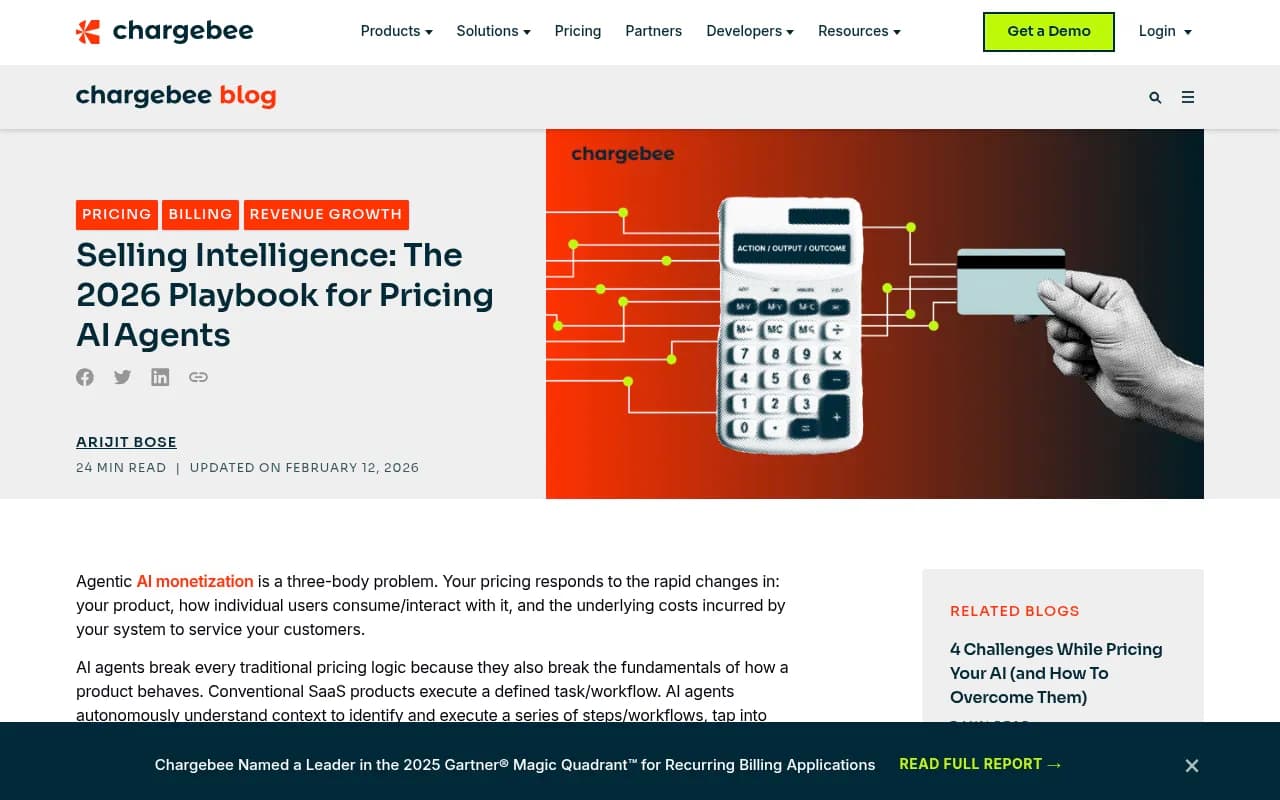
How to Handle the "What's the ROI?" Objection
Clients will ask: "How do I know this is worth $5,000/month?"
Here's the framework that works:
Step 1: Calculate the value of a single customer
"What's the average lifetime value of a customer in your business? Let's say it's $10,000."
Step 2: Estimate AI search volume
"We've identified 50 high-intent prompts where your competitors are being cited but you're not. Those prompts get an estimated 5,000 searches per month combined."
Step 3: Apply conservative conversion math
"If we capture just 2% of that volume (100 people), and convert 10% of them (10 customers), that's $100,000 in new revenue per month. Our fee is $5,000. That's a 20x return."
Step 4: Add the protection angle
"Plus, you're protecting the customers you're already losing to competitors who are visible in AI search. How many deals have you lost in the last quarter where the buyer 'just went with someone else'? Some of those were AI search losses."
This math is conservative and defensible. It reframes the investment from "cost" to "revenue opportunity."
Part 3: Proof — Demonstrate Results That Close Deals
The 30-Day Quick Win Strategy
The fastest way to prove value and retain clients is to deliver a visible win within the first 30 days. Here's the playbook:
Week 1: Audit and Prioritization
- Run comprehensive visibility audit across 10+ AI engines
- Identify 10-15 high-value prompts where client is invisible
- Analyze top 3 competitors' content strategies
- Deliver detailed gap analysis showing exactly what's missing
Week 2-3: Content Creation and Optimization
- Create 2-3 AI-optimized articles targeting high-priority prompts
- Focus on topics where competitors are weak
- Use AI writing tools that ground content in real citation data
- Implement technical optimizations (schema, entity markup)
- Ensure AI crawlers can access and index new content
Week 4: Tracking and Reporting
- Monitor daily for new citations and visibility improvements
- Document any new prompt coverage
- Track traffic from AI sources using attribution tools
- Deliver comprehensive report showing progress
This rapid-iteration approach proves you can move fast and deliver measurable results. It's the difference between "we're working on it" and "here's what we accomplished."
The Metrics That Matter
When reporting results to clients, focus on these KPIs:
Primary Metrics:
- Visibility Score — Overall brand presence across tracked AI engines (0-100 scale)
- Prompt Coverage — Number of prompts where brand is cited
- Citation Frequency — How often brand appears in AI responses
- Competitive Position — Ranking vs. top 3-5 competitors
Secondary Metrics:
- Traffic Attribution — Visitors from AI sources (requires tracking implementation)
- Crawler Activity — AI bot visits to website (shows indexing health)
- Featured Placements — Appearances in ChatGPT Shopping, Perplexity carousels
- Multi-Engine Coverage — Presence across different AI platforms
Leading Indicators:
- Content Gap Closure — Number of recommended articles published
- Technical Optimization — Schema implementation, entity markup completion
- Indexing Health — AI crawler access and error rates
Case Study Format That Sells
When you land your first few AI search wins, document them using this structure:
The Challenge: "[Client] was invisible in ChatGPT and Perplexity for 47 high-intent prompts in their category, losing an estimated $200K/month in revenue to competitors."
The Strategy: "We conducted a comprehensive content gap analysis, identified the 15 highest-priority prompts, and created AI-optimized content targeting those gaps. We also implemented technical optimizations to ensure AI crawlers could discover and index the new content."
The Results: "Within 60 days, [Client] achieved:
- 34% increase in overall AI visibility score
- Citations in 23 new prompts (up from 0)
- #2 competitive position vs. top competitor
- 847 tracked visitors from AI sources
- Estimated $85K in attributed revenue"
The Proof: [Include screenshots of before/after visibility reports, citation examples, traffic graphs]
This format works because it follows the classic problem-solution-results structure, includes specific numbers, and provides visual proof.
The Tools You Need to Deliver AI Search Services
The Core Platform: Visibility Tracking and Optimization
You need a platform that does three things:
- Tracks visibility across multiple AI engines
- Identifies content gaps showing exactly what you're missing
- Helps you create optimized content that actually gets cited
This is where most agencies get stuck. There are 40+ AI visibility tracking tools now, and most of them are monitoring-only dashboards. They show you data but leave you stuck figuring out what to do about it.
Promptwatch is different because it's built around the action loop:
- Find the gaps: Answer Gap Analysis shows which prompts competitors rank for but you don't, plus the specific content your site is missing
- Create content that ranks: Built-in AI writing agent generates articles grounded in 880M+ citations analyzed, not generic SEO filler
- Track the results: Page-level tracking shows which content is getting cited, plus traffic attribution to connect visibility to revenue
This cycle — find gaps, generate content, track results — is what makes it an optimization platform, not just another tracker.
Other capabilities that support the action loop:
- AI Crawler Logs: See which pages ChatGPT, Claude, and Perplexity are reading, plus errors they encounter
- Prompt Intelligence: Volume estimates and difficulty scores for prioritizing high-value prompts
- Citation Analysis: Know exactly which pages and domains AI models cite most
- Reddit & YouTube Insights: Surface discussions that influence AI recommendations
- ChatGPT Shopping Tracking: Monitor product recommendation appearances
- Multi-language & Multi-region: Track AI responses in any language, from any country
Pricing: Essential $99/mo, Professional $249/mo, Business $579/mo. Agency/Enterprise custom pricing available.
Supporting Tools for AI Search Services
Content Creation and Optimization:
Technical SEO and Crawling:

Competitor Intelligence:
Analytics and Attribution:
How to Package and Sell Your First AI Search Service
Step 1: Define Your Ideal Client Profile
Not every business needs AI search optimization right now. Focus on:
High-Intent Industries:
- SaaS and software tools
- Professional services (legal, accounting, consulting)
- E-commerce and retail
- Healthcare and medical services
- Financial services and insurance
- Home services and contractors
Business Characteristics:
- $1M+ annual revenue
- Existing SEO investment
- Competitive category with 5+ direct competitors
- High customer lifetime value ($5K+)
- Active content marketing program
Buyer Personas:
- Marketing Directors/VPs at mid-market companies
- CMOs at enterprise organizations
- Founders/CEOs at growth-stage startups
- Digital agency owners managing multiple clients
Step 2: Create Your Audit Offer
Develop a low-friction entry point:
"AI Search Visibility Audit" — $500-$1,500
Deliverables:
- Visibility analysis across 5-10 AI engines
- Competitive benchmarking vs. top 3 competitors
- 10-15 high-priority prompt opportunities
- Content gap analysis with specific recommendations
- 30-minute strategy call to review findings
This audit serves two purposes:
- Generates revenue while you're building your pipeline
- Creates urgency by showing clients exactly where they're losing
Many agencies offer this audit for free to qualified prospects, then convert 40-60% to ongoing retainers.
Step 3: Build Your Outreach Sequence
Cold Email Template:
Subject: [Company] invisible in ChatGPT for "[high-value prompt]"
Hi [Name],
I was researching AI search visibility in [industry] and noticed something concerning:
When someone asks ChatGPT "[specific prompt relevant to their business]," [Competitor 1], [Competitor 2], and [Competitor 3] all get cited.
[Company] doesn't appear at all.
That prompt gets an estimated [X] searches per month. At your average customer value, you're potentially losing $[Y] in revenue to competitors who are visible in AI search.
I've put together a quick audit showing:
- Where you're currently invisible
- Which competitors are winning
- The specific content gaps preventing you from being cited
Want to see it? Just reply and I'll send it over.
[Your Name]
LinkedIn Outreach:
- Connect with decision-maker
- Wait 2-3 days, then send:
"Hi [Name], saw you're leading marketing at [Company]. Quick question: are you tracking your brand's visibility in ChatGPT and Perplexity? I ran a quick check and found some interesting gaps vs. [Competitor]. Happy to share if useful."
- If they respond, send audit highlights
- Offer full audit + strategy call
Step 4: Close the Deal
Discovery Call Framework:
-
Understand their current state (5 min)
- What's your current SEO strategy?
- Are you tracking AI search visibility?
- Have you noticed any changes in organic traffic or lead quality?
-
Present the audit findings (10 min)
- Show visibility gaps
- Highlight competitor advantages
- Quantify the opportunity
-
Explain your solution (5 min)
- Walk through your optimization process
- Share case study or example results
- Outline timeline and deliverables
-
Handle objections (5 min)
- "How do we know this will work?" → Show competitor success
- "What's the ROI?" → Use the calculation framework above
- "Can't we just do this ourselves?" → Explain the expertise and tools required
-
Close (5 min)
- Present pricing options
- Offer 30-day quick win guarantee
- Get commitment or next steps
Common Mistakes to Avoid
Mistake 1: Selling Monitoring Without Optimization
Many agencies start by offering basic visibility tracking because it's easy to deliver. The problem: clients quickly realize they're paying for a dashboard that doesn't actually fix anything.
Solution: Always bundle monitoring with optimization. Show the gaps, then help them close the gaps.
Mistake 2: Overpromising on Timelines
AI search optimization isn't instant. It takes time for AI models to discover, process, and start citing new content.
Solution: Set realistic expectations (30-60 days for initial results, 90+ days for significant visibility gains) and focus on leading indicators early (content published, crawler activity, indexing health).
Mistake 3: Ignoring Technical Optimization
Many agencies focus purely on content creation and miss critical technical issues that prevent AI crawlers from accessing their content.
Solution: Always include technical audit and optimization in your process. Check robots.txt, implement proper schema markup, ensure AI crawlers can access key pages.
Mistake 4: Using Only One Tracking Tool
No single platform tracks every AI engine perfectly. Relying on one tool gives you blind spots.
Solution: Use a primary platform like Promptwatch for comprehensive tracking and optimization, but validate key findings with spot checks using other tools.
Mistake 5: Not Connecting Visibility to Revenue
Showing visibility improvements is great, but clients ultimately care about business outcomes.
Solution: Implement traffic attribution early (tracking code, GSC integration, or server logs) so you can connect AI visibility to actual visitors and revenue.
The Future of AI Search Services: What's Coming in 2026-2027
Agentic AI Will Change Everything
AI agents that can autonomously research, compare, and make purchase decisions are already here. By late 2026, we'll see:
- Shopping agents that compare products across sites and complete purchases
- Research agents that evaluate service providers and schedule demos
- Content agents that consume and synthesize information from multiple sources
Agencies that understand how to optimize for agentic AI — not just answer engines — will dominate.
Multi-Modal Search Will Explode
Voice search, image search, and video search through AI platforms will become mainstream:
- "Show me project management tools with these features" (image-based query)
- "Find accounting firms near me that specialize in startups" (voice query)
- "Analyze this competitor's product demo" (video analysis)
Optimization strategies will need to expand beyond text-based content.
AI Search Attribution Will Become Standard
Right now, most companies can't accurately track traffic from AI sources. By 2027, attribution will be table stakes:
- Standard tracking implementations across platforms
- Direct integrations between AI engines and analytics tools
- Clear ROI measurement for AI search optimization
Agencies that build attribution capabilities now will have a massive advantage.
Consolidation in the Tools Market
There are 40+ AI visibility tracking platforms today. By 2027, we'll see:
- 5-10 dominant platforms that most agencies use
- Consolidation through acquisitions
- Integration with existing SEO and marketing platforms
Choose tools that are well-funded, actively developing, and have clear differentiation.
Your 90-Day Action Plan
Days 1-30: Foundation
Week 1:
- Sign up for Promptwatch or similar platform (free trial available)
- Run visibility audits on 5 potential clients
- Document gaps and opportunities for each
- Create audit report template
Week 2:
- Build outreach list of 50 ideal prospects
- Write cold email and LinkedIn sequences
- Create case study template
- Set up tracking and reporting systems
Week 3:
- Launch outreach campaign
- Conduct 5-10 discovery calls
- Refine pitch based on feedback
- Close first 1-2 clients
Week 4:
- Deliver first audits to new clients
- Create optimization roadmaps
- Begin content creation
- Implement technical optimizations
Days 31-60: Optimization
Week 5-6:
- Publish 2-3 AI-optimized articles per client
- Monitor crawler activity and indexing
- Track early visibility improvements
- Refine content strategy based on results
Week 7-8:
- Continue content production
- Implement advanced technical optimizations
- Begin tracking traffic attribution
- Document quick wins for case studies
Days 61-90: Scaling
Week 9-10:
- Deliver 60-day results reports
- Upsell existing clients to higher tiers
- Launch second outreach wave
- Hire or train additional team members
Week 11-12:
- Systematize delivery processes
- Create SOPs for common tasks
- Build case studies from early wins
- Plan expansion into new verticals
Final Thoughts: The Agencies That Win Will Move Fast
AI search optimization is the biggest opportunity in digital marketing since mobile-first design. But the window won't stay open forever.
Right now, most businesses don't understand AI search visibility. Most agencies don't offer it. And most competitors aren't optimizing for it.
That means early movers have a massive advantage. You can:
- Educate clients before they hear about it from competitors
- Build case studies while the market is still new
- Establish expertise before the space gets crowded
- Lock in retainers before pricing commoditizes
But this window is closing fast. By late 2026, AI search optimization will be table stakes, not a differentiator.
The agencies that move now — that invest in tools, build processes, and start selling — will own this category for the next decade.
The agencies that wait will be playing catch-up.
Which one will you be?
Resources and Next Steps
Start Your AI Search Optimization Journey:
- Sign up for Promptwatch — Track and optimize your brand visibility across ChatGPT, Perplexity, Claude, and 10+ AI engines
- Run your first visibility audit using the frameworks in this guide
- Join AI search optimization communities on LinkedIn and Reddit
- Follow thought leaders in GEO/AEO space for latest strategies
Recommended Reading:
- "The Complete Digital Marketing Agency Playbook for 2026" — Comprehensive guide to AI-first marketing strategies
- "The State of AI Search in 2026" — Industry research and benchmarks
- "Pricing AI Agents Playbook" — Deep dive on pricing models for AI services
Tools to Explore:
- Promptwatch for visibility tracking and optimization
- Jasper or Surfer SEO for AI-optimized content creation
- Screaming Frog for technical SEO audits
- Google Analytics 4 for traffic attribution
The future of search is here. The question isn't whether to offer AI search services — it's how fast you can get started.
Good luck. Now go sell.