Summary
- AI search traffic grew 527% year-over-year from 2024 to 2025, with some sites now seeing over 1% of total sessions from ChatGPT, Perplexity, and other AI engines
- Prompt velocity -- the rate at which specific queries gain or lose volume -- is the new metric that separates winners from laggards in AI search
- Long-tail, high-intent prompts (57% AI Overview appearance rate) are growing faster than generic head terms, especially in ecommerce and SaaS
- Tools like Promptwatch surface prompt volume estimates, difficulty scores, and query fan-outs to help you prioritize high-velocity, winnable prompts
- The brands winning in 2026 track prompt velocity weekly, map it to content gaps, and ship optimized content before competitors even notice the trend

Why prompt velocity matters more than raw volume
Most teams still optimize for static keyword volume. They pick a term with 10,000 monthly searches, write content, and hope it ranks. That worked when Google was the only game. Now AI search is fragmenting the landscape -- ChatGPT has 700 million weekly active users, Google AI Mode has 100 million users in the US and India alone, and Perplexity is processing billions of queries.
The problem: AI search behavior is volatile. A prompt that gets 500 queries this month might get 5,000 next month because a competitor got cited, a news cycle shifted, or an AI model updated its training data. Velocity -- the rate of change in prompt volume -- tells you which queries are heating up and which are cooling off. It's the difference between chasing yesterday's traffic and capturing tomorrow's.
Consider two prompts:
- Prompt A: 8,000 monthly queries, flat growth for six months
- Prompt B: 1,200 monthly queries, up 300% in the last 90 days
Most teams pick Prompt A because the absolute number is bigger. Smart teams pick Prompt B because the trajectory is steeper. By the time you rank for Prompt B, it might be at 5,000 queries -- and you'll have first-mover advantage in the AI citation graph.
The three velocity tiers: explosive, steady, and declining
Not all prompts move at the same speed. Based on data from platforms tracking 1.1 billion+ citations and prompts, queries fall into three velocity buckets:
Explosive growth (50%+ monthly increase)
These are the prompts you want to own early. They're often triggered by:
- Product launches: "How does [new AI tool] compare to [incumbent]" surges when a competitor ships
- Regulatory shifts: "GDPR-compliant [solution]" spiked after enforcement actions in 2025
- Seasonal spikes: "Best [category] for Q4 2026" starts climbing in August
- Viral content: A Reddit thread or YouTube video gets cited by ChatGPT, and suddenly the underlying question explodes
Explosive prompts are high-risk, high-reward. If you rank early, you capture the wave. If you're late, the window closes.
Steady growth (10-50% monthly increase)
These are the workhorses. They grow predictably as:
- Market adoption increases: "What is [emerging technology]" climbs as awareness spreads
- Use cases mature: "How to use [tool] for [specific task]" grows as the product gains traction
- Educational demand rises: "[Concept] explained" queries increase as more people enter the space
Steady-growth prompts are lower-risk. You have time to optimize, but you still need to move faster than competitors.
Declining velocity (flat or negative growth)
These prompts are saturated or obsolete:
- Commoditized queries: "What is SEO" has been answered a million times. AI models have stable citations.
- Outdated tech: "Best [deprecated tool] alternatives" declines as the market moves on
- Solved problems: "How to [basic task]" flattens when AI models internalize the answer and stop citing sources
Declining prompts aren't worthless -- they might still drive traffic -- but they're not where you'll find growth.
How to measure prompt velocity in your industry
You can't optimize for velocity if you can't measure it. Here's the process:
Step 1: Identify your core prompt universe
Start with 50-200 prompts relevant to your business. These should span:
- Navigational prompts: "[Your brand] vs [competitor]", "[Your brand] pricing"
- Informational prompts: "How to [solve problem your product addresses]"
- Transactional prompts: "Best [category] for [use case]"
- Long-tail variations: "[Specific feature] in [your category] for [persona]"
Don't guess. Use tools that surface real prompt data. Promptwatch analyzes 880M+ citations to show you which prompts are actually being asked and how often. You'll see volume estimates, difficulty scores, and query fan-outs (how one prompt branches into sub-queries).
Step 2: Track volume over time
Set up weekly or bi-weekly snapshots of prompt volume. Most AI visibility platforms update daily, but weekly is enough to spot trends without drowning in noise. You're looking for:
- Week-over-week % change: Is the prompt growing or shrinking?
- Month-over-month trajectory: Is the growth accelerating or decelerating?
- Seasonal patterns: Does the prompt spike in Q4 or dip in summer?
Platforms like Promptwatch, Profound, and Otterly.AI all provide time-series data. Promptwatch goes further by tying prompt velocity to actual citation data -- you see not just volume, but which pages are being cited and why.
Profound

Otterly.AI

Step 3: Map velocity to citation gaps
High-velocity prompts are only useful if you can rank for them. Run an Answer Gap Analysis to see:
- Which prompts are competitors visible for but you're not?
- Which prompts have low citation saturation (few brands dominating the answer)?
- Which prompts align with your content strengths?
Prompwatch's Answer Gap Analysis is purpose-built for this. It shows you the exact prompts where competitors are cited but your site isn't, then surfaces the specific content angles and topics AI models want but can't find on your site. This isn't generic SEO gap analysis -- it's grounded in real citation behavior from ChatGPT, Claude, Perplexity, and other models.
Step 4: Prioritize with a velocity-difficulty matrix
Plot prompts on two axes:
- X-axis: Velocity (slow to explosive)
- Y-axis: Difficulty (easy to hard, based on citation saturation and domain authority of current rankers)
The sweet spot: high velocity, low difficulty. These are prompts growing fast with weak competition. Ship content here first.
| Prompt | Monthly volume | 90-day growth | Difficulty | Priority |
|---|---|---|---|---|
| "Best [tool] for [use case]" | 1,800 | +240% | Medium | High |
| "[Your brand] vs [competitor]" | 600 | +180% | Low | High |
| "How to [generic task]" | 12,000 | +5% | High | Low |
| "[Deprecated feature] guide" | 3,200 | -15% | Medium | Low |
Focus on the top two. Ignore the bottom two unless they're strategic for other reasons (e.g., brand defense).
Industry-specific velocity trends in 2026
Prompt velocity isn't uniform across industries. Here's what's heating up:
SaaS and B2B software
- Comparison prompts ("[Tool A] vs [Tool B] for [use case]") are up 300%+ as buyers use AI to shortlist vendors
- Integration queries ("Does [Tool] integrate with [Platform]") are growing 150% as tech stacks get more complex
- Pricing transparency prompts ("[Tool] pricing breakdown") surged after ChatGPT started citing pricing pages directly
Winning move: Publish detailed comparison pages and integration guides. AI models cite structured, factual content over marketing fluff.
Ecommerce and DTC brands
- Product recommendation prompts ("Best [product] for [specific need]") dominate AI Overviews (57% appearance rate for long-tail queries)
- Sustainability and ethics queries ("Is [brand] ethical?") are up 200% as Gen Z uses AI for purchase research
- Unboxing and review synthesis ("What do people say about [product]?") grew 180% as AI aggregates Reddit and YouTube sentiment
Winning move: Optimize product pages with structured data, embed Reddit discussions, and publish buyer's guides that AI models can cite.
Local and multi-location businesses
- Geo-specific service queries ("Best [service] near [location]") are growing 120% as AI Mode and Perplexity add map integrations
- Hours and availability prompts ("Is [business] open now?") spiked 90% as AI becomes the default for quick lookups
- Review-driven queries ("Top-rated [category] in [city]") are up 150% as AI synthesizes review data
Winning move: Claim and optimize your Google Business Profile, publish location-specific landing pages, and monitor AI crawler logs to ensure models can access your data.
Healthcare and wellness
- Symptom and treatment queries ("Natural remedies for [condition]") are growing 100%+ but heavily regulated -- AI models cite authoritative sources only
- Provider comparison prompts ("[Specialist] near me with [insurance]") are up 80% as AI simplifies healthcare navigation
- Telehealth availability queries ("Can I get [treatment] online?") surged 200% post-pandemic
Winning move: Publish medically reviewed content, get cited by authoritative health sites, and ensure your practice info is crawlable by AI bots.
Financial services
- Product comparison prompts ("[Bank] vs [Bank] savings rates") are up 150% as AI becomes a financial advisor proxy
- Regulatory and compliance queries ("Is [service] FDIC insured?") grew 100% as trust becomes a differentiator
- Fee transparency prompts ("Hidden fees in [product]") spiked 180% as consumers demand clarity
Winning move: Publish transparent, data-rich comparison pages and FAQs. AI models cite sources that answer questions directly without marketing spin.
The tools you need to track and act on velocity
You can't do this manually. Here's the stack:
AI visibility and prompt tracking
Promptwatch is the only platform rated as a "Leader" across all categories in a 2026 comparison of 12 GEO platforms. It's built around the action loop: find gaps (Answer Gap Analysis), create content (AI writing agent grounded in 880M+ citations), and track results (page-level citation tracking + traffic attribution). Most competitors stop at monitoring. Promptwatch helps you fix what's broken.
Alternatives:
- Profound: Strong feature set, higher price point, no Reddit tracking
- Otterly.AI: Basic monitoring only -- no content generation or crawler logs
- AthenaHQ: Monitoring-focused, lacks optimization tools
Profound
Otterly.AI

Keyword and prompt research
AlsoAsked and AnswerThePublic surface real questions people ask. Use these to seed your prompt universe, then validate volume and velocity in Promptwatch.
Content optimization
Surfer SEO and Clearscope optimize for traditional search. For AI search, you need tools that analyze citation patterns. Promptwatch's AI writing agent does this -- it generates content based on what AI models actually cite, not just keyword density.

Analytics and attribution
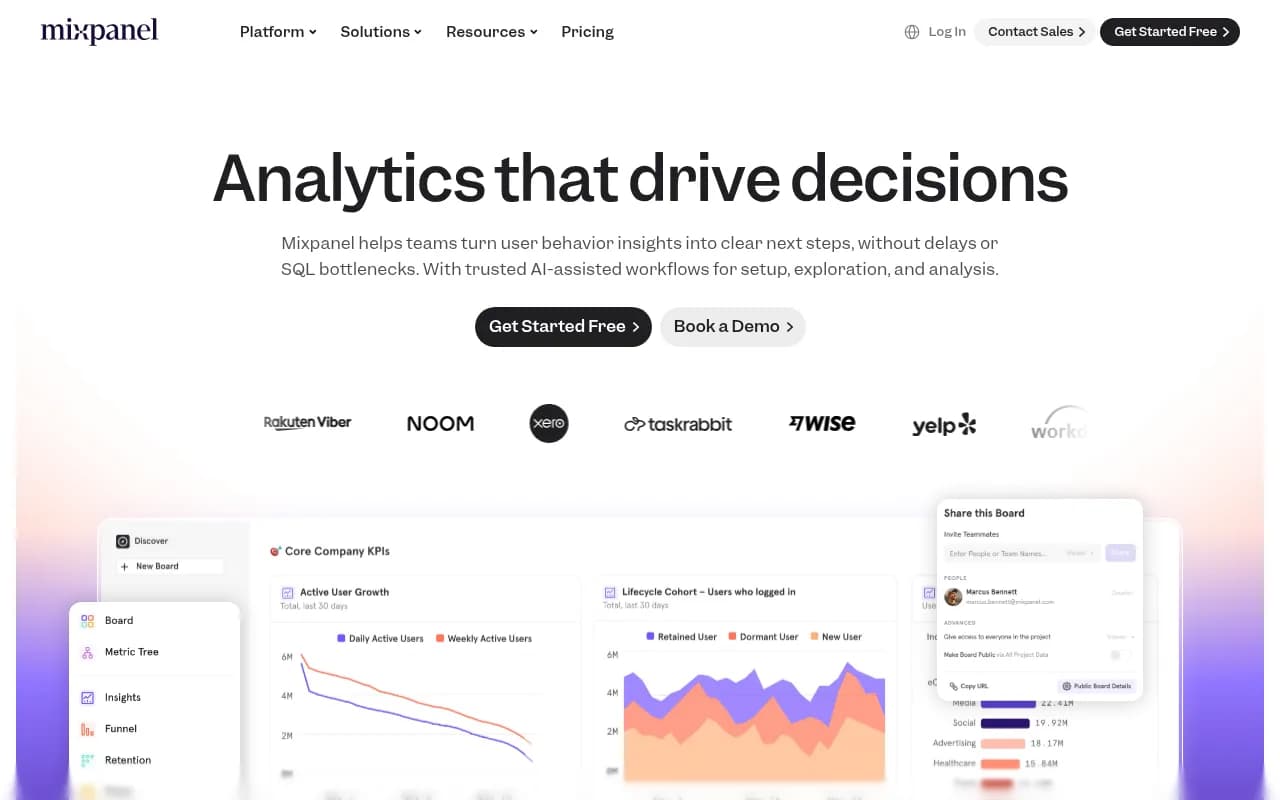
Google Analytics and Mixpanel track traffic. To tie AI visibility to revenue, use Promptwatch's traffic attribution (code snippet, GSC integration, or server log analysis). You'll see which AI-cited pages drive conversions.
The velocity optimization playbook: ship faster than your competitors
Tracking velocity is pointless if you don't act on it. Here's how to move fast:
Week 1: Audit and baseline
- Export your top 100 prompts from Promptwatch or your tracking tool
- Tag each prompt by velocity tier (explosive, steady, declining)
- Run Answer Gap Analysis to find citation gaps
- Prioritize 10 high-velocity, low-difficulty prompts
Week 2-3: Content sprint
Use Promptwatch's AI writing agent or a similar tool to generate:
- Comparison pages for explosive prompts
- How-to guides for steady-growth prompts
- FAQ pages that answer long-tail variations
Don't aim for perfection. Aim for speed. AI models cite fresh, relevant content over polished but outdated pages.
Week 4: Publish and monitor
- Publish all 10 pieces
- Add structured data (FAQ schema, HowTo schema, Product schema)
- Monitor AI crawler logs in Promptwatch to confirm models are reading your pages
- Track citation changes weekly
Week 5+: Iterate and scale
Double down on what works:
- If a page gets cited, expand it with more detail and examples
- If a prompt's velocity accelerates, create supporting content (related prompts, sub-topics)
- If competitors overtake you, analyze their cited pages and close the gap
Repeat the cycle every month. Velocity optimization is a continuous loop, not a one-time project.
Common mistakes that kill velocity optimization
Mistake 1: Optimizing for yesterday's prompts
You find a high-volume prompt, spend three weeks writing the perfect guide, and publish. By then, the prompt's velocity has flattened or a competitor already owns the citation. Fix: Track velocity weekly and ship content in days, not weeks.
Mistake 2: Ignoring long-tail velocity
Head terms ("Best CRM") get attention, but long-tail prompts ("Best CRM for real estate teams under 10 people") are growing faster and have lower competition. Fix: Use query fan-outs in Promptwatch to find high-velocity long-tail variations.
Mistake 3: Writing for humans, not AI models
AI models cite content that directly answers questions with structured, factual information. Marketing fluff and vague claims get ignored. Fix: Write like you're answering a specific question. Use headings, lists, and tables. Cite sources.
Mistake 4: Not tracking the full funnel
You rank for a prompt, get cited by ChatGPT, and celebrate. But you don't know if those citations drove traffic or revenue. Fix: Use Promptwatch's traffic attribution or Google Analytics UTM tracking to connect AI visibility to conversions.
Mistake 5: Treating AI search like traditional SEO
SEO is about ranking in a list. AI search is about being cited in an answer. The optimization strategies are different. Fix: Focus on citation-worthy content (comparisons, data, examples) over keyword density and backlinks.
What winning looks like in 2026
The brands dominating AI search in 2026 aren't the ones with the biggest budgets. They're the ones moving fastest:
- They track prompt velocity weekly, not quarterly
- They ship content in days, not months
- They optimize for citations, not clicks
- They close answer gaps before competitors even notice them
- They tie AI visibility to revenue, not vanity metrics
AI search traffic is up 527% year-over-year. Some analysts predict it will surpass traditional search traffic by 2028. The window to build first-mover advantage is closing. The brands that win will be the ones who treat prompt velocity as a core KPI and build systems to act on it.
Start tracking velocity this week. Find your high-growth, low-competition prompts. Ship content. Monitor citations. Iterate. The velocity report isn't a one-time analysis -- it's a weekly habit that separates leaders from laggards.