Key takeaways
- Most AI search platforms in 2026 are monitoring dashboards -- they show you where you're invisible but don't help you fix it.
- A genuinely actionable platform needs at least 8 capabilities: real prompt tracking, answer gap analysis, content generation, crawler log access, citation analysis, traffic attribution, multi-model coverage, and offsite visibility.
- Skipping even two or three of these leaves you with data you can't act on.
- The gap between "tracker" and "optimizer" is where most brands are losing ground to competitors right now.
The AI search market has exploded. According to Exposure Ninja's State of AI Search report, 80% of people say that at least half of their purchasing decisions now involve AI tools like ChatGPT. That's not a trend to watch -- it's already the reality for your buyers.
So naturally, a wave of platforms has emerged promising to help brands "win at AI search." Most of them are dashboards. They show you a score, maybe a list of prompts where you're not appearing, and then... nothing. You're left to figure out what to do with that information yourself.
That's the problem this checklist addresses. Not "does this platform track AI search?" but "can this platform actually help me improve my AI search visibility?" Those are very different questions.
Here's what separates a genuinely actionable platform from an expensive monitoring subscription.
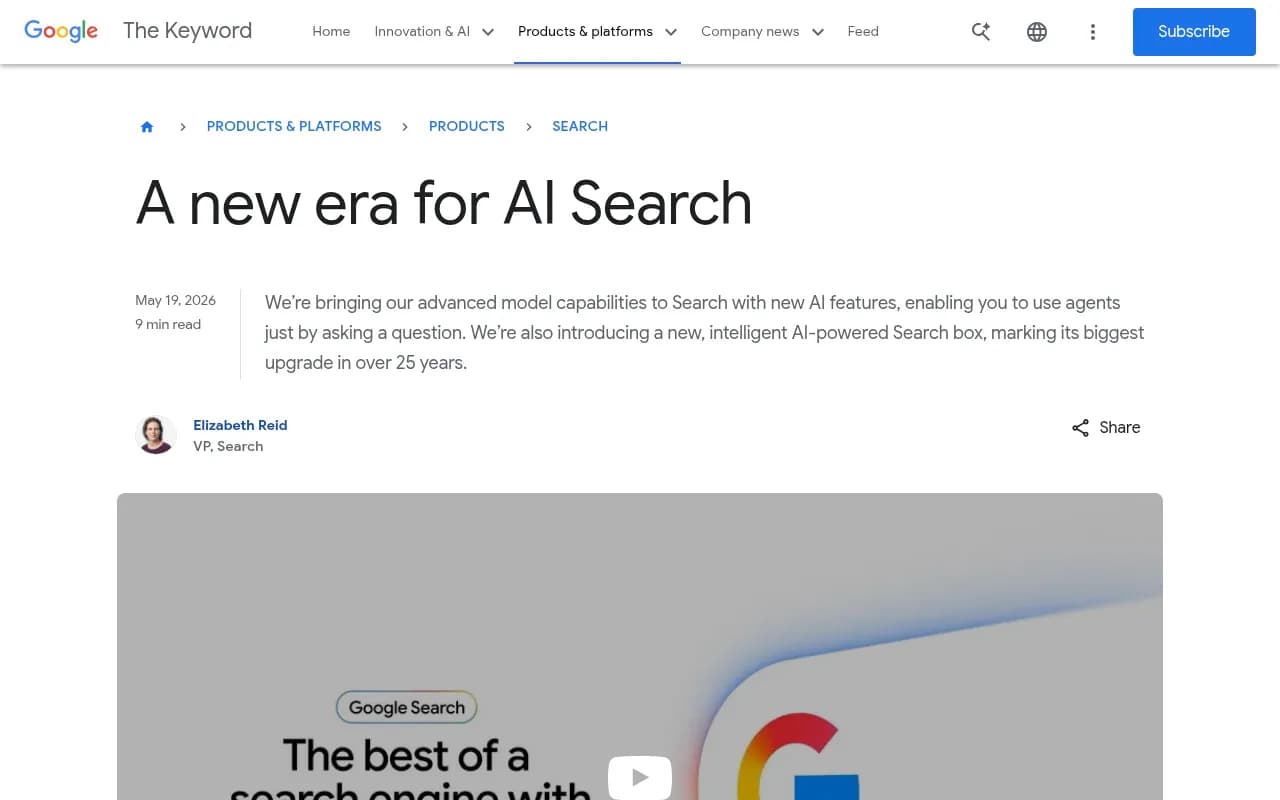
Google's I/O 2026 announcements made clear that AI search isn't a feature -- it's the new default. Brands that aren't optimizing for it are already behind.
Feature 1: Real prompt tracking (not just API outputs)
The first thing to check is how a platform actually collects its data. Many tools query AI models through their APIs and report back what the API returns. That sounds reasonable until you realize that user-facing AI search interfaces -- ChatGPT's web search, Perplexity's answer pages, Google AI Mode -- often return different results than the raw API.
Shopping recommendations, citation carousels, and sourced answers in the actual product can differ significantly from what you'd get hitting an endpoint directly. If a platform only uses API calls, it's measuring something slightly different from what your customers actually see.
What you want is a platform that tracks how AI search engines behave in real user interfaces. That means monitoring actual responses, not just API outputs. It's a harder technical problem, which is why many tools skip it.
What to ask: "Do you track real UI responses or API outputs?" If the answer is vague, assume API-only.
Feature 2: Answer gap analysis
This is the feature that separates monitoring tools from optimization tools. Answer gap analysis shows you the specific prompts where your competitors are being cited but you're not.
Not just "your visibility score is 34%." Not just "you appear in 12 out of 50 prompts." But: here are the exact questions AI models are answering right now where your competitor is the recommended source and you're invisible. Here's what those prompts are. Here's what the AI says when someone asks them.
That's actionable. You can look at that list and immediately understand what content you're missing, what topics you haven't covered, and what angles your competitors have taken that you haven't.
Without this feature, you're essentially flying blind. You know you have a visibility problem. You don't know what to build to fix it.
Promptwatch calls this Answer Gap Analysis, and it's one of the core reasons it gets used by over 1,480 brands. The output isn't a score -- it's a content to-do list grounded in real data.

Feature 3: AI content generation tied to gap data
Knowing what content you're missing is step one. Being able to create that content without switching to five other tools is step two.
A genuinely actionable platform should let you go from "here's the gap" to "here's a draft article that addresses it" without leaving the product. And not just any draft -- content that's grounded in the actual prompt data, the AI responses your competitors are getting cited for, real citation patterns, and your own brand guidelines.
Generic AI writing tools can produce articles. What you need is content engineered specifically to fill the gaps AI models have identified. That means the brief should include: the target prompts, the competing sources currently being cited, the angle the AI favors, and any brand or persona instructions you've set.
This is where most monitoring-only platforms fall short. Otterly.AI, Peec.ai, AthenaHQ -- they'll show you the gap. They won't help you fill it.
Otterly.AI



What to ask: "Can I generate content directly from gap analysis data, or do I need to export and use a separate tool?"
Feature 4: AI crawler logs and agent analytics
This one is underappreciated and almost entirely absent from smaller platforms.
When ChatGPT, Perplexity, or Claude crawls your website, they leave traces in your server logs. Knowing which pages they visited, how often they return, what errors they hit, and -- critically -- whether a crawl eventually led to a citation is enormously useful information.
Without this, you're optimizing blind. You might publish a new article targeting a specific prompt, but you have no idea whether GPTBot has even crawled it yet, let alone whether it's being cited. Crawler logs close that loop. You can see the timeline from publish to crawl to citation, which means you can measure whether your optimization efforts are working and how long they take.
Most platforms lack this entirely. It requires either a server-side integration (Cloudflare, Fastly, Vercel, server logs) or a tracking snippet, and most smaller tools haven't built that infrastructure.
What to ask: "Do you provide real-time AI crawler logs? Can I see which pages GPTBot and ClaudeBot have visited and when?"
Feature 5: Prompt intelligence with volume and difficulty data
Not all prompts are worth targeting. Some are asked by millions of people. Some are niche. Some are dominated by Wikipedia and Reddit and essentially impossible to break into. Others are wide open.
A platform that just gives you a list of prompts you're missing doesn't tell you which ones to prioritize. Prompt intelligence -- volume estimates, difficulty scores, and query fan-outs (how one prompt branches into sub-queries) -- lets you make strategic decisions about where to invest your content budget.
This is the AI search equivalent of keyword research. You wouldn't build an SEO strategy without understanding search volume and competition. The same logic applies here.
What to look for: Volume estimates per prompt, a difficulty or competition score, and ideally a view of how prompts relate to each other (fan-outs or topic clusters).
Feature 6: Multi-model coverage across all major AI engines
In 2026, "AI search" isn't one thing. Your buyers might be using ChatGPT, Perplexity, Google AI Overviews, Google AI Mode, Gemini, Claude, Grok, DeepSeek, Copilot, or Meta AI. Each model has different citation behaviors, different source preferences, and different response patterns.
A platform that only tracks one or two models is giving you an incomplete picture. You might be highly visible in Perplexity and completely absent from Google AI Mode -- and if your platform doesn't cover both, you'd never know.
The minimum bar in 2026 is coverage across at least 8-10 major models. Anything less and you're making decisions based on partial data.
Here's a quick comparison of how some platforms stack up on model coverage:
| Platform | Models tracked | Content generation | Crawler logs | Prompt volume data |
|---|---|---|---|---|
| Promptwatch | 10+ (ChatGPT, Perplexity, Gemini, Claude, Grok, DeepSeek, Copilot, Meta AI, Google AI Overviews, Google AI Mode) | Yes | Yes | Yes |
| Otterly.AI | 3-4 | No | No | No |
| Peec.ai | 3-4 | No | No | No |
| AthenaHQ | 5-6 | No | No | Limited |
| Profound | 9+ | No | No | Limited |
| Semrush | Limited (fixed prompts) | No | No | No |
| Ahrefs Brand Radar | Limited (fixed prompts) | No | No | No |
Feature 7: Citation and offsite visibility analysis
Your AI search visibility isn't just about your own website. AI models cite Reddit threads, YouTube videos, third-party review sites, industry publications, and listicles. If a Reddit post recommending your competitor is being cited in 40% of responses to a key prompt, that's something you need to know -- and potentially act on.
Offsite citation analysis shows you which external sources are driving AI visibility in your category. That tells you where to publish guest content, which communities to participate in, which review platforms matter, and which third-party mentions are worth pursuing.
This is a channel most platforms ignore entirely. But for many brands, the fastest path to improved AI visibility isn't publishing more content on their own site -- it's getting mentioned in the external sources AI models already trust.
What to look for: A breakdown of which domains, Reddit threads, YouTube videos, and third-party pages are being cited for your target prompts, not just your own pages.
Feature 8: Traffic attribution connecting AI visibility to revenue
This is the feature that makes the whole thing defensible to a CFO.
AI search visibility is great. But if you can't connect it to actual website traffic, leads, or revenue, it stays in the "interesting metric" bucket rather than the "business-critical investment" bucket.
Traffic attribution for AI search means being able to say: "Our visibility in Perplexity for these 12 prompts drove 847 visits last month, and those visits converted at X%." It means connecting the dots between a citation in ChatGPT and a customer who landed on your pricing page.
This requires more than just tracking citations. It requires integration with your website analytics, ideally through a server-side connection (Cloudflare, Vercel, Google Search Console, or a tracking snippet) that can capture AI referral traffic accurately.
Without this, you're measuring AI visibility as a vanity metric. With it, you're measuring it as a business outcome.
The buyer journey has fundamentally shifted. Brands that can't measure AI search traffic are missing a growing share of their funnel.
How to use this checklist
Run any platform you're evaluating against these eight features. Be specific -- ask for demos of each capability, not just a "yes we have that" on a pricing page.
| Feature | What to verify |
|---|---|
| Real prompt tracking | UI-based monitoring, not just API calls |
| Answer gap analysis | Shows specific prompts competitors win that you don't |
| AI content generation | Generates briefs/articles from gap data, not just generic AI writing |
| Crawler logs | Real-time logs of GPTBot, ClaudeBot, PerplexityBot visits |
| Prompt intelligence | Volume estimates, difficulty scores, query fan-outs |
| Multi-model coverage | At least 8-10 AI engines tracked |
| Offsite citation analysis | Reddit, YouTube, third-party domains tracked |
| Traffic attribution | AI citations connected to actual site visits and conversions |
A platform that covers all eight is an optimization tool. A platform that covers two or three is a monitoring dashboard. Both have a price tag, but only one has a clear path to ROI.
Most brands in 2026 are paying for monitoring dashboards and wondering why their AI search visibility isn't improving. The answer is usually that they have data but no mechanism to act on it. The checklist above is the mechanism.
A few tools worth knowing
Beyond Promptwatch, there are other platforms in this space worth evaluating depending on your budget and use case:
Profound

Profound covers 9+ AI engines and has solid enterprise-grade monitoring. It's strong on tracking but lighter on the content generation and crawler log side.
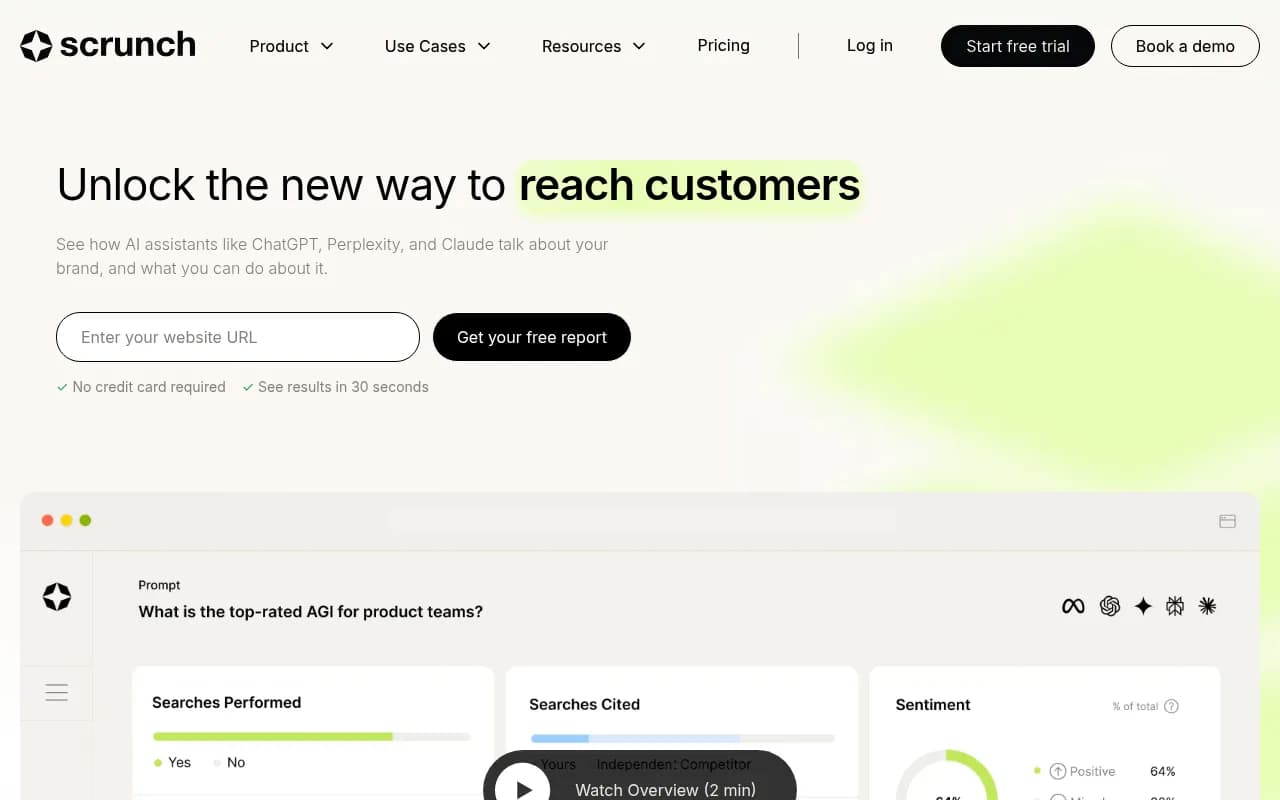
Scrunch AI offers tracking across multiple LLMs with some content optimization features, though it's more monitoring-focused than action-oriented.
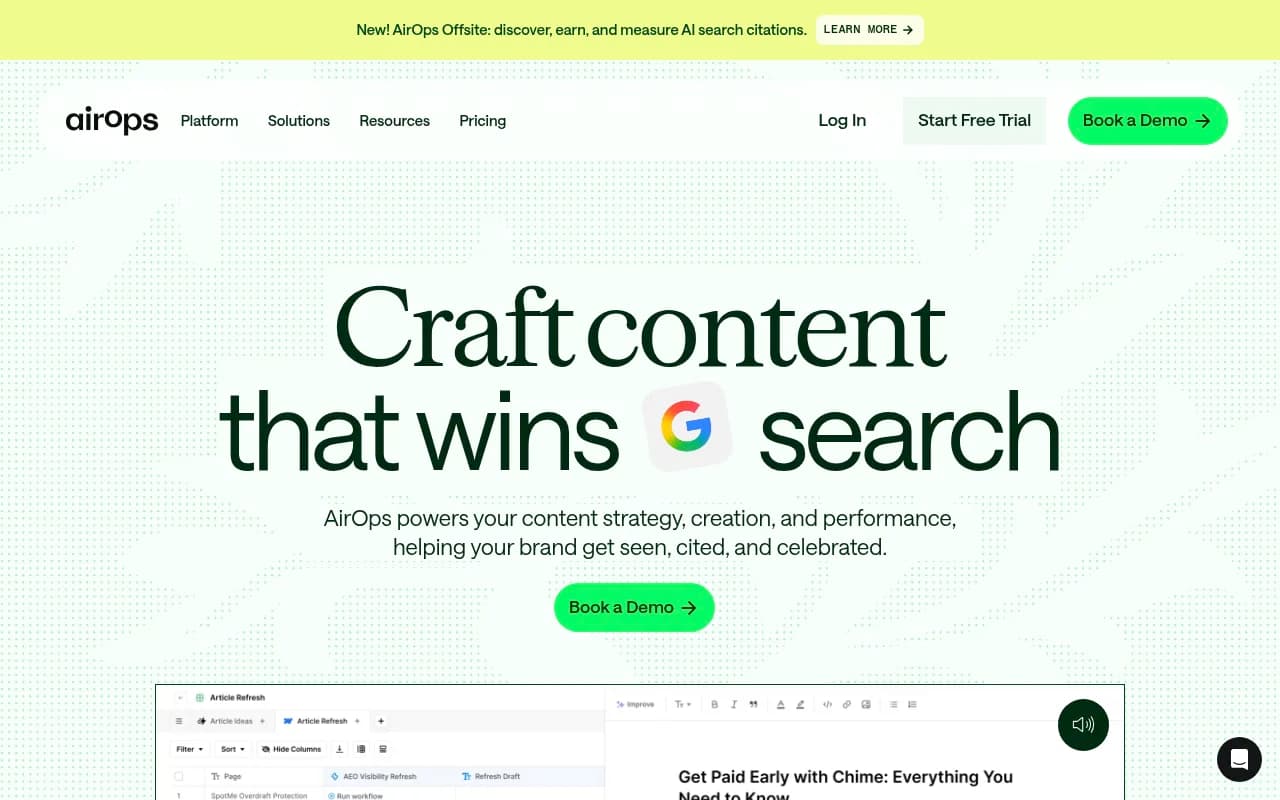
AirOps takes a content engineering approach -- it's built around creating content for AI search visibility, which makes it a useful complement to a monitoring tool if you're willing to use two platforms.
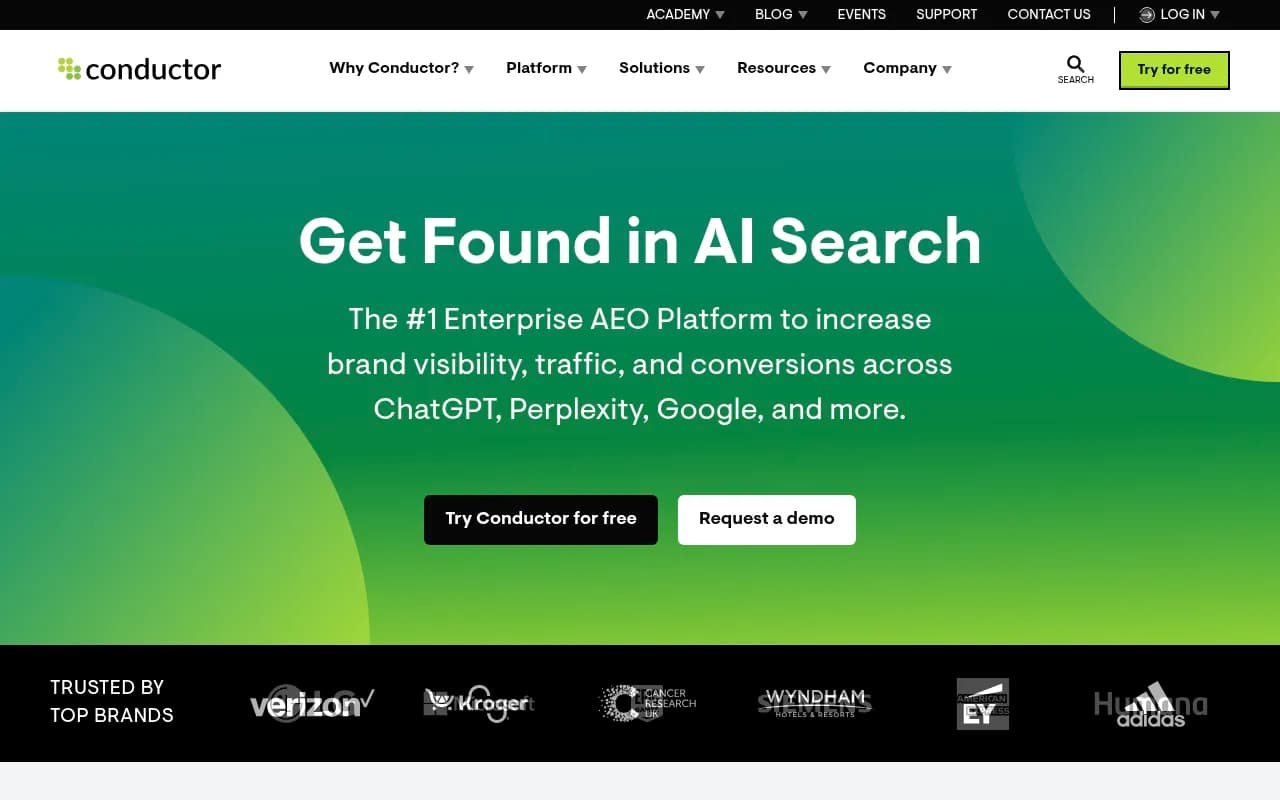
Conductor has added AI citation tracking to its traditional SEO platform, which is useful if you're already using it for organic search and want to add AI visibility to the same workflow.
The honest summary: if you want a single platform that covers all eight features on this checklist, the options narrow quickly. Most tools in 2026 are still monitoring-first. The ones that have built the full action loop -- find gaps, generate content, track results -- are fewer than you'd expect given how much noise there is in this space.
That's not a reason to wait. It's a reason to be selective about what you pay for.