Key takeaways
- Most AI writing tools (including Jasper) generate content but have no visibility into whether that content actually gets cited by ChatGPT, Perplexity, or Google AI Overviews.
- GEO (Generative Engine Optimization) requires a tighter loop: create content, track citations, find gaps, repeat.
- The tools in this guide range from pure content writers with some GEO features to full-stack platforms that handle both writing and AI search monitoring.
- If you need a dedicated GEO tracking layer on top of any writing tool, Promptwatch is the most complete option for closing that loop.
- No single tool does everything perfectly -- the right choice depends on whether your bottleneck is content creation, citation tracking, or both.
Jasper is a solid AI writing platform. If you need brand-consistent marketing copy at scale, it delivers. But here's the problem: it has no idea whether the content it generates actually shows up in ChatGPT's answers, Perplexity's citations, or Google's AI Overviews. For a traditional SEO workflow, that's fine. For GEO in 2026, it's a real gap.
Generative Engine Optimization is different from SEO in one important way: the feedback loop is harder to close. You can't just check a rank tracker and see position 3 for your target keyword. You need to know which prompts trigger AI responses that mention your brand, which pages get cited, and what content gaps are letting competitors get recommended instead of you.
That's why this list isn't just "better AI writers than Jasper." It's specifically focused on tools that either combine content generation with GEO tracking, or pair well with a dedicated AI visibility layer. Some of these tools lean heavily toward writing. Others are more monitoring-focused. A few try to do both.
Here's how they stack up.
The tools at a glance
| Tool | Content generation | AI citation tracking | GEO-specific features | Starting price |
|---|---|---|---|---|
| Writesonic | Strong | Yes (GEO features) | AI visibility dashboard | ~$20/mo |
| Search Atlas | Strong | Yes | AI content + OTTO SEO agent | ~$99/mo |
| Surfer SEO | Strong | Limited | Content scoring, NLP | ~$89/mo |
| Frase | Strong | No | SEO briefs, SERP analysis | ~$45/mo |
| AirOps | Strong | Yes (AEO analysis) | AI search playbook, workflows | Custom |
| Scalenut | Moderate | No | Keyword planning, briefs | ~$39/mo |
| Clearscope | Moderate | No | Content grading, topic modeling | ~$189/mo |
| Promptwatch | No (tracking only) | Yes (best-in-class) | Full GEO platform, content gap analysis, AI writing agent | From $99/mo |
1. Writesonic
Writesonic is probably the closest thing to a direct Jasper alternative that has actually invested in GEO. It's been building out AI visibility features since late 2024, and by 2026 it includes a dedicated GEO dashboard that shows how your content performs across AI search engines.
The writing quality is genuinely good. Blog posts, landing pages, product descriptions -- it handles all of them with reasonable brand consistency once you've set up your brand voice. The SEO integrations (Surfer, Google Search Console) help ensure what you write has a chance of ranking in traditional search too.
Where Writesonic stands out in this context is that it's one of the only AI writers that has started connecting content output to AI search visibility. You can see which of your articles are being cited by AI models and use that data to inform what to write next. It's not as deep as a dedicated GEO platform, but it's a meaningful step beyond what Jasper offers.
The downside: the GEO features are still maturing. If you need granular prompt-level tracking, competitor heatmaps, or crawler log analysis, you'll hit the ceiling quickly.

2. Search Atlas
Search Atlas is one of the more ambitious platforms in this space. It combines AI content writing with a full SEO toolkit and, increasingly, GEO-focused features. The OTTO SEO agent can automate a lot of the technical and content work that normally requires separate tools.
For GEO specifically, Search Atlas tracks AI search visibility and helps you understand which content is getting picked up by generative engines. The content generation side is solid -- it can produce briefs, outlines, and full articles with competitive context baked in.
The platform is genuinely trying to be an all-in-one solution, which means it does a lot of things reasonably well rather than one thing exceptionally. If you're a small team that wants to consolidate tools, it's worth a serious look. If you're a larger team with specific GEO needs, you may find the tracking features less granular than you need.

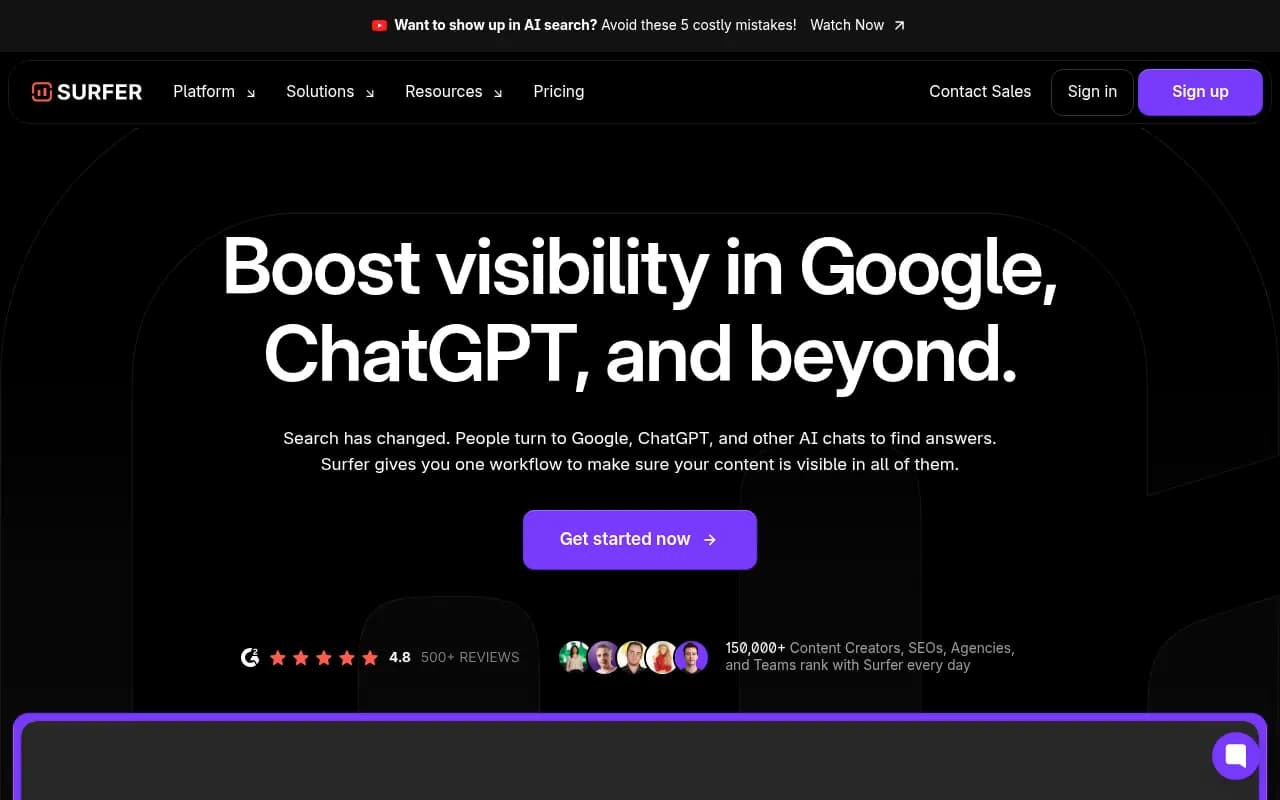
3. Surfer SEO
Surfer is the content optimization tool that most SEO teams already know. It scores your content against top-ranking pages, suggests NLP terms, and helps you write articles that are structurally competitive for traditional search.
In 2026, Surfer has added some AI search features, but it's still primarily a traditional SEO content tool. The writing assistant is capable, and the content editor is genuinely useful for ensuring you're covering a topic thoroughly -- which matters for GEO too, since AI models tend to cite comprehensive, well-structured content.
The honest take: Surfer will help you write better content that has a higher chance of being cited by AI models, but it won't tell you whether that's actually happening. You'd need to pair it with a dedicated tracking tool to close that loop.
4. Frase
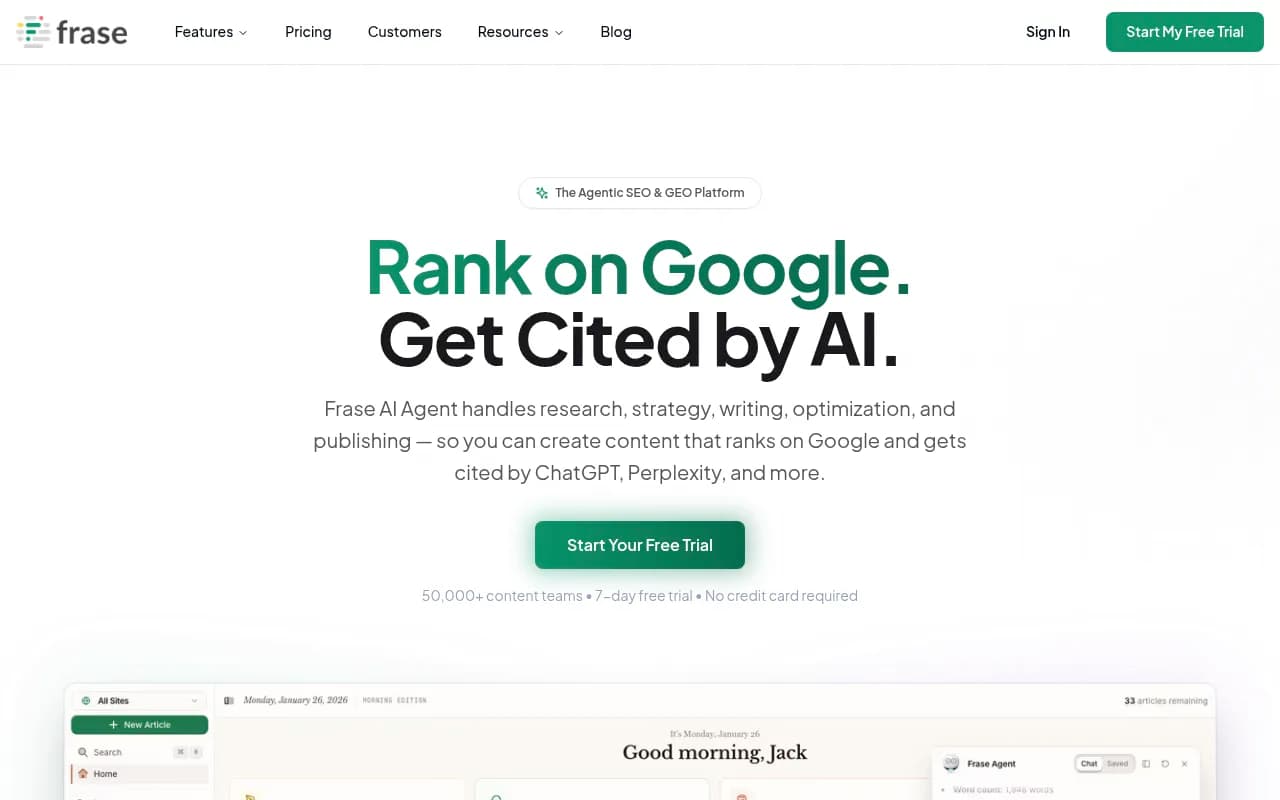
Frase is built around the research and briefing phase of content creation. It pulls in SERP data, identifies what questions your content needs to answer, and helps you structure articles that cover a topic completely. The writing assistant is decent, though it's not the main reason people use Frase.
For GEO, Frase's strength is in the research layer. AI models cite content that answers questions directly and comprehensively -- which is exactly what Frase helps you optimize for. If you're trying to get cited in AI responses to specific queries, starting with a Frase brief gives you a solid foundation.
What Frase doesn't do is track whether any of that effort is working. There's no AI citation monitoring, no prompt tracking, no visibility into which LLMs are citing your pages. It's a content input tool, not a GEO feedback loop.
5. AirOps
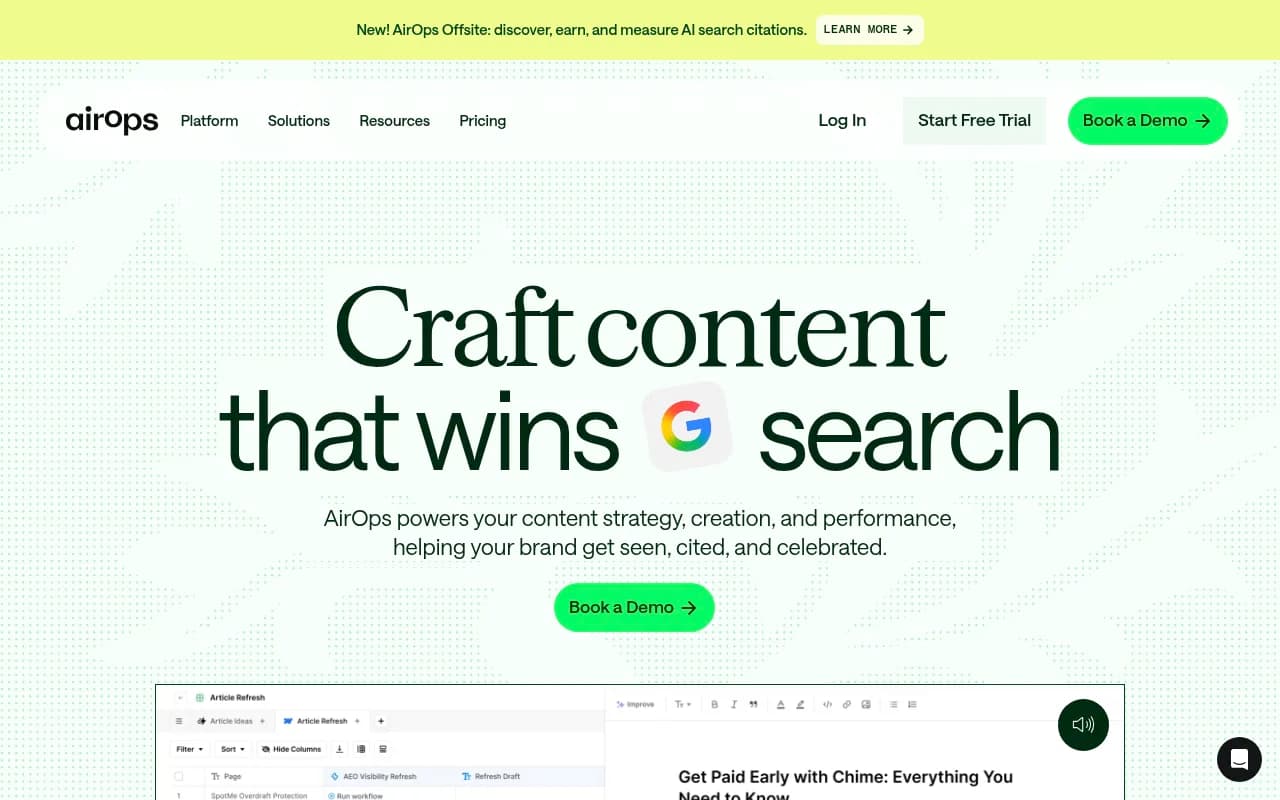
AirOps has positioned itself specifically around AI search visibility, which makes it one of the more interesting options on this list. It's not just an AI writer -- it's built around the idea of "content engineering for AI search," with workflows that connect content creation to AEO (Answer Engine Optimization) analysis.
The platform includes an AI Search Hub, AEO analysis tools, and content workflows designed to help you appear in AI-generated answers. The writing capabilities are strong, and the templates are built with AI search in mind rather than just traditional SEO.
AirOps is best suited for teams that are already thinking seriously about AI search strategy, not just content volume. It's more of a workflow and strategy platform than a simple AI writer. Pricing is custom, which usually means it's aimed at larger teams and agencies.
6. Scalenut
Scalenut is a capable AI writing and SEO platform that handles keyword research, content briefs, and article generation in one place. The interface is clean, the output is decent, and the pricing is more accessible than many competitors.
For GEO purposes, Scalenut helps you plan and produce content at scale -- which is useful if you're trying to cover a broad topic cluster and increase your chances of being cited across multiple AI prompts. But like Frase, it's a creation tool without a monitoring layer. You won't know which of your Scalenut-generated articles are actually getting cited by ChatGPT or Perplexity.
It's a solid choice if your primary need is content production and you're handling GEO tracking separately.

7. Clearscope
Clearscope is the content optimization tool that enterprise SEO teams tend to reach for when quality matters more than speed. It's expensive relative to the other tools on this list, but the content grading and topic modeling are genuinely best-in-class for traditional SEO.
The connection to GEO is indirect but real: Clearscope helps you write content that thoroughly covers a topic, uses the right terminology, and answers related questions -- all of which are factors that influence whether AI models cite your content. A Clearscope-optimized article is more likely to be cited than a thin, keyword-stuffed one.
What Clearscope doesn't do is anything on the monitoring side. It's a content quality tool, full stop. If you're using it for GEO, you're relying on the assumption that better content = more citations, which is true in general but doesn't give you the feedback loop you need to optimize systematically.

The missing piece: tracking whether any of this is working
Here's the honest problem with every tool on this list: they help you create content, but most of them don't tell you whether that content is actually being cited by AI models. You can write excellent articles with Frase, optimize them with Clearscope, publish them with Writesonic's GEO dashboard, and still have no clear picture of which prompts are triggering citations, which competitors are getting recommended instead of you, or which pages are being read by AI crawlers.
That's where a dedicated GEO tracking platform becomes necessary. The tools above are content inputs. You also need a feedback mechanism.
Promptwatch is built specifically for this. It tracks your brand visibility across 10 AI models (ChatGPT, Perplexity, Claude, Gemini, Google AI Overviews, and more), shows you which prompts your competitors are winning that you're not, and -- importantly -- includes a built-in AI writing agent that generates content specifically designed to fill those gaps. It's the only platform in the 2026 GEO landscape that closes the full loop: find gaps, create content, track results.

The AI crawler logs feature is particularly useful alongside any content tool. You can see exactly which pages ChatGPT or Perplexity are crawling, how often, and whether they're encountering errors. That tells you whether your newly published content is even being discovered, which is a question none of the writing tools above can answer.
How to pick the right combination
The right setup depends on what your actual bottleneck is.
If you're producing plenty of content but don't know if it's working in AI search, the priority is a tracking and gap analysis tool. Pair whatever writing tool you already use with Promptwatch or a similar GEO platform.
If you're starting from scratch and need both writing and some GEO visibility, Writesonic or Search Atlas are the most integrated options. They won't give you the depth of a dedicated tracking platform, but they reduce the number of tools you need to manage.
If content quality is the constraint and you're in a competitive vertical, Clearscope or Surfer SEO will help you produce articles that are structurally more likely to earn citations -- even if they don't tell you whether that's happening.
If you're running a larger operation and need workflow automation alongside AI search strategy, AirOps is worth evaluating.
The one thing to avoid: treating AI writing and GEO as the same problem. Writing good content is necessary but not sufficient. You need to know which prompts matter, which pages are getting cited, and what your competitors are doing that you're not. That requires monitoring, not just generation.
A note on Jasper itself
Jasper isn't going anywhere. It's a mature platform with strong brand voice controls, a large template library, and good integrations. If your team is already using it and happy with the output quality, the case for switching is mostly about GEO visibility -- not writing quality.
The practical move for many teams is to keep Jasper for content production and add a dedicated GEO tracking layer on top. That's a more surgical fix than replacing your entire content workflow.

Bottom line
The AI writing tool market in 2026 is crowded, and most tools do a reasonable job of generating content. The real differentiator for GEO is whether a tool helps you understand what's actually happening in AI search -- which prompts are being answered, which sources are being cited, and what you need to create to show up.
Writesonic and Search Atlas are the best bets if you want writing and GEO features in one place. Frase, Surfer, and Clearscope are strong for content quality but need a tracking layer added. AirOps is worth considering for teams building serious AI search workflows.
And if you want the full picture -- citations, crawler logs, prompt tracking, content gap analysis, and an AI writing agent that knows what to create -- Promptwatch is the platform built specifically for that job.