Key takeaways
- Most AI visibility platforms only monitor brand mentions in AI responses — they don't show you what AI crawlers are actually doing on your site
- Crawler log monitoring is the missing layer: it tells you which pages GPTBot, ClaudeBot, and PerplexityBot are reading, how often they return, and whether they're hitting errors
- Searchable has built-in content generation, but its crawler monitoring capabilities are limited compared to platforms that treat bot analytics as a core feature
- Promptwatch is the only platform in this comparison rated as a "Leader" across both AI visibility monitoring and crawler log analytics
- Choosing the right alternative depends on whether you need monitoring only, content generation, or the full loop from gap analysis to content to citation tracking
Most AI visibility tools are looking at the wrong thing.
They run prompts through ChatGPT, count how often your brand gets mentioned, and call it a day. That's useful, but it's only half the picture. The other half is happening on your server right now: GPTBot is crawling your site, ClaudeBot is reading certain pages and skipping others, PerplexityBot is hitting 404s on content you thought was indexed. You won't see any of that in a standard brand mention dashboard.
Searchable is one of the more capable platforms in the AI visibility space, with built-in content generation that sets it apart from pure monitoring tools. But if crawler log monitoring is your priority — actually understanding what AI bots are doing on your site before they decide what to cite — there are better options.
Here's a breakdown of nine alternatives worth considering in 2026.
Why crawler log monitoring matters more than most people realize
When an AI model like ChatGPT or Perplexity generates a response, it draws on content it has already crawled and indexed. If GPTBot visited your site, hit a slow page, and moved on without reading the content, that page won't get cited — regardless of how well-written it is.
Crawler logs tell you:
- Which pages AI bots are visiting and how often
- Which pages they're skipping or encountering errors on
- How long it takes from crawl to citation (the "crawl-to-cite" timeline)
- Whether your robots.txt or server configuration is accidentally blocking AI crawlers
Without this data, you're optimizing blind. You might be publishing great content that GPTBot never reads. You might have a misconfigured server that's blocking ClaudeBot entirely. Standard brand mention tracking won't catch either of those problems.
This is why the question "which tool shows me what AI bots are doing" is worth asking separately from "which tool tracks my brand mentions."
The 9 best Searchable alternatives with crawler log monitoring
1. Promptwatch
Promptwatch is the most complete option here, and the only platform in a 2026 comparison of 12 GEO tools rated as a "Leader" across all evaluation categories.

What makes it relevant to this specific question: Promptwatch has real-time AI crawler logs built into the platform. You can see exactly which AI crawlers (ChatGPT, Claude, Perplexity, and others) are hitting your site, which pages they're reading, what errors they're encountering, and how often they return. The platform then connects that crawl data to actual citations — so you can see the timeline from "GPTBot visited this page" to "ChatGPT started citing it."
That's the part most tools skip. They show you citations but not the crawl activity that preceded them. Promptwatch shows both, and then goes further with Answer Gap Analysis (which prompts are your competitors visible for that you're not?) and Content Agents that generate articles designed to close those gaps.
The crawler log feature is available on the Professional plan ($249/mo) and above. It supports integration via Cloudflare, Fastly, Vercel, server logs, Google Search Console, or a tracking snippet.
2. Profound
Profound is an enterprise-grade AI visibility platform with solid monitoring across 9+ AI engines. It has stronger analytics than most mid-market tools, and its citation tracking is detailed enough to be genuinely useful.
Profound

On the crawler side, Profound offers some log analysis capabilities, though it's not as granular as Promptwatch's real-time crawler logs. It's better suited to teams that need deep brand monitoring and competitive analysis at scale, and are less focused on the technical crawl layer. Pricing is on the higher end, which makes it harder to justify for smaller teams.
3. Scrunch AI
Scrunch AI sits in an interesting middle ground — it has more analytical depth than basic monitoring tools, and it does surface some crawl-related insights as part of its visibility reporting.
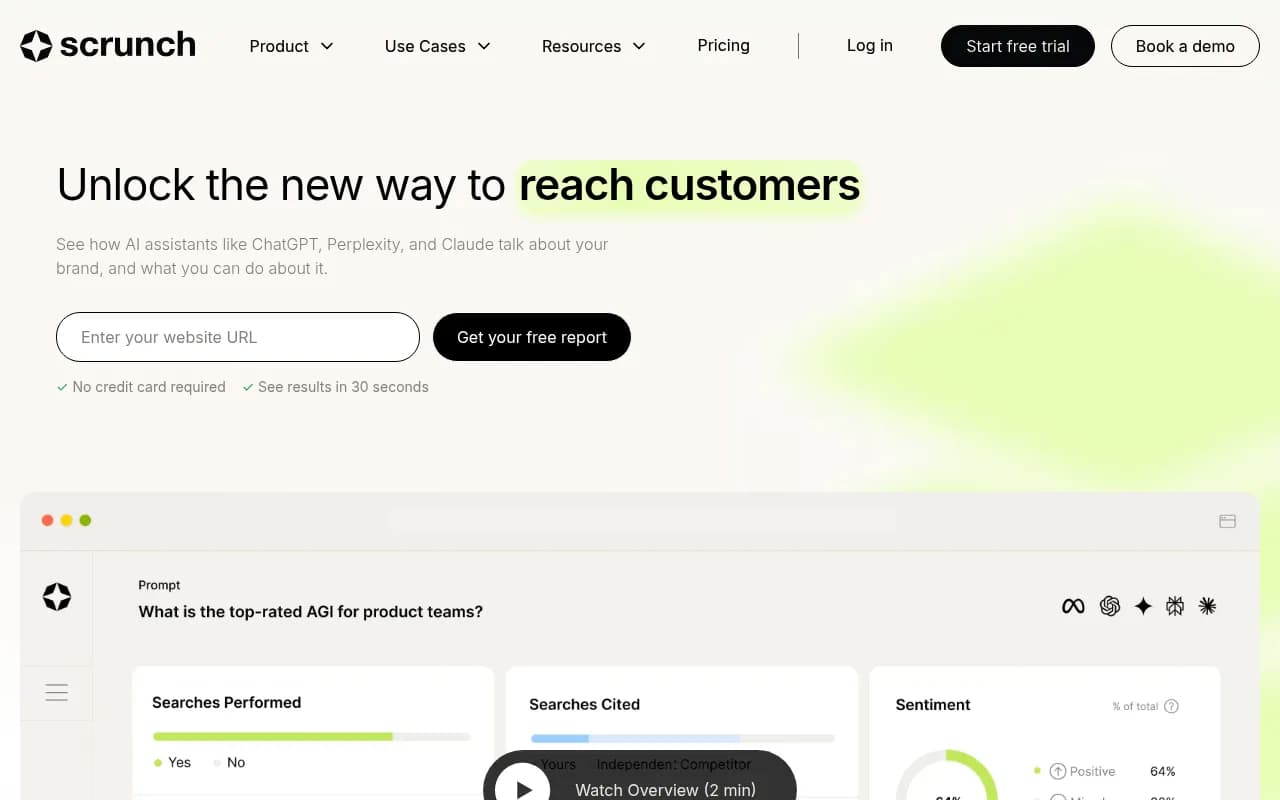
It's worth considering if you want a cleaner interface and don't need the full technical depth of crawler log monitoring. The platform tracks brand mentions across major LLMs and provides competitive benchmarking, but like most tools in this category, it doesn't give you raw bot-level access to what's happening on your server.
4. AthenaHQ
AthenaHQ is a monitoring-focused platform that does brand tracking across AI engines reasonably well. It's often mentioned alongside Profound and Scrunch as one of the more capable pure-monitoring options.

The honest limitation: AthenaHQ is built around observation, not action. It will tell you where you're visible and where you're not, but it doesn't have content generation, and its crawler analytics are minimal. If you're specifically looking for bot-level data, this isn't the right tool.
5. Otterly.AI
Otterly.AI is one of the more accessible entry points into AI visibility tracking. It monitors ChatGPT, Perplexity, Google AI Overviews, and a few other engines, and the interface is clean enough that non-technical users can get value from it quickly.
Otterly.AI

That accessibility comes with trade-offs. Otterly.AI doesn't have crawler log monitoring, and it doesn't have content generation. It's a monitoring dashboard — useful for tracking brand mentions and share of voice, but not built for the technical layer of understanding what AI bots are actually doing on your site.
6. ZipTie
ZipTie takes a more analytical approach to AI visibility, with deeper prompt analysis and competitive intelligence than most tools at its price point.
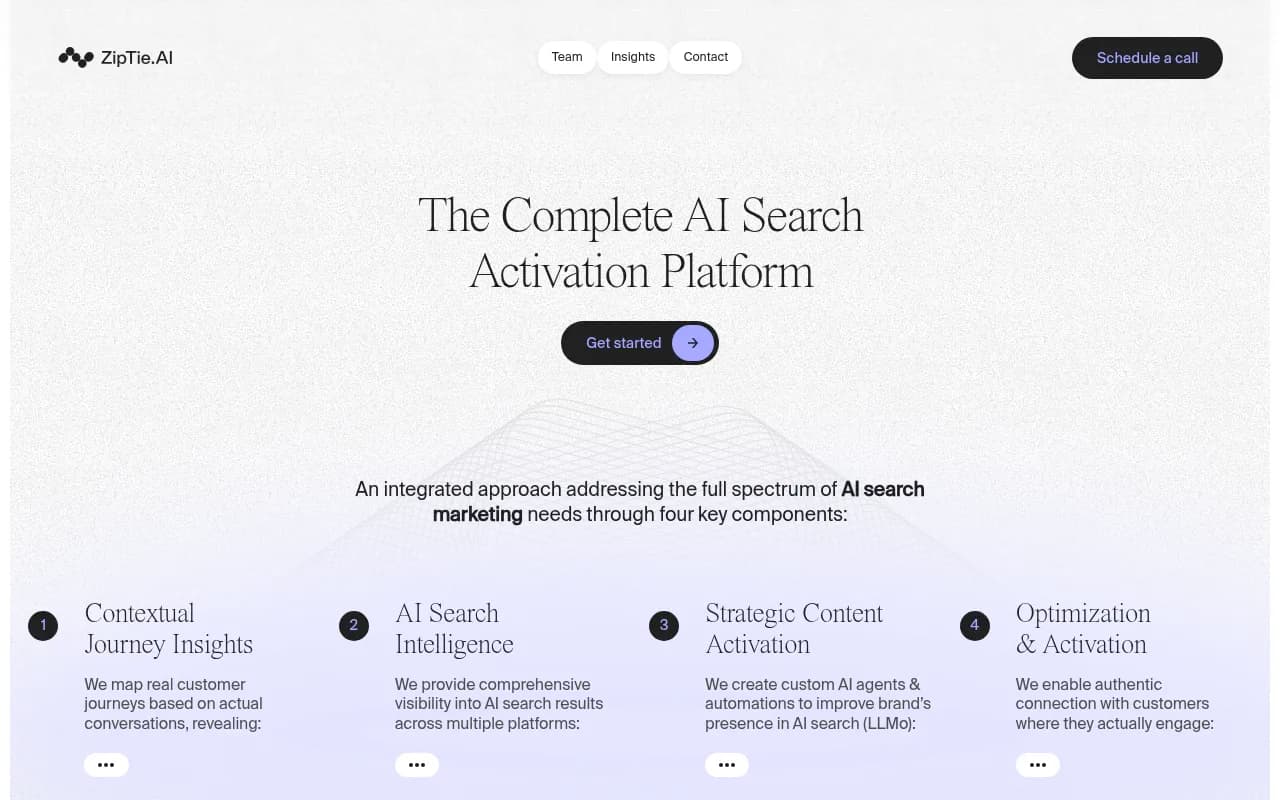
It's a reasonable choice if you want more than surface-level brand mention counts and are willing to work with a platform that's still building out its feature set. Crawler log monitoring isn't a core feature, but ZipTie's prompt-level analysis can help you understand which queries you're missing — which is a useful starting point even without bot-level data.
7. xSeek
xSeek is one of the few tools specifically built around AI crawler monitoring. It tracks which AI bots are hitting your site, what they're taking, and how to control access — including GPTBot, ClaudeBot, PerplexityBot, and others.
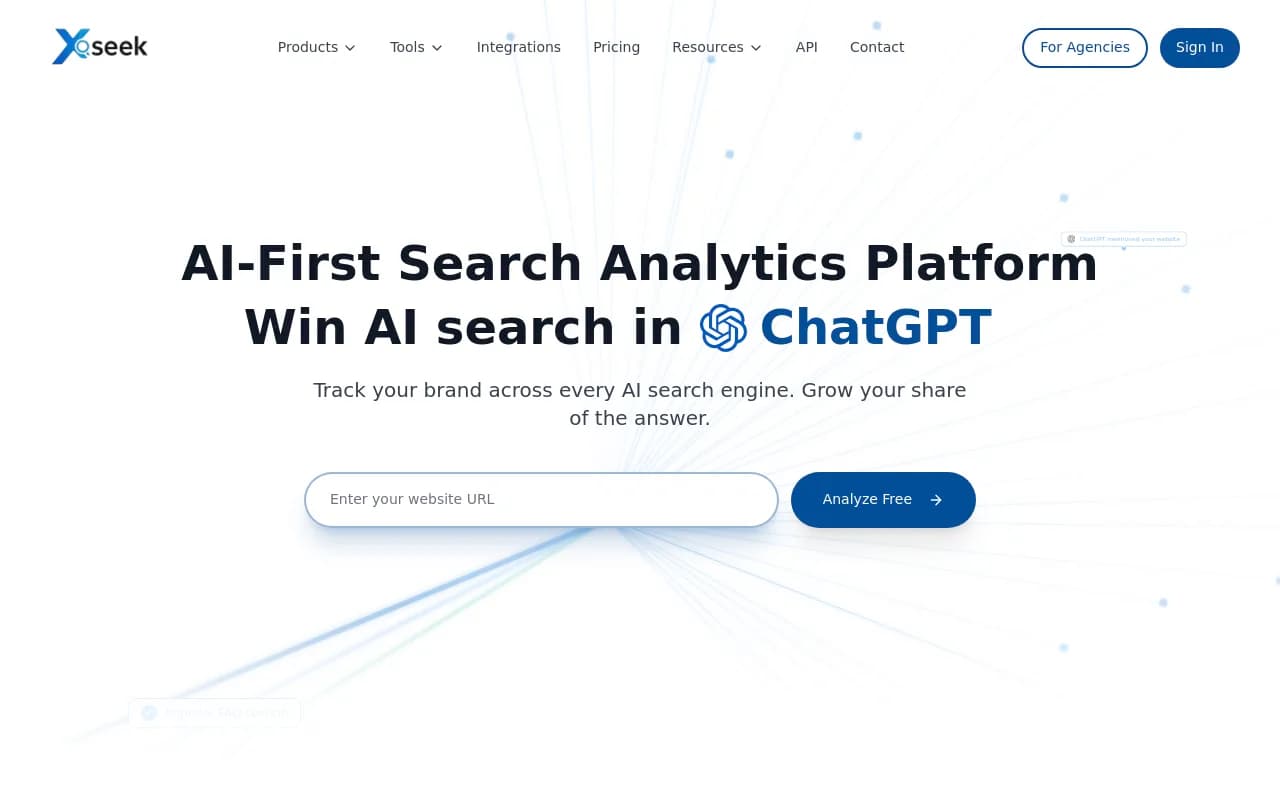
If your primary concern is the technical crawl layer rather than brand mention tracking, xSeek is worth a look. It's more narrowly focused than Promptwatch (which combines crawler logs with brand monitoring, content generation, and citation tracking), but that focus means it goes deep on the bot analytics side. Good for technical SEO teams who want to understand AI crawler behavior without necessarily needing the full GEO platform.
8. Scriptbee
Scriptbee is a newer entrant that offers AI crawler monitoring across unlimited domains, which makes it interesting for agencies managing multiple client sites.
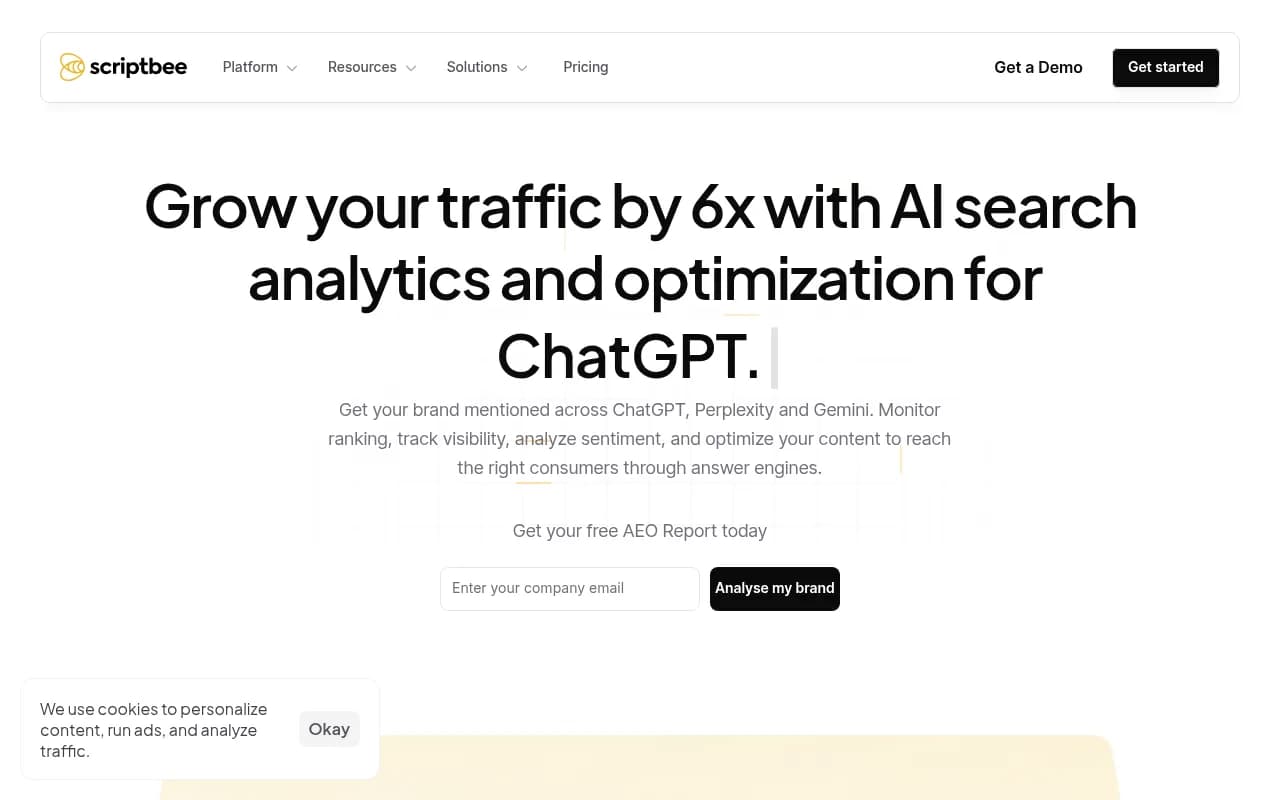
The platform tracks AI bot activity and surfaces crawl data in a reasonably usable format. It's less mature than Promptwatch on the brand monitoring and content generation side, but if you're running an agency and need crawler visibility across many sites without paying per-domain fees, it's worth evaluating.
9. Siteline AI
Siteline AI focuses on AI agent traffic analytics — tracking how AI-driven traffic flows through your site and connecting that to conversion outcomes.
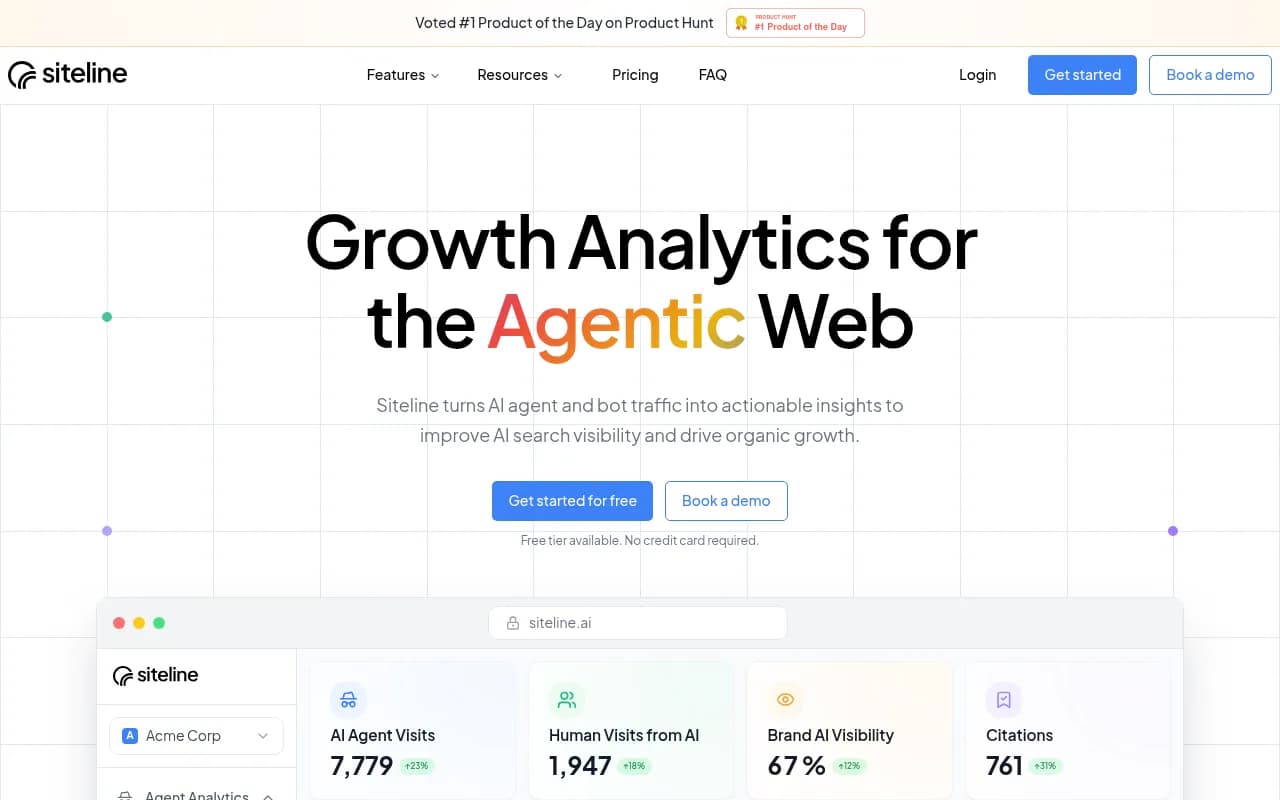
It's a different angle than most tools here. Rather than starting with brand mentions in AI responses, Siteline AI starts with your actual traffic data and works backward to understand which AI agents are sending visitors and what those visitors do. That makes it more of an analytics tool than a GEO platform, but the crawler and agent traffic data it surfaces is genuinely useful for understanding the revenue impact of AI visibility.
How these tools compare
| Tool | Crawler log monitoring | Brand mention tracking | Content generation | AI models covered | Best for |
|---|---|---|---|---|---|
| Promptwatch | Yes (real-time) | Yes | Yes (Content Agents) | 10+ | Full GEO platform with crawler analytics |
| Profound | Partial | Yes | No | 9+ | Enterprise brand monitoring |
| Scrunch AI | Partial | Yes | No | Multiple | Mid-market monitoring |
| AthenaHQ | No | Yes | No | Multiple | Monitoring-focused teams |
| Otterly.AI | No | Yes | No | 4+ | Entry-level monitoring |
| ZipTie | No | Yes | No | Multiple | Prompt-level analysis |
| xSeek | Yes (bot-focused) | No | No | Multiple | Technical crawler monitoring |
| Scriptbee | Yes (multi-domain) | Partial | No | Multiple | Agencies, multi-site |
| Siteline AI | Yes (traffic-focused) | No | No | Multiple | Traffic attribution |
What to look for when evaluating these tools
The crawler monitoring question is really three separate questions:
1. Which AI bots are visiting your site? You want to see GPTBot (OpenAI), ClaudeBot (Anthropic), PerplexityBot, Googlebot-extended (for AI Overviews), and ideally a few others. Some tools only track one or two of these.
2. What are they doing when they get there? Visiting a page is different from reading it. You want to know which pages get crawled, how deeply, and whether bots are encountering errors (404s, 500s, slow load times) that might cause them to skip content.
3. How does crawl activity connect to citations? This is the hardest question to answer, and most tools don't try. Promptwatch's agent analytics specifically tracks the timeline from crawl to citation, which is the only way to know whether your technical setup is actually working.
If you only care about question one, xSeek or Scriptbee might be enough. If you need all three questions answered — and you want to act on the answers by generating content that fills the gaps — Promptwatch is the only platform that currently covers the full loop.
The monitoring-only trap
One thing worth naming directly: most of the tools in this list are monitoring platforms. They'll tell you where you're invisible, which is valuable. But knowing you're invisible and knowing what to do about it are different problems.
The tools that stop at monitoring leave you with a dashboard full of gaps and no clear path to closing them. You know ChatGPT isn't citing you for certain queries. You know competitors are showing up where you're not. But the tool doesn't help you figure out what content to create, how to structure it, or whether it's working after you publish.
That's the gap that separates monitoring tools from optimization platforms. If you're evaluating Searchable alternatives specifically because you want to take action on what you learn — not just observe it — that distinction matters a lot when you're comparing options.
The crawler log data is one piece of that. Knowing GPTBot is hitting your site but skipping your most important pages is actionable information. Knowing which prompts your competitors rank for that you don't is actionable. Having a platform that helps you generate content to close those gaps, then tracks whether that content gets cited, is the full picture.
Most tools give you one of those things. A few give you two. Very few give you all three.