Key takeaways
- Over 58.5% of Google searches now end without a click, and 37% of consumers start searches directly in AI tools like ChatGPT -- meaning Google rank alone no longer equals traffic or visibility.
- AI search engines select sources based on authority, citation patterns, and content comprehensiveness, not just keyword relevance or backlink counts.
- Only 14% of marketers currently track AI visibility, creating a massive opportunity gap for brands that move early.
- The metrics, content strategies, and optimization tactics for AI search are fundamentally different from traditional SEO -- treating them the same is a mistake.
- Brands need to monitor both channels separately and optimize for each, since the signals that drive Google rankings and AI citations often diverge.
For about 25 years, "search visibility" meant one thing: where do you rank on Google? Page one, position one, featured snippet. The whole game was legible. You could measure it, track it, and optimize for it with a fairly predictable playbook.
That game hasn't ended. But a second, parallel game has started -- and most marketing teams are still playing the first one exclusively.
AI search engines like ChatGPT, Perplexity, Claude, and Google's own AI Overviews now answer questions directly. They synthesize information, recommend products, and cite sources. When someone asks "what's the best project management tool for remote teams?" they might get a full answer with specific recommendations -- without ever clicking a search result. Your Google ranking for that query is irrelevant if you're not in the AI's answer.
These two channels look similar on the surface. Both involve search. Both involve content. But the underlying mechanics are different enough that treating them the same will cost you visibility in one or both.
Here are 9 concrete differences every marketer needs to understand.
1. The click is no longer the unit of value
In traditional SEO, clicks are the currency. You rank, users click, traffic flows to your site, and you measure success in sessions, conversions, and revenue. The whole funnel starts with a click.
AI search breaks this model. According to Goodfirms' 2026 research across 100+ digital marketing professionals, 83% of AI-generated answer queries are resolved directly on the results page. Users get their answer and move on. No click required.
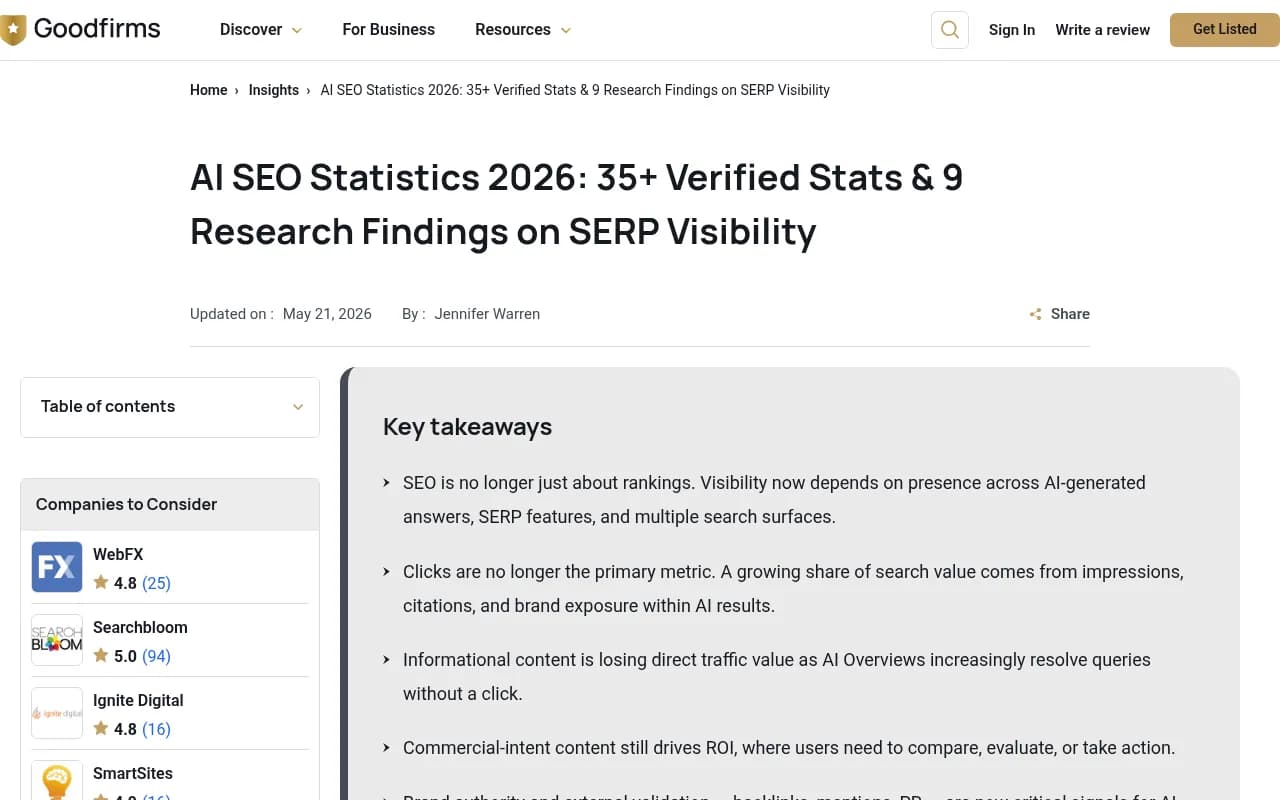
This doesn't mean AI visibility has no value -- it absolutely does. Brand exposure, recommendation, and trust-building happen even without a click. But if your measurement framework is built entirely around traffic, you'll systematically undervalue AI visibility and underinvest in it.
The implication: you need separate metrics for AI search. Citation frequency, mention sentiment, share of voice across AI models, and eventually -- as attribution tools improve -- the downstream revenue influence of AI-driven brand exposure.
2. Rankings are deterministic; AI citations are probabilistic
Google's ranking algorithm, while complex, produces consistent results. If you're ranking #3 for a keyword, you're ranking #3. You can check it, track it daily, and watch it move.
AI search doesn't work this way. When Rand Fishkin discussed this on the Near Media podcast in early 2026, he noted that AI brand visibility has an inherent randomness to it -- the same prompt asked twice can produce different answers, different citations, and different brand mentions. The models don't have a fixed "rank" for your brand; they have a probability of including you based on training data, retrieval patterns, and prompt context.
This makes traditional rank tracking tools largely useless for AI search. You can't just check "your position" because there isn't one. What you can measure is citation rate across a large sample of prompts -- how often does your brand appear when relevant questions are asked? That's a statistical measure, not a deterministic one.
3. The content signals are different
Google rewards pages that match keyword intent, earn backlinks, load fast, and demonstrate E-E-A-T (experience, expertise, authoritativeness, trustworthiness). These signals are well understood and have been refined over decades.
AI models are trained on and retrieve from a different set of signals:
- Comprehensiveness: Does your content fully answer a question, or does it skim the surface?
- Citability: Is your content structured in a way that's easy to quote or reference?
- External validation: Are you mentioned in third-party sources, forums, review sites, and industry publications that AI models also read?
- Entity clarity: Does your content clearly establish what your brand is, what it does, and who it serves?
A page optimized for a specific keyword might rank well on Google but never get cited by an AI model. Conversely, a well-structured FAQ page or a detailed comparison guide might get cited frequently in AI answers even if it doesn't rank particularly high in traditional search.
The practical takeaway: content that answers questions directly and completely tends to perform better in AI search. Thin content optimized around keyword density is increasingly useless in both channels, but it's especially useless for AI.
4. Competitor visibility looks completely different
In Google SEO, you know your competitors. You track the same keywords, watch each other's rankings, and the competitive landscape is relatively stable and visible.
In AI search, your competitive set can be surprising. AI models might recommend a smaller, less-known brand over you because that brand has more comprehensive content, more third-party mentions, or simply appears in more of the sources the model was trained on. A startup with a detailed blog and active Reddit presence might outperform an established brand with a polished website but thin content.
The 2026 research from Goodfirms found that 65% of marketers cite AI-driven changes as their biggest SEO challenge -- and a big part of that is the unpredictability of who's winning in AI answers.
To understand your AI competitive landscape, you need to actually run prompts and see who gets cited. Tools like Promptwatch can automate this at scale, running hundreds of relevant prompts and showing you which competitors appear, how often, and in which AI models.

5. The role of off-site content is much larger
In traditional SEO, off-site signals primarily mean backlinks. You earn links, they pass authority, your rankings improve. It's a fairly clean model.
In AI search, off-site content plays a much broader role. AI models don't just look at your website -- they synthesize information from across the web. This means:
- Reddit threads discussing your product influence AI recommendations
- YouTube videos reviewing your service get cited in AI answers
- Third-party listicles ("best tools for X") directly shape whether AI models recommend you
- Review sites, industry publications, and even forum posts all feed into the AI's understanding of your brand
This is a meaningful shift. You can have a technically perfect website with great content and still be invisible in AI search if the broader web conversation about your brand is thin or negative.
The implication is that PR, community engagement, and earned media matter more for AI visibility than they do for traditional SEO. Getting mentioned in the right places -- not just linked to -- is now a core visibility strategy.
6. Query structure is fundamentally different
Traditional SEO is built around keywords. Users type short, fragmented queries ("best CRM software," "project management tool pricing"), and you optimize for those specific terms.
AI search users ask questions in natural language. Full sentences. Conversational prompts. "What's the best CRM for a 10-person sales team that integrates with Slack?" That's not a keyword -- it's a question with context, constraints, and intent baked in.
This changes how you need to think about content. Keyword density optimization is largely irrelevant for AI search. What matters is whether your content actually answers the kinds of questions your customers are asking in natural language.
The practical shift: think in terms of questions and scenarios, not keywords. What does your ideal customer ask when they're evaluating your category? What objections do they have? What comparisons do they make? Content that addresses these questions directly is more likely to be cited by AI models.
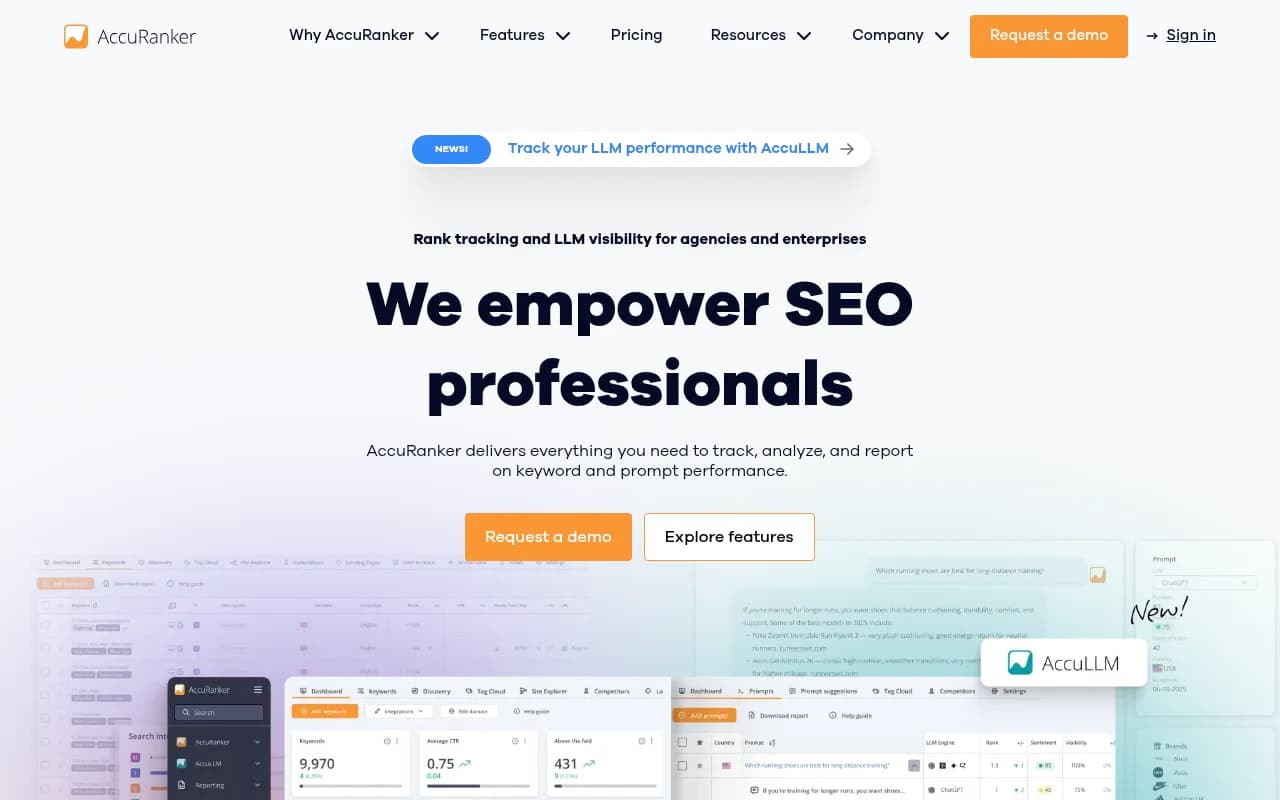
Tools like AccuRanker remain useful for tracking traditional keyword rankings, while AI-specific platforms handle the prompt-based monitoring side.
7. Speed of change is much faster -- and harder to predict
Google algorithm updates are significant events. They happen periodically, get named (Helpful Content, Core Updates), and the SEO community analyzes them intensively. You have time to adapt.
AI search changes constantly and without announcement. Model updates, retrieval changes, and new training data can shift which brands get cited overnight. There's no changelog. There's no "Perplexity Core Update" blog post.
This makes continuous monitoring essential rather than periodic. Checking your AI visibility once a quarter is like checking your Google rankings once a quarter -- you'll miss changes that matter.
The 37% of consumers who now start searches with AI tools (per 2026 data from QuickSEO) are a growing audience. As that share increases, the cost of missing AI visibility changes grows proportionally.
8. Measurement and attribution are genuinely harder
Google Search Console gives you impressions, clicks, average position, and CTR. It's not perfect, but it's a solid foundation for measuring SEO performance. The data is reliable and the attribution is relatively clear.
AI search attribution is a mess, and that's not an exaggeration. When someone asks ChatGPT for a software recommendation, gets your brand mentioned, and then searches for your brand on Google three days later -- how do you attribute that? You probably can't, with standard analytics.
This is why only 14% of marketers currently track AI visibility, according to the Goodfirms 2026 research. It's not that they don't care -- it's that the measurement infrastructure is still being built.
The brands that figure this out early will have a significant advantage. Some platforms are starting to connect AI crawler logs to actual site traffic, which helps close the attribution gap. But for most teams right now, AI visibility measurement requires accepting that some of the value is brand-level and not directly attributable to a session or conversion.
9. The optimization loop is completely different
Traditional SEO has a well-established optimization cycle: research keywords, create content, build links, track rankings, iterate. It's slow but predictable.
AI search optimization -- often called Generative Engine Optimization (GEO) -- requires a different loop:
- Identify which prompts your competitors are being cited for that you're not
- Understand what content or sources the AI is drawing from for those prompts
- Create content that fills those gaps, structured for citability
- Monitor whether AI models start citing your new content
- Expand to adjacent prompts and topics
This is a faster, more iterative cycle. And it requires different tools. A traditional SEO platform won't show you which prompts competitors are winning, what content gaps exist in AI responses, or whether your new article got picked up by AI crawlers.
Platforms built specifically for this -- like Promptwatch, which tracks citation rates across 10 AI models and includes content gap analysis and AI content generation -- are designed around this optimization loop rather than the traditional keyword-ranking cycle.
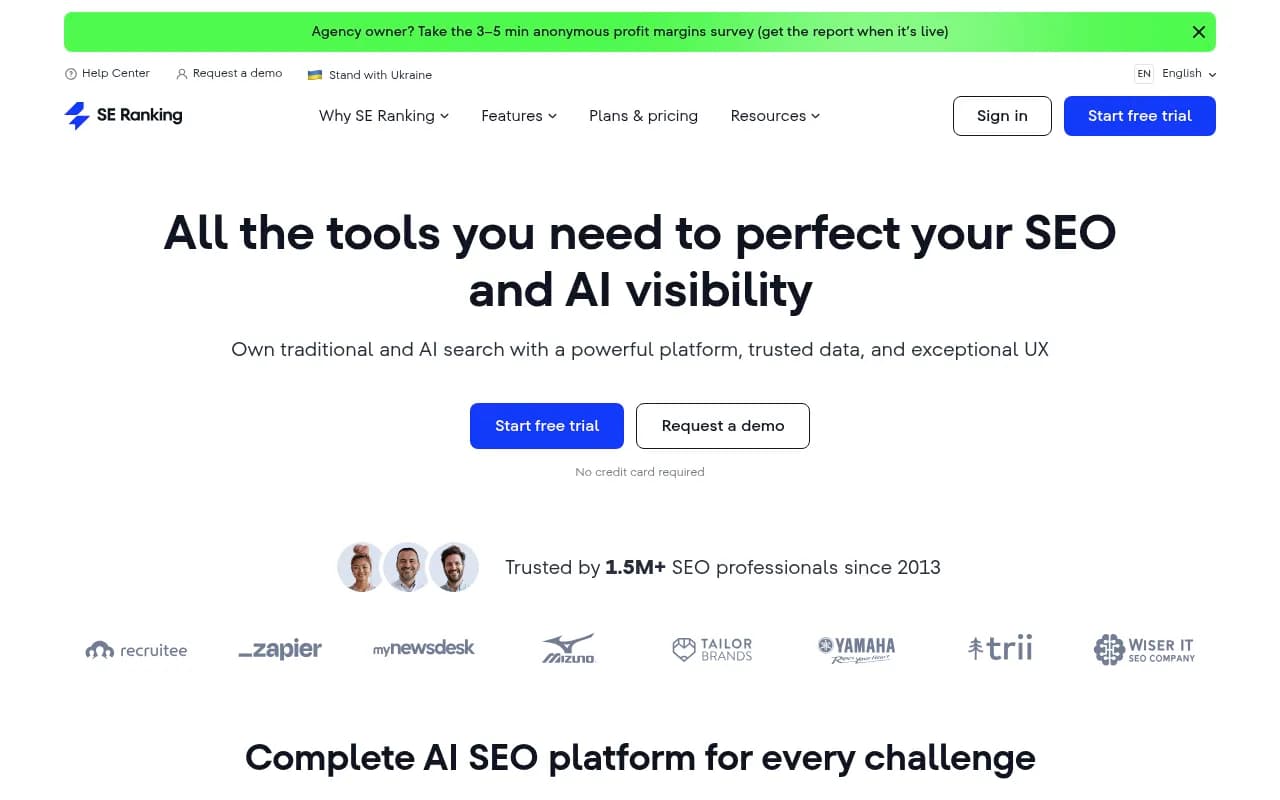
For teams that want to track traditional rankings alongside AI visibility in one place, platforms like SE Ranking and Semrush are adding AI tracking features, though their depth varies.
What this means in practice
These nine differences don't mean you should abandon traditional SEO. Google still drives enormous traffic, and for commercial-intent queries, ranking well still matters. The Goodfirms research found that 86.5% of marketers say ranking #1 still matters -- mainly for queries where users need to compare, evaluate, or take action.
What it means is that you need two parallel strategies, not one. And you need measurement infrastructure for both.
A few practical starting points:
- Run a sample of 20-30 prompts that represent your customers' actual questions and see who gets cited. This is your baseline.
- Audit your off-site presence: Reddit, YouTube, review sites, industry publications. These feed AI models and most brands have significant gaps here.
- Review your content for citability. Does it directly answer questions? Is it structured clearly? Does it establish your brand's expertise on specific topics?
- Set up AI visibility monitoring so you're not flying blind when model updates shift citation patterns.
The brands that treat AI search visibility as a separate discipline -- with its own metrics, its own content strategy, and its own optimization cycle -- will have a meaningful advantage over those still optimizing exclusively for Google rankings.
The two games are running simultaneously. You need to play both.
Tools worth exploring
If you're building out your AI visibility stack, here are some tools relevant to different parts of the problem:
For AI visibility monitoring and optimization:
Otterly.AI

Profound


For traditional SEO tracking (with some AI features):
For content optimization:

Quick comparison: traditional SEO vs AI search visibility
| Dimension | Traditional SEO (Google) | AI search visibility |
|---|---|---|
| Primary metric | Rankings, clicks, traffic | Citation rate, share of voice, mention sentiment |
| Result consistency | Deterministic (stable rankings) | Probabilistic (varies by prompt/model) |
| Key content signals | Keyword match, backlinks, E-E-A-T | Comprehensiveness, citability, entity clarity |
| Off-site signals | Backlinks | Mentions, forums, reviews, YouTube, Reddit |
| Query format | Short keywords | Natural language questions |
| Competitive visibility | Clear, trackable | Surprising, requires prompt sampling |
| Measurement tools | Google Search Console, rank trackers | AI visibility platforms, crawler logs |
| Update cadence | Periodic algorithm updates | Continuous, unannounced model changes |
| Attribution | Relatively clear | Difficult, often brand-level |
| Optimization cycle | Keyword > content > links > rankings | Gap analysis > content > citation tracking |
The table above makes the divergence clear. These are not the same discipline with different names. They share some foundations -- good content, credible sources, clear expertise -- but the mechanics of how you get found, measured, and optimized are genuinely different.
Build for both. Measure both. And don't assume that winning on Google means you're winning in AI search.