Key takeaways
- Apify is a developer platform: you run or build Actors (containerized scrapers), schedule them, and chain them with webhooks. Bright Data is infrastructure: proxies, unblocking APIs, SERP API and managed datasets.
- Apify's official pricing starts free ($5 of monthly usage), then $19 Starter, $199 Scale and $999 Business. Bright Data prices per product on separate sub-pages, and you should confirm numbers there before budgeting.
- For SEO teams, the choice usually comes down to SERP volume and how hostile the targets are. For AI teams, it comes down to whether you want ready-made site scrapers or a hardened pipe to the open web.
- You can combine them: Apify Actors can run through Bright Data proxies when a target blocks Apify Proxy.
- Most comparisons online are written by one of the two vendors or by an affiliate. Treat any verdict, including the star counts, with that in mind.
The short version
If you want a scraper for a popular site and you want it running by lunchtime, Apify is probably where you start. If you need to pull data from sites that fight back, at volume, with someone to call when it breaks, Bright Data is the more natural fit.
That is a simplification, and both companies now overlap a lot. Bright Data has Scraper Studio and a Web Scraper API with pre-built scrapers. Apify sells residential proxies, a Google SERP proxy and an unblocker. But the center of gravity is different, and that is what matters when you pick one.
One caveat before going further. Bright Data's own blog has a comparison called "Bright Data vs Apify," and a site called use-apify.com publishes a rival one with affiliate links. Neither is neutral. I have leaned on official pricing pages where possible and flagged vendor claims as claims.
What each platform actually is
Apify: a platform for running and building scrapers
Apify is a cloud platform built around Actors, which are containerized programs that scrape a site or automate a task. You can run one from the Store with a form and a button, call it through the API, or write your own with Crawlee and deploy it from the CLI. Runs can be scheduled and chained with webhooks.
Store size is inconsistent across sources. Apify's pricing page claims 98,000+ pre-built tools, Firecrawl's comparison says 26,000+, and use-apify.com says 70,000+. I would not quote any of them as fact. What matters is that for common targets (Google Maps, Amazon, social platforms, review sites), an Actor probably exists, though quality varies because most are community-built.
Apify is rated 4.84 from 579 reviews on Capterra, which is a decent sample.
Bright Data: web data infrastructure
Bright Data started in 2014 as Luminati Networks and is best known for its proxy network, which it describes as 400M+ IPs across 195 countries. Around that it sells a Web Scraper API with pre-built scrapers, a Scraping Browser compatible with Puppeteer and Playwright, Web Unlocker, a SERP API (JSON or HTML), Scraper Studio, and ready-made Datasets with an optional account manager. Its pricing page claims 50,000+ customers, with names like Deloitte, Pfizer and Moody's.
Bright Data is rated 4.66 from 68 reviews on Capterra. Fewer reviews, so a less settled picture.
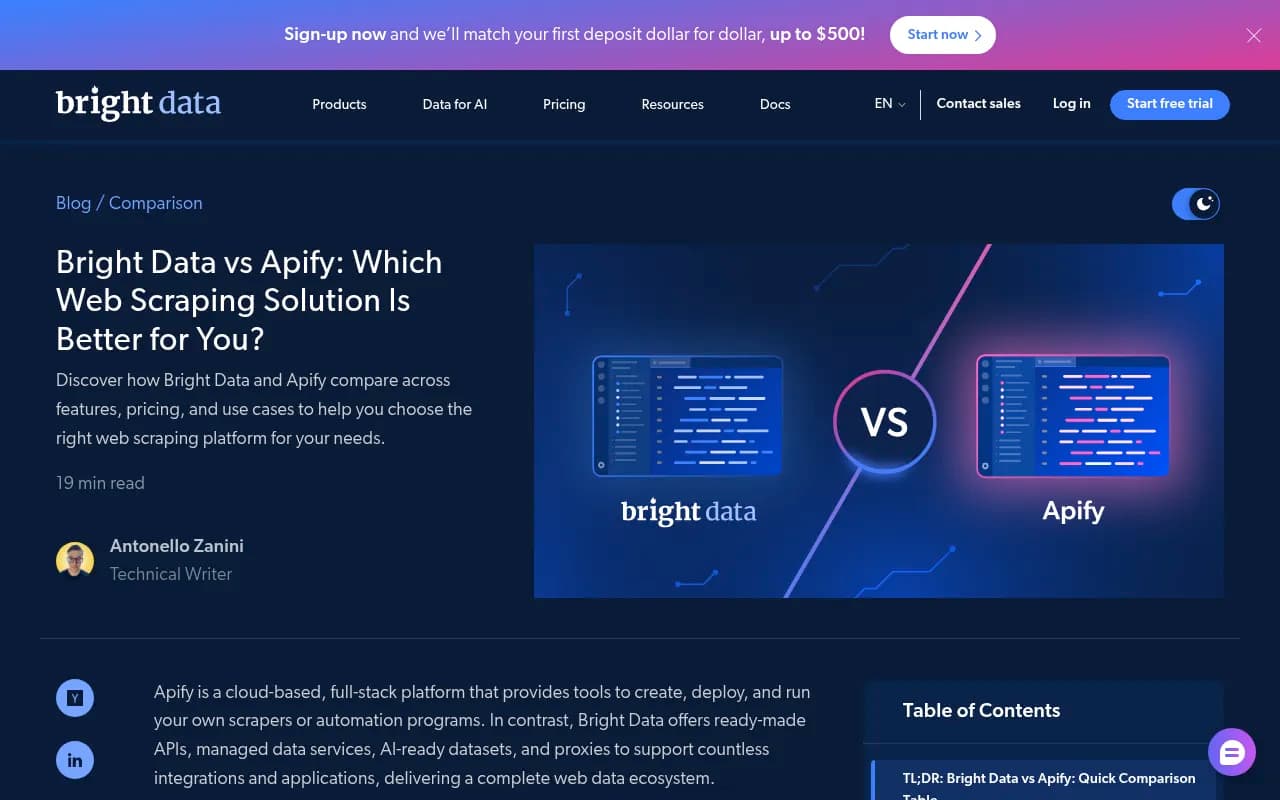
The screenshot above is Bright Data's own write-up. It is useful for the product list, less so for the verdict.
Side-by-side comparison
| Area | Apify | Bright Data |
|---|---|---|
| Core model | Platform for running and building Actors | Proxy-first infrastructure plus APIs and datasets |
| Pre-built scrapers | Community-built Actors in the Store | Maintained by Bright Data's own team |
| Custom scrapers | Strong: Crawlee, CLI, scheduling, webhooks | Possible via Scraping Browser and Scraper Studio |
| Proxies | Residential, datacenter, Google SERP | 400M+ IPs across 195+ countries (vendor claim) |
| Unblocking | Unblocker at $1 to $1.50 per 1,000 requests | Web Unlocker, built-in anti-bot handling |
| SERP data | Google SERP proxy from $1.70 to $2.50 per 1,000 | Dedicated SERP API |
| Managed datasets | No | Yes, with subscription option |
| MCP server | 700+ GitHub stars (per Bright Data) | 1.9k+ stars, 60+ tools (per Bright Data) |
| Entry cost | Free, $5 monthly usage | Per-product pricing, check sub-pages |
| Capterra | 4.84 (579 reviews) | 4.66 (68 reviews) |
The MCP numbers come from Bright Data's own blog, so they favor Bright Data by construction. GitHub stars are also a popularity signal, not a quality one.
Pricing: what we can verify
Apify
These figures come from Apify's official pricing page.
| Plan | Monthly price | Prepaid usage | Compute unit | Max concurrent runs |
|---|---|---|---|---|
| Free | $0 | $5 | $0.20 | 5 |
| Starter | $19 + pay as you go | $19 | $0.20 | 32 |
| Scale | $199 | $199 | $0.16 | 128 |
| Business | $999 | $999 | $0.13 | 256 |
| Enterprise | Custom | Custom | Custom | Custom |
A compute unit is one GB of RAM for one hour. Residential proxies run $8/GB on Free and Starter, $7.50 on Scale and $7 on Business. Google SERPs cost $2.50 per 1,000 on Free and Starter, $2 on Scale and $1.70 on Business.
The catch is the Store. Each Actor picks its own pricing model: pay per event, pay per usage, or both. So your real bill depends on which Actors you run, not just your plan. A Reddit user in r/automation put it this way: Apify is fantastic for pre-built Actors on common sites, but costs "can spiral quickly." That matches how usage-based pricing behaves, so set spending limits.
Ignore any third-party article that says Apify's paid plans start at $49 and $499 a month. That conflicts with the official $19 and $199 tiers.
Bright Data
Bright Data's pricing hub lists product lines, but the per-unit prices live on sub-pages. I could not verify a SERP API price per 1,000 requests, a Web Unlocker price or a residential per-GB rate, and I will not guess. Firecrawl's competing article says Bright Data has $499/month minimums billed separately per product and multi-zone setup before a first request. That is a rival's claim, so confirm it on the sub-pages (proxy network, SERP, Web Unlocker, Scraping Browser, Web Scraper, Datasets) before you commit.
Scraper Studio is described as charging only for successful requests and has a free tier. That is a useful detail for teams worried about paying for blocked pages.
Fit for SEO teams
SEO scraping usually means one of four jobs: SERP collection, competitor page monitoring, on-page extraction at scale, and review or local data pulls.
SERP collection
Both have a route. Bright Data's SERP API returns JSON or HTML, and per its sales material covers Google, Bing, Yandex and Baidu according to Firecrawl's write-up. Apify's Google SERP proxy is priced per 1,000 SERPs and gets cheaper as you move up plans. At low volume, Apify's published rates are easy to model. At high volume or across multiple engines, Bright Data's dedicated API is worth pricing out.
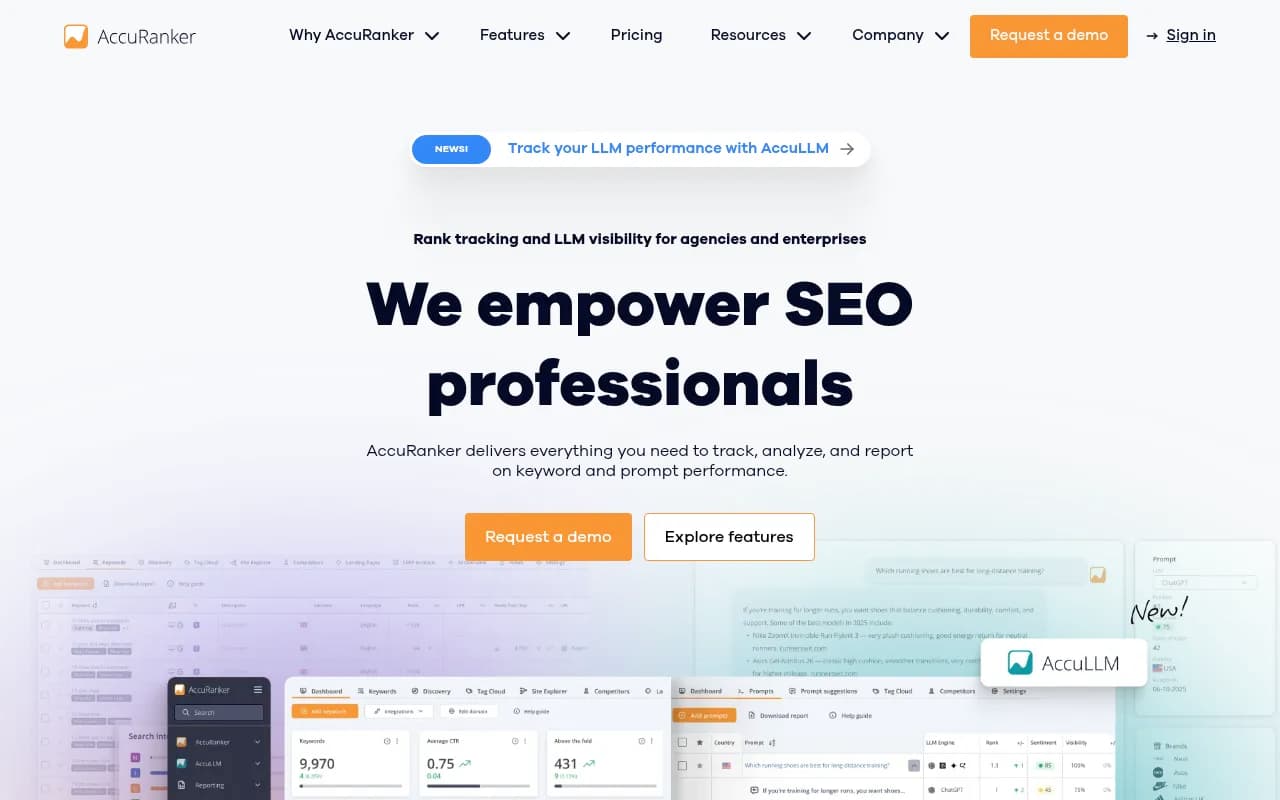
If you only need rankings for your own keywords, a rank tracker is cheaper than building anything. Tools like AccuRanker cover that.
Technical crawling
Neither platform replaces a purpose-built SEO crawler. For auditing your own site, a desktop or cloud crawler is the right tool.
Scraping platforms earn their place when you crawl other people's sites: competitor catalogs, pricing pages, directories. There, Apify's Website Content Crawler-style Actors and scheduling are convenient, while Bright Data's unblocking helps when a target blocks datacenter IPs.
Change monitoring
If you only want to know when a competitor page changes, you probably do not need either. A monitoring tool is lighter.
Fit for AI teams
AI teams scrape for three reasons: training or evaluation data, RAG pipelines, and agents that browse live.
Apify's Actors give you structured output from specific sites with little code, and Apify announced x402 agentic payments so agents can run Actors and pay per run. Bright Data pitches an MCP server with 60+ tools for search, scraping and web interaction, plus AI-ready datasets so you can skip scraping altogether for some use cases.
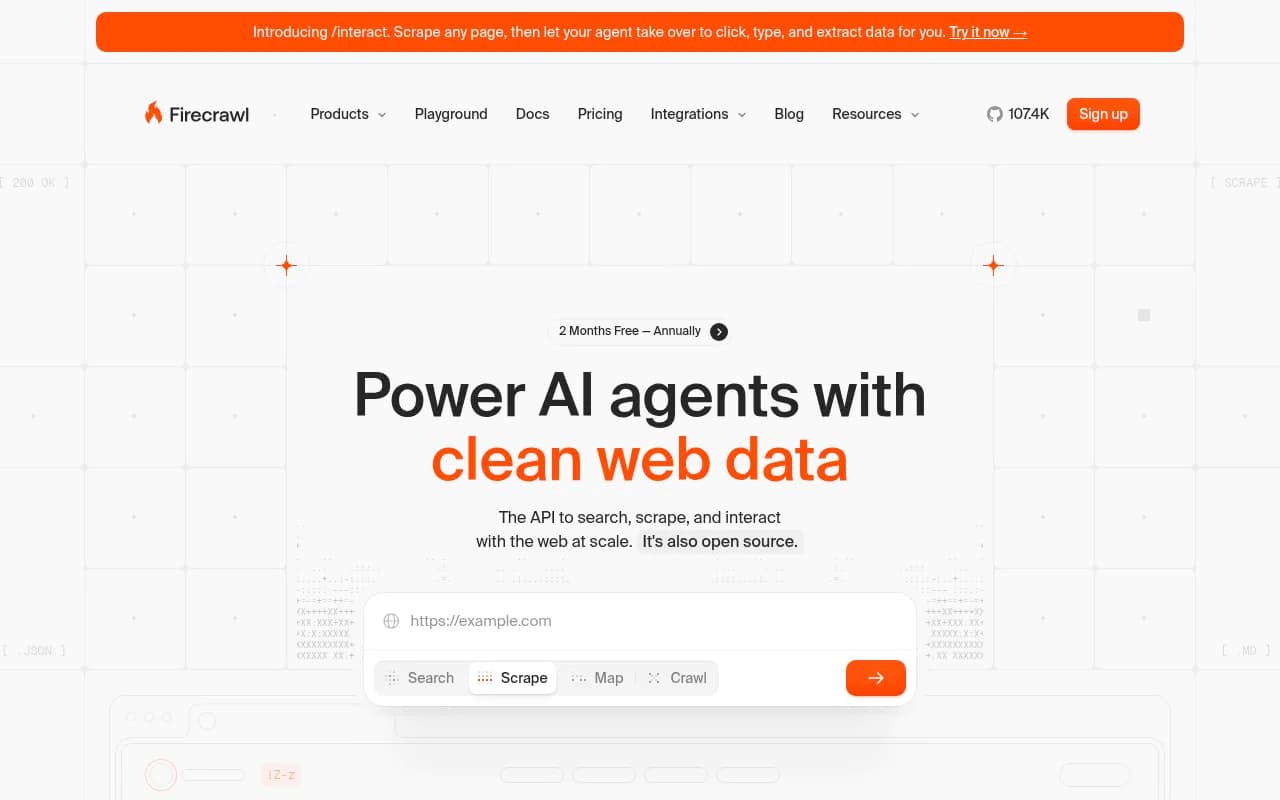
A third option is worth knowing about. Firecrawl positions itself as a single API for scrape, search, crawl and browse, with LLM-ready markdown output. It is the pick when you want clean text into a model, not site-specific scrapers or a proxy network.
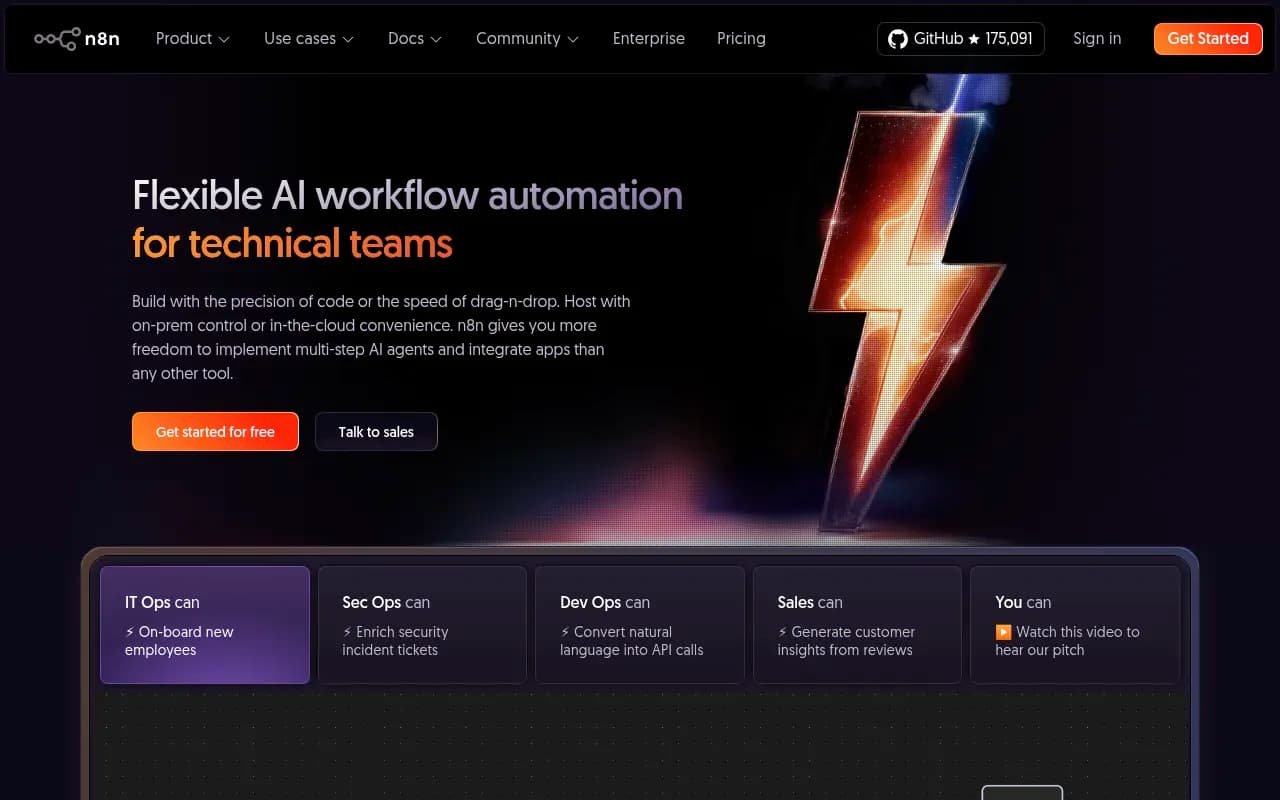
For wiring scraped data into downstream workflows, automation tools such as n8n and Zapier are common glue, and Apify lists integrations with n8n, Zapier, Make, Slack and Google Drive.
Choosing by scenario
| Scenario | Better starting point | Why |
|---|---|---|
| Need a scraper for a mainstream site this week | Apify | Ready-to-run Actors, free tier to test |
| Building and scheduling custom scrapers in code | Apify | Crawlee, CLI, webhooks |
| Heavily protected targets at scale | Bright Data | Proxy network and unblocking are the core product |
| Want data without running scrapers | Bright Data | Managed datasets |
| Large SERP volume across engines | Bright Data | Dedicated SERP API |
| LLM-ready markdown for RAG | Firecrawl | Built for that output |
| Apify Actor keeps getting blocked | Both | Route the Actor through Bright Data proxies |
That last row is the practical answer to "which one." The hybrid is real: you configure a custom proxy in the Actor input and keep Apify's scheduling and Store while borrowing Bright Data's IPs.
What I could not verify
It would be dishonest to wrap this up neatly, because the evidence has gaps.
- No independent benchmark of success rates on hard targets turned up. Every "Bright Data unblocks better" claim comes from a vendor or an affiliate.
- Bright Data's per-unit prices were not verified.
- Compliance and customer vetting differ between the two, but I found nothing reliable on specifics. Both show GDPR-related claims, and Apify's pricing page lists SOC 2. Ask each vendor directly if you are in a regulated industry.
- Store size figures disagree by a factor of nearly four.
My advice is to run the same small job on both. Pick one real target, 1,000 pages, and compare cost, success rate and time spent debugging. That tells you more than any comparison article.
Scraping data to understand AI visibility
A lot of AI and SEO teams scrape because they want to know how they show up in AI answers. That is a different problem from general scraping, and a general scraper is a poor tool for it, since AI interfaces differ from API outputs and are hard to sample consistently.
Purpose-built tools handle that better. Promptwatch tracks how brands appear across ChatGPT, Google AI Overviews, Perplexity and other models, and also logs which AI crawlers hit your own site.

That second part matters if you are scraping and being scraped. Promptwatch Data's AI crawler traffic report (IP-verified requests, June 8 to September 6, 2026) found OpenAI made up 79.8% of verified AI crawler requests in the week of Aug 31 to Sep 6, down from 94.8% in the week of June 8 to 14. The mix is shifting, so checking your robots.txt and CDN rules against your own logs is worth doing. For a broader look at tools in this space, the GEO software directory lists alternatives.
Bottom line
Pick Apify if your team writes code or wants pre-built scrapers, values scheduling and a free way to start, and can watch usage-based costs. Pick Bright Data if your bottleneck is getting through blocks at scale, or you would rather buy a dataset than maintain scrapers. Pick neither first if you just need markdown for an LLM, and look at Firecrawl.
Whatever you choose, test on your real targets before signing anything annual, and confirm Bright Data's per-product prices on its own pricing pages first.