
Key takeaways
- A citation is not a visit. To connect the two you need three data sources: what AI says (prompt tracking), what AI bots read (crawler logs), and who arrives (visitor analytics or GA4).
- Attribution only covers trackable referrals. Some AI visits land as direct traffic, so treat the numbers as a floor, not a total.
- AthenaHQ markets revenue attribution but starts at $295/month on a credit model with no real free trial (vendor-reported, October 2026).
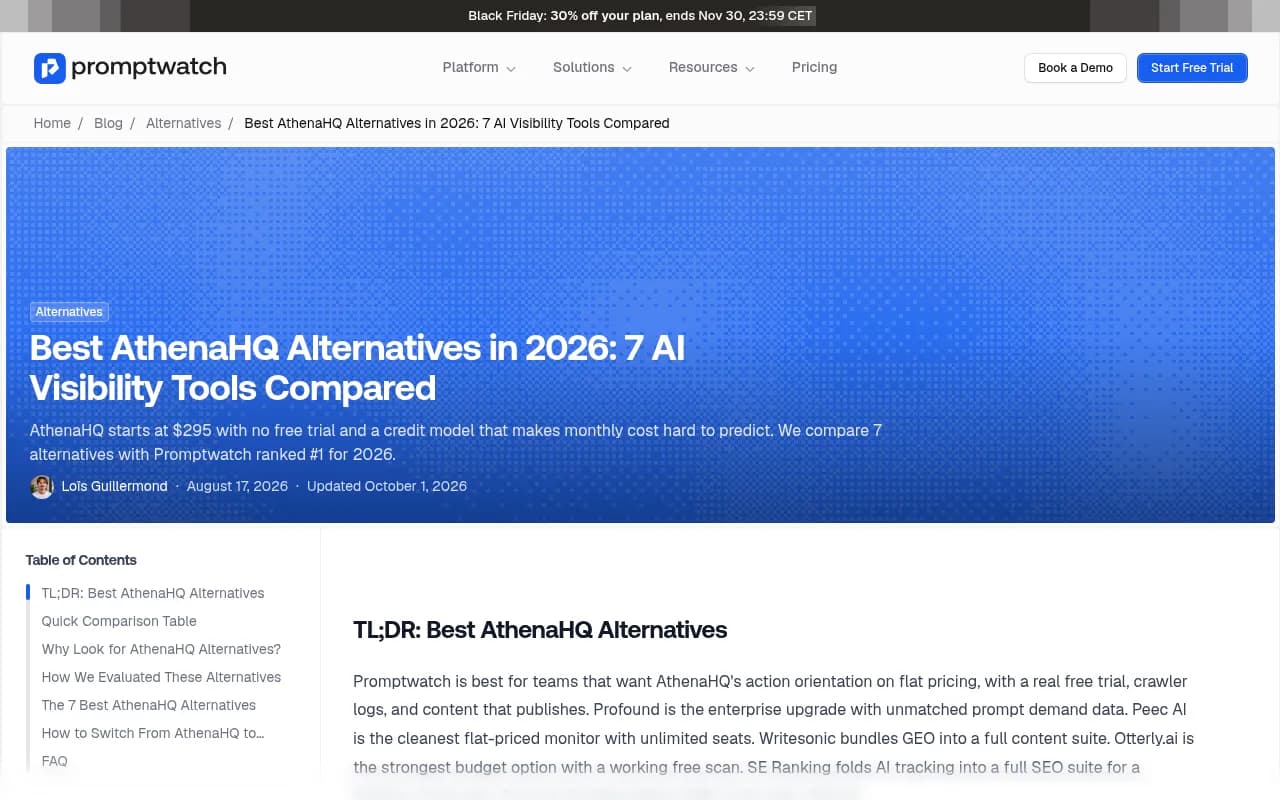
- Promptwatch, Analyze AI, Siteline AI and Bear AI each connect AI visibility to traffic in different ways. General analytics tools like GA4 and Dreamdata fill the conversion side.
- Social citations barely matter for ChatGPT attribution. Visits will mostly land on your own pages, listicles and comparisons.
Why attribution is the real reason people leave AthenaHQ
Most teams shopping for an AthenaHQ alternative start with price. The floor is $295 a month, billed on credits, and signup gives a one-time pool of roughly 300 credits instead of a proper trial. Those are vendor claims from Promptwatch's own comparison, so check current pricing yourself.

But the question that comes up in the second meeting is different: can you show me that AI citations produce visits, and that those visits convert? A visibility score on its own does not answer that. A CFO wants sessions, signups and revenue.
That is the lens for this guide. I am ranking alternatives on how well they close the gap between a mention in an AI answer and a row in your analytics.
How AI traffic attribution actually works
There is no single switch that says "this sale came from ChatGPT." You stitch it together from three layers.
Layer 1: what AI says about you
Prompt tracking runs a set of questions across ChatGPT, Gemini, Perplexity, AI Overviews and others, and records whether you are mentioned, where, and which pages get cited. This tells you where you could get traffic. It does not tell you that you did.
Layer 2: what AI bots read
Crawler logs show which AI bots fetch which pages, and which fail. This matters more than people expect. A page that never gets crawled never gets cited, so no attribution setup will rescue it. Promptwatch's AI crawler traffic data shows OpenAI at 79.8% of IP-verified AI crawler requests in the week of Aug 31 to Sep 6, 2026, down from 94.8% in early June. The practical tip from that report: compare your own logs against that mix. A provider that is large in the chart but near zero in your logs suggests you are blocked or unreachable for it.
Layer 3: who shows up and what they do
This is the referral side. Visitors arriving from chatgpt.com, perplexity.ai, gemini.google.com, claude.ai and copilot domains can be grouped into an AI channel in your analytics, then tied to conversions. Two caveats:
- Some referrals arrive with no referrer at all. Mobile app clicks are the usual suspect and land in direct traffic. A keeverseo.com guide makes the same point: AI traffic reports measure trackable referrals, not every visit influenced by an AI answer.
- Referrer behavior changes. Per Promptwatch's notes, ChatGPT stopped sending a referrer on October 8, 2026, so tagging links with utm_source=chatgpt.com and counting those visits matters now.
What the citation data says about where visits land
Promptwatch Data's social media citations report (Oct 11 to Nov 9, 2026) found social platforms made up 0.64% of ChatGPT citations, 1.94% of Perplexity's and 13.16% of Google AI Overviews'. YouTube alone was 6.71% of AI Overviews citations. So for ChatGPT, attributable visits will mostly hit your owned pages and the listicles and comparisons that cite you. For AI Overviews, video is a real second front.
Product pages are also the most cited content type in ChatGPT at 22.4% of citations, according to the content type report (Sep 28 to Oct 4, 2026). Those are the pages where a visit is closest to a conversion, so make sure your tracking is solid there first.
What to demand from an alternative
Before you compare names, write down your must-haves. I would insist on these:
- A first-party tracking script or server-side logs, not just API-based prompt monitoring.
- A way to split AI traffic by engine, landing page and conversion event.
- Crawler visibility, so you can tell an access problem from a content problem.
- A link between a page and the prompts that cite it.
- Export or API access, so the data can reach GA4, a warehouse or your CRM.
- Pricing that does not punish you for looking at the data more often.
Comparison: AthenaHQ alternatives with traffic attribution
| Tool | Attribution approach | Crawler logs | Starting price (as listed) | Best for |
|---|---|---|---|---|
| AthenaHQ | Revenue attribution tied to visibility | Not a focus | $295/mo, credits | Teams already committed to it |
| Promptwatch | Visitor analytics, IP-verified crawler logs, Search Console and Bing data per page | Yes | $95/mo | Closing the loop from citation to fix to traffic |
| Analyze AI | Ties AI visibility to real traffic | Check vendor | Check vendor | Lean teams wanting traffic next to visibility |
| Siteline AI | AI agent traffic analytics | Agent traffic focus | Check vendor | Understanding bot and agent behavior |
| Bear AI | Turns agent traffic into revenue with conversion tools | Agent traffic focus | Check vendor | Conversion-led teams |
| Profound | Enterprise prompt demand data | Check vendor | $99/mo annual, Growth $399 | Enterprises |
| Peec AI | Clean monitoring | No | $95/mo | Teams with their own analytics stack |
| Scrunch AI | Treats agent traffic as its own channel | Check vendor | ~$250/mo | Enterprise brands |
Prices for tools other than Promptwatch come from Promptwatch's own comparison article and are vendor-reported. Confirm before buying.
The alternatives, in more detail
Promptwatch
Promptwatch is the option I would look at first if attribution is your main reason for leaving, because it keeps all three layers in one place. It tracks how ChatGPT, Gemini, Perplexity, Claude, AI Overviews and others mention and cite you, logs AI crawler hits with IP verification, and runs visitor analytics that count AI-referred sessions and conversions by engine, page and country. Search Insights then overlays Google Search Console and Bing data, so you can ask which pages rank in search but never get cited by AI.

The part that goes beyond reporting: pages that underperform come back as actions, and the Content Agent can write and publish fixes to WordPress, Webflow or Framer. Then the same page is tracked again for crawls, citations and traffic. Case in point: TreeHouse, the company behind Pararius, grew AI search to about 25% of organic conversions after fixing crawler access and publishing proprietary data (case study). Crisp reported 2x higher conversion rates from AI traffic than other channels (case study).
Pricing starts at $95/month (Essential, with 200K visitor events), but crawler logs begin on Professional at $245/month, so match the plan to your attribution needs. Business at $579/month adds the Content Agent and hourly tracking. Check promptwatch.com/pricing and try the 7-day free trial. Compare directly with Promptwatch vs AthenaHQ.
Analyze AI
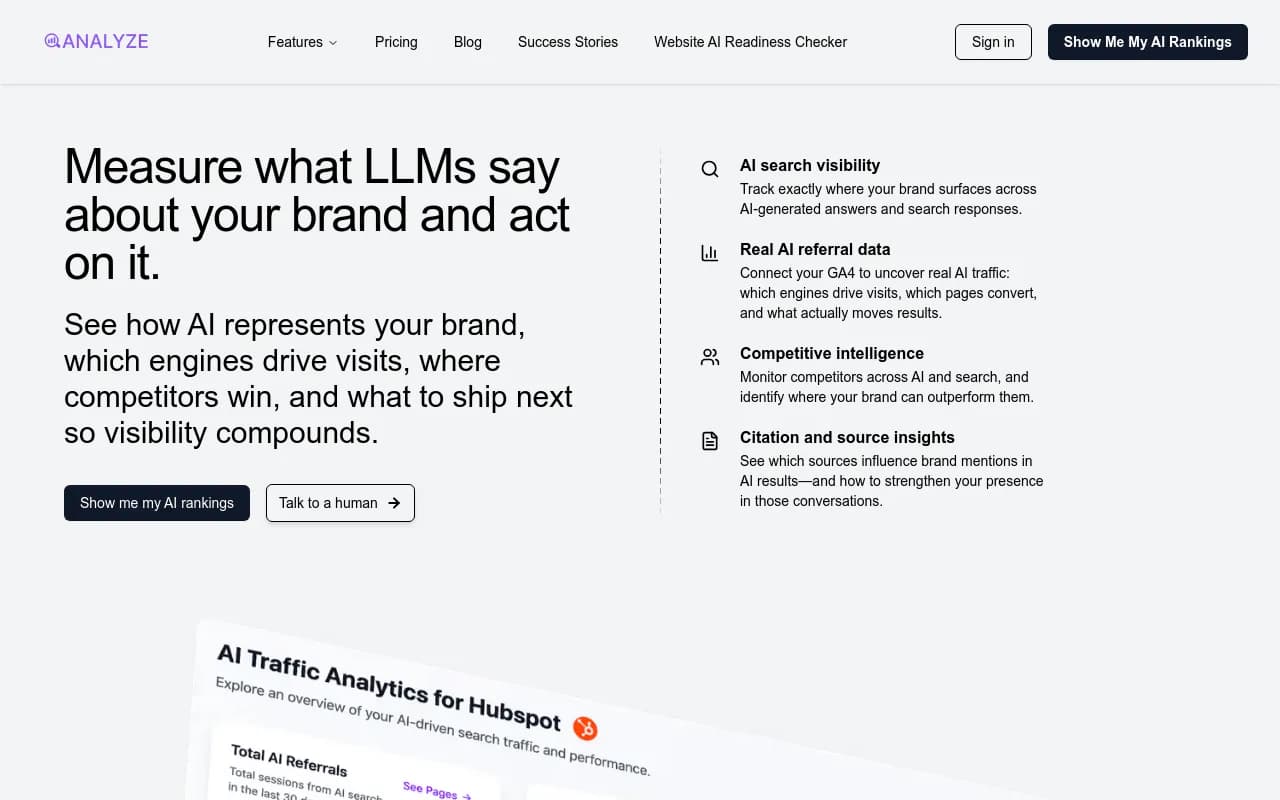
Analyze AI pitches itself as tracking AI visibility and tying it to real traffic. That is the right idea for a lean team. Verify how it identifies sessions and whether it exposes conversion events before you commit.
Siteline AI and Bear AI
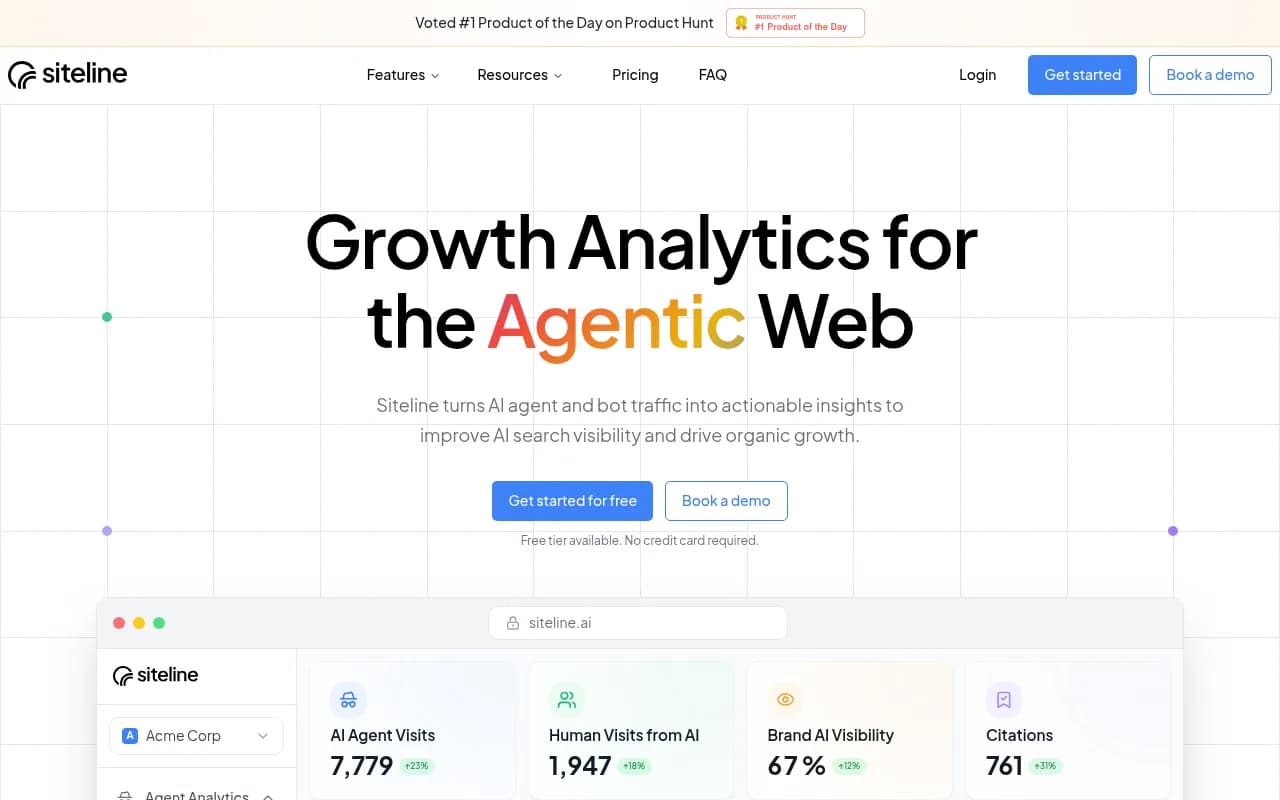
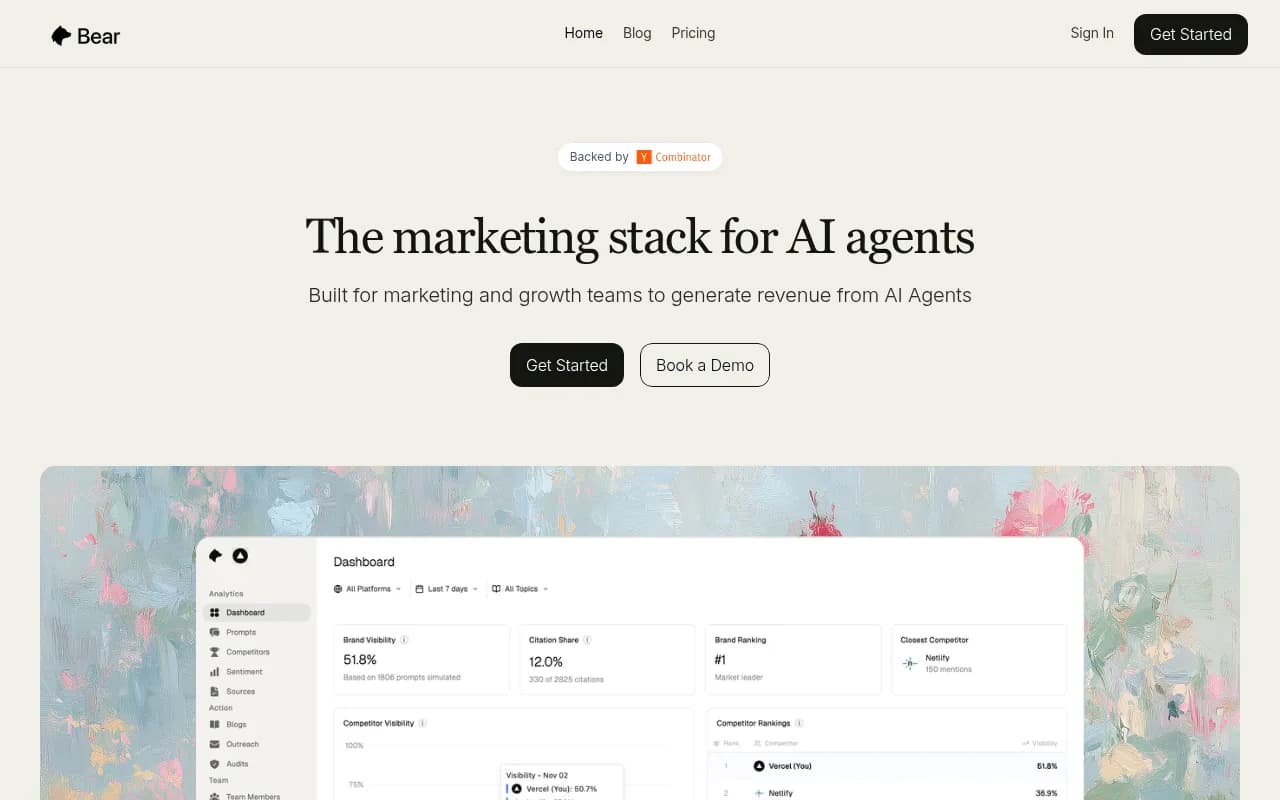
Both lean into the agent-traffic side. Siteline AI focuses on analytics for AI agent traffic, which helps you see what bots do on your site. Bear AI goes a step further and positions itself around turning agent traffic into revenue with conversion tools. These make sense if you care about agents that browse and buy, not just citations.
Profound, Peec AI and Scrunch AI
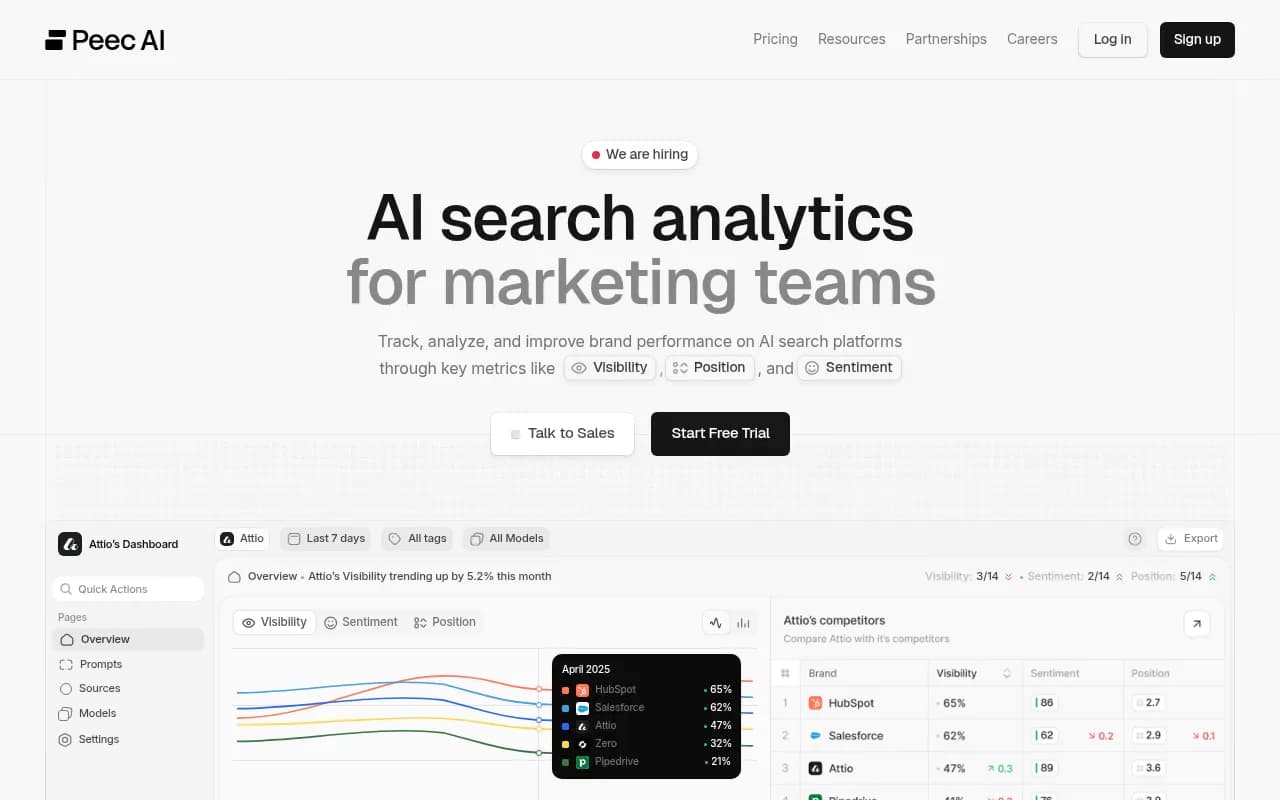
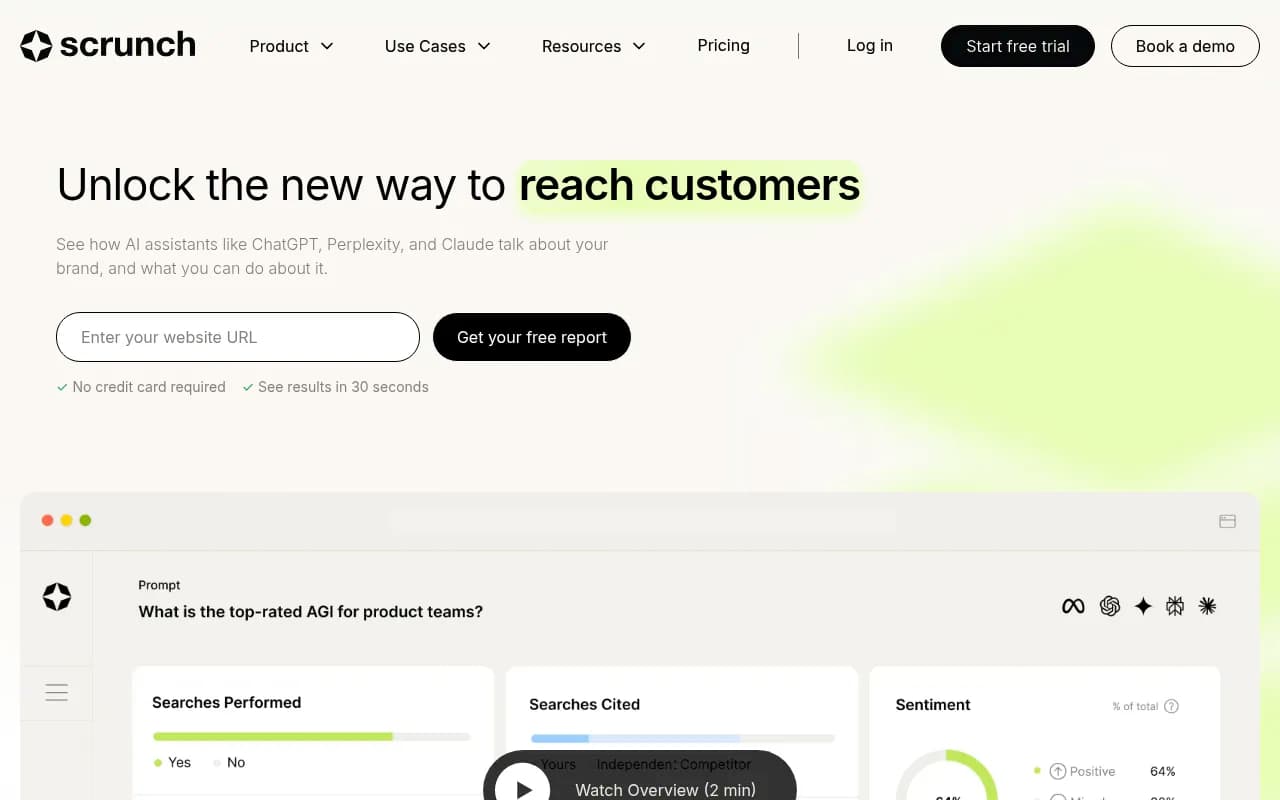
Profound has the strongest prompt demand data and suits enterprises, but attribution is not its headline. Peec AI is a clean, flat-priced monitor. It tells you where you appear, then leaves visit and conversion tracking to your own stack. Scrunch AI treats agent traffic as a separate channel, which is closer to the attribution problem.
Profound

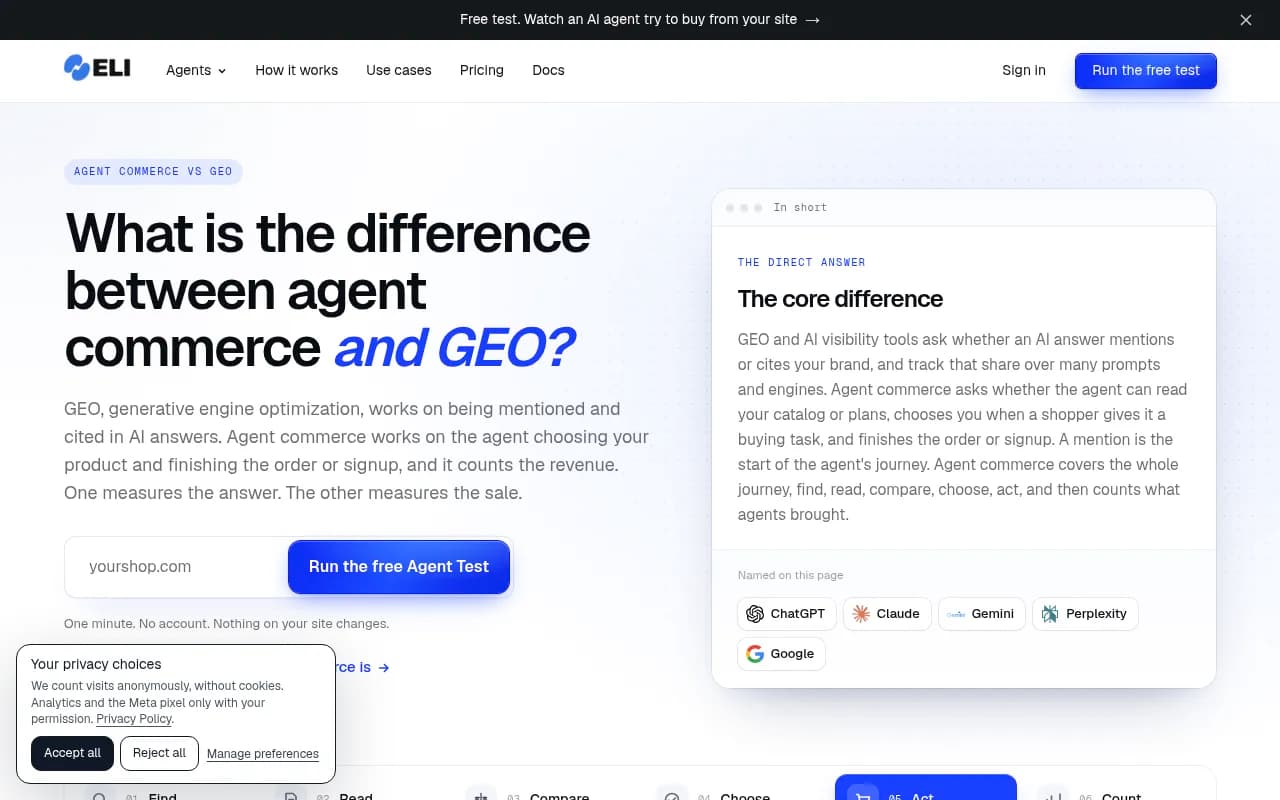
One independent warning from Eli's own tests of 12 November 2026: of 54 companies, 42 got no recommendation at all across 323 ChatGPT and Claude answers. That is a small sample and one run per task, but it is a reminder that a mention is not a recommendation, and a recommendation is not a sale.
The attribution stack around your GEO tool
Even the best GEO platform will not replace your analytics. Pair it with:
- Google Analytics for a custom AI channel group built from referrer regex (chatgpt.com, perplexity.ai, gemini.google.com, claude.ai, copilot.microsoft.com).
- Google Search Console for the Google side of the picture.
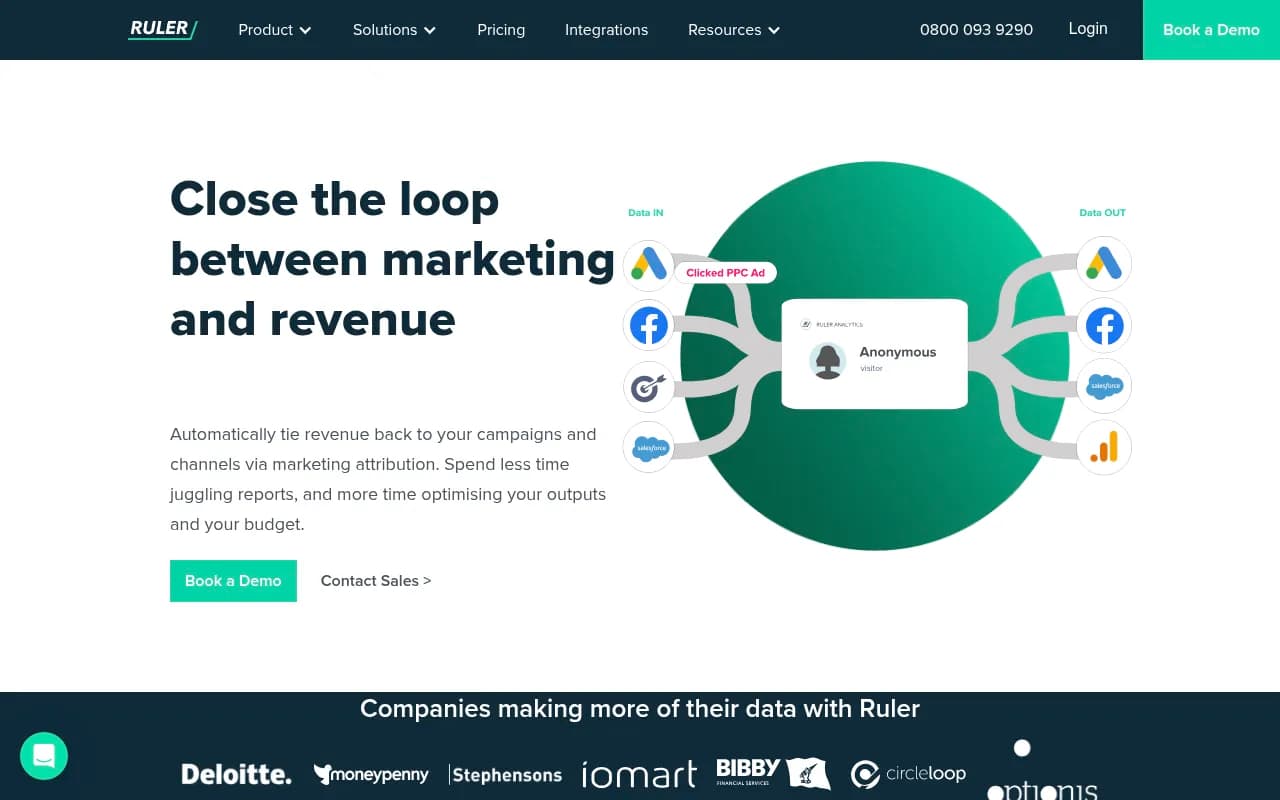
- Dreamdata or Ruler Analytics if you need multi-touch or revenue attribution in B2B.
A practical setup in five steps
- Define the AI channel in GA4 using a referrer regex, and keep it as its own channel group so it does not blend into referral.
- Tag every link you control. Add utm_source values for AI engines wherever you publish links that assistants may reuse.
- Turn on crawler logging through your CDN or host. Without it you cannot tell whether a quiet page is unread or unloved.
- Map prompts to landing pages. For each tracked prompt, note which of your pages get cited and send that list to whoever owns conversion rates.
- Report on trends, not absolutes. Compare AI-referred sessions and conversion rate week over week, and label the number as trackable referrals.
Which one should you pick?
- Want citation, crawl and visit data in one product, plus the ability to fix gaps: Promptwatch.
- Want a light traffic-plus-visibility pairing: Analyze AI.
- Care mostly about agent behavior: Siteline AI, Bear AI or Scrunch AI.
- Already own your analytics and just need monitoring: Peec AI.
- Need enterprise prompt demand data: Profound.
For a wider shortlist, the GEO software directory lists more tools by capability.
Bottom line
Attribution is a chain with three links, and most tools hold only one. Pick the one that covers the links you do not already own, set up your AI channel in analytics this week, and accept that the numbers will undercount. A consistent undercount you can trend is still more useful than a visibility score with no visits behind it.
FAQ
Can any tool attribute every AI-influenced sale?
No. Mobile app clicks, copy-pasted URLs and users who read an answer and search your brand later all show up as direct or organic. Trackable referrals are a floor.
Is AthenaHQ's revenue attribution worth $295 a month?
It can be if it fits your stack, but the credit model makes cost harder to predict. Compare it against a flat-priced alternative with a real trial.
Do I need crawler logs for attribution?
Yes if you want to diagnose problems. Logs separate access failures from content failures, which visit data alone cannot do.
Which AI engine sends the most attributable traffic?
It varies by site. Promptwatch's TreeHouse case study reported that 99% of its AI-driven conversions came from ChatGPT, but your mix will differ, so measure it yourself.