
Key takeaways
- Most AEO tools are monitoring dashboards. A much smaller group reads server or CDN logs to show which AI bots reach your pages, and a smaller group still ties that to human visits and conversions.
- Crawler logs and AI traffic attribution answer different questions. Logs tell you whether bots can reach and read a page. Attribution tells you whether AI answers send people who convert. You need both to tell an access problem from a content problem.
- Promptwatch, Profound, Scrunch and a few niche tools (Siteline AI, xSeek, Scriptbee, Bear AI) cover some part of this. Coverage, IP verification and pricing vary a lot, so verify on each vendor's pricing page.
- Referrer tracking is the weak spot. ChatGPT stopped sending a referrer on October 8, 2026, so attribution that relies only on referrer headers undercounts. Look for UTM-based fallbacks.
- A quick test: ask each vendor to show you a page that was crawled, cited, visited and converted, all in one view.
Why crawler logs and attribution matter more than another visibility score
Visibility tracking has become table stakes. Almost every AEO tool will tell you that ChatGPT mentioned your brand in 31% of tracked prompts. Fewer can tell you why a page that should be cited never is, or whether the citations you do earn produce a single sale.
That gap is where crawler logs and attribution come in.
- Crawler logs show which AI bots (GPTBot, OAI-SearchBot, ClaudeBot, PerplexityBot and others) request which URLs, how often, and what status codes they get back.
- AI traffic attribution separates human visitors arriving from ChatGPT, Perplexity, Gemini, Claude or Copilot from everything else, then connects them to conversions.
Without logs, a low citation rate is a mystery. It could be that bots are blocked by your WAF, that a page returns a 403, or that the content simply is not good enough. With logs, you can tell. Promptwatch's AI Crawler Traffic report is a useful sanity check here: in the week of Aug 31 to Sep 6, 2026, OpenAI accounted for 79.8% of verified AI crawler requests, down from 94.8% in Jun 8 to 14. If a provider is large in that overall mix but near zero in your own logs, you are probably blocked or unreachable for it.
There is also a market shift to watch. Promptwatch Data on Meta-WebIndexer found it went from roughly 2% to nearly 38% of tracked AI crawler requests between mid-July and August 9, 2026. Bot mixes move fast. A tool that only shows you a static list of user agents will age badly.
What to look for in a platform
I would score every candidate on six things before looking at price.
Log ingestion and IP verification
How do the logs get in? CDN integrations (Cloudflare, CloudFront, Fastly, Vercel, Akamai, Netlify), a WordPress plugin, a custom endpoint, or raw uploads. More important: does the tool verify requests against each operator's published IP ranges? User agent strings are trivially spoofed. Without IP verification, your numbers are inflated by scrapers pretending to be GPTBot.
Training bots versus answer-time fetchers
A GPTBot hit and a ChatGPT-User hit mean very different things. One feeds a training or index pipeline. The other means a real person's question caused a fetch right now. The better platforms separate these, and some show a crawl-to-citation path per page.
Separate AI-referred visitor tracking
The research behind this guide kept returning to one pitfall: AI session attribution needs its own referrer logic, and it should be reported separately from crawler activity. Mixing bot hits with human visits is a common way to produce a dashboard that looks great and means nothing.
Handling of missing referrers
Since ChatGPT stopped sending a referrer on October 8, 2026, tools need a fallback such as counting visits tagged utm_source=chatgpt.com. Ask the vendor how they handle it.
Conversion connection
GA4 integration, an own tracking script, or both. Closed-loop reporting needs to show conversions, not just sessions.
Action layer
Does the tool help you fix what the logs reveal? Reporting that a bot gets a 404 is useful. A tool that creates the task, helps rewrite the page, and checks again next week is better.
Comparison table
| Platform | Crawler logs | AI visitor and conversion attribution | Content and fix workflow | Best for |
|---|---|---|---|---|
| Promptwatch | IP-verified logs via CDN, host or WordPress plugin | Own script, GTM template, WordPress plugin; UTM fallback for ChatGPT | Content Agent, Action Board, CMS publishing | Teams that want the full crawl to citation to visit to conversion loop |
| Profound | Agent Analytics via CDN integrations | GA4 connection to human traffic and conversions | Content creation, enterprise workflows | Large enterprises needing compliance and panel data |
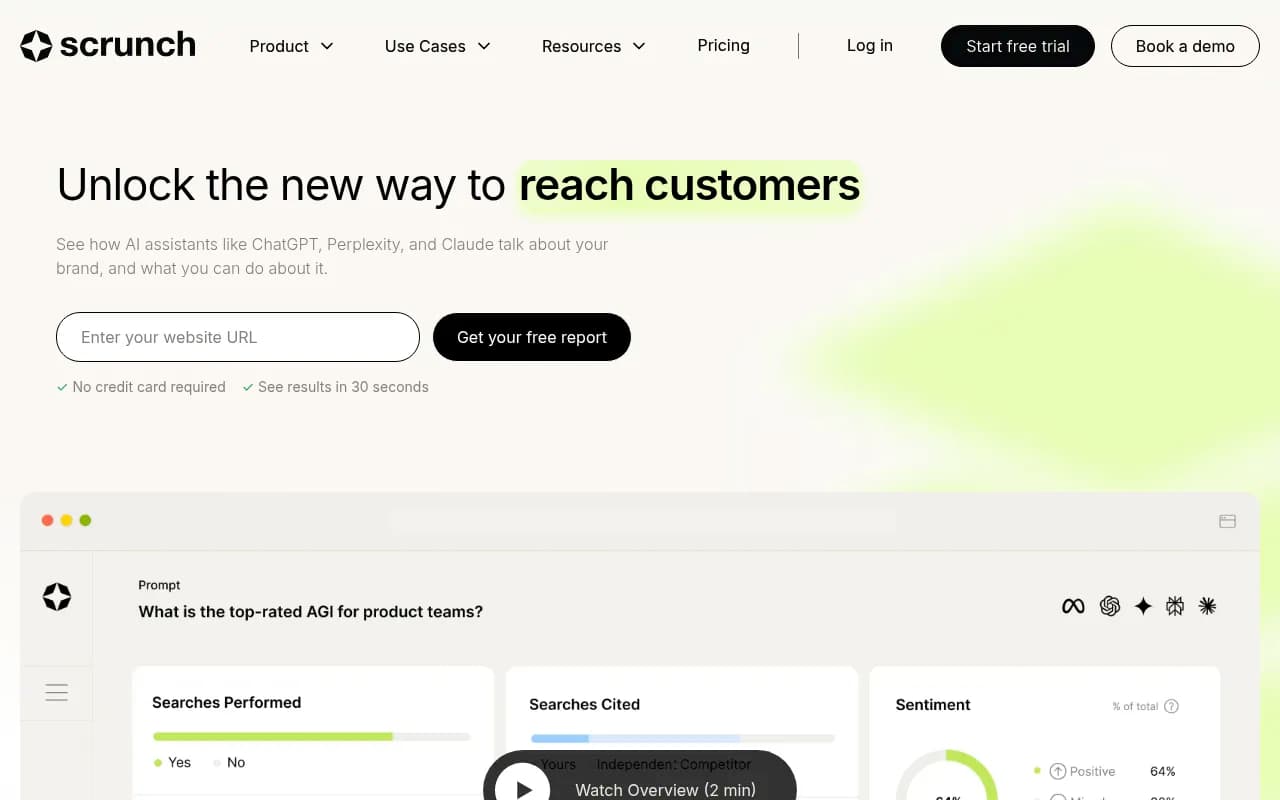
| Scrunch AI | Crawler observability | Journey mapping | Agent Experience Platform serves AI-friendly content | Teams wanting monitoring plus AI-served content |
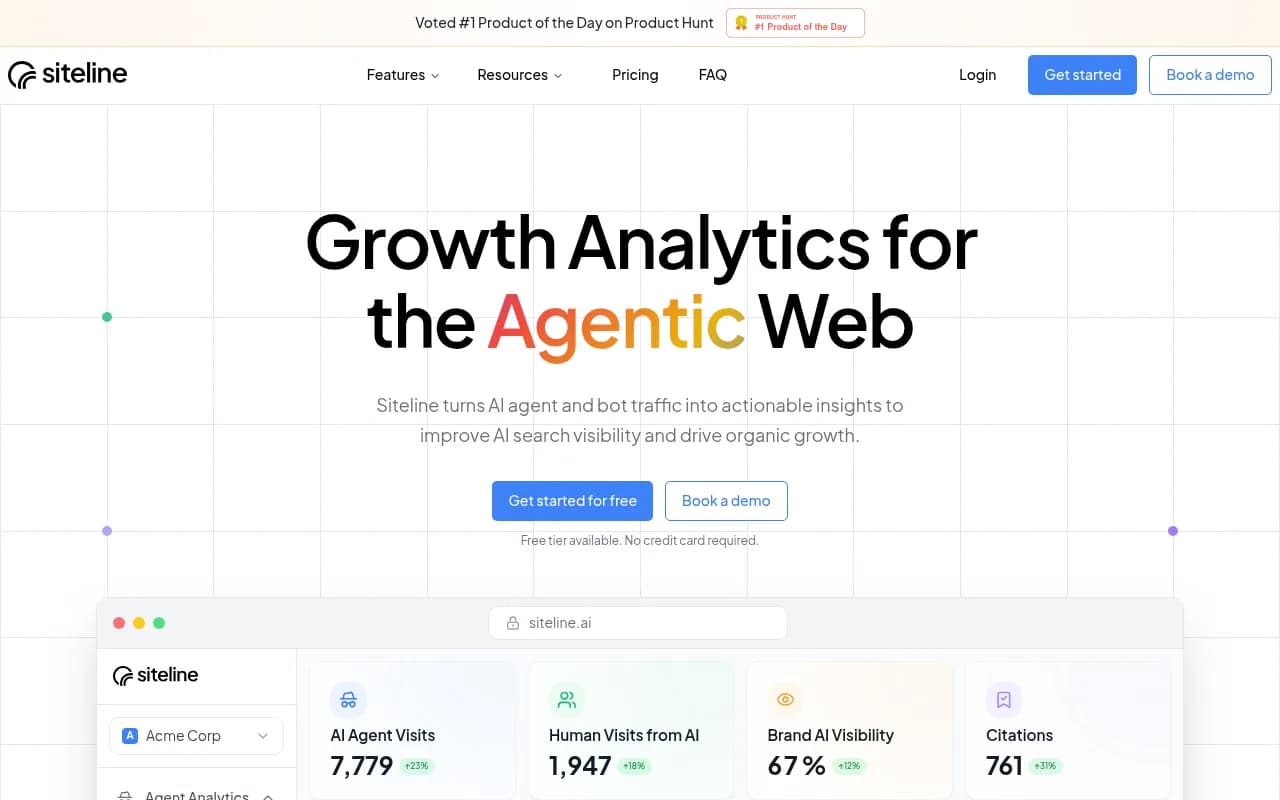
| Siteline AI | AI agent traffic analytics | Traffic focus | Limited | Teams that mostly want bot analytics |
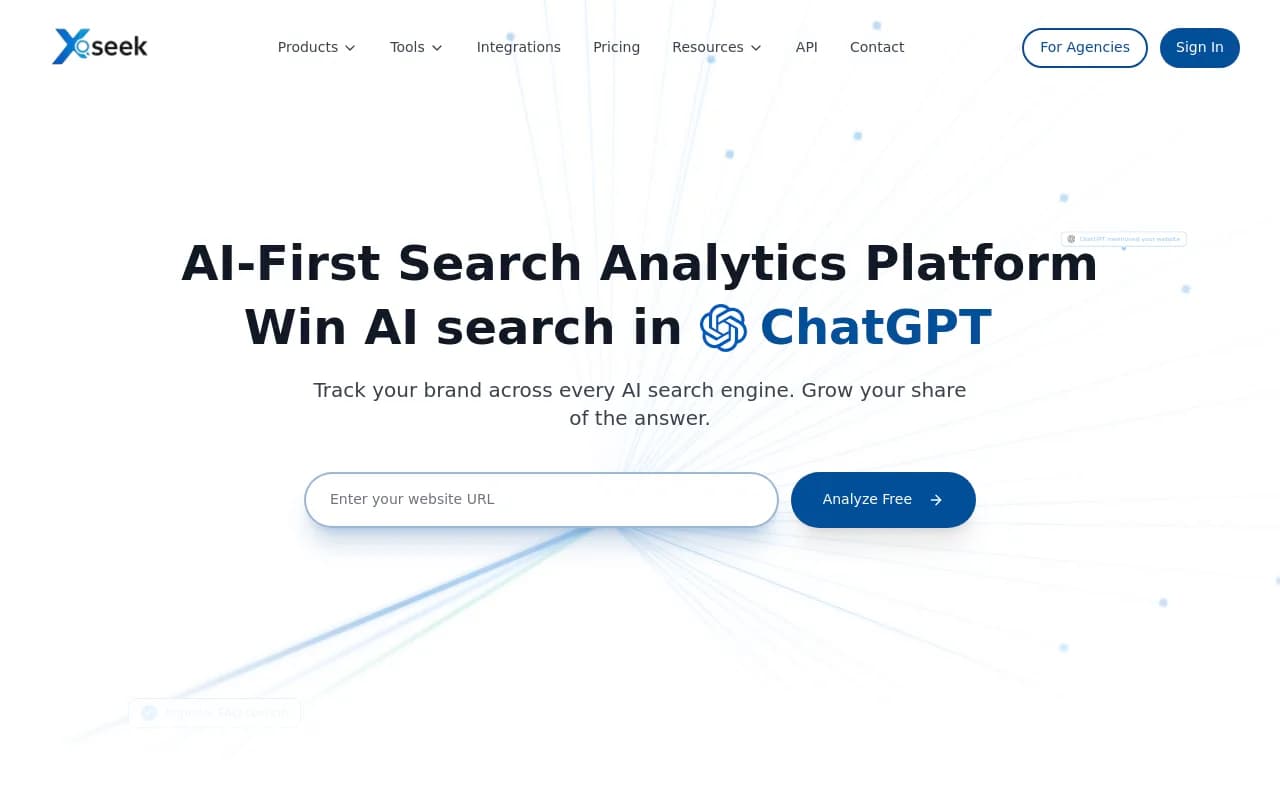
| xSeek | GPTBot crawler monitoring | Limited | Limited | ChatGPT-focused tracking |
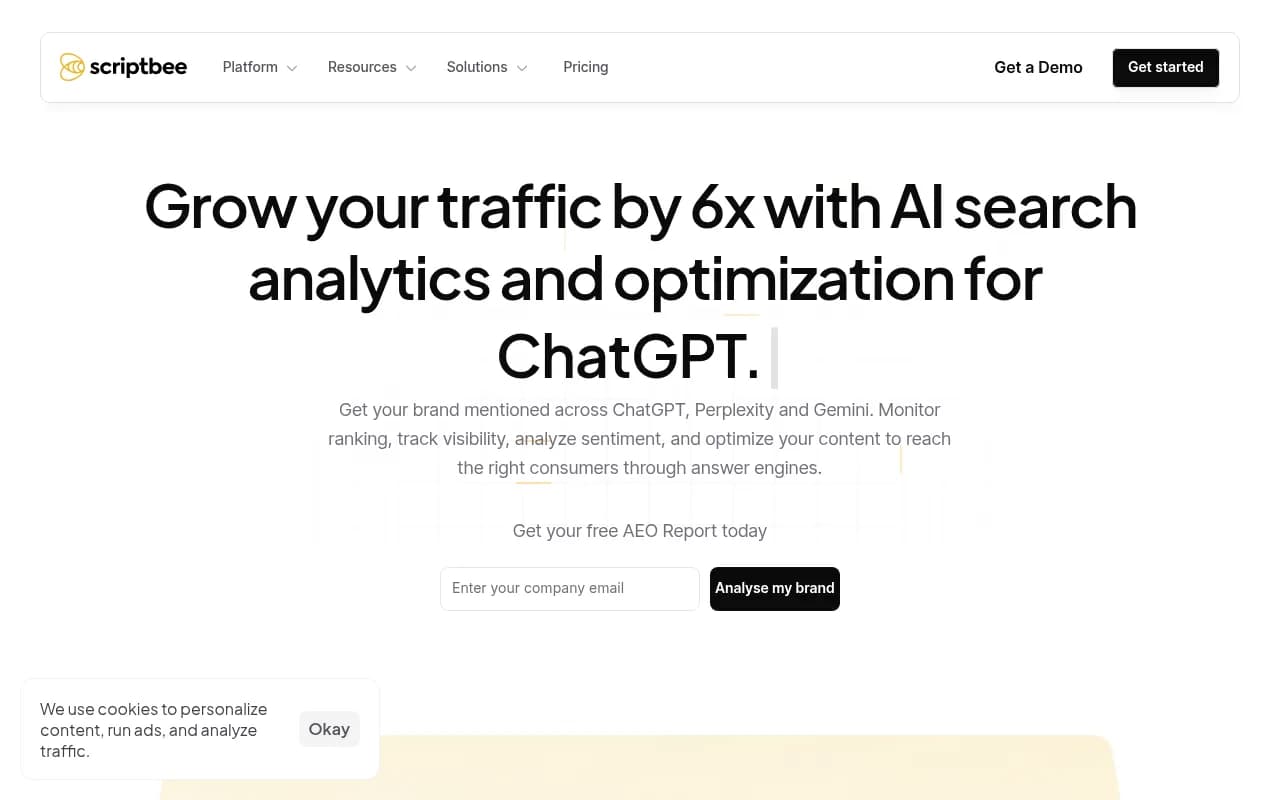
| Scriptbee | AI crawler monitoring | Limited | Limited | Many domains on a budget |
| Bear AI | Agent traffic tracking | Conversion tools | Some | Turning agent traffic into revenue |
| Peec AI, Otterly.AI, Goodie AI | Generally no crawler logs | Generally limited | Little | Pure visibility monitoring |
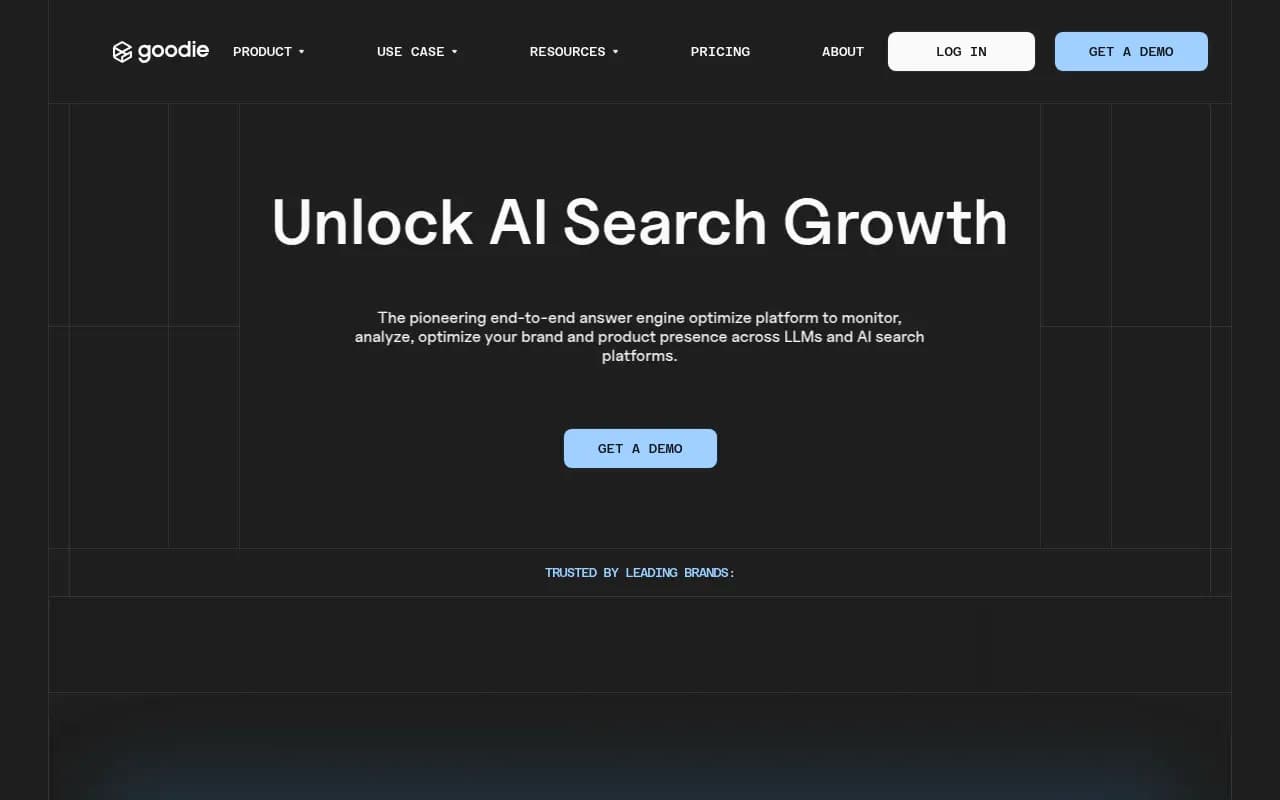
Treat the last row with care. Sources conflict on Goodie AI: one review says it has no crawler logs and no citation or content gap analysis, while another says it offers AI search attribution. Check directly before buying.
The platforms, one by one
Promptwatch
Promptwatch is the one I would put first if the question is specifically "crawl, citation, visit, conversion in a single product." Its AI crawler logs are IP-verified against operator ranges, so spoofed bots are filtered out, and they cover GPTBot, OAI-SearchBot, ChatGPT-User, ClaudeBot, Claude-User, PerplexityBot, Meta-WebIndexer and more. You see which pages were read, errors with plain-language explanations, and a citation rate per page, which is how you tell an access problem from a content problem.
On the human side, visitor analytics track AI-referred sessions and conversions from ChatGPT, Perplexity, Gemini, Claude, Copilot, DeepSeek and others through a script tag, Google Tag Manager template or the WordPress plugin. There is an optional setting that counts utm_source=chatgpt.com visits as ChatGPT traffic, which addresses the missing referrer problem directly.
What separates it from most dashboards is what happens next. The Action Board turns findings into prioritized tasks, the Content Agent writes and publishes to WordPress, Webflow or Framer, and Page Tracker and visitor analytics check whether the new page got crawled, cited and clicked. Search Insights puts Google Search Console and Bing data beside AI data, so you can ask which pages rank but never get cited.
TreeHouse, the company behind Pararius, grew AI search to about 25% of organic conversions after fixing crawler access and publishing proprietary data (case study). Crisp reported 2x higher conversion rates from AI traffic than from traditional channels (case study).
Pricing matters here. Crawler logs are not in Essential ($95/mo). Professional ($245/mo) adds 25M crawler logs, and Business ($579/mo) adds 100M logs plus the automated Content Agent. Agency plans start at $199/mo with crawler logs and visitor analytics included. Confirm current numbers at promptwatch.com/pricing. There is a 7-day free trial on monthly billing. If you want a no-login first look, the free AI visibility report includes a crawler access check.

For a head-to-head, see Promptwatch vs Profound.
Profound
Profound is the strongest enterprise alternative. Its Agent Analytics reads server logs via CDN integrations with Akamai, AWS, Cloudflare, Fastly, Google Cloud, Netlify and Vercel, then ties them through GA4 to human traffic and conversions. It also tracks against a large panel of real prompts and carries SOC 2 compliance, which matters in procurement. Pricing is custom, and one reviewer notes Agent Analytics is included free in the trial, while Promptwatch's own comparison places it on higher tiers. Ask for a quote with Agent Analytics explicitly scoped. It can be overkill if you just want a lightweight score.
Profound

Scrunch AI
Scrunch pairs monitoring with crawler observability and journey mapping. Its Agent Experience Platform serves AI-optimized content to crawlers without touching the human page, which is clever for sites that are hard to restructure, though you should think carefully about maintaining two versions of content. It is a monitoring-plus-delivery product rather than a full content and measurement loop.
Siteline AI, xSeek, Scriptbee and Bear AI
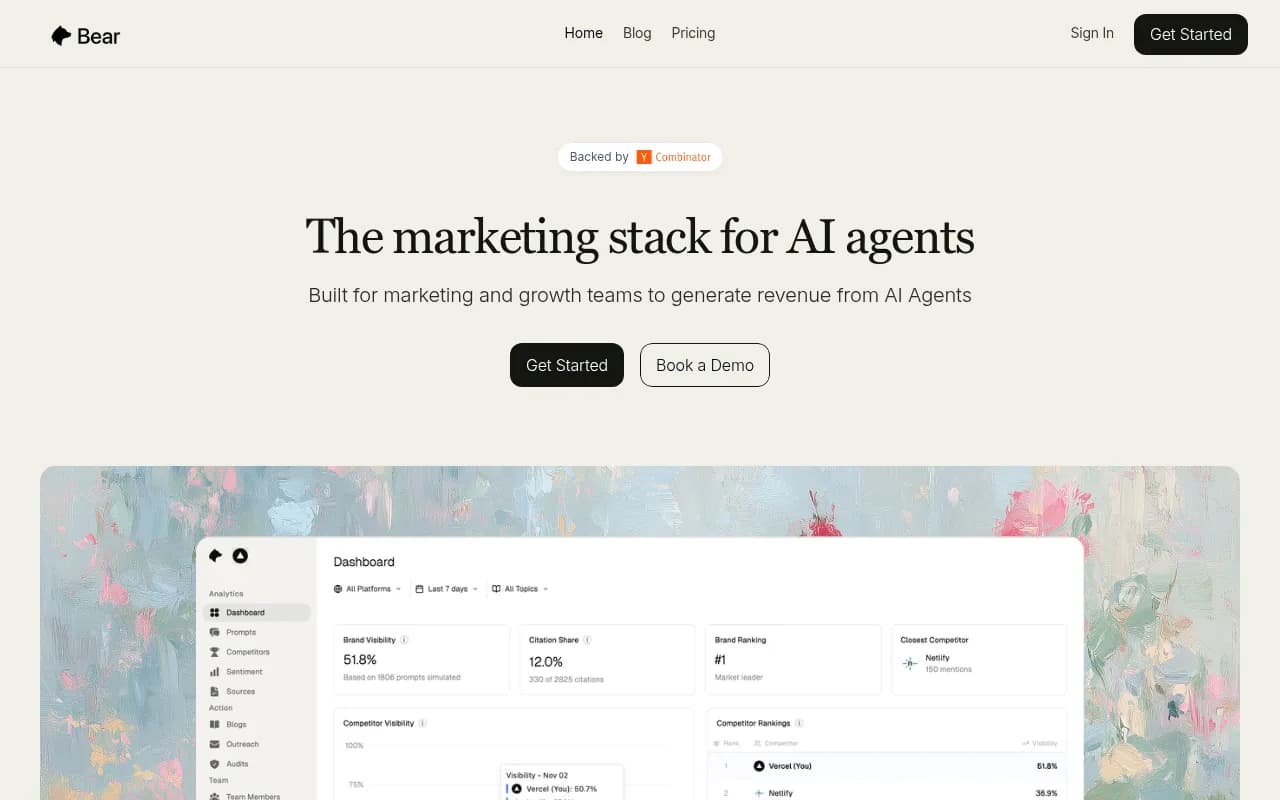
These are narrower tools. Siteline AI focuses on AI agent traffic analytics, xSeek pairs ChatGPT rank tracking with GPTBot monitoring, Scriptbee offers AI crawler monitoring across unlimited domains, and Bear AI aims to turn agent traffic into revenue with conversion tools. They are worth a look if bot analytics is your main need and you do not want a full platform, but they generally lack the content creation and fix workflow.
Monitoring-only tools worth knowing
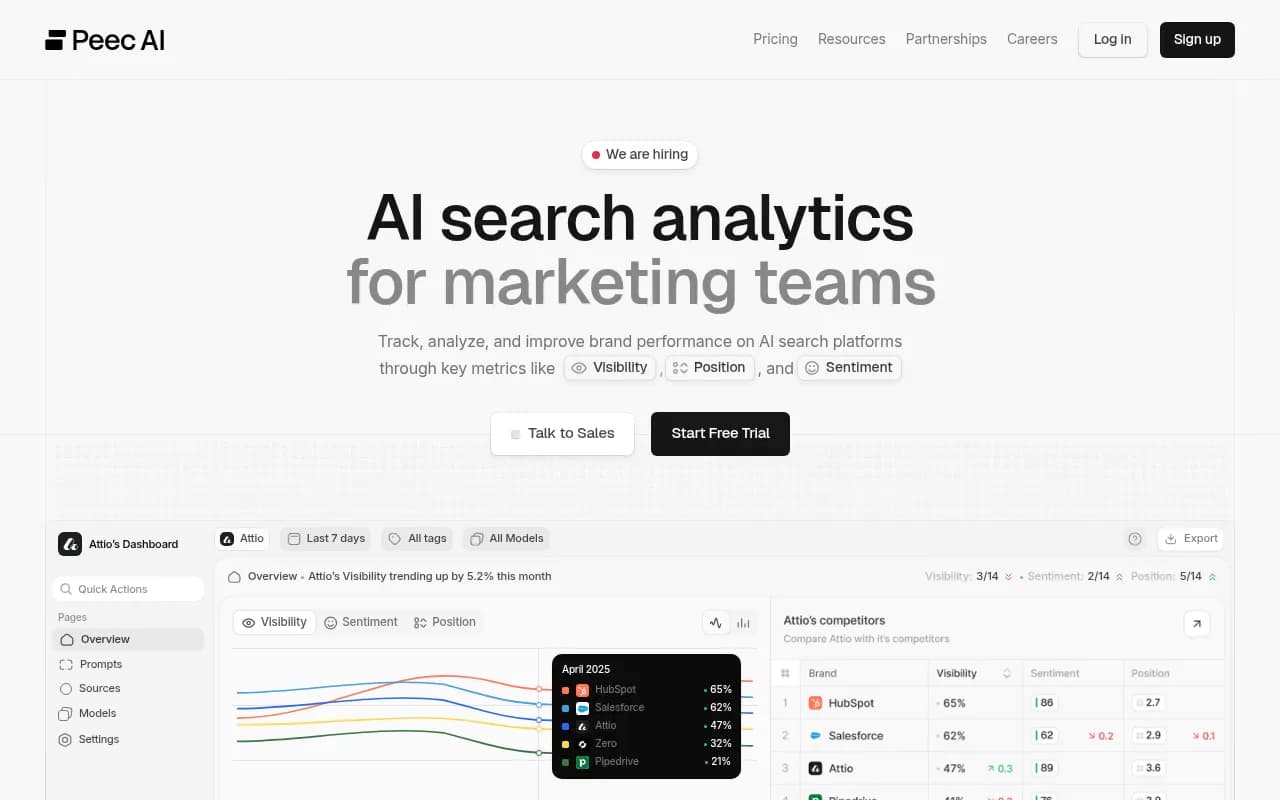
Peec AI, Otterly.AI and Goodie AI are decent at telling you whether you were mentioned. If you pair them with your own analytics and server log tooling, you can build a partial version of the loop, but you are doing the stitching yourself.
Otterly.AI

Build-your-own option
If budget is tight, you can approximate this with parts.
- Forward CDN logs to a warehouse such as BigQuery, and filter for AI user agents.
- Verify IPs against each operator's published ranges.
- In Google Analytics, build a segment for referrers like chatgpt.com, perplexity.ai and gemini.google.com, plus UTM-tagged variants.
- Join crawl data to citations by hand using a monitoring tool.
It works, and it is also a part-time job. The IP verification step alone is tedious to keep current, since operators change their ranges.
How to run a two-week evaluation
Do not trust demos. Run a short test on your own site.
- Connect logs to two shortlisted tools on the same domain.
- Pick five pages: two you expect to be cited, two you expect to be ignored, one that returns an error to bots.
- Check whether each tool correctly flags the error page and distinguishes citation fetchers from training crawlers.
- Compare AI-referred sessions against your own analytics. Large gaps usually mean referrer handling differs.
- Ask each vendor to show a single page's full path: crawled, cited, visited, converted.
Whichever tool makes step 5 effortless is probably the one your team will keep using.
Which one should you pick?
- You want crawl, citation, traffic and content fixes in one product: Promptwatch.
- You are a large enterprise with compliance requirements and a bespoke budget: Profound.
- You need to serve different content to AI crawlers on a hard-to-change site: Scrunch.
- You just want bot analytics cheaply: one of the narrow tools above.
- You only need mention tracking: Peec AI or Otterly.AI, and accept you are not getting logs.
For wider browsing, the GEO software directory at bestgeosoftware.com lists many more options. And whatever you choose, check live pricing and feature scope on the vendor's own page, because these products change monthly.
FAQ
Do I need crawler logs if I already have Google Analytics?
Yes. Bots do not run JavaScript analytics, so GA never sees them. Logs are the only way to know whether an AI bot read a page.
Why is AI traffic often undercounted?
Many AI apps strip or omit referrers, and ChatGPT stopped sending one on October 8, 2026. Use UTM-tagged links and a tool that has a fallback.
Are crawler hits the same as citations?
No. A crawl means a bot fetched the page. A citation means an answer used it. A good platform shows the rate between the two per page.
What should I fix first if logs show blocks?
Check robots.txt, CDN and WAF rules for every provider. The free AI Crawler URL Inspector and Robots.txt Generator for AI are quick starting points.