Key takeaways
- AI hallucinations about brands aren't rare edge cases. Wrong pricing, phantom features, and outdated company details show up in ChatGPT, Gemini, Perplexity, and Copilot answers regularly, and there's no "post" to flag like there is on social media.
- A single-snapshot check is close to useless. Promptwatch's own data shows ChatGPT's average citations per response dropped from roughly 6.4 to under 5 almost overnight after a March 2026 model update, meaning what a model says about you today can look nothing like what it says next week.
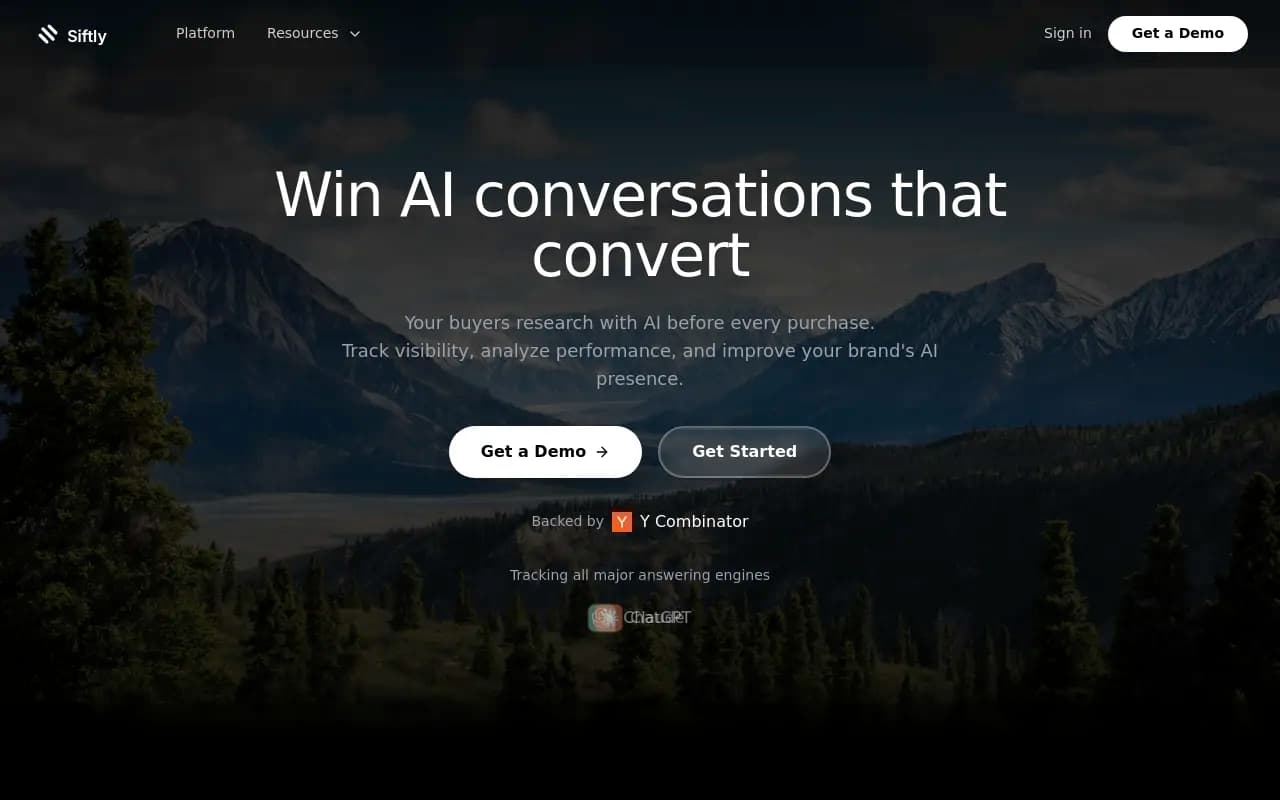
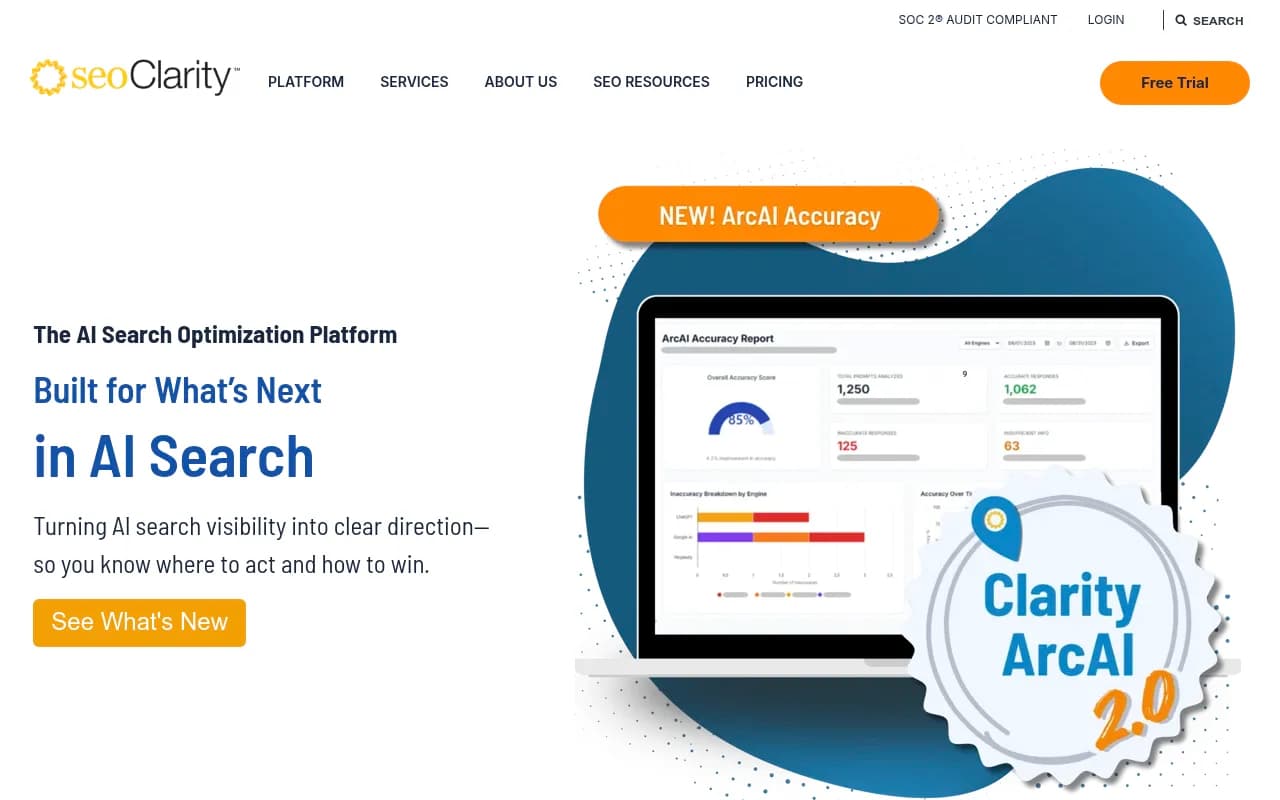
- Some tools only tell you whether your brand got mentioned. Others, like Siftly and seoClarity's Clarity ArcAI, explicitly compare AI answers against a structured profile of your real pricing and features to flag mismatches. That distinction matters more than most buyers realize.
- Old, low-engagement Reddit threads are a bigger hallucination source than viral posts. Promptwatch data on Reddit citations in ChatGPT found most cited posts have fewer than 10 upvotes and are over six months old, sometimes years.
- Pricing for this category runs from free tiers to $2,000+/month enterprise contracts. Most teams don't need the top end to catch the claims that matter.
Why this is a different problem than "brand mentions"
Most AI visibility tools were built to answer one question: does my brand show up when someone asks about my category? That's useful, but it's a different question from: is what the AI just said about me actually true?
A brand can show up constantly and still get hurt. I've seen the pattern described in a few different write-ups now: a company's product gets rebranded, and months later someone on the marketing team asks ChatGPT about the old product name almost by accident, and finds out the model has been telling users for months that the product was discontinued. It wasn't discontinued. The model confused a rebrand with a shutdown, and nobody caught it because nobody was watching what the AI was saying, only whether it was saying anything at all.
That's the gap a hallucination-focused monitoring platform is supposed to close. Mention tracking tells you visibility. Hallucination tracking tells you accuracy. You need both, but most tools in this space still only do the first one.
What actually causes AI to hallucinate about a brand
A few structural reasons this happens more than people expect:
Models pull from stale, low-signal sources more than you'd guess. Promptwatch's research on Reddit citations found that roughly 71% of Reddit posts ChatGPT cited in January 2026 had fewer than 10 upvotes, and about 60% of cited posts were more than six months old, with the single largest bucket being over two years old (https://promptwatch.com/data/reddit-citation-data-jan-2026). That means an outdated pricing complaint from a 2023 Reddit thread can outlive its accuracy by years and still show up in a 2026 AI answer.
Citation behavior itself is unstable and platform-controlled. When OpenAI rolled out GPT-5.3 in March 2026, average citations per ChatGPT response dropped roughly 27%, from about 6.4 down to 4.7-4.9, and it never recovered a month later (https://promptwatch.com/data/chatgpt-citation-drop). Fewer citation slots means more room for the model to fill gaps with confident-sounding guesses instead of sourced facts.
Source mix varies wildly by engine, and by platform. Promptwatch's social-media citation data shows ChatGPT leans heavily on Reddit (5.19% of citations, over 20x its next social source), while Google AI Overviews and Grok lean on YouTube instead (https://promptwatch.com/data/social-media-citations-by-ai-model). If your hallucination risk is concentrated in outdated YouTube reviews, a tool that only watches Reddit and news sites will miss it entirely.
And the number of sources a model even draws from differs a lot: ChatGPT averages around 5 sources per web-search response, Google AI Overviews and Perplexity closer to 10, and Microsoft Copilot has been erratic, swinging from under 2 to nearly 17 sources per response within weeks (https://promptwatch.com/data/average-sources-per-response). Fewer sources per answer generally means each one carries more weight, and more risk if it's wrong.
What separates a real hallucination-detection tool from a basic tracker
The honest answer: most "AI visibility" platforms track mention rate, rank, and sentiment, and stop there. A smaller set actively compares what the AI said against ground truth about your brand. Here's roughly how the landscape splits.
| Platform | Explicit hallucination detection | Engines covered | Starting price | Best for |
|---|---|---|---|---|
| Promptwatch | Citation and crawler data plus content fixes, not a standalone "hallucination flag" but built to catch and correct drift | ChatGPT, Gemini, Claude, Perplexity, Grok, Copilot, AI Overviews, AI Mode, and more | $95/mo (Essential) | Teams that want monitoring and the fix in one workflow |
| Siftly | Yes, compares every AI response against a structured brand profile (pricing, features, positioning) | ChatGPT, Perplexity, AI Overviews, plus Claude/Gemini in dashboards | Free tier, then $79/mo | Teams wanting a purpose-built hallucination alert |
| seoClarity (Clarity ArcAI) | Yes, named capability that flags wrong pricing, wrong features, outdated leadership with evidence | ChatGPT, Perplexity, Copilot, AI Overviews | Custom quote | Enterprise and regulated industries |
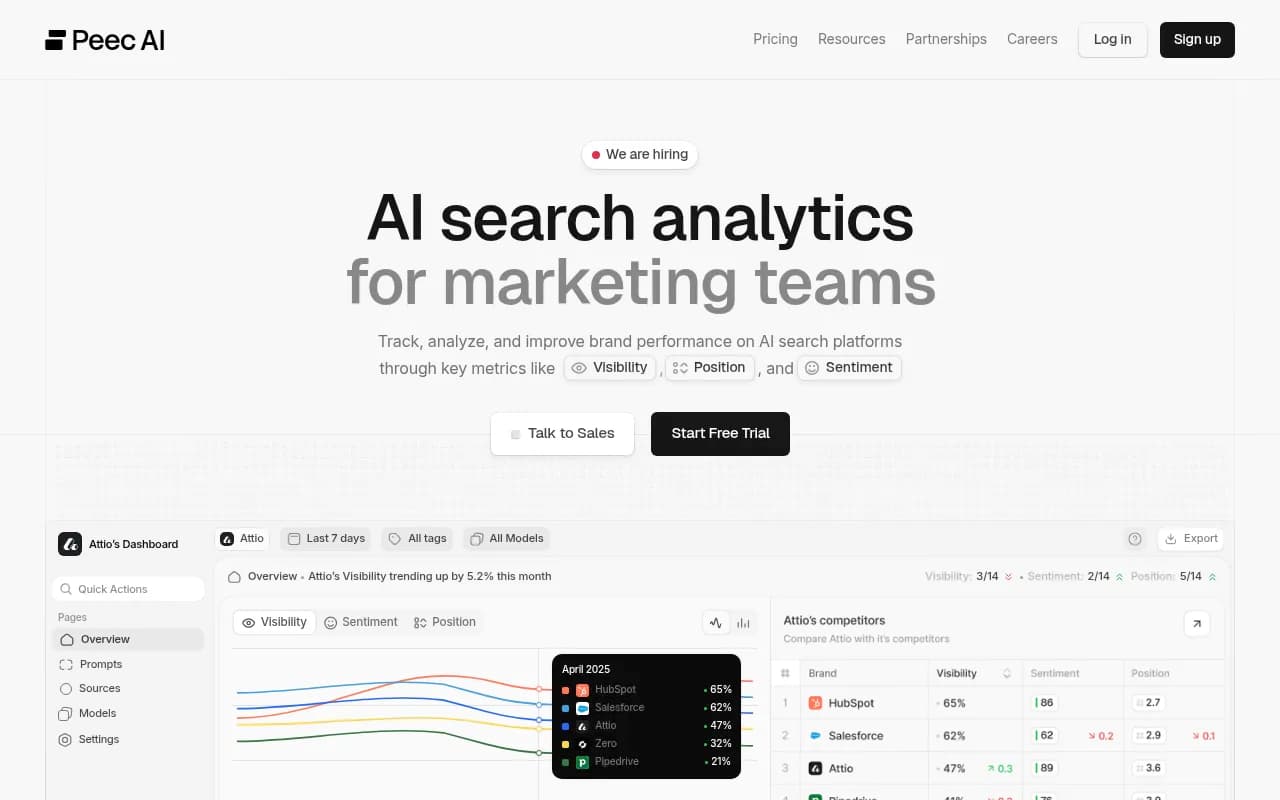
| Peec AI | No dedicated hallucination flag, general mention/sentiment tracking | ChatGPT, AI Overviews, AI Mode, Copilot, Perplexity, Gemini | $95/mo | Teams focused on visibility and competitor share |
| Profound | No dedicated hallucination flag | ChatGPT (Lite), up to 10+ platforms on Enterprise | $399/mo (Growth) | Enterprise brands needing broad platform coverage |
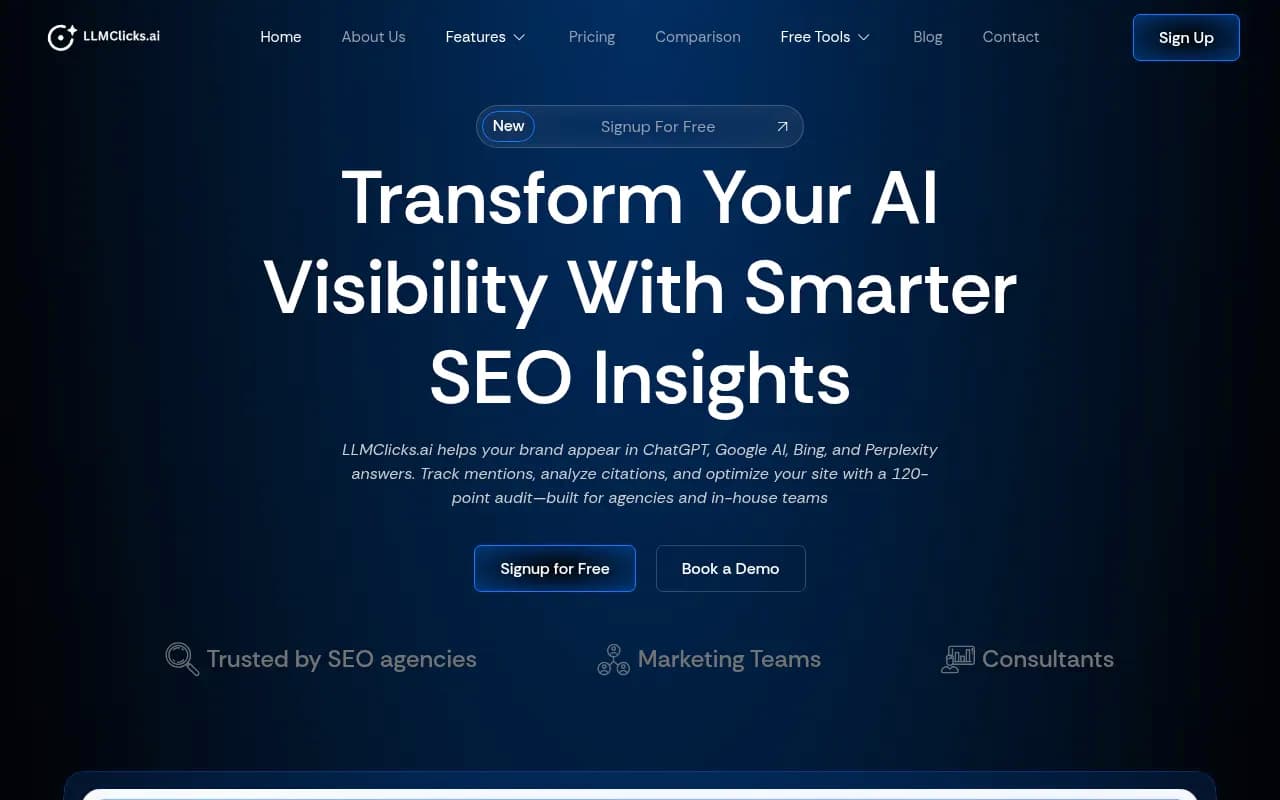
| LLMClicks | Markets hallucination detection as a feature | ChatGPT, Perplexity, others | Not published | Smaller teams testing the concept cheaply |

Profound

Why the "run it once" audit doesn't work
Siftly makes a point worth repeating here because it's counterintuitive but correct: LLM answers vary run to run, even for the exact same prompt. If you check once and your brand shows up, you might conclude you have 100% mention rate. Check again an hour later and it's gone, and now you'd conclude 0%. Neither number is right. The real answer is somewhere in between, and you only find it by sampling repeatedly across a day, across models, and tracking the variance. Siftly builds this into its scoring with what it calls sample variance and platform variance, which single-shot audit tools simply can't produce.
This matters even more for hallucination detection specifically than for basic mention tracking. A brand might get the pricing right in 7 out of 10 runs and wrong in 3. If your monitoring only checks once a week, you might never see the wrong version, right up until it's the version a big customer happens to see.
A practical monitoring setup
Based on what the better tools in this space recommend and what the underlying research supports, here's a reasonable starting structure:
- Build a prompt set of 20-50 queries that mirror how real customers actually ask about your category, not just "[brand name] pricing." Include comparison prompts ("X vs Y"), feature questions, and "is [brand] still around" style checks if you've rebranded or changed products recently.
- Run those prompts daily, not weekly, across at least ChatGPT, Perplexity, Google AI Overviews, and Gemini. Add Copilot if your buyers are in enterprise or Microsoft-heavy environments; the volatility in its source count alone makes it worth watching separately.
- Flag specific factual claims, not just sentiment. "Wrong price," "missing feature," "wrong founder," "described as discontinued" are the kinds of tags that actually let someone act on an alert, versus a vague "negative mention" score.
- Check your citation sources, not just your answers. If a model is pulling from a 2-year-old Reddit thread or an old review, the fix isn't arguing with the AI, it's getting current, accurate information published somewhere the model is likely to crawl and cite.
- Re-audit after major model updates. The GPT-5.3 citation drop is a good reminder that platform behavior can shift overnight with zero warning from the vendor. A quarterly "is our monitoring still catching the right things" check isn't optional.
Where the different tools actually fit
If hallucination detection is your only priority and budget is tight, Siftly's structured comparison against a brand profile is the most purpose-built option at the lowest price point, starting free and scaling to $599/mo. If you're a large, regulated brand (financial services, healthcare, anything with frequently changing pricing or compliance-sensitive claims), seoClarity's Clarity ArcAI is worth the custom quote conversation because it documents specific false claims with platform and query context, which is exactly what a legal or compliance team wants to see, not a vague "accuracy score."
If you want monitoring and the fix in one place rather than a monitoring tool plus a separate content team, that's where Promptwatch is built differently. It's not marketed as a standalone hallucination flag, but the underlying mechanics, crawler logs showing what AI systems actually read on your site, citation tracking down to the page level, and content agents that can generate and publish corrected, better-sourced content directly to your CMS, address the actual cause of most hallucinations: thin or outdated information about your brand being the only thing available for a model to cite. Watching for the problem is one thing; publishing the fix without a six-week content sprint is the harder part most platforms skip.
Profound and Peec AI are strong general visibility trackers with broad platform coverage, but neither one is built around the specific job of flagging factual inaccuracy. They'll tell you your brand showed up in an answer; they won't tell you the answer got your pricing wrong.
A word on generic hallucination rate stats
You'll see headline numbers thrown around, like "Grok hallucinates 94% of the time" or "most models are under 12%." Both can be true simultaneously, because they're measuring completely different things. Benchmark-style tests on grounded summarization tasks often show single-digit hallucination rates for frontier models. Open-domain factual QA and citation-fidelity tests on the same models can show hallucination rates in the 30-90% range. Neither number tells you what a model will say about your specific brand on a random Tuesday. That's exactly why generic leaderboards are a poor substitute for running your own prompts against your own brand, repeatedly, over time.
If you want to go deeper on the broader AI visibility category beyond hallucination-specific tools, the GEO software directory at bestgeosoftware.com is a good place to compare platforms side by side.