Key takeaways
- Only 11% of domains are cited by both ChatGPT and Perplexity, making single-engine monitoring nearly useless for serious visibility work.
- Most platforms stop at monitoring — they show you where you're invisible but offer no path to fixing it.
- The platforms worth paying for in 2026 track real user-facing responses (not just API outputs), cover 10+ LLMs, and give you something actionable to do with the data.
- For teams that need to both track and improve AI visibility, Promptwatch is the only platform rated as a leader across monitoring, content generation, and optimization.
- Monitoring-only tools like Otterly.AI and Peec AI are fine for basic awareness, but they leave you stuck once you find a gap.
Why tracking citations across multiple LLMs is no longer optional
Here's a number worth sitting with: according to The Digital Bloom's 2025 AI Visibility Report (synthesizing 680 million citations), only 11% of domains are cited by both ChatGPT and Perplexity. That means if you're only watching one engine, you're missing most of the picture.
The fragmentation runs deeper than that. Reddit accounts for 46.7% of Perplexity's top citations but only 11.3% of ChatGPT's. Google AI Overviews pull from a completely different source mix. And 80% of LLM citations don't rank anywhere in Google's top 100 for the same query — so your traditional rank tracker is essentially blind to all of it.
Meanwhile, the audience using these tools has grown fast. ChatGPT hit roughly 900 million weekly active users in early 2026 (per TechCrunch's reporting on OpenAI figures). Google's AI Overviews reach an estimated 2 billion-plus people monthly. When the AI answer is where users stop, being cited inside it is the new front page.
The practical problem: most of the tools built to track this are monitoring dashboards. They tell you where you appear (or don't). They don't tell you what to do next. That gap between "you're invisible on Claude" and "here's the content that would fix it" is where most platforms fall short.
This guide covers the platforms that actually close that gap, plus the ones worth knowing about for specific use cases.
What to look for in an AI citation tracking platform
Before comparing tools, it helps to know what separates a useful platform from a pretty dashboard.
LLM coverage: Does it track the engines your audience actually uses? The major ones are ChatGPT, Perplexity, Google AI Overviews, Google AI Mode, Gemini, Claude, Grok, DeepSeek, Copilot, and Meta AI. Some tools cover five. A few cover all ten or more.
Real UI monitoring vs. API-only: AI models behave differently in their user-facing interfaces than through their APIs. A platform that only queries the API may miss shopping recommendations, citation panels, and answer formats that real users see. This matters more than most vendors admit.
Prompt intelligence: Volume estimates, difficulty scores, and query fan-outs (how one prompt branches into sub-queries) let you prioritize. Without this, you're tracking random prompts with no sense of which ones are worth winning.
Content gap analysis: Can the platform tell you specifically what content is missing from your site — not just that you're invisible, but why?
Content generation: Can it help you create the content that would close those gaps? This is where most tools stop and a few genuinely differentiate.
Crawler and citation logs: Real-time logs of AI crawlers hitting your pages tell you whether AI engines can even find your content. Most platforms lack this entirely.
Offsite citation tracking: Are you appearing in Reddit threads, YouTube videos, or third-party listicles that AI models cite? Some platforms track this; most don't.
The platforms worth knowing in 2026
Promptwatch — the full action loop
Promptwatch is the platform that covers the most ground end-to-end. It monitors 10 AI models (ChatGPT, Perplexity, Google AI Overviews, Google AI Mode, Claude, Gemini, Meta/Llama, DeepSeek, Grok, Mistral, Copilot) and tracks real user-facing responses rather than just API outputs.
What separates it from the rest of the field is what happens after you find a gap. The Answer Gap Analysis shows exactly which prompts competitors are visible for but you're not — specific topics, angles, and questions AI models want answered but can't find on your site. Content Agents then generate articles, listicles, comparisons, and briefs grounded in that real prompt data, citation data, and competitor analysis. Page-level tracking shows which pages are being cited, how often, and by which models. Agent analytics tracks the timeline from publish to crawl to citation.
It also has AI Crawler Logs — real-time logs of AI crawlers hitting your site, which pages they read, errors they encounter, and how often they return. Most competitors lack this entirely. Reddit and YouTube insights, ChatGPT Shopping tracking, competitor heatmaps, and multi-language/multi-region support round out a feature set that no other single platform matches.
Pricing starts at $99/month (Essential: 1 site, 50 prompts, 5 articles), $249/month (Professional: 2 sites, 150 prompts, 15 articles, crawler logs), and $579/month (Business: 5 sites, 350 prompts, 30 articles). Free trial available.

Profound — strong enterprise monitoring
Profound is the most capable dedicated monitoring platform for enterprise teams. It tracks 10+ AI engines with a large prompt database and solid reporting. The interface is clean, the data is reliable, and it's a reasonable choice for teams that primarily need visibility data to feed into their own content workflows.
The limitation is that it stops at monitoring. There's no content generation, no crawler logs, and no Reddit tracking. For teams with a separate content operation that just needs the signal, that's fine. For teams that want the full loop in one place, it falls short.
Profound

Otterly.AI — solid for basic monitoring
Otterly.AI covers the major platforms (ChatGPT, Perplexity, Google AI Overviews, Gemini, Claude) and gives you brand mention tracking, sentiment analysis, and citation data. It's one of the more polished monitoring-only tools and has a reasonable price point for smaller teams.
It doesn't have crawler logs, visitor analytics, content generation, or prompt volume data. If you're just getting started and want to understand where you currently stand, it's a reasonable entry point. If you want to act on what you find, you'll need something else alongside it.
Otterly.AI

Peec AI — lightweight tracking for marketing teams
Peec AI focuses on AI search visibility tracking for marketing teams that want a simpler interface. It covers the main LLMs and provides share-of-voice data and competitor comparisons. Like Otterly.AI, it's a monitoring tool — useful for awareness, not for optimization.

AthenaHQ — monitoring with some depth
AthenaHQ has more analytical depth than some of the lighter monitoring tools, with better prompt management and competitive analysis features. It's monitoring-focused and lacks content optimization and generation capabilities, but it's a reasonable choice for teams that want more structured data than Otterly.AI provides.

Semrush — traditional SEO with AI visibility added
Semrush has added AI visibility features to its existing platform, which makes it convenient for teams already standardized on Semrush. The AI tracking uses fixed prompts rather than dynamic prompt intelligence, and there's no AI traffic attribution. It's not purpose-built for LLM citation tracking, but if you're already paying for Semrush and want basic AI visibility data without adding another vendor, it's worth exploring.
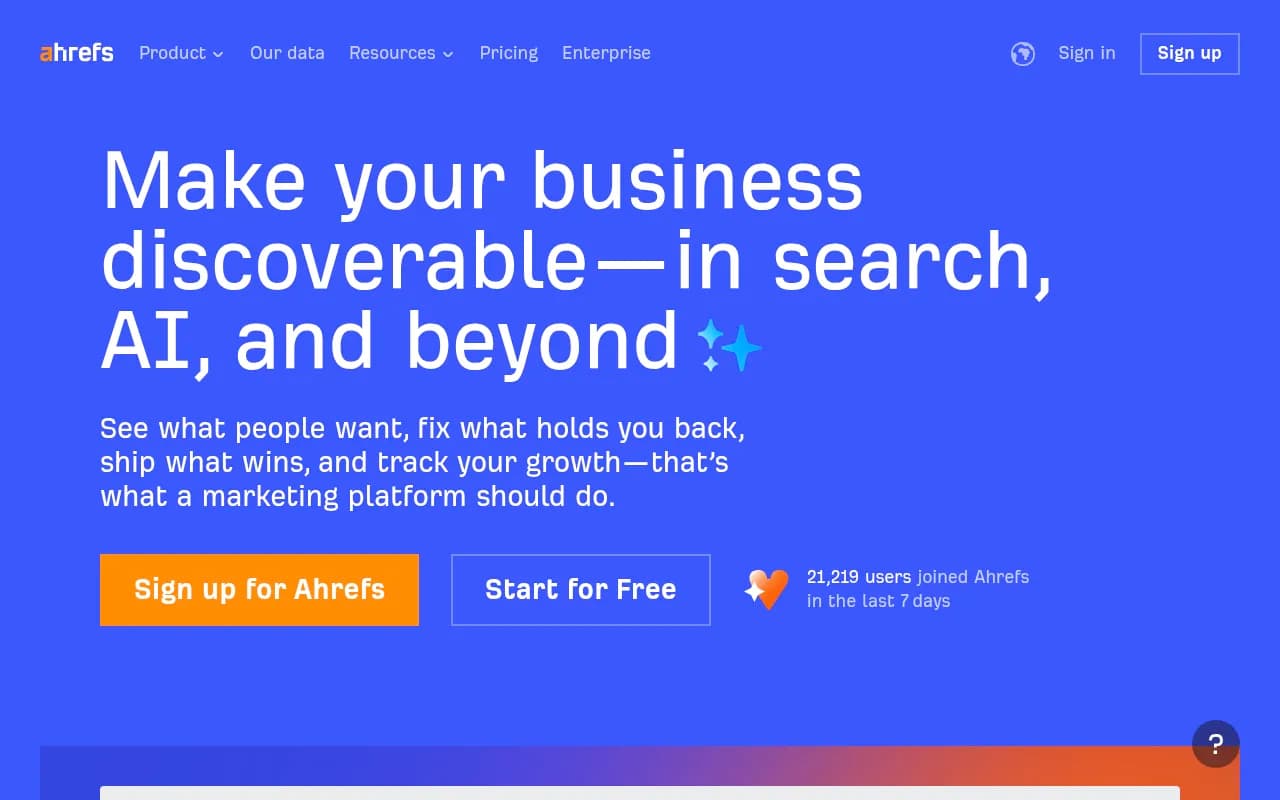
Ahrefs — brand radar with limitations
Ahrefs added Brand Radar for AI visibility tracking. Like Semrush, it uses fixed prompts and lacks AI traffic attribution. It's a useful addition for existing Ahrefs users but not a reason to switch platforms if AI visibility is your primary concern.
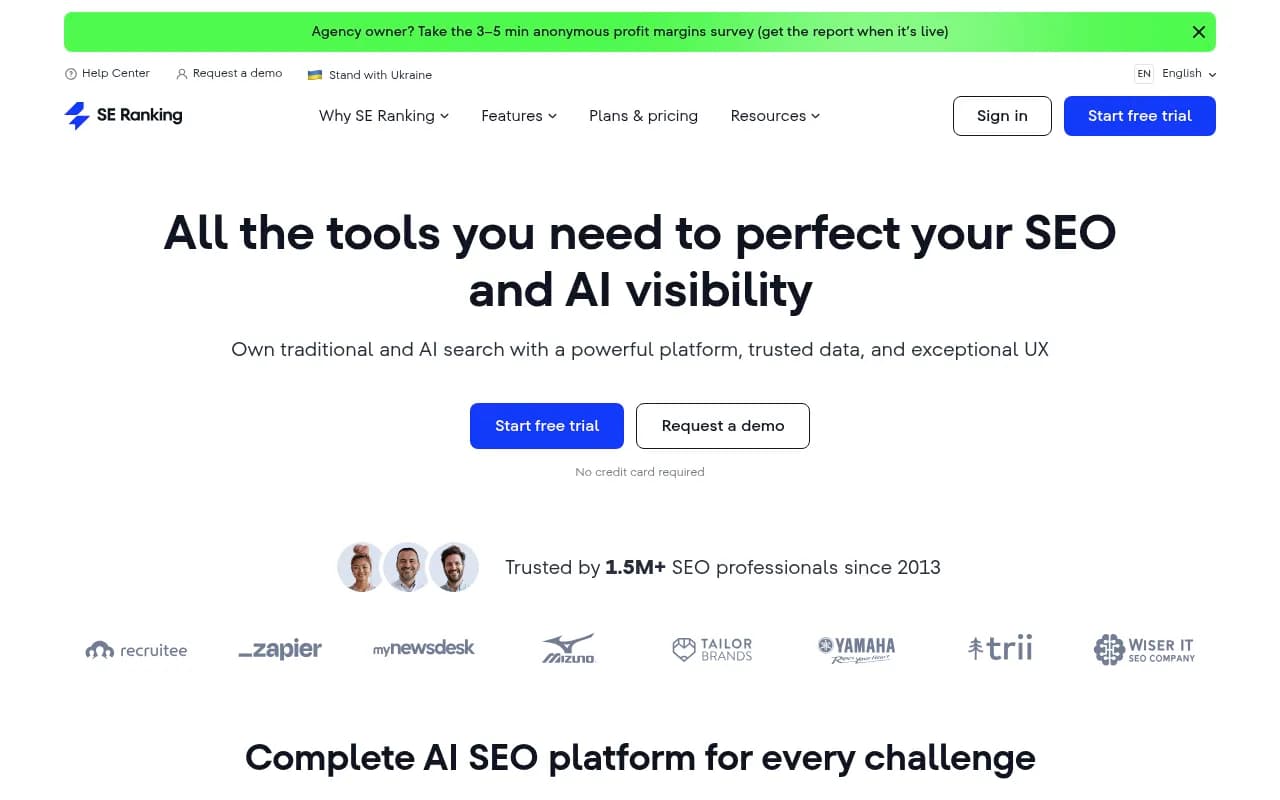
SE Ranking — all-in-one with AI visibility features
SE Ranking has built out AI visibility monitoring alongside its traditional SEO capabilities. It's a reasonable option for smaller teams that want both traditional rank tracking and basic AI citation monitoring in one platform without paying for two separate tools.
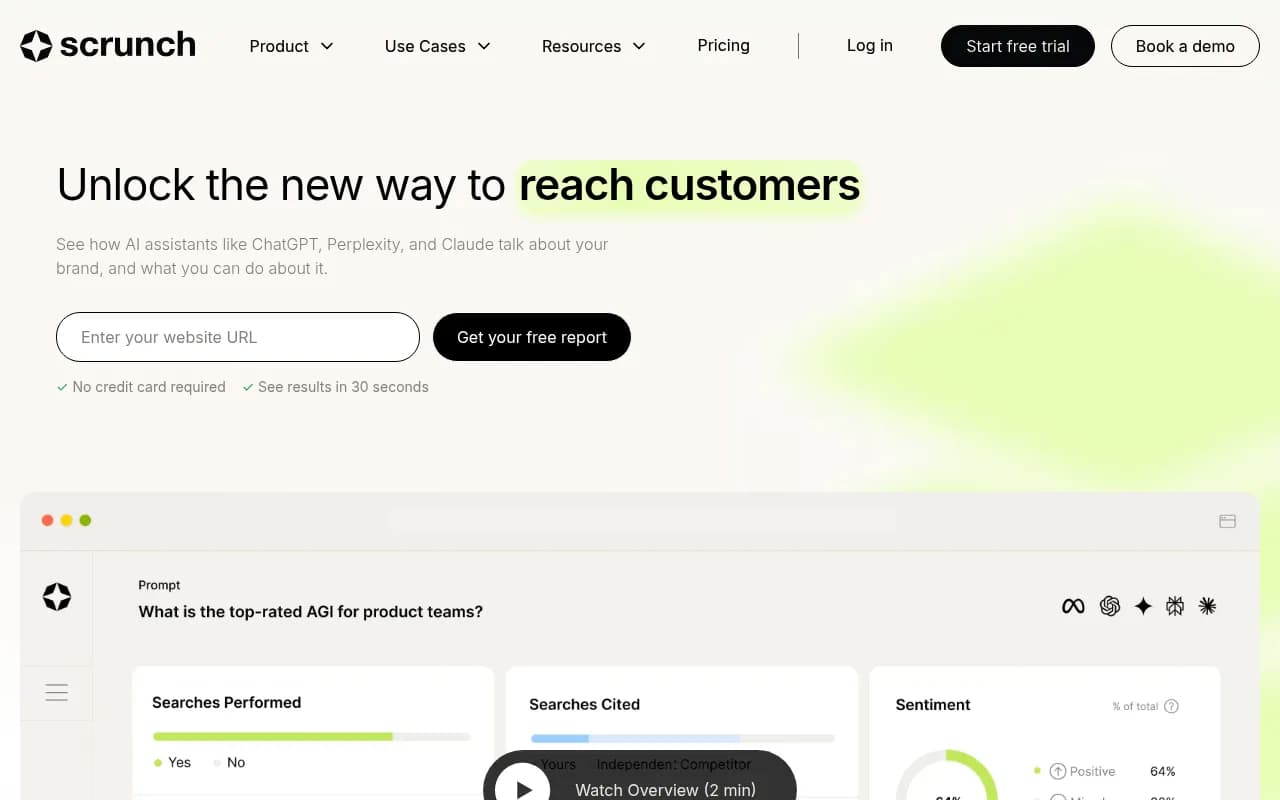
Scrunch AI — mid-market option
Scrunch AI tracks brand mentions across LLMs with decent coverage and a cleaner interface than some of the older monitoring tools. It sits in the mid-market range and is worth evaluating if Profound feels too expensive and Otterly.AI feels too lightweight.
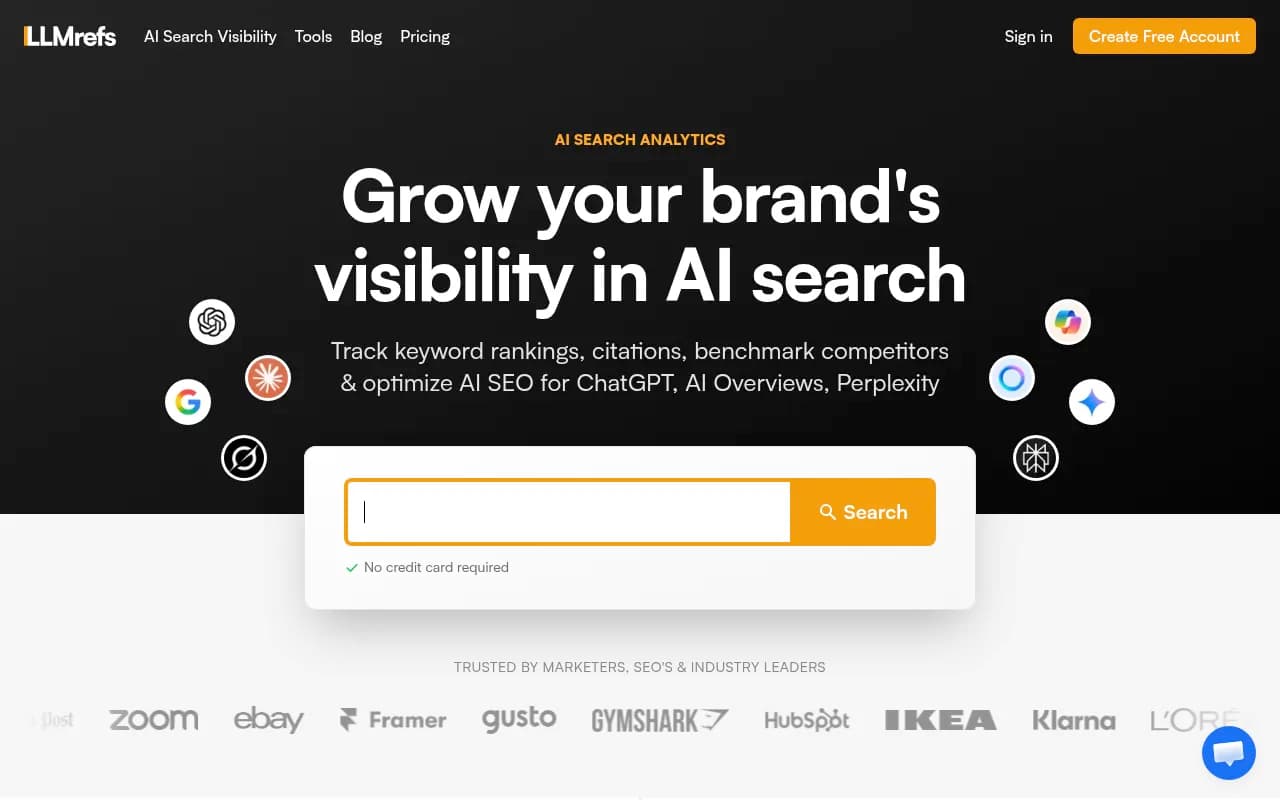
LLMrefs — broad LLM coverage
LLMrefs tracks AI search visibility, share of voice, citations, and rankings across ChatGPT, Google AI Mode, AI Overviews, and more. It covers a wide range of engines and is worth looking at for teams that need broad LLM coverage at a reasonable price point.
LLMrefs
Platform comparison table
| Platform | LLMs tracked | Content generation | Crawler logs | Prompt intelligence | Reddit/YouTube tracking | Best for |
|---|---|---|---|---|---|---|
| Promptwatch | 10+ | Yes (Content Agents) | Yes | Yes (volume + difficulty) | Yes | Full-loop optimization |
| Profound | 10+ | No | No | Limited | No | Enterprise monitoring |
| Otterly.AI | 5 | No | No | No | No | Basic awareness |
| Peec AI | 5-6 | No | No | No | No | Lightweight tracking |
| AthenaHQ | 6+ | No | No | Limited | No | Structured monitoring |
| Semrush | 5 (fixed prompts) | No | No | No | No | Existing Semrush users |
| Ahrefs | 5 (fixed prompts) | No | No | No | No | Existing Ahrefs users |
| SE Ranking | 5-6 | No | No | No | No | SMB all-in-one |
| Scrunch AI | 6+ | No | No | Limited | No | Mid-market monitoring |
| LLMrefs | 9+ | No | No | Limited | No | Broad LLM coverage |
The monitoring-only problem
It's worth being direct about something: most of the platforms in this space are dashboards that show you data. They tell you your brand appeared in 12% of relevant ChatGPT responses last week, down from 15% the week before. That's useful to know. But then what?
The gap between "I know I'm invisible" and "I've fixed it" requires a different kind of tool. You need to know which specific prompts you're losing, what content would answer them, how to write that content in a way AI models will actually cite, and whether it worked after you published it.
That's the action loop that separates optimization platforms from monitoring dashboards. Most tools cover step one. A few cover steps one and two. Only Promptwatch covers the full cycle: find the gaps, generate the content, track the results.
For teams with the budget and the content operation to support it, that full loop is worth paying for. For teams just starting out or with limited resources, a monitoring-only tool is a reasonable starting point — just go in knowing you'll need to build the "fix it" workflow yourself.
How to choose the right platform for your situation
If you're a marketing team at a mid-size brand that wants to understand and improve AI visibility without managing multiple tools: Promptwatch gives you everything in one place. The Content Agents alone can replace a significant chunk of manual content brief work.
If you're an enterprise with an existing content team that just needs reliable citation data to feed into your own workflows: Profound is the strongest dedicated monitoring platform. It's expensive but the data quality is solid.
If you're just getting started and want to understand where you stand before committing budget: Otterly.AI or Peec AI are reasonable entry points. Expect to outgrow them.
If you're already on Semrush or Ahrefs and want basic AI visibility data without adding a new vendor: use their built-in AI features as a starting point, but know their fixed-prompt approach limits what you can learn.
If you're an agency managing multiple clients: Promptwatch has agency and enterprise pricing, and the multi-site tracking with white-label reporting options makes it the most practical choice at scale.
A note on what the data actually tells you
One thing worth understanding before you pick a platform: the data you get from AI citation tracking is fundamentally different from traditional rank tracking data.
A rank tracker tells you position 4 for "best project management software." An AI citation tracker tells you that Claude mentions Asana in 67% of responses to that prompt, Notion in 43%, and your brand in 0%. That's a different kind of signal — and it requires a different kind of response.
The platforms that understand this distinction build their features around it. Prompt intelligence (which prompts matter, how hard they are to win), query fan-outs (how one prompt branches into sub-queries), and page-level citation tracking (which specific pages AI models are reading and citing) are all features that only make sense in an AI-native context.
When you're evaluating platforms, ask whether the tool was built for AI search from the ground up, or whether AI features were bolted onto an existing SEO tool. The difference shows up in the data quality, the feature depth, and ultimately in whether the platform helps you do anything useful with what it finds.
The citation data is there. The question is whether your platform helps you act on it.