Key takeaways
- Only a handful of AI SEO tools have a real, documented MCP server backed by first-party docs, not a directory listing someone forgot to fact-check.
- Semrush, Ahrefs, SE Ranking, Screaming Frog, Google Search Console, and Google Analytics 4 all ship one, confirmed against vendor documentation.
- Most SEO MCP servers are read-focused. Your agent can pull rankings, keywords, and crawl data, but it usually can't push changes back into the tool.
- Promptwatch ships an MCP server plus a Claude Connector and ChatGPT plugin, letting agents query AI visibility data directly inside Claude, Cursor, or ChatGPT.
- Before wiring an agent into five SEO MCP servers, check whether you actually need all five. Every connected server adds tokens to every turn.
Why this list needed to exist
I asked a well-known AI research tool which SEO platforms ship official MCP servers. It told me Semrush, Ahrefs, and HubSpot had none. That's wrong on all three counts, and it's the kind of wrong that spreads fast because AI models are trained on aggregator directories that never got updated after MCP adoption accelerated in early 2026.
Humblytics ran the same test in July 2026 and got the same bad answers for eight marketing tools, including Notion, Stripe, and Shopify. Every single one of those tools ships a first-party MCP server today. So this guide does the boring, necessary thing: it checks vendor documentation directly, names the endpoint or repo, and tells you whether the agent can write data back or only read it.
What "documented MCP API" actually means here
A tool qualifies for this list only if three things are true:
- The vendor's own documentation names an MCP server, endpoint, or GitHub repo. Third-party wrappers built by someone in their bedroom don't count.
- The server is reachable today, not "coming soon" or mentioned once in a changelog and never shipped.
- There's a clear answer to whether the agent can only read data or can also write it back into the platform.
That third point matters more than most lists admit. "Has MCP" and "lets your agent actually do something useful" are different claims. A read-only MCP server that returns keyword data is genuinely useful for research agents. It is not the same as a server that lets Claude Code create a Google Ads campaign or publish a Notion page.
The AI SEO and marketing tools that actually shipped MCP servers
| Tool | Category | Endpoint / repo | Agent can write? | Notes |
|---|---|---|---|---|
| Semrush | SEO suite | mcp.semrush.com/v2/mcp | Read-focused | Keyword, domain, and backlink data via MCP |
| Ahrefs | SEO suite | docs.ahrefs.com/en/mcp | Read-focused | Requires Lite plan or higher |
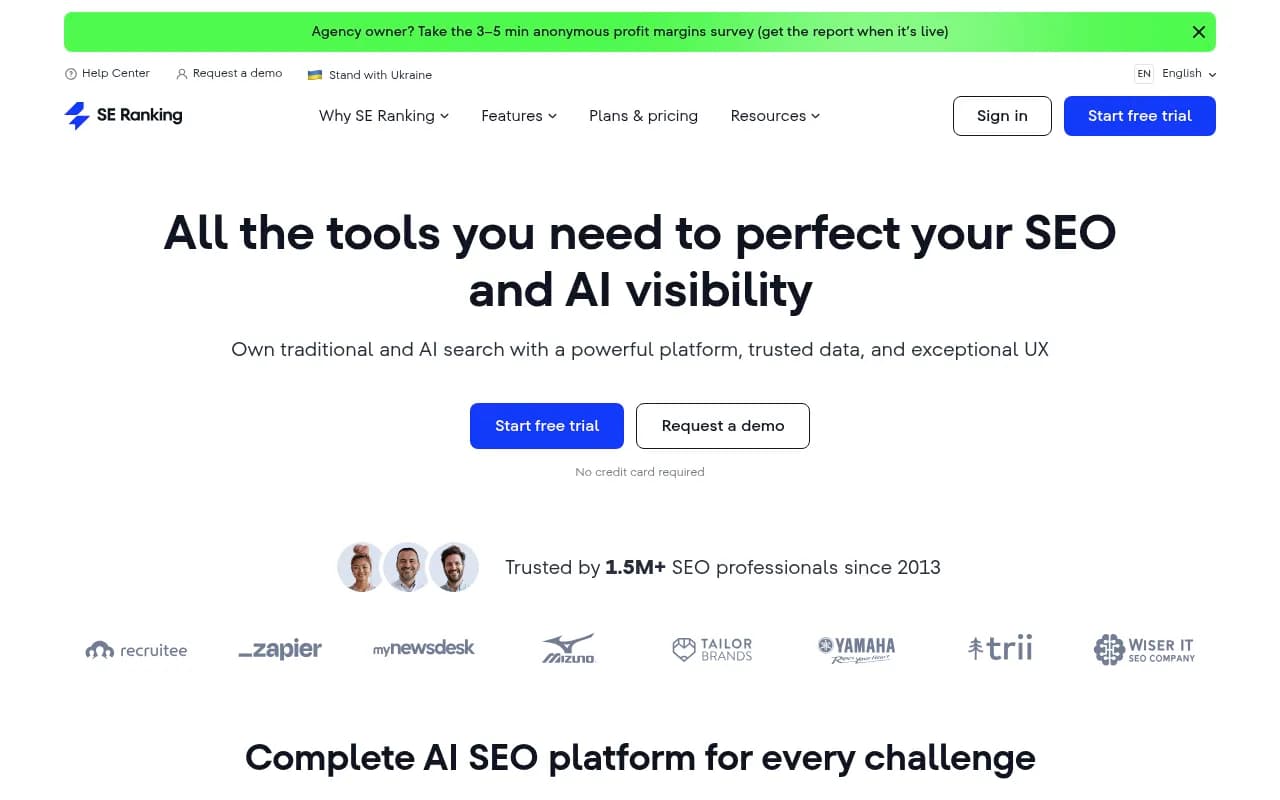
| SE Ranking | Rank tracking + SEO | Remote MCP server | Read-focused | Bundles rank tracking, keyword, backlink, and AI visibility data |
| Google Search Console | Search performance | Local MCP server, free | Read-focused | Any team cleared to connect GSC data to an agent |
| Google Analytics 4 | Analytics | github.com/googleanalytics/google-analytics-mcp | Read only, experimental | Google labels this experimental |
| Screaming Frog | Technical crawler | Desktop MCP integration | Read-focused | License required, technical SEO practitioners only |
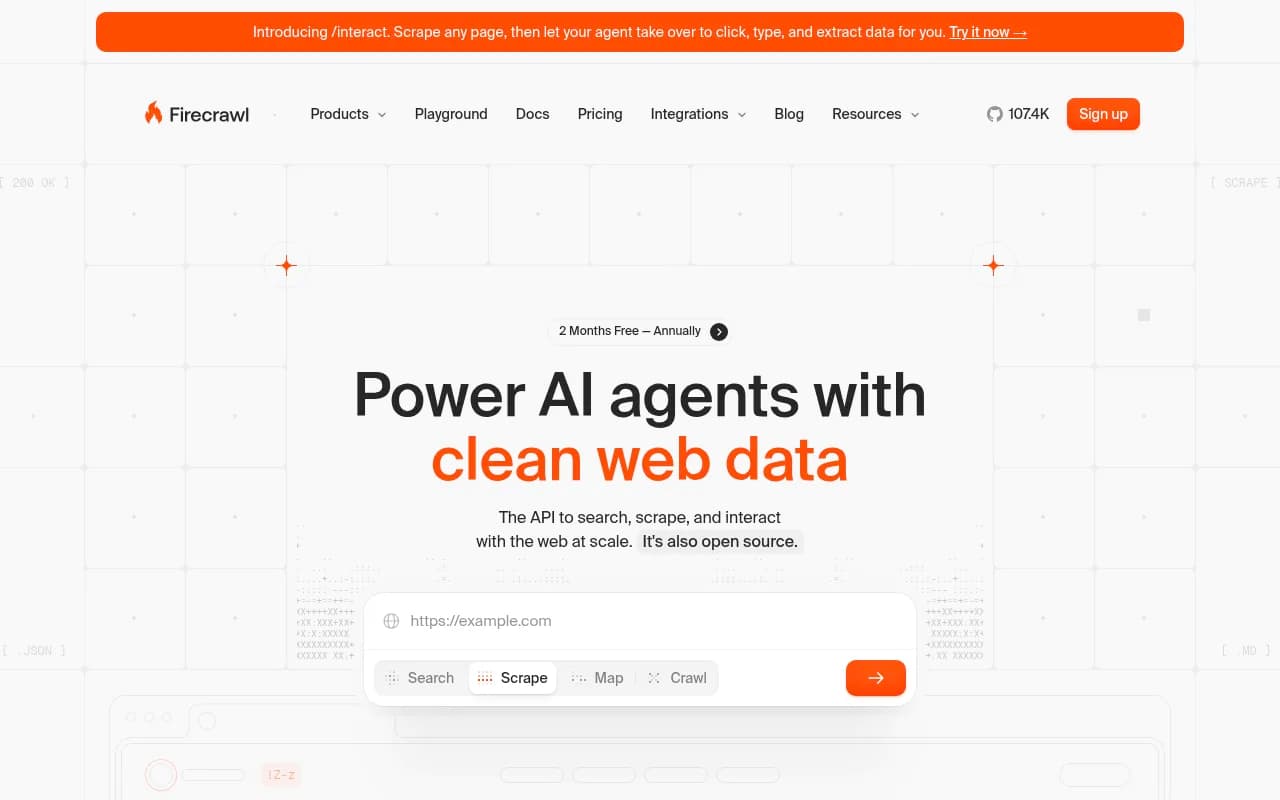
| Firecrawl | Web scraping / content extraction | Remote MCP server | Read | Free tier available, useful for content and competitor research |
| Google Ads | Paid search | github.com/googleads/google-ads-mcp | Yes | Maintained by the Google Ads API team, can create and edit campaigns |
| HubSpot | CRM + content | developers.hubspot.com/ai-tools/mcp | Yes | Agent can create records, not just read them |
| Notion | Docs | mcp.notion.com/mcp | Yes | Agent can create and edit pages |
That list is deliberately narrow. If a tool isn't on it, either the vendor hasn't documented an MCP server yet, or research couldn't confirm one against first-party docs at the time of writing. Directories claiming otherwise should be treated with suspicion until you've clicked through to the vendor's own developer docs.
The SEO-specific players, one at a time
Semrush ships its MCP server at a dedicated endpoint, separate from its main API. It's read-focused, which makes sense given what most agents need from it: keyword volumes, competitor domain overlaps, backlink profiles. You're not going to have an agent edit a Semrush project through MCP yet.
Ahrefs gates its MCP server behind the Lite plan or higher, documented at docs.ahrefs.com/en/mcp. Same read-focused pattern. If your workflow is "ask Claude to pull backlink gaps between us and three competitors," this works well. If your workflow is "have the agent fix things," it won't, because Ahrefs' MCP server doesn't expose write actions.

SE Ranking is the more interesting entry here because its MCP server bundles more than one data type. According to SE Ranking's own writeup of the SEO MCP landscape, its server combines rank tracking, keyword data, backlinks, and AI visibility signals in one connection, priced from $129/month on the Core plan or a $50 pay-as-you-go minimum. That's a genuinely different design decision than Semrush or Ahrefs, which each expose one product line through MCP.
Google Search Console and Google Analytics 4 both ship local MCP servers, free, maintained by Google. GSC's is stable; Google explicitly labels the GA4 server experimental, so don't build a production workflow on top of it without accepting that the interface might change under you.
Screaming Frog is the odd one out: a desktop application with a local MCP integration rather than a hosted endpoint. That fits its user base, technical SEOs who already run crawls locally and want an agent to interrogate crawl data without shipping it to a remote server.
Firecrawl isn't a traditional SEO tool, but it shows up constantly in SEO agent stacks because it turns messy web pages into clean, structured content an LLM can actually reason about. Its MCP server has a free tier, which is why it's the default choice when agents need to pull competitor page content rather than just metadata.
Where AI visibility tools fit into this
Everything above tracks traditional Google rankings and technical SEO signals. None of it tells you whether ChatGPT, Perplexity, or Google AI Overviews are citing your pages, and none of it explains why an AI crawler hit your site 40,000 times last week and cited you zero times.
Promptwatch is built specifically for that gap, and it's one of the AI visibility platforms that actually documents an MCP server rather than just claiming AI-friendliness in marketing copy. Its MCP server, plus an official Claude Connector and ChatGPT plugin, means you can ask Claude or Cursor directly about your citation trends, crawler logs, or which of your competitors are eating your share of voice in AI Overviews, without leaving the tool you're already working in.

What makes that useful in an agentic workflow specifically: Promptwatch's Agent Analytics track when ChatGPTBot, ClaudeBot, PerplexityBot, and 400+ other crawlers hit your site, what they read, and whether they threw errors. Pair that with an MCP-connected agent and you can literally ask "which pages did Claude's crawler visit last week that we haven't optimized yet" and get a real answer, not a guess. Content type matters here too: Promptwatch's data on ChatGPT citation types in July 2026 found product pages accounted for roughly a third of all citations that month, with listicles the fastest-growing format, which is exactly the kind of signal an MCP-connected content agent needs before it decides what to write next.
For a broader view of who else in the GEO space ships genuine agent integrations versus who's just tracking mentions, the directory at bestgeosoftware.com is worth a scan.
A quick sanity check before you connect anything
Before adding a fifth SEO MCP server to your Claude or Cursor setup, ask two questions.
First, does this server let the agent write, or only read? If you're hoping an agent will fix a technical SEO issue end to end, a read-only Screaming Frog or Ahrefs connection won't get you there on its own. You'll need to pair it with something that can actually push changes, whether that's a CMS-connected content agent or a write-capable server like HubSpot's or Google Ads'.
Second, do you need this server connected all the time? Every MCP server your agent has access to adds tool definitions to every single prompt, which eats context and slows responses. Most SEO agent setups work better with three or four servers connected: one rank/keyword source, one analytics source, one crawler or content source, and one AI visibility source if you're tracking citations. Bolting on every SEO tool that happens to have an MCP server just because it exists usually makes the agent slower and dumber, not smarter.
Frequently asked questions
How do I verify a tool actually has an MCP server, instead of trusting a listicle?
Go to the vendor's own developer documentation and search for "MCP." If you find a named endpoint, a GitHub repo, or explicit setup instructions, it's real. If the only mention is on a third-party aggregator site or in an AI chatbot's answer with no link to primary docs, don't trust it until you've confirmed it yourself.
Can any of these SEO MCP servers publish content directly?
Not the pure SEO data tools. Semrush, Ahrefs, SE Ranking, GSC, GA4, and Screaming Frog are all read-focused through MCP. If you want an agent to research and then publish, you need a separate write-capable layer, whether that's a CMS-connected content agent, Notion's MCP server for docs, or HubSpot's for CRM-linked content.
Is Google Analytics 4's MCP server safe to rely on for production workflows?
Google itself labels the GA4 MCP server experimental as of 2026. It works, but treat it the way you'd treat any beta API: don't build critical automation around it without a fallback plan for when the interface changes.
Where should I look if I want a wider list of tools built for agent workflows, not just MCP compliance?
The directory at agenticseotools.com tracks tools specifically designed around agentic execution rather than dashboard-first SEO, which is a useful second stop once you've confirmed which vendors actually ship documented MCP servers.