Key takeaways
- Sentiment in AI answers is a different problem from sentiment on social media. You are scoring what a model says about you, and the same prompt can return different wording on every run.
- Comms teams should look for claim-level analysis (what exactly is being said), not just a single positive/neutral/negative score.
- Sentiment moves differently by engine. Social chatter matters far more in Google AI Overviews than in ChatGPT, so a blended number can mislead you.
- Most tools on the market monitor. Fewer help you trace where a negative claim comes from or fix it.
- Prices in third-party roundups are snapshots. Confirm everything on the vendor's own pricing page before you buy.
Why comms teams care about AI sentiment now
PR teams spent years tuning for headlines, analyst quotes and review sites. Now a buyer asks ChatGPT "is [your brand] worth it for a small team?" and gets a two-paragraph verdict. Nobody on your team wrote it, approved it, or can easily see it.
That verdict is built from sources: your own site, review directories, forum threads, news, videos. If one of those says something outdated or wrong, the model repeats it with total confidence.
A visibility tool that only tells you "you were mentioned 14 times" is not much help to a comms lead. Mentions are cheap. What you need to know is how you were described, by which engine, versus which competitor, and what the model leaned on to say it.
One caution from the research I reviewed: a brand mention and a citation measure different things. A mention means the answer names you. A citation means it links a source. Neither is the same as referral traffic or revenue, so read them next to the prompt, the engine, the location and how the data was collected.
What "sentiment tracking" means in AI search
There are really three different things vendors call sentiment, and it is worth knowing which one you are buying.
- Per-response tone. Each AI answer gets scored positive, neutral or negative about your brand. Easy to chart, easy to report upward. Also coarse.
- Claim-level analysis. The tool extracts the individual statements a model makes ("pricey for small teams", "great support") and groups them by theme. This is far more useful for comms because you can see which narrative is spreading.
- Social listening sentiment. Classic tools like Brand24 or Brandwatch scoring posts and articles. Valuable, but it measures what people say, not what AI says.
For AI visibility work you want the first two, ideally with the third as context.
Why a single score can mislead
AI engines do not behave alike. In Promptwatch Data's average sources per response report, ChatGPT cites roughly 5 sources per web-search answer, while Google AI Overviews and Perplexity cite about 10. Copilot swung from under 2 to nearly 17 within a few weeks. More citation slots means more places for a stray negative source to leak in, so the same brand can look different on each engine.
Social influence differs too. According to Promptwatch's social media citations by AI model report (Oct 11 to Nov 9, 2026), social platforms made up 13.16% of AI Overviews citations, 1.94% of Perplexity's and just 0.64% of ChatGPT's. YouTube alone was 6.71% of AI Overviews citations. So a bad YouTube review is a real problem in AI Overviews and a minor one in ChatGPT, where your own site and listicles carry more weight.
The practical lesson: split your sentiment reporting by engine, and do not average them into one comfort number.
What to check before you buy
Here is the checklist I would hand a comms team.
- Real interface data or API data. User-facing answers can differ from API outputs. Ask how the tool collects responses.
- Repeat sampling. LLM answers vary run to run. A tool that scores one response per prompt will give you noisy sentiment. Look for daily or repeated runs and trend lines rather than snapshots.
- Claim extraction. Can you see the actual statements, how often they appear, and which models say them?
- Competitor comparison. Sentiment in a vacuum means little. You need yours next to two or three rivals.
- Source tracing. When a model says something negative, can you see the cited page behind it?
- Country and language control. A global brand needs to know that the German answer is not the US answer.
- Reporting. Scheduled PDFs, Slack briefings or exports your CEO will actually open.
- Action path. Does the tool tell you what to do when sentiment dips, or just chart it?
Note that I could not verify vendor sentiment methodologies on official pages for this guide, and the research I had on how reliable sentiment scoring is across repeated runs was thin. Ask each vendor for a demo on your own brand and judge the output yourself.
The platforms worth shortlisting
Promptwatch
Promptwatch is the one I would start with for comms teams who need to go past monitoring. Its Brand Narrative feature pulls the individual claims AI makes about you and your competitors out of every tracked response, groups the repeated ones, shows which models say each, and files them under themes like Pricing, Features, Support or Reputation with a 0-100 score per theme. That is claim-level sentiment, on every plan.

The sentiment score itself runs 0-100 (about 50 is neutral) and is scored independently of visibility, so a brand can be highly visible and poorly regarded, which is exactly the distinction a comms team needs. There are per-prompt, per-topic and per-competitor views, plus sentiment heatmaps and a weekly AI summary.
Where it goes further than most: Fact Check lets you mark a claim Accurate or Inaccurate, then checks the pages crawled from your site to find which ones state the claim or its opposite, so you know which page the model is learning the wrong thing from. It is on Business and above and uses Agent Credits. Promptwatch also tracks Reddit, YouTube, LinkedIn and Instagram citations, and Offsite Mentions catch third-party pages naming you without a link, which is where a lot of reputation problems start.
It monitors the real interfaces of ChatGPT, Google AI Overviews, AI Mode, Gemini, Perplexity, Copilot and others, by country and language. Personas let you prompt like your actual buyers. Then the Action Board and Content Agent turn findings into work. For comms specifically, scheduled PDF reports and Slack briefings handle the reporting side.
Pricing as listed: Essential $95/mo, Professional $245/mo, Business $579/mo, with agency plans from $199/mo. Confirm at promptwatch.com/pricing. There is a 7-day free trial and a free AI visibility report if you want to see your own brand first. Fact Check, faster-than-daily tracking and local targeting need Business. Agencies running this for several clients should look at the agency plans, and there is a Promptwatch vs Profound comparison if you are weighing the enterprise names.
Profound
The usual enterprise pick. Roundups describe daily prompt tracking, citations, sentiment, competitive benchmarking and a FactCheck feature, with multiple workspaces for agencies. Reviewers lean toward it for brand accuracy at larger companies. Expect higher price points and a sales conversation; it focuses on monitoring rather than writing and publishing the fix.
Profound

Peec AI
Peec tracks visibility score, position and sentiment for prompts you choose, and one roundup positions it for agencies handling several client brands. A reasonable lightweight option for marketing and comms teams focused on share of voice. It is a tracker, so you will pair it with other tools for crawler data and content work.

Otterly.AI
The cheap self-serve starting point, with one roundup listing a plan from $29/month (unverified, check the site). Good for testing whether this channel matters to you. Expect basic monitoring rather than deep sentiment analysis.
Otterly.AI

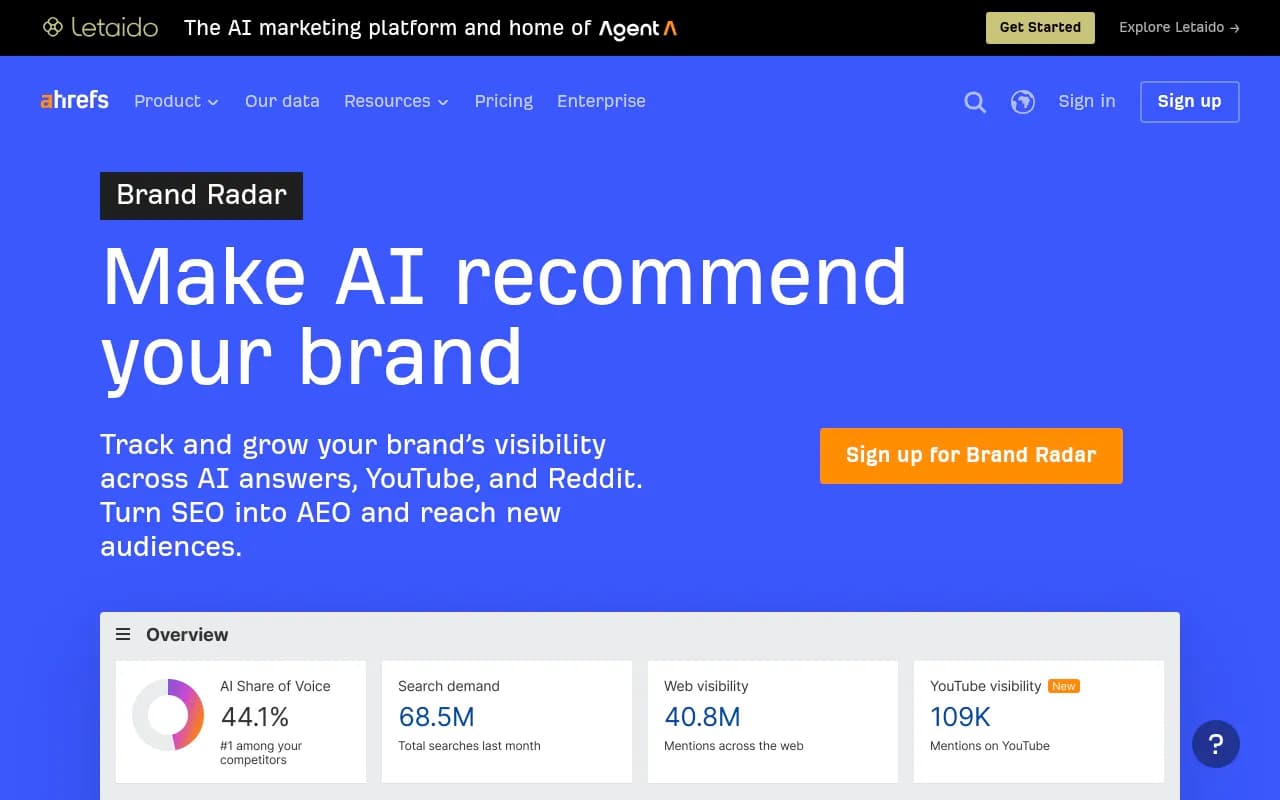
Semrush and Ahrefs Brand Radar
If your team already lives in an SEO suite, both add AI visibility. Semrush's AI toolkit measures mentions, cited pages, and visibility trends across supported engines. Ahrefs Brand Radar is strong for investigating a market and competitors before you set up narrow tracking, and one review recommends it for digital PR teams. The trade-off: broader suites tend to have shallower AI-specific data and fixed prompt sets.
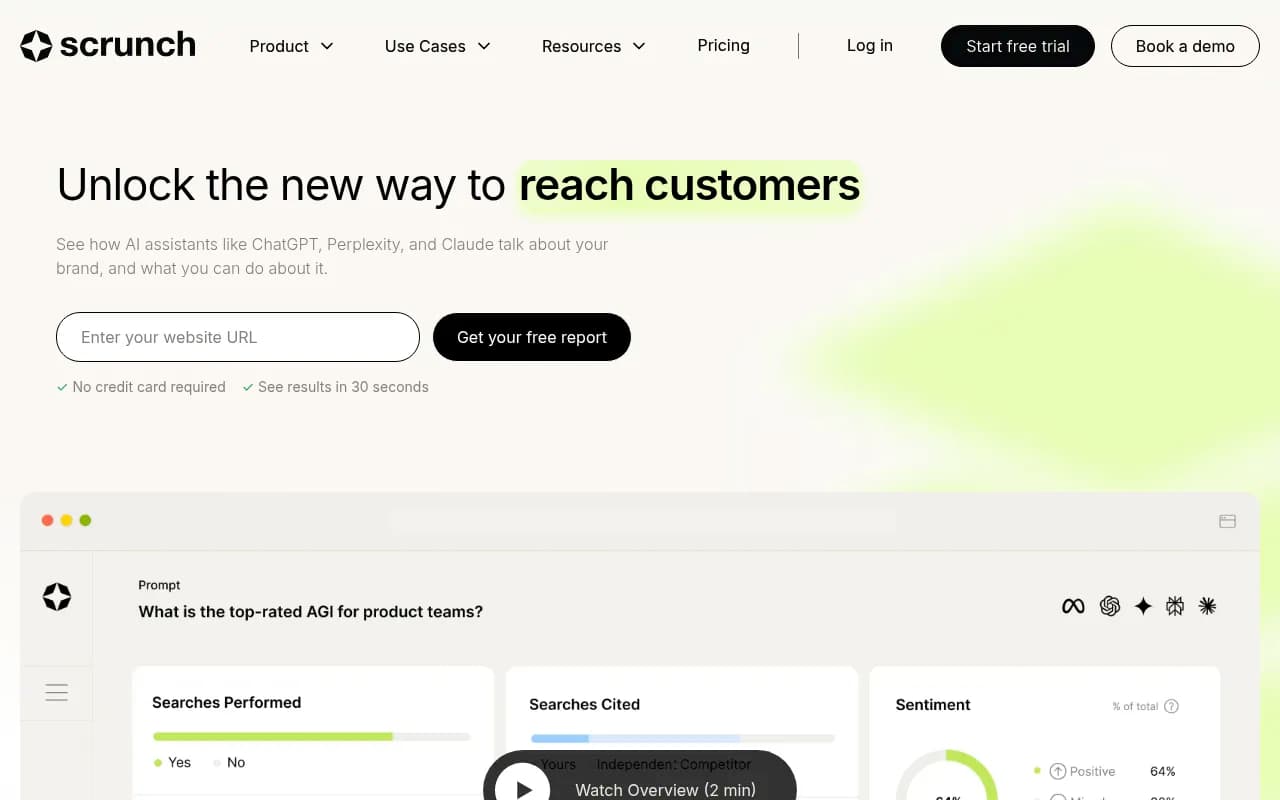
Scrunch AI
Adds crawler diagnostics and agent accessibility checks next to monitoring. Useful if you suspect the model cannot read your site properly.
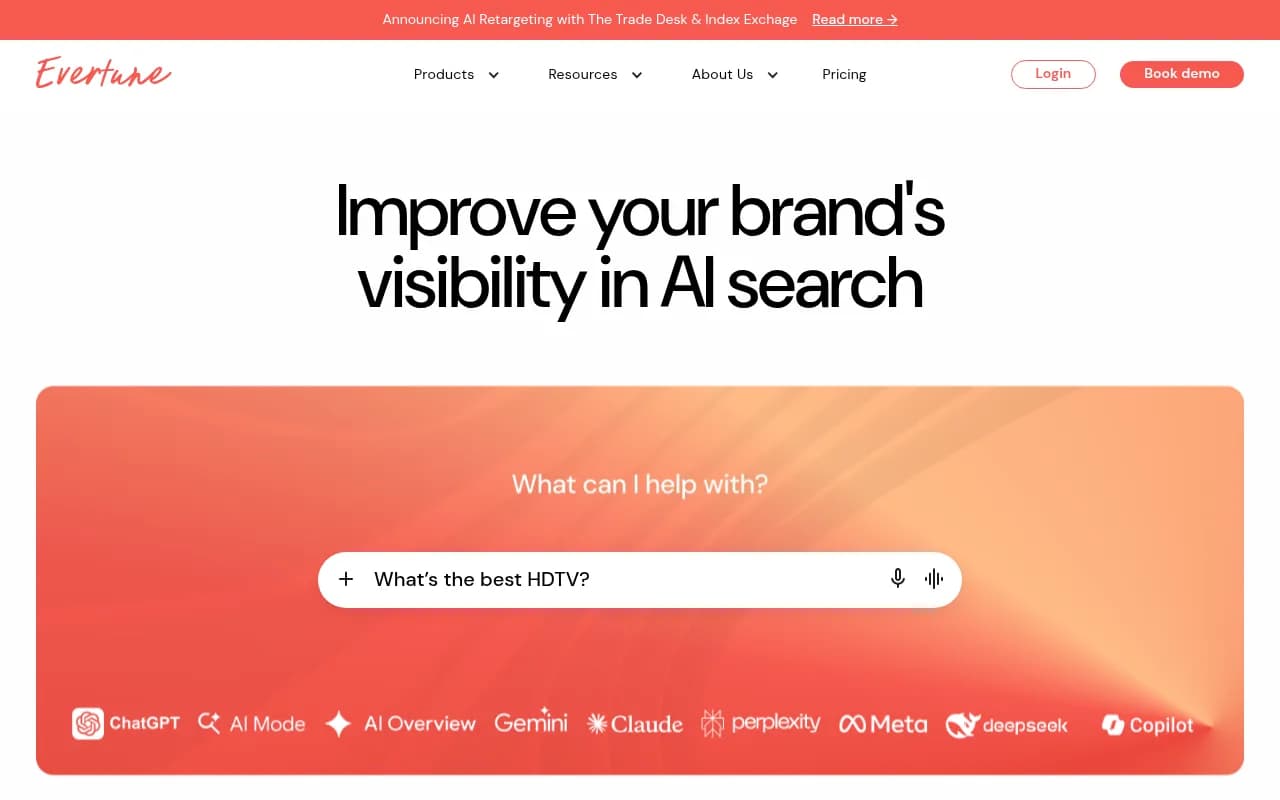
Evertune
Emphasizes repeated sampling and brand research for large enterprises. Repeated sampling is exactly what you want for statistically steadier sentiment, though it is aimed at Fortune 500 budgets.
Brandlight and SE Visible
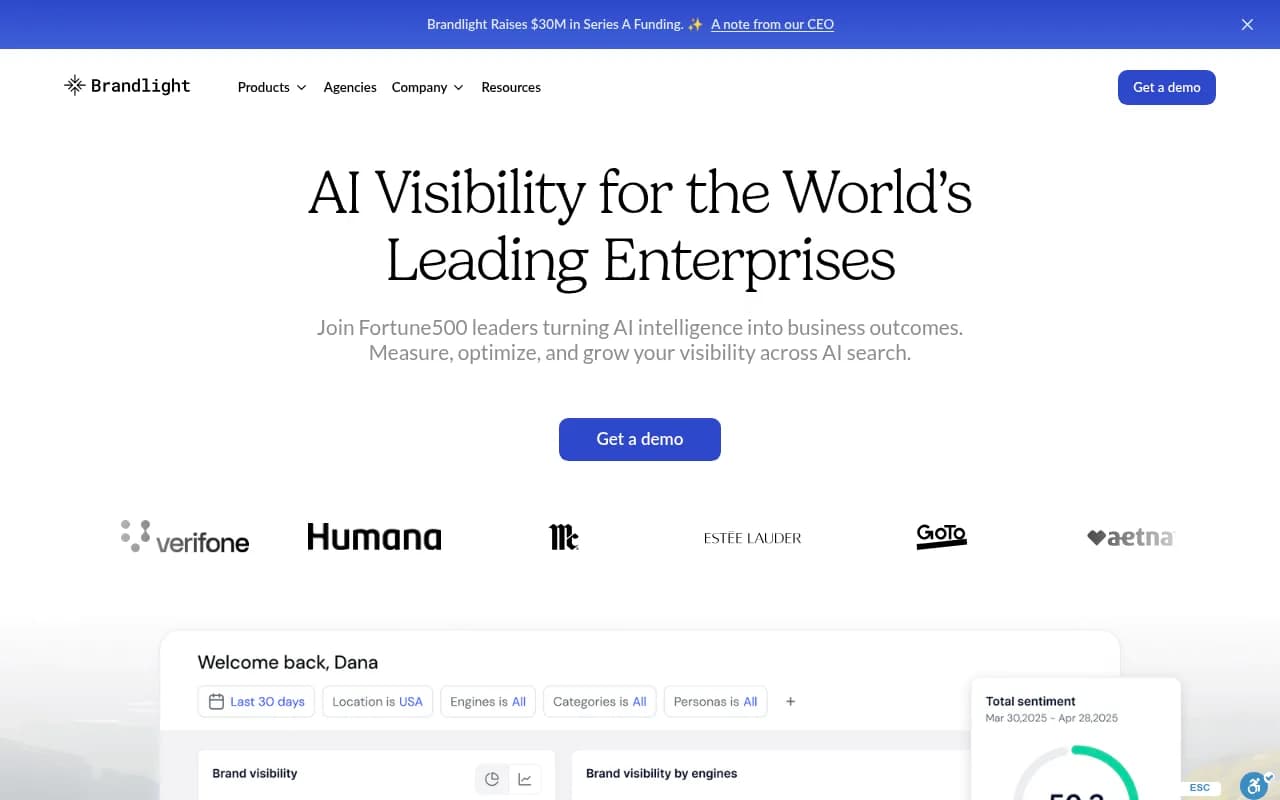
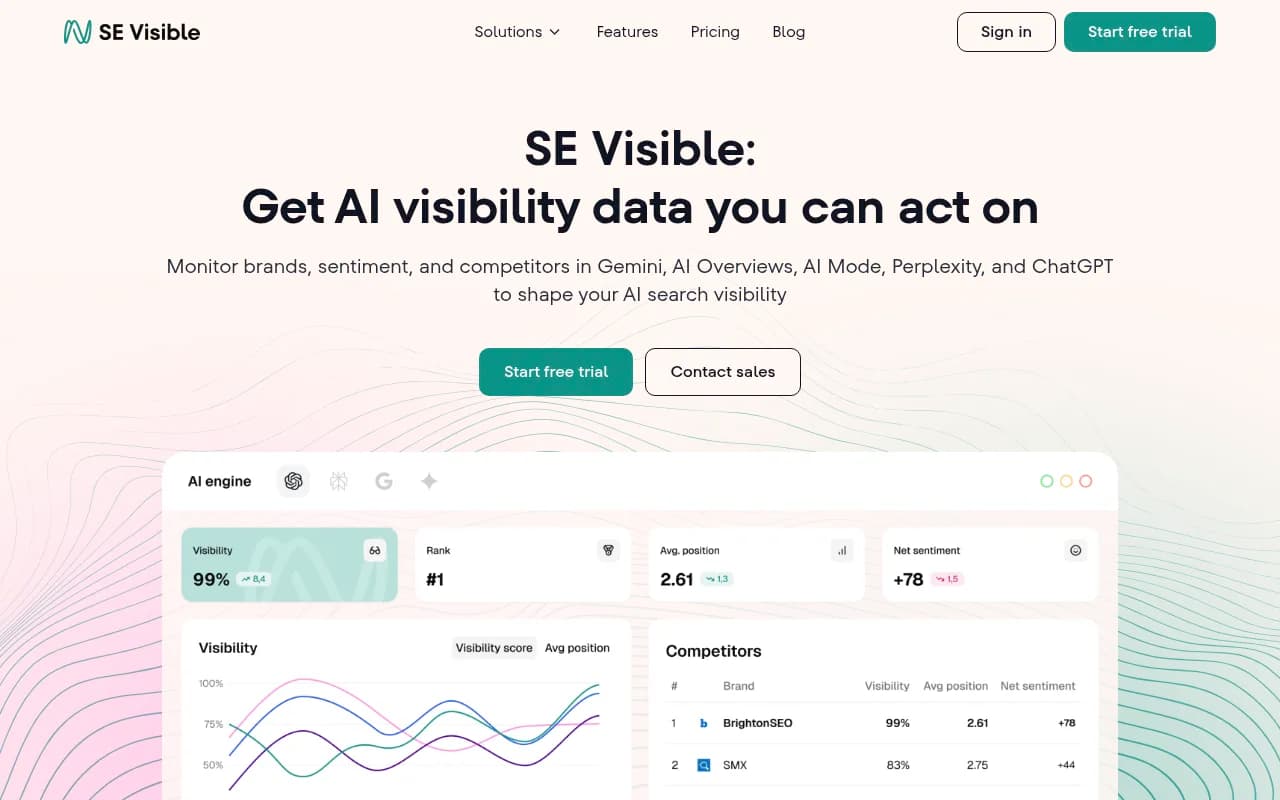
Brandlight launched in 2025 and shows up in PR-focused roundups. SE Visible from SE Ranking gives net sentiment and share of voice in one dashboard but is positioned as tracking without the tools to fix problems.
Comparison table
| Platform | Sentiment approach | Best for | Notable limit |
|---|---|---|---|
| Promptwatch | 0-100 score plus claim-level Brand Narrative, Fact Check | Comms teams that want to find and fix inaccurate claims | Fact Check and local targeting start on Business |
| Profound | Sentiment, FactCheck, benchmarking | Large enterprises, multi-client workspaces | Higher price, monitoring-led |
| Peec AI | Position and sentiment per prompt | Marketing and agency teams | Tracker, not an execution tool |
| Otterly.AI | Basic mention and citation tracking | Low-budget pilots | Shallow sentiment depth |
| Semrush | Mentions, citations, visibility trends | Teams already on Semrush | AI data less deep than specialists |
| Ahrefs Brand Radar | Mentions, citations, sentiment, source research | PR and search teams researching a market | Not built for fixing issues |
| Scrunch AI | Monitoring plus crawler diagnostics | Technical accessibility checks | Higher entry price |
| Evertune | Repeated sampling, brand research | Fortune 500 brands | Enterprise-level cost |
Pair AI sentiment with classic listening
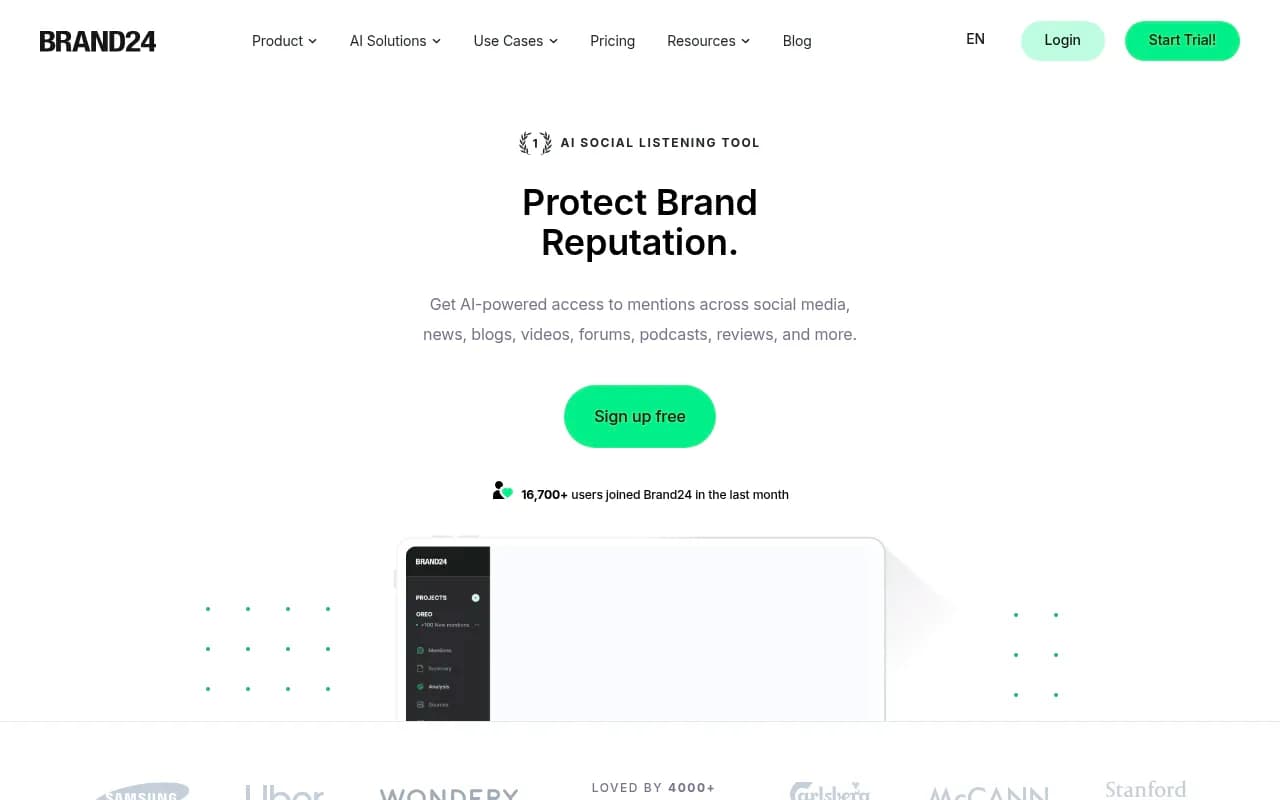
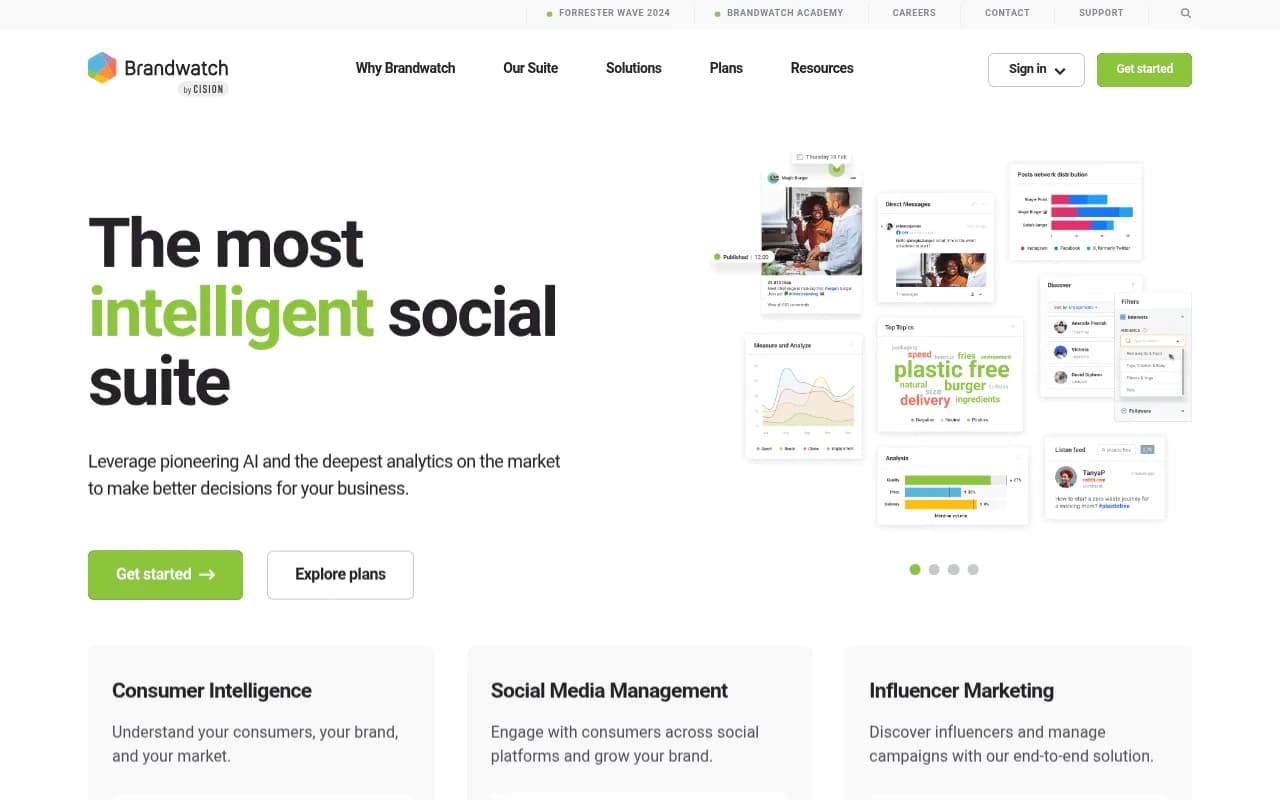
AI sentiment tools do not replace social listening. They answer a different question. Brandwatch, Talkwalker, Meltwater and Brand24 tell you what people are saying in posts and articles. The AI platforms tell you which of that chatter actually reaches a model's answer.
A sensible split: use listening to spot a brewing issue, and an AI visibility tool to check whether it has leaked into ChatGPT or AI Overviews. For deeper background on how sources shape answers, browse Promptwatch Data.
A simple workflow for the first 30 days
Week 1: baseline
Build a prompt set that mirrors how buyers actually ask. Include branded prompts ("is X good?"), competitor comparisons ("X vs Y") and category prompts. Run it across ChatGPT, AI Overviews, Perplexity and Gemini in your key countries.
Week 2: read the claims
Ignore the headline score. Read the actual claims. List the three most repeated negative or inaccurate ones and the pages cited next to them.
Week 3: fix the source
Most bad claims trace back to a handful of pages: an outdated pricing page, an old review, a forum thread. Update your own pages first, since they are the part you control. Then pitch corrections or fresh coverage to the third-party sources.
Week 4: measure again
Re-run the same prompts and compare by engine. Expect movement to be slower and noisier than a press cycle. Judge trends over weeks, not single days, and treat Copilot with extra suspicion given how much its citation counts swing.
Do you need an agency?
If your comms team lacks the bandwidth for source tracing and content fixes, an outside team can run this loop. 1001 SEO Media works on GEO and AI visibility for brands and uses Promptwatch for the monitoring side, though plenty of in-house teams run it themselves.
Where to look for more options
The market is crowded and changes monthly. The directory at bestgeosoftware.com lists GEO platforms you can filter yourself, and Unite.AI's roundup is a useful third-party view of how different vendors approach evidence and workflow.
Bottom line
Pick based on the question you need answered. If it is "how often are we mentioned," nearly any tracker will do. If it is "what is AI telling buyers about us, is it true, and which page taught it that," you need claim-level analysis and source tracing. Run a trial on your own brand with two or three tools, compare the claims each one surfaces, and check current pricing on each vendor's site before committing.