Key takeaways
- AI visibility tracking is no longer optional -- ChatGPT, Perplexity, and Google AI Overviews now influence buying decisions for millions of customers every day.
- Most tools only monitor brand mentions. The ones worth paying for also help you understand why you're invisible and what to do about it.
- Budget-friendly options exist starting from free tiers up to ~$99/month, with meaningful differences in what you actually get.
- Small businesses should prioritize tools that cover at least ChatGPT, Perplexity, and Google AI Overviews -- those three account for the vast majority of AI-driven discovery.
- Tracking visibility without a plan to improve it is just expensive anxiety. Look for tools that close the loop between monitoring and action.
Why small businesses can't ignore AI search anymore
Here's a scenario that's playing out for small businesses right now: a potential customer asks ChatGPT "what's the best [your category] in [your city]?" and your competitor gets recommended. You don't even know it happened.
That's the problem. Traditional SEO gave you rankings you could see. AI search is a black box -- unless you're actively monitoring it.
Google's AI Overviews now appear in roughly 47% of all searches according to Search Engine Journal. ChatGPT has hundreds of millions of weekly active users. Perplexity is growing fast as a research tool. These aren't niche platforms anymore. They're where your customers are looking for answers, and the brands that show up in those answers get the clicks, the calls, and the sales.
For small businesses, the stakes are actually higher than for enterprises. A big brand can absorb being invisible in AI search for a few months while they figure it out. A local service business or a small SaaS company can't. One competitor getting consistently recommended by ChatGPT in your niche can meaningfully shift your pipeline.
The good news: you don't need an enterprise budget to start tracking this. Several solid tools exist in the $0-$99/month range that will tell you exactly how you're showing up (or not showing up) in AI responses.
What to look for in an AI visibility tool
Before diving into specific tools, it's worth being clear about what actually matters -- because the market is full of dashboards that look impressive but don't tell you much.
LLM coverage: Does it monitor ChatGPT? Perplexity? Google AI Overviews? Claude? Gemini? The more models covered, the fuller the picture. At minimum, you want the big three: ChatGPT, Perplexity, and Google AI Overviews.
Prompt customization: Can you define the specific questions your customers are actually asking? Generic prompts give generic data. The best tools let you track the exact queries relevant to your business.
Competitor benchmarking: Knowing you appear in 12% of responses is meaningless without context. Knowing your competitor appears in 67% of the same responses is actionable.
Sentiment and accuracy: Are the AI responses saying good things about you? Are they accurate? Some tools just count mentions; others tell you whether the mention is positive, negative, or factually wrong.
Content recommendations: The most useful tools don't just show you the gap -- they help you close it. That might mean content suggestions, gap analysis, or built-in writing tools.
Price: For small businesses, this is real. A $2,500/month enterprise platform is not an option. Fortunately, you don't need it.
The tools: a practical breakdown
Here's an honest look at the options that make sense for small businesses in 2026, organized roughly from most accessible to most capable.
Free and freemium options
A few tools offer free tiers that are genuinely useful for getting started.
Otterly.AI is one of the most-cited affordable options in this space. It starts at $29/month but has a free tier for basic testing. It covers ChatGPT, Perplexity, and Google AI Overviews, and it's particularly popular with small agencies and solo marketers who want automated prompt testing without a complex setup. The interface is clean, the learning curve is low, and for basic brand monitoring it does the job.
Otterly.AI

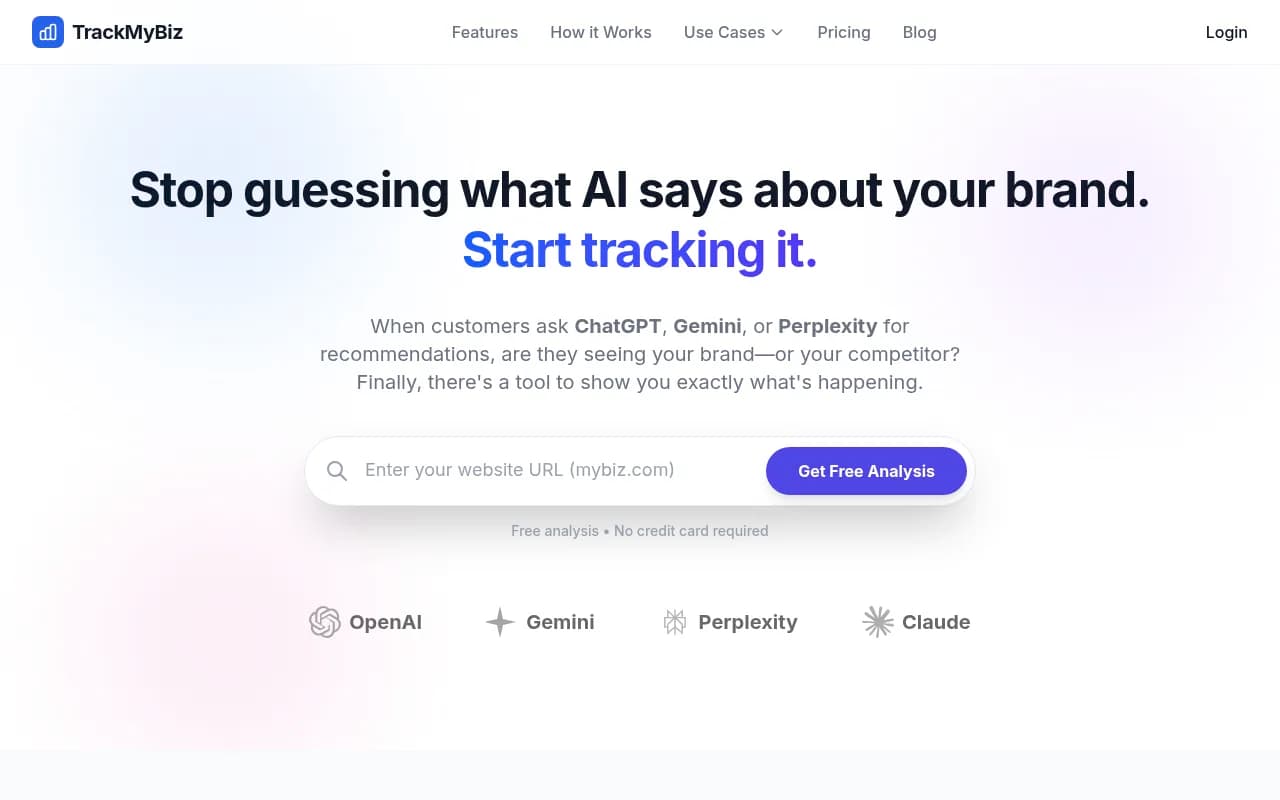
TrackMyBusiness is worth a look if you just want to know what ChatGPT, Gemini, and Perplexity are saying about your brand without committing to a paid plan immediately.
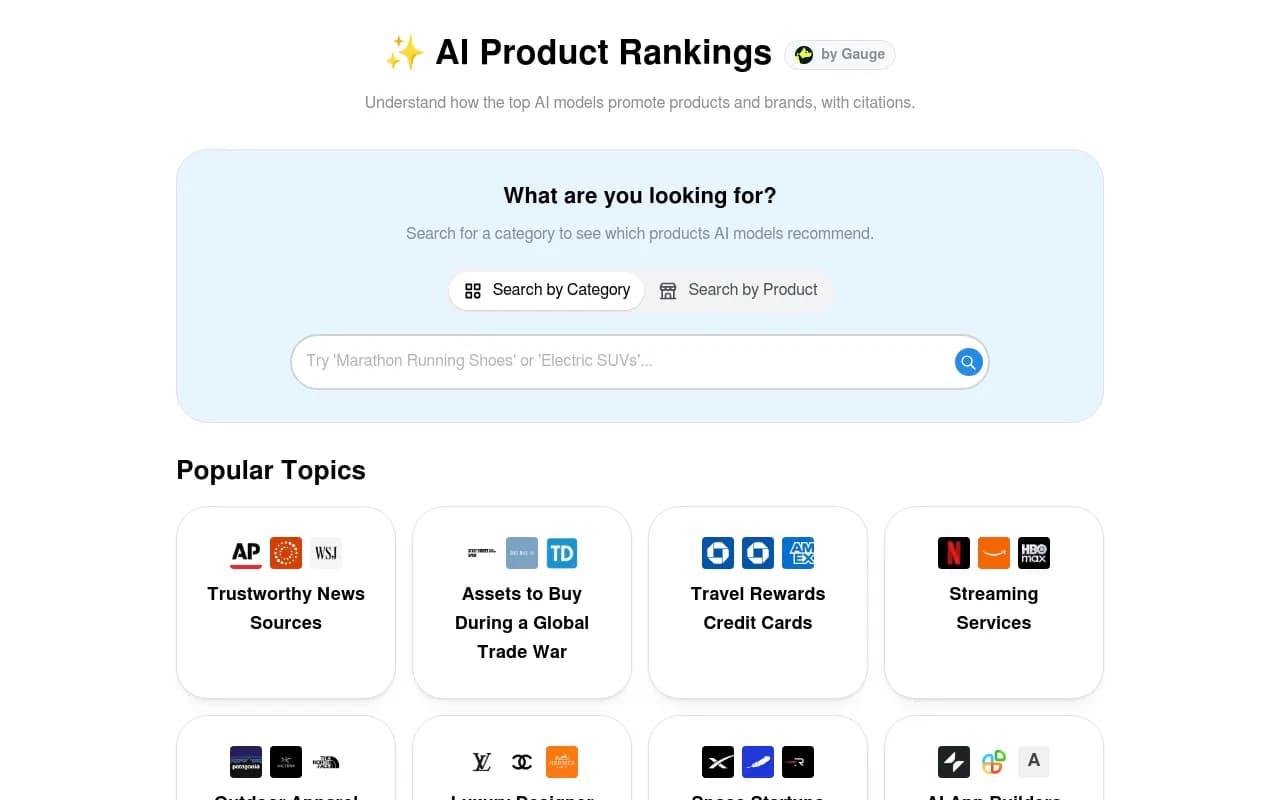
ProductRank offers free AI search discovery and monitoring -- useful for getting a baseline read on your visibility before deciding whether to invest in a paid tool.
The honest caveat with free tools: they tend to give you a snapshot, not a system. You'll see data, but you won't necessarily know what to do with it.
Budget-friendly paid tools ($29-$99/month)
This is where most small businesses will land, and there are genuinely good options here.
Otterly.AI ($29/month starting) earns its reputation. For a small business tracking a handful of prompts across the main AI platforms, it's a solid starting point. The automated prompt testing saves time, and the GEO audit features give you something to act on.
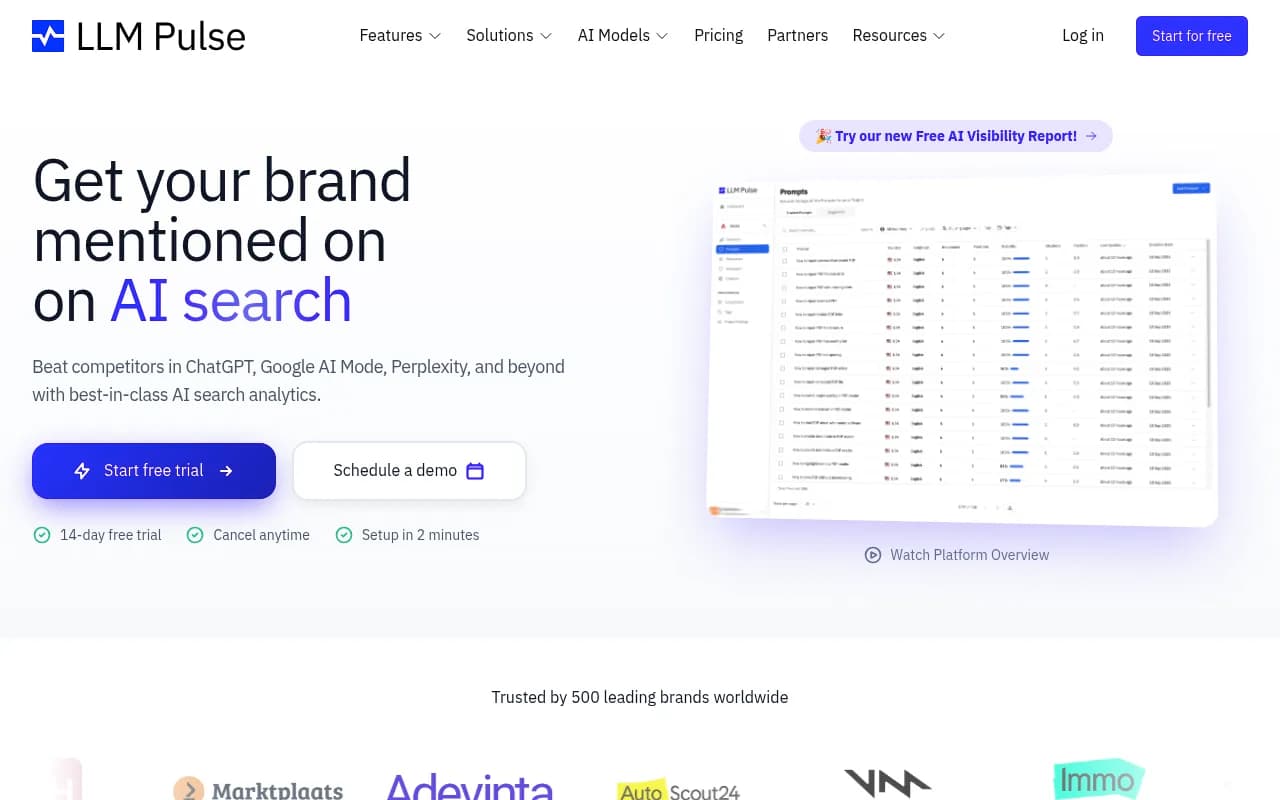
LLM Pulse starts at €49/month and focuses on brand recommendations and sentiment across LLMs. If you care not just about whether you're mentioned but how you're described, this is worth considering. It's particularly useful for businesses where reputation matters a lot -- professional services, healthcare, hospitality.
Peec AI (€89/month) has a simple dashboard with competitor benchmarks built in. For small B2B companies or SaaS businesses that want to see how they stack up against specific competitors in AI responses, it's a clean solution.

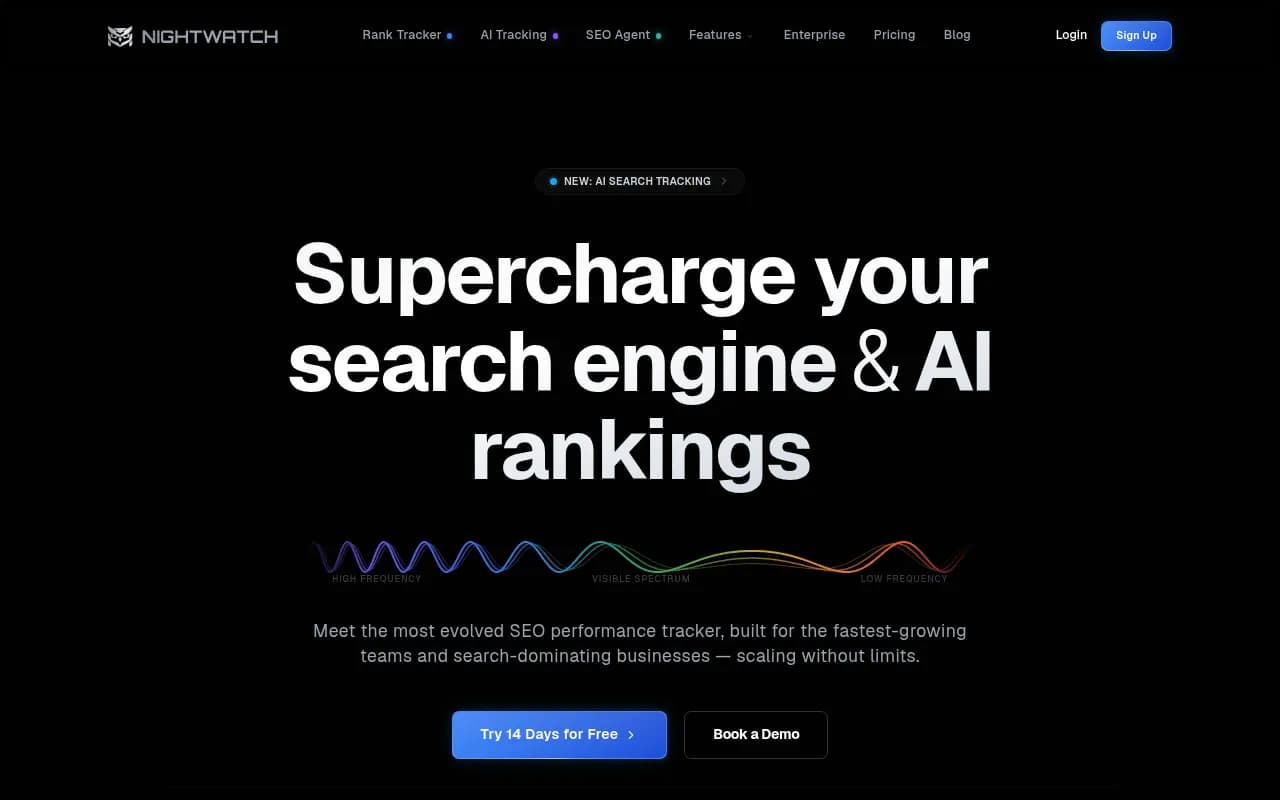
Nightwatch ($39/month plus an AI add-on) is interesting because it combines traditional rank tracking with AI visibility monitoring. If you're already paying for rank tracking and want to add AI visibility without a separate subscription, this is worth evaluating.
Promptwatch ($99/month for the Essential plan) sits at the top of this budget tier and does considerably more than the others. It covers 10 AI models (ChatGPT, Perplexity, Claude, Gemini, Google AI Overviews, DeepSeek, Grok, Mistral, Meta AI, and Copilot), includes Answer Gap Analysis to show you exactly which prompts competitors are visible for that you're not, and has a built-in AI writing agent that generates content specifically engineered to get cited by AI models. For small businesses that want to not just track visibility but actually improve it, this is the most complete option in the budget range.
Promptwatch also includes AI crawler logs -- real-time data on when ChatGPT, Claude, and Perplexity are crawling your site, which pages they're reading, and whether they're hitting errors. That's a feature most tools at any price point don't offer.

Mid-range options ($100-$250/month)
Once you're past the $99 mark, you're getting into more serious territory -- more prompts, more sites, more data.
Profound ($99/month entry, but scales up) is frequently mentioned as a strong enterprise-adjacent option. It has solid AI visibility tracking and content operations features. The tradeoff is that it's priced and designed more for larger teams.
Profound

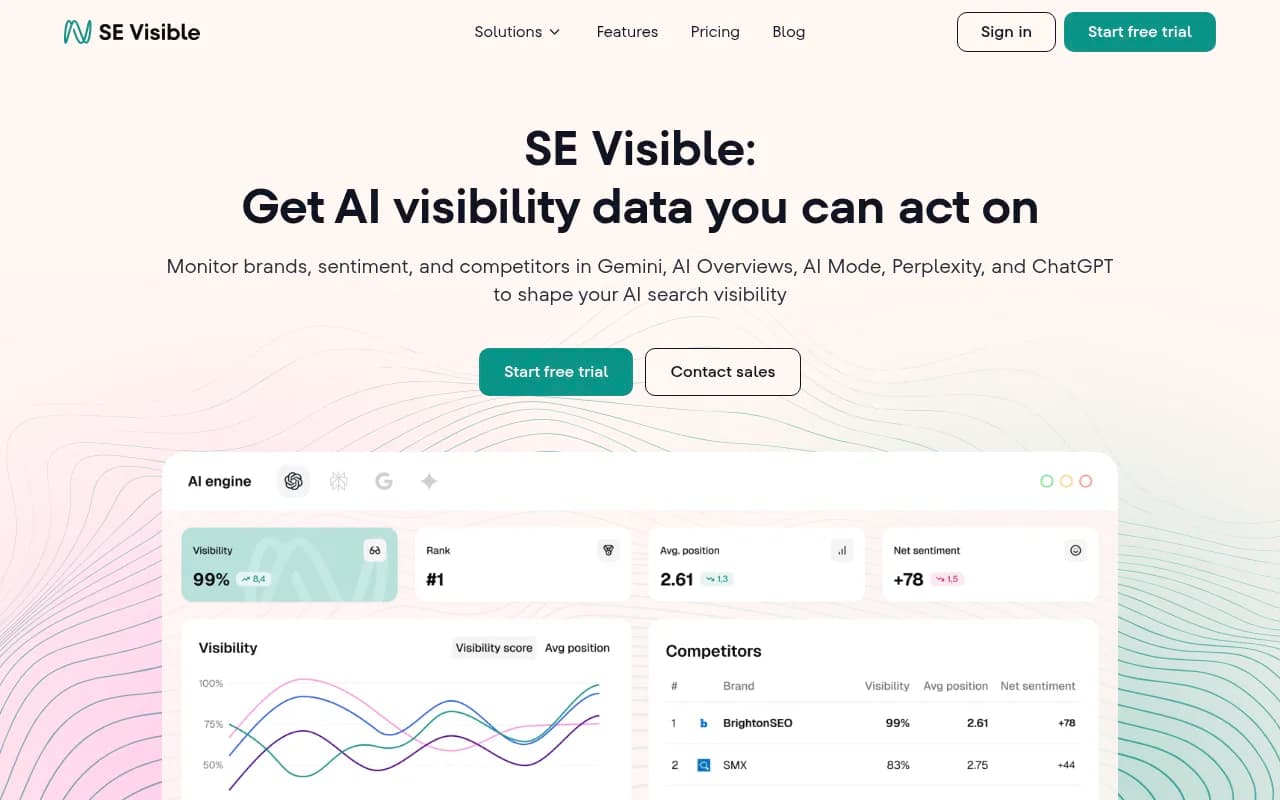
SE Visible ($189/month) from SE Ranking is a dedicated AI Mode tracking tool. It's well-built for agencies and SEO teams that need detailed AI Mode and AI Overviews monitoring. For a solo small business owner, it might be more than you need.
ZipTie is worth mentioning for businesses that want deep analysis and reporting. It goes further than most tools in breaking down AI responses, but it's positioned more for teams that want to dig into the data.
Tools to skip (or use cautiously)
Semrush and Ahrefs both have AI visibility features, but they're add-ons to traditional SEO platforms. Semrush uses fixed prompts (you can't customize them), and Ahrefs Brand Radar similarly lacks the flexibility to track the specific questions your customers are actually asking. If you're already paying for these platforms, the AI features are worth exploring -- but don't buy them for AI visibility tracking.
Comparison table: AI visibility tools for small businesses
| Tool | Starting price | LLMs covered | Prompt customization | Content help | Best for |
|---|---|---|---|---|---|
| Otterly.AI | $29/mo | ChatGPT, Perplexity, Google AIO | Yes | No | Budget monitoring |
| LLM Pulse | €49/mo | Multiple LLMs | Yes | No | Sentiment tracking |
| Nightwatch | $39/mo + add-on | AI + traditional SEO | Yes | No | Combined SEO/AI tracking |
| Peec AI | €89/mo | ChatGPT, Perplexity, Claude | Yes | Basic | B2B competitor benchmarking |
| Promptwatch | $99/mo | 10 models incl. ChatGPT, Claude, Gemini, Perplexity | Yes | Yes (AI writing agent) | Full optimization loop |
| Profound | $99/mo+ | 9+ models | Yes | Partial | Growing teams |
| SE Visible | $189/mo | AI Mode + AIO | Yes | No | Agency/SEO teams |
| Semrush (AI features) | $139/mo (full platform) | Limited | Fixed prompts only | Yes (SEO-focused) | Existing Semrush users |
A note on the "monitoring vs. optimization" gap
One thing that becomes clear when you test these tools: there's a real difference between knowing you're invisible and knowing what to do about it.
Most tools in this space -- including some well-regarded ones -- stop at monitoring. They'll show you a dashboard with your visibility score, your share of AI mentions, how you compare to competitors. That's useful. But then what?
The tools that go further actually analyze why you're not appearing. What topics are your competitors covering that you're not? What questions are AI models answering with competitor content because you don't have a page that addresses them? What content would you need to create to start appearing in those responses?
That second layer is what separates a monitoring tool from an optimization tool. For small businesses with limited time and budget, the optimization layer is arguably more valuable -- because you can't afford to just watch the data. You need to act on it.
Practical advice for getting started
If you're a small business owner or a one-person marketing team, here's a realistic path forward:
Start with a free tool to get your baseline. Use something like TrackMyBusiness or Otterly.AI's free tier to run 10-15 prompts relevant to your business. See where you appear, where competitors appear, and whether the AI responses about you are accurate.
Identify your most important prompts. These are the questions your customers actually ask when they're looking for what you offer. "Best [your category] for [your use case]" type queries. Write them down. These become your tracking prompts.
Pick a paid tool based on what you need most. If you just need monitoring, Otterly.AI or Nightwatch will serve you well. If you want to actively improve your visibility -- not just watch it -- Promptwatch's Essential plan at $99/month gives you the gap analysis and content generation tools to actually move the needle.
Create content that answers the questions AI models care about. This is the part most businesses skip. AI models cite content that directly and clearly answers specific questions. If your website doesn't have a page that answers "how does [your product] compare to [competitor]?" or "is [your service] worth it for [specific use case]?", you're leaving visibility on the table.
Check your AI crawler logs. This is underrated. Knowing whether ChatGPT's crawler (GPTBot) is actually visiting your site -- and whether it's hitting errors -- tells you a lot about why you might be invisible. Tools like Promptwatch surface this data automatically.
The hallucination problem (and why it matters for small businesses)
One thing the research data surfaced that deserves a mention: AI models sometimes say wrong things about businesses. Wrong pricing. Wrong features. Confused with a competitor. Invented integrations.
For a small business, this is a real risk. If ChatGPT is telling people your service costs twice what it actually does, or that you don't offer something you do offer, that's actively hurting you -- and you might not know it's happening.
Most monitoring tools count mentions without checking accuracy. A few tools, including LLMClicks, specifically flag when AI responses contain information that doesn't match your website. If you operate in a space where pricing, features, or credentials matter a lot (professional services, SaaS, healthcare), it's worth checking whether your monitoring tool of choice does any accuracy validation -- or at least lets you manually review the actual AI responses, not just the mention count.
Bottom line
AI visibility tracking doesn't have to be expensive to be useful. For most small businesses, a $29-$99/month tool that covers the main AI platforms and lets you customize your prompts will give you the data you need to understand where you stand.
The more important question is what you do with that data. Monitoring your visibility score going up and down without a clear plan for improving it is just expensive anxiety. The tools that help you identify content gaps and create content that AI models actually want to cite are the ones worth the investment -- and several of them are accessible at small business price points in 2026.
Start tracking. Then start optimizing. The gap between brands that appear in AI search and those that don't is widening, and it's much easier to close that gap now than it will be in 12 months.