Key takeaways
- AirOps excels at LLM orchestration and content workflows, but it doesn't show you whether your content is being cited in AI search engines like ChatGPT, Perplexity, or Google AI Overviews.
- The platforms that matter most in 2026 close the full loop: generate content, track citations, and help you fix gaps -- not just monitor them.
- Most "GEO tools" are monitoring dashboards only. The ones worth paying for connect visibility data to actual content creation.
- If you need both content generation and AI citation tracking in one place, Promptwatch and Search Atlas are the strongest all-in-one options.
- For teams that already have a content workflow and just need visibility tracking, tools like Profound, Otterly.AI, and Peec AI are worth considering -- with the caveat that they stop at data.
AirOps built a solid reputation as an LLM orchestration platform. If you're running content operations at scale -- managing prompts, chaining workflows, automating production -- it does that well. But there's a gap that's become harder to ignore in 2026: AirOps doesn't tell you whether the content you're creating is actually showing up in AI-generated answers.
That's the problem this guide addresses. You can publish 200 articles and have no idea whether ChatGPT, Perplexity, or Google's AI Overviews are citing any of them. You're optimizing blind.
The platforms below either close that loop entirely or do one part of it better than AirOps. Some generate content engineered for AI citation. Some track your brand across LLMs. The best ones do both and show you the connection between what you publish and where you appear.
Here's how they stack up.
How to think about AirOps alternatives
Before jumping into the list, it's worth being clear about what "alternative" means here, because these tools aren't all solving the same problem.
There are three distinct categories:
- Content generation platforms that write SEO and GEO-optimized content (but may not track citations)
- AI visibility monitoring tools that track where your brand appears in LLM responses (but don't help you create content)
- End-to-end platforms that do both -- generate content based on gap analysis, then track whether it gets cited
AirOps sits closest to the first category, with some workflow automation on top. The most interesting alternatives in 2026 are the ones pushing into that third category, because that's where the real ROI lives.
| Tool | Content generation | AI citation tracking | Gap analysis | Crawler logs | Best for |
|---|---|---|---|---|---|
| Promptwatch | Yes (Content Agents) | Yes (10 models) | Yes | Yes | Full GEO loop |
| Search Atlas | Yes | Yes | Yes | No | SEO + GEO teams |
| AirOps | Yes | No | Limited | No | LLM workflow automation |
| Jasper | Yes | No | No | No | Marketing content at scale |
| Surfer SEO | Yes | No | No | No | Traditional SEO content |
| Profound | No | Yes | No | No | Enterprise AI monitoring |
| Otterly.AI | No | Yes | No | No | Lightweight brand tracking |
| Peec AI | No | Yes | No | No | Analytics-first teams |
| Frase | Yes | No | No | No | Content briefs and research |
| MarketMuse | Yes | No | Yes | No | Content strategy and planning |
1. Promptwatch -- best for closing the full loop
If the core complaint about AirOps is that it generates content but doesn't show you whether that content gets cited in AI search, Promptwatch is the most direct answer to that problem.

The platform tracks your brand across 10 AI models -- ChatGPT, Perplexity, Claude, Gemini, Google AI Overviews, Grok, DeepSeek, Copilot, Meta AI, and Mistral -- and connects that visibility data to a content creation workflow. The Answer Gap Analysis shows you exactly which prompts your competitors are appearing for that you're not. From there, Content Agents generate articles, listicles, and comparisons grounded in real prompt data, citation patterns, and competitor analysis.
What makes this different from just having two separate tools is the feedback loop. Page-level tracking shows which specific pages are being cited, by which models, and how often. Agent Analytics logs when AI crawlers hit your site, which pages they read, and when a page moves from "crawled" to "cited." You can see the timeline from publish to citation -- something most platforms don't even attempt.
For teams that have been frustrated by publishing content into a black box, that attribution layer is the thing that changes how you prioritize work.
Pricing starts at $99/month for one site and 50 prompts. The Professional plan at $249/month adds crawler logs, multi-location tracking, and 15 content articles per month.
2. Search Atlas -- best for SEO teams moving into GEO
Search Atlas has grown into one of the more complete platforms for teams that need traditional SEO and AI search visibility in the same place. It generates content, tracks rankings, and monitors how your brand appears in AI-generated answers -- without requiring you to stitch together three separate tools.
The content generation side is genuinely useful: it writes and optimizes articles based on SERP data and competitor analysis, not just generic prompts. The AI visibility layer tracks brand mentions across major LLMs and surfaces gaps in your coverage. For SEO teams that are just starting to think about GEO, this is a natural on-ramp because it doesn't require abandoning your existing workflow.
The main limitation compared to Promptwatch is depth on the AI tracking side -- no crawler logs, and the citation attribution isn't as granular. But for most mid-market teams, the breadth of features at a reasonable price point makes it worth serious consideration.
3. Jasper -- best for marketing teams that need volume
Jasper has evolved well beyond its early days as a GPT wrapper. In 2026, it's a proper marketing platform with AI agents that can run content pipelines, maintain brand voice across large teams, and produce content at a scale that's genuinely hard to match manually.
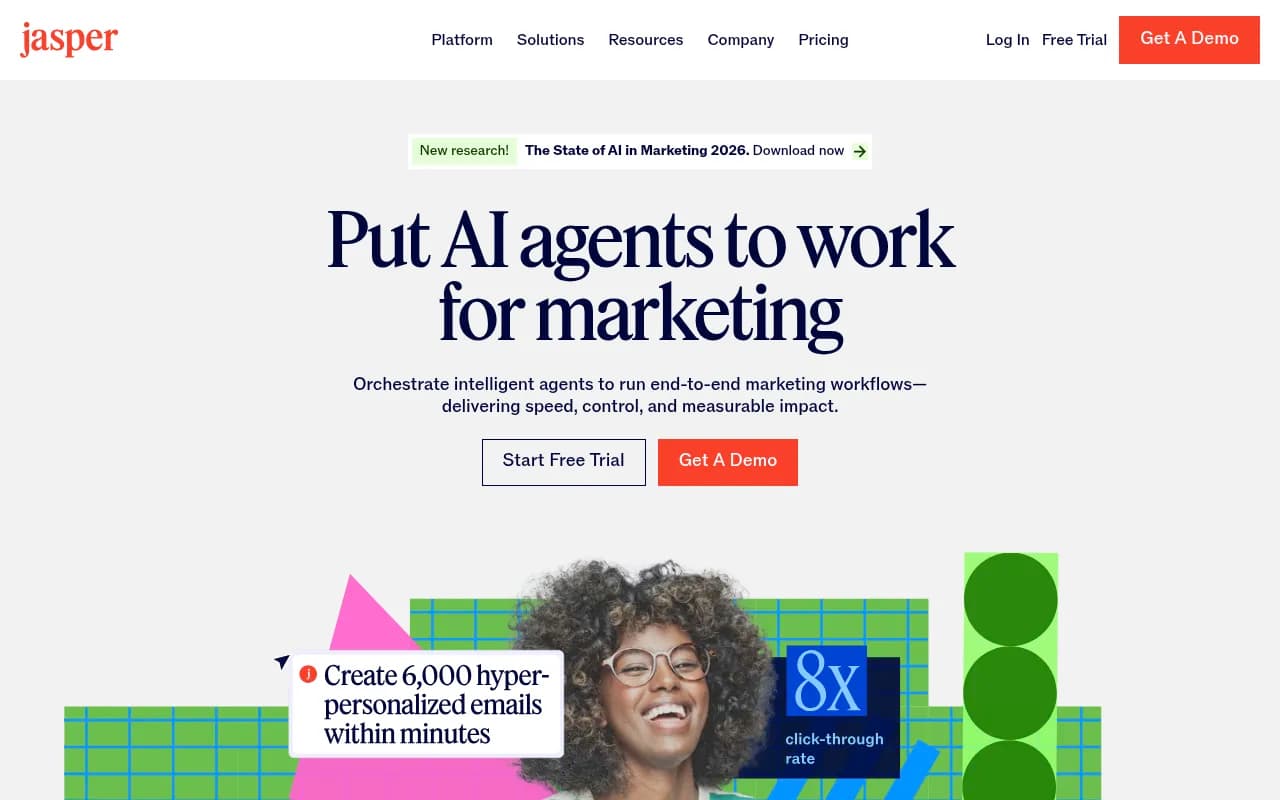
Where Jasper falls short as an AirOps alternative is the same place AirOps itself falls short: there's no AI citation tracking. You can produce a lot of content, but you won't know whether any of it is influencing what ChatGPT or Perplexity recommends. For teams where volume and brand consistency are the primary problems, Jasper is excellent. For teams trying to win in AI search, it's half the solution.
4. Surfer SEO -- best for content that still needs to rank in Google
Surfer SEO remains one of the strongest tools for optimizing content against traditional Google rankings. Its content editor scores articles in real time against top-ranking competitors, and the keyword research and clustering features are genuinely well-built.
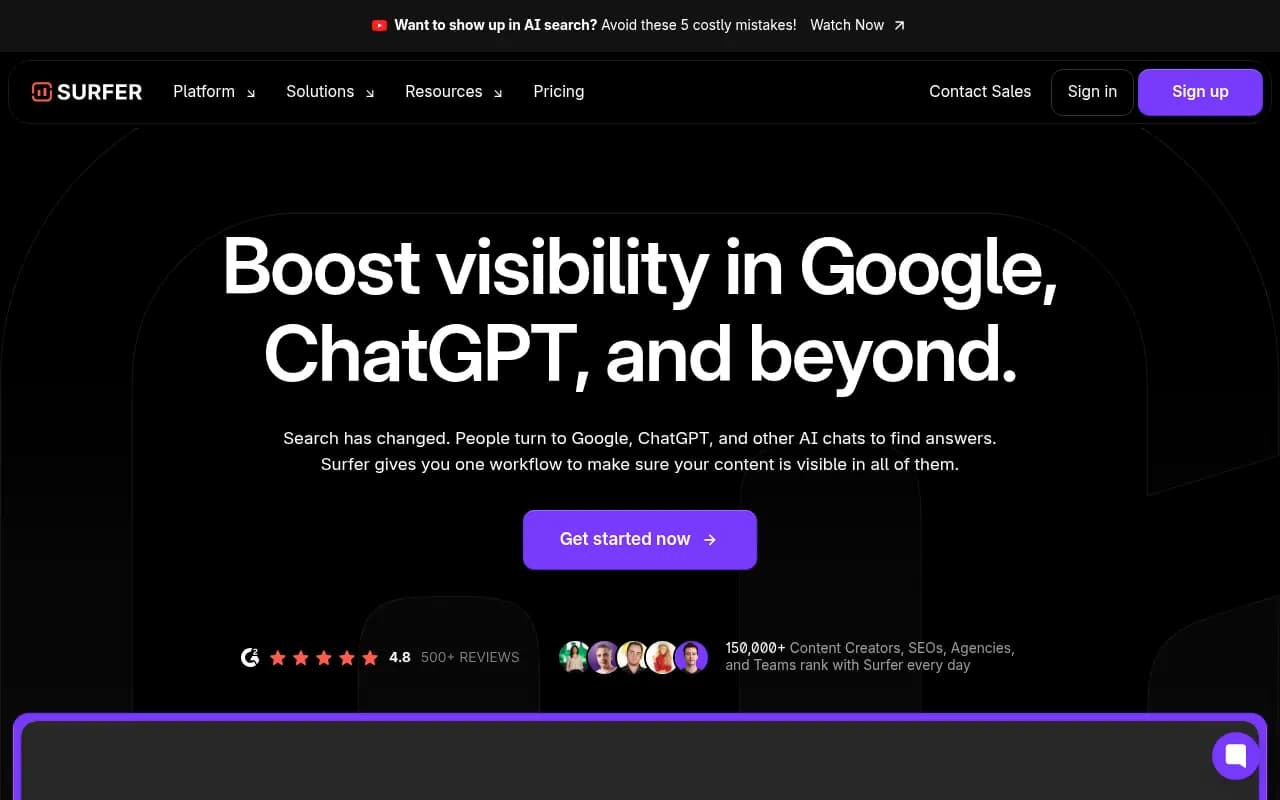
In the context of AirOps alternatives, Surfer is worth including because a lot of teams using AirOps are still primarily optimizing for Google -- AI search visibility is a secondary concern. If that describes you, Surfer's content optimization is more actionable than AirOps's for traditional SEO purposes.
The gap: Surfer has no AI citation tracking. It doesn't know whether Perplexity is citing your articles or ignoring them. If AI search visibility is a priority, you'd need to pair it with a dedicated monitoring tool.
5. Profound -- best for enterprise AI visibility monitoring
Profound is one of the more established names in AI search visibility tracking. It monitors how your brand appears across ChatGPT, Perplexity, Claude, and Google AI Overviews, with solid reporting on share of voice, sentiment, and citation patterns.
Profound

The honest assessment: Profound is a monitoring tool, not an optimization tool. It shows you data but doesn't help you act on it. There's no content generation, no gap analysis that feeds into a content brief, no crawler logs. For enterprise teams that have separate content and SEO functions and just need reliable visibility data to report upward, Profound works well. For teams that need to actually move the needle on AI citations, it's a starting point, not a complete solution.
AirOps itself published a comparison of Profound alternatives, noting that many teams outgrow visibility-only tools once they need to ship content based on those insights -- which is a fair characterization of Profound's ceiling.
6. Otterly.AI -- best for lightweight brand tracking
Otterly.AI is a simpler, more accessible entry point into AI search monitoring. It tracks brand mentions across ChatGPT, Perplexity, and Google AI Overviews, with a clean interface that doesn't require much setup.
Otterly.AI

For small teams or founders who want a basic read on whether they're showing up in AI-generated answers, Otterly.AI is a reasonable starting point. The pricing is accessible and the learning curve is low. But it's firmly in the monitoring-only camp -- no content generation, no crawler logs, no gap analysis. If you outgrow basic monitoring, you'll need to switch to something more capable.
7. Frase -- best for content research and brief generation
Frase has been a reliable tool for content teams that want to speed up the research and brief-writing phase of content production. It analyzes top-ranking pages for a given keyword, extracts the topics and questions those pages cover, and helps you structure a brief that competes.
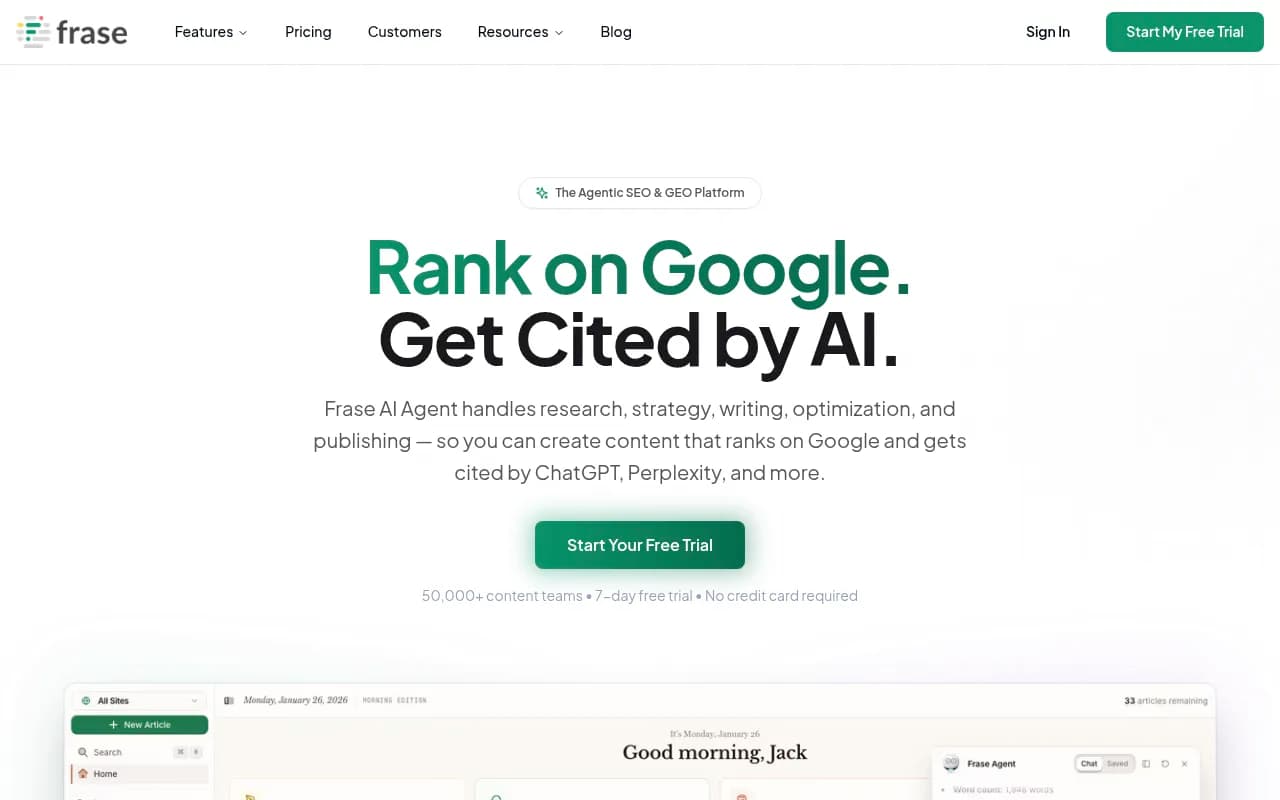
As an AirOps alternative, Frase is most useful for teams where the bottleneck is research and planning rather than writing. The AI writing features are decent but not the main draw -- the brief generation and SERP analysis are where it earns its place. Like most content tools, it has no AI citation tracking, so you're still flying blind on whether your content influences LLM responses.
8. MarketMuse -- best for content strategy and topical authority
MarketMuse takes a different angle from most content tools: it focuses on topical authority, helping you understand which topics you own, which you're weak on, and how to build a content plan that establishes depth in a subject area.
This is particularly relevant for AI search visibility because topical authority is one of the signals that influences whether AI models treat your site as a reliable source. If you're thin on coverage in a topic area, AI models are less likely to cite you -- MarketMuse helps you identify and fix that systematically.
The limitation is that MarketMuse doesn't track AI citations directly. It can tell you what content you should create, but not whether that content is actually being cited by ChatGPT or Perplexity. For that, you'd need a separate monitoring layer.
9. Peec AI -- best for analytics-first teams
Peec AI is a focused analytics platform for teams that want clean, low-friction data on AI search visibility. It tracks how your brand appears across major LLMs, surfaces share of voice metrics, and provides the kind of structured reporting that works well in agency or enterprise settings where stakeholders want dashboards, not workflows.

The positioning is honest: Peec AI is built for measurement, not execution. If you have a content team that can act on the data independently, Peec AI gives them good signal. If you need the platform to help you act on the data -- generate content, identify specific gaps, track the impact of new pages -- you'll hit its ceiling quickly.
The real question: monitoring or optimization?
Most of the tools in this list do one of two things well: they generate content, or they track AI citations. Very few do both, and even fewer connect the two in a way that creates a feedback loop.
That distinction matters more than it might seem. A monitoring tool that shows you're invisible in Perplexity is useful. A platform that shows you're invisible, identifies the specific prompts you're missing, generates content to fill those gaps, and then tracks whether that content gets cited -- that's a different category of tool.
The platforms that come closest to that full loop in 2026 are Promptwatch (which is built around it) and Search Atlas (which covers most of it). Everything else is either a strong point solution or a starting point that you'll eventually need to supplement.
If you're evaluating AirOps alternatives because you want better content quality or more workflow automation, Jasper and Surfer SEO are worth your time. If you're evaluating because you want to actually win in AI search and prove it, the monitoring-only tools will frustrate you -- and the full-loop platforms are where the real leverage is.
The gap between "we publish content" and "we know our content is being cited in AI search" is the gap worth closing in 2026. Pick the tool that closes it.