Key Takeaways
- GEO tools for accountants measure whether ChatGPT, Gemini, Perplexity and Google AI Overviews mention and cite your firm. They are a different category from AI tax research or bookkeeping tools.
- Most small firms need a tracker plus a way to act on the data. A dashboard alone won't get you cited.
- In Promptwatch's data (Sep 28 to Oct 4, 2026), product and landing pages earn about 39% of ChatGPT citations. Your service pages matter more than your blog.
- Pick a tool by firm size: a budget tracker for a solo preparer, an end-to-end platform for a multi-partner firm, an agency for firms with no marketing staff.
- Before publishing AI-assisted content, check it against Circular 230 and AICPA advertising rules.
Why accounting firms should care about GEO
A prospect used to search "tax preparer near me" and scan ten blue links. Now a growing number of them ask ChatGPT or Perplexity something like "which CPA firm understands multistate sales tax for SaaS companies?" and get a short list of named firms. If you're not on that list, you never knew the prospect existed.
This is what generative engine optimization (GEO) addresses. It's also called AEO, AI SEO or LLM SEO. The goal is to be mentioned, cited and described accurately in AI answers. For a deeper primer, the Promptwatch glossary covers the terms.
Accounting is an awkward category for this. The questions are high-stakes (taxes, audits, penalties), seasonal, and often local. AI engines lean on authoritative sources for finance topics, so a small firm competes with NerdWallet, the IRS, and big directories. One third-party study (Web Tonic, citing Conductor data from May to September 2025) put NerdWallet at a 6.73% share of top AI-cited domains in the financial sector. I haven't verified that figure, so treat it as directional.
Don't confuse GEO tools with AI tax tools
Searching for this topic mostly returns lists of AI workflow tools: CoCounsel Tax, Blue J, TaxGPT, Bloomberg Tax AI Assistant, CCH AnswerConnect, and workspaces like OCTA Flow. Those help you do the work. They don't help clients find you.
Thomson Reuters Institute's 2026 AI in Professional Services Report says 34% of tax firms already use generative AI and another 47% are planning or considering it. OCTA, a vendor, says AI helps most with work around the return (books, workpapers, provisions, 1099s) while tax-prep software still files the return. Those are vendor claims, and they're about operations. Useful, but a separate budget line.
Here is the split:
| Category | Question it answers | Examples |
|---|---|---|
| AI tax research | What does the code say about this? | CoCounsel Tax, Blue J, TaxGPT |
| AI workflow and prep | How do I finish this work faster? | OCTA Flow, Double |
| GEO and AI visibility | Do AI engines recommend my firm? | Promptwatch, Peec AI, Otterly.AI |
| Local listings | Is my firm data consistent everywhere? | BrightLocal, Whitespark, Yext |
This guide covers the third and fourth rows.
What an accounting firm should track
A GEO tool is only useful if you point it at the right prompts. Build your list around how clients actually ask:
- Service plus location: "best CPA for small business in Austin", "tax preparer near me"
- Niche plus service: "accounting firm for SaaS companies", "CPA for nonprofits audit", "cost segregation study provider"
- Problem prompts: "I got an IRS notice, who can help", "how to catch up on three years of unfiled returns"
- Brand prompts: "is [Firm] good for small business taxes"
- Competitor comparisons: "[Firm] vs [Competitor]"
Then watch four things: whether you're mentioned, where you land in the answer, which pages get cited, and how the AI describes you. That last one matters in a trust-based profession. If ChatGPT says your firm doesn't handle S-corp returns and you do, you want to know.
What the citation data says about your pages
Promptwatch's data on ChatGPT citation share by content type (Sep 28 to Oct 4, 2026) found product pages took 22.4% of classified citations and landing pages 16.8%. Listicles got 13.6%, how-tos 8.7%, and news 5.7%. For commercial prompts like "best tax software for small firms," product, landing and listicle pages together took roughly two thirds of citations.
For an accounting firm, translate that: your individual service pages (tax preparation, advisory, outsourced CFO, audit) are the equivalent of product pages. They should be complete, factual, and include who it's for, process, example situations and how fees work. Add an FAQ page and some how-to and comparison content.
One inference of mine, not stated in the report: because news pages lose about half their citations within roughly five weeks while landing pages and docs hold up for months, evergreen service pages should outlast tax-news posts. Don't stop publishing news, but don't make it your whole strategy.
You share every answer with many other sites
According to Promptwatch's report on unique domains per ChatGPT response (Sep 28 to Oct 4, 2026), 47.6% of responses with citations cite 10 or more domains. Organic prompts with no brand named are the most crowded, at 52.5%. Brand-specific prompts are narrower, with 5 domains the most common count.
For a CPA firm the practical takeaway is that your own site isn't enough. Directories, reviews and third-party listicles fill most of those slots. The IRS Directory of Federal Tax Return Preparers, your Google Business Profile, and review sites in your category all feed the picture. Keep your PTIN name and address consistent with your public profiles.
The best GEO tools for accounting firms in 2026
I didn't have verified pricing for most trackers below, so check each vendor's page before you buy. The one exception is Promptwatch, where the figures are published.
Promptwatch for firms that want to fix problems, not only see them
Promptwatch is an end-to-end AI visibility platform. It tracks how ChatGPT, Gemini, Claude, Perplexity, Google AI Overviews, Google AI Mode and Copilot mention and cite you, using the real interfaces rather than only APIs. Then it goes further: content gap analysis shows which prompts you're missing, the Content Agent writes and publishes pages to WordPress, Webflow or Framer, and the Action Board gives a prioritized to-do list.

For accounting specifically, a few capabilities stand out:
- Brand Narrative pulls out the individual claims AI makes about your firm (for example "expensive for small businesses") and groups them by theme such as Pricing or Support. Fact Check, on Business and above, lets you mark a claim inaccurate and find which page on your site is teaching the wrong thing.
- Local GEO targeting (Business plan and above) pins a monitor to exact coordinates, so "tax preparer near me" is checked as if asked from your office. State and city tracking is on the same tier.
- Crawler logs show whether GPTBot, ClaudeBot and others can actually read your site, which catches a surprising number of firms whose sites block AI bots.
- Visitor analytics measure the traffic and conversions AI sends. Note that ChatGPT stopped sending a referrer on October 8, 2026, so there's a setting to count visits tagged utm_source=chatgpt.com.
Pricing as published: Essential is $95/mo (50 prompts, 1 project), Professional $245/mo (150 prompts, 5 AEO articles), and Business $579/mo (350 prompts, the automated Content Agent, local targeting, Fact Check). There's a 7-day free trial on monthly billing, and a free no-login AI visibility report is a decent first look. Confirm current numbers at promptwatch.com/pricing.
For a solo preparer, Essential covers a sensible prompt list. A regional firm with several service lines and offices will want Business for the Content Agent and local targeting. Agencies managing several firms can look at the agency plans.
Peec AI, Otterly.AI and Rankshift for lightweight monitoring
If all you want is a recurring answer to "are we mentioned?", the simpler trackers are fine. These tools monitor prompts and brand mentions and report them. They generally don't include crawler logs, visitor analytics or content generation, so you'll need other tools to act on what you find.

Otterly.AI


They suit a solo preparer who wants a cheap pulse check and is willing to fix pages manually.
Semrush and Ahrefs Brand Radar if you already pay for them
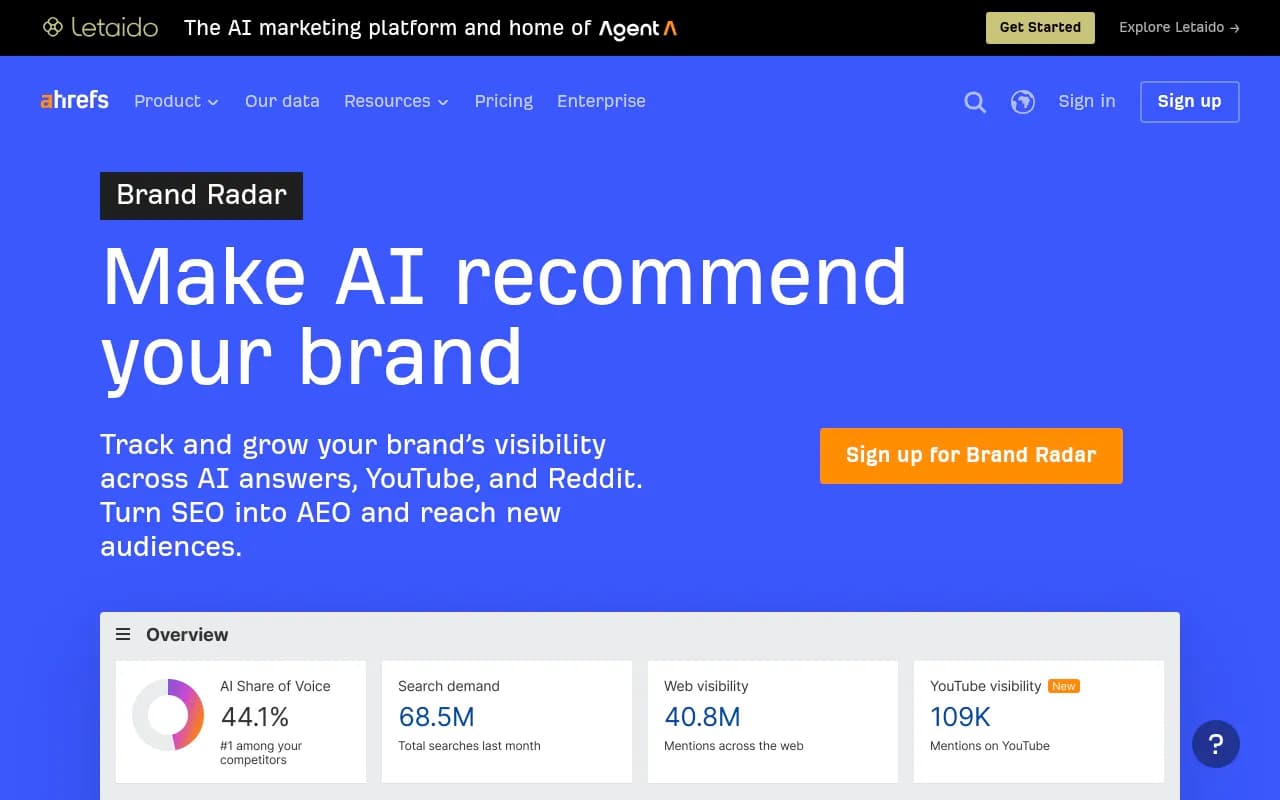
If your marketing person already lives in an SEO suite, adding AI tracking there is the lowest-friction path. The tradeoff is that these are traditional SEO platforms with AI features attached, so the AI-specific depth (crawler logs, AI traffic attribution) is thinner.
BrightLocal, Whitespark and Yext for the local layer
Tax preparers live and die by local. AI engines draw on listings, reviews and directory data, and inconsistent name, address and phone details across the web hurt you. A local SEO tool audits and fixes that.
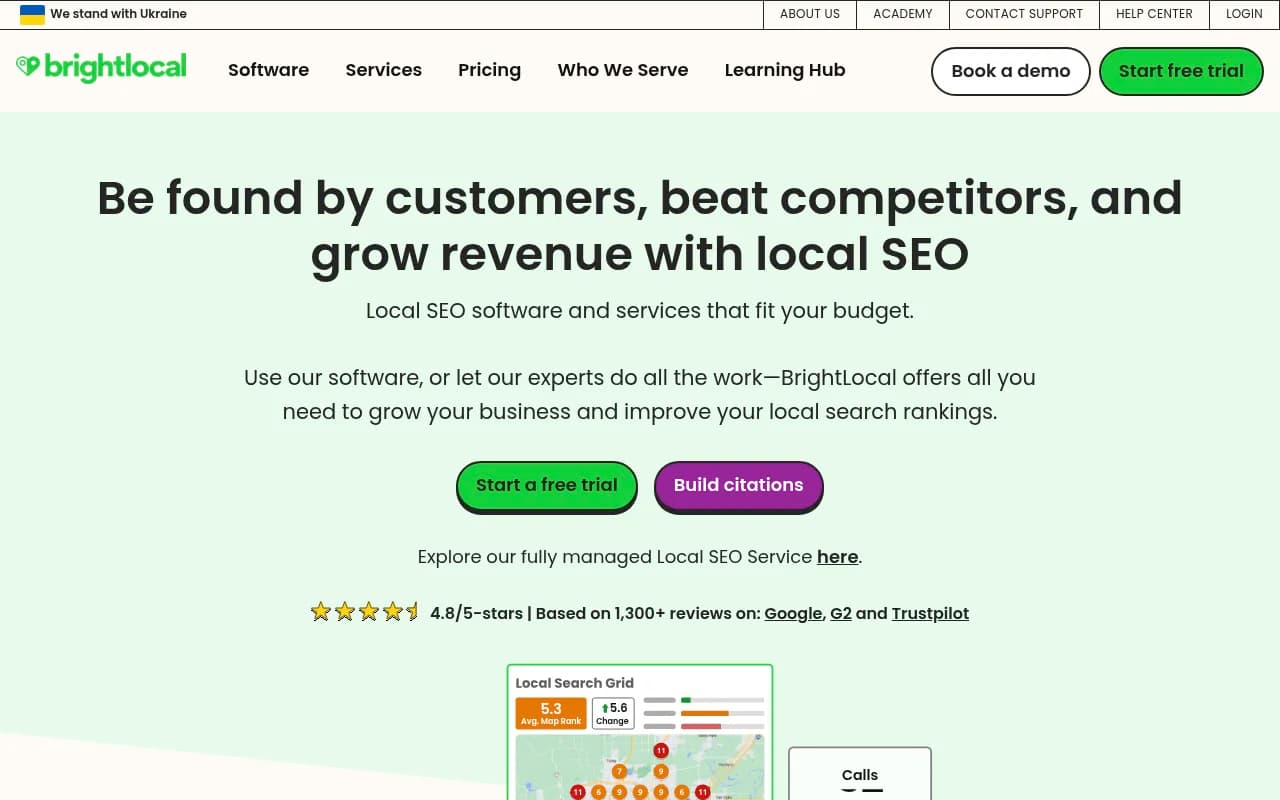
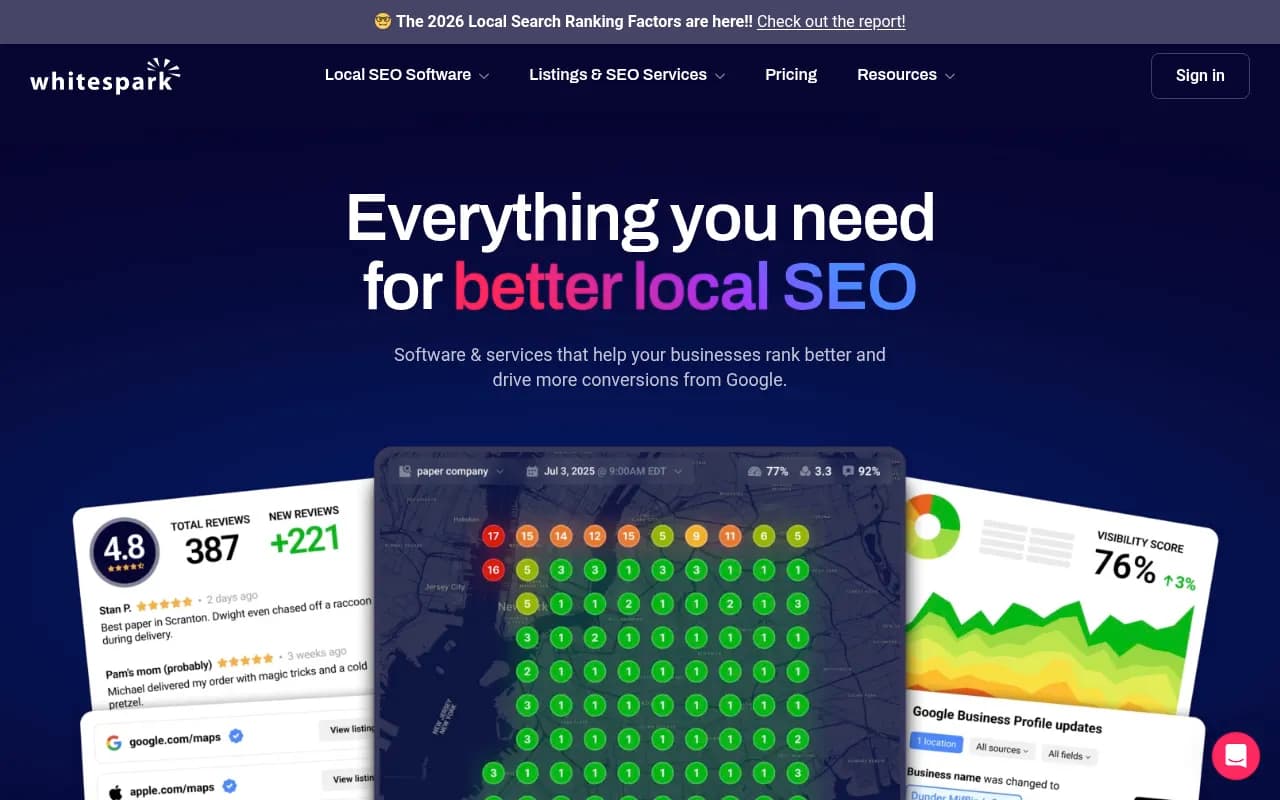
These don't measure AI answers directly, so pair one with a GEO tracker.
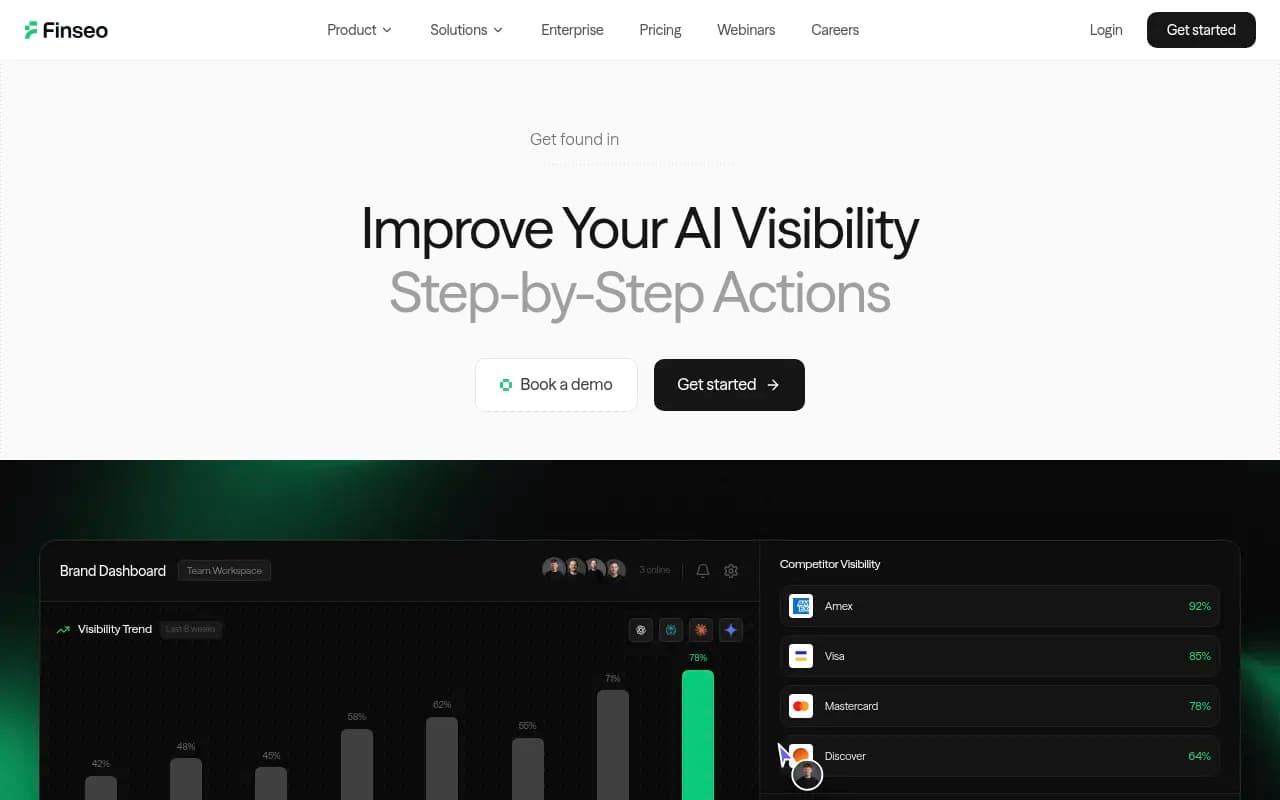
Finseo.ai for financial brands
Finseo.ai is listed in our catalog as AI visibility tracking for financial brands. It's a niche option worth a look if you want finance-specific framing, though I'd compare its prompt coverage and reporting against the broader platforms before committing.
Comparison table
| Tool | Tracks AI mentions | Helps you fix gaps | Crawler logs | Local targeting | Best for |
|---|---|---|---|---|---|
| Promptwatch | Yes, real interfaces | Content Agent, Action Board | Yes | Yes, exact coordinates (Business+) | Firms that want one platform end to end |
| Peec AI | Yes | Limited | No | No | Budget monitoring |
| Otterly.AI | Yes | Limited | No | No | Basic tracking |
| Semrush / Ahrefs Brand Radar | Yes, fixed prompt sets | Within SEO suite | No | Partial | Teams already on these suites |
| BrightLocal / Whitespark | No | Listings and reviews | No | Yes | Local listing hygiene |
| Finseo.ai | Yes, finance focus | Varies | Unverified | Unverified | Finance-niche tracking |
For a wider view of the category, the GEO software directory lists more options.
Which tool for which firm
- Solo tax preparer: a cheap tracker or Promptwatch Essential, plus a cleaned-up Google Business Profile and a complete tax preparation page.
- Two to ten person CPA firm: Promptwatch Professional or Business. You need content support because nobody has time to write.
- Multi-office firm: Business plan for local targeting per office, plus a listings tool.
- Firm with no marketing staff: consider a GEO agency. A fair test of any agency, per AEO Engine's own guide, is whether they can explain how their work changes your entity profile, service relevance and citations, and tie it to qualified inquiries rather than just mentions.
1001 SEO Media, which publishes this directory, is one such option. It's a full-service SEO and GEO agency with no long-term contracts, and it uses Promptwatch for AI visibility work. Ask any agency, including that one, to show before-and-after prompt data.
A simple 30-day starting plan
- Write 25 to 50 prompts across service, niche, problem and brand categories.
- Run the free AI visibility report and check that AI crawlers can read your site.
- Audit service pages. Each should state who it's for, what's included, timelines, what to bring and how fees work.
- Add an FAQ page and two comparison or how-to pages for your best niche.
- Fix directory consistency: Google Business Profile, IRS preparer directory (PTIN details must match), and review sites.
- Ask recent clients for reviews on the sites your category trusts.
- Re-run the same prompts monthly and track position, not just presence. One prompt tells you little, so measure across many.
Compliance: check before you publish
This part gets skipped. Content that AI will quote is also content a regulator can read. Review IRS Circular 230 requirements for tax professionals and the AICPA advertising and solicitation rules, and your state board's rules, before publishing AI-drafted pages. Never publish fee promises, outcome guarantees or tax advice that nobody qualified has reviewed. I haven't verified how each rule applies to AI-generated copy, so confirm with your professional body or counsel. An AI content agent with a review inbox, where a CPA approves every page, is the safer setup than hands-off publishing.
Bottom line
Treat GEO as a second channel next to local SEO, not a replacement. Start with measurement, fix your service pages and directory data first, and only then spend on content volume. For most firms that want tracking and the means to act on it in one place, Promptwatch is the one I'd trial first. A solo preparer on a tight budget can start with a lightweight tracker and the free report.