Key takeaways
- GEO (generative engine optimization) for gyms means getting named and cited when someone asks an AI "best gym near me" or "best yoga studio in [city]". A tracker alone does not do that. You need tracking, content and clean local data.
- Product and landing pages earn about 39% of ChatGPT citations, according to Promptwatch Data (Sep 28 to Oct 4, 2026). For a gym, that means your class, membership and pricing pages are the main citation surface.
- Most fitness businesses need two jobs covered: AI visibility tracking and fixing, plus local listings and Google Business Profile hygiene. Do not expect one cheap tool to handle both.
- A single-location studio can start with a free scan, a good Google Business Profile and a few well-built landing pages. Multi-club chains need listings management and location-level tracking.
- Gym management software (Mindbody, PushPress, Glofox and similar) is not a GEO tool, even though it holds the data your GEO work depends on.
Why gyms need GEO now
Someone asks ChatGPT "best gym near me with childcare" or "good beginner Pilates studio downtown". They get a short synthesized answer with a handful of named businesses. If you are not in it, you did not lose a ranking position. You lost the whole conversation.
Gyms are an odd case. The category is local, review-driven and highly seasonal. January is chaos, July is quiet. Most owners have strong Google Business Profiles and weak websites, which is exactly backwards for AI search, where models pull from your own pages, third-party roundups and review sites.
One caveat before the tool list. I could not find a fitness-specific citation study, and Promptwatch Data does not have one either. The closest published data is general ChatGPT citation behavior and the healthcare report, so treat fitness advice here as informed inference, not proven fact.
What the data says about how AI picks gyms
A few findings from Promptwatch's ChatGPT citation data (Sep 28 to Oct 4, 2026) translate directly to gyms:
- Product pages are the most cited type at 22.4%, landing pages follow at 16.8%, then listicles at 13.6%.
- For commercial prompts like "best X for Y", product pages earn 26.0%, landing pages 20.6% and listicles 15.0%. "Best gym in Austin" is exactly this kind of prompt.
- For branded prompts (someone asking about your gym by name), reviews rise to 5.6%, more than three times their share overall. FAQ pages earn 4.8%.
Two practical conclusions. First, get your studio into the "best of" roundups AI already cites for your city. Second, treat reviews and an FAQ page as reputation insurance for when someone asks about you directly.
Social matters less than most gym owners assume. Promptwatch's social citation data (Sep 28 to Oct 4, 2026) shows ChatGPT got only 0.46% of its citations from social platforms, while Google AI Overviews got 12.2%. YouTube led AI Overviews at 4.28%, then Facebook at 2.38%, Reddit at 2.15% and Instagram at 1.61%. So class videos and Instagram help mostly with Google. Reddit has nearly vanished from ChatGPT citations since August 14, 2026, so do not build a ChatGPT plan around it.
Content age matters too. In Promptwatch's content half-life report, landing pages and docs stayed cited longest, while news pages lost half their citations within about 36 days. A "New Year, new you" news-style blog post decays fast. A solid evergreen page for your beginner membership does not.
Finally, if you publish health or exercise claims, the healthcare citation report (Sep 9 to Oct 8, 2026) shows ChatGPT leaning on NIH (5.46%), PubMed Central, PubMed and the FDA. Linking your claims to those sources is a reasonable move for any training or nutrition content.
Two jobs, two kinds of tools
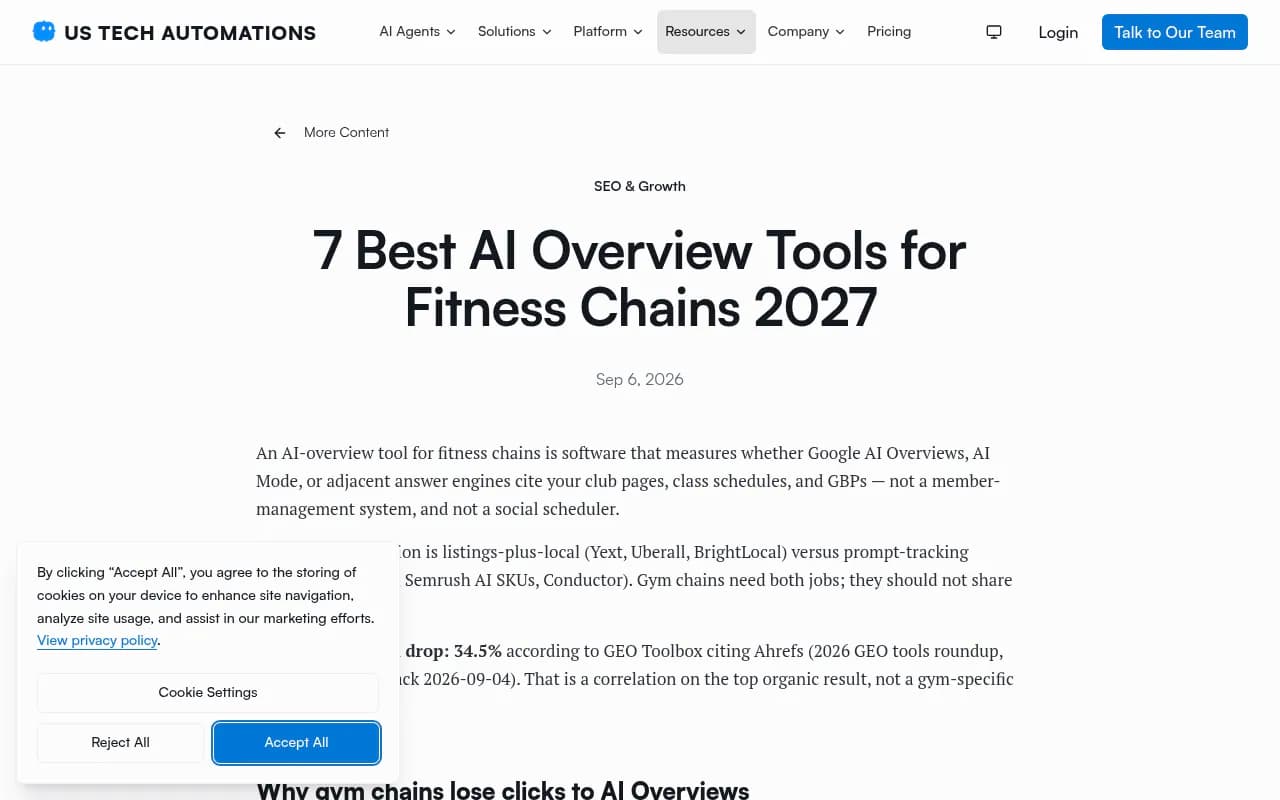
This is the thing most listicles skip. One US Tech Automations piece on fitness chains makes the same split: listings-plus-local tools on one side, prompt-tracking on the other, and gym chains need both. I agree with that framing, though I would treat its pricing as unverified (the article is titled 2027 but the URL says 2026).
| Job | What it answers | Example tools |
|---|---|---|
| AI visibility tracking and fixing | Do ChatGPT, Gemini and AI Overviews mention us, and why not? | Promptwatch, Profound, Peec AI, Otterly.AI, Qwairy |
| Local listings and reputation | Are our hours, address and reviews consistent everywhere? | BrightLocal, Uberall, Yext, Whitespark, Moz Local |
| Local rank diagnostics | Where do we show in the map pack around the studio? | Local Falcon, Local Rank Tracker |
| Operations software | Who is a member, what do they pay, who is booked? | Mindbody, PushPress, Glofox, Wodify |
The best GEO tools for gyms and fitness studios
Promptwatch: best for tracking and fixing AI visibility
Promptwatch is an AI visibility platform rather than a plain prompt tracker. It monitors what ChatGPT, Gemini, Perplexity, Google AI Overviews, Google AI Mode, Copilot and others say about your brand, traces which pages and third-party sources they cite, and then helps you act on the gaps.

For gyms, the useful parts are:
- Local GEO/SEO targeting, which pins a monitor to exact coordinates so ChatGPT and Google's AI surfaces answer as if asked from your neighborhood. That matters for "near me" prompts. It is on the Business plan and above.
- Personas, so you can prompt the way a beginner, a parent or a competitive lifter would actually ask.
- Content gap analysis and the Content Agent, which find the prompts AI answers without citing you and draft the pages to fill them, publishing to WordPress, Webflow or Framer. The Content Agent is on Business and Enterprise.
- Crawler logs, which show whether AI bots can read your class schedule pages at all. A surprising number of studio sites built on heavy booking widgets fail here.
- Brand Narrative, which surfaces the claims AI makes about you, such as "expensive" or "crowded at peak hours".
Pricing, confirmed on promptwatch.com/pricing: Essential is $95/mo (50 prompts), Professional $245/mo and Business $579/mo. A single studio can start on Essential, but if you need local coordinate targeting or the Content Agent, budget for Business. Agencies running several gyms should look at the Kick-off ($199/mo), Growth ($399/mo) and Scale ($799/mo) plans. There is a 7-day free trial on monthly billing, and a free AI visibility report if you just want a first look.
Honest limit: it does not manage listings, so pair it with a local tool below.
BrightLocal: best for multi-location listings and local SEO
BrightLocal covers citations, review tracking and local rank reporting. The US Tech Automations piece lists Citation Builder from $3.20 per site and managed SEO from $1,299/mo, though I could not verify current prices, so check directly. For a 40-club chain, consistent location data is the foundation everything else sits on.
Uberall and Yext: best for large chains
Yext is a knowledge graph that pushes consistent business facts to directories and AI-facing sources. Uberall combines listings, reviews and a store locator for multi-location brands. Both are overkill for a two-location studio you can edit by hand, and both are sales-led on pricing.
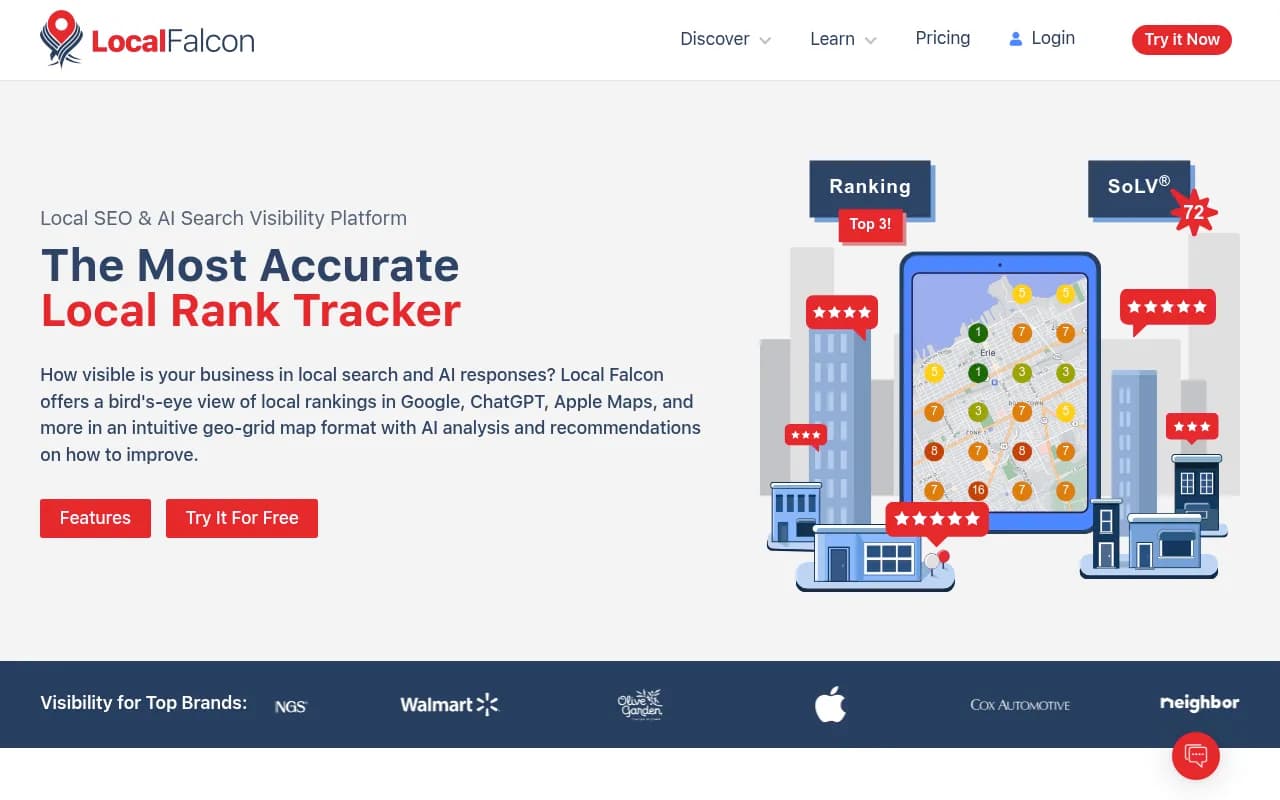
Local Falcon: best for single-studio map diagnostics
A Flento roundup of local SEO tools for fitness studios singles out Local Falcon for real geo-grid scanning. It shows how visible you are at points across a radius around the gym, which is the best way to see that you rank well on your own street and vanish two miles away.
Qwairy: good for fitness-specific GEO guidance
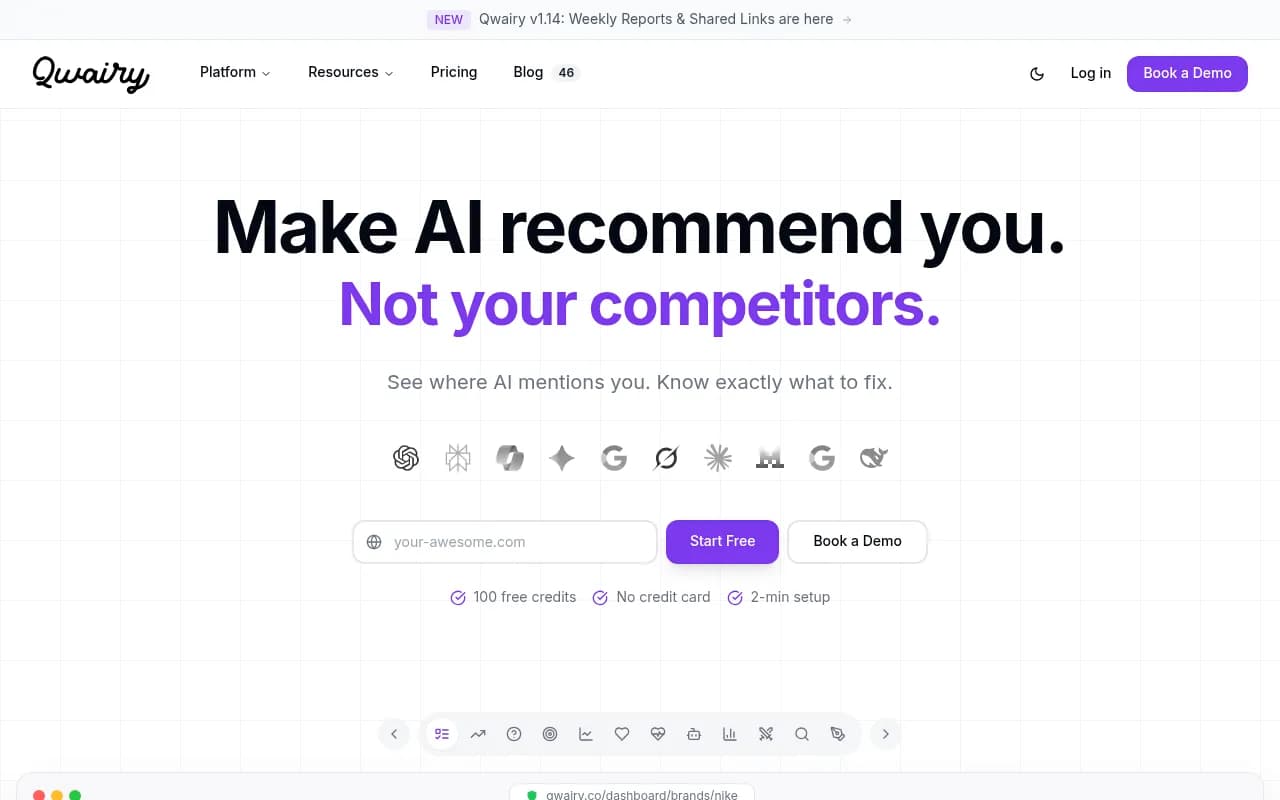
Qwairy tracks brands across multiple AI engines and publishes a fitness GEO playbook with schema markup examples for gyms. It leans toward monitoring and recommendations, so you will do more of the execution yourself.
Frizerly: small studios that want content on autopilot
Frizerly pitches itself at gyms specifically, combining automated blog publishing, AEO and brand mention tracking. The tradeoff is depth. The Frizerly article ranks Frizerly first among its own seven picks, so read that list with the obvious bias in mind.
Peec AI, Otterly.AI and Profound: pure tracking options
Peec AI and Otterly.AI are lighter prompt trackers that suit a studio that only wants to watch mentions. Profound is the enterprise-leaning option. The US Tech Automations piece cites a Starter plan at $99, but notes you should skip higher tiers if you will not write 100 prompts. None of these three give you crawler logs or content generation the way a full optimization platform does.

Otterly.AI

Profound

Side-by-side comparison
| Tool | Primary job | Local targeting | Content creation | Best for |
|---|---|---|---|---|
| Promptwatch | AI visibility tracking and fixing | Exact coordinates (Business+) | Yes (Business+) | Studios and chains that want to act on gaps |
| BrightLocal | Listings, reviews, local SEO | Yes | No | Multi-location consistency |
| Yext / Uberall | Listings and brand data at scale | Yes | No | Large chains |
| Local Falcon | Geo-grid map rank checks | Yes | No | Single-studio diagnostics |
| Qwairy | AI visibility monitoring | Limited | Limited | Teams wanting GEO playbooks |
| Frizerly | Blog automation plus tracking | Limited | Yes | Small studios, low effort |
| Peec AI / Otterly.AI | Prompt tracking | Basic | No | Simple monitoring |
For more options, the GEO software directory at bestgeosoftware.com lists a wider set of platforms.
What to fix on your own site first
Tools are only useful if the pages exist. Before paying for anything, check these.
Give every class and membership its own landing page
Given that landing pages and product-style pages earn the biggest share of citations, a single "Classes" page with a widget is a weak asset. Create separate pages for beginner membership, personal training, each class type and each location, with price ranges, hours, trainer bios and an FAQ. Avoid city-name clones that differ by one word. They are easy for an AI to skip.
Add structured data
Qwairy's playbook suggests marking up gyms with schema. A trimmed example:
{
  "@context": "https://schema.org",
  "@type": "ExerciseGym",
  "name": "Your Gym Name",
  "priceRange": "$$",
  "address": {
    "@type": "PostalAddress",
    "streetAddress": "123 Main Street",
    "addressLocality": "Your City",
    "addressRegion": "State",
    "postalCode": "12345"
  },
  "amenityFeature": [
    {"@type": "LocationFeatureSpecification", "name": "Sauna", "value": true},
    {"@type": "LocationFeatureSpecification", "name": "Free Parking", "value": true}
  ]
}
Make sure hours and address match your Google Business Profile exactly. Mismatches make you easy to distrust.
Check that AI crawlers can actually read the site
Booking widgets and JavaScript-heavy templates often hide the schedule and pricing from bots. Free checks like the Agentic Readiness Check and the robots.txt generator for AI tell you which AI crawlers get through. Paid crawler logs show what bots really do.
Get into the roundups and collect reviews
Listicles are the third most cited type. Find the "best gyms in [city]" and "best Pilates studios in [city]" articles that already appear when you ask ChatGPT, and pitch the authors. Then collect reviews on the sites those roundups lean on, since reviews matter most when people ask about you by name.
Favor evergreen over seasonal
Publish the January promo as a landing page you update, not a news post you abandon. Content half-life data says news-style pages fade within weeks.
A simple stack by gym size
| Business | Suggested setup |
|---|---|
| Single studio, tight budget | Free AI visibility report, clean Google Business Profile, 5 to 8 landing pages, Local Falcon if map rankings are a worry |
| 2 to 5 locations | Promptwatch (Essential or Business for local targeting), BrightLocal for listings |
| 10+ clubs | Promptwatch Business or Enterprise, plus Uberall or Yext for listings governance |
| Agency serving gyms | Promptwatch agency plans, BrightLocal for client listings |
If you would rather hand this off, an agency that covers GEO and local SEO can run it. 1001 SEO Media is one example, and it uses Promptwatch for AI visibility work.
How to measure whether it works
Pick 20 to 50 prompts that real prospects would use: "best gym near me", "women-only gym in [city]", "affordable personal trainer in [neighborhood]". Track them weekly. Watch four things: how often you are mentioned, where you appear in the answer, which sources are cited, and whether trial signups or contact form fills from AI referrals rise. Mentions without citations to your own site usually mean a content or crawlability problem. Weak mentions in a market you care about usually mean you are missing from the roundups.
Expect slow movement. Google says recrawling after a change can take days to months, and AI answers shift from week to week.
Bottom line
For most gyms, the sensible order is: fix your pages and listings, add a visibility platform that can show you the gaps and help close them, then layer on local diagnostics if you run multiple sites. Do not count your member management software as a marketing tool. It holds your data, but it will not get you cited. Start with the free report, pick two or three prompts that matter, and see who ChatGPT recommends instead of you.