Key takeaways
- GEO (generative engine optimization) is about getting your charity named and cited inside ChatGPT, Gemini, Perplexity and Google AI Overviews, not just ranking a link.
- Nonprofits have a specific problem: AI answers to "where should I donate" and "which charity helps with X" often skip small organizations unless their pages are clear, factual and easy to crawl.
- Start free: Google Search Console, Bing Webmaster Tools and a manual prompt audit cost nothing. Paid tools make sense once you have a prompt list worth tracking weekly.
- Monitoring-only trackers are cheaper but leave the work to you. Platforms that also help you fix gaps and measure results are a better fit for lean teams.
- Most citations go to pages describing what an organization offers, so your program, impact and donation pages matter more than blog volume.
Why nonprofits should care about GEO
A donor used to type "animal rescue near me" into Google and scan ten blue links. Now a growing share asks ChatGPT or Gemini and reads one synthesized answer with a handful of named organizations. If yours isn't in that answer, you don't exist for that donor, volunteer or person seeking help.
The same shift affects the people you serve. Someone searching for food assistance, mental health support or legal aid increasingly gets an AI summary first. Being accurately described there is a service issue as well as a fundraising one.
Nonprofit Tech for Good puts the idea simply: GEO for fundraisers means structuring and writing content on your fundraising platform's campaign page so AI can synthesize it and then recommend it. That is a decent working definition. It also hints at a trap. Plenty of charities send donors to a third-party campaign page they barely control, so the page AI cites may not be yours.
What a GEO tool actually does
The category is messy, so here is the plain version. A GEO tool runs a set of prompts across AI engines on a schedule and records what comes back. Most do four jobs:
- Mention tracking: does the engine name your organization?
- Citation tracking: which pages does it link to?
- Sentiment: is the description positive, neutral or negative?
- Share of voice: how often you appear compared with similar charities.
The Olostep buyer's guide makes a fair point that the word "tool" covers simple monitors, content optimizers that suggest fixes, and full platforms that do both. For a nonprofit with one marketing person, that distinction matters more than any feature checklist.
What the data says about getting cited
Before buying anything, it helps to know what AI engines actually cite. Promptwatch Data analyzed ChatGPT citations between Sep 28 and Oct 4, 2026 in its report on which content types ChatGPT cites the most. The numbers are useful for charities:
- Product pages earned 22.4% of citations and landing pages 16.8%. Pages that describe what an organization offers took about 39% combined.
- Listicles got 13.6%, how-to guides 8.7%, documentation 7.5% and FAQ pages 3.3%.
- For branded prompts, where someone names a specific organization, reviews made up 5.6% of citations, more than three times their overall share.
Translate that for a charity: your program pages and donation page are the main citation surface. "Product page" for you means a page that clearly says what you do, who you help, where, and what a gift achieves. Add an FAQ page, publish step-by-step guides for informational questions, and collect reviews on sites people trust in your sector, such as charity watchdogs and review platforms.
Social platforms are a weak bet for ChatGPT
Many nonprofits pour effort into social media. Promptwatch's social media citations report (Sep 28 to Oct 4, 2026) shows the payoff varies a lot by engine:
- ChatGPT drew only 0.46% of its citations from social platforms. Reddit had fallen from 5.19% to 0.09%, and LinkedIn was its top social source at 0.3%.
- Google AI Overviews drew 12.2% from social, with YouTube at 4.28%, Facebook at 2.38% and Instagram at 1.61%.
- Perplexity sat at 2.7%, with LinkedIn and Reddit tied at 0.86%.
So a complete Facebook page and a few YouTube videos help in Google's AI surfaces, while ChatGPT mostly reads your website. Related: Reddit's share of ChatGPT citations collapsed in August 2026, covered in Promptwatch's Reddit citations data. Don't build your strategy on Reddit threads.
Health charities face different sources
If you run a health nonprofit, AI engines lean on institutions. In Promptwatch's healthcare citation report (Sep 9 to Oct 8, 2026), NIH led with 5.46%, mostly through PubMed Central and PubMed, followed by the FDA at 1.76% and the NHS at 1.1%. Government and public health sites took 7.06% of all healthcare citations, while medical associations got 1.39%.
The practical advice: back medical claims with peer-reviewed studies, link to PubMed and official guidance, make sure your pages agree with FDA, CDC, NHS or NICE advice, and build relationships with medical associations in your field.
Start with the free layer
You can learn a lot before paying for any GEO software.
- Write 20 to 30 prompts a donor, volunteer or beneficiary would plausibly ask. Mix branded ("is [your charity] legitimate?"), category ("best charities for clean water") and local ("food bank in [city]").
- Run them in ChatGPT, Gemini and Perplexity. Note whether you appear, what is said, and which sources are cited.
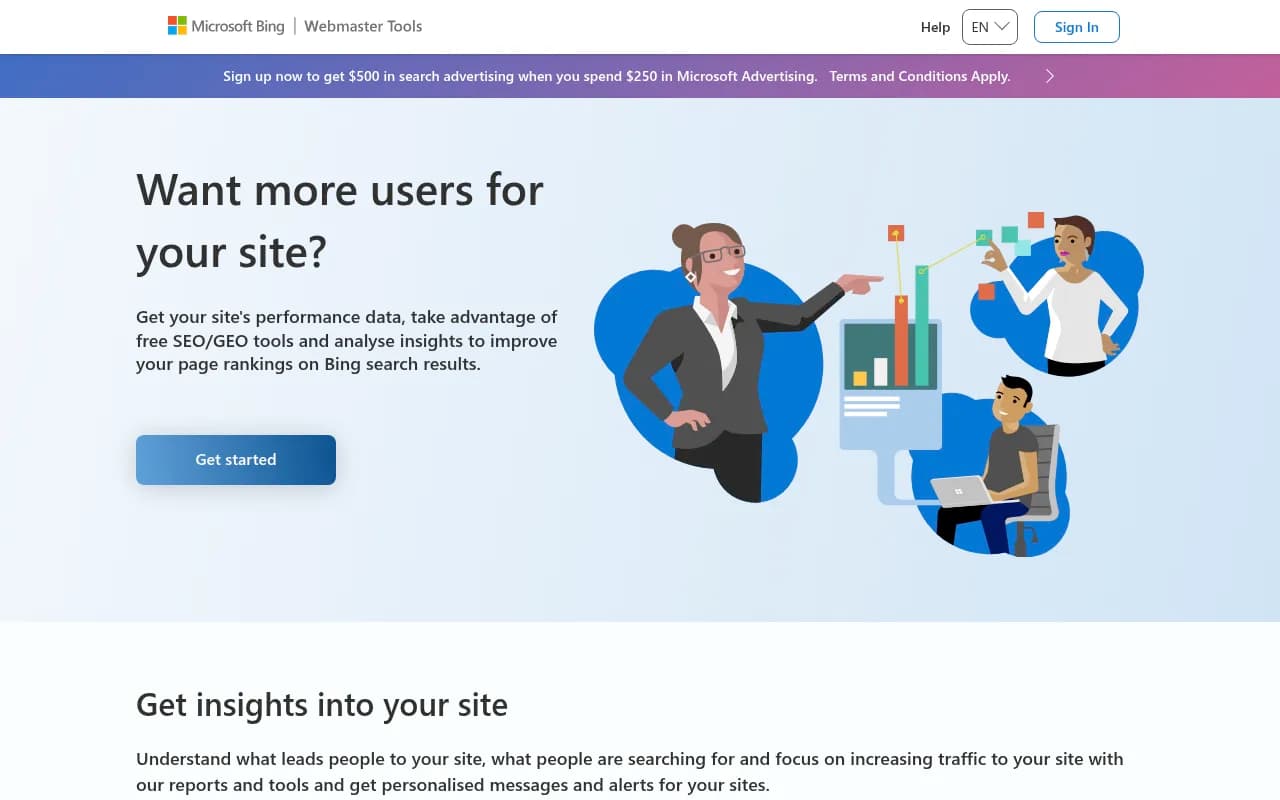
- Check Google Search Console and Bing Webmaster Tools for pages with lots of impressions and few clicks. Those are likely candidates for AI summaries absorbing the click.
- Check whether AI crawlers can reach your site. A misconfigured robots.txt is a surprisingly common reason a charity is invisible.
The sector's own guides help here too. Media Cause has a solid walkthrough on structuring a nonprofit website for GEO, and StratusLIVE covers the general AI assistants nonprofits already use. One caution from that StratusLIVE piece: keep donor data out of general assistants unless your AI policy allows it. It cites an NTEN and Bridgespan survey in which only 39% of nonprofit executives had written guidance on safe AI use. Write the policy before you pilot anything.
Best GEO tools for nonprofits in 2026
I haven't verified nonprofit discount programs for any vendor below, so ask each one directly. Pricing changes often, and most vendors will talk to a charity if you ask. Here is how I would sort the options by what a nonprofit actually needs.
Promptwatch: best for lean teams that need to fix gaps, not just see them
Promptwatch is an end-to-end AI visibility platform. It tracks how ChatGPT, Gemini, Perplexity, Claude, Google AI Overviews, Google AI Mode, Copilot and others mention and cite you, using the real interfaces rather than only APIs. Then it goes further than most tools: content gap analysis shows which prompts you're missing, the Content Agent can write and publish pages to WordPress, Webflow or Framer, and the Action Board gives a prioritized to-do list. That matters for a nonprofit with one comms person and no spare hours.

A few features fit charities well:
- IP-verified AI crawler logs show whether bots can read your donation and program pages, and where they fail.
- Brand Narrative pulls out the claims AI makes about you, such as "high overhead" or "great volunteer program", so you can spot reputation issues. Fact Check (Business plan and up) flags which of your pages teach AI something wrong.
- Local GEO/SEO targeting at exact coordinates is useful for food banks, shelters and local chapters answering "near me" queries (Business plan and up).
- Visitor analytics measure the traffic and conversions AI search sends, so you can show a board something concrete.
Pricing, per promptwatch.com/pricing: Essential is $95/mo (50 prompts, 1 project), Professional is $245/mo (150 prompts, 2 projects) and Business is $579/mo (350 prompts, 5 projects, Content Agent). The Content Agent starts at Business; Essential has no crawler logs or AEO articles. There is a 7-day free trial on monthly billing, and the free AI visibility report is a no-cost way to see where you stand first. Confirm current prices on the pricing page, and ask about nonprofit terms.
Peec AI and Otterly.AI: best for simple, budget-first monitoring
If all you need is a weekly answer to "are we mentioned, and by whom?", simpler trackers do the job. Peec AI and Otterly.AI are common picks for small marketing teams. The tradeoff is that they stop at monitoring. There are no crawler logs, no visitor analytics and no content generation, so you still need to figure out and execute the fixes yourself.

Otterly.AI

Profound and Scrunch: best if you are a large national charity
Profound and Scrunch have deep monitoring features and enterprise polish. They also sit at higher price points, and neither covers areas like Reddit tracking or ChatGPT Shopping the way broader platforms do. A national organization with a dedicated digital team and multiple regional brands may justify them. A small local charity probably won't.
Profound

Semrush and Ahrefs: best if you already use them for SEO
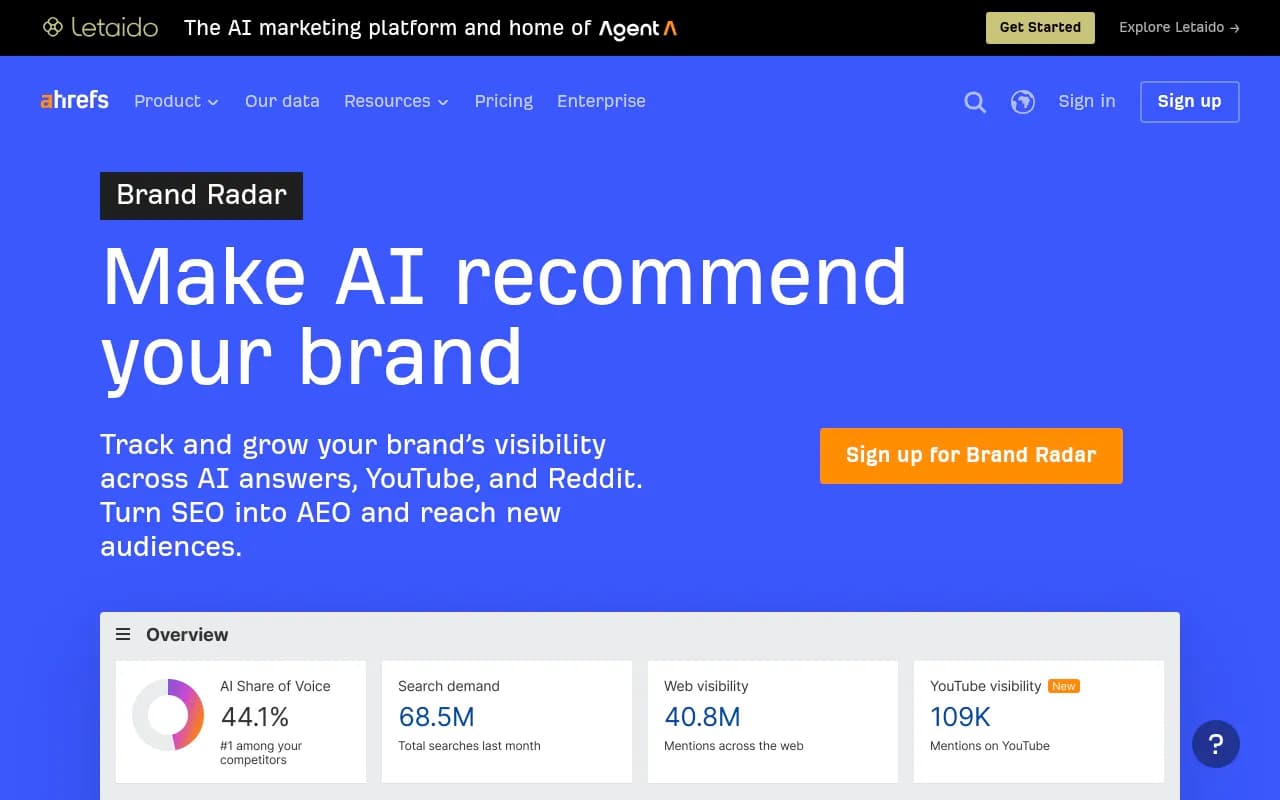
The consensus core of SEO tools for nonprofits, per one 2026 roundup, is Semrush, Ahrefs, Google Search Console and Screaming Frog. If you already pay for one, its AI tracking add-on is a low-friction starting point. The limitation is depth: these are SEO suites adding AI features, usually with fixed prompt sets and no AI crawler logs.
AthenaHQ and other monitoring-focused tools
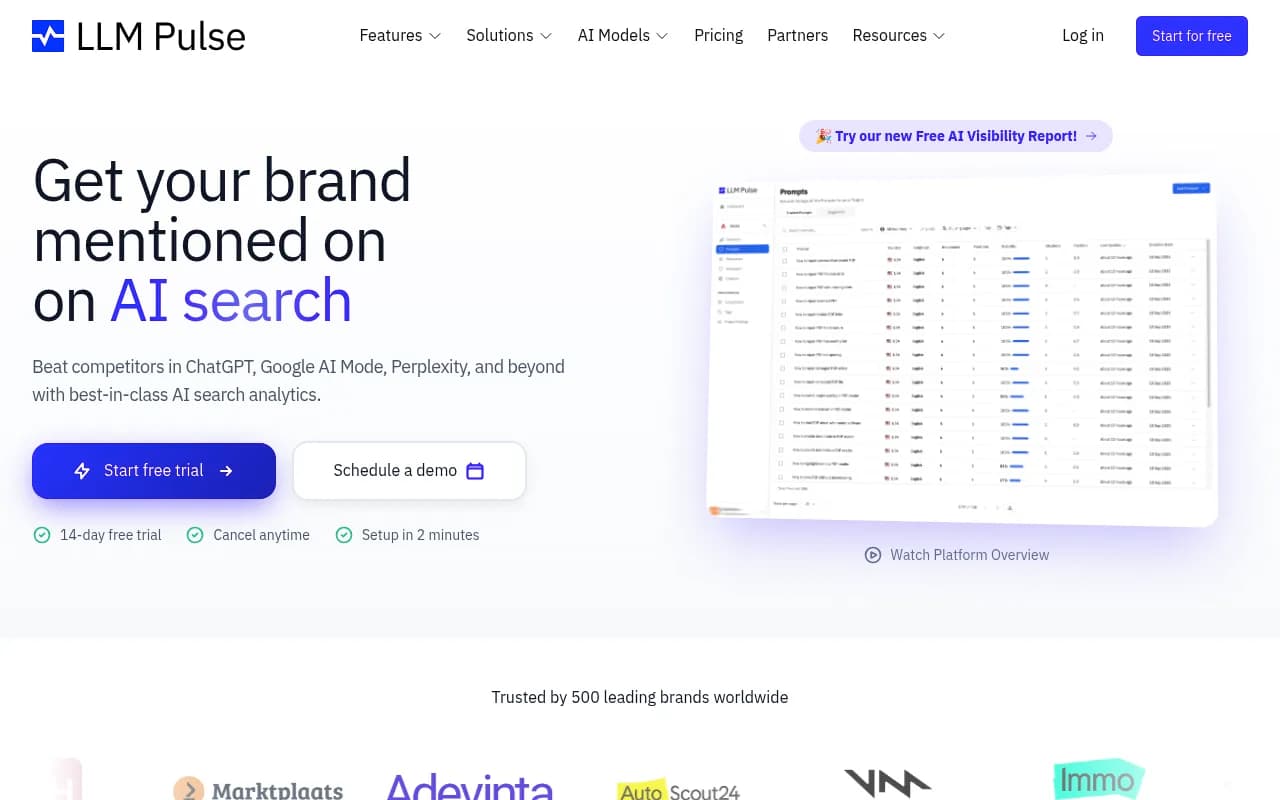
AthenaHQ, Qwairy, LLM Pulse, Rankshift and similar tools lean toward monitoring with lighter content and publishing support. They are worth a look if their prompt limits suit you. Browse the wider field in the GEO software directory at bestgeosoftware.com.


Comparison table
| Tool | Type | Fixes gaps for you | AI crawler logs | Best for |
|---|---|---|---|---|
| Promptwatch | Full platform | Yes (content agent, action board) | Yes | Small teams wanting results, not dashboards |
| Peec AI | Monitor | No | No | Tight budgets, simple tracking |
| Otterly.AI | Monitor | No | No | Basic mention tracking |
| Profound | Enterprise monitor | Limited | Not core | Large national charities |
| Scrunch | Enterprise monitor | Limited | Not core | Multi-brand organizations |
| Semrush / Ahrefs | SEO suite add-on | No | No | Teams already on these suites |
| Search Console + manual audit | Free | No | No | First 30 days, any size |
Fix your pages first, then buy the tool
A GEO tool tells you what is wrong. It doesn't change your website. Spend your first month on these basics, drawn from the citation data above.
Make core pages complete and factual
Your mission, programs, impact numbers, financials, locations and donation page should each have a clear, crawlable page. State outcomes plainly: what a $50 gift does, how many people you served last year, which year the figure comes from. Vague mission language gives AI nothing to quote.
Add an FAQ and a few how-to guides
Questions like "is this charity legitimate?", "how are donations used?" and "how do I volunteer?" are exactly what AI gets asked. An FAQ page covers them. Step-by-step guides help with informational prompts, which is where how-tos earn 8.7% of citations.
Keep documentation and reports public
Annual reports, audited financials and program evaluations should sit on open pages, not behind forms. Documentation earned 7.5% of ChatGPT citations in the report above. Check the AI crawler traffic data to see which bots are active, then confirm yours aren't blocked, with a free tool like the robots.txt generator for AI.
Earn reviews on trusted sites
Branded prompts cite reviews at more than three times their general rate. Keep profiles on charity evaluators and review platforms current, and ask satisfied donors and volunteers to leave feedback.
Own your fundraising page
If your main campaign lives on a third-party platform, mirror the key facts on your own domain. You want the cited page to be the one you control.
How to choose
Match the tool to your capacity, not your ambition.
- One person, under a few hundred dollars a month: manual prompt audits plus a free report, then an entry-level plan once you have a stable prompt list.
- Small team that wants outcomes: pick a platform that writes, publishes and measures, since your bottleneck is time. This is where Promptwatch's content agents earn their keep.
- Health or advocacy nonprofit with a reputation to protect: prioritize Brand Narrative style claim tracking and fact checking.
- Multi-chapter or franchise-style charity: local targeting and multi-project support matter more than raw prompt counts.
- Agency serving several nonprofit clients: look at agency plans with unlimited projects.
If you would rather hand the work to specialists, an agency that does GEO can run the process for you. 1001 SEO Media offers GEO and AI search services, and it uses Promptwatch as its visibility platform.
A simple 30-day plan
- Week 1: build your prompt list and run the manual audit. Screenshot the results.
- Week 2: fix crawler access and rewrite your three most important pages.
- Week 3: publish an FAQ page and one how-to guide. Update your Facebook and YouTube presence if Google AI Overviews matters to your audience.
- Week 4: start a trial of one tracking platform, load your prompts, and compare against the week 1 baseline.
Then repeat monthly. Content in AI answers also decays: Promptwatch's content half-life data shows landing pages and docs stay cited longest while news loses half its pages within 36 days. Evergreen program pages are a better investment than news-style posts.
Final word
Nonprofits don't need the most expensive GEO tool. They need accurate pages, crawlable sites and a way to see whether AI describes them correctly. Start with the free audit, fix the basics, and choose a platform that matches how much time your team really has. For most small charities that means favoring a tool that does some of the work over one that only reports a score.