Key takeaways
- Most GEO tools are built for single-brand monitoring. Multi-brand teams need platforms that support multiple sites, workspaces, or client accounts without doubling costs.
- There's a big difference between tools that show you where you're invisible and tools that help you do something about it. For agencies and multi-brand teams, the latter matters more.
- The best platforms in 2026 track across 10+ AI models (ChatGPT, Perplexity, Gemini, Claude, Grok, DeepSeek, and others) -- not just one or two.
- Crawler logs, prompt volume data, and content generation capabilities separate the serious platforms from basic dashboards.
- Price scales matter: some tools charge per brand/site, others per prompt, and a few offer flat agency tiers. Know what you're buying before you commit.
Running AI visibility tracking for a single brand is manageable. You pick a tool, set up your prompts, watch the dashboard. But managing AI visibility across five brands, or fifteen client accounts, is a completely different problem. You need consistent reporting, cross-brand comparison, scalable prompt management, and ideally some way to act on what you find -- not just stare at it.
This guide is for marketing teams managing multiple properties, digital agencies tracking client AI visibility, and in-house teams with a portfolio of brands. We'll cover what to look for, which tools are actually built for this use case, and where the gaps are.
What "multi-brand AI visibility" actually requires
Before jumping to tool recommendations, it's worth being specific about what multi-brand tracking demands that single-brand tracking doesn't.
Workspace or account separation. You need clean separation between brands -- different prompt sets, different competitors, different reporting. A tool that only supports one "project" at a time is a non-starter.
Scalable prompt management. Each brand might have 30-100 prompts worth tracking. Multiply that by ten clients and you're managing thousands of prompts. You need bulk import, organization by brand/topic, and ideally some way to prioritize high-value prompts without manually reviewing everything.
Cross-brand comparison. Sometimes you want to see which of your brands is performing best in AI search, or benchmark a new client against an existing one. Most tools don't support this natively.
White-label or client-facing reporting. Agencies need to show clients their AI visibility data without exposing the underlying tool or other client data.
Content action at scale. Finding gaps is only useful if you can do something about them. For multi-brand teams, that means content generation that's brand-aware -- different tone, different competitors, different target personas per brand.
With those requirements in mind, here's how the current landscape breaks down.
The tools worth considering in 2026
Promptwatch -- best overall for multi-brand teams
Promptwatch is the platform most purpose-built for this use case. It supports multiple sites natively across all paid tiers (Professional covers 2 sites, Business covers 5, and Agency/Enterprise is custom), and it's the only platform in this comparison that closes the full loop from gap discovery to content creation to result tracking.

What makes it genuinely useful for multi-brand work:
The Answer Gap Analysis shows exactly which prompts competitors are visible for but a given brand isn't. For an agency managing ten clients, this is the difference between having a clear content roadmap and guessing. Each brand gets its own gap analysis, its own competitor set, its own prompt library.
Content Agents generate articles, listicles, and briefs grounded in real prompt data -- not generic SEO content. You can upload brand guidelines, set personas, and pull in competitor analysis so the output is actually brand-specific. For agencies producing content across multiple clients, this is a significant time saver.
The crawler logs are something most competitors don't offer at all. Real-time logs showing when ChatGPT, Claude, Perplexity, and other AI crawlers hit your pages -- which pages they read, errors they hit, how often they return. For a multi-brand team, this means you can see exactly why one client's pages are getting cited and another's aren't.
Prompt Intelligence includes volume estimates and difficulty scores per prompt, plus query fan-outs that show how one prompt branches into sub-queries. This is how you prioritize which prompts to target first across a large portfolio.
Pricing: Professional at $249/mo (2 sites, 150 prompts, 15 articles), Business at $579/mo (5 sites, 350 prompts, 30 articles), Agency/Enterprise custom. Annual billing discounts available.
Profound -- strong enterprise option
Profound is a solid enterprise-grade platform with broad AI model coverage (9+ models) and good depth on citation analysis. It's well-regarded for teams that need reliable monitoring across a large number of prompts.
Profound

Where it fits: enterprise marketing teams with dedicated resources and budget. The feature set is strong, but it's priced accordingly and doesn't include content generation -- so you're still on your own for the "fix it" part.
Evertune -- built for Fortune 500 scale
Evertune positions itself at the Fortune 500 end of the market. It covers AI visibility tracking with strong GEO insights and is designed for large organizations with complex brand portfolios.
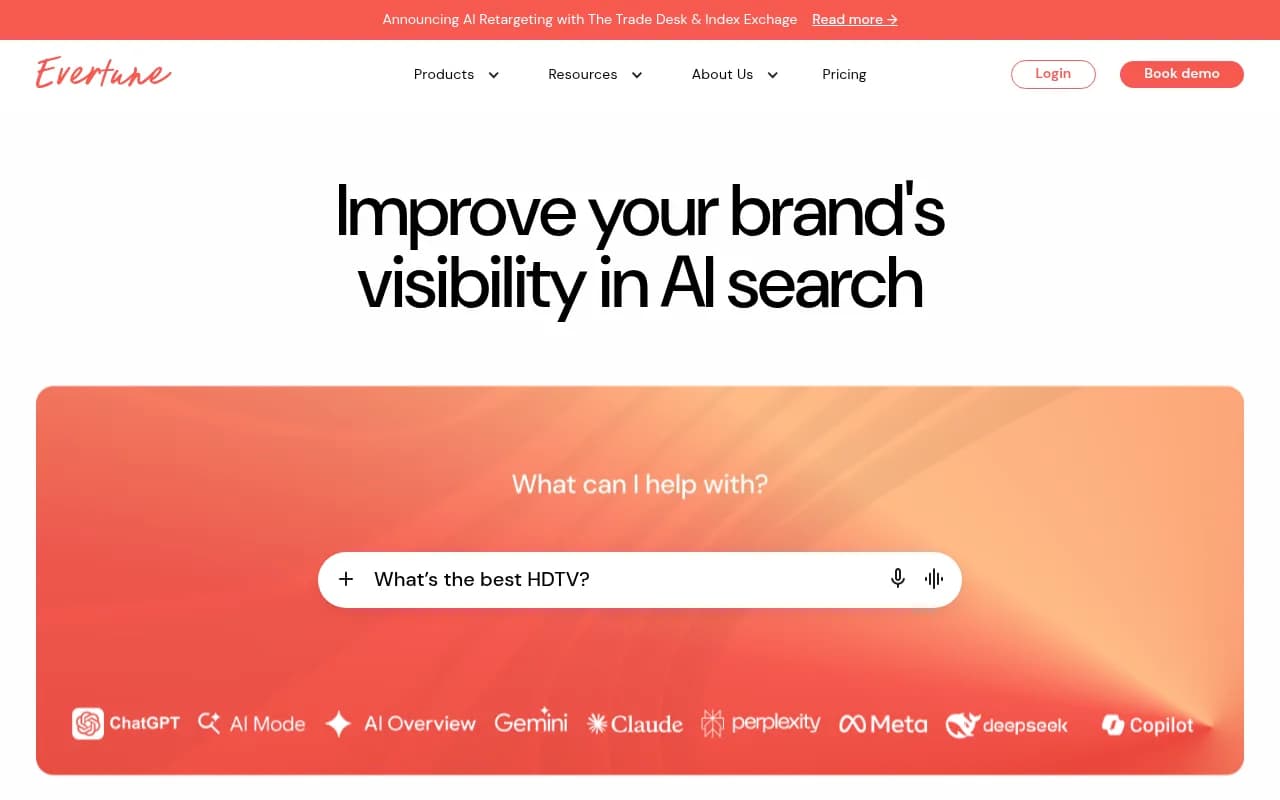
The platform is genuinely capable, but the entry point (both in price and complexity) makes it less practical for mid-market agencies or teams managing 3-10 brands rather than 30+.
Otterly.AI -- accessible monitoring for smaller teams
Otterly.AI covers the major AI engines (ChatGPT, Google AI Overviews, Gemini, Perplexity, Copilot) and has a clean interface that's easy to get started with. For a small agency tracking a handful of clients, it's a reasonable starting point.
Otterly.AI

The limitation is that it's fundamentally a monitoring tool. There's no content generation, no crawler logs, no prompt volume data. You can see where you're invisible, but the platform doesn't help you fix it. For multi-brand teams that need to show ROI and take action, that gap becomes a problem quickly.
Peec AI -- good for teams focused on share-of-voice
Peec AI is a clean, focused platform that does share-of-voice tracking across AI engines well. It's useful for teams that want to benchmark brand visibility against competitors across a prompt set.

Like Otterly, it's monitoring-first. The multi-brand support is limited compared to platforms built with agencies in mind.
AthenaHQ -- monitoring with decent depth
AthenaHQ has solid tracking capabilities and covers multiple AI models. It's a reasonable choice for in-house teams that want more depth than basic monitoring tools provide.

The gap is the same as most competitors: it stops at monitoring. No content generation, no crawler logs, no traffic attribution connecting AI visibility to actual revenue.
Scrunch AI -- agency-oriented tracking
Scrunch AI is worth mentioning for agencies specifically. It has multi-client support and reasonable coverage across AI engines.
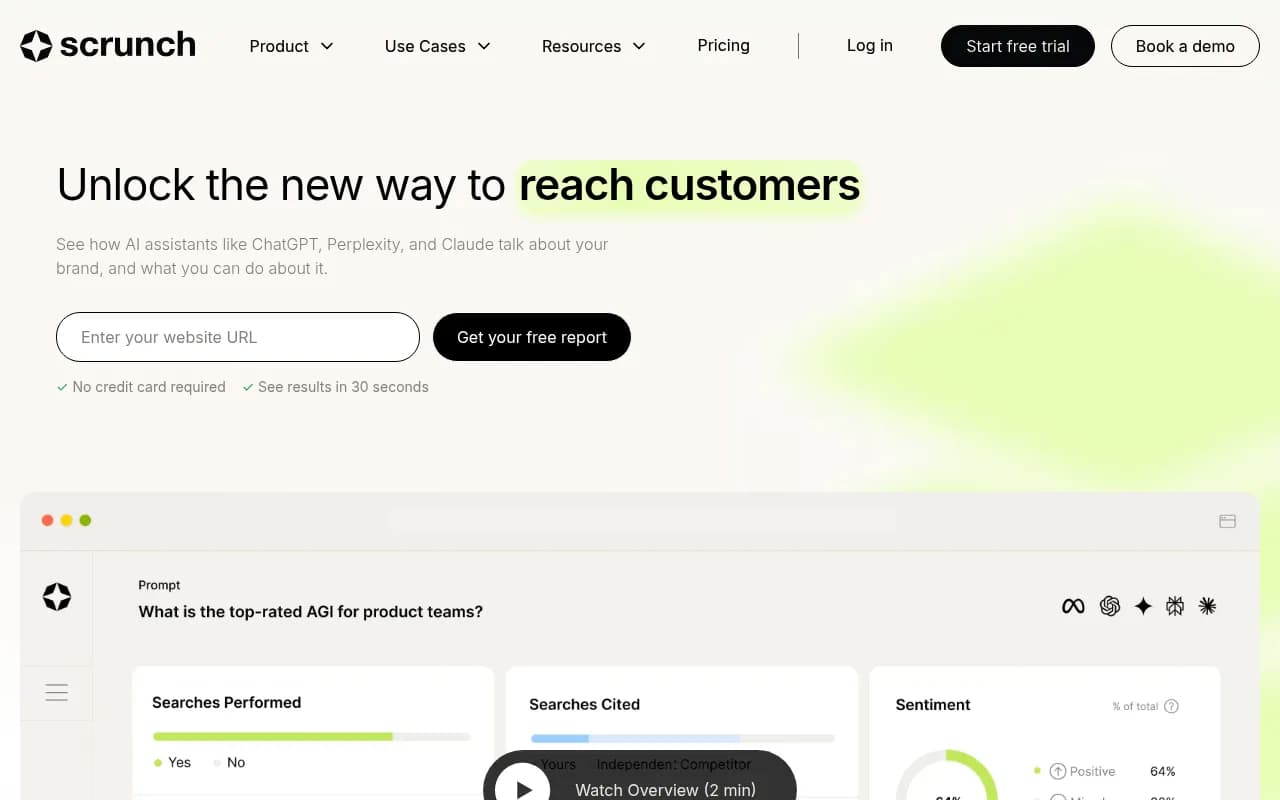
It's a capable tracker but lacks the content optimization and generation features that make a real difference when you're trying to move the needle for multiple clients simultaneously.
Rankscale -- agency-focused with white-label options
Rankscale is designed with agencies in mind and includes white-label reporting, which is genuinely useful for client-facing work.
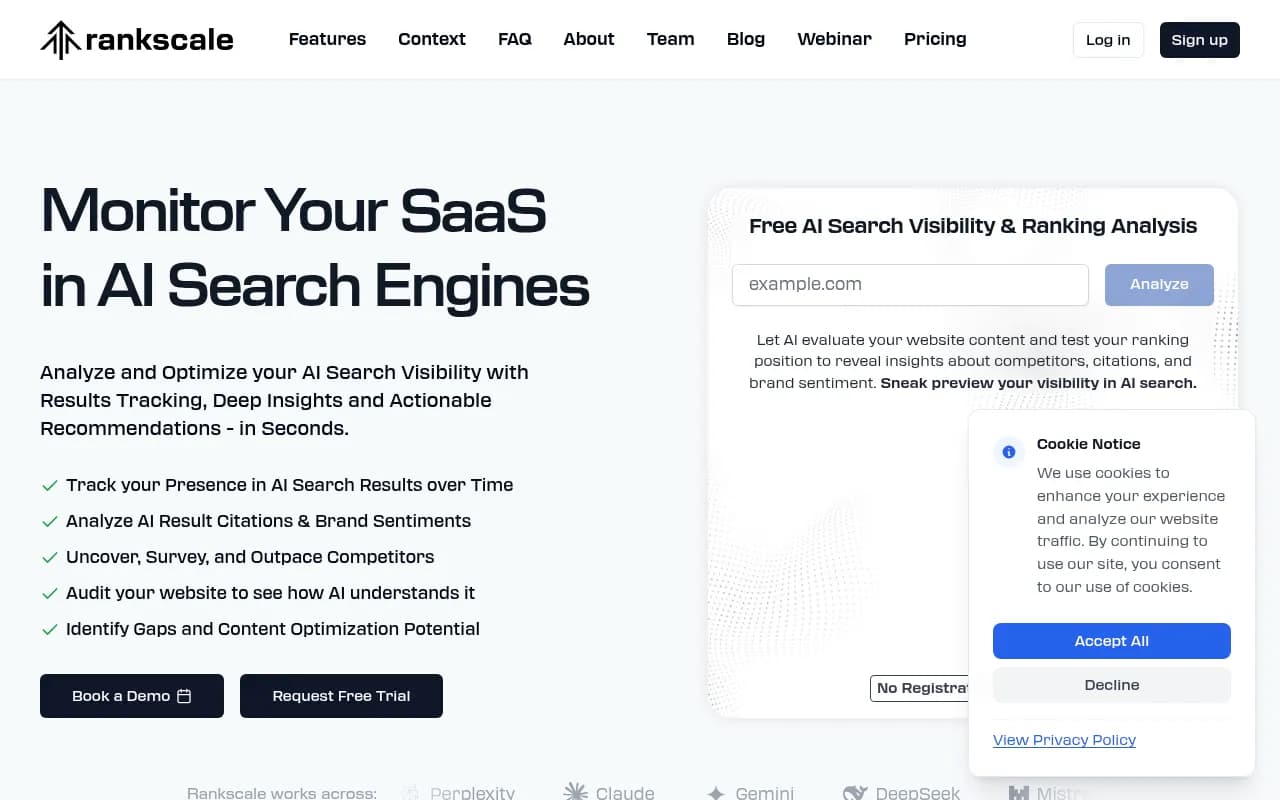
Coverage and depth are more limited than the top-tier platforms, but if white-label reporting is a hard requirement and budget is constrained, it's worth evaluating.
ZipTie -- granular data for analytical teams
ZipTie (also listed as ZipTie.dev) is notable for the granularity of its in-app insights. For teams that want to drill into GEO data at a detailed level, it offers descriptive analytics that go deeper than most monitoring dashboards.
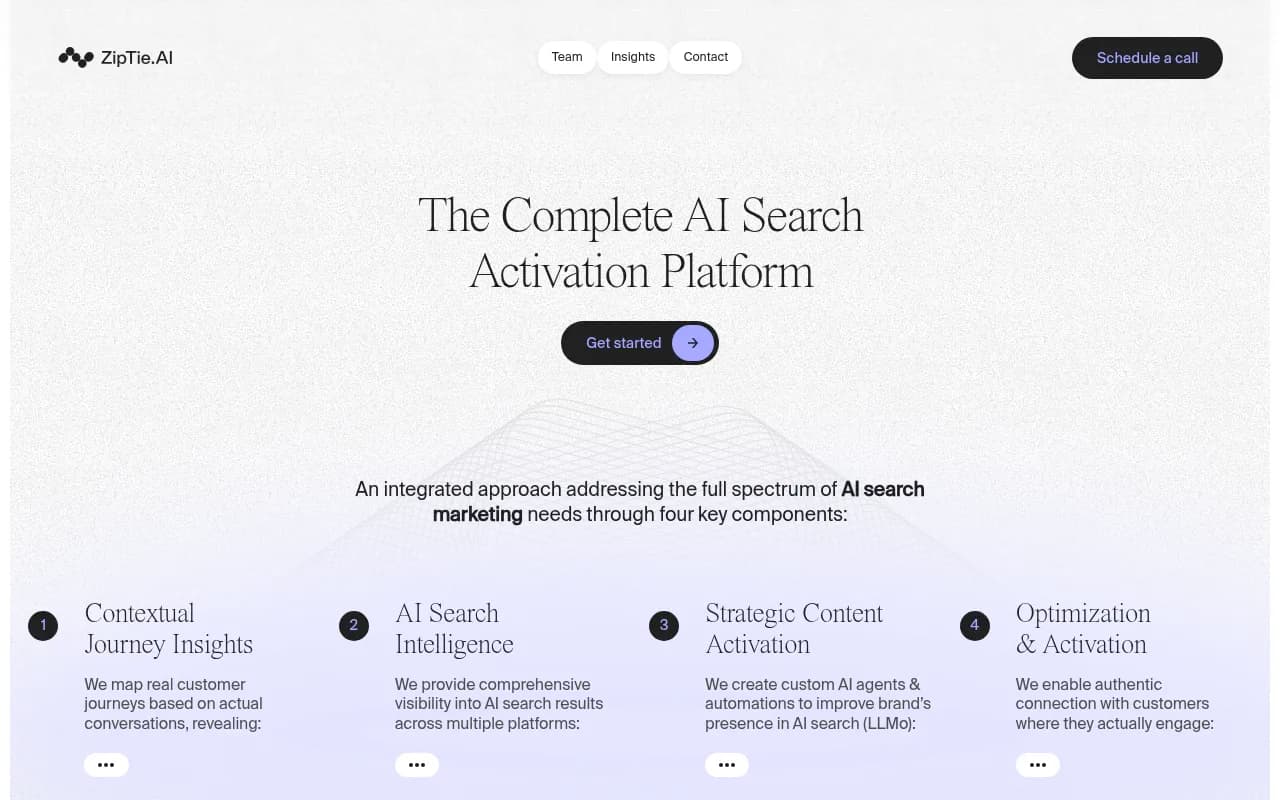
It's a good fit for analytical teams that have the capacity to interpret detailed data and act on it independently. Less suited to teams that need the tool to guide them toward what to do next.
Conductor -- brand authority and citation tracking
Conductor has expanded its platform to include AI search tracking alongside its traditional SEO capabilities. It's a reasonable option for enterprise teams already using it for SEO who want to add AI visibility tracking without switching platforms.
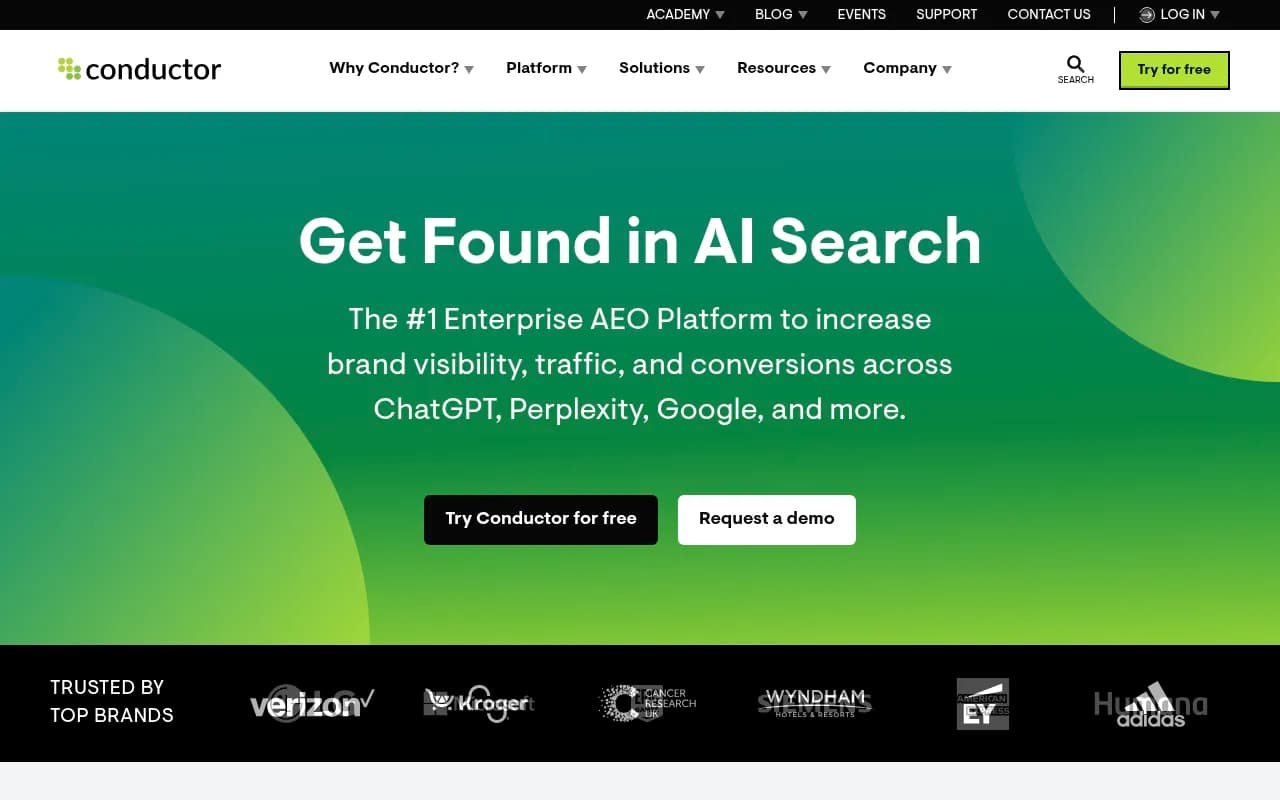
The AI-specific features are newer and less mature than dedicated GEO platforms, but the integration with existing SEO workflows is a genuine advantage for some teams.
Feature comparison
| Tool | Multi-site support | AI models tracked | Content generation | Crawler logs | Prompt volume data | Best for |
|---|---|---|---|---|---|---|
| Promptwatch | Yes (up to 5+ sites) | 10+ | Yes | Yes | Yes | Agencies, multi-brand teams |
| Profound | Yes (enterprise) | 9+ | No | No | Limited | Enterprise monitoring |
| Evertune | Yes (enterprise) | Multiple | Limited | No | No | Fortune 500 brands |
| Otterly.AI | Limited | 5 | No | No | No | Small teams, basic monitoring |
| Peec AI | Limited | Multiple | No | No | No | Share-of-voice tracking |
| AthenaHQ | Limited | Multiple | No | No | No | In-house monitoring |
| Scrunch AI | Yes (agencies) | Multiple | No | No | No | Agency tracking |
| Rankscale | Yes (agencies) | Multiple | No | No | No | White-label agency reporting |
| ZipTie | Limited | Multiple | No | No | No | Analytical teams |
| Conductor | Yes (enterprise) | Multiple | No | No | No | Enterprise SEO + AI |
What most tools get wrong for multi-brand use cases
The honest assessment: most GEO tools were built for a single brand tracking its own visibility. Multi-brand support is often an afterthought -- a "projects" feature that lets you create separate workspaces but doesn't actually scale the workflow.
A few specific problems that come up repeatedly:
Prompt management doesn't scale. Setting up 50 prompts per brand manually, one by one, is fine for one brand. For ten clients, it's a significant time investment. Very few platforms offer bulk prompt import, prompt templates, or any kind of prompt library you can adapt across clients.
Reporting isn't client-ready. Most dashboards are built for internal use. Exporting data for client reports usually means CSV downloads and manual formatting. Platforms with Looker Studio integration or white-label options are meaningfully better for agency use.
Content generation isn't brand-aware. Some platforms are adding AI content generation, but the output is often generic. For multi-brand teams, you need content that reflects each brand's voice, targets their specific competitors, and addresses their specific prompt gaps. That requires brand instructions, uploaded knowledge base files, and persona targeting -- not just a "generate article" button.
No connection to revenue. Showing a client their AI visibility score is fine. Showing them that AI visibility drove X sessions and Y conversions is what actually justifies the budget. Very few platforms connect AI visibility to traffic attribution and revenue.
How to choose the right tool for your situation
The right answer depends on what you're actually trying to accomplish.
If you're an agency managing 5+ client brands and need to show ROI, you need a platform that covers the full loop: gap analysis, content generation, and result tracking. Promptwatch is the most complete option here, with the crawler logs and traffic attribution that let you connect visibility to revenue.
If you're an enterprise in-house team with a large brand portfolio and dedicated analysts, Profound or Evertune may be worth evaluating -- they have strong monitoring depth and enterprise support structures, even if they don't help you create content.
If you're a smaller team or just starting with GEO, Otterly.AI or Peec AI are reasonable entry points. They're accessible, cover the major AI engines, and will give you a baseline understanding of where your brands stand. Just know that you'll hit the ceiling quickly once you want to act on what you find.
If granular data analysis is your priority and you have the internal capacity to interpret and act on it, ZipTie is worth a look.
A note on AI model coverage
One thing that varies significantly across platforms is which AI models they actually track. The major ones to look for in 2026:
- ChatGPT (OpenAI)
- Perplexity
- Google AI Overviews
- Google AI Mode
- Gemini
- Claude
- Grok
- DeepSeek
- Copilot
- Meta AI / Llama
Most basic tools cover 3-5 of these. The more complete platforms cover 9-10. For multi-brand teams, this matters because different AI models have different citation behaviors -- a brand might be well-cited in Perplexity but invisible in Google AI Overviews, and those require different optimization approaches.
The action gap is the real differentiator
The GEO tool market has split into two categories: monitoring dashboards and optimization platforms. Most tools fall into the first category. They show you data -- visibility scores, citation counts, share-of-voice -- but leave you to figure out what to do with it.
For a single brand with a small team, that might be manageable. For multi-brand teams and agencies, the gap between "here's your data" and "here's what to do about it" is where time and budget disappear.
The platforms that close this gap -- by showing which specific content is missing, generating that content, and tracking whether it moved the needle -- are the ones worth building workflows around. That's the standard to hold any GEO tool to in 2026.