Key takeaways
- Profound's Shopping feature analyzes individual SKUs in ChatGPT Shopping, but its pricing page now lists only a free 7-day trial and a custom Enterprise plan. Several vendor blogs report the $99 and $399 self-serve plans are gone.
- For ecommerce, the real question is whether a tool tracks products (SKUs), not just brand mentions. Many alternatives only track the brand.
- Promptwatch combines ChatGPT Shopping tracking with crawler logs, AI traffic analytics and a content agent that fixes gaps. Alhena, Am I Cited and ShopMentions focus more narrowly on revenue attribution or Shopify product tracking.
- ChatGPT attaches shopping features to only a low single-digit percentage of web-search responses, but commercial prompts trigger them far more often. Early visibility matters more than current volume.
- Product pages are the most cited content type in ChatGPT (22.4% of citations). Your product data quality does as much work as any tracker.
Why ecommerce brands look past Profound
Profound is a serious product. Its Shopping page is headed "Boost your product visibility in ChatGPT Shopping" and promises SKU-level granularity across merchants and retailers. It also covers Amazon Rufus, which most competitors skip.
Profound

The friction is pricing and access. According to Answer Socrates, after Profound's large early-2026 funding round the public tiers moved to custom enterprise pricing, with teams reporting quotes starting around $399 a month and climbing past $2,000 for full access. Alhena's comparison, written in 2026, says the pricing page now shows only a free 7-day Trial (50 prompts across ChatGPT, Gemini and Google AI Overviews) and a custom Enterprise plan. These are vendor-written comparisons, so check Profound's page yourself before deciding.
If you are a mid-market store, that leaves two problems. You can't budget without a sales call, and the trial's three engines and seven days won't tell you much about product visibility over time.
What ecommerce brands actually need to track
Brand mention tracking answers "does ChatGPT name us?" Shopping visibility is a different question: when a buyer asks for the best running shoes under $150, do your products show up in the cards, at what price, and next to which competitors?
That means a useful tool needs a few things:
- Product or SKU-level tracking, not only brand-level metrics
- Shopping card detection in ChatGPT, ideally with alerts when a competitor replaces you
- A way to connect AI visibility to real traffic and orders
- Some path from "you're invisible" to "here is the fix"
The last one is where most tools stop. Monitoring tells you the problem. It rarely touches the cause, which usually sits in product data, feed quality, and which third-party pages mention you.
How often does ChatGPT show shopping results?
Less often than the hype suggests. Promptwatch's ChatGPT Shopping usage data shows that shopping features (product cards, recommendations, price comparisons) appear on only a low single-digit percentage of citation-enabled responses overall. The rate moves in steps. It roughly doubled overnight in late May, then fell back weeks later, which Promptwatch reads as OpenAI tuning when cards appear. On commercial and transactional prompts the trigger rate is far higher.
The practical takeaway: track the prompts your buyers use, not a generic set. A tool that only samples broad prompts will undercount your exposure.
What ChatGPT cites for buying prompts
Promptwatch's content type data for Sep 28 to Oct 4, 2026 puts product pages at 22.4% of all ChatGPT citations, with landing pages at 16.8% and listicles at 13.6%. On commercial prompts, product pages hit 26.0%, landing pages 20.6%, listicles 15.0% and comparisons 7.9%. Those four types make up almost 70% of commercial citations.
So for a store, the lever is clear. Complete product pages (specs, prices, availability, Product schema), a clean merchant feed, and placement in the "best of" roundups ChatGPT pulls from.
Comparison table
| Tool | Product-level tracking | Revenue attribution | Acts on findings | Pricing signal |
|---|---|---|---|---|
| Promptwatch | ChatGPT Shopping and Amazon Alexa product results, catalog upload | Visitor analytics for AI traffic and conversions | Content Agent, Action Board, CMS publishing | Essential $95/mo, Business $579/mo |
| Alhena | SKU mapping to your catalog | Joins AI sessions to checkout events | Flags stale prices and invisible bestsellers | Free, then $199/mo billed annually (vendor figure) |
| Am I Cited | SKU-level citations (vendor claim) | Shopify/WooCommerce revenue attribution | Drafts product pages and buying guides | Flat published pricing |
| ShopMentions | Per-product scorecards (Shopify) | Limited | Tracking only | Free trial to $29/mo (per Answer Socrates) |
| Peec AI | SKU-level Visibility, Position, Win rate (per its pricing page) | No | Reporting | From about 85 EUR/mo |
| Athena | Brand-level, multiple LLMs | No | Some gap fixing | $95/mo self-serve (per Tim Soulo's Ahrefs blog) |
| Otterly.AI | Brand mentions | No | No | From $29/mo |
Pricing for everything except Promptwatch comes from vendor or third-party comparison posts. Confirm on each vendor's site.
Promptwatch: tracking plus the fix
Promptwatch is the option I'd look at first if you want shopping visibility to lead somewhere. It tracks ChatGPT Shopping carousels and Amazon Alexa product results in the real interfaces, and you can upload your catalog to track your own products. When a competitor takes your slot, you get alerts rather than a surprise in next month's report.

The difference from a pure tracker is what happens next. IP-verified AI crawler logs show whether GPTBot and OAI-SearchBot are reaching your product pages or hitting errors. Visitor analytics measure the actual traffic and conversions from ChatGPT and other AI platforms. Then the Action Board lists prioritized fixes, and the Content Agent can write and publish pages to Shopify-adjacent stacks like Webflow, Framer or WordPress against the prompts you are losing.
The proof points are reasonable for this category. Crisp saw 2x higher conversion rates from AI traffic than from traditional channels. TreeHouse (Pararius and Huurwoningen.nl) grew AI search to roughly 25% of organic conversions, mostly after fixing crawler access and publishing proprietary data. That crawler-access story matters for stores too, since a blocked product page can't be cited.
A few other things worth knowing for ecommerce:
- Ads Radar shows which advertisers are bidding on your prompts in AI search, with their copy and landing pages.
- Prompt volumes and difficulty scores help you prioritize which buying questions to chase first.
- Local GEO/SEO targeting at exact coordinates helps multi-location retailers with "near me" queries (Business plan and up).
- It is ISO/IEC 27001 certified and GDPR compliant, which helps when procurement asks.
Pricing: Essential is $95/mo (50 prompts, all AI models, MCP and API), Professional $245/mo, Business $579/mo with the Content Agent, Shopping Insights and Ads Radar. Check promptwatch.com/pricing before buying. A free Explore plan tracks ChatGPT only, with 10 prompts.
Honest caveat: the Shopping Insights and Content Agent features sit on Business and above, so the $95 tier is more of an entry point for visibility and traffic data than for full shopping automation.
Alhena: best when revenue attribution is the point
Alhena is an ecommerce AI platform first, and its AI Visibility product is built for online stores. According to its own comparison page, it maps each AI product card to a SKU in your catalog, flags stale prices and bestsellers that AI doesn't recommend, and joins AI-referred sessions to checkout events because it also runs an on-site shopping assistant. It covers ChatGPT, Google AI Overviews, Gemini, Perplexity and Claude on every paid plan and syncs with Shopify, WooCommerce and Salesforce Commerce Cloud.
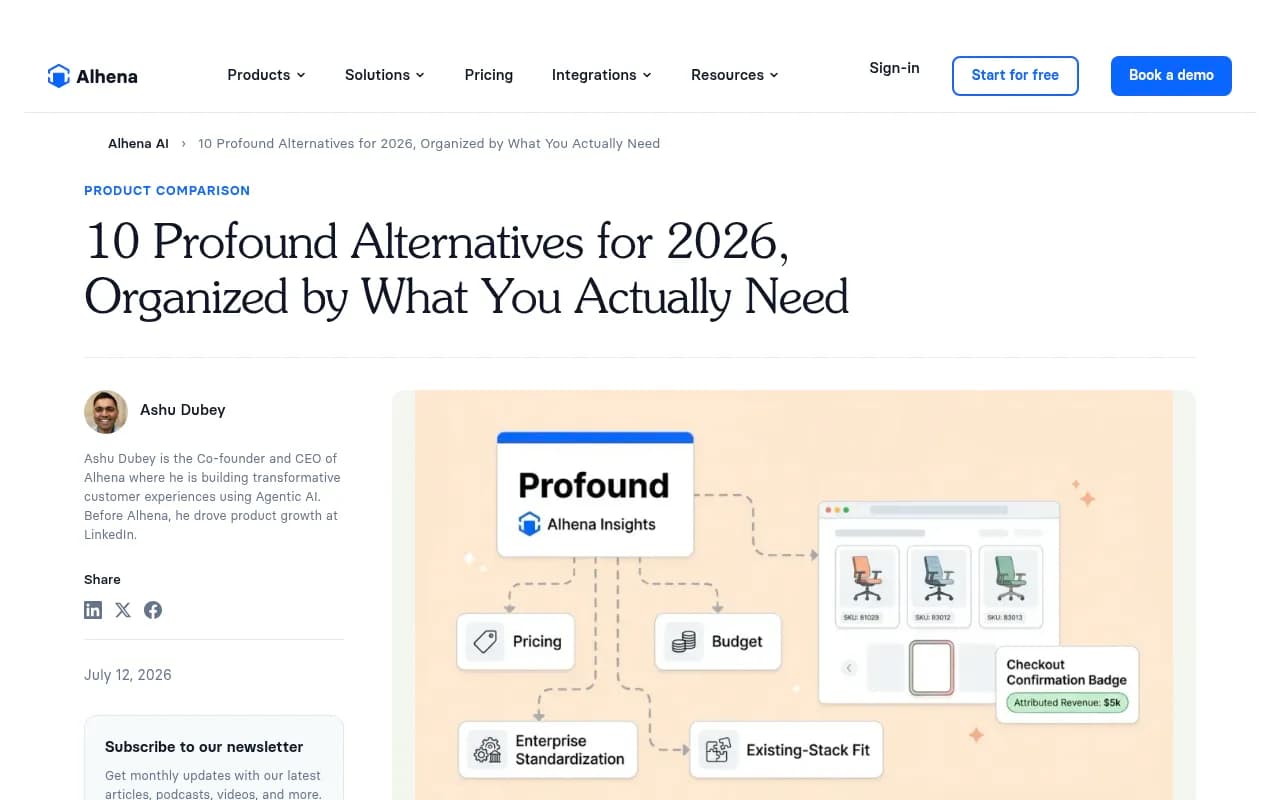
The reported pricing is free, then $199, $499 and $999 a month billed annually. Alhena itself says to skip it if you are a B2B or non-commerce brand that mainly needs the widest engine list or crawler log analytics. That is a fair self-assessment. Note that Alhena is not in our tool catalog, so judge it from its own site.
Am I Cited: flat pricing and Shopify or WooCommerce revenue
Am I Cited positions itself for mid-market and ecommerce teams that want published pricing. Per its own comparison, you connect Shopify or WooCommerce and it ties AI-assisted sessions to real orders, tracks which products get cited at the SKU level, and drafts product pages and buying guides scored against the prompts you're losing. Those are vendor claims, and the same page claims Profound offers neither. Treat that as marketing until you have tested it on your own store.
ShopMentions: the budget Shopify option
Answer Socrates calls ShopMentions the closest thing to Profound's ChatGPT Shopping tracking at an app-store price. It is a Shopify-native app that pulls in your products and shows what is being mentioned in ChatGPT, Perplexity, Gemini, Claude and AI Overviews, with per-product scorecards and competitor rankings. Pricing runs from a free trial to about $29 a month. The limits are obvious: Shopify only, and it tracks rather than fixes.
Peec AI and Athena: brand-level trackers with some product depth
Peec AI is aimed at agencies and marketing teams, with unlimited seats. Its pricing page, as quoted by Perform.AI, lists SKU-level tracking: Visibility, Position and Win rate per product alongside brand metrics. That makes it more relevant to ecommerce than its reputation as a brand tracker suggests.

AthenaHQ has a self-serve plan at $95/mo according to Tim Soulo's comparison, matching Profound's old Starter price but covering all major LLMs instead of only ChatGPT. It focuses on fixing visibility gaps, though the product tracking is at brand level.

Cheaper trackers if you only need mention monitoring
If you just need to know whether ChatGPT names your brand, a few budget trackers do that job. Otterly.AI starts at $29/mo per Alhena's roundup and covers several engines with lighter analytics.
Otterly.AI

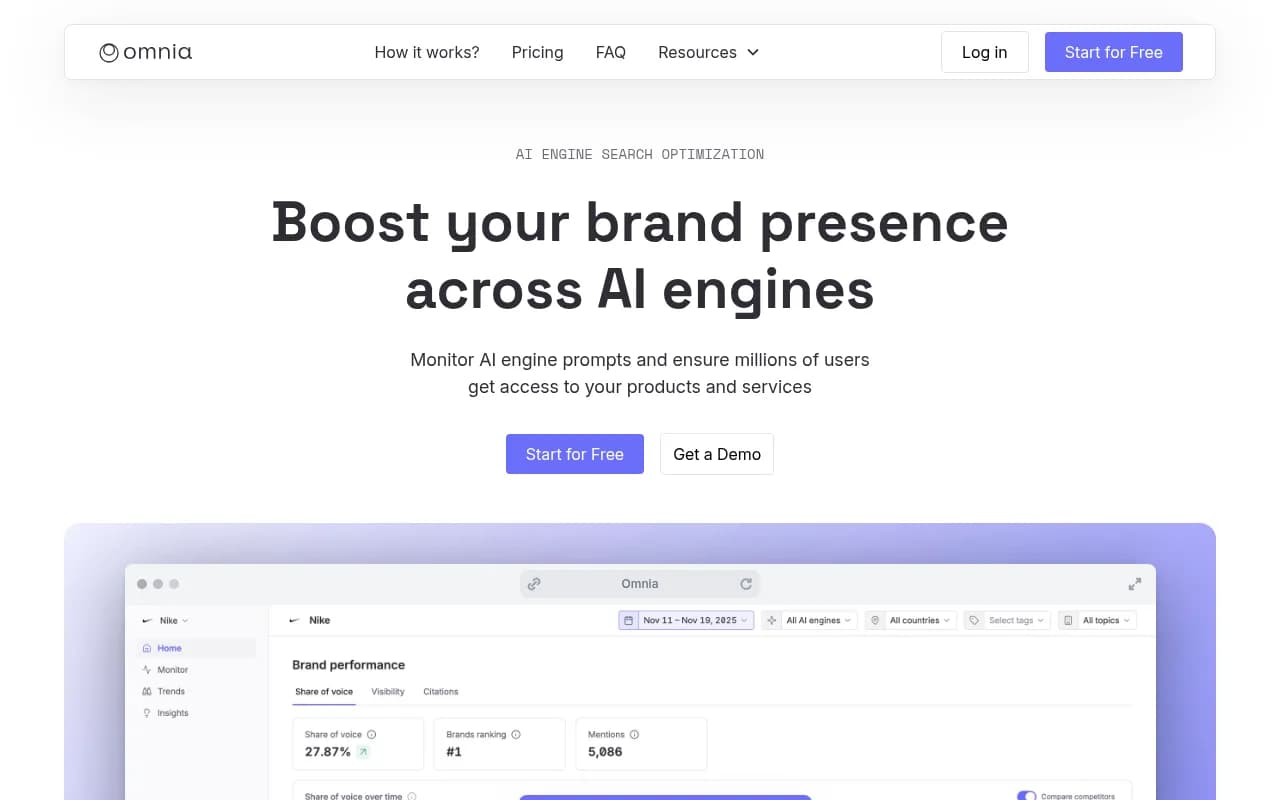
Omnia is worth a look if your brand name collides with other entities, since it uses contextual matching to separate similarly named brands.
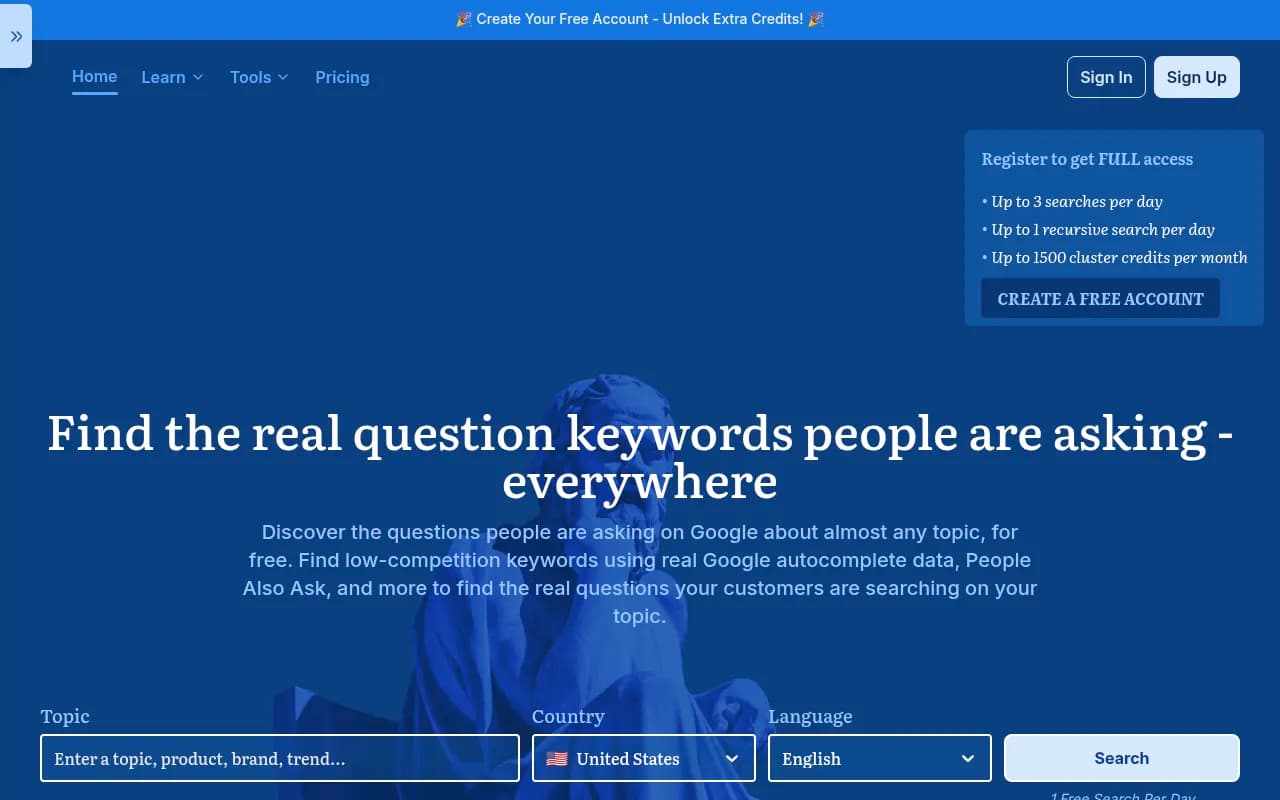
Answer Socrates takes a different angle. It is a keyword discovery tool that helps you find the shopping questions buyers ask AI, and its own post pairs it with a tracker rather than replacing one.
If you already pay for an SEO suite, Semrush and Ahrefs Brand Radar add AI tracking to what you have. Expect fixed prompt sets and shallower AI-specific data compared with dedicated platforms.

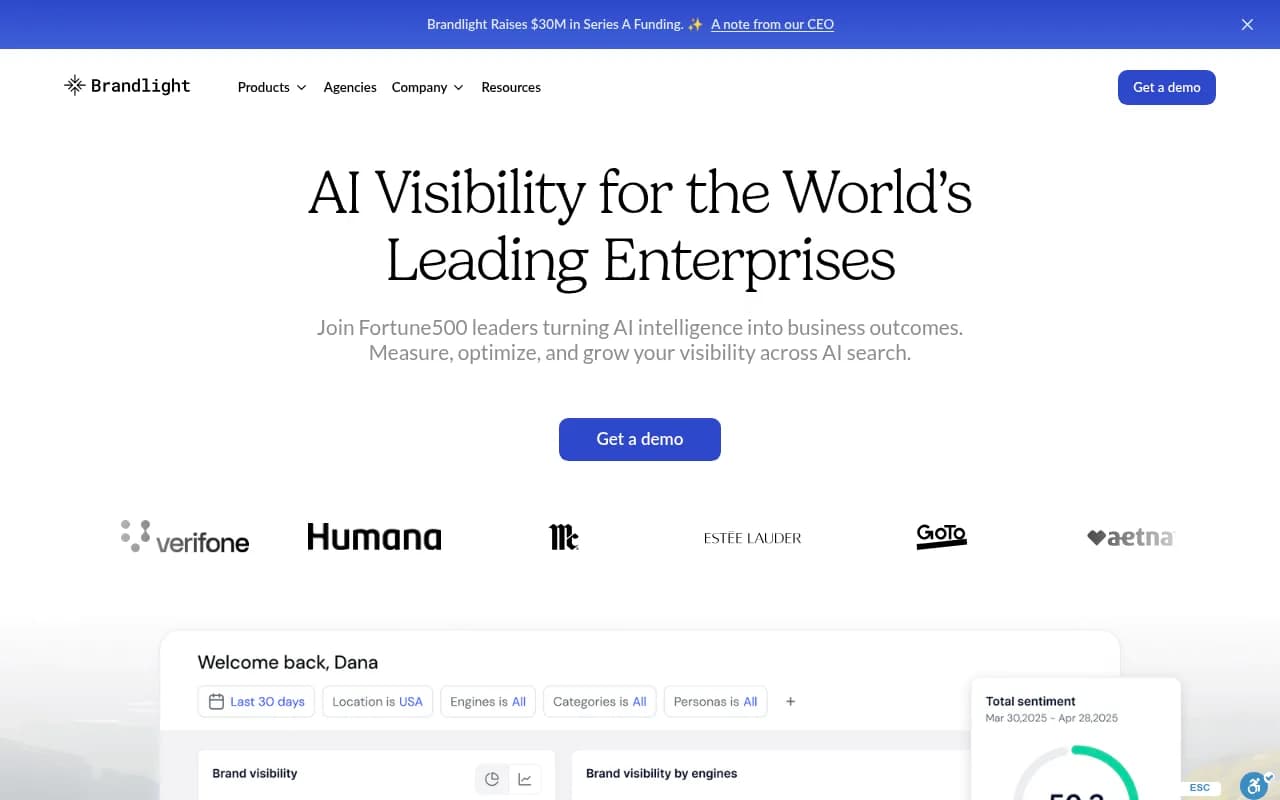
For enterprise retailers thinking about agents that buy on a shopper's behalf, Brandlight is pitching tooling for that scenario.
How to choose
Start from what you need to change, not from the feature list.
- If you want tracking, traffic proof and the content fixes in one place, Promptwatch fits best.
- If you live in Shopify and want the cheapest product-level view, ShopMentions.
- If revenue attribution to orders is the priority and your platform is Shopify, WooCommerce or Salesforce Commerce Cloud, test Alhena or Am I Cited.
- If you are an agency running many stores, Peec AI or Promptwatch's agency plans (Kick-off $199/mo, Growth $399/mo, Scale $799/mo) are the obvious shortlist.
- If you only want brand-mention alerts, Otterly.AI is enough.
Whatever you pick, run it against your actual buying prompts for at least a few weeks. Shopping card rates shift in steps, so a one-week snapshot can mislead you.
Fixing the visibility gaps these tools find
Tracking won't move your numbers. Four things will:
- Make sure AI crawlers can read your product pages. Check robots.txt and CDN rules, and look at crawler logs if your tool offers them.
- Complete your Product schema with accurate price and availability, and keep your merchant feed clean.
- Get included in the listicles and comparison pages that ChatGPT cites for commercial prompts, since those make up a large share of buying-intent citations.
- Collect reviews on trusted third-party sites. Reviews are only 1.7% of ChatGPT citations overall, but they feed the pages and sentiment AI draws on.
For more tools in this category, the GEO software directory at bestgeosoftware.com lists dozens of trackers, and ai-rank-tools.com covers AI rank trackers specifically. Promptwatch's data hub has the underlying citation research.
Final verdict
Profound remains the enterprise reference for SKU-level ChatGPT Shopping analysis, and if you are a large retailer with budget and a sales conversation to have, it earns its place. For everyone else, the best alternative depends on whether you want to watch or to fix. Pure trackers are cheap and fine for monitoring. For ecommerce brands that want shopping visibility, crawler diagnostics, AI-referred revenue and content production in one workflow, Promptwatch is the one I'd trial first, then test one attribution-focused option like Alhena alongside it if order-level data is your main need.