Key takeaways
- Birdeye Search AI and Yext Scout are location-native: they score visibility per store, branch or dealership, then push fixes into listings, reviews and local content.
- Promptwatch is prompt-native: it is sized by prompts and websites, not locations, and its strengths are crawler logs, citation analysis, content generation and traffic attribution.
- Neither Birdeye nor Yext publishes Scout or Search AI pricing. Both are sales-led. Promptwatch lists prices publicly, starting at $95/month.
- The three vendors measure different things, so their "visibility scores" cannot be compared head to head.
- Many multi-location brands will end up with a location platform for operations and a prompt-level platform for the content and crawler side.
Why local AI visibility is a different problem
A national brand can ask one question: does ChatGPT mention us when someone searches our category? A brand with 400 dealerships, clinics or restaurants has 400 versions of that question. AI answer engines tend to recommend specific places, and a location with a wrong phone number, thin reviews or a missing listing can be invisible even when the brand overall looks healthy.
That is the gap these tools try to fill, but they approach it from different directions. Birdeye and Yext came from the listings and reputation world. They extended into AI search because their customers already manage thousands of local records. Promptwatch came from the other side: it started as an AI search visibility and GEO platform and has no concept of a store as a unit.
I think that distinction matters more than any feature checklist. Pick the wrong unit of measurement and you will either pay for location-level tracking you do not need, or find yourself stuck without it.
The three tools at a glance
| Birdeye Search AI | Yext Scout | Promptwatch | |
|---|---|---|---|
| Unit of measurement | Brand and location | Brand, location and competitor | Prompt, page, brand |
| Engines (vendor-stated) | ChatGPT, Gemini, Perplexity, Google AI Overviews, AI Mode, Claude, Grok | Google Search, Maps, AI Overviews, plus ChatGPT, Gemini, Claude, Perplexity | ChatGPT, Google AI Overviews, AI Mode, Gemini, Perplexity, Copilot, Claude, Grok, DeepSeek and others |
| Fix mechanism | Agents update listings, reviews, local content | Action Center agents update listings, reviews, social | Content Agent, Action Board, CMS publishing |
| AI crawler logs | Not described in sources | Not described in sources | Yes, IP-verified |
| Target scale | 100 to 10,000+ locations | Yext customers, 12M+ locations on the platform | Brands and agencies sized by prompts |
| Pricing | Custom | Custom, demo-led | Public, from $95/month |
One caution before going further. The Birdeye and Yext details above come from each vendor's own pages. Birdeye's comparison articles rank Birdeye first, and I found no independent head-to-head test of these products. Treat the claims as claims.
Birdeye Search AI
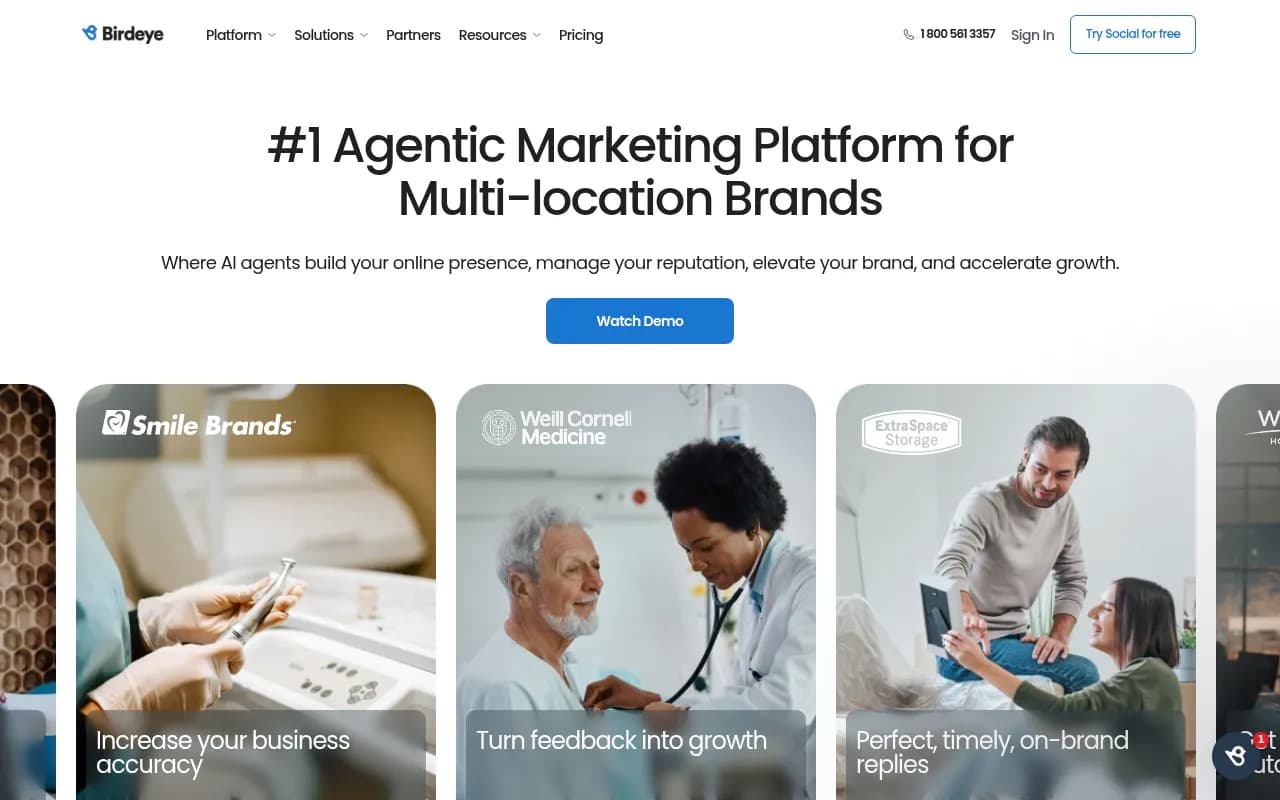
Birdeye positions Search AI as an AI search visibility platform for multi-location brands, with a stated sweet spot of 100 to 10,000+ locations. Customer-configured queries are sent to the selected LLMs, and it measures visibility from the responses that come back, at brand and location level.
What it does well
The pitch is closing the loop between measurement and action. Birdeye says gaps get tied to the reviews, listings and content you control, and its agents do the work: Listings AI pushes corrected business data to 100+ directories, Insights AI surfaces sentiment patterns, Social AI suggests location-specific posts, and Reports AI consolidates the data.
Two other ideas stand out:
- Prompt intelligence based on questions users actually ask, grouped into semantic themes rather than a predefined keyword list.
- Citation mapping that shows which websites and directories AI engines cite instead of you, so fixes can be prioritized by impact.
Its target industries include automotive dealerships and service providers, contractors and home services.
Where to be careful
Pricing is custom, based on queries tracked, locations and LLMs. Birdeye says it replaces standalone AEO trackers, content tools and listings platforms for multi-location brands. That is a bold consolidation claim, and you should test it in a pilot with a handful of locations before signing for hundreds.
Yext Scout
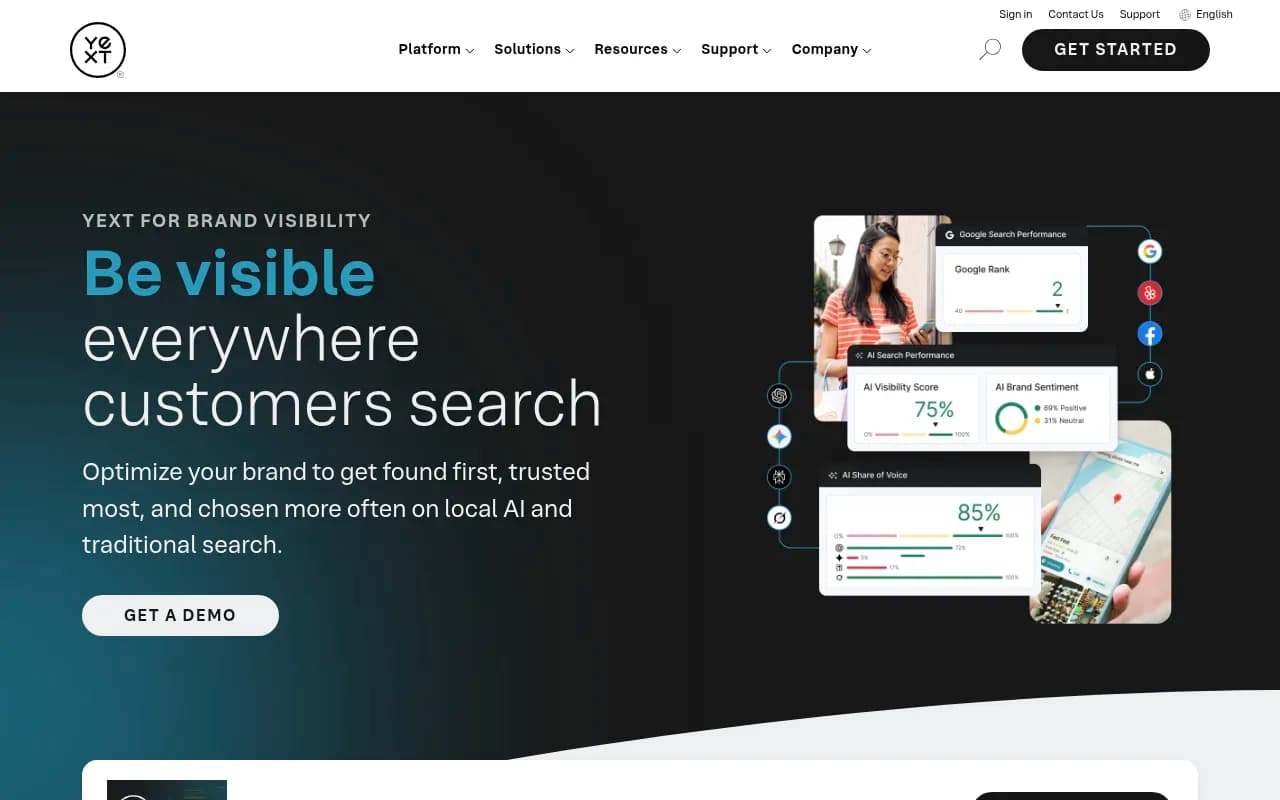
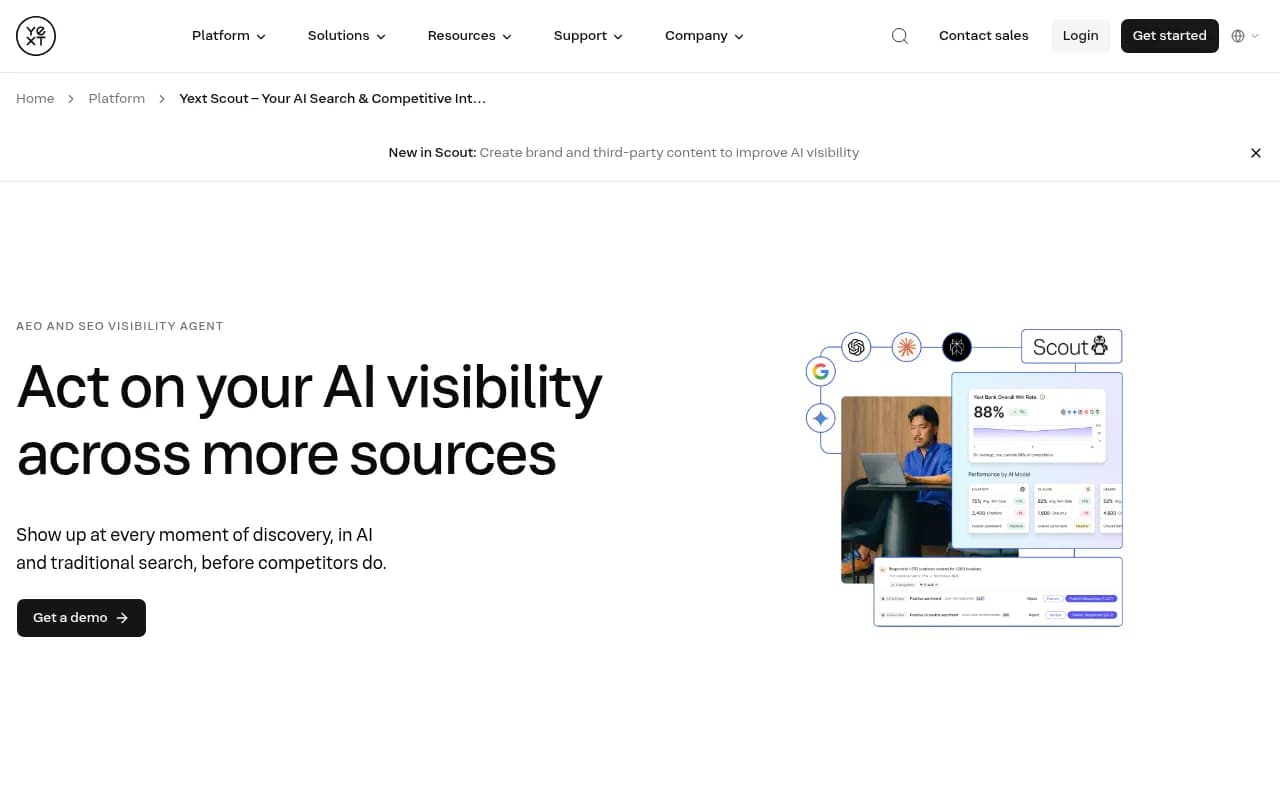
Yext describes Scout as an "AEO and SEO visibility agent." Its page headlines 10B signals, 5 AI models, 12M+ locations, 150 visibility metrics and 20 competitors per scan.
What it does well
Scout is the only one of the three that blends traditional local search and AI in one view. It tracks Google Search, Google Maps and Google AI Overviews alongside ChatGPT, Gemini, Claude and Perplexity. For a local business, that hybrid is a feature: most customers still find a branch through Maps.
Other pieces worth knowing:
- Head-to-head win rates against your 20 closest competitors, for brand-level and high-intent local searches.
- An Action Center where agents update listings, correct business information, respond to reviews and manage social content, with your team staying in control.
- Sentiment analysis that surfaces recurring themes, such as "long wait times."
- Citation tracking, a mobile app showing win rate by location, and data access through MCP or API.
- A newer capability to create brand and third-party content to improve AI visibility.
Yext also publishes a Visibility Score that blends Google Search rank and AI search presence, among other signals.
Where to be careful
Birdeye argues that Scout's hybrid focus dilutes an AI-specific strategy and that you get the most from it inside the Yext Knowledge Graph. That is a competitor's framing, but the underlying point is fair: if you are not a Yext customer, Scout means adopting a platform, not just a tracker. I found no public Scout pricing. It is a demo-led purchase.
Promptwatch
Promptwatch is not a local platform, and I would rather say that plainly than stretch it. Its plans are sized by prompts and websites, not by locations. There is no listings sync, no review request engine and no per-store dashboard.

What it does cover is the layer the other two do not describe in their public material:
- Real-UI tracking of ChatGPT, Google AI Overviews, AI Mode, Gemini, Perplexity, Copilot and others, with country tracking on every paid plan and state/city tracking from the Business plan.
- IP-verified AI crawler logs, which show which AI bots hit which pages and whether they get errors.
- Visitor analytics that attribute real traffic and conversions from AI platforms.
- Prompt volumes, difficulty scores and query fan-outs.
- A Content Agent that plans, writes and publishes to WordPress, Webflow or Framer, plus an Action Board of prioritized tasks.
Pricing
Promptwatch publishes its prices. Paid plans start at $95/month (Essential, 50 prompts), then $245 for Professional (150 prompts) and $579 for Business (350 prompts), with agency plans from $199. Third-party sources list slightly different numbers, for example $99 and $249, so confirm on promptwatch.com/pricing before budgeting.
Why it still matters for local brands
Local pages are content, and content has to be crawlable. Promptwatch's own data on ChatGPT citations (Sep 28 to Oct 4, 2026) shows product pages at 22.4% of citations and landing pages at 16.8%, so pages describing what a company sells earn about 39% between them. For branded prompts, reviews rise to 5.6% of citations, more than three times their share across all prompts, and FAQ pages reach 4.8%. See the full ChatGPT citation share by content type report.
For a local brand, that translates into a plain to-do list: strong location landing pages, reviews on the sites people trust in your category, and an FAQ page. Birdeye and Yext are built to manage the reviews and listings side at scale. Promptwatch tells you whether AI crawlers can actually read the pages and which ones get cited.
Social profiles: a local detail that differs by engine
If you manage Facebook and Instagram pages for every location, know that their value depends on the engine. In Promptwatch Data for Sep 28 to Oct 4, 2026, ChatGPT drew only 0.46% of its citations from social platforms, while Google AI Overviews drew 12.2%, with Facebook at 2.38% and Instagram at 1.61%. The social media citations report has the breakdown. Reddit's share of ChatGPT citations also collapsed in mid-August, which you can see in the Reddit citations report.
The takeaway: a tool that reports one blended "AI visibility" number across engines can hide the fact that your social work pays off in one engine and barely registers in another. Ask every vendor to show results per engine.
Which one fits which situation
| Situation | Best fit | Why |
|---|---|---|
| 500+ locations, messy listings and reviews | Birdeye Search AI or Yext Scout | Location-level scoring plus agents that fix local data |
| Already running Yext listings or Knowledge Graph | Yext Scout | Same data layer, Google Maps included |
| Local pack and Maps matter as much as AI answers | Yext Scout | Tracks Search, Maps and AI Overviews together |
| Review-driven, service-business locations | Birdeye Search AI | Reviews, sentiment and listings in one vendor |
| Need to know if AI crawlers can read your site | Promptwatch | IP-verified crawler logs |
| Need content produced and published against gaps | Promptwatch | Content Agent with CMS publishing |
| Agency serving many clients, not many stores | Promptwatch | Agency plans sized by responses, with unlimited projects |
| Under 20 locations, tight budget | Promptwatch plus a listings tool | Public pricing from $95/month, no location minimums |
How to evaluate them in a pilot
Because nothing here is standardized, run the same test on all of them.
- Pick 10 representative locations: a few strong, a few weak, a few in competitive metros.
- Write 20 prompts a real customer would type, such as "best urgent care near [neighborhood]" or "who services [brand] vehicles in [city]".
- Check the tool's answer against what ChatGPT, Gemini and Google actually show you by hand. Real interface results can differ from API outputs.
- Ask for the source pages behind a competitor mention. If the tool cannot show them, the citation layer is thin.
- Make one fix, such as a corrected listing or a new FAQ, and see how long the tool takes to reflect it.
- Get pricing in writing for your actual location and prompt counts. Custom pricing tends to scale in ways the demo does not show.
Other tools worth a look
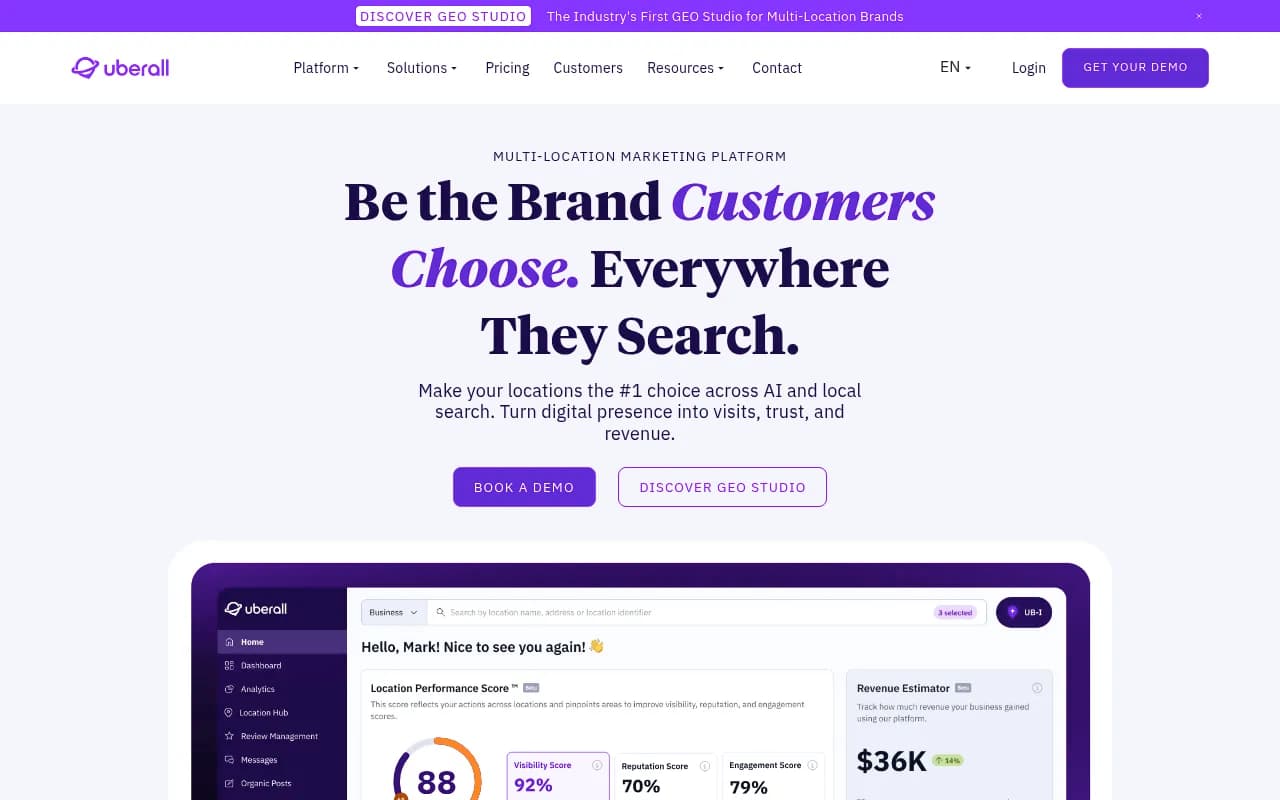
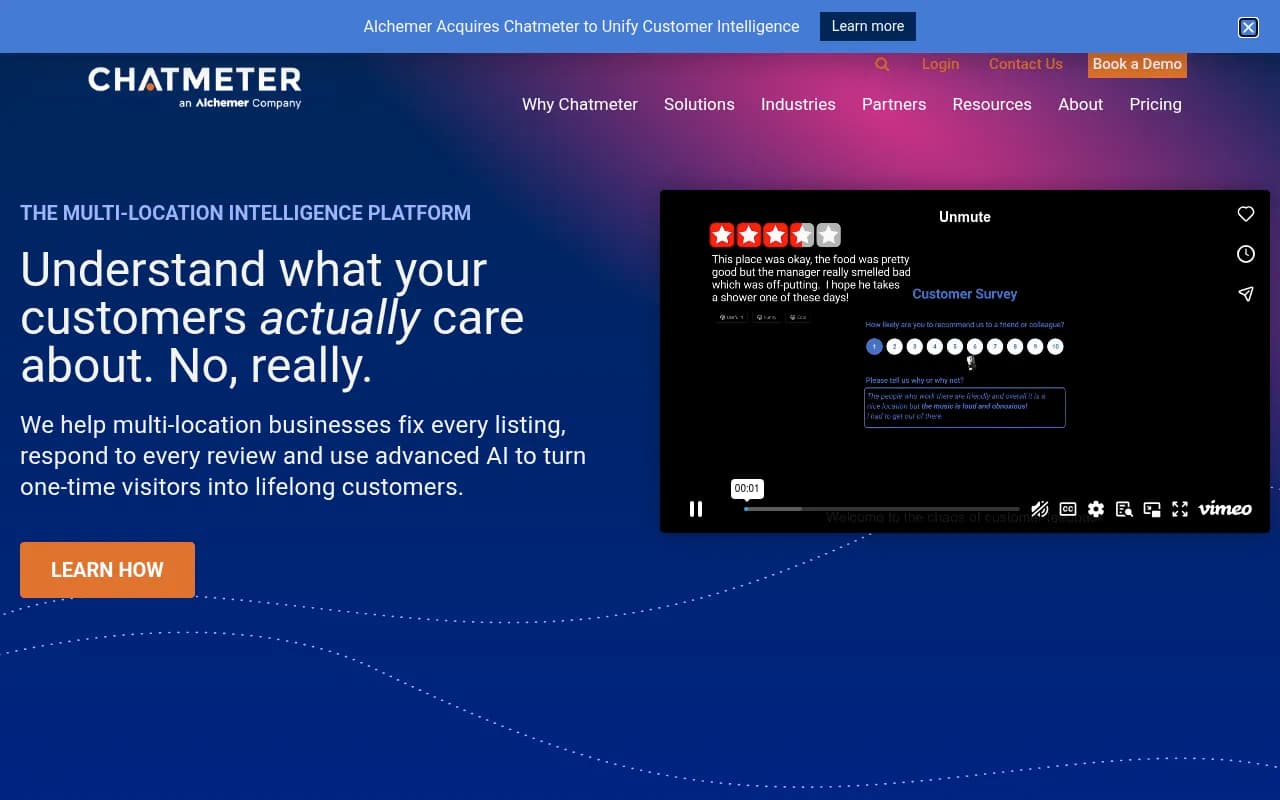
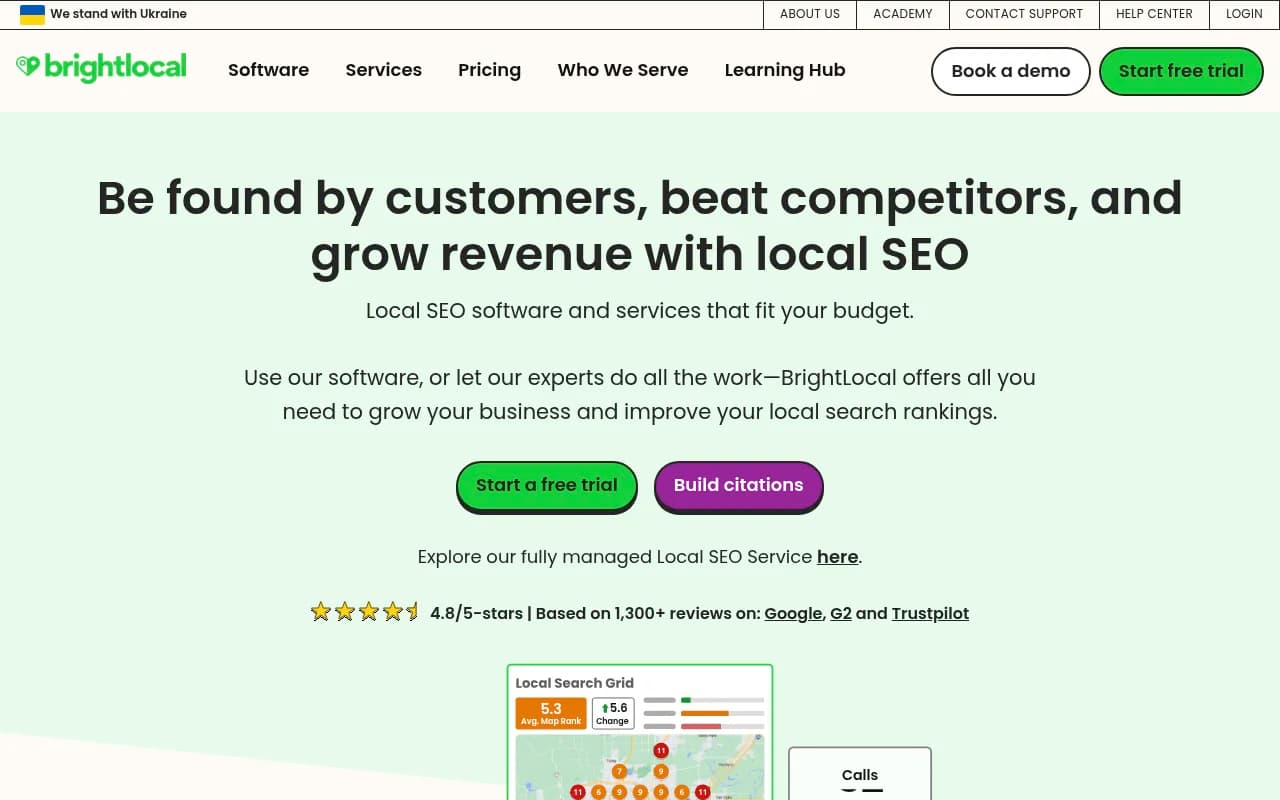
If neither Birdeye nor Yext fits, the local and multi-location space has others in the catalog, including Uberall, Chatmeter, SOCi, Reputation, Rio SEO, Partoo and BrightLocal.
For prompt-level monitoring without the local layer, the GEO software directory at bestgeosoftware.com lists more trackers, and ai-rank-tools.com covers AI rank trackers specifically.
My take
If your problem is that hundreds of locations have inconsistent data and weak reviews, Birdeye or Yext is the right category, and the choice mostly comes down to whether you already live in the Yext ecosystem and whether you care about Maps. Birdeye's review and sentiment strength suits service businesses. Scout's Google Maps coverage suits retail footprints.
If your problem is that AI systems cannot read, cite or send traffic to your site, no listings platform will fix that, and a prompt-level platform like Promptwatch answers it. Large brands will often need both. Just do not let any vendor convince you its own visibility score is the one true number.
Finally, ask all three for the thing the public pages do not show: a live demo on your own locations and your own competitors. Whatever they show you on that call tells you more than any comparison article, including this one.